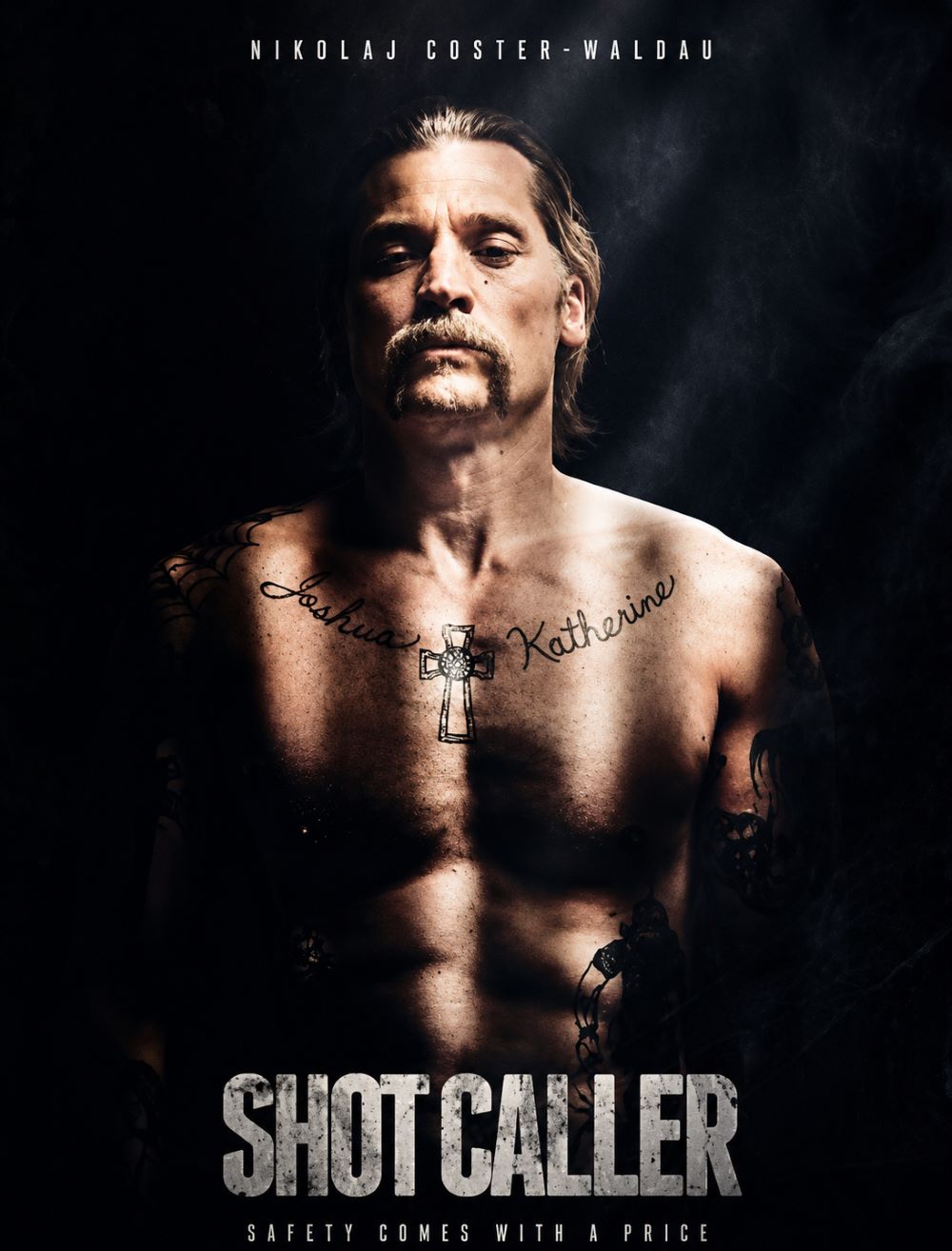
Review: Shot Caller (dir. by Ric Roman Waugh)


“The fact is, we all started out as someone’s little angel. And a place like this forces us to become warriors or victims. Nothing in between can exist here.” — “Bottles”

Shot Caller (released in 2017), directed by Ric Roman Waugh, is a gritty, morally complex crime drama that dives deep into the brutal world of prison gangs, redemption, and the blurred lines between justice and survival. Clocking in at just over two hours, it’s a tense, character-driven story that doesn’t shy away from the harsh realities of its setting, delivering a raw and unfiltered look at life behind bars and the psychological toll it exacts.

The film follows Jacob Harlon, played by Nikolaj Coster-Waldau, a successful businessman whose life spirals out of control after a DUI accident leaves his best friend dead. Sentenced to prison, Jacob is thrust into a violent, hierarchical world where survival means adapting to the rules of the Shot Callers—high-ranking gang members who control the prison’s underground economy. The film’s title itself is a nod to this brutal hierarchy, where every decision, every move, is dictated by those at the top. As Jacob navigates this treacherous landscape, he transforms from a naive new inmate into a hardened, strategic player, adopting the moniker “Money” for his financial acumen. His journey is as much about physical survival as it is about the psychological toll of losing his identity and grappling with the moral compromises he’s forced to make.

What makes Shot Caller stand out is its unflinching portrayal of prison life. Waugh, who also co-wrote the screenplay, doesn’t romanticize the violence or the characters. The film opens with a visceral, almost documentary-like sequence of Jacob’s first days in prison, where he’s immediately targeted by a white supremacist gang. The brutality is shocking, but it sets the tone for a story that refuses to sugarcoat the realities of incarceration. The prison scenes are claustrophobic, the tension palpable, and the stakes feel painfully real. Waugh’s direction ensures that every punch, every stab, every whispered threat carries weight. There’s no glorification here—just the cold, hard truth of a system that chews people up and spits them out. Even the brief but chilling appearance of Holt McCallany as The Beast, a high-ranking Aryan Brotherhood member, leaves a lasting impression. Though his screen time is limited, McCallany’s performance is unforgettable, exuding a quiet, menacing authority that underscores the danger lurking in every corner of the prison.

Nikolaj Coster-Waldau delivers a career-best performance as Jacob. Known to many as Jaime Lannister from Game of Thrones, Coster-Waldau sheds his noble, charismatic image to embody a man broken by guilt and reshaped by circumstance. His physical transformation is striking—he bulked up significantly for the role, but it’s his emotional range that truly impresses. Jacob’s arc is one of the most compelling aspects of the film. Early on, he’s a fish out of water, a man clinging to his old life and morals. But as the story progresses, we see the gradual erosion of his principles. The moment he finally snaps and fights back is a turning point, not just for his character but for the audience’s perception of him. By the time he’s released from prison, he’s almost unrecognizable—both physically and psychologically. Coster-Waldau makes you believe every step of this transformation, and it’s a testament to his skill as an actor that you’re rooting for Jacob even as he makes increasingly questionable decisions.

The supporting cast is equally strong. Omari Hardwick plays Shotgun, a high-ranking member of the black gang who becomes Jacob’s reluctant mentor. Hardwick brings a quiet intensity to the role, balancing threats with moments of unexpected humanity. Lake Bell plays Jacob’s wife, Kate, and her performance is heartbreaking in its restraint. Kate’s struggle to hold her family together while her husband is in prison is a grounded counterpoint to the chaos unfolding behind bars. Jon Bernthal, another standout, plays a prison guard with a morally ambiguous role in Jacob’s journey. Bernthal, as always, brings a raw, simmering energy to his scenes, making his character’s motivations feel authentic, even when they’re not entirely clear.

The film’s pacing is deliberate, almost methodical. Waugh takes his time building the world and the characters, and while this might frustrate viewers looking for constant action, it pays off in the long run. The first act is heavy on exposition, introducing the prison’s power structures and the various factions at play. But once Jacob starts to find his footing, the story picks up momentum. The middle act is where Shot Caller really shines, as Jacob’s alliances and rivalries become more complex. The film’s climax is a high-stakes heist that feels both inevitable and earned, a culmination of everything Jacob has learned—and lost—during his time inside.

One of the most interesting themes in Shot Caller is the idea of control. The title itself refers to those who call the shots, but the film constantly questions who really has power in this world. Jacob starts as a man who thinks he’s in control of his life, only to have that illusion shattered. In prison, he learns that control is a fragile, often violent thing, constantly shifting hands. Even after his release, he’s not truly free—he’s still bound by the rules of the criminal underworld he’s now a part of. The film suggests that in a system as broken as this one, no one is ever truly in control. It’s a bleak message, but one that feels authentic to the story being told.

The cinematography, by Dana Gonzales, is another highlight. The prison scenes are shot in a way that emphasizes the claustrophobia and tension of the environment. The color palette is muted, with lots of grays and blues, reflecting the cold, harsh reality of Jacob’s new world. The action sequences, when they do occur, are brutal and realistic, with a handheld camera style that puts you right in the middle of the chaos. There’s no glamour to the violence here—it’s messy, desperate, and often over in seconds.

If Shot Caller has a weakness, it’s that some of its themes and plot points might feel familiar to fans of the genre. The story of a man falling into the criminal underworld and struggling to escape isn’t exactly new. What saves the film from feeling derivative is its commitment to authenticity and its strong performances. Waugh’s script also avoids easy answers. Jacob isn’t a hero, and the film doesn’t pretend he is. He’s a flawed, complicated man making the best of a series of terrible situations. The ending, without spoiling too much, is bittersweet and ambiguous, leaving you to ponder just how much of Jacob’s old self is left—and whether he can ever truly escape the life he’s been drawn into.

Another aspect worth praising is the film’s soundtrack. The score, composed by Antonio Pinto, is understated but effective, using a mix of electronic and orchestral elements to underscore the tension and emotional beats of the story. The use of silence is also notable—there are moments where the absence of music makes the violence or the weight of a decision hit even harder.

Shot Caller is a film that lingers with you long after the credits roll. It’s not an easy watch, and it’s certainly not for the faint of heart. The violence is graphic, the language is harsh, and the themes are heavy. But for those willing to engage with it, the film offers a gripping, thought-provoking experience. It’s a story about survival, identity, and the cost of redemption. Ric Roman Waugh has crafted a prison drama that stands alongside classics like The Shawshank Redemption and American History X, even if it doesn’t quite reach their lofty heights. What it lacks in originality, it makes up for in execution, with stellar performances and a relentless commitment to its vision. In a world where crime dramas often glorify the outlaw life, Shot Caller is refreshingly honest. It doesn’t ask you to root for Jacob because he’s a good guy—it asks you to understand him, flaws and all. And by the end, you do. You understand the choices he makes, even if you don’t agree with them. That’s the mark of a great character study, and Shot Caller delivers on that front in spades. It’s a film that will leave you thinking, long after the final shot fades to black.

Retro Television Review: Law and Order 6.13 “Charm City” and Homicide 4.11 “For God And Country”


Welcome to Retro Television Reviews, a feature where we review some of our favorite and least favorite shows of the past!  On Sundays, I will be reviewing Homicide: Life On The Street, which aired from 1993 to 1999, on NBC!  It  can be viewed on Peacock.
This week, Homicide crosses over with Law & Order.

Law & Order 6.13 “Charm City”

(Dir by Ed Sherin, originally aired on February 7th, 1996)

Homicide 4.11 “For God and Country”

(Dir by Ed Sherin, originally aired on February 9th, 1996)

This week, we have a two-part cross-over between Law & Order and Homicide.

On Law & Order, things start in New York City.  A chemical attack on a subway train leaves 20 people dead.  Because the train was specifically heading into Harlem and all of the victims were black, it is suspected that the attack was racially motivated.  In Baltimore, Frank Pembleton and Tim Bayliss hear about the attack and are reminded of a similar attack on a black church, which occurred five years prior.  Pembleton was the primary on the church attack.  He and Bayliss head to New York City, where they meet and quickly get on the nerves of Detectives Lennie Briscoe (Jerry Orbach) and Rey Curtis (Benjamin Bratt).

Pembleton’s investigation uncovers that a man from Baltimore, Brian Egan (Kevin Geer), not only had access to the chemicals used in both attacks but also that’s he currently in New York.  When Briscoe and Curtis arrest Egan and fail to get him to confess, Pembleton asks for permission to interrogate him.  Pembleton, being Pembleton, rather easily gets Egan to confess to having committed the church bombing.  However, before getting the confession, Pembleton pretends not to hear Egan say that he no longer wants to continue talking.  In typical Law & Order (if not Homicide) fashion, the confession is tossed out.

Jack McCoy (Sam Waterston) and Claire Kincaid (Jill Hennessy) still get their conviction.  (And Claire gets an admirer in the form of Tim Bayliss.)  However, it’s obvious that Egan was not working alone.  Egan says that he will never name names.

That changes when his wife is murdered and his teenage son goes missing.  Homicide opens with Bayliss investigating the poisoning of Egan’s wife.  He and Pembleton eventually track down Egan’s son and they get him to admit that he saw his uncle, former NSA agent Col. Alexander Rausch (J.K. Simmons), murder his mother.  Because Brian Egan has said that he’ll only reveal the truth of the conspiracy if his son is brought to New York, Briscoe and Curtis show up in Baltimore.

While Curtis, Bayliss, and Pembleton track down Colonel Rausch, Briscoe hangs out with Munch.  Their friendly banter goes south as soon as Briscoe mentions that he once knew a Gwen Munch in New York.  Gwen is John Munch’s ex-wife and John is not happy when he finds out that Briscoe slept with Gwen.  John Munch spends the rest of the episode drinking heavily.  Stanley Bolander would not approve.

As for Col. Rausch, he is captured and he turns out to be a smug snake.  (He’s played by J.K. Simmons, after all.)  Pembleton wants to see Rausch prosecuted for the church bombing and he especially wants to see racist Rausch publicly humiliated.  New York, however, wants to prosecute him for the subway attack.  Claire comes down to Baltimore and gets a judge to agree that Rausch should first be sent to New York.

Rausch doesn’t care.  He has a heart condition so he simply stops taking his heart pills and then drops dead while waiting for the train to take him to the Big Apple.  The episodes ends with Pembleton sobbing as he realizes Rausch will never be humiliated at a trial.  The New York cops shrug and say, “Sorry, Frank.”

I enjoyed this crossover quite a bit.  It was interesting to see two police dramas, each with a very different style, come together to tell one big story.  As Homicide always celebrated the lengths that Pembleton would go to get a confession in the Box, it was amusing to see what would actually happen to one of those confessions if it was brought to court.  Jack McCoy is not at all amused by Pembleton’s tactics.  Meanwhile, Briscoe, Curtis, and Claire was allowed to loosen up a bit when they went to Homicide and I enjoyed watching them shed their “just-the-facts” personas.  If the Law & Order episode was ultimately superior to the the Homicide episode, that’s just because the Law & Order episode featured an actual mystery to be solved whereas the Homicide episode occasionally felt as if it was padded out a bit.  On Homicide, it was obvious that Colonel Rausch was guilty and, from the minute he started to cough during the interrogation, it was easy to guess what his ultimate fate would be.

(I also have to say that it was interesting to compare this episode of Law & Order to watch Law & Order has become today.  How this show went from featuring McCoy confidently doing his job to Nolan Price essentially begging his co-counsel, on a weekly basis, to actually do her job is something that is worth considering.)

Overall, this was a good crossover.  For those who want to watch it, the Law & Order episode is available on Hulu and Disney+ while Homicide can be found on Peacock and Tubi.

Demolition Man (1993, directed by Marco Brambilla)


File written by Adobe Photoshop¨ 4.0

In the near future, law-breakers and other destructive types are not put in prison but are instead cryogenically frozen and left in suspended animation until they’ve served out their sentences.  The most fearsome criminal in the world, Simon Phoenix (Wesley Snipes) has been frozen but so has his nemesis, Detective John Spartan (Sylvester Stallone).

In the far future, Los Angeles is a part of a megalopolis named San Angeles.  Envisioned and watched over by a seemingly benign dictator named Cocteau (Nigel Hawthorne), San Angeles is a wannabe utopia where cursing leads to an automatic fine and all of the restaurants are Taco Bell.  When he’s thawed out for a parole hearing, the suddenly super-powered Phoenix makes his escape.  The police, no longer knowing how to deal with violence, make the reluctant decision to thaw out John Spartan.  Assigned to work with the enthusiastic Lenina Huxley (Sandra Bullock), Spartan must navigate this strange future to defeat Phoenix.

For some reason, Demolition Man never seems to get the respect that it deserves.  Made at a time when both the Rambo and the Rocky franchises appeared to be over, Demolition Man features one of Stallone’s most appealing performances as he deals with a society where just saying a bad word can cause a scandal.  Just as Spartan proves that his brand of destructive police work still has its place in the future, Stallone proved that he could still carry an action movie in 1993.  There’s a lot of knowing humor to Stallone’s performance.  After a series of failed comedies in the 80s, Demolition Man was the movie that proved that Stallone could be intentionally funny.  Stallone is also surrounded by one of his strongest supporting casts.  Wesley Snipes attacks his villainous role with gusto while Denis Leary breaks out his stand-up routine as Edgar Friendly, the leader of San Angeles’s rebels.  This is also the film that led to Sandra Bullock getting cast in Speed and she’s so incredibly adorable here that even Stallone breaks out into a smile while acting opposite her

(In 1993, you couldn’t turn on television without seeing Sandra Bullock saying, “All restaurants are Taco Bell.”)

Demolition Man is an action film and it lives up to its name, with all the demolition that a viewer could want.  Even more so, It’s also a satire, of both Stallone’s previous films and what was then known as “political correctness.”  Demolition Man’s portrayal of a sterile society where everyone had been programmed to be docile and inoffensive wasn’t that far off from what a lot of politicians were then promoting for America at large.  Luckily, John Spartan was around to put an end to that.  The end result is one of Sylvester Stallone’s most memorable films.

Dead For A Dollar (2022, directed by Walter Hill)


In 1897, bounty hunter Max Borlund (Christoph Waltz) is hired by wealthy Martin Kidd (Hamish Linklater) to track down Elijah Jones (Brandon Scott), the man who Martin says has kidnapped his wife.  Accompanying Max is Alonzo Poe (Warren Burke), who served with Elijah in the Army.

From the start, Max suspects that Martin is not being completely forthright about the kidnapping and it does turn out that Rachel Kidd (Rachel Brosnahan) voluntarily left with Elijah and is planning on traveling to Cuba with him.  Martin has hired crime baron Tiberio Vargas (Benjamin Bratt) to have Rachel raped and murdered because Martin thinks that the tragedy will help him launch his political career.  Because Martin suspects that Max might not be trustworthy, he has hired Max’s rival, Joe Cribbens (Willem DaFoe), to track down Rachel as well.

This film has a cast that is full of talented people and it’s a western directed by someone who has proven himself to be one of the masters of genre, Walter Hill.  I wanted to like Dead For A Dollar but the movie just didn’t work.  Waltz and DaFoe are great actors but they just seem to be going through the motions and Rachel Bsonahan is miscast.  Benjamin Bratt and Hamish Linklater are forgettable villains.  Even worse, Dead For A Dollar has a washed-out visual style that you would never expect from a director like Walter Hill.

Rewatch The Long Riders instead.

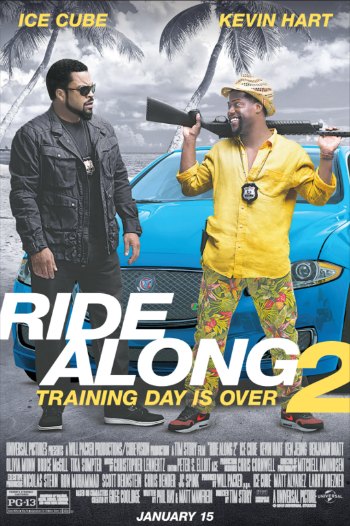
Cleaning Out The DVR Yet Again #22: Ride Along 2 (dir by Tim Story)


(Lisa recently discovered that she only has about 8 hours of space left on her DVR!  It turns out that she’s been recording movies from July and she just hasn’t gotten around to watching and reviewing them yet.  So, once again, Lisa is cleaning out her DVR!  She is going to try to watch and review 52 movies by the end of Sunday, December 4th!  Will she make it?  Keep checking the site to find out!)

ride_along_2_poster

A friend of mine recently posted this on Facebook: “Name your vagina by using the last movie you watched!”  While everyone else was able to answer with “The Nightmare Before Christmas,” “Christmas Vacation,” and “Zombeavers,” I was forced to answer “Ride Along 2,” because I watched it last night.  If only I had held off on watching Ride Along 2, I could have answered Moana.

Oh well…

ANYWAY — I recorded Ride Along 2 off of HBO on November 11th.  The main reason that I recorded it was because, at the time, I was panicking over the fact that the year is nearly over and there’s still a lot of 2016 releases that I haven’t seen.  You know me.  I’m a cinema completist and I like to see everything.  As a result, I’ve been recording every single 2016 movie that I come across on cable, even if the film in question is one that I really didn’t have much interest in actually watching.

Like this one for instance…

Ride Along 2 is the latest entry in the ever-growing Ken Jeong Gets Kidnapped genre of action comedies.  At some point in the future, film historians will wonder why Ken Jeong was always either getting abducted or arrested in violent comedies.  I imagine that they’ll devote most of their time to studying The Hangover films and Community but they’ll still find some time to consider Ride Along 2.

In Ride Along 2, Ken Jeong is abducted by two Atlanta detectives who have come to Miami to investigate his boss, murderous drug lord Antonio Pope (Benjamin Bratt).  The two detectives are James Payton (Ice Cube) and his future brother-in-law, Ben Barber (Kevin Hart).  Of course, it’s really not important that one of them is named Payton or that the other one is named Ben.  Ultimately, they are Ice Cube and Kevin Hart.  Payton is tough and no-nonsense.  Ben is short and outspoken and given to histrionics.  Needless to say, the plot is mostly just an excuse for Kevin Hart to get on Ice Cube’s nerves.

And it’s all pretty predictable.  There’s really nothing in Ride Along 2 that you haven’t already seen in a hundred other action comedies, including the first Ride Along.  So, how much you enjoy this film is going to depend on how much you like Ice Cube, Kevin Hart, and Ken Jeong.  (And I guess it might help if you’re a Benjamin Bratt fan as well.  Are there Benjamin Bratt fans?)  And, I will say this.  Nobody glowers with quite the skill of Ice Cube.  Ken Jeong may play the same role a hundred times but he knows what he’s doing.  And Kevin Hart is actually a good actor, even if his films rarely give him a chance to show the full depth of his ability.

Ride Along 2 is predictable and kinda forgettable.  It didn’t do much for me.  But, at the same time, it’s thoroughly nonpretentious and totally inoffensive.

I still think Moana is a better name, though…

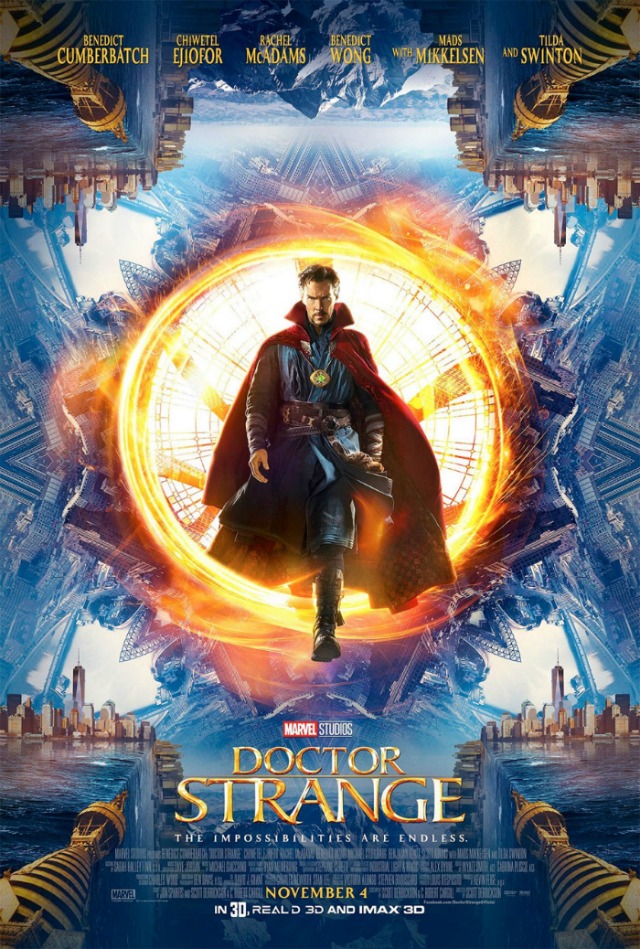
Doctor Strange Trailer Arrives At SDCC 2016


Doctor Strange

San Diego Comic-Con for the past decade has always been a major mainstay for Marvel Studios when it comes to releasing their latest news and trailer for their upcoming films. There has been rumors the last couple years that Marvel Studios may skip Comic-Con and it’s venerable Hall H altogether in the near-future. Marvel Studios being owned by Disney means they have access to their parent company’s own D23 event. There’s even talk of just having a yearly Marvel Con to showcase everything Marvel.

Until that occurs many who attend San Diego Comic-Con will stand hours (some even days) to be able to get into Hall H and be the first to see what Marvel Studios has up it’s sleeves. This year we get the latest trailer on their biggest gamble to date: Doctor Strange.

A gamble in that it will delve deeply into the one aspect of the Marvel Universe it has so far avoided: magic.

One cannot make a film about Doctor Strange and not portray the magic and sorcery, the otherworldly dimensions and demons, spells and illusions. This is the bread and butter of the Sorcerer Supreme and if this latest trailer is any indication then filmmaker Scott Derrickson may have just broken the code in how to integrate this aspect of the Marvel Universe into the grounded, albeit hyper-reality, of the Marvel Cinematic Universe.

Doctor Strange arrives this November 4, 2016.

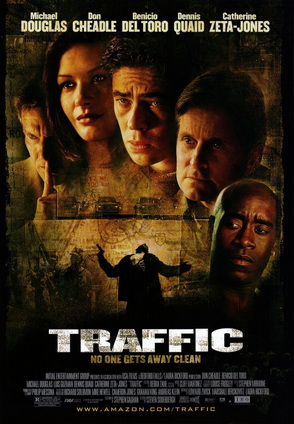
Shattered Politics #69: Traffic (dir by Steven Soderbergh)


Traffic2000Poster

I have mixed feelings about Steven Soderbergh.  On the one hand, his talent cannot be denied and you have to respect the fact that he’s willing to take chances and make films like The Girlfriend Experience and The Informant.  On the other hand, he’s also the director who has been responsible for overrated messes like Contagion and utter pretentious disasters like Haywire.  And it doesn’t help that Soderbergh’s fanbase seems to be largely made up of the type of hipsters who end up leaving comments under the articles at The A.V. Club.  Some people mourned Soderbergh’s retirement.  Personally, I think he made the right decision.  He retired before his misfires ended up outnumbering all of his masterpieces.

The thing about Soderbergh is that his good films are so good that it makes it all the more frustrating to watch his failures.  If Soderbergh was just your typical bad director than a film like Contagion wouldn’t be as annoying.  But this is the man who also gave us Traffic!

And Traffic is a very good film.

First released in 2000, Traffic attempted to deal with the American war on drugs, a war that the film suggests might not even be worth fighting.  (Full disclosure: I support the legalization of drugs and, for that matter, just about everything else.  And yes, I am biased towards films that agree with me.  So is every other film critic out there.  The difference is that I’m willing to admit it.)  Traffic won four Oscars, including Best Director and Best Supporting Actor for Benicio Del Toro.  It was also nominated for best picture but lost to Gladiator.

Traffic tells three, barely connected stories.  Each story is given its own distinct look, feel, and color scheme.  And while it takes a few minutes to get used to film’s visual scheme, it ultimately works quite well.  Though all of the film’s characters share the same general existence, they live in different worlds.  The only thing linking them together is drugs.

Judge Andrew Wakefield (Michael Douglas) is a judge on the Ohio Supreme Court who has recently been named as the new drug czar.  However, while Judge Wakefield is going around the country and talking to politicians (Harry Reid shows up playing himself and is just as creepy as always), his daughter Caroline (Erika Christensen) is dating Seth (Topher Grace) and getting addicted to cocaine and heroin.  When Caroline run away, Judge Wakefield recruits Seth and, using him as a guide, searches the ghetto for his daughter.

The Wakefield scenes are bathed in cold and somber blues.  They’re beautiful to look at but, in some ways, they’re also some of the weakest in the film.  The whole plotline of Caroline going from being an innocent honor’s student to being a prostitute who sells her body for heroin feels a lot like the notorious anti-drug film Go Ask Alice.  At the same time, it’s interesting and a little fun to see Topher Grace playing such a little jerk.  Grace gets some of the best lines in the film, especially when he attacks Wakefield’s feelings of smug superiority.

In the film’s second storyline, two DEA Agents (Don Cheadle and Luis Guzman) arrest drug trafficker Eddie Ruiz (Miguel Ferrer).  Eddie works for the Ayala syndicate and, once he’s arrested, he turns informant.  Drug lord Carlos Ayala (Steven Bauer) is arrested.  While Carlos sits on trial, his pregnant wife (Catherine Zeta-Jones) and his sleazy business associate (Dennis Quaid) struggle to hold together the business and find a way to kill Ruiz before he can testify.

This storyline is filmed in bright and vibrant colors and why not?  The Ayalas are rich and, unlike the Wakefields, they don’t feel the need to hide their material wealth.  This is actually probably my favorite storyline, largely because it’s the best acted and the most entertaining.  Miguel Ferrer, in particular, steals every scene that he’s in.  The scene where he explains the economics of being a drug trafficker is fascinating to watch.

The Ayala storyline may be my favorite but the film’s most thought-provoking storyline is the third one.  Taking place in Mexico, it stars Benicio Del Toro as Javier Rodriguez, a casually corrupt police officer who gets recruited to work for General Salazar (Tomas Milian), who is heading up Mexico’s war on the cartels.  Following the orders of Salazar, Javier captures assassin Frankie Flowers (Clifton Collins, Jr.) who is then savagely tortured by Salazar until he turns informer.  Javier comes to realize that Salazar is actually working for one of Mexico’s cartels.  When he decides to inform on Salazar, he puts his own life at risk.

The Mexico storyline is also the harshest and visually, it reflects that fact.  The heat literally seems to be rising up from the desert and the streets of Tijuana.  It takes a few minutes to adjust to the look of the Mexico scenes but, once you do, they become enthralling.

And Traffic, as a film, is undeniably enthralling as well.  Soderbergh deftly juggles the multiple storylines and brings them together to create a portrait of a society that’s being destroyed by the efforts to save it.  Hopefully, if Soderbergh ever does come out of retirement, he’ll give us more films like Traffic and less films like Contagion.