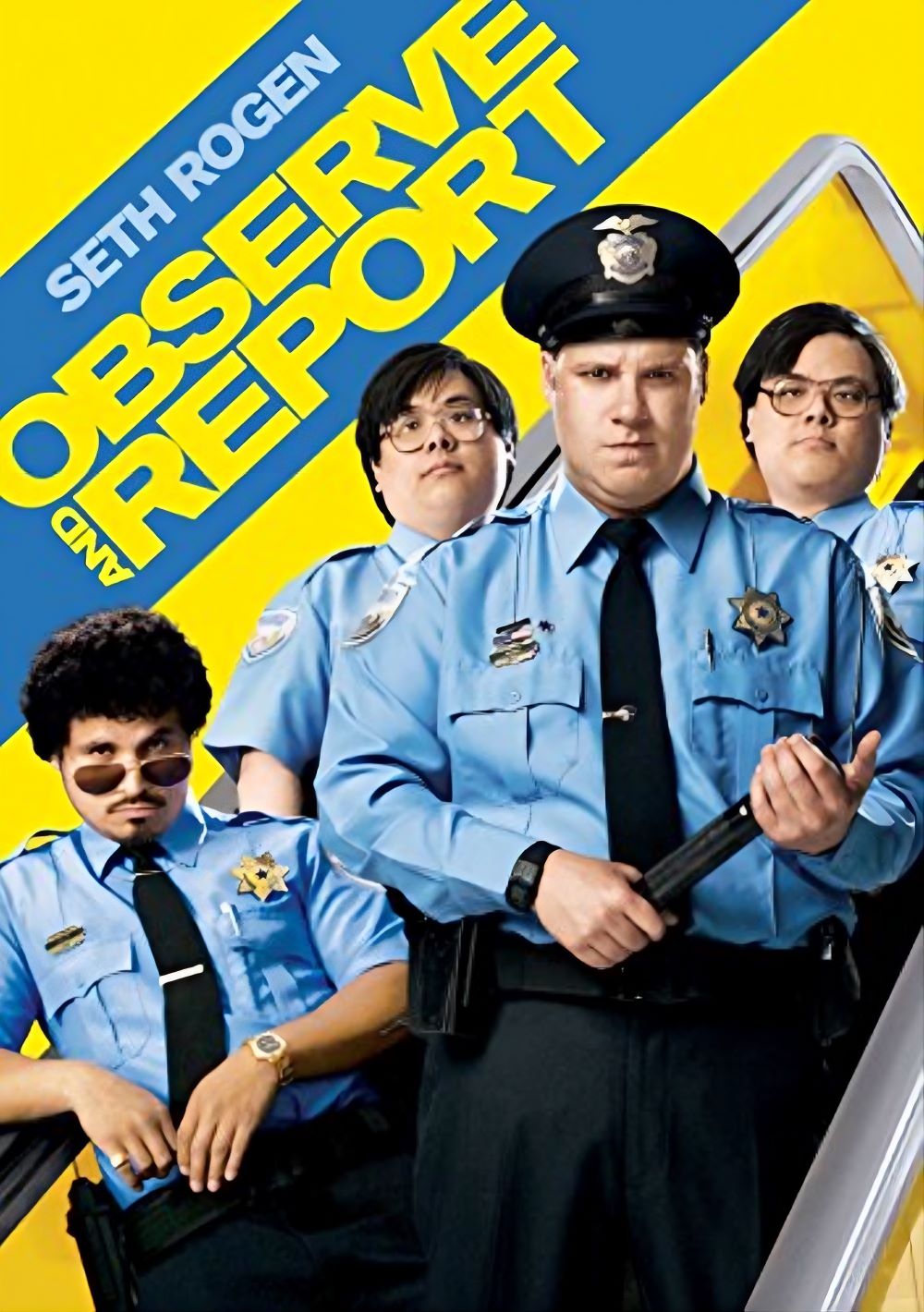
Review: Observe and Report (dir. by Jody Hill)


“I’m not a good person. I’m not a bad person. I’m just not a person that things happen to.” — Ronnie Barnhardt

There’s a specific kind of whiplash that comes from watching Observe & Report, Jody Hill’s 2009 dark comedy about a bipolar mall cop named Ronnie Barnhardt. On its surface, the film invites comparisons to Paul Blart: Mall Cop, which came out the same year, but that’s like comparing a punch to the gut with a tickle fight. Where Paul Blart plays it safe with slapstick and heart, Observe & Report dives headfirst into uncomfortable, ugly, and strangely profound territory. This is not a movie for everyone, and that’s precisely why it has earned a cult following over the years. It’s a film that hides a serious character study inside a dirty joke, and depending on your mood, it’s either a misunderstood masterpiece or a mean-spirited mess. Honestly, it’s a bit of both.

The plot, such as it is, follows Ronnie (played with terrifying commitment by Seth Rogen), the head security guard at the Forest Ridge Mall. Ronnie sees himself as a warrior-poet of law enforcement, constantly vying for the respect he feels he deserves from the local police, specifically the smug Detective Harrison (Ray Liotta). When a flasher starts terrorizing the mall, Ronnie sees his chance to prove his worth. But the film is less about catching the pervert and more about Ronnie’s slow, volatile unraveling. He pops antipsychotic meds, lives with his alcoholic mother (Celia Weston), and harbors a delusional crush on a makeup counter girl named Brandi (Anna Faris), who is openly using him. It’s a recipe for a tragedy, but Hill frames it as a comedy so deadpan and abrasive that you’re never quite sure when you’re allowed to laugh.

Let’s talk about performance, because Rogen does something here that he’s rarely done before or since. He sheds the lovable stoner schtick entirely. Ronnie is not charming. He’s awkward, prone to violent outbursts, and genuinely frightening in his conviction. When he goes off his medication, the film shifts from quirky indie comedy to something closer to Taxi Driver. Rogen plays Ronnie with a straight-backed, chest-out posture that suggests a man holding himself together with duct tape and delusion. There’s a scene where he interrogates a group of teenagers—pulling one kid’s pants down and pepper-spraying another—that is so uncomfortably realistic in its abuse of authority that you might wince instead of chuckle. That’s the point. Hill isn’t interested in making Ronnie a hero. He’s interested in the gap between how Ronnie sees himself (a lone crusader for justice) and how the world sees him (a dangerous liability).

The supporting cast deserves a shout-out here. Anna Faris is pitch-perfect as Brandi, a shallow, cocaine-snorting mess who treats Ronnie’s affection as a minor inconvenience. She never plays for sympathy, which makes her character brutally honest. And it’s in her most uncomfortable scene with Ronnie that the film’s entire thesis snaps into focus. Without spoiling exactly what happens, Brandi invites Ronnie to her apartment after a long night of drinking and using. For a brief, hopeful moment, the film seems to be offering him a genuine connection. But Brandi is too self-absorbed to notice Ronnie’s desperate, medication-starved sincerity, and Ronnie himself misreads every signal she doesn’t bother to send. What unfolds is a hollow, mechanical act that Ronnie mistakes for intimacy and Brandi barely registers as an inconvenience. The scene is shot flatly—no music, no punchline, just the awful silence of two broken people failing to see each other. Ronnie sees a fantasy of Brandi that doesn’t exist. Brandi sees a tool she can use and discard. It’s a car crash you know you shouldn’t slow down for, but you do anyway, and when you get close enough to see the human damage, the film refuses to let you look away. That moment is emblematic of Observe & Report as a whole: it dares you to laugh, then makes you feel gross for even considering it. Most dark comedies use shock for a quick gag. Hill uses it as a mirror.

Michael Peña shows up as Ronnie’s loyal but dim partner Dennis, providing the film’s few genuine moments of warmth. And then there’s Ray Liotta, practically playing a parody of his Goodfellas persona, but in a way that underscores the film’s central irony: the real cops are just as arrogant and flawed as Ronnie, but they have badges, so it’s allowed. Liotta’s Detective Harrison isn’t a hero; he’s just a bully with better legal standing.

From a craft perspective, Observe & Report is deceptively smart. Jody Hill, who came from the brilliant but uncomfortable HBO show Eastbound & Down, directs with a strange kind of sincerity. The mall is shot like a battlefield or a Western town, all wide angles and lonely corridors. There’s a scene where Ronnie imagines a slow-motion shootout set to a cover of “Rocket Man,” and it’s both hilarious and deeply sad. Hill uses music ironically but not cruelly. The film’s climax, which I won’t spoil, involves a literal parking lot confrontation that descends into shocking, bloody violence—and then immediately undercuts it with a joke so tasteless it almost works as social commentary. This is where the film splits audiences. Some see a juvenile attempt to shock. Others see a pointed satire of vigilantism and the American male ego.

The biggest critique of Observe & Report is its tonal chaos. The movie can’t decide if you’re supposed to laugh at Ronnie’s mental illness or cry for him. In one scene, he’s horrifically mean to a genuinely kind love interest (played by Collette Wolfe). In the next, he’s delivering a surprisingly vulnerable monologue about being a “security guard for his own heart.” The Brandi apartment scene sits right at the center of this chaos, a perfect little engine of discomfort that powers everything around it. If you walk in expecting a stoner comedy, that scene will leave you unsettled. If you walk in expecting a gritty character study, the dick jokes and mall-cop absurdity surrounding it will feel out of place. That’s the point. The film deliberately rubs its contradictions in your face, and the Brandi scene is where those contradictions burn hottest.

That said, the film’s final act is where it earns its cult status. Without giving too much away, Ronnie essentially achieves his goal—but the victory is hollow, pointless, and tinged with tragedy. The very last shot is a freeze frame that asks you to reconsider everything you’ve just watched, including that awful night in Brandi’s apartment. Is Ronnie a hero? A monster? A pathetic man who got lucky? Hill refuses to label him, which is rare in mainstream American cinema. Most movies would either punish or redeem a character like this. Observe & Report simply watches him continue, the same broken person he always was, now with a slight bump in self-esteem. That’s either a brilliant subversion of the “loser succeeds” trope or a cop-out. I lean toward brilliant, but I wouldn’t argue with someone who hated it.

So, final verdict? Observe & Report is not a film I can recommend easily. If you need your comedies to be warm, predictable, or morally clear, stay far away. But if you’re interested in a movie that uses the mall-cop setup to ask uncomfortable questions about masculinity, mental health, and the thin line between community guardian and domestic terrorist, this is a fascinating artifact. It’s messy, mean, and occasionally transcendent. Seth Rogen has never been braver, and Jody Hill has never been more himself. Just don’t watch it back-to-back with Paul Blart unless you want emotional whiplash. This is the dark, spiky, unapologetic alternative—the film that says the quiet part out loud, then laughs at you for being surprised. For better or worse, you won’t forget it.

Review: Identity (dir. by James Mangold)


“As I was going up the stairs, I met a man who wasn’t there. He wasn’t there again today. I wish, I wish he’d go away.” — Malcolm Rivers

There’s a certain kind of movie that thrives on a rainy Sunday afternoon or a late-night cable scroll—something pulpy, clever, and self-contained, with a cast that makes you sit up a little straighter. James Mangold’s Identity from 2003 is exactly that breed of thriller. It’s not trying to reinvent the wheel, but it’s having a damn good time spinning it through mud, rain, and a whole lot of psychological fog. On the surface, Identity is a slasher-adjacent whodunit set in a deserted Nevada motel during a biblical storm, and it wears its debt to Agatha Christie’s And Then There Were None like a bloodstained badge of honor. That classic novel—where strangers are lured to an isolated island and picked off one by one according to a nursery rhyme—provides the blueprint. Mangold swaps the island for a rundown motel, the nursery rhyme for room keys, and adds a thick layer of rainy noir atmosphere. But underneath the jump scares and dripping dread, Identity is also a sly, shaggy-dog meditation on identity, trauma, and the stories we tell ourselves to survive. Mangold, who’d go on to direct Walk the Line and Logan, shows his genre dexterity here—he treats the material with just enough seriousness to keep you invested, but not so much that you can’t laugh at the absurdity when the twist finally snaps into place.

The setup is classic Christie with a tar pit of dread. A motley crew of strangers gets stranded at a rundown motel when a flash flood washes out the roads, just as the guests in And Then There Were None find themselves cut off from civilization. There’s a former cop turned limo driver (John Cusack), a has-been actress (Rebecca De Mornay), a newlywed couple, a cop escorting a prisoner, a nervous motel manager, a prostitute with a heart of gold (Amanda Peet), and a few others who might as well have target silhouettes painted on their backs. The storm rages, the power flickers, and one by one, they start turning up dead. The killer leaves behind clues—room keys, specifically—and the survivors realize the bodies are being dropped in the order of the motel’s room numbers. It’s a wonderfully cheap gimmick that works because the film leans into its own artificiality. The rain never stops. The Nevada landscape is featureless and black. The motel feels less like a real place and more like a diorama in a psychiatrist’s office. Which, as it turns out, is almost exactly what it is.

Now, here’s where the review has to carefully step around spoilers, because Identity lives and dies on its midpoint rug-pull. But seeing as the movie is over twenty years old, a gentle acknowledgment is fair: the motel carnage is intercut with scenes of a criminal psychologist (Alfred Molina) arguing with a judge during a late-night hearing about a convicted serial killer’s sanity. That killer, Malcolm Rivers, is awaiting execution, and the defense is presenting new diary evidence. You don’t have to be a detective to start connecting dots. Mangold and screenwriter Michael Cooney aren’t interested in subtlety; they want you to squirm as the two storylines begin to converge. The motel guests, we gradually realize, are not random travelers. They are fractured pieces of a single damaged psyche—personalities inside Rivers’ mind, duking it out for survival as his body faces a real-world lethal injection. The killer in the motel isn’t a man in a mask; it’s the most malevolent alter among them, systematically erasing the others. Where Christie’s novel uses a hidden murderer working through a fixed list, Identity twists that formula by making the setting itself a psychological construct.

On a technical level, Identity is a masterclass in low-budget atmosphere. Phedon Papamichael’s cinematography drenches every frame in gray-blue gloom, and the sound design makes every creak and drip sound like a gunshot. Mangold directs the ensemble with a steady hand, and the cast clearly knows what movie they’re in. Cusack brings his usual blue-collar soulfulness to Ed, the ex-cop with a guilty conscience. Ray Liotta, as the suspicious cop, chews scenery in the best way—he’s all twitchy aggression and bad intentions. But the real standout is Amanda Peet as Paris, a call girl who just wants to start over on a Florida orange farm. She’s smarter and tougher than the archetype usually allows, and her final scene in the motel’s office carries an unexpected tenderness. That’s the trick of Identity: it makes you care about figments. For a good hour, you’re genuinely invested in whether the newlyweds survive or if the motel manager will finally clean that damn room 6.

Where the movie loses some people is in the execution of its twist. When the narrative finally snaps from the motel to the real-world courtroom, there’s a jarring shift that feels almost like a different film. The last fifteen minutes become a race to explain the rules of this shared-mind universe, and here the logic gets wobbly. How exactly does a personality “die” inside a system? Why does the motel order matter? And without giving too much away, the film’s famous final reveal—which involves a third-act twist on the twist—pushes credibility to the breaking point. Some viewers will throw their hands up and groan. Others will grin and applaud the audacity. I land somewhere in the middle. On one hand, the final image is genuinely chilling, a perfect little joke about evil’s persistence. On the other hand, the film spends so much time setting up the motel’s internal rules that it forgets to make the real-world stakes feel as urgent.

Still, Identity works best if you don’t overthink it. Think of it as a B-movie with an A-movie haircut, or as And Then There Were None filtered through a late-night cable dream about multiple personality disorder. Mangold directs the violence with a knowing wink—there are no gratuitous gore shots, just quick, sharp cuts and clever misdirection. One death involving a baseball bat and a laundry machine is as goofy as it is brutal, and that tonal tightrope is hard to walk. The film also has a sneaky thematic resonance beneath the pulp. At its heart, Identity asks whether people can truly change. Every character is trapped not just by the storm, but by their own backstory: the cop who failed a case, the actress past her prime, the prostitute who dreams of orange groves. In the motel of the mind, these backstories are just narratives the personality uses to justify itself. When Paris pleads, “I get to start over,” she’s speaking for anyone who’s ever wished they could delete a bad version of themselves. The film’s bleak final twist suggests that some stories are stronger than we think—the ones we tell ourselves about who we are, and who we’ve always been.

For a thriller that runs just over ninety minutes, Identity has surprising legs. It’s not a masterpiece, but it’s a tight, well-oiled machine of suspense with a gimmick that still feels fresh if you haven’t been spoiled. The dialogue crackles with noir-lite attitude, and the pacing never sags—once the bodies start dropping around the twenty-minute mark, you’re locked in. The biggest flaw is that the movie is so proud of its puzzle-box structure that it forgets to breathe between twists. You never get a quiet moment to sit with the characters as real people because, well, they’re not real people. But that’s also the point. Identity is a movie about a metaphor, and like most metaphors, it works until you poke it too hard. If you’re looking for a rainy-night thrill ride with a cast that commits to the bit and a final shot that’ll stick in your brain like a bad dream, check in. Just maybe avoid room 6.

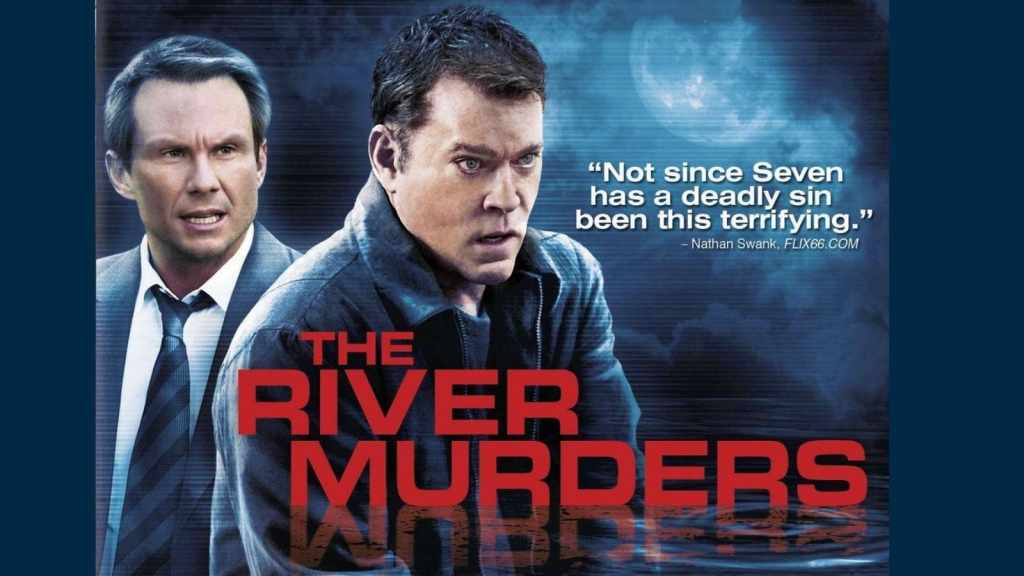
#MondayMuggers presents THE RIVER MURDERS (2011) starring Ray Liotta, Ving Rhames & Christian Slater!


Every Monday night at 9:00 Central Time, my wife Sierra and I host a “Live Movie Tweet” event on X using the hashtag #MondayMuggers. We rotate movie picks each week, and our tastes are quite different. Tonight, Monday April 28th, Sierra has chosen THE RIVER MURDERS (2011) starring Ray Liotta, Ving Rhames, Christian Slater, and Raymond J. Barry. 

The plot revolves around a homicide detective (Liotta) who becomes the prime suspect in a series of murders when the FBI uncovers his close personal ties to all of the victims.

This sounds pretty good to me, so join us tonight for #MondayMuggers and watch THE RIVER MURDERS! It’s on Amazon Prime. The trailer is included below:

Love on the Shattered Lens: Something Wild (dir by Jonathan Demme)


1986’s Something Wild opens with Charlie Driggs (Jeff Daniels) eating lunch in a New York diner.

Charlie is a stockbroker.  He wears a suit.  He’s quiet and mild-mannered.  He just got a promotion at work.  He carries a picture of his kids in his wallet.  Everything about Charlie shouts that he’s a nice guy who is extremely conventional in his outlook and behavior.  But then, Charlie sneaks out of the diner without paying and is spotted by a woman (Melanie Griffith) who says that her name is Lulu.

Dressed in black and with a brunette bob that makes her look like Louis Brooks (and which is later revealed to be a wig), Lulu chases after Charlie.  She offers him a ride back to his job, downtown.  However, when Charlie gets in the car, Lulu instead speeds off towards New Jersey.  Lulu grabs Charlie beeper and throws it away.  (I guess that was the 80s equivalent of stealing someone’s phone.)  She stops off at a liquor store and robs the place while Charlie unknowingly waits out in the car.  She takes him to a motel and, after handcuffing to the bed, has sex with him and calls his office….

And then the film takes an unexpected turn.  What started out as one of those NSFW stories that occasionally cropped up on Internet message boards suddenly turns into a quirky slice of Americana.  Lulu and Charlie head to Pennsylvania for Lulu’s high school reunion.  Lulu reveals that her real name is Audrey and she’s actually blonde.  Audrey introduces Charlie to her family as being her husband and Charlie plays along with her.  At the reunion, Charlie turns out to be just as skillful a liar as Audrey.  But there’s nothing particularly mean-spirited about their lies.  Audrey wanted to be able to brag about having a wonderful husband at her reunion and Charlie, whose wife left him for a dentist, wanted to pretend that he was still married and still a regular part of his children’s lives.  The reunion itself is a masterful set piece, one in which director Jonathan Demme balances his trademark quirky humor with a genuine love for small town American.  With the old school bands playing in front of an American flag, Demme transforms the reunion into a metaphor for everything good about this country.  It’s a place where two lonely people can find each other.  The weekend may have started out like a middle-aged man’s fantasy but Charlie finds himself falling in love with the real Audrey.  It’s very sweet and humorous and it makes you feel good about life in general….

And then Ray shows up and the film takes another unexpected turn.  Played by Ray Liotta, Ray is Audrey’s ex-husband.  He’s a charmer, as one might expect from a character played by a young Ray Liotta.  Ray is friendly with Charlie, telling him stories about how wild Audrey was in high school.  It’s only as the night progresses that it becomes obvious that Ray is a sadistic sociopath and he wants Audrey back.

The violence in the film’s second half is a bit jarring.  After the good-natured, screwball comedy of the film’s first 50 minutes, it’s shocking to suddenly see Ray pistol-whipping a clerk and then breaking Charlie’s nose.  At the same time, meeting Ray allows us to know what it was that attracted Audrey to Charlie.  Charlie is the opposite of Ray, a good man who truly cares about other people.  Ray is the type of bad boy who is very attractive when you don’t know any better.  Charlie is the guy who seems conventional but, underneath it all, turns out to be something wild as well.

Directed by Jonathan Demme, Something Wild has a good eye for the quirkiness of America.  It portrays the world out of New York with love and none of the condescension that tends to show up in so many other road trip movies.  Daniels, Griffith, and the much-missed Ray Liotta all gives performance that take the viewer by surprise.  None of them are who we originally assume them to be and Griffith’s deconstruction of the type of character who would later be termed a “manic pixie dream girl” is probably her best and most honest performance.  Even Ray, for all his violent tendencies, has moments of humanity.  Something Wild is a celebration of life, rebellion, and love.  Like Charlie and Audrey, it’s more than worth taking a chance on.

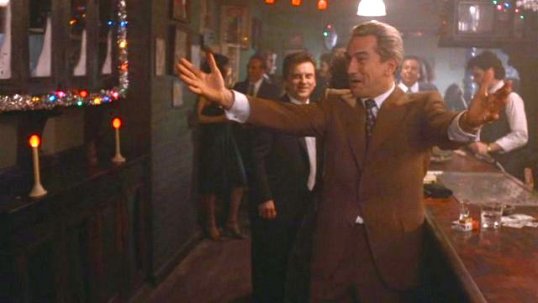
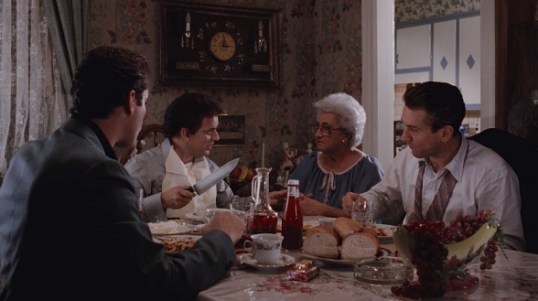
Scenes I Love: How is Tommy DeVito funny from Goodfellas


In honor of Joe Pesci’s birthday, today’s scene that I love comes from 1990’s Goodfellas.  This iconic scene was largely improvised by Joe Pesci and Ray Liotta.  Reportedly, Pesci based the scene on an actual incident that he observed.

It’s also interesting to note that Tommy’s comment of “you might fold under pressure” turns out to be true.

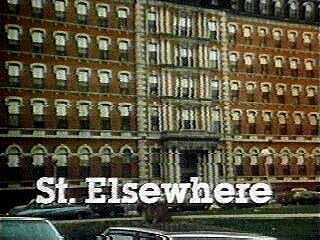
Retro Television Review: St. Elsewhere 1.9 “Rain”


Welcome to Retro Television Reviews, a feature where we review some of our favorite and least favorite shows of the past! On Fridays, I will be reviewing St. Elsewhere, a medical show which ran on NBC from 1982 to 1988.  The show can be found on Hulu and, for purchase, on Prime!

This week, a famous face shows up in the ER!

Episode 1.9 “Rain”

(Dir by Victor Hsu, originally aired on January 3rd, 1983)

Last night, after writing my review of Goodfellas, I watched the ninth episode of St. Elsewhere and there was Ray Liotta!

Liotta played Murray, a young man who came into the ER with a deep cut on his back.  Orderly Luther took one look at him and decided that he was a member of the same gang who mugged Fiscus a few episodes ago.  Luther then told Fiscus right before Fiscus was due to stitch Murray up.  Murray was indeed rude but Fiscus wasn’t particularly polite to him.  Fiscus didn’t stich up Murray’s wound but he did pull his gun on him.  Murray fled the ER and, after knocking over several doctors who were in his way, he jumped out of a window and escaped from St. Eligius.

As for Fiscus, he got a stern talking to from Dr. Westphall.  Westphall ordered Fiscus to get rid of the gun and told him that if he ever brought a weapon to work again, his residency would come to an end.  Fiscus agreed to not bring the gun to the ER anymore but he later told Dr. Chandler that he was terrified for his life.  I’ve been critical of Howie Mandel’s performance on this show but he actually did a pretty good job in this episode.  He was able to hold his own while sharing the screen with Denzel Washington.  That’s quite an accomplishment.

While Dr. Westphall yelled at Fiscus, Dr. Craig yelled at Ehrlich for spraining his pinkie while playing handball.  Dr. Craig demands to know how Ehrlich will ever make it as a surgeon if he doesn’t protect his hands.  Ehrlich spends the entire day trying to protect his hands and he continually fails.  (Ehrlich’s a bit of a klutz.)  Finally, Ehrlich storms into Craig’s office and interrupts a meeting to announce that he’s going to continue to play handball.  Craig shrugs and dismissively says, “He’s from California.”

As for the rest of this episode, it took place over one very long and rainy day.  Peter is still struggling as both a doctor and a husband.  When his daughter (a very young Candace Cameron Bure) was rushed to the hospital after eating mothballs, Peter blamed his wife and his wife blamed Peter.  Returning home from the hospital, Peter nearly hit his wife after she tossed his dinner on the floor.  It was scary to watch.  I’m getting a bad feeling about what’s going to happen with this marriage.

Dr. Morrison made the mistake of making a house call and soon, he discovered himself constantly being called by Mr. Lukovic (George Morfogen) whenever any of Lukovic’s neighbors were taken ill.  Morrison kept telling Lukovic to take his friends to the hospital but Lukovic talked about how, in the past, doctors would always make house calls.  When Morrison finally refused to go to Lukovic’s building, Lukovic brought his neighbor to the hospital.  The neighbor was in cardiac arrest but Morrison managed to get his heart beating again.  Rather than be thankful, Lukovic blamed Morrison for not responding to his call.  Morrison lost his temper and told Lukovic that he couldn’t keep living in the past.  “I will not call you again,” Lukovic replied.  Roll the end credits!

This was a pretty good episode, one that not only answered the question of why doctors don’t make housecalls but also which featured Ray Liotta being tough and dangerous.  There were a few annoying scenes involving the guy who thinks that he’s a bird but otherwise, this was a well-done and rainy hour.

Lisa Marie Reviews An Oscar Nominee: Goodfellas (dir by Martin Scorsese)


First released in 1990 and continuously acclaimed ever since, Goodfellas did not win the Oscar for Best Picture.

I’m always a bit surprised whenever I remember that.  Goodfellas didn’t win Best Picture?  That just doesn’t seem right.  It’s not the other films nominated that year were bad but Goodfellas was so brilliant that it’s hard to imagine someone actually voting for something else.  Seriously, it’s hard to think of a film that has been more influential than Goodfellas.  Every gangster film with a soundtrack of kitschy tunes from the 6os and 70s owes huge debt to Goodfellas.  Every actor who has ever been cast as a wild and out-of-control psycho gangster owes a debt to Joe Pesci’s performance as Tommy DeVito.  When Ray Liotta passed away two years ago, we all immediately heard him saying, “I always wanted to be a gangster.”  Robert De Niro’s Jimmy Conway remains the epitome of the ruthless gangster.  For many, Paul Sorvino’s neighborhood godfather redefined what it meant to be a crime boss.  Lorraine Bracco made such an impression as Karen Hill that it somehow seemed appropriate that she was one of the first people cast in The Sopranos, a show that itself would probably have not existed if not for Goodfellas.  Frank Sivero, Samuel L. Jackson, Tobin Bell, Debi Mazer, Vincent Gallo, Ileana Douglas, Frank Vincent, Tony Sirico, Michael Imperioli, Tony Darrow, Mike Starr, Chuck Low, all of them can be seen in Goodfellas.  It’s a film that many still consider to be the best of Martin Scorsese’s legendary career.  Who can forget Robert De Niro smoking that cigarette while Sunshine of Your Love blared on the soundtrack?  Who can forget “Maury’s wigs don’t come off!” or “Rossi, you are nothing but whore!?”  Who can forget the cheery Christmas music playing in the background while De Niro’s Jimmy Conway grows more and more paranoid after pulling off the biggest heist of his career?

Plus, it’s a Christmas movie!

And yet, it did not win Best Picture.

Myself, whenever I’m sitting behind a garbage truck in traffic, I immediately start to hear the piano coda from Layla.  For that matter, whenever I see a helicopter in the sky, I flash back to a coke-addled Henry Hill getting paranoid as he tries to pick up his brother from the hospital.  Whenever I see someone walking across the street in the suburbs, I remember the scene where Henry coolly pistol-whips the country club guy and then tells Karen to hide his gun.  I always remember Karen saying that she knows that many of her best friends would have run off as soon as their boyfriend gave them a gun to hide but “it turned me on.”  It would have turned me on as well.  Henry might be a gangster and his friends might be murderers but he doesn’t make any apologies for who he is, unlike everyone else in the world.

But it did not win Best Picture.

How many people have imitated Joe Pesci saying, “How am I funny?”  How many times did Pesci and Frank Vincent have to listen to people telling them to “go home and get your fucking shinebox?”  A lot of people remember the brutality of the scene where Pesci and De Niro team up to attack Vincent’s crude gangster but I always remember the sound of Donavon’s Atlantis playing on the soundtrack.

And then there’s Catherine Scorsese, showing up as Tommy’s mom and cooking for everyone while Vincent struggles to escape from the trunk of a car.  “He is content to be a jerk,” Tommy says about Henry Hill.  Just a few hours earlier, Tommy was apologizing to Henry for getting blood on his floor.

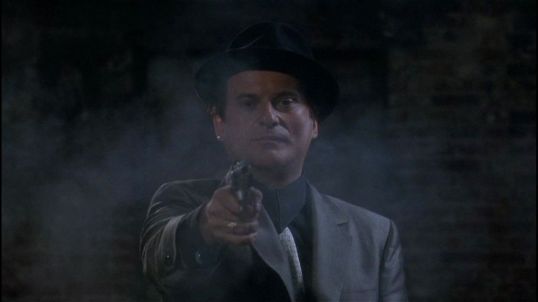
Goodfellas is a fast-paced look at organized crime, spanning from the 50s to the early 80s.  Ray Liotta plays Henry Hill, who goes from idolizing gangsters to being a gangster to ultimately fearing his associates after he gets busted for dealing drugs.  It’s a dizzying film, full of so many classic scenes and lines that it feels almost pointless to try to list them all here or to pretend like whoever is reading this review doesn’t remember the scene where the camera pans through the club and we meet the members of the crew.  (“And then there was Pete The Killer….”)  Goodfellas is a film that spend two hours showing us how much fun being a gangster can be and then thirty minutes showing us just how bad it can get when you’re high on coke, the police are after you, and you’ve recently learned that your associates are willing to kill even their oldest friends.  No matter how many times I watch Goodfellas, I always get very anxious towards the end of the film.  With the music pounding and the camera spinning, with Henry looking for helicopters, and with all of his plans going wrong over the course of one day, it’s almost a relief when Bo Dietl points that gun at Henry’s head and yells at him, revealing that Henry has been captured by the cops and not the Gambinos.  Karen desperately running through the house, flushing drugs and hiding a gun in her underwear, always leaves me unsettled.  It’s such a nice house but now, everything is crashing down.

There’s a tendency to compare Goodfellas to The Godfather, as their both films that re-imagine American history and culture through the lens of the gangster genre.  I think they’re both great but I also think that they are ultimately two very different films.  If The Godfather is sweeping and operatic, Goodfellas is the film that reminds us that gangsters also live in the suburbs and go to cookouts and that their wives take care of the kids and watch movies while the FBI searches their home.  If The Godfather is about the bosses, Goodfellas is about the blue collar soldiers.  The Godfather represents what we wish the Mafia was like while Goodfellas represents the reality.

Goodfellas is one of the greatest films ever made but it lost the Best Picture Oscar to Dances With Wolves, a film that left audiences feeling good as opposed to anxious.  To be honest, Martin Scorsese losing Best Director to Kevin Costner feels like an even bigger injustice than Goodfellas losing Best Picture.  One can understand the desire to reward Dances With Wolves, a film that attempts to correct a decades worth of negative stereotypes about Native Americans.  But Scorsese’s direction was so brilliant that it’s truly a shame that he didn’t win and that Lorraine Bracco didn’t win Best Supporting Actress.  It’s also a shame that Ray Liotta wasn’t nominated for playing Henry Hill.  At least Joe Pesci won an Oscar for redefining what it meant to be a gangster.

Goodfellas is proof that the best film doesn’t always win at the Oscars.  But it’s also proof that a great film doesn’t need an Oscar to be remembered.

Here’s The Trailer For Dangerous Waters


Here’s the trailer for Dangerous Waters, a film about a sailing trip that appears to go terribly wrong.  To be honest, everything about the trailer screams “direct-to-streaming” and I have a feeling that’s how most people will end up seeing the film.  That said, this film also features the final film performance of the great Ray Liotta.  Unfortunately, it appears from the trailer that, much like Cocaine Bear, this is another film the features Ray as a somewhat generic villain.  It’s a shame because Ray Liotta was capable of so much more.

Here’s the trailer for Dangerous Waters!

Film Review: Cocaine Bear (dir by Elizabeth Banks)


Cocaine Bear is the story of a duffel bag full of cocaine and the bear that gets into it.  It’s loosely based on a true story.  I say loosely because, in real life, the bear promptly overdosed and died.  In the film, the bear not only survives eating a bag of cocaine but it also subsequently goes on a coke-fueled rampage.

The film opens in 1985, with a series of anti-drug commercials airing on television and a drug smuggler flying high above Georgia.  The smuggler kicks his shipment of cocaine out of the plane, so that it can later be retrieved from the mountains below.  Unfortunately, for him, he also manages to slip and plummets out of the plane to his death.  A day later, in Georgia’s Chattahoochee–Oconee National Forest, two hikers are debating which band they should hire to play for their wedding when they happen to come across a black bear.  The hikers decide to snap a picture of the bear.  The bear, whose face is coved in cocaine, decides to eat the hikers.

Yep, both the bear and her two adorable cubs have discovered the joys of cocaine.  It would probably be best to close down the park until someone can hold an intervention but, unfortunately, more and more people keep showing up.  For instance, there’s a detective named Bob (Isiah Whitlock, Jr.) who is determined to track down the cocaine and use it to finally take down the St. Louis’s drug kingpin, Syd (Ray Liotta, in his final film role).  Syd, meanwhile, has sent his son Eddie (Alden Ehrenreich) and his employee Daveed (O’Shea Jackson, Jr.) to retrieve the drugs.  Daveed is determined to get the job done while Eddie, who is mourning the death of his wife, just wants to leave the family business behind.  Local criminal Stache (Aaron Holliday) wants to deal the drugs himself but instead ends up bonding with Eddie.  Park ranger Liz (Margo Martindale) wants to pursue her crush on animal inspector Peter (Jesse Tyler Ferguson).  Finally, two kids, Dee Dee (Brooklynn Prince) and Henry (Christian Convery) have skipped school and are lost in the park.  Dee Dee’s mother (Keri Russell) is determined to rescue them and then ground them for the rest of their lives.

Yes, there’s a lot of people in this film.  I haven’t even mentioned Stace’s partners-in-crime or the paramedics who pick an inopportune time to show up.  The majority of the people in this film end up getting ripped apart by the bear and, make no mistake about it, the bear is the true heroine of the film.  All of the actors do well with their roles, though I do wish that Liotta could have ended his career playing something other than just another psycho criminal.  Keri Russell, Margo Martindale, Isiah Whitlock, Jr., and Alden Ehrenreich all deserve a lot of credit for bringing their characters to life.  But the bear is the true star here.  The bear kills a lot of people and most of the deaths are pretty bloody but, at the same time, the bear doesn’t really mean any harm.  It just really likes cocaine and the majority of the people who the bear kills are killed precisely because they either got cocaine on their clothes (or face) or they allowed themselves to become a part of the cocaine trade.  The bear ultimately becomes a satirical representation of every anti-drug commercial that has ever aired.  If you’re not worried about overdosing, how do you feel about getting torn apart by a bear?  Not so much fun being a rebel now, is it?

Cocaine Bear is an admittedly dark comedy, one in which almost all of the human characters have at least one bizarre quirk to make them memorable.  Usually, I’m not a huge fan of gory comedies but the humor in Cocaine Bear has an appealingly weird edge to it.  Eddie, Stache, and an annoyed Daveed playing twenty questions while looking for a duffel bag full of drugs is amusing but it becomes hilarious when combined with scenes of the bear joyfully finding more cocaine.  As well, Henry and Dee Dee’s reaction to finding a brick of cocaine is every parent’s nightmare but also one to which everyone should be able to relate and maybe even chuckle at.  I laughed, even as I thought, “OH MY GOD, DON’T DO THAT!”

Finally, in a time when so many movies are full of unnecessary padding, Cocaine Bear deserves a lot of credit for telling its story in 90 quickly placed minutes.  The film doesn’t waste any time getting to the point and it doesn’t overstay its welcome.  A lot of filmmakers could learn a lesson from Cocaine Bear.