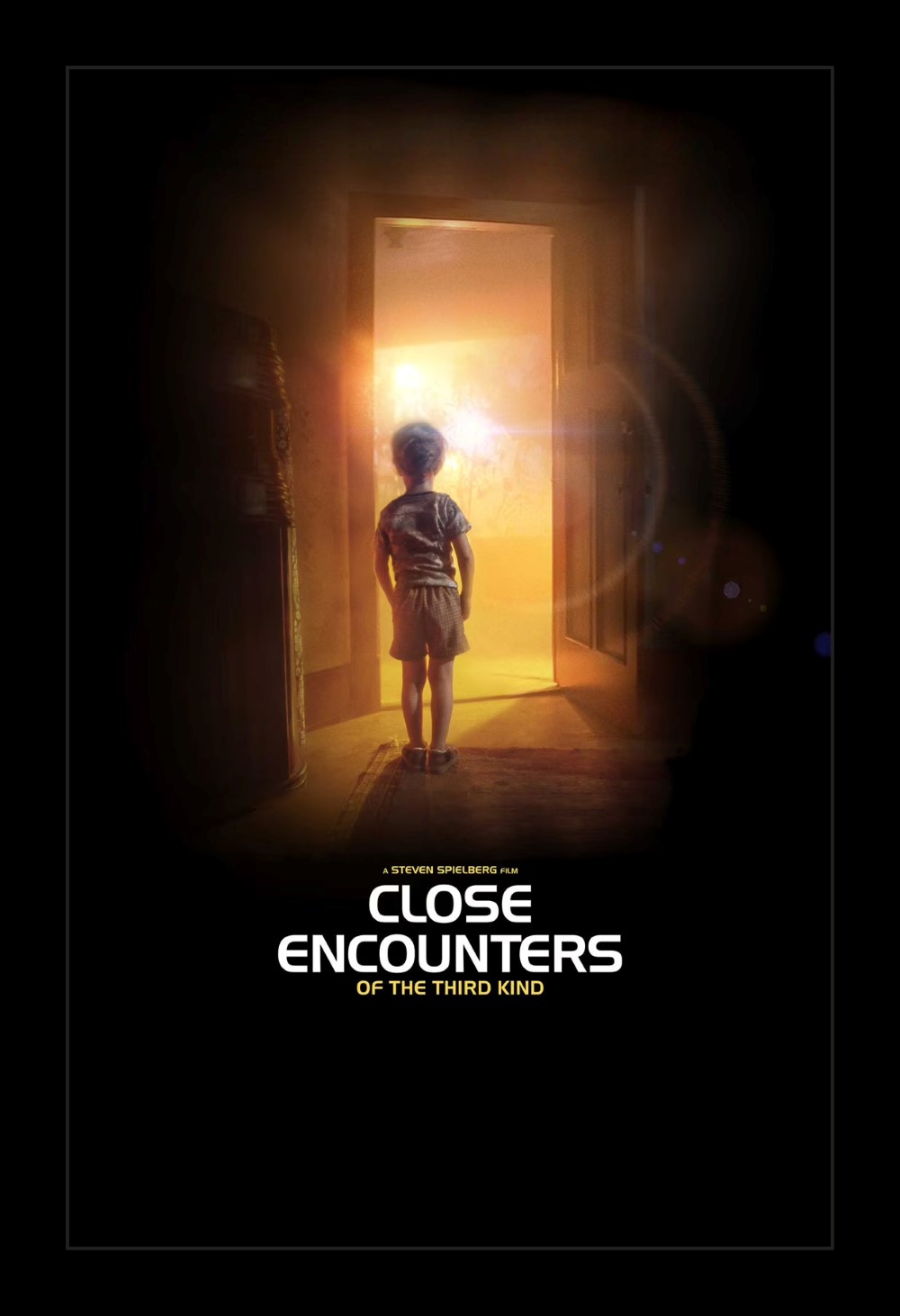
Review: Close Encounters of the Third Kind (dir. by Steven Spielberg)


“Monsieur Neary, I envy you.” — Claude Lacombe

When we look back at the historic cinematic landscape of 1977, it is almost impossible not to view it through the lens of a seismic cultural shift. That was the year a young George Lucas unleashed Star Wars upon the collective consciousness, fundamentally reshaping the Hollywood studio system and redirecting the trajectory of science fiction toward space opera, galactic dogfights, and mythic hero journeys. Yet, just a few months later, Steven Spielberg quietly delivered his own counter-argument to the stars with Close Encounters of the Third Kind. While Lucas looked outward toward far-away galaxies, Spielberg looked upward from our own suburban backyards. The result remains one of the most singular, agonizingly beautiful, and intensely personal science fiction films ever made, a masterclass in atmospheric tension that manages to balance deep blue-collar anxieties with a profound, almost spiritual sense of cosmic wonder. Watching it today, stripped of the immediate historical noise of the late seventies, the film stands out not merely as a technical milestone of visual effects, but as a fascinatingly messy character study about the terrifying, disruptive nature of inspiration and obsession.

The story follows Roy Neary, a blue-collar electrician in Indiana who, during a late-night power outage, sees something inexplicable in the sky. He’s not alone—across the state, a young mother named Jillian Guiler also witnesses strange lights, and her toddler son Barry becomes eerily fascinated by them. What Roy and Jillian don’t know is that similar sightings are happening worldwide, from the Gobi Desert to the air traffic control towers of Indianapolis. The film then does something unusual: instead of cutting to a military briefing or a scientist’s whiteboard, it stays with Roy as his ordinary life starts to fracture. He becomes obsessed with a shape he can’t quite remember—a mountain, maybe, or a tower—that he begins sculpting out of mashed potatoes, shaving cream, and whatever else is at hand. His wife and kids, understandably, think he’s losing his mind. Jillian, meanwhile, faces a more immediate and terrifying version of the same mystery.

What’s remarkable is how Spielberg handles characterization. Roy isn’t a hero in any traditional sense. He’s a loud, slightly goofy family man who loves model trains and bad jokes. Richard Dreyfuss plays him with a permanent crease of confusion between his eyebrows, as if his brain is trying to process a frequency nobody else can hear. The film never explains why Roy is chosen or why the visions hit him so hard—it just shows the consequences: lost jobs, a crumbling marriage, a man who starts seeing his living room as a prison. Jillian, played with fierce tenderness by Melinda Dillon, is the emotional anchor. Where Roy’s obsession feels almost euphoric, Jillian’s is rooted in primal fear and love. She doesn’t want to meet the unknown; she wants her son back. The film wisely never pits them against each other. Instead, they become accidental allies, two people dragged toward the same inexplicable destination for very different reasons.

Then there’s the other side of the coin: the government. François Truffaut (one of the founders of the French New Wave film movement), in a wonderfully offbeat piece of casting, plays Claude Lacombe, a French scientist leading a secret U.N. team that’s been tracking the phenomena for years. We see them discover something astonishing in the Mongolian desert—a lost ship from World War II, returned without its crew, in pristine condition. Later, they find an entire tanker ship deposited in the Gobi, miles from any ocean. These scenes are brief but crucial, because they establish that whatever is happening has been happening for a long time. Lacombe and his team aren’t villains; they’re just as baffled as Roy, but with better funding. Their method of communication—a simple five-note musical phrase—becomes the film’s quiet heartbeat. Spielberg trusts you to understand that this isn’t a code or a weapon. It’s a greeting.

The film’s middle section is where most blockbusters would insert a chase or a battle. Instead, Close Encounters gives us a slow-burn portrait of obsession as a kind of grace. Roy drives his family crazy. Jillian chases rumors. Hundreds of other ordinary people—the film calls them the “paranoids”—start showing up at rural crossroads, drawn by the same psychic pull. Spielberg shoots these scenes with a documentary-like patience: a traffic jam of confused believers, a midnight roadblock, a man who just knows he has to go to Wyoming. You start to feel the pull yourself. By the time Roy finally understands what the mashed-potato mountain is—Devil’s Tower, a real volcanic plug in northeastern Wyoming—the movie has earned every ounce of that revelation. It’s not a twist. It’s a release.

The final forty minutes of Close Encounters are best experienced with as little prior knowledge as possible, so I’ll stay vague. What I will say is that Spielberg stages the arrival of the unknown as a religious event, not an invasion. There are no laser cannons, no ultimatums, no speeches about humanity’s destiny. Instead, there’s light and sound, a symphony of colored orbs and humming engines, and a sequence of hand gestures that communicates more than any dialogue could. The aliens, when they finally appear, are small and pale and oddly childlike—not scary, not angelic, just other. And a choice that Roy faces, involving whether to stay or go, lands with the weight of a moral question, not a happy ending. Spielberg doesn’t tell you if it’s right. He just shows you a man’s face, lit by unearthly glow, and leaves the rest to your own compass.

Technically, the film is a marvel of analog craft. The UFOs aren’t digital—they’re models, lights, and smoke, shot with such loving care that they feel tangible. Douglas Trumbull’s visual effects prioritize scale and mystery over menace. John Williams’s score, anchored by that five-note motif, does the emotional heavy lifting without ever feeling manipulative. And Spielberg’s direction is all about waiting—holding on a character’s face as they process something impossible, letting a shot of the night sky breathe for an extra five seconds. That patience is the film’s secret weapon. In an era of quick cuts and louder-is-better spectacle, Close Encounters dares you to sit in the dark and listen.

Does it hold up? Almost entirely, though with small caveats. The pacing is glacial by modern standards, and Roy’s family is written as shrill obstacles—Teri Garr does her best with a thankless role. Some viewers may find Roy’s eventual choices hard to forgive. But those complaints miss the point. Close Encounters isn’t about good fathers or responsible citizens. It’s about the ache of the ineffable—the feeling that something is out there, just past the treeline, and it knows your name. Spielberg made bigger hits, but he never made anything more personal. If you’ve never seen it, or haven’t since you were a kid, watch it in the dark. Turn your phone off. Let the tones wash over you. You might find yourself humming that five-note song for days. And honestly, that’s the whole point.

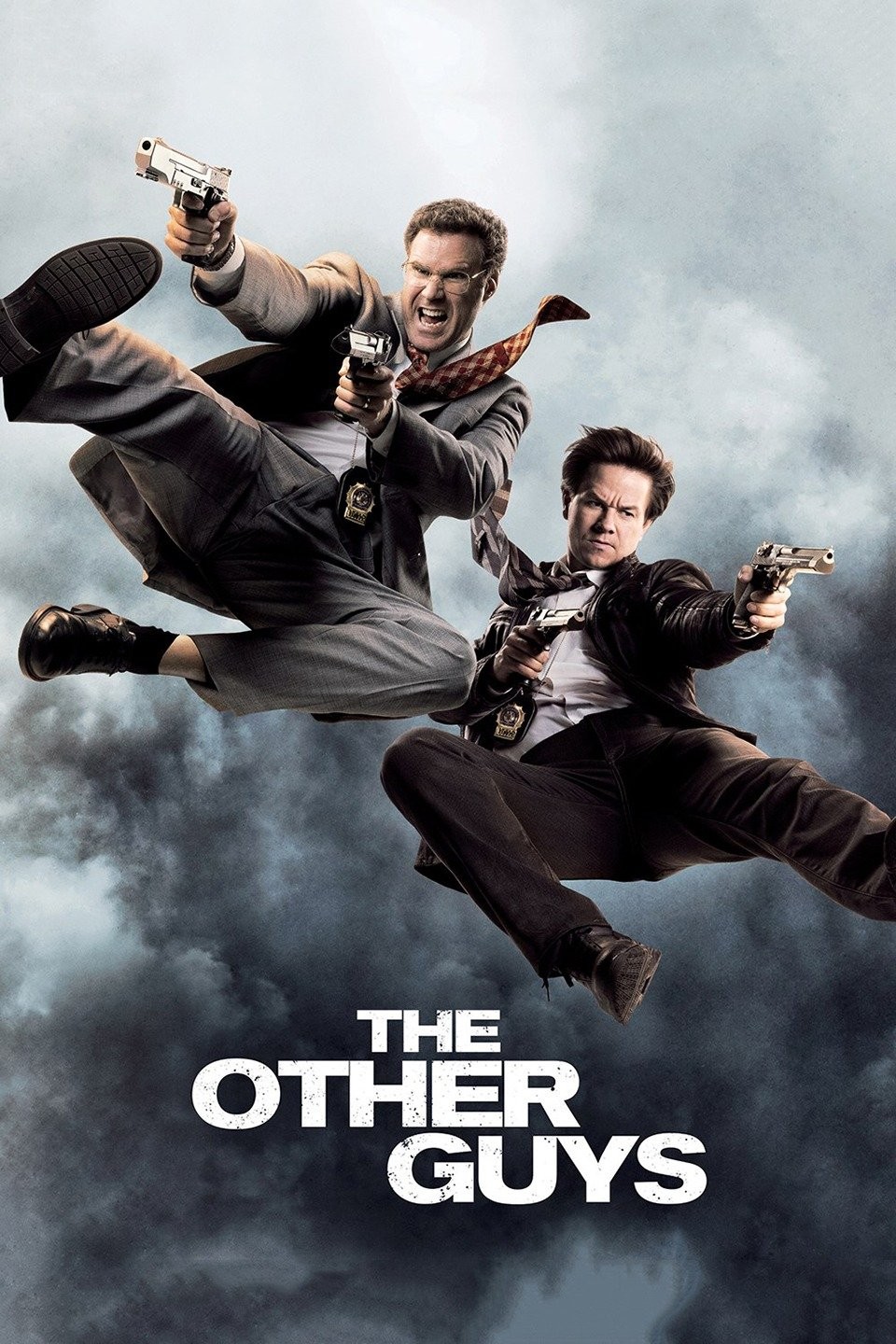
Review: The Other Guys (dir. by Adam McKay)


“We are gonna have sex in your car. It will happen again!” — Dirty Mike

Adam McKay’s The Other Guys feels like the moment a class clown who is secretly a genius finally snaps and decides to teach the entire school a lesson while making them laugh so hard they forget they’re being educated. Released in 2010, the film lands right in that sweet spot of McKay’s career where he was pivoting away from the pure, unhinged mania of Anchorman and Step Brothers and starting to smuggle razor-sharp satire into the multiplex under a mountain of stupidity. It is, without a doubt, one of the funniest movies of its decade, but calling it just a comedy feels like a disservice. It’s a buddy cop movie that hates the irresponsibility of buddy cop movies, a financial crisis explainer disguised as a screamo TLC tribute, and a showcase for two lead performances that should have spawned at least three sequels. If you’ve somehow managed to sleep on this one, it’s time to fix that.

The opening sequence is a masterclass in bait-and-switch. We are introduced to Danson and Highsmith, the city’s top cops, played with magnificent, self-serious swagger by Dwayne Johnson and Samuel L. Jackson. They’re chasing down a minor misdemeanor in a way that destroys half of downtown Manhattan, culminating in them heroically jumping off a twenty-story building to land safely in some bushes. Except they don’t. They splatter. It’s a shocking, hilarious, and instantly iconic death scene that serves as McKay’s thesis statement: the action movie logic you’ve been fed for decades is a lethal fantasy. With the heroes dead, the spotlight shifts painfully to the guys who have to do the paperwork on their mangled corpses, forensic accountant Allen Gamble and hot-headed loose cannon Terry Hoitz. These two are, emphatically, the other guys, and when circumstances force them onto a case involving corporate financial fraud, they stumble their way toward something resembling heroism, occasionally despite themselves.

What separates The Other Guys from the pile of mediocre comedy-action hybrids that came before and after it is the chemistry between Ferrell and Wahlberg, which is genuinely one of the more unexpected comedic pairings of that era. Ferrell plays Gamble as a deeply strange man who has weaponized milquetoast passivity into a superpower. His complete, serene contentment with a life of spreadsheets, Grand Theft Auto grand larceny sprees where he obeys all traffic laws, and a suspiciously beautiful wife played by Eva Mendes is a hypnotic thing to watch. Ferrell dials down the bombast and delivers something wonderfully weird and controlled, a man who is simultaneously a complete dork and, as we later discover, a shockingly capable pimp named Gator. Wahlberg, meanwhile, is doing something genuinely interesting here. Terry Hoitz is a walking wound, a great cop reduced to a desk jockey and public mockery for the unforgivable sin of accidentally shooting Derek Jeter during the World Series. He’s angry, humorless, and convinced of his own greatness despite ample evidence to the contrary. Wahlberg plays him completely straight, which is the exact right call, because his deadpan bewilderment at Ferrell’s behavior, the way his voice cracks with desperate, shrill anger when trying to explain a normal scenario, ends up being funnier than almost anything else in the film. Their chemistry is a perfect storm of a guy who wants to live inside a peaceful spreadsheet and a guy who wants to set that spreadsheet on fire while learning to dance the sardine.

This is the kind of comedy where the supporting cast keeps piling on gloriously unhinged performances, which makes Ray Stevenson’s work as the heavy all the more valuable. As Roger Wesley, the corporate enforcer who does the violent bidding of Steve Coogan’s billionaire fraudster, Stevenson operates in a completely different register from everyone else. While Ferrell is weaponizing passive-aggressive politeness, Wahlberg is screaming about peacocks, and Michael Keaton is unconsciously quoting Waterfalls while running a police precinct, Stevenson remains a granite slab of menace. He doesn’t crack jokes, he doesn’t do double-takes, and he certainly doesn’t care about the absurdity swirling around him. There’s something almost old-fashioned about his screen presence here, a grim, heavy-lidded seriousness that makes him feel like he wandered in from a real crime thriller and simply refused to leave. It’s the kind of straight-man performance that doesn’t just anchor the chaos; it makes the chaos funnier by contrast. When he’s methodically hunting down loose ends while Ferrell and Wahlberg are bickering about whether a lion could beat a tuna in open ocean, the collision of tones is pure McKay alchemy.

The plot, such as it is, involves the duo stumbling onto a massive white-collar crime conspiracy led by a billionaire played with smarmy, cowardly glee by Steve Coogan. It’s here that McKay’s deeper ambitions start to peek through the absurdity. While Terry is desperate for a classic action-movie shootout and car chase, the investigation leads them to the Lendl Global offices, where the real villainy isn’t drug lords or terrorists but leveraged buyouts and pension fund looting. There’s a perfect running gag where they keep trying to get into the action, preparing for a massive gunfight against a team of mercenaries, only to find that the corrupt corporate security detail is made up of ex-cops just looking to quietly retire with their benefits. It is the funniest anti-climax, a deliberate denial of violence that reinforces the film’s core idea that the most dangerous criminals wear suits, not ski masks. The financial villain is a thinly veiled stand-in for the kind of Wall Street grift that was very much in the cultural conversation in 2010, just a couple of years after the financial crisis. McKay would later go much deeper on that territory with The Big Short, but the seeds of that interest are planted all over this film.

The comedy in The Other Guys operates on two distinct but equally brilliant levels. There is the surface-level absurdity, the kind that produces quotes like “I’m a peacock, you gotta let me fly!” and the quiet, steady domination of Gamble’s totemic Prius, which somehow survives a fireball helicopter crash without a scratch. The “aim for the bushes” jump, the lion versus tuna debate that Hoitz treats with theological gravity, and the wooden gun gifted to Gamble are all top-tier ridiculousness. Then there is the deeper, more surreal well of humor that feels distinctly McKay. The entire subplot of Gamble’s past as a college pimp named Gator is a work of deranged genius, a slow-motion, honey-dripped flashback that reveals a world of casual, elegant pimping that Ferrell plays with a straight face so absolute it circles back around to being terrifyingly cool. The relentless jokes about Gamble unknowingly marrying way out of his league, his genuine confusion over why people think Eva Mendes is attractive, is a running gag that beautifully plays on Ferrell’s ability to be completely oblivious to the reality surrounding him. Eva Mendes is admittedly underused, though the film at least has fun with the joke by leaning into Wahlberg’s incredulous reaction every time she appears, which never gets old.

Visually, the film has a blandly competent sheen that actually works in its favor. Unlike the frattish haze of Anchorman, here McKay is directing a movie that looks like a real cop film, which makes the eruptions of insanity even more jarring. The action sequences are staged with real competence. The car chases aren’t played as joke sequences; they’re genuinely well-staged, particularly the Prius chase midway through where Gamble’s calm, methodical driving commentary clashes with a panicking Hoitz. It’s legitimately exciting before it goes completely off the rails in the best way. McKay never lets the plot drag even when the jokes need room to breathe. By this point in his career he’d clearly figured out the right pace for this kind of thing, and it shows. The movie moves. The film also showcases Michael Keaton in a delightful supporting role as Captain Gene Mauch, a cop who unconsciously works a second job at Bed Bath & Beyond while peppering his police work with retail slogans. Keaton’s deadpan delivery of lines about TLC references and towel specials, only to shout the chorus of Waterfalls at a moment of high tension, is a thing of beauty. Every single one of his scenes is a gift. It’s a running joke that never explains itself, and it’s all the better for it.

Then there is the ending. For a film that spends nearly two hours being aggressively stupid-smart, the final moments make a radical pivot. As the bad guy is caught, the movie doesn’t just roll credits. It stops dead and turns into a miniature economics lecture. With animated infographics and hard statistics, McKay lays out exactly how Ponzi schemes, bailouts, and income inequality have shattered the American middle class, all while the Rage Against the Machine cover of Maggie’s Farm thrashes on the soundtrack. It’s a jarring, preachy, and completely unexpected move. On first viewing, it feels like the director violently smashing the emergency brake on the comedy train. But in hindsight, it’s the only honest way this movie could end. McKay isn’t just telling us that bank robbers are less dangerous than bankers; he’s stopping us from leaving the theater without understanding the scale of the theft. It doesn’t undermine the fun at all. If anything it adds a layer of purpose that makes the whole thing feel a little more substantial than your average cop spoof. It’s the moment the class clown pulls out a graph showing your student debt will cripple you for life, and somehow, it works because he’s been earning your trust with jokes for the previous hour and a half.

There’s something almost nostalgic about watching a comedy this confident in its own weirdness. The Other Guys arrived at an interesting moment for this kind of movie, when the mid-budget, R-rated studio comedy was still a viable commercial proposition. It made decent money even if it wasn’t a runaway smash, but more importantly, it trusts that you’re going to be on board for a scene where Ferrell and Wahlberg argue about whether they’d rather be a lion or a tuna, and it’s right to trust that. The criticisms are relatively minor. The movie is maybe fifteen minutes too long, and a subplot involving Wahlberg’s ballet background gets introduced and then somewhat dropped. The villain’s scheme, by design, isn’t particularly cinematic, and the film occasionally strains to make the stakes feel real. But these are the kinds of complaints you make about a movie you liked, not a movie you didn’t, and none of them meaningfully dent the overall experience.

More than a decade later, The Other Guys has aged into something of a classic, a revered staple of late-night cable and quotable group chats. It sits at a fascinating crossroads, holding onto the absurdist, quote-heavy DNA of McKay’s earlier work while laying the formal and thematic groundwork for what he would do next with The Big Short and Vice. It proves that the jump from Ron Burgundy to a film about the 2008 housing crisis wasn’t actually that far at all. He just needed Wahlberg to yell a little bit, Ferrell to explain why a lion would still beat a tuna, even in open ocean, and Stevenson to stand in the middle of it all looking like he genuinely wants to murder everyone in the room. Whether you come for the laughs, the surprisingly competent action, or Michael Keaton mumbling TLC lyrics under his breath, you’re going to find something to love. Absolutely worth your time.

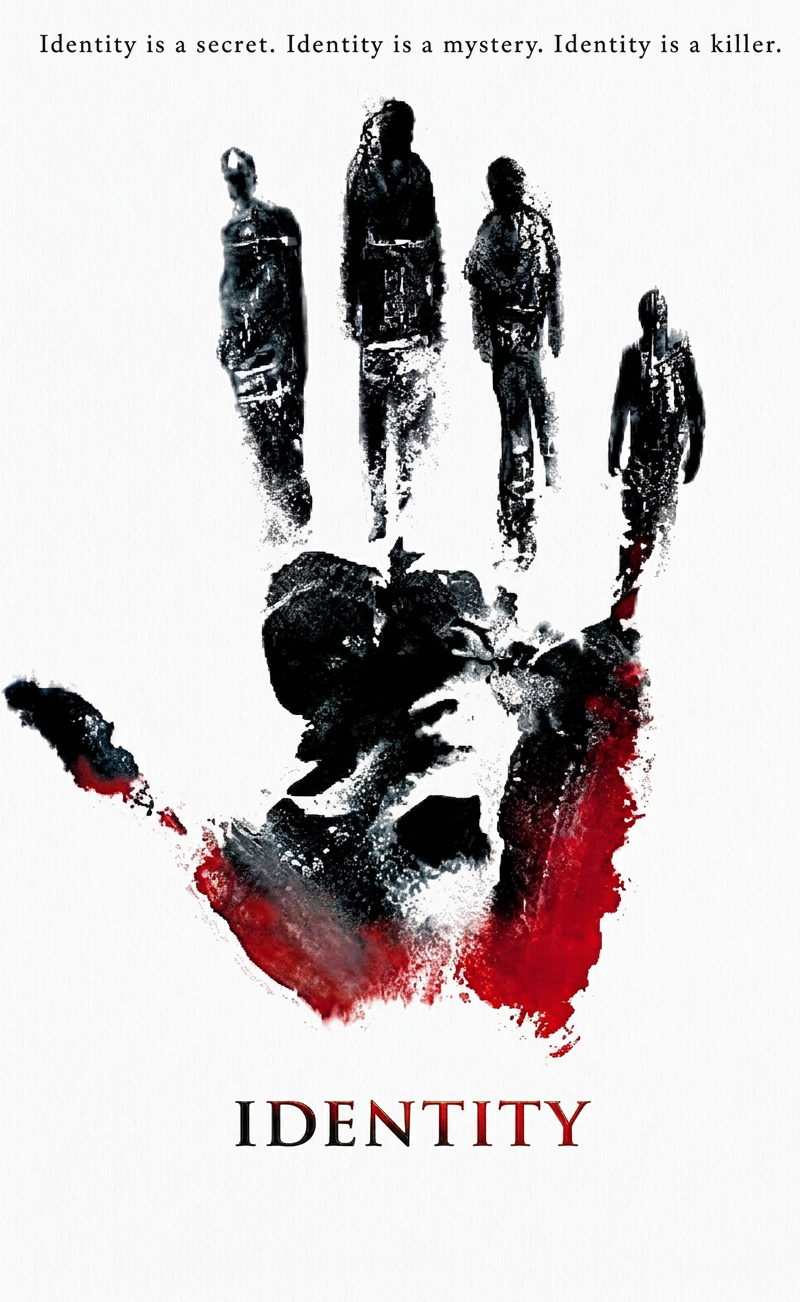
Review: Identity (dir. by James Mangold)


“As I was going up the stairs, I met a man who wasn’t there. He wasn’t there again today. I wish, I wish he’d go away.” — Malcolm Rivers

There’s a certain kind of movie that thrives on a rainy Sunday afternoon or a late-night cable scroll—something pulpy, clever, and self-contained, with a cast that makes you sit up a little straighter. James Mangold’s Identity from 2003 is exactly that breed of thriller. It’s not trying to reinvent the wheel, but it’s having a damn good time spinning it through mud, rain, and a whole lot of psychological fog. On the surface, Identity is a slasher-adjacent whodunit set in a deserted Nevada motel during a biblical storm, and it wears its debt to Agatha Christie’s And Then There Were None like a bloodstained badge of honor. That classic novel—where strangers are lured to an isolated island and picked off one by one according to a nursery rhyme—provides the blueprint. Mangold swaps the island for a rundown motel, the nursery rhyme for room keys, and adds a thick layer of rainy noir atmosphere. But underneath the jump scares and dripping dread, Identity is also a sly, shaggy-dog meditation on identity, trauma, and the stories we tell ourselves to survive. Mangold, who’d go on to direct Walk the Line and Logan, shows his genre dexterity here—he treats the material with just enough seriousness to keep you invested, but not so much that you can’t laugh at the absurdity when the twist finally snaps into place.

The setup is classic Christie with a tar pit of dread. A motley crew of strangers gets stranded at a rundown motel when a flash flood washes out the roads, just as the guests in And Then There Were None find themselves cut off from civilization. There’s a former cop turned limo driver (John Cusack), a has-been actress (Rebecca De Mornay), a newlywed couple, a cop escorting a prisoner, a nervous motel manager, a prostitute with a heart of gold (Amanda Peet), and a few others who might as well have target silhouettes painted on their backs. The storm rages, the power flickers, and one by one, they start turning up dead. The killer leaves behind clues—room keys, specifically—and the survivors realize the bodies are being dropped in the order of the motel’s room numbers. It’s a wonderfully cheap gimmick that works because the film leans into its own artificiality. The rain never stops. The Nevada landscape is featureless and black. The motel feels less like a real place and more like a diorama in a psychiatrist’s office. Which, as it turns out, is almost exactly what it is.

Now, here’s where the review has to carefully step around spoilers, because Identity lives and dies on its midpoint rug-pull. But seeing as the movie is over twenty years old, a gentle acknowledgment is fair: the motel carnage is intercut with scenes of a criminal psychologist (Alfred Molina) arguing with a judge during a late-night hearing about a convicted serial killer’s sanity. That killer, Malcolm Rivers, is awaiting execution, and the defense is presenting new diary evidence. You don’t have to be a detective to start connecting dots. Mangold and screenwriter Michael Cooney aren’t interested in subtlety; they want you to squirm as the two storylines begin to converge. The motel guests, we gradually realize, are not random travelers. They are fractured pieces of a single damaged psyche—personalities inside Rivers’ mind, duking it out for survival as his body faces a real-world lethal injection. The killer in the motel isn’t a man in a mask; it’s the most malevolent alter among them, systematically erasing the others. Where Christie’s novel uses a hidden murderer working through a fixed list, Identity twists that formula by making the setting itself a psychological construct.

On a technical level, Identity is a masterclass in low-budget atmosphere. Phedon Papamichael’s cinematography drenches every frame in gray-blue gloom, and the sound design makes every creak and drip sound like a gunshot. Mangold directs the ensemble with a steady hand, and the cast clearly knows what movie they’re in. Cusack brings his usual blue-collar soulfulness to Ed, the ex-cop with a guilty conscience. Ray Liotta, as the suspicious cop, chews scenery in the best way—he’s all twitchy aggression and bad intentions. But the real standout is Amanda Peet as Paris, a call girl who just wants to start over on a Florida orange farm. She’s smarter and tougher than the archetype usually allows, and her final scene in the motel’s office carries an unexpected tenderness. That’s the trick of Identity: it makes you care about figments. For a good hour, you’re genuinely invested in whether the newlyweds survive or if the motel manager will finally clean that damn room 6.

Where the movie loses some people is in the execution of its twist. When the narrative finally snaps from the motel to the real-world courtroom, there’s a jarring shift that feels almost like a different film. The last fifteen minutes become a race to explain the rules of this shared-mind universe, and here the logic gets wobbly. How exactly does a personality “die” inside a system? Why does the motel order matter? And without giving too much away, the film’s famous final reveal—which involves a third-act twist on the twist—pushes credibility to the breaking point. Some viewers will throw their hands up and groan. Others will grin and applaud the audacity. I land somewhere in the middle. On one hand, the final image is genuinely chilling, a perfect little joke about evil’s persistence. On the other hand, the film spends so much time setting up the motel’s internal rules that it forgets to make the real-world stakes feel as urgent.

Still, Identity works best if you don’t overthink it. Think of it as a B-movie with an A-movie haircut, or as And Then There Were None filtered through a late-night cable dream about multiple personality disorder. Mangold directs the violence with a knowing wink—there are no gratuitous gore shots, just quick, sharp cuts and clever misdirection. One death involving a baseball bat and a laundry machine is as goofy as it is brutal, and that tonal tightrope is hard to walk. The film also has a sneaky thematic resonance beneath the pulp. At its heart, Identity asks whether people can truly change. Every character is trapped not just by the storm, but by their own backstory: the cop who failed a case, the actress past her prime, the prostitute who dreams of orange groves. In the motel of the mind, these backstories are just narratives the personality uses to justify itself. When Paris pleads, “I get to start over,” she’s speaking for anyone who’s ever wished they could delete a bad version of themselves. The film’s bleak final twist suggests that some stories are stronger than we think—the ones we tell ourselves about who we are, and who we’ve always been.

For a thriller that runs just over ninety minutes, Identity has surprising legs. It’s not a masterpiece, but it’s a tight, well-oiled machine of suspense with a gimmick that still feels fresh if you haven’t been spoiled. The dialogue crackles with noir-lite attitude, and the pacing never sags—once the bodies start dropping around the twenty-minute mark, you’re locked in. The biggest flaw is that the movie is so proud of its puzzle-box structure that it forgets to breathe between twists. You never get a quiet moment to sit with the characters as real people because, well, they’re not real people. But that’s also the point. Identity is a movie about a metaphor, and like most metaphors, it works until you poke it too hard. If you’re looking for a rainy-night thrill ride with a cast that commits to the bit and a final shot that’ll stick in your brain like a bad dream, check in. Just maybe avoid room 6.

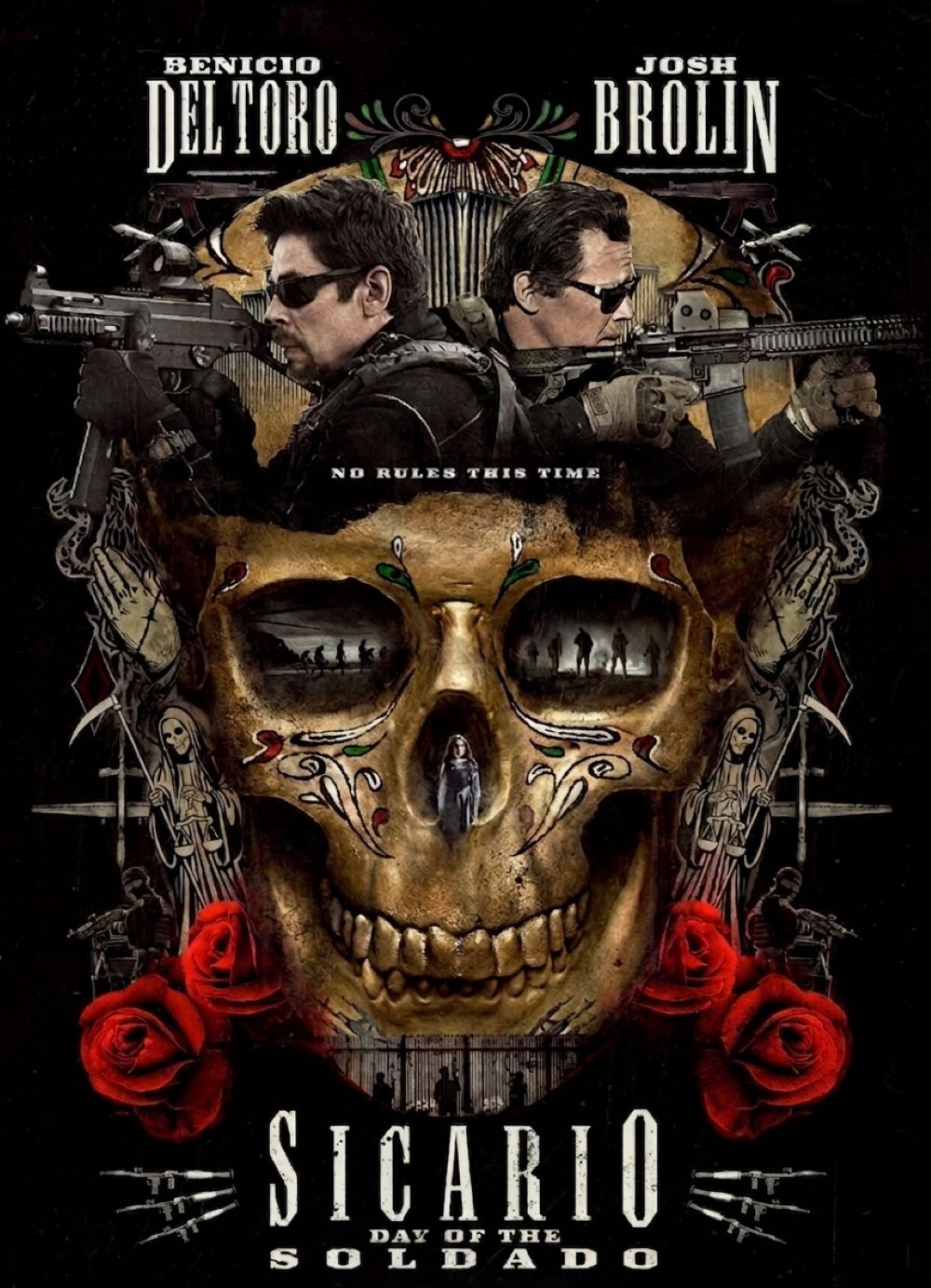
Sicario: Day of the Soldado (dir. by Stefano Sollima) Review


“I mean, I wouldn’t take out a cartel leader. Turn one cartel into 50. Besides, killing kings doesn’t start wars, it ends them.” — Matt Graver

Sicario: Day of the Soldado is a tense, often entertaining follow-up that never quite reaches the same level of dread, complexity, or visual identity as the first Sicario. It’s a movie that knows how to hit hard in the moment, but it doesn’t linger in the mind the same way, and a big reason for that is how much it shifts from being a layered border thriller into something more like a blunt-force crime action movie.

What stands out right away is that the film still has strong ingredients. Taylor Sheridan’s script gives Josh Brolin and Benicio Del Toro plenty of room to do what they do best, and both actors make this thing watchable even when the movie itself starts feeling thinner than it should. Brolin brings that loose, swaggering menace to Matt Graver, making him feel like the kind of guy who smiles while ordering something morally awful. Del Toro, meanwhile, gives Alejandro a cold, haunted intensity that fits the character perfectly. He doesn’t need much dialogue to sell the idea that this man is basically a weapon walking around in human form.

But that’s also where the movie’s biggest issue starts to show. For all the credit Sheridan deserves for keeping the world of Sicario alive, the absence of Denis Villeneuve in the director’s chair is obvious. The first film had this slow-burning, oppressive grip on you; every scene felt like it was pulling you deeper into a nightmare that had structure, purpose, and a real sense of moral unease. Here, that layered feeling is much weaker. The sequel becomes more interested in forward motion, shootouts, and tension-by-incident than in developing the deeper political and thematic weight that made the original so memorable.

That doesn’t mean Sicario: Day of the Soldado is empty. It just feels like it has less on its mind than the first film. The original Sicario was about systems, corruption, compromise, and the way law enforcement and criminal violence blur together until nobody gets to stay clean. This sequel touches on similar territory, but it often feels like the movie is more focused on creating a harsh atmosphere around its two lead men than on really digging into what all of it means. In that sense, it starts to feel like a vehicle for Brolin and Del Toro first, and a larger statement second.

Stefano Sollima does a solid job with the action, and to his credit, he understands that this world should feel mean, chaotic, and stripped of comfort. There’s a gritty professionalism to the violence that works well enough, and the film certainly doesn’t shy away from brutality. Still, the action doesn’t always carry the same weight as it did in the first movie because the buildup isn’t as rich. The tension is there, but the emotional and thematic buildup behind it is thinner, so some of the set pieces land more as effective genre beats than as moments that actually deepen the story.

The film’s biggest strength, beyond the performances, is its atmosphere of moral corrosion. Nobody in Day of the Soldado feels especially noble, and that’s part of what keeps it interesting. Brolin’s Graver is still the kind of operator who treats human lives like pieces on a board, while Del Toro’s Alejandro remains a deeply damaged figure who seems to exist somewhere between avenger, assassin, and ghost. Their relationship gives the movie a sharp edge, because you’re never really sure whether these guys are working together, manipulating each other, or simply following the same dark logic from different angles.

Still, the movie’s structure is less satisfying than the first one’s. It leans harder into a straightforward escalation of events, and once that happens, some of the mystery and suspense gives way to a more familiar crime-thriller rhythm. That isn’t automatically a bad thing, but it does mean the film loses some of the special quality that made Sicario feel so bracing. The sequel is darker in tone, sure, but not necessarily deeper. It’s more aggressive than observant, more kinetic than reflective.

A lot of this is why the movie works best when it keeps its focus on the two men at the center. Brolin and Del Toro are compelling enough to hold attention even when the screenplay starts feeling a little schematic. Their characters are so insulated by violence and secrecy that they almost seem to belong to a different kind of movie than everyone else around them. The downside is that this also makes the surrounding story feel less important. The first film balanced character and theme in a way that felt inseparable; this one often feels like it is using theme as a backdrop for the characters rather than letting the ideas shape the entire film.

Even so, Sicario: Day of the Soldado isn’t a failure. It’s a good-looking, well-acted, often tense sequel that knows how to stay nasty and efficient. It just doesn’t have the same confidence in its own ideas. The result is a film that is entertaining in a hard-edged, grim way, but also one that makes you think about what it could have been with a stronger directorial voice pulling everything together. Taylor Sheridan’s fingerprints are still all over it, but Villeneuve’s absence leaves a noticeable gap in the film’s pulse and perspective.

In the end, the movie feels like a solid but diminished return to a brutal world. It gives you Brolin and Del Toro doing sharp, controlled work inside a story that never fully rises to match them. That’s enough to make it worthwhile, but not enough to make it essential. Compared to the first Sicario, this one is more of a hard-nosed spin-off in spirit than a true continuation of the original’s power, and that difference is felt in almost every scene.

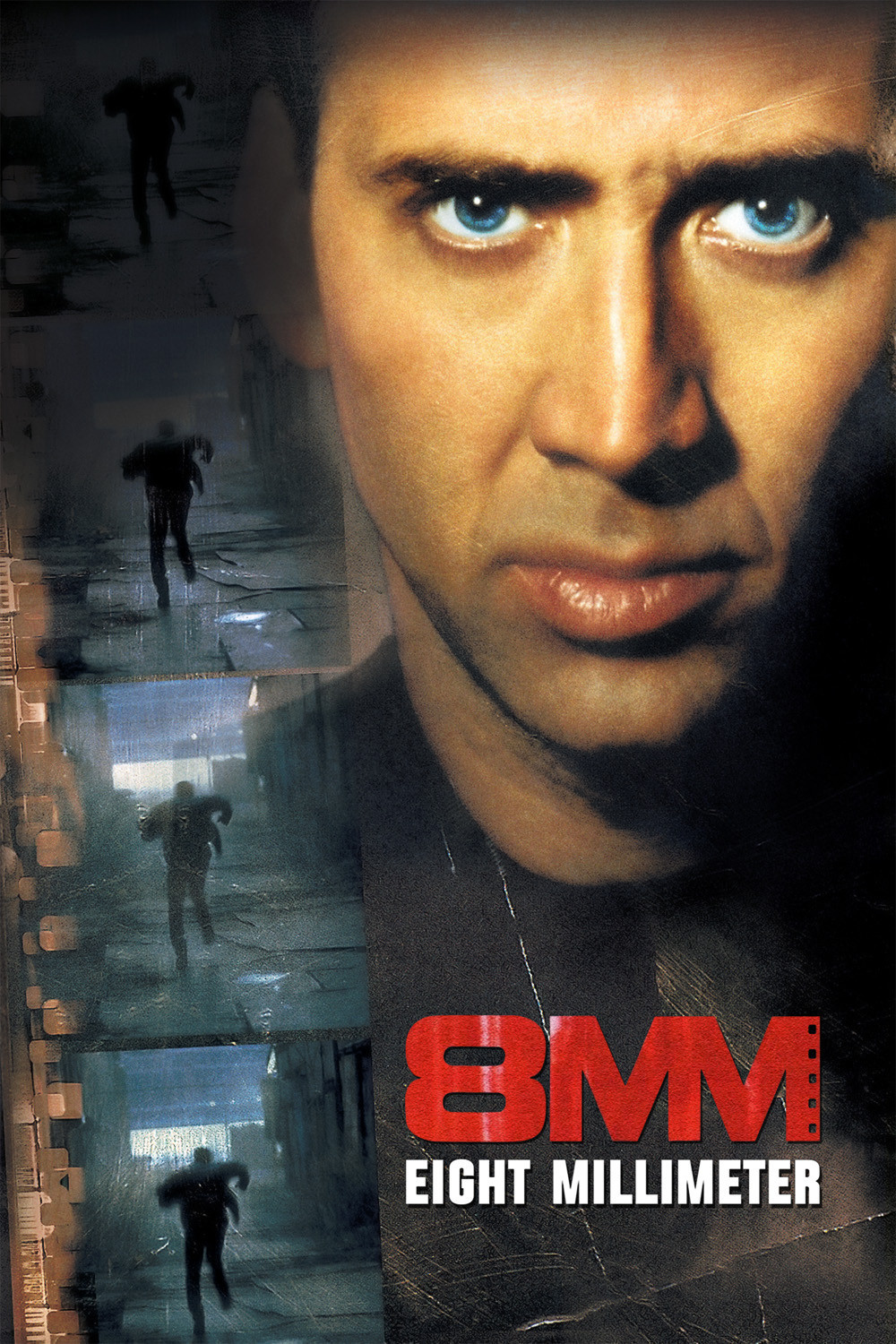
Review: 8mm (dir. by Joel Schumacher)


“Because he could!” — Daniel Longdale

Joel Schumacher’s 8MM (1999) uncoils like a reel of forbidden footage you shouldn’t have found, pulling a buttoned-up private eye into the rancid shadows of underground smut peddlers and whispers of snuff films that may or may not exist. It’s a late-’90s thriller smack in the wake of Se7en and Kiss the Girls, starring Nicolas Cage as Tom Welles, a Harrisburg family man whose crisp suits and steady hands belie the unraveling ahead. Hired by a steel magnate’s widow to verify an 8mm tape depicting a girl’s torture-murder, Welles tumbles down a rabbit hole of L.A. peep shows and New York meatpacking sleaze, his moral compass spinning as the line between fantasy and atrocity blurs. Schumacher crafts a narrative engine that hums with procedural grit, doling out dread in measured doses while mirroring the protagonist’s corrosion, though it occasionally stumbles in its heavier-handed turns.

The setup hooks with surgical efficiency, painting Welles as everydad detective: he buries bodies for a living, kisses his infant daughter goodbye, and screens the tape in a vault-like study that feels like a confessional. Myra Carter’s Mrs. Christian trembles with decorous horror as the projector whirs to life, bathing the room in jaundiced flicker; the footage—grainy, handheld, a pleading teen bound for “Machine’s” blade—lands like a gut punch without lingering on gore. Lawyer Longdale (Anthony Heald, all patrician slime) waves it off as staged porn, but Welles digs anyway, tracing victim Mary Ann Mathews through missing-persons archives to her runaway dreams in Hollywood. Paired with Max California (Joaquin Phoenix), a Sunset Strip tape jockey with pawn-shop cynicism and a Zipperhead tee, they prowl fetish dens where vendors hawk needle-play loops and dismiss snuff as urban legend. Schumacher’s lens, via Robert Elswit, turns these dives into feverish grottos—neon strobes slicing steam, racks of VHS promising the forbidden—building unease through denial upon denial.

That mounting frustration propels the first hour’s finest stretches, a slow immersion where Welles’s calls home grow terse, his wife’s concern (Catherine Keener, quietly anchoring) a lifeline fraying in crosscuts. Max’s street-rat patter—”Snuff? Ain’t no such thing as snuff, man”—leavens the rot without undercutting it, Phoenix layering vulnerability beneath the snark that makes his arc genuinely affecting. Schumacher parcels revelations like a fuse burning short: a Florida trailer confirms Mary Ann’s vanishing, a porn mag scout nods toward “real death” commissions, and suddenly they’re in New York, knocking on Dino Velvet’s door. Peter Stormare vamps as the mulleted auteur of extremity, his studio a cathedral of spotlit chains where Machine (masked, hulking) performs for hidden lenses. The confrontation there explodes into sudden violence and betrayal, shattering assumptions about the tape’s origins and thrusting Welles into a desperate fight for survival, with devastating losses that harden his path forward.

This mid-film rupture peels back layers of the underworld’s machinery, revealing how far some will go to sate forbidden appetites—no vast conspiracy, just raw opportunism turning fantasy lethal. Chaos erupts in a brutal showdown that catapults Welles into lone-wolf payback, though the script’s mechanics creak here, tipping from investigation to vengeance saga with less finesse than its buildup promises. He tracks leads back to L.A., confronting scout Eddie Poole (James Gandolfini) in a derelict factory, beating out confessions amid rusted girders, then facing Machine—unmasked as unassuming accountant George Higgins (Chris Bauer), who shrugs, “I like it”—in a rain-slicked graveyard melee. Schumacher stages the violence as visceral toll, not catharsis: fists land with bone-crunching thuds, blood sprays real, and Welles emerges hollowed, sobbing in his wife’s arms over the unerasable stain. It’s raw consequence over triumph, indicting the watcher as much as the watched.

Cage shoulders the load masterfully, dialing back his manic energy for a portrait of competence curdling into obsession—hesitant stares post-tape, fists unclenching at home, exploding only when the dam breaks. It’s restrained Cage at his peak, the fury earned through incremental fracture, though some beats flirt with overemphasis. Phoenix shines brighter still, turning Max from sidekick gag into soulful foil; his death resonates because Joaquin sells the bravado as fragile armor. Stormare’s Dino struts operatic depravity, a Bond villain in wifebeater, while Gandolfini’s Poole simmers regretful everyman heft—pre-Sopranos groundwork for Tony’s shadows. Heald’s Longdale drips WASP entitlement, and bits like Norman Reedus’s twitchy dealer add lived-in texture. Schumacher elicits extremes without cartooning them, populating the underworld with deviants who feel plausibly human, not pulp cutouts.

Visually, 8MM thrums with Schumacher’s maximalist pulse tamed to noir grit: Elswit’s shadows swallow faces in peep booths’ crimson haze, the snuff reel’s jitter evokes cursed artifacts, and the loft showdown’s spotlights carve brutality like Bosch hellscapes. Mychael Danna’s score slithers—piano sparsity for Welles’s drift, synth throbs for dives—capped by Aphex Twin’s “Come to Daddy” warping a raid into glitch-rage frenzy. Production design nails the era’s analog underbelly: dog-eared tape boxes, industrial decay standing in for L.A. (shot cheap in Florida), all evoking a pre-digital void where evil hides on celluloid. The snuff aesthetic probes voyeurism smartly—we glimpse pleas and steel without exploitation, questioning our gaze alongside Welles’s, though the film’s flirtation with seediness risks tipping into the very prurience it critiques.

Andrew Kevin Walker’s script (fresh off Se7en) structures as moral diptych: procedural probe yields to vigilante spasm, bookended by domestic anchors that underscore the cost. No tidy psychologizing redeems the killers—Higgins kills because appetite wills it, Poole for “business,” others for greed—exposing evil’s flat banality over tortured backstories. The widow’s suicide post-truth, Mary Ann’s mom’s grateful note (“You cared enough to try”), and Welles’s scarred homecoming deny closure; vengeance hardens more than heals, bodies burned sans parade of justice. It’s a gut-punch thesis on film’s limits: some horrors defy capture, watching them unmakes the witness. Schumacher, slumming post-Batman gloss, revels in the ugly, though pacing drags early in porn prowls and the revenge rampage strains credulity.

Yet for all its stumbles—script contrivances like convenient turns, a third act veering punchy over precise—8MM endures as underrated descent, a thriller that stares unblinking into appetite’s void. Cage and Phoenix elevate genre tropes, Schumacher’s design makes depravity stick, and the core query lingers: does filming evil make it real, or us complicit? Flaws aside, it hums with the era’s dark electricity, a flawed reel worth unspooling for its unflinching grind.

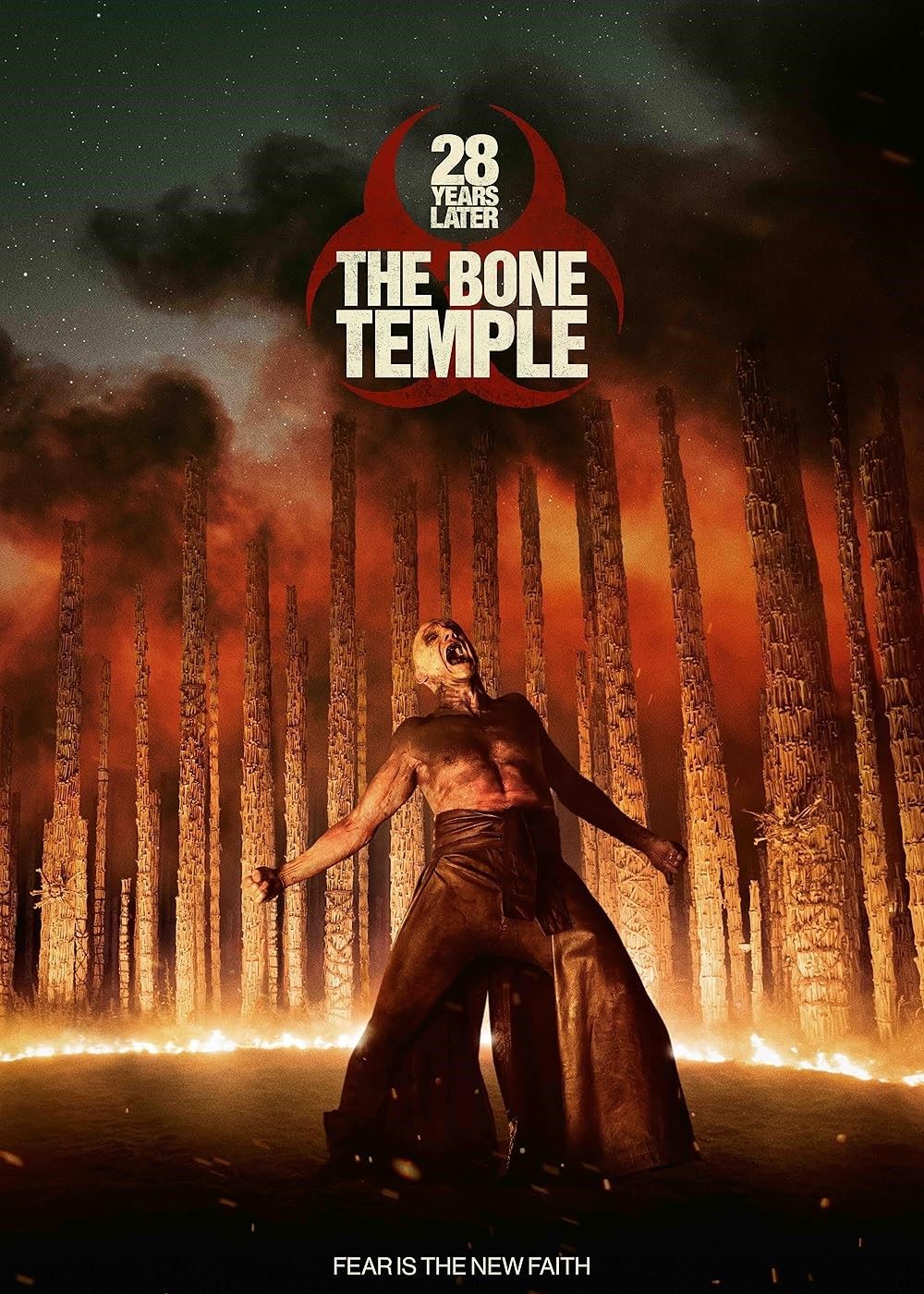
28 Years Later: The Bone Temple (dir. by Nia DaCosta) Review


“Every skull is a set of thoughts. These sockets saw and these jaws spoke and swallowed. This is a monument to them. A temple.” — Dr. Ian Kelson

28 Years Later: The Bone Temple crashes into 2026 with the force of a Rage-infected sprint, claiming its spot as one of the year’s top films right out of the gate, flaws and all. Directed by Nia DaCosta, the film continues to showcase her evolving command as a filmmaker, building directly on the promise of her 2025 character study Hedda, where she dissected emotional isolation with surgical precision and atmospheric tension. Where The Marvels in 2023 felt like a worthy attempt hampered by a screenplay that couldn’t decide on a tone—swinging between quippy banter and high-stakes drama while beholden to the cinematic universe’s endless interconnections—The Bone Temple unleashes DaCosta at full throttle, free from franchise baggage to craft a horror epic that’s visually poetic, thematically fearless, and rhythmically assured.​

Yeah, it revels in bleakness that can border on exhausting, and its structure wanders more than it charges forward, but those imperfections only underscore how fiercely original and alive it feels compared to the rote horror sequels we’re usually fed. Decades past the initial outbreak that defined 28 Days Later and 28 Weeks Later, the apocalypse here isn’t a fresh crisis anymore—it’s infrastructure, a grim new normal etched into the landscape. Survivors haven’t rebuilt so much as repurposed the ruins, carving out rituals and monuments that say as much about lingering trauma as they do about adaptation. The Rage virus still turns people into feral killers, ripping through flesh in those signature bursts of speed and savagery, but the infected have evolved in intriguing ways that deepen the world’s mythology without overshadowing the human core. The spotlight swings to human extremes: towering bone architectures raised as memorials, nomadic gangs treating murder like liturgy, and lone figures wrestling with whether dignity even matters when bodies pile up unmarked. This pivot lets the film breathe in ways the earlier entries couldn’t, expanding a zombie-adjacent thriller into something folk-horrific and introspective.

Dr. Ian Kelson embodies that shift, and Ralph Fiennes delivers what might be his meatiest role in years—a reclusive physician-architect whose Bone Temple dominates the story like a character itself, adding a profound level of tragic humanity that stands in stark, poignant contrast to the nihilistic worldview of Sir Lord Jimmy Crystal and his blindly devoted followers. Picture spires of meticulously arranged skulls and femurs, bleached white against misty Scottish skies, lit at night like profane altars: it’s production design that hits you visually first, then sinks in thematically as Kelson’s obsession with cataloging the dead. Fiennes plays him not as a villain or eccentric, but as a man fraying at the edges—tender when easing a dying woman’s passage (Spike’s mother, in a flashback that sets the whole narrative in motion), ruthless in his logic about preserving memory over sentiment. “Every skull is a set of thoughts,” he murmurs in one standout line, sockets staring empty, jaws frozen mid-word—a perfect encapsulation of the film’s meditation on legacy amid oblivion. Those quiet scenes, where Kelson debates ethics with survivors or observes the infected Samson with clinical curiosity shading into something paternal, ground the movie’s wilder swings and prove Fiennes can carry horror on sheer presence alone.​

Spike, our entry point into this madness, carries scars from that childhood brush with the Temple and his mother’s end, propelling him toward Jimmy Crystal’s orbit like fate’s cruel magnet. He’s no square-jawed lead; he’s reactive, watchful, hardening through trials that test his humanity without fully erasing it. That arc collides with Jimmy’s cult—a roving pack of devotees renamed his “seven fingers,” all aping the leader’s bleach-blond hair, loud tracksuits, and flashy trinkets in a uniformity that’s both comic and chilling. Jack O’Connell chews the scenery as Jimmy, a pint-sized prophet whose charisma masks profound damage: twitchy grins, boyish rants blending kids’ TV catchphrases with fire-and-brimstone, devotion to his “Old Nick” devil figure turning every kill into theater. The Savile visual parallels—those garish outfits evoking the real-life abuser’s predatory fame—add a layer of cultural poison, implying charisma survives apocalypse by mutating into something even uglier, with institutions gone but the hunger for idols intact. O’Connell makes Jimmy magnetic and monstrous, a performance that elevates the cult from trope to tragedy.​

If the film’s greatness shines through performances and visuals, its violence tests that shine—deliberately, one suspects. Infected attacks deliver franchise-expected chaos: heads torn free, eyes clawed out, bodies pulped in handheld frenzy. But Jimmy’s rituals amp the sadism—knife duels extended into endurance ordeals, flayings half-glimpsed but fully heard, victims’ pleas dragging until empathy fatigues. It’s grueling, sometimes overlong, risking audience burnout, yet it serves the theme: in a Rage world, human-inflicted torment outlasts viral rage because it feeds on belief. DaCosta pulls punches visually (smart cuts, shadows over gore) but lingers on emotional fallout, making cruelty feel earned rather than exploited— a maturation from The Marvels‘ tonal whiplash into controlled, purposeful discomfort. Counterpoints pierce through: Jimmy Ink’s furtive kindnesses toward Spike, Ian and Samson’s drug-hazy field dances blurring monster and man, fragments of backstory humanizing even Jimmy’s frenzy. These glimmers don’t redeem the world—they make its harshness sting deeper, proving flickers of connection persist as defiant accidents.

Technically, the film flexes non-stop, with DaCosta’s post-Hedda assurance evident in every frame. Anthony Dod Mantle’s cinematography weds gritty digital shakes to sweeping drone shots, turning Highlands into deceptive idylls ruptured by whip-pans and flame flares. Sound design hums with menace—whistling winds masking howls, train rumbles underscoring rituals, screams echoing into silence for maximum unease. Editing mirrors the narrative’s spiral: episodic loops around Spike’s hardening, Ian’s doubt, Jimmy’s collapse, eschewing linear escalation for dream-logic dread that suits a “settled” apocalypse. The Temple centerpiece ritual explodes into metal-thrash worship, cultists moshing amid pyres—a grotesque stadium parody where faith meets fandom in blood-soaked ecstasy. Even the score pulses with restraint, letting ambient horror fill gaps better than bombast ever could.

Tonally, it juggles masterfully: tender Kelson vignettes abut cult carnage, philosophical riffs on atheism versus delusion frame gore-fests, folk-horror monuments clash with infection thriller roots. Themes of faith-as-coping, grief-as-art, ideology’s pitfalls land without preaching—Kelson’s secular duty versus Jimmy’s ecstatic nihilism debates through action, not monologue. The ending circles back to series emotional cores (survival’s cost, hope’s fragility) while forging ahead, teasing Spike’s grim purpose without cheap uplift.

Flaws? The runtime sags in cult stretches, bleakness borders masochistic, sprawl might frustrate plot-chasers. But these are risks of ambition, not laziness—choices that make triumphs (Fiennes’ gravitas, O’Connell’s feral spark, visuals’ poetry) land harder, all under DaCosta’s steady hand that Hedda honed and The Marvels tested. In January 2026, amid safe genre retreads, The Bone Temple towers: a sequel philosophically dense, actor-propelled, unafraid to wound deeply then whisper mercy. It hurts because it sees us clearly—craving structure in chaos, building temples from bones, real or imagined. One of the year’s best, period, for daring to evolve rather than echo.

Review: Kraven the Hunter (dir. by J. C. Chandor)


Kraven is Sony’s latest attempt to mine its Spider-Man-adjacent characters for cinematic gold, this time taking a stab at Sergei Kravinoff, better known as Kraven the Hunter. Even if you’re going in with rock-bottom expectations set by Morbius or the patchy Venom films, you might find yourself torn between mild intrigue and full-on indifference. The movie doesn’t bomb, but it certainly doesn’t soar either—it lands squarely in the “it’s fine, I guess” territory, buoyed by a handful of positive elements but weighed down by a laundry list of issues.

The film tries to position itself as a darker, grittier entry in Sony’s Spider-Man Universe but ultimately falls flat in several key areas. The movie follows Sergei Kravinoff (Aaron Taylor-Johnson), a man battling his toxic past and violent instincts, trying to define himself apart from his ruthless father, Nikolai (Russell Crowe). While Taylor-Johnson puts in a committed, physical performance and the action sequences deliver some visceral excitement—with brutal fight scenes and a snowy prison breakout standing out—the film struggles to transcend its predictable, shallow narrative.

One of the strongest aspects of Kraven is its commitment to visceral, intense action. The movie doesn’t shy away from bloody, fierce fights, embracing Kraven’s nature as a hunter rather than a hero. Physicality is a highlight here with Taylor-Johnson convincingly portraying the character’s power and agility. Some of the choreography—such as a snow-covered prison escape and a jungle chase—inject adrenaline into the movie, complemented by Russell Crowe’s imposing presence as the domineering father. Ariana DeBose’s Calypso and Alessandro Nivola’s Rhino provide interesting, if underdeveloped, counterparts that add flavor to the otherwise monochrome supporting cast.

However, the film is weighed down by a paint-by-numbers storyline that treads the well-worn path of antihero origin stories without adding fresh insight or emotional texture. The plot feels cliched and forgettable, with many moments so awkward and stilted that the dialogue and narrative flow could easily be accused of being AI-generated—and that accusation wouldn’t be out of place. This mechanical, artificial quality in the script creates a disconnect that makes characters seem like hollow archetypes rather than fully realized people. It’s as if the story was stitched together by a formula rather than human creativity, robbing the film of natural humor, depth, or emotional impact.

The biggest glaring example of this artificiality comes in the odd use of CGI for some of the characters’ facial movements. In particular, a scene with DeBose’s Calypso involved digital manipulation of her mouth and eyes to sync dialogue after filming, creating an uncanny, often distracting effect. This technique, reminiscent of the awkward, jarring movement of digitally animated mouths on still images, recalls the uncomfortable “Annoying Orange” vibe and highlights a troubling overreliance on technology rather than retakes or better production planning. It is a standout low point that further reinforces the impression of a rushed or overly engineered project.

The emotional core of Kraven revolves around the toxic father-son dynamic, which Crowe and Taylor-Johnson approach with convincing intensity, though the writing undermines their efforts with repetitive, obvious lines. The other characters, including Calypso, Rhino, and the Foreigner, suffer from limited screen time and one-dimensional arcs, often serving only to advance the plot mechanically rather than enrich the story. The film’s isolation from the broader Spider-Man universe also makes the stakes feel lower, leaving Kraven’s violent vendetta somewhat directionless and detached from broader consequences.

Visually, the film is inconsistent. While it nails gritty, physical action sequences, the CGI and digital alterations break immersion. The attempt at a darker, more grounded tone battles against these technical missteps and a narrative stuck in early-2000s superhero tropes.

Kraven offers some genuinely brutal action and committed performances but is hamstrung by a formulaic, AI-esque script and distracting technical glitches like the digital mouth-sync. It feels like a film caught between creative ambition and lazy execution, where flashes of potential are overwhelmed by awkward dialogue and uninspired plotting. For fans craving raw action or eager to see a Spider-Man villain on screen, it may be a mildly watchable diversion; for anyone seeking a fully fleshed-out, emotionally engaging story, Kraven is likely to disappoint.

Horror Review: 28 Years Later (dir. by Danny Boyle)


Danny Boyle waited nearly two decades to return to the world he helped redefine with his groundbreaking 2002 film 28 Days Later, which reshaped the zombie subgenre by replacing the traditional, slow-moving undead with fast, feral infected that embody contagion, panic, and societal collapse. While purists continue to debate whether the creatures are technically zombies or infected, Boyle’s vision fundamentally changed how audiences engage with themes of epidemic, survival, and the breakdown of order on screen. The 2007 follow-up, 28 Weeks Later, directed by Juan Carlos Fresnadillo, expanded the Rage virus mythology and landscape but lacked the original’s haunting intimacy and innovation, leaving the franchise in a state of uncertainty until Boyle and writer Alex Garland reunited for 28 Years Later, a film that feels less like a conventional sequel and more like an elegy for a deeply changed world.

The film opens with a short, brutal prologue: young Jimmy Crystal’s family is consumed by the Rage virus while watching Teletubbies, and the boy flees to find safety only to discover his minister father welcoming the infected as a sign of apocalyptic judgment. This early scene deftly establishes the film’s unease, blending visceral horror with spiritual inquiry and foreshadowing a narrative caught between faith, grief, and chaos. Boyle reasserts his command of visceral set pieces while signaling that this film is more concerned with memory and ritual than with relentless terror.

Decades later, the British Isles have been sealed off; NATO forces enforce a quarantine and blockade, isolating the mainland as a toxic exclusion zone. On the tidal island of Lindisfarne, a small community clings to a fragile existence, protected by a causeway that floods at high tide—a detail that metaphorically underscores themes of isolation and dangerous connection. It is here that the emotional core emerges in Jamie and his son Spike, played by Aaron Taylor-Johnson and the remarkable newcomer Alfie Williams. Their spare, heartfelt relationship grounds what otherwise wanders into meditative and often surreal territory.

Alfie Williams emerges as one of the year’s most impressive new talents. His portrayal of Spike avoids the usual survivor archetype; instead, he presents a boy deeply shaped by inherited trauma and cautious curiosity. Boyle’s camera lingers on Williams’ face, capturing silent shifts of fear, wonder, and resilience, making his quiet moments as powerful as the film’s larger set pieces. Williams shines particularly in a sequence where Spike and his mother, portrayed with subtle grace by Jodie Comer, navigate a moss-covered village reclaimed by nature; Williams embodies awe and terror with a single glance. His encounters with the evolved infected—some sedentary and tree-like, others organized into predator packs—are charged with terrifying authenticity and emotional depth. Early reviews label Williams a breakout star, praising his ability to hold the screen alongside veteran actors.

Visually, Boyle and cinematographer Anthony Dod Mantle experiment with a striking mix of techniques, blending the use of iPhone 15 Pro Max cameras and drones with traditional film methods to create a language that oscillates between intimate human moments and sweeping, documentary-style landscapes. The Britain depicted is no longer a lifeless wasteland but an ecologically regrown terrain—lush, eerie, and indifferent. This verdant backdrop reflects the Rage virus’s own evolution. The infected have adapted in ways both terrifying and fascinating: some feed off the earth and fungus, becoming near-plantlike and sedentary, while others form packs ruled by alpha mutants, suggesting emergent social structures even after humanity’s collapse. This biological and ecological evolution amplifies the film’s central theme: survival transcending humanity.

Anchoring the film’s philosophical inquiry is Ralph Fiennes’s performance as Dr. Ian Kelson, a former general practitioner who has exiled himself to live among the infected. Fiennes crafts Kelson with haunting solemnity and layered ambiguity—part caregiver, part fanatic, part recluse—who has created the eponymous “Bone Temple,” a shrine assembled from bones and memories to honor the dead and the changed world they inhabit. The role requires quiet intensity, and Fiennes delivers; his interactions with Spike are charged with both menace and melancholy. Kelson’s reverence for the infected and his willingness to coexist with them challenge traditional survivalist narratives, injecting the film with a solemn meditation on loss, acceptance, and the possibility of new forms of life.

28 Years Later opts for a deliberately slower, more contemplative pace than its predecessors. Boyle and Garland invest their energy in exploring grief, adaptation, and collective memory. The infected become symbolic forces of transformation rather than mere antagonists, while survivors seek meaning through ritual and remembrance as a bulwark against despair. This approach has divided fans: some lament the absence of the unrelenting terror and pace that characterized the earlier films, while others welcome the franchise’s intellectual maturity and thematic depth.

Certain scenes—such as the stranded NATO patrol subplot and glimpses of emerging cult-like human factions—hint at a larger, more complex world but never overshadow the film’s intimate father‑son narrative. Jodie Comer complements Williams with a nuanced portrayal of Spike’s mother, and Taylor‑Johnson brings grounded emotional weight to Jamie, embodying a parent wrestling with how to protect the next generation in a broken world and dealing with his own inner demons.

The interplay between Williams and Fiennes forms the film’s core dynamic, uniting youthful vulnerability with somber reflection. Kelson’s philosophical acceptance of the apocalypse contrasts with Spike’s struggle for identity and belonging, producing compelling, often unsettling exchanges that elevate the narrative’s moral complexity.

Toward the film’s conclusion, a jarring tonal shift occurs with the sudden arrival of a grown-up Jimmy Crystal, whose unsettling presence and cult leadership drastically change the mood. The moment is so discordant that viewers are left questioning whether it is literal or a fevered hallucination—an ambiguity that effectively sets the stage for the sequel.

The upcoming follow-up, 28 Years Later: The Bone Temple, is set for release in January 2026 and will be directed by Nia DaCosta, with Alex Garland returning as screenwriter. This sequel is expected to explore the role of Kelson’s Bone Temple more deeply and develop the cult gathering led by Jack O’Connell’s Jimmy Crystal, expanding on the fractured post-apocalyptic world and the characters introduced in the current film.

Ultimately, 28 Years Later is a film about evolution—of species, storytelling, and filmmaking itself. It balances raw dread with haunting visuals and somber themes, anchored by Alfie Williams’s quietly compelling Spike and Ralph Fiennes’s enigmatic Dr. Ian Kelson. Boyle has not merely revived the franchise; he has transformed it into an unsettling, elegiac meditation on rage, loss, and the fragile hope that survives beyond apocalypse.

Hellhound On My Trail: Walter Hill’s CROSSROADS (Columbia 1986)


gary loggins's avatarcracked rear viewer

‘Well the blues had a baby/and they named it rock and roll” –

Muddy Waters

Hi, my name’s Gary, and I’m a bluesoholic! Whether it’s Deep South Delta or Electric Chicago, distilled in Great Britain or Sunny California, the blues has always been the foundation upon which rock’n’roll was built. Yet there aren’t a lot of films out there depicting this totally original American art form. One I viewed recently was 1986’s CROSSROADS, directed by another American original whose work I enjoy, Walter Hill.

Hill was responsible for cult classics filled with violence and laced with humor, like HARD TIMES (with Charles Bronson as a 1930’s bare knuckles brawler), the highly stylized THE WARRIORS , the gritty Western THE LONG RIDERS, and SOUTHERN COMFORT (a kind of MOST DANGEROUS GAME On The Bayou). He scored box office gold with the 1982 action-comedy 48 HRS, making a movie star out of…

View original post 466 more words

West-Teen Angst: GUNMAN’S WALK (Columbia 1958)


gary loggins's avatarcracked rear viewer

GUNMAN’S WALK may not be a classic Western like THE SEARCHERS or HIGH NOON, but it was entertaining enough to hold my interest. That’s due in large part to a change of pace performance by All-American 50’s Teen Idol Tab Hunter as a sort-of Rebel Without A Cause On The Range, an unlikable sociopath with daddy issues, aided and abetted by Phil Karlson’s taut direction and some gorgeous panoramic Cinemascope shots by DP Charles Lawton Jr.

Boisterous cattle rancher Lee Hackett (Van Heflin) is one of those Men-Who-Tamed-The-West types, a widower with two sons. Eldest Ed (Hunter) is a privileged, racist creep who’s obsessed with guns, while younger Davy (played by another 50’s Teen Idol, James Darren) is more reserved. The Hacketts are about to embark on a wild horse round-up, and enlist two half-breed Sioux, the brothers of pretty young Clee (Kathryn Grant,  young wife of crooner Bing Crosby).

View original post 403 more words