Review: Dark City (dir. by Alex Proyas)


“First there was darkness. Then came the strangers.” — Dr. Schreber

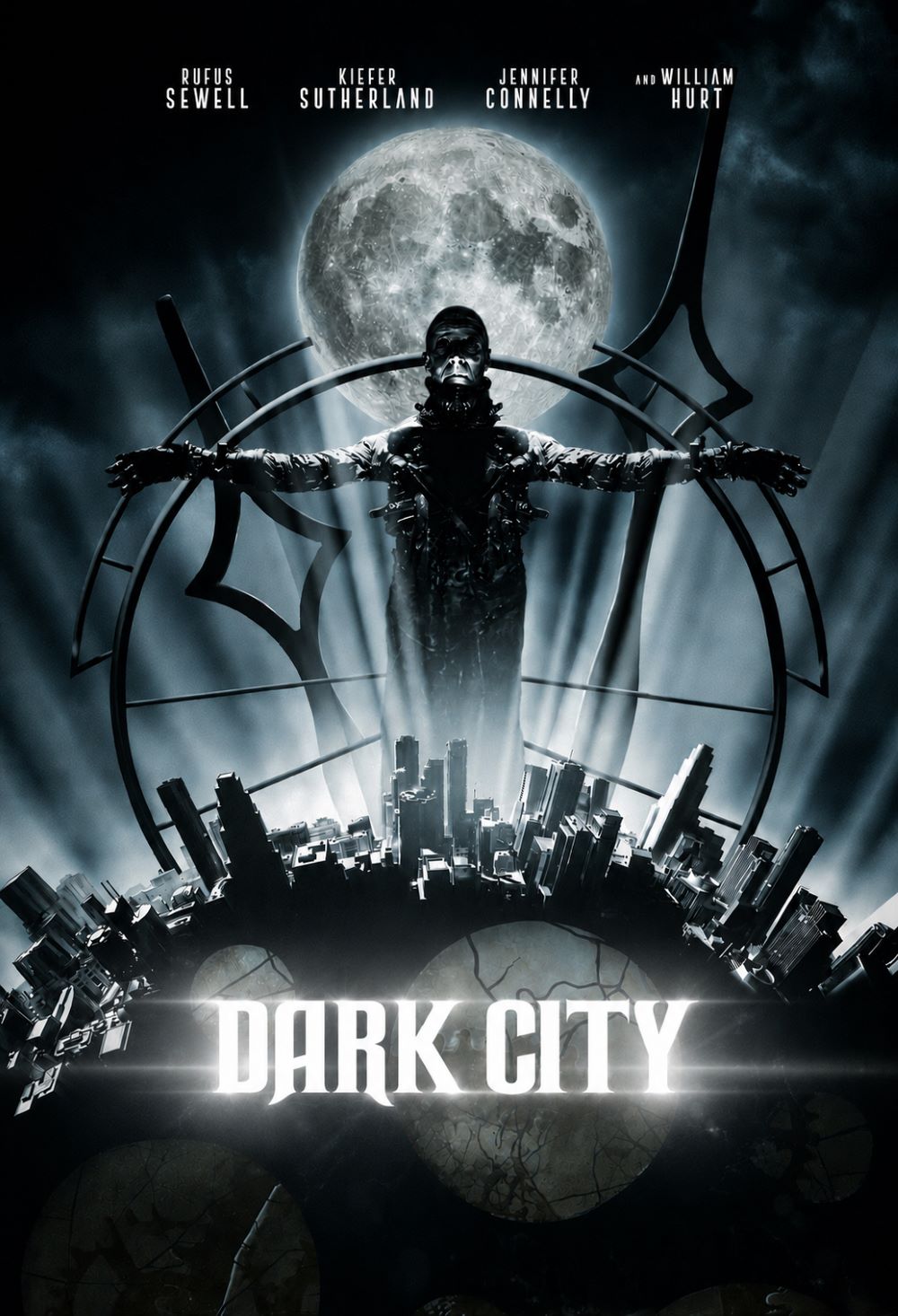
Dark City opens like a half-remembered nightmare, and that’s exactly the kind of vibe the movie sustains from start to finish. Alex Proyas builds a world that feels trapped between a detective story, a fever dream, and a sci-fi conspiracy, and the result is one of the most atmospheric films of the late ’90s.

What makes Dark City so distinctive is the way it treats its setting like an active force rather than a backdrop. The city itself feels oppressive and unstable, all sharp angles, heavy shadows, looming buildings, and damp streets that seem permanently stuck in the middle of the night. That visual approach owes a lot to German expressionism, with its warped architecture and unnatural spaces, and Proyas uses that legacy to make the city feel psychologically trapped and visually wrong in the best way. You can see the noir influence too, especially in the low-key lighting, the sense of fatalism, and the way the whole film feels like a detective story pushed through a nightmare filter.

The sci-fi side of the film is just as memorable because it doesn’t rely on shiny futurism. Instead, it leans into mystery, memory loss, and identity breakdown, which gives it a more unsettling and human quality. That’s part of why the film works so well: the weirdness is not just decorative, it’s built into the story’s central questions. The result is a movie that feels cerebral without becoming cold, and atmospheric without losing narrative momentum. Even when the film is being highly stylized, it still moves with purpose, and that keeps the viewer locked in.

The performances help sell all of that, especially Rufus Sewell as John Murdoch. He has to carry the audience through confusion, paranoia, and growing dread, and he does it with a mix of physical vulnerability and stubborn intensity. William Hurt gives the film a weary, grounded presence, while Kiefer Sutherland turns Dr. Schreber into one of those slippery, unforgettable supporting characters who always seems one step ahead of the audience. Jennifer Connelly brings warmth and melancholy to the film, which matters a lot because her character gives the story a human anchor amid all the conceptual chaos. The cast doesn’t play the material like it’s just an exercise in style; they commit to the oddness while keeping the emotional stakes legible.

What’s especially impressive is how the acting matches the movie’s visual language. A lesser cast could have made this feel overcooked or self-conscious, but here the heightened performances fit the artificial, dreamlike quality of the world. The characters are somewhat archetypal, yet that works because the film is so interested in identity as something constructed, remembered, and manipulated. In that sense, the performances aren’t just good in isolation; they’re part of the movie’s design, helping it feel like a living puzzle instead of a hollow aesthetic showcase.

The film’s influence on later sci-fi thrillers is hard to miss. A lot of movies after Dark City seem to borrow its basic flavor: the paranoid atmosphere, the reality-questioning premise, the noir-scifi crossover, and the feeling that the world itself is a conspiracy. Films like The Matrix, Memento, Minority Report, Equilibrium, and even Sin City all exist in a creative space that Dark City helped sharpen or popularize, whether directly or indirectly. It didn’t always get the mainstream recognition of some of those titles, but in terms of tone and visual influence, it was incredibly important.

Part of that legacy comes from the way Dark City captured a very specific late-’90s anxiety: the fear that memory, identity, and reality could all be manufactured. That idea became a major engine for sci-fi thrillers moving forward, especially films that wanted to combine philosophical unease with stylized action or mystery. Even the movie’s look, with its blend of noir shadows and surreal production design, became a kind of template for how to make sci-fi feel adult, moody, and psychologically unstable. It helped prove that science fiction didn’t need clean lines and sterile futures to feel intelligent; it could be dirty, haunted, and expressionist.

Dark City remains such a strong film because it understands that style and theme should feed each other. The shadows, the tilted buildings, the endless night, and the fractured sense of self all point in the same direction, creating a unified experience that feels deliberately unsteady. That’s why it lingers: not just because it looks incredible, but because it turns visual design into emotional pressure. It’s a smart, strange, and beautifully murky piece of sci-fi noir that helped clear the way for a whole wave of thrillers that wanted to feel just as paranoid and disorienting.

In the end, Dark City is the kind of movie that rewards both first-time viewers and people revisiting it years later. The plot twists are memorable, but the real achievement is the atmosphere, which is so complete it almost becomes the main character. Proyas made a film that feels like it came from the crossroads of German expressionism, classic noir, and modern sci-fi anxiety, and the result is a cult landmark that still casts a long shadow over the genre.

Review: Enemy Mine (dir. by Wolfgang Petersen)


“Truth is truth.” – Jeriba Shigan

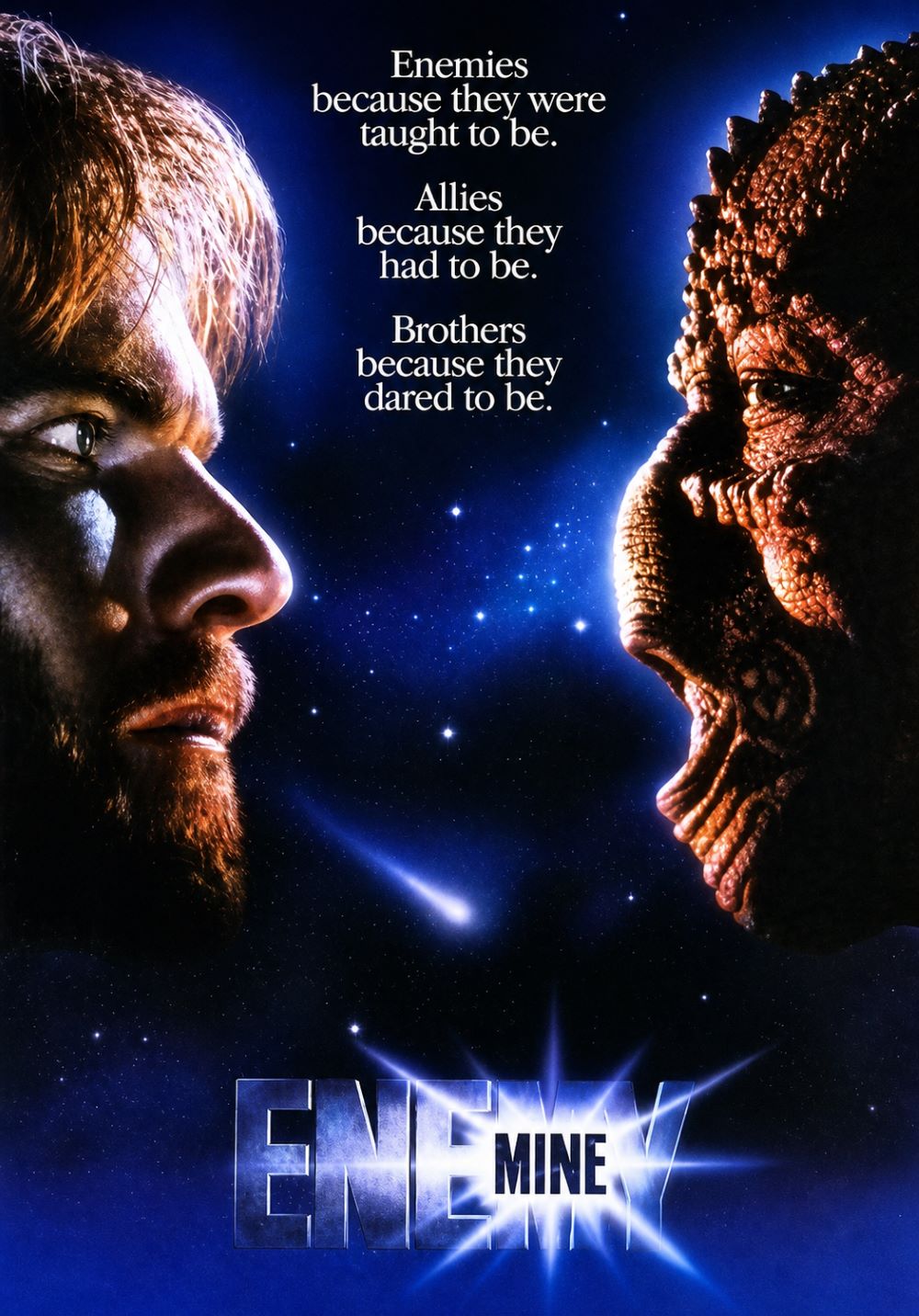
One of those 1980s sci-fi movies that sneaks up on you with more heart than flash, Enemy Mine turns a pulpy premise into something genuinely moving under Wolfgang Petersen’s steady hand. What starts as a straightforward tale of enemies forced together ends up digging deep into survival, prejudice, and the unlikely bonds that form when everything else falls away.

The storyline kicks off in the middle of an interstellar war between humans and the Drac, a reptilian alien species. Human pilot Willis Davidge, played by Dennis Quaid, crash-lands on a harsh, storm-battered planet after a dogfight with Drac warrior Jeriba Shigan. At first, it’s pure hate: they clash, scheme, and barely survive the planet’s brutal environment—freezing winds, toxic air, and hungry scavengers. But necessity breeds uneasy teamwork, and from there, the film charts a slow thaw into mutual respect and friendship. The plot builds to bigger stakes when Jeriba faces a pregnancy unique to their species, leading to themes of parenthood, loss, and legacy that give the story real emotional weight.

Interestingly, Enemy Mine‘s basic premise echoes John Boorman’s 1968 war drama Hell in the Pacific, where an American airman (Lee Marvin) and a stranded Japanese soldier (Toshiro Mifune) wash up on the same deserted island and must cooperate to survive after initial violent antagonism. Both films hinge on that classic setup of mortal enemies isolated together, grappling with a language barrier that heightens the tension—grunts, gestures, and improvised signals become their only bridge. But where Boorman leans into raw cynicism, ending on an ambiguous and bleak note that questions if reconciliation is even possible, Enemy Mine flips the script toward optimism, letting understanding bloom into a full-fledged familial bond.

What elevates Enemy Mine beyond typical space opera is its focus on themes that feel timeless, even if the delivery is pure ’80s cheese. The human-Drac conflict is a clear stand-in for racism and xenophobia, showing how propaganda and fear turn “others” into monsters in our minds. Davidge starts spouting all the usual human supremacist lines, while Jeriba embodies alien pride, but isolation strips away those defenses. The movie argues that empathy isn’t innate—it’s forged through shared hardship, language lessons (Davidge memorably recites Drac poetry), and vulnerability. There’s a queer undercurrent too, in the intense, almost parental intimacy that develops, challenging binary ideas of enemy and ally.

Dennis Quaid nails Davidge as a cocky everyman with a hidden soft side. He brings brash energy to the early fights—grinning through gritted teeth, improvising weapons from junk—but lets cracks show as grief and responsibility hit. His arc from hothead to devoted guardian feels earned, especially in quieter moments like teaching the Drac child human songs. Louis Gossett Jr. is even more impressive under layers of prosthetics as Jeriba, giving the alien a dignified, wry voice that cuts through the makeup. He conveys wisdom and humor without preaching, making Jeriba’s final lessons about tolerance land with quiet power. Their chemistry carries the film; you buy the shift from foes to family because these two sell every beat.

Thematically, Enemy Mine shines brightest in its exploration of fatherhood across species lines. After tragedy strikes, Davidge steps up for Jeriba’s child, Zammis, turning the story into a tale of nurture over nature. It’s about breaking cycles—passing on culture, rituals, and values not to perpetuate war, but to build peace. The film critiques blind loyalty to one’s side, showing how the real enemy might be the systems that demand it. Petersen, fresh off Das Boot, keeps the tone earnest, balancing tense survival scenes with tender rituals like Jeriba’s egg-laying or Davidge’s makeshift cradle. Sure, the effects age unevenly—those Drac faces look rubbery now—but the emotional core holds up.

Revisiting it today, Enemy Mine feels like a forgotten gem in the era of Aliens and Star Wars sequels. It dares to be intimate amid the spectacle, prioritizing character over conquest. The climax, with its courtroom-like showdown back in human space, hammers home the anti-war message without feeling forced. Quaid and Gossett elevate the script’s earnestness, making the bromance-turned-familial bond resonate. It’s not flawless—the pacing drags in spots, and some twists feel convenient—but its sincerity wins out. In a genre often about blowing stuff up, this one’s about building something human (or Drac) from the wreckage.

Enemy Mine reminds us that enemies are just strangers we haven’t met yet. Through Davidge and Jeriba’s journey, it champions understanding over ideology, legacy over vengeance. Quaid’s charisma and Gossett’s gravitas make it stick, turning a B-movie setup into a heartfelt plea for connection. If you’re into thoughtful sci-fi with soul, it’s worth a rewatch—imperfect, but profoundly kind.

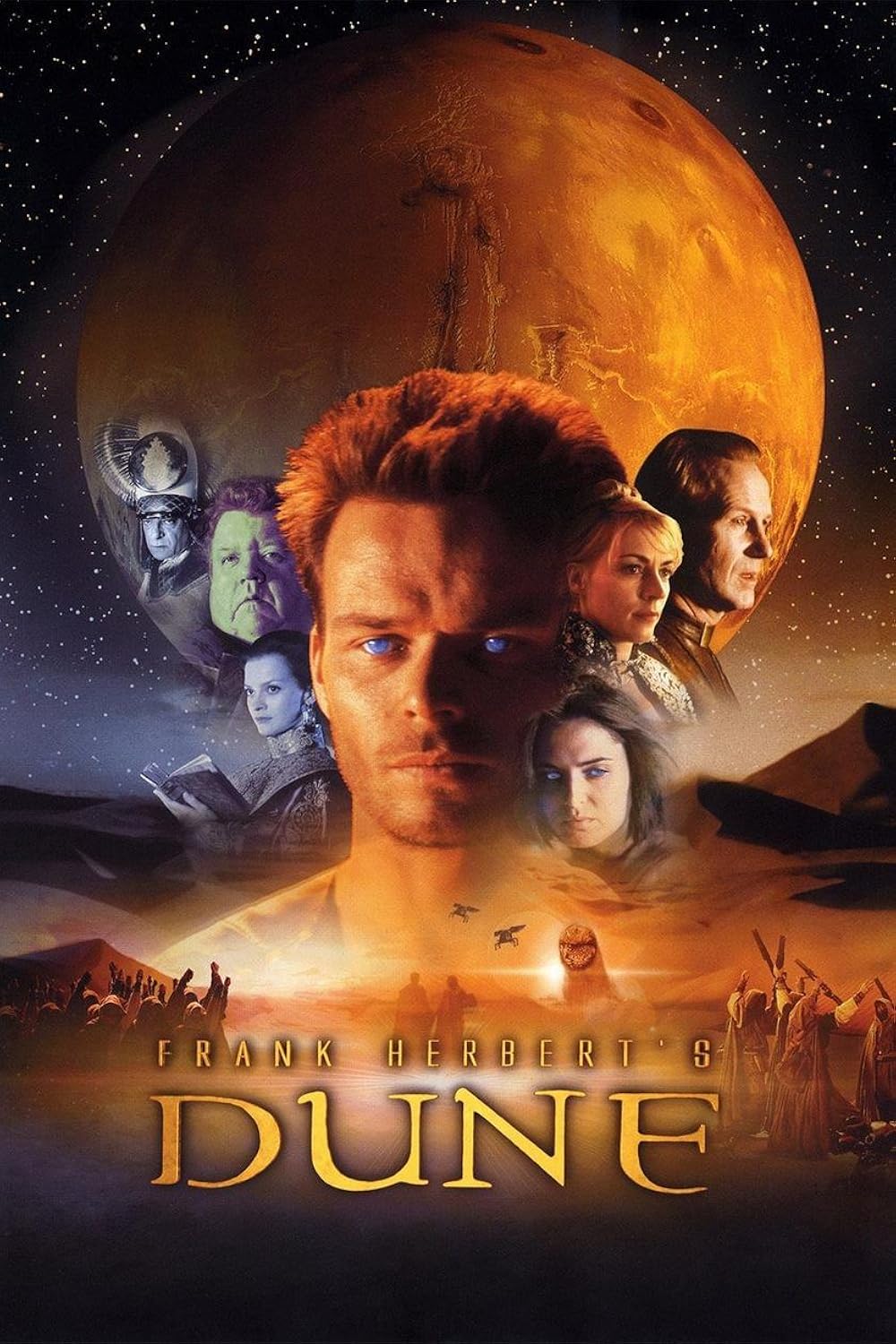
Review: Frank Herbert’s Dune


“Mercy is a word I no longer understand.” — Paul Atreides

Frank Herbert’s Dune, the 2000 Syfy Channel miniseries, stands as a scrappy yet heartfelt attempt to tame the untamable beast that is Frank Herbert’s sprawling sci-fi epic Dune. Clocking in at nearly four hours across three parts, it doesn’t pretend to be the cinematic knockout punch of Denis Villeneuve’s Dune: Part One and Dune: Part Two, nor does it dive headfirst into the psychedelic rabbit hole of David Lynch’s notoriously bonkers 1984 film. Instead, it carves out its own lane as the faithful workhorse adaptation—the one that prioritizes stuffing in every major plot thread, faction rivalry, and philosophical nugget from the novel without apology. That dogged completeness earns it major points from book purists, even if the early-2000s TV production values leave it looking like a glorious mess next to today’s blockbuster standards. It’s the version you revisit when you want Dune’s full political chessboard laid bare, rough edges and all.

Right from the opening narration, you sense this miniseries is playing a different game. While Villeneuve hooks you with those thunderous sandworm roars and vast desert expanses that make Arrakis feel like a character unto itself, and Lynch blasts you with industrial-gothic sets and nose-plug close-ups that scream “weird,” the Syfy take eases in with expository voiceover and sweeping shots of Caladan’s misty nobility. The budget screams made-for-TV: thopters wobble like cheap models on strings, sandworms shimmer with dated CGI that wouldn’t pass muster even in 2000, and interstellar travel feels more like a quick fade than a hyperspace spectacle. Yet there’s charm in the earnestness—the ornate costumes drip with imperial excess, from House Atreides’ regal blues to the Harkonnens’ sickly pallor, capturing Herbert’s baroque universe better than Lynch’s fever-dream excess or Villeneuve’s minimalist severity. It’s alien and opulent without trying to reinvent the wheel visually, letting the story’s inherent strangeness do the heavy lifting.

What truly sets this adaptation apart is its unhurried commitment to Dune’s core as a tale of interstellar realpolitik, not just laser swords and monster chases. The miniseries luxuriates in the scheming: extended scenes of Bene Gesserit whispering manipulations across generations, Emperor Shaddam IV plotting from his golden throne, and the Spacing Guild’s monopoly stranglehold get room to breathe. Lynch crammed this into a frantic 137 minutes, resorting to on-screen crawls and “the spice must flow” explainers that border on parody, while Villeneuve elegantly implies much of it through mood and subtext, trimming for pace. Here, the trap closes deliberately—Duke Leto’s honorable doom unfolds with all its tragic inevitability, Paul’s Fremen transformation simmers with ecological and messianic tension, and the Baron’s depravity feels like a rotting empire’s symptom. It’s talkier, sure, but that density mirrors the novel’s heady mix of ecology, religion, and colonialism, making the good-vs-evil surface hide a much murkier power grab.

Faithfulness is the miniseries’ superpower, and stacking it against the films drives that home. Lynch’s Dune is a directorial fever dream—brilliant in bursts (those Guild Navigators floating in spice tanks are iconic), but it mangles the timeline, invents “weirding modules” and pain boxes that Herbert never dreamed of, and caps with a cheesy resurrection and empire-toppling finale that feels like fanfic. Villeneuve’s duology is a masterclass in restraint and awe: Part One builds unbearable dread through silence and scale, Part Two unleashes Paul’s holy war turn with chilling clarity, but both demand sequels and sacrifice chunks like Thufir Hawat’s full betrayal arc or the ecological long-view for runtime efficiency. The Syfy version? It hits about 90% of the book’s beats in one self-contained package—Paul drinks the Water of Life, rides the first worm, unites the tribes, all while fleshing out Yueh’s guilt, Gurney’s survival, and Irulan’s expanded role as a scheming narrator who spies on the action. Smart tweaks like inner-monologue voiceovers clarify the mental gymnastics without Lynch’s exposition overload.

The ensemble punches above the production’s weight, delivering performances that ground the sprawl. Alec Newman’s Paul Atreides evolves from callow youth to burdened Kwisatz Haderach with a steely intensity—more seasoned than Kyle MacLachlan’s wide-eyed innocent in Lynch’s film or Timothée Chalamet’s introspective minimalist in Villeneuve’s, but convincingly haunted by prescient visions. William Hurt’s Duke Leto radiates quiet nobility, a paternal rock that Oscar Isaac matches with fiercer charisma but less screen time. Saskia Reeves’ Lady Jessica is a coiled operative, mastering the Voice while Rebecca Ferguson brings feral maternal fire and Francesca Annis floats as an ethereal priestess. Ian McNeice’s Baron Harkonnen oozes grotesque glee, echoing Kenneth McMillan’s scenery-chewing blimp but with slyer malice; Stellan Skarsgård’s version chills as a tactical monster sans the floating fat-suit camp. Chani fares best as Barbora Kodetová’s fierce Fremen equal, outshining Lynch’s rushed Sean Young and edging Zendaya’s mythic close-ups with raw tribe loyalty. Even bit players like Robert Wisdom’s Idaho shine brighter than their film counterparts.

Directorial choices by John Harrison emphasize theatricality over cinema flair, turning court scenes into operatic standoffs that suit Dune’s ritualistic pomp. Princess Irulan’s upgrade—from bookend quotes to active imperial intriguer—adds a vital scheming perspective Lynch ignored and Villeneuve teases for later. The gom jabbar test throbs with intimate terror, Fremen sietches pulse with cultural depth, and the final duel crackles despite modest effects. Pacing lags in spots—the Atreides downfall stretches, subplots like Feyd-Rautha’s gladiatorial intro feel obligatory—but that thoroughness lets overlooked gems like the dinner-table tensions and spice-blow ecology lectures land fully. Brian Tyler’s score swells bombastically, aping Zimmer’s primal dread without the subtlety, yet it propels the saga forward.

Flaws glare under modern scrutiny: effects age like milk (those ornithopters!), editing chops unevenly between threads, and some line deliveries veer stagey next to Villeneuve’s hushed precision or Lynch’s unhinged energy. It lacks the 1984 film’s quotable weirdness (“The sleeper must awaken!”) or the recent epics’ IMAX transcendence, feeling more like a filmed audiobook than immersive event cinema. Still, that scrappiness fits Dune’s prickly soul—ornate yet precarious, cerebral yet visceral. Herbert crafted a warning about heroes and empires; this miniseries trusts you to unpack it, preserving the unsettling texture the smoother films sometimes polish away.

Revisiting after the others clarifies its niche perfectly. Lynch’s Dune is the cult oddity—fractured, visionary, endlessly memeable despite narrative chaos. Villeneuve’s saga is prestige sci-fi at its peak: disciplined, subversive, a slow-burn symphony begging Part Three. The Syfy miniseries? Your completist’s deep cut—comprehensive, unpretentious, ideal for dissecting the guilds, houses, and prophecies on a rainy weekend. Constraints hobble the spectacle, but the ambition to honor Herbert’s labyrinthine blueprint shines through.

Ultimately, Frank Herbert’s Dune miniseries claims no crowns as the ultimate adaptation—that debate rages between Lynch’s deranged heart, Villeneuve’s cool mastery, or the book itself. At around 1150 words, it’s a worthy underdog: earnest, exhaustive, and true to the novel’s tangled genius. Fire it up if you crave Dune’s unfiltered intrigue over heart-pounding visuals. It respects the spice’s full flow, worms and all.

Anime You Should Be Watching: Made In Abyss (Meido in Abisu)


“I want to go to the bottom of the Abyss. Even if it means I can never come back.” — Riko

Made in Abyss is one of those shows that looks like a cozy kids’ fantasy at a glance and then quietly starts gnawing at your nerves. It’s a series that mixes cute character designs and lush worldbuilding with some of the most brutal, lingering depictions of pain and sacrifice you’ll see in mainstream anime, and that tension is really where it lives. Whether that mix works for you will probably decide if this becomes an all-timer or something you admire more than you enjoy.

The basic setup is simple but immediately gripping: the world is built around a gigantic vertical pit known as the Abyss, and humanity has basically reorganized itself around studying, looting, and mythologizing this hole in the ground. Riko, an orphaned girl living in an orphanage of trainee cave raiders, dreams of following in the footsteps of her legendary mother, a White Whistle who descended deep into the Abyss and never came back. When Riko finds Reg, an amnesiac boy with a mechanical body and an arm cannon, the two of them decide—through a mix of naïve optimism, desperation, and genuine affection—to dive all the way down to the bottom in search of answers. On paper it’s a classic coming-of-age adventure. In practice, the further they go, the more it shifts into a survival horror story where “growing up” means watching your illusions get peeled away layer by layer.

The worldbuilding is easily Made in Abyss’s biggest hook. The Abyss itself feels like a character: each layer has its own ecosystem, rules, and atmosphere, from misty forests and floating islands to grotesque biological nightmares that look like someone crossbred a nature documentary with a fever dream. The show doesn’t dump an encyclopedia on you; it sprinkles details through cave raider jargon, relics, and offhand remarks from more experienced characters until you start to feel how this society has bent itself around this hole. The “Curse of the Abyss,” which punishes you for ascending by inflicting anything from nausea to full-on bodily and mental breakdown, is a smart mechanic that makes every upward movement feel dangerous. It’s also a neat thematic metaphor for the price of trying to go back once you’ve seen too much—physically and emotionally, there’s no climbing out without a cost.

Visually, the show leans hard into contrast. The backgrounds are gorgeous: painterly vistas, rich color palettes, lovingly detailed flora and fauna. It has that “storybook you could fall into” vibe, and the camera knows how to linger on little things like light filtering through leaves or mist curling around rocks. The character designs, especially early on, skew round and childlike, which makes the brutality later hit harder. When horrific injuries happen—and they do, lingeringly—the clash between how soft the characters look and how realistically the pain is depicted is jarring on purpose. The animation sells that pain a little too well sometimes; bones don’t just break, they grind, blood doesn’t just appear, it seeps and pulses. If you’re squeamish about body horror involving children, this is a serious warning label, not a minor note.

The soundtrack deserves its reputation. The music goes for this ethereal, almost otherworldly feel, with vocals and instrumentation that make the Abyss feel ancient and sacred rather than just dangerous. Quiet, melancholic tracks show up during reflective moments and then give way to swelling, almost holy themes when the show wants you to feel the awe of descending somewhere no human should be. It’s the kind of score that would work in a nature documentary if that documentary occasionally cut to scenes of emotional devastation. The audio design in general—creature noises, echoes, the sense of space—does a lot of heavy lifting in making the Abyss feel vast instead of just “big background painting.”

Character-wise, Riko and Reg are a pretty effective duo. Riko is pure drive: she’s reckless, stubborn, and often dangerously single-minded, but she’s also the one with the knowledge, curiosity, and emotional openness that keeps the journey moving. She’s not a prodigy fighter, and the show never pretends she is; her value is in her ability to read the Abyss, improvise, and keep believing there’s something worth all this suffering. Reg, on the other hand, is the literal and figurative shield. He’s got the super-weapon, the durable body, and the instinct to protect, but he’s emotionally fragile, prone to tears, and constantly wrestling with guilt whenever he can’t prevent Riko from getting hurt. Their dynamic flips the usual “cool boy, emotional girl” archetype in a way that feels organic.

Once Nanachi enters the story, the emotional tone tilts even darker and deeper. Without spoiling specifics, Nanachi’s backstory is where the show makes it absolutely clear what kind of series it wants to be. It’s not just about dangerous monsters and mysterious relics; it’s about what happens when scientific ambition and obsession treat living beings, especially children, as raw material. Nanachi brings a weary, matter-of-fact perspective that anchors the later episodes. Through them, the show digs into trauma, survivor’s guilt, and the idea that sometimes “moving forward” just means finding a way to live with what you’ve seen.

Thematically, Made in Abyss is fascinated with curiosity and the cost of chasing it. There’s this persistent question of whether the drive to explore the unknown is noble or selfish—or if those two are inseparable. Adults in the series rationalize a lot of horrific choices in the name of progress, or the “glory” of uncovering the Abyss’s secrets. The kids are caught in that wake, inheriting both the romantic legends and the brutal consequences. The show also spends a lot of time on innocence and its erosion. Riko’s enthusiasm isn’t framed as stupid; it’s part of what makes her compelling. But episode by episode you watch that bright optimism get scarred, not in a grimdark “everything is meaningless” way so much as a “this world is much harsher than your storybooks said” way.

This is also where the series gets legitimately uncomfortable, and it’s worth talking about. Made in Abyss likes to juxtapose childlike bodies and faces with extreme suffering and, at times, questionable fanservice. There are moments of nudity, offhand sexual jokes, and camera framing choices that feel at odds with how seriously the show takes its darker material. Depending on your tolerance, this can range from minor annoyance to “I’m out.” On top of that, the willingness to linger on the physical torment of children—broken limbs, poison, invasive medical procedures—walks a very thin line between honest depiction of cruelty and exploitation. To the show’s credit, it never treats that suffering as cool or badass; it’s always presented as horrifying, traumatic, and scarring. But the intensity and frequency still won’t be for everyone.

Structurally, the first season is pretty tight. Thirteen episodes give the story enough room to breathe without bogging down in filler. The early episodes lean into exploration and atmosphere, introducing the rules, stakes, and vibe of Orth (the city around the Abyss) and the upper layers. As they descend, the pacing shifts into longer stretches of tension and pain interspersed with quiet, tender character beats. Some viewers might feel the last third becomes almost suffocatingly grim, but there’s a clear intent behind that choice; the deeper layers are supposed to feel like a point of no return, where the story’s whimsical trappings finally fall away.

If there’s a structural downside to the whole project so far, it’s that each season feels like “Part X” of a larger journey. You get emotional climaxes and a sense of progression, but not full narrative resolutions. The bottom of the Abyss remains out of reach, and major mysteries about Reg, Riko’s mother, and the true nature of the pit are left dangling. For some people, that’s exciting; it makes the world feel bigger and the story more ambitious. For others, it can feel like being cut off mid-descent just as things really start to escalate. Whether that’s a flaw or just the reality of adapting an ongoing manga will depend on how patient you are with long-game storytelling.

In terms of audience, Made in Abyss is not the comfy adventure its key art might suggest. It’s closer to a dark fairy tale dressed up as a traditional fantasy quest. If you’re into rich worldbuilding, emotional gut-punches, and stories that don’t shield their young protagonists from the full ugliness of their setting, it has a lot to offer and is worth pushing through the rough patches. If the idea of watching children suffer graphically in the name of narrative stakes sounds like a dealbreaker, no amount of gorgeous backgrounds and soaring music will make this the right fit.

Overall, Made in Abyss is a memorable, sometimes brilliant, sometimes frustrating series that takes big swings. With two seasons released so far and a third season announced but no release date as of its announcement, its strongest points—world, atmosphere, music, and the central trio—are strong enough that even people who bounce off parts of it usually still remember it vividly years later. It’s not an easy watch, but it’s a distinct one, and if you’re willing to take the plunge alongside Riko, Reg, and Nanachi, the Abyss has a way of sticking with you long after the credits roll.

Ro-Man Holiday: ROBOT MONSTER (Astor Pictures 1953)


gary loggins's avatarcracked rear viewer

My friends at The Film Detective are hosting a Drive-In Monster Movie Party all this month, and asked me to join in on the fun! When I received the list of movies they’re showing, I jumped at the chance to watch and review ROBOT MONSTER, that infamous no-budget classic directed by Phil Tucker, featuring an alien called Ro-Man who looks like a gorilla wearing a diving helmet. And honestly, how can you not love that!!

ROBOT MONSTER consistently makes critics’ all-time worst movie lists, derided for its technical ineptitude, overwrought acting, absurd dialog, and flat-out senselessness. It’s all that, to be certain, but I look at things through a different (some would say “shattered”) lens. First, did I enjoy it? The answer: a resounding yes! The movie may not be on a par with CASABLANCA or THE SEARCHERS , but it didn’t bore me or make me want to shut…

View original post 372 more words

Confessions of a TV Addict #9: The Amazing Sci-Fi Worlds of Irwin Allen Pt. 2


gary loggins's avatarcracked rear viewer

Last week, I did an overview of producer Irwin Allen’s first two sci-fi shows, VOYAGE TO THE BOTTOM OF THE SEA and LOST IN SPACE. Today, Allen’s final shows in the quartet, THE TIME TUNNEL and LAND OF THE GIANTS! 

Where Allen’s LOST IN SPACE was juvenile fantasy, his next series THE TIME TUNNEL (ABC, 1966-67) took a more serious tone. Scientists Dr. Doug Phillips (Robert Colbert ) and Dr. Tony Newman (James Darren), working on the top-secret government Project Tic-Toc, become “lost in the swirling maze of past and future ages… (and) tumble helplessly toward a new fantastic adventure, somewhere along the infinite corridors of time” (at least according to the opening narration!). Project director Lt. Gen. Kirk (Whit Bissell ), ‘electrobiologist’ Dr. Ann McGregor (Lee Meriwether), and electronic genius Dr. Raymond Swain (John Zaremba) track the pair through those “infinite corridors” and try to assist in navigating them…

View original post 696 more words

Confessions of a TV Addict #8: The Amazing Sci-Fi Worlds of Irwin Allen Pt. 1


gary loggins's avatarcracked rear viewer

Irwin Allen  (1916-1991) wore many different hats during his long career: magazine editor, gossip columnist, documentarian, producer, director. He helped usher in the Age of the Disaster Movie with such 70’s hits as THE POSEIDON ADVENTURE and THE TOWERING INFERNO, but before that he was best known as the producer of a quartet of sci-fi series from the Swingin’ 60’s. From 1964 to 1970 he had at least one sci-fi show airing in prime time… during the 1966-67 season, he had three, all complete with cheezy-looking monsters, campy humor, stock footage, guest stars (some on their way up… some down!), special effects by Oscar winner L.B. Abbott, and music by John Williams (who later scored a little thing called STAR WARS )! Here’s a look at the Amazing Sci-Fi Worlds of Irwin Allen:

Allen’s first foray into sci-fi TV was VOYAGE TO THE BOTTOM OF THE SEA (ABC, 1964-68), based…

View original post 699 more words

Halloween Havoc!: REPTILICUS (AIP 1962)


gary loggins's avatarcracked rear viewer

Are you ready for some Danish horror? Well, don’t get too excited; REPTILICUS is a giant monster flick that doesn’t really deliver the goods. The monster itself is on a par with THE GIANT CLAW , the film’s stuffed with stock footage and needless padding, the acting and dialog are way below average. Yet I’ve always liked this loopy movie; it has an endearing charm of its own, and is entertaining in spite of its limitations.

“High above the Arctic Circle”, copper miner drilling into the Earth’s crust hit flesh and bone. Scientists are called in, and sample’s are sent to the Copenhagen Aquarium. A piece of tail is kept in a refrigeration unit, until a sleepy scientist forgets to lock the door tight. The tail begins to rapidly regenerate, and turns into a giant prehistoric lizard dubbed Reptilicus. The giant lizard gets loose and begins to wreak the usual giant lizard…

View original post 434 more words

Halloween Havoc!: RETURN OF THE FLY (20th Century-Fox 1959)


gary loggins's avatarcracked rear viewer

Last year’s “Halloween Havoc” took a bug-eyed look at THE FLY , so this year we’ll buzz in on it’s sequel. RETURN OF THE FLY was done on a much lower budget and trades in the original’s Technicolor for black and white, but it’s got a lot going for it. A creepy atmosphere and a strong performance from Vincent Price help lift the movie above it’s admittedly ‘B’ status, and while not wholly successful, it is fun for “Bug-Eyed Monster” fans.

The film opens at the rain-soaked graveyard burial of Helene Delambre, widow of Andre and mother to young Philippe, who’s now all grown up. Uncle Francois (Price) finally relates the truth about Andre’s mad experiments with matter disintegration/reintegration to Philippe, and the brooding youngster now wants to resume his father’s work and vindicate his legacy. Together with his fellow scientist Alan Hines, Philippe begins to reassemble his father’s machinery, moving…

View original post 479 more words

Strange Days Indeed: Woody Allen’s SLEEPER (United Artists 1973)


gary loggins's avatarcracked rear viewer

(I’m posting a bit earlier than usual so I can head up to the Mecca of baseball, Fenway Park! Go Red Sox!!)

Full disclosure: I lost interest in Woody Allen around the time he decided to become a “serious” filmmaker beginning with INTERIORS. Sure, I thought ZELIG and PURPLE ROSE OF CAIRO were funny, and A MIDSUMMER’S NIGHTS SEX COMEDY had its moments. But for me, the years 1969-1977 were Woody’s most creative period, spanning from the absurd TAKE THE MONEY AND RUN to the Oscar-winning ANNIE HALL. Landing right about midway in that timeline stands his brilliant sci-fi satire SLEEPER, which owes more to Chaplin and Keaton than Asimov and Arthur C. Clarke.

The fun begins when Miles Monroe (Allen) is woken from his cryogenic sleep in the year 2173. Two hundred years earlier, Miles had been the proprietor of the Happy Carrot Health Food store, and went in for minor surgery on…

View original post 588 more words