Guilty Pleasure No. 124: No Escape (dir. by Martin Campbell)


So, No Escape is a movie that, if you’re a fan of mid-90s action flicks, you’ve probably stumbled across on late-night cable at some point. Directed by Martin Campbell, a guy who would go on to resurrect James Bond with GoldenEye, this 1994 sci-fi romp is a strange, almost forgotten artifact from a time when every action movie seemed to be set in a grim, corporate-run future. It’s a movie that borrows so heavily from its predecessors that you could make a drinking game out of spotting the references, yet it does it all with such earnest, sweaty commitment that it’s hard to completely hate. It’s a film that, in a perfect world, should have been a genre classic, but its own bloat and inconsistent rhythm drag it down to the level of a solid, slightly-defective guilty pleasure.

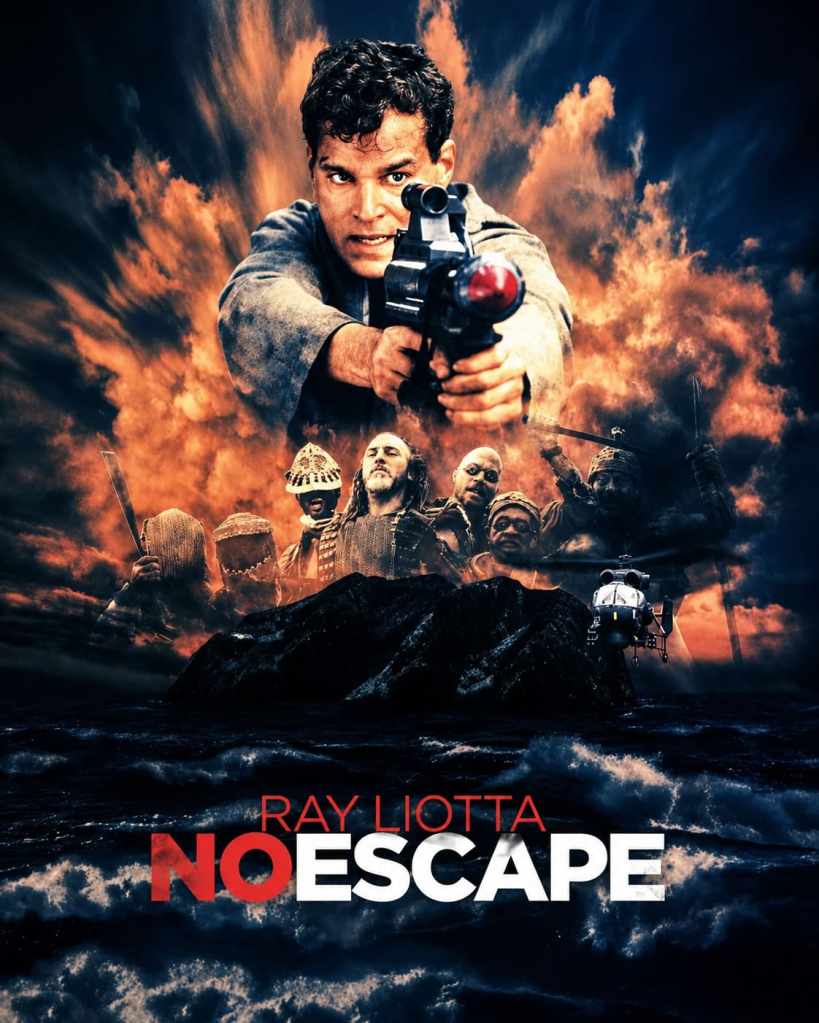
The setup is pure B-movie gold. It’s the year 2022, which felt super futuristic back then, and the world has privatized its prison system. Ray Liotta stars as Captain Robbins, a man sentenced to life on the brutal island prison of Absolom after he kills his commanding officer. The premise of a super-max prison on a remote island, a “civilized” versus “savage” faction of inmates, and a hero who just wants to escape is a greatest-hits medley of Escape from New YorkMad Max 2: The Road Warrior, and Papillon. The film’s villain, Marek, played by a gloriously over-the-top Stuart Wilson, leads a tribe of leather-clad maniacs called the Outsiders, while Lance Henriksen’s Father leads the peaceful, agrarian community of Insiders. Our hero is thrust between them, forced to navigate tribal politics while plotting his getaway. It’s as familiar as an old pair of boots, but there’s a comfort in that familiarity, a sense that you know the beats and can just enjoy the ride.

And for a while, the ride is genuinely fun. Campbell, who clearly has an eye for widescreen spectacle, makes the lush Australian location look both beautiful and hostile. The production design is actually one of the film’s strongest assets; the Outsiders’ camp is a junkyard nightmare, while the Insiders’ village is a quaint, shanty-town paradise built from salvaged scrap. It gives the film a distinct, tactile feel that a lot of sterile sci-fi movies lack. Liotta is perfectly cast as the tough, morally ambiguous soldier. He brings a rough, cerebral quality to the role, making Robbins feel like a guy who’s seen too much and is just plain tired. Stuart Wilson, meanwhile, hams it up as the villain Marek, delivering a performance so broad and gleefully evil that he borders on self-parody, but in a way that’s weirdly compelling and provides some much-needed comic relief. The film feels like it’s building to something great, a tense and explosive showdown between these two drastically different tribes.

The problem is that No Escape simply does not know when to stop. This is a movie with a lean, mean premise that somehow stretches itself out to nearly two hours, and you feel every single minute of the back half. The pacing is wildly inconsistent, lurching between tense survivalist stuff, full-blown action set pieces, and stretches of world-building exposition that just sit there and deflate the momentum the film worked hard to build. There are entire sequences that feel like they exist purely to pad the runtime, and by the time the third act rolls around and Robbins is organizing his prison-break uprising, you’re less excited by the payoff and more just relieved that the movie is finally getting somewhere. A tighter edit, trimming maybe twenty to thirty minutes of the connective tissue, would’ve turned this into a genuinely great B-movie instead of a good one hamstrung by its own indulgence.

That’s really the frustrating thing about No Escape. Everything that makes prison-island and dystopian-exile movies fun is present and accounted for here: a charismatic antihero, a nasty villain, a societal allegory bubbling under the surface, brutal action, and a satisfying underdog uprising. Campbell clearly understood the assignment and delivered those elements competently, sometimes even excitingly. But competent execution of familiar beats can only carry a movie so far when the film refuses to trim the fat, and the sluggish, uneven pacing keeps dragging you out of scenes that should be gripping. It’s the kind of movie that probably could’ve stood shoulder to shoulder with its genre influences if someone in the editing room had been a little more ruthless.

As it stands, No Escape lands squarely in guilty-pleasure territory. It’s not a film you’d necessarily recommend to someone as an essential genre entry, but if you’re already the type who loves this stuff, the dystopian island prisons, the tribal factions, the gruff antihero clawing his way toward freedom, there’s a lot here to enjoy despite the flab. It wears its influences on its sleeve, executes them with more skill than it probably gets credit for, and then undercuts itself by overstaying its welcome. Somewhere in this movie is a tight, mean ninety-minute action flick that could’ve been a minor classic. Instead we got a longer, baggier version that’s still worth a watch on a lazy afternoon, just with the fast-forward button within easy reach for the slower stretches.

Previous Guilty Pleasures

  1. Half-Baked
  2. Save The Last Dance
  3. Every Rose Has Its Thorns
  4. The Jeremy Kyle Show
  5. Invasion USA
  6. The Golden Child
  7. Final Destination 2
  8. Paparazzi
  9. The Principal
  10. The Substitute
  11. Terror In The Family
  12. Pandorum
  13. Lambada
  14. Fear
  15. Cocktail
  16. Keep Off The Grass
  17. Girls, Girls, Girls
  18. Class
  19. Tart
  20. King Kong vs. Godzilla
  21. Hawk the Slayer
  22. Battle Beyond the Stars
  23. Meridian
  24. Walk of Shame
  25. From Justin To Kelly
  26. Project Greenlight
  27. Sex Decoy: Love Stings
  28. Swimfan
  29. On the Line
  30. Wolfen
  31. Hail Caesar!
  32. It’s So Cold In The D
  33. In the Mix
  34. Healed By Grace
  35. Valley of the Dolls
  36. The Legend of Billie Jean
  37. Death Wish
  38. Shipping Wars
  39. Ghost Whisperer
  40. Parking Wars
  41. The Dead Are After Me
  42. Harper’s Island
  43. The Resurrection of Gavin Stone
  44. Paranormal State
  45. Utopia
  46. Bar Rescue
  47. The Powers of Matthew Star
  48. Spiker
  49. Heavenly Bodies
  50. Maid in Manhattan
  51. Rage and Honor
  52. Saved By The Bell 3. 21 “No Hope With Dope”
  53. Happy Gilmore
  54. Solarbabies
  55. The Dawn of Correction
  56. Once You Understand
  57. The Voyeurs 
  58. Robot Jox
  59. Teen Wolf
  60. The Running Man
  61. Double Dragon
  62. Backtrack
  63. Julie and Jack
  64. Karate Warrior
  65. Invaders From Mars
  66. Cloverfield
  67. Aerobicide 
  68. Blood Harvest
  69. Shocking Dark
  70. Face The Truth
  71. Submerged
  72. The Canyons
  73. Days of Thunder
  74. Van Helsing
  75. The Night Comes for Us
  76. Code of Silence
  77. Captain Ron
  78. Armageddon
  79. Kate’s Secret
  80. Point Break
  81. The Replacements
  82. The Shadow
  83. Meteor
  84. Last Action Hero
  85. Attack of the Killer Tomatoes
  86. The Horror at 37,000 Feet
  87. The ‘Burbs
  88. Lifeforce
  89. Highschool of the Dead
  90. Ice Station Zebra
  91. No One Lives
  92. Brewster’s Millions
  93. Porky’s
  94. Revenge of the Nerds
  95. The Delta Force
  96. The Hidden
  97. Roller Boogie
  98. Raw Deal
  99. Death Merchant Series
  100. Ski Patrol
  101. The Executioner Series
  102. The Destroyer Series
  103. Private Teacher
  104. The Parker Series
  105. Ramba
  106. The Troubles of Janice
  107. Ironwood
  108. Interspecies Reviewers
  109. SST — Death Flight
  110. Undercover Brother
  111. Out for Justice
  112. Food Wars!
  113. Cherry
  114. Death Race
  115. The Beast Within
  116. Girl Series
  117. Gone in 60 Seconds
  118. Swordfish
  119. Marked For Death
  120. The Internship
  121. The Angry Red Planet
  122. 2012
  123. Old School

Review: Mercy (dir. by Timur Bekmambetov)


“You and I both know that this clock is bullshit. You make your decisions about the people in this courtroom before they’re even in this chair.” — Det. Chris Raven

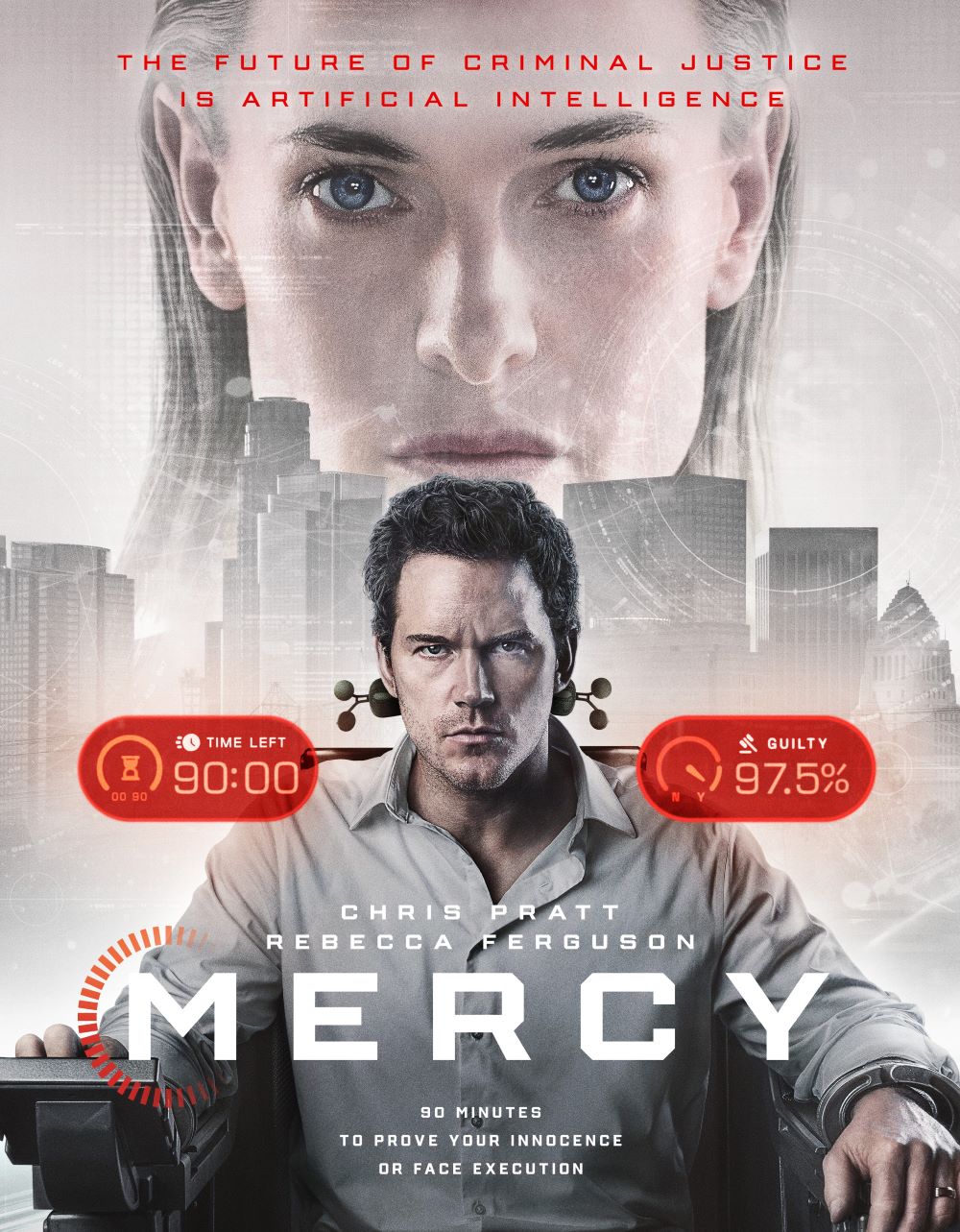
Mercy is the kind of movie that looks great in a trailer and promises a slick, high‑concept thriller, but then sputters once you sit through it. It’s set in a near‑future Los Angeles where the LAPD relies on a program called the “Mercy Court,” in which AI judges rapidly process violent crime cases, and the whole thing is framed as a techno‑noir twist on the courtroom thriller. The central gimmick is compelling on paper: detective Chris Raven wakes up strapped into a high‑tech chair, accused of brutally murdering his wife, and has 90 minutes to prove his innocence before being executed by a sonic blast. That setup alone should guarantee at least a tense, scrappy B‑movie; instead, the film keeps undercutting itself with lazy writing, cluttered subplots, and a surprising lack of nerve.

The biggest problem is the script, which feels like it’s trying to be three different movies at once and doesn’t really commit to any of them. On one level, Mercy wants to be a real‑time investigation, where Raven works with an AI judge to access security feeds, social media, emails, and police databases to piece together his wife’s murder. In practice, this becomes a series of exposition dumps—Raven talking out his thought process, the AI reciting rules, and side characters popping in just long enough to drop information before the movie rushes on. It’s not building tension; it’s building a checklist. The film’s pacing stays brisk, but that’s because so much of the middle act feels like procedural filler rather than a genuine mystery.

Tonally, Mercy swings wildly between modes. At times it’s going for something like a sleek, dystopian Minority Report–style narrative, then it veers into a revenge‑driven character drama about a cop who may be too reliant on an authoritarian justice system, and then it suddenly transforms into a generic bomb‑plot action movie. The initial setup—a world where people suspected of murder are strapped into a chair, presumed guilty, and given a brutally short window to prove themselves—feels genuinely unsettling. But the movie doesn’t really sit with those implications; it flirts with the moral and ethical questions and then rushes off to a more conventional, physical threat. What should be a caustic, uncomfortable critique of automated justice reduces to another last‑minute rescue mission.

The central mystery is another missed opportunity. The evidence stacked against Raven is substantial—blood on his clothes, footage from cameras, his drinking problem, and a history of violent outbursts—but the film telegraphs the real culprit so early that the final reveal feels less like a twist and more like a completion of prior signposting. The story tries to make the framing of Raven seem like a master‑plan‑level conspiracy, but the plan hinges on an almost impossible level of predictability on his part. The more the movie explains, the harder it becomes to buy into the logic of the setup. Instead of feeling like the net has tightened around him in a sophisticated way, it feels like the script is forcing contrivances to land on top of him.

Chris Pratt’s performance is an odd fit for the material. The movie seems determined to present him as a darker, more tortured version of himself, and there are a few moments where that dynamic works—Raven’s vulnerability, his self‑loathing, his conflicted belief in the system he helped create. But the script never really lets him live in the morally grey space it clearly wants him to inhabit. Instead, it keeps reassuring us that he’s essentially a good cop who’s been wronged, which undercuts any real tension about whether he might actually be guilty or at least dangerous. You get glimpses of a more interesting character, but they’re constantly being smoothed over by the need for a likable protagonist.

The AI judge, voiced and embodied by Rebecca Ferguson, is one of the few genuinely strong elements here. She plays the voice and presence of the system with a cool, clipped rationality that occasionally shades into dry wit, and her interactions with Raven hint at a more ambitious film lurking underneath. The idea of an AI judge slowly questioning its own assumptions—pushing back on emotional appeals, probing inconsistencies, and gradually developing something resembling curiosity—is inherently compelling. Ferguson gives the character enough personality and nuance to make that arc feel plausible, but the script mostly treats her as a glorified search engine and a moral referee for the final act, when she should be the co‑lead driving the film’s central conflict.

The supporting cast is fine, but underused. Raven’s partner mostly exists to run errands off‑screen—tracking suspects, raiding houses, reacting over the comms—so the movie can cut away from the courtroom whenever it gets bored. Raven’s AA sponsor is saddled with a mix of clumsy foreshadowing and heavy‑handed motivation, which only becomes relevant when the revenge angle kicks in. Raven’s daughter functions almost entirely as emotional leverage and a hostage, escalating the stakes in a way that feels mechanical rather than organic. You can tell the film wants these relationships to carry weight, especially when it leans on family flashbacks and guilt, but they play out like bullet points instead of lived‑in dynamics.

Visually, the film leans into its creator’s usual fondness for screens within screens, overlay graphics, and multimedia collage. The Mercy Court itself is a striking concept—an almost clinical chamber where Raven is strapped into a chair while the AI’s interface shifts around him—yet the movie keeps cutting away to external action once the premise might otherwise grow too tense or claustrophobic. The pacing is brisk, and there are a few set‑pieces—an intense raid on a suspect’s house, the final assault on the courthouse—that deliver a basic level of genre competence. The issue is that competence is about as high as Mercy ever aims; it never really experiments with the form or stakes of its own setup.

Where the film stumbles most is in its attempt at commentary. The world it presents is, on paper, horrifying: defendants are presumed guilty, strapped into a chair, surveilled across every aspect of their digital life, and given a brutally short window to clear their name before being executed. That’s fertile ground for a scathing critique of mass surveillance, algorithmic justice, and the erosion of due process. But the movie is oddly kind to the system itself; by the end, the AI judge is portrayed as more reasonable and “fair” than most humans, and the real villain is just an individual with a personal grudge. The film nods at privacy violations and the moral grey zones of automating justice, then quickly moves on to a more traditional, physical threat. For something that positions itself as a provocative AI courtroom thriller, it ends up feeling strangely apolitical and conflict‑averse.

To be fair, there are a few things Mercy gets right. The core structure—a detective investigating his own case against a clock—remains inherently watchable, even when handled clumsily. Ferguson’s performance gives the material a center of gravity whenever it threatens to spin out into nonsense. And there’s an occasionally interesting tension between Raven’s instinct‑driven, emotionally charged approach and the AI’s cold, probabilistic logic, suggesting a better film that really pits those worldviews against each other instead of letting them conveniently converge. If you go in with low expectations and a tolerance for generic sci‑fi thrillers, you might find it mildly diverting.

But for anyone hoping Mercy would be a sharp, nasty, high‑concept genre piece with something to say about AI, policing, and due process, it’s a disappointment. The movie leans on an admittedly strong premise, some slick production design, and a few scattered performances, yet it never commits to either being a full‑tilt B‑movie or a genuinely thoughtful techno‑thriller. It’s not unwatchable, just frustratingly timid—content to skim the surface of its own ideas and then blow something up when things get complicated. By the time the credits roll, you’re left with the sense that the AI judge wasn’t the only one operating on a strict time limit; somewhere along the way, the film seems to have run out of patience with itself, too.