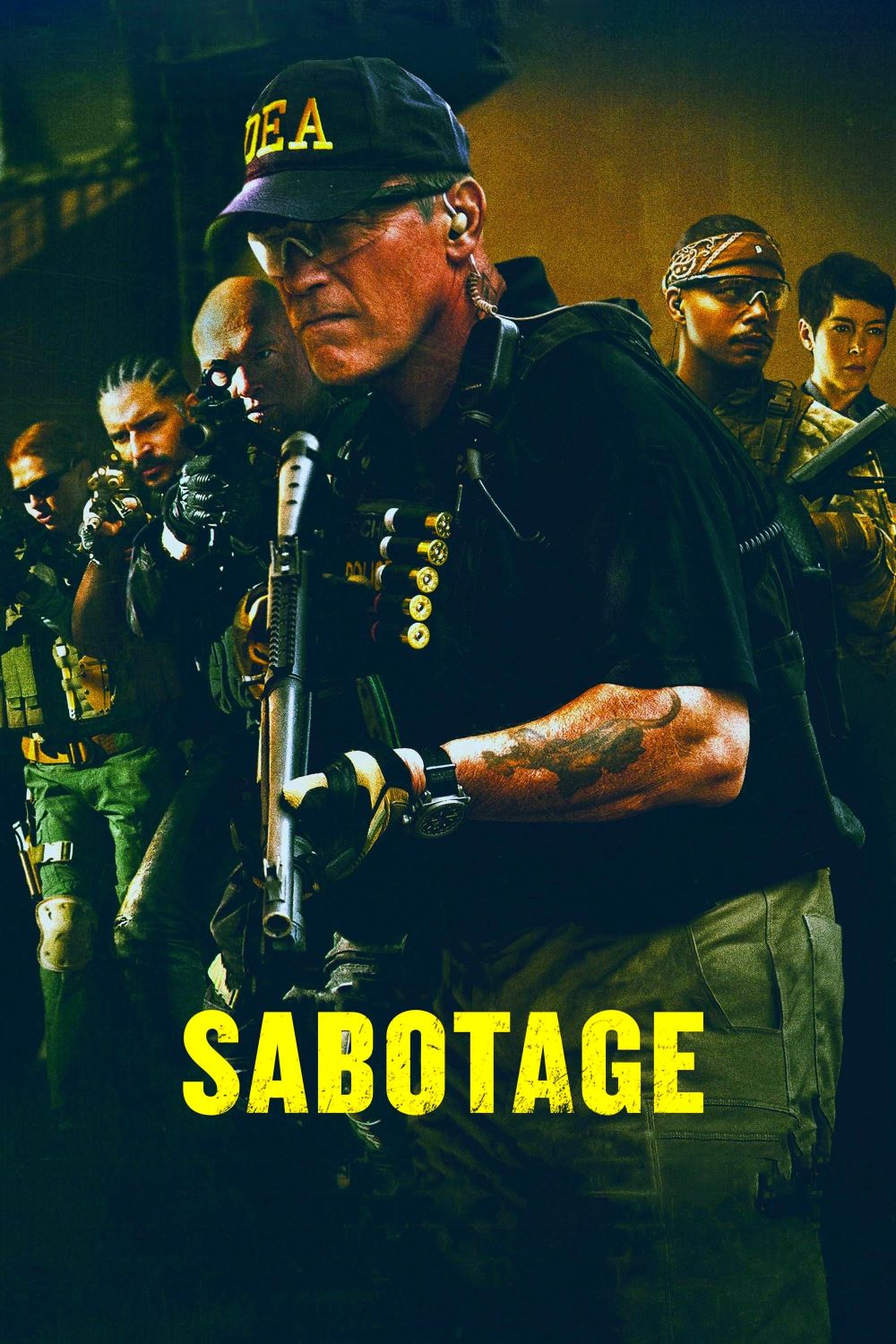
Review: Sabotage (dir. by David Ayer)


“Ammo’s cheap, my life ain’t.” — Joe “Grinder” Phillips

Watching Sabotage, the 2014 David Ayer action-thriller, is a bit like finding a beautiful, high-performance sports car that’s been stripped for parts. It’s got a shiny exterior in Arnold Schwarzenegger, a director known for gritty cop dramas, and a promising cast, but under the hood, the engine is sputtering and the chassis is held together with duct tape and questionable intentions. The film is a strange, often unpleasant beast that seems unsure if it wants to be a complex whodunit, a grim torture-porn horror flick, or a simple action vehicle for its aging star. In trying to be all of them, it mostly succeeds at being a confusing, albeit fascinating, mess.

The film starts with a classic set-up that reeks of potential. Schwarzenegger plays John “Breacher” Wharton, the leader of an elite and ruthless DEA task force. During a cartel raid, the team decides to skim $10 million in cash from the seizure for themselves. Their plan backfires when they go to retrieve the hidden money and find it gone. This creates a perfect powder keg of suspicion and paranoia. While they’re all investigated, no one is charged, and they are put back into action. The plot kicks into high gear when members of the team start getting picked off one by one in increasingly gruesome and inventive ways. Now, Breacher has to find out who is hunting his team, while simultaneously being haunted by a dark secret from his past.

The mystery is clearly meant to be a bloody, modern interpretation of a classic “stranded and hunted” thriller formula. The problem is, the “whodunit” aspect falls flat because the story is just too messy to build any real suspense. The characters are an indistinguishable mass of nicknames like “Monster” (Sam Worthington), “Grinder” (Joe Manganiello), and “Sugar” (Terrence Howard), making it difficult to keep track of who is who, let alone care when they meet their grisly end. The film gives you little reason to invest in them, as they are an intentionally unlikable bunch of thugs who treat civilians with contempt, break the law without a second thought, and generally act like cartoon villains with badges. When a character is killed off, it’s often not a shocking, gut-wrenching twist, but more of a shrug: “Oh, that guy’s gone now.” The plot becomes less about solving a puzzle and more about waiting for the next spectacularly bloody demise.

And those demises are where David Ayer’s direction makes its most “memorable” impact. The violence in Sabotage is not your typical Schwarzenegger shoot-’em-up. It is unflinchingly brutal and hyper-realistic, leaning heavily into the kind of gruesome, elaborate set-pieces that feel borrowed from the horror genre. We’re not talking about clean, one-shot kills; we’re talking about brutal, drawn-out murders involving trains, industrial equipment, and a staggering amount of viscera. The camera lingers on open wounds, bodies nailed to ceilings, and the general gory aftermath of each death with a kind of morbid fascination. The film’s obsession with gore is relentless. It even opens with a scene of Breacher watching a video of his family being tortured, setting a grim, nasty tone that never quite lets up. It feels like Ayer is trying to show the brutal, unglamorous reality of violence, but it quickly crosses the line into exploitation, making the film a punishing watch for anyone not specifically seeking out that level of graphic brutality.

The cast is a mixed bag, and it’s one of the more interesting paradoxes of the film. Schwarzenegger, despite being the star, is a strange fit for this material. Critics noted that he seems to be trying to give a more “dark and complex performance,” mining reserves of darkness he rarely accesses. However, the movie around him doesn’t quite support that ambition. He’s still “Arnold,” and his innate charisma and larger-than-life persona often clash with the grim, nasty world Ayer has created. His presence is too big for the bleak mundanity the movie is striving for, creating a constant tension between the action hero audiences expect and the broken, haunted man the script demands. In stark contrast, it was the supporting female cast that often stole the show. Mireille Enos delivers a truly fearless and unhinged performance as Lizzy, the team’s drug-addicted female member, bringing a level of manic energy that is genuinely engaging. Olivia Williams, as the no-nonsense homicide detective Caroline Brentwood, is also a standout. She plays the “only sane person in the room” with an air of world-weary professionalism that feels like it belongs in a better movie. But even her character is dragged into the muck, with a strange and unnecessary romance that feels forced and out of place.

It’s almost impossible to discuss Sabotage without talking about the tone. The film is relentlessly cynical, presenting a world where the line between law enforcement and the cartels is practically non-existent. Ayer, who has explored the dark side of law enforcement in previous work, seems to be asking a bold question here: what happens when cops are worse than the criminals? The answer, according to the film, is a lot of violence and a total lack of moral compass. This cynical view is further dragged down by a barrage of cheap, sophomoric humor. The script is peppered with scatological jokes, crude sexual banter, and homophobic slurs that feel less like “gritty realism” and more like the writers are trying to be edgy just for the sake of it. This creates a bizarre, off-putting atmosphere where the dark, philosophical musings about corruption are undercut by a high-school-level obsession with bodily functions, making the whole experience feel awkward and juvenile.

In the end, Sabotage is a textbook example of a movie that is sabotaged by its own ambitions. It boasts a director with a distinctive style for crime stories, a legendary action star trying something different, and a cast full of talented actors. Yet, it’s ultimately sunk by a script that can’t balance its whodunit premise with its over-the-top gore, and a tone that can’t decide if it’s a serious crime drama or a nasty, nihilistic joke. It’s not boring, and you can’t say Ayer didn’t try something different with the action genre, but the result is an ugly, mean-spirited, and often just plain unpleasant film. For a fascinating look at what happens when a good idea goes horribly off the rails, Sabotage is a case study in wasted potential. But for a good movie? You’ll want to look elsewhere.
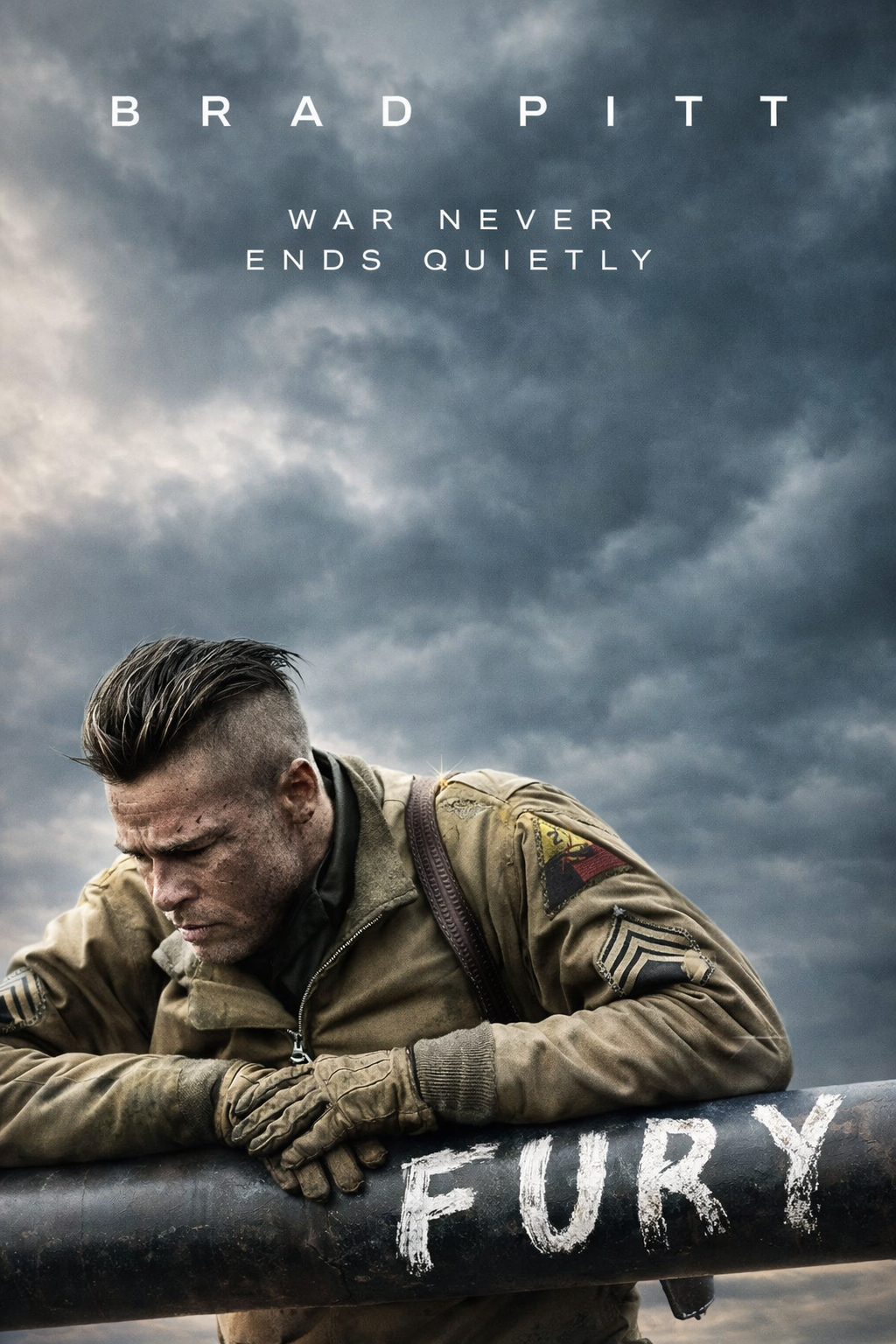
Review: Fury (dir. by David Ayer)


“Ideals are peaceful. History is violent.”

You know that feeling when a war movie tries so hard to be gritty that it forgets to be anything else? Fury, directed by David Ayer, flirts with that problem but mostly stays on the right side of the line. Released in 2014, this WWII drama follows a five-man American tank crew as they push deeper into Nazi Germany in April 1945. The war is almost over, but as the film constantly reminds us, that only makes the fighting more desperate and meaningless. Ayer, who wrote Training Day and directed End of Watch, clearly wanted to make a grimy, claustrophobic, and visceral experience—not a clean, heroic adventure. And for the most part, he succeeds. But the movie is also uneven, sometimes brilliant, and occasionally frustrating. One thing becomes clear early on: Ayer is not just making a war movie. He is trying to out-war the war movie that changed everything. Saving Private Ryan raised the bar for realistic combat violence in 1998, and ever since, directors have been chasing that opening Omaha Beach sequence. Fury spends its entire runtime trying to shove that bar even higher, especially in its final act, where the violence tips over from realistic into something almost performative—as if Ayer is daring you to look away.

The plot is simple. We meet Don “Wardaddy” Collier, played by Brad Pitt, as the seasoned commander of a Sherman tank nicknamed “Fury.” His crew includes Boyd “Bible” Swan (Shia LaBeouf), the religious gunner; Coon-Ass (Jon Bernthal), the volatile loader; and Grady (also Bernthal, though the character is actually Grady “Coon-Ass” Travis; the movie gives everyone a nickname). The crew loses their assistant driver in the opening scene, and they get a replacement: Norman Ellison (Logan Lerman), a young typist who has never fired a gun and has no intention of killing anyone. The rest of the film is basically a crash course in how war turns gentle men into monsters—or at least into effective killers.

What works best in Fury is the sense of being trapped inside a steel coffin. Ayer films almost everything from inside the tank or right next to it. You hear every shell clank, every engine strain, every bullet ping off the hull. The sound design is incredible—it’s the kind of movie where you feel the bass in your chest during combat scenes. And the tank battles are brutally realistic. There’s no slick choreography here. When a German Tiger tank shows up, the fight becomes static, clumsy, and terrifying. The Sherman isn’t some superhero; it’s outgunned and out-armored, and the crew wins only because they’re desperate and lucky. That sequence alone is worth the price of admission. You can feel Ayer’s respect for Saving Private Ryan in those moments—the same handheld cameras, the same sudden death, the same sense that no one is safe. But then the film goes further.

Brad Pitt gives one of his tougher, quieter performances. Wardaddy isn’t a philosopher or a hero. He’s a tired man who has seen too much and made too many compromises. He forces Norman to execute a German prisoner, not out of cruelty but out of a cold, broken logic: if Norman can’t kill, he’ll get the whole crew killed. Pitt sells the weight of that decision without grand speeches. Shia LaBeouf is surprisingly restrained as Bible, a character who prays before each battle but never preaches. The real surprise is Logan Lerman. He starts as a scared kid who vomits at the sight of corpses and ends the film doing things that would ruin anyone’s soul. His transformation is uncomfortable to watch, but that’s the point.

However, the movie has some clunky moments. One extended scene has Wardaddy and Norman sharing a meal with two German women in an abandoned apartment. It’s supposed to show a brief flash of normal life—eggs, music, a soft bed—but it feels oddly staged. The women are just props. They have no real personality except to be gentle and then get killed offscreen. It’s a rare moment where Ayer’s macho instincts flatten the story instead of deepening it. But the real problem is the final act. The crew holds a crossroads against an entire SS battalion of about 200 men, doing it with a broken-down tank that cannot move. Realistically, they’d be dead in minutes. But Ayer turns it into a grim last stand that feels more like a Western than a WWII movie. The Germans attack in waves like idiots, running straight into machine-gun fire. And here is where you sense Ayer’s real intention: he is not trying to be realistic anymore. He is trying to one-up Saving Private Ryan by making the violence not just brutal but excessive, almost numbing. Limbs fly. Faces get torn open. The camera lingers on wounds long past the point of necessary storytelling. It feels like Ayer is saying, “You thought Spielberg was intense? Watch this.” But instead of adding emotional weight, the violence starts to feel like a dare. The movie becomes less about these five men and more about proving it can stomach more than any other war film.

Thematically, Fury is about how institutions crush individuality. Norman was a decent person who typed letters and likely never hurt anyone. By the end, he is sitting in the commander’s seat, pulling triggers without hesitation. The movie doesn’t celebrate this—it presents it as a tragedy. But the final act undercuts that tragedy because it becomes so cartoonishly violent that you stop feeling for the characters and just wait for the bloodshed to end. Unlike Saving Private Ryan, which uses its famous opening sequence to establish horror and then pulls back for character moments, Fury seems to think that more gore equals more truth. It doesn’t. It just equals more gore.

If you’re looking for a clean story with clear good guys and bad guys, this isn’t it. The Germans are offscreen most of the time, and the real enemy is the war itself. Wardaddy even says, “The only thing that separates us from them is this uniform.” That’s a heavy line, and the film never really resolves it. It just lets it hang there. Some critics called Fury shallow because it raises moral questions without answering them. I’d argue that’s the point. War doesn’t come with footnotes. You just survive or you don’t. But the film’s desperate need to prove it is tougher than its predecessors does make it feel, at times, like a younger brother showing off.

On a technical level, the cinematography by Roman Vasyanov is beautiful in a grim way. Colors are desaturated—browns, grays, washed-out greens. Mud and blood look the same. The camera shakes when it needs to, but it’s not the hyperactive Bourne style. It’s controlled chaos. And the final shot, where the camera slowly pulls back from the dead tank, is haunting. It stays with you.

So, final verdict? Fury is a solid, often great war film that trips over its own ambitions in the last thirty minutes. It wants to be a small, character-driven horror show, then pivots to a heroic last stand that feels like it belongs in a different movie—one that cares more about shocking you than moving you. The comparison to Saving Private Ryan is unavoidable, and Fury clearly wants to be mentioned in the same breath. But where Spielberg used violence as a doorway into human cost, Ayer sometimes uses it as a blunt instrument. The performances are strong, the tank combat is second to none, and the atmosphere is suffocating in the best way. It’s not Come and See, but it’s also not Pearl Harbor. If you can handle the tonal whiplash and the occasional macho posturing, you’ll find a movie that respects its audience enough to leave them feeling dirty. Just don’t expect a clean exit—and don’t expect it to earn every drop of blood it spills.

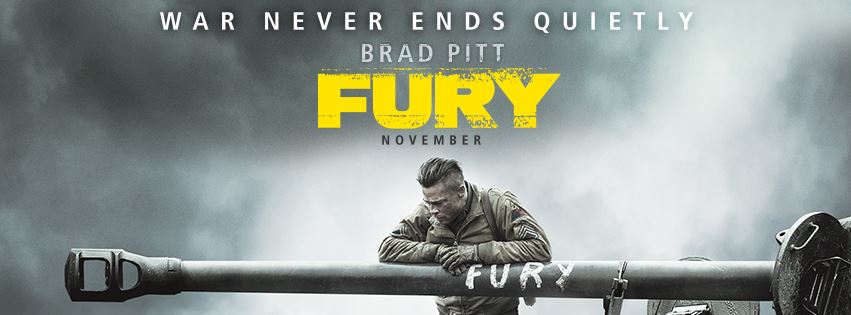
Trailer: Fury (International)


Fury-2014-Movie-Banner-Poster

I must admit that World War II films are a favorite of mine. Even bad ones I tend to enjoy. Whether it’s alternate fantasy fares like Tarantino’s Inglourious Basterds or something that combines historical accuracy with dramatic license like Spielberg’s Saving Private Ryan, the World War II genre always manage to hit straight and true to my film wheelhouse.

This October there looks to be another World War II film that seems almost tailor-fit for me. I’m talking about David Ayer’s follow-up to his underappreciated film End of Watch. This follow-up is Fury and tells the story of an American tank crew in the waning days of World War II in Europe. Just from the two trailer released I already know that I’m seeing this. Ayer looks to be exploring the bond of a tank crew that has seen war from the deserts of Africa and now to the urban and forested landscapes of Germany.

The film is already getting major buzz as a major contender for the upcoming awards season and I, for one, hope that it’s a well-deserved buzz. Even with Shia LaBeouf being part of the cast is not dampening my excitement for this film. Even if it doesn’t live up to the hype I know that I’ll probably still end up enjoying it.

This trailer looks to be selling the utter brutality and carnage of World War II’s final days in Europe when German forces were literally fighting for their homeland and that makes for a desperate enemy (who still had weapons and soldiers that were still hands down better than what the Allies had one-on-one).

On a side note, I like the fact that the tracers in the film actually look like tracers which means they look like freakin’ laser blasts. That’s how tracers behave.

Fury is set to hit theaters on October 17, 2014 in the United States and October 22, 2014 internationally.

Trailer: Sabotage (Red Band)


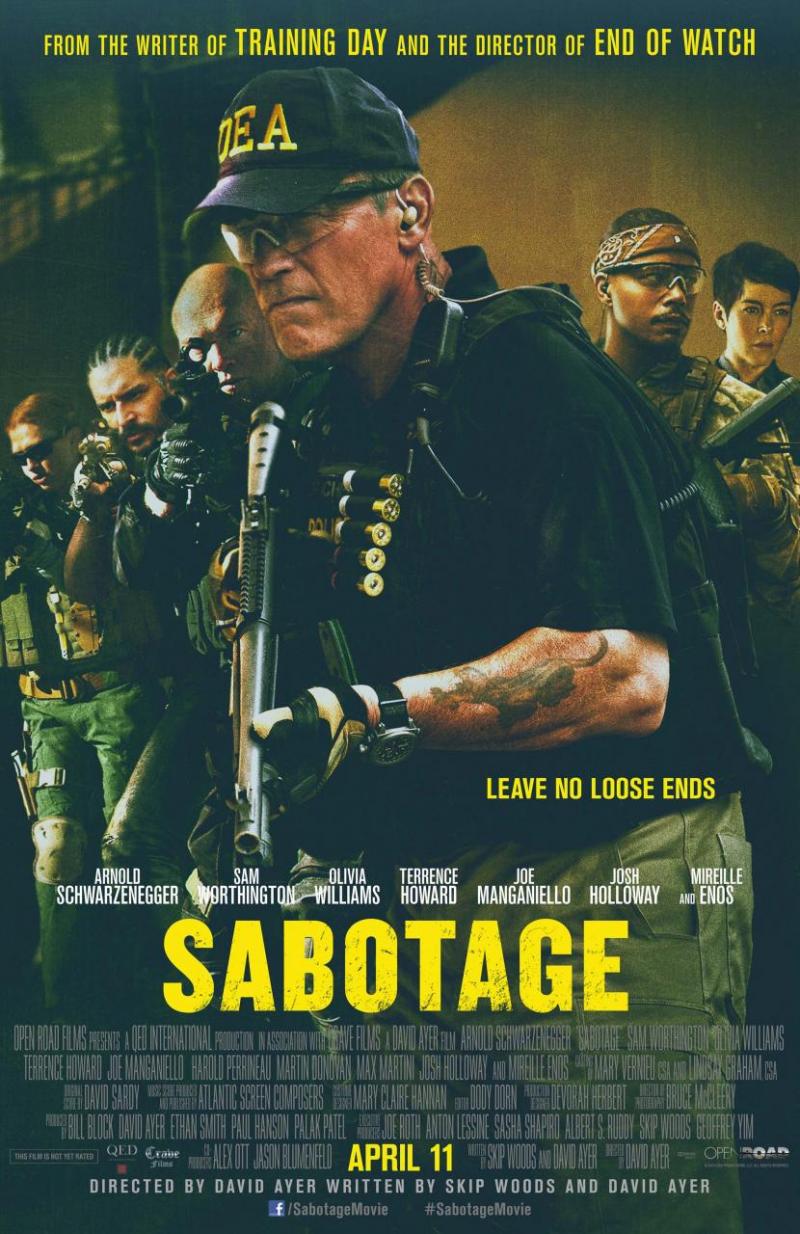
Sabotage

Since Arnold Schwarzenneger left the California governor’s office and politics he’s gone back to doing what he was good at (or at least good at during the 80’s and 90’s). His first couple of films since getting back in front of the camera has been average at best (though I must say that Last Stand was pretty fun).

Now, we have him back in another film, but this time around one that’s a very hard, gritty R-rating that he hasn’t done since ever. He’s always had rated-R films, but they had a certain fun tone to them. With David Ayer’s Sabotage it looks like Schwarzenneger is trying to flex his hardcore bones. It’s definitely a surprise to hear him curse like a sailor during the red band trailer.

Sabotage is set for a March 28, 2014, release date.

Trailer: Elysium (2nd Official)


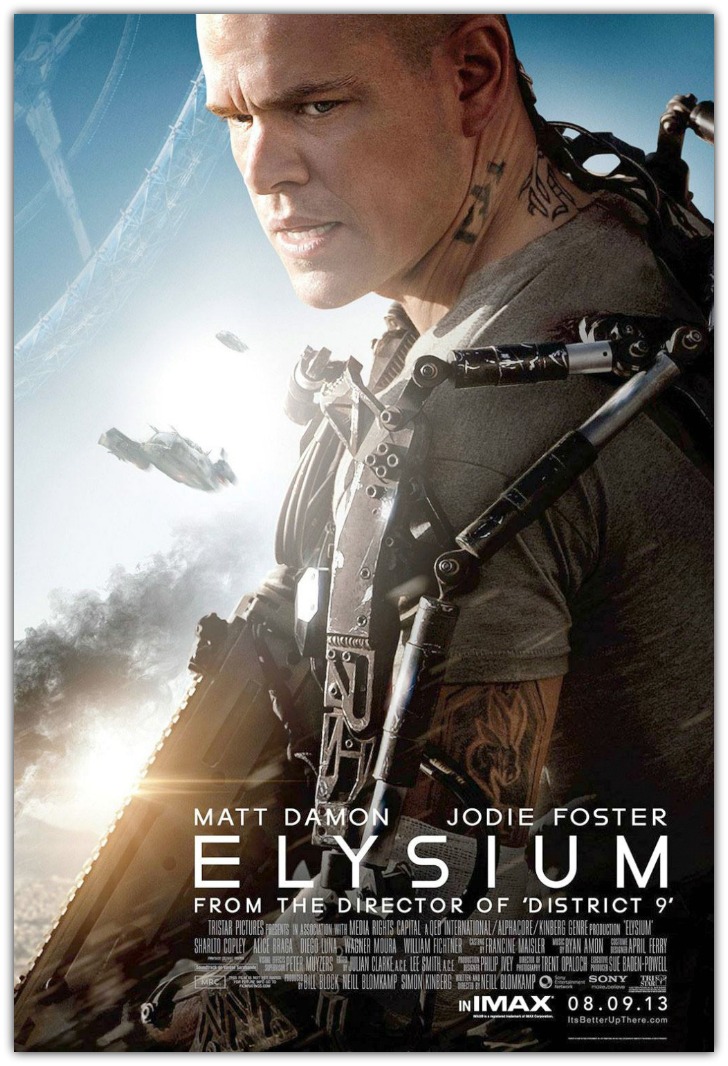
Elysium

I know it’s been done and written for what seems like hundreds of times that Neill Blomkamp was given the chance to direct a planned live-action film adaptation of the highly popular video game franchise Halo. Seeing how his directorial full-feature debut with District 9 proved that Peter Jackson was correct in trying to give the mega-budgeted project to the young South African, but also set Blomkamp as filmmaker who had given himself that rare commodity in Hollywood: the ability to pick and choose his next projects.

He could easily have taken the money and accolades from that first film and taken the first major action project sent his way, but Blomkamp took that rare commodity and decided to do another sci-fi film that combined not just his flair for action and gritty sci-fi visuals, but what looks to be his storytelling style of using current sociological problems (immigration, class divide, etc…for his latest film) as themes for his film.

Elysium arrives with a new trailer from TriStar Pictures and it’s parent company Sony Pictures. The first trailer gave a taste of the ideas that drive the film’s plot. This second (and much longer trailer) gives us a much more detailed look into the film’s three main characters played by Matt Damon, Jodie Foster and Sharlto Copley. It also gives us a longer look at the two contrasting art designs for society on Earth and that on Elysium.

Oh, did I also mention that the trailer almost makes it seem that it could be a trailer-run for any future Mass Effect live-action film. I saw more than one instance of what could be the use of “biotics” in the trailer by Sharlto Copley’s Kruger character.

Elysium is set to arrive in theaters on August 9, 2013 in both regular and IMAX screens.

Trailer: Elysium (Official)


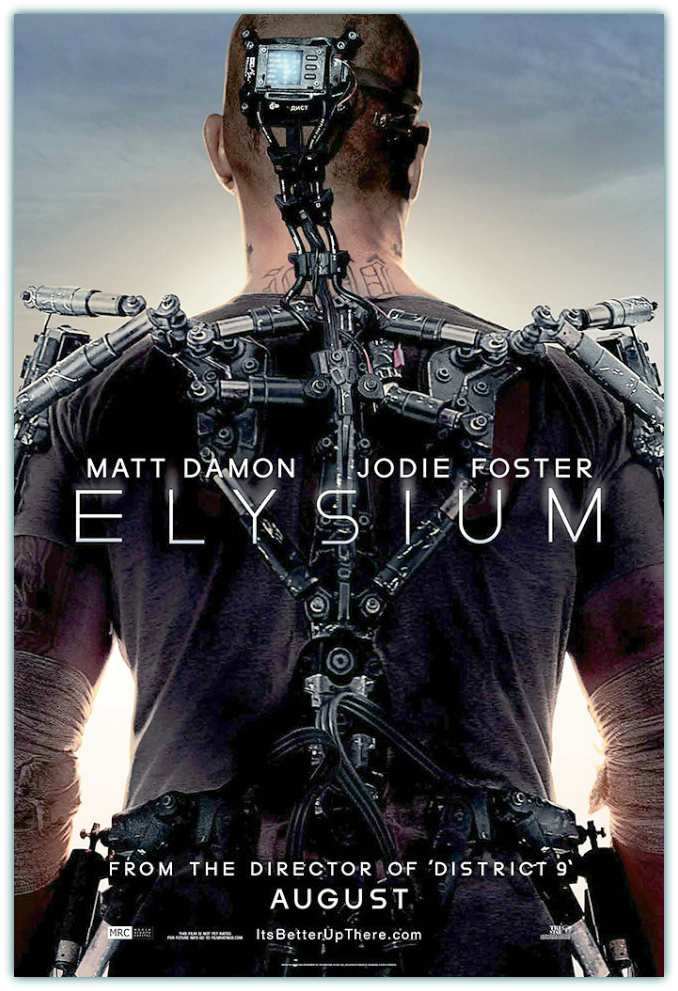
Elysium

It’s not often that a filmmaker makes such a major splash in the industry with their initial full-length film becoming not just a commercial success but one which gained widespread critical-acclaim. South African filmmaker Neill Blomkamp is one such filmmaker. Initially tapped by Peter Jackson to direct the planned HALO film adaptation Blomkamp ended up doing District 9 (based off of his own short film Alive in Joburg).

The film became the sensation of San Diego Comic-Con 2009 which raised the hype for it’s inevitable release a month later. It’s now been 4 years since District 9 and we finally get a chance to see the first official trailer (a 10-minute film reel was shown to invited industry and press which showed a bit more of what the film will be about) for Blomkamp’s much awaited follow-up to his hit first film.

Elysium looks to continue Blomkamp’s attempt to bring social awareness to the scifi genre and do so with a mixture of real-world gritty realism and scifi fantasy. just looking at the trailer the space station Elysium where all the rich and privilege live in a paradise-setting look like an amalgam of the HALO ringworlds and the Citadel Station from Mass Effect.

It’s still months away, but just this teaser of a trailer has just raised Elysium to the top of my list for most awaited films of 2013. If it’s as good or better than District 9 then Blomkamp will cement himself as one of his generation’s best instead of a flash in the pan like so many of his contemporaries.

Elysium is set for a wide release date of August 9, 2013.