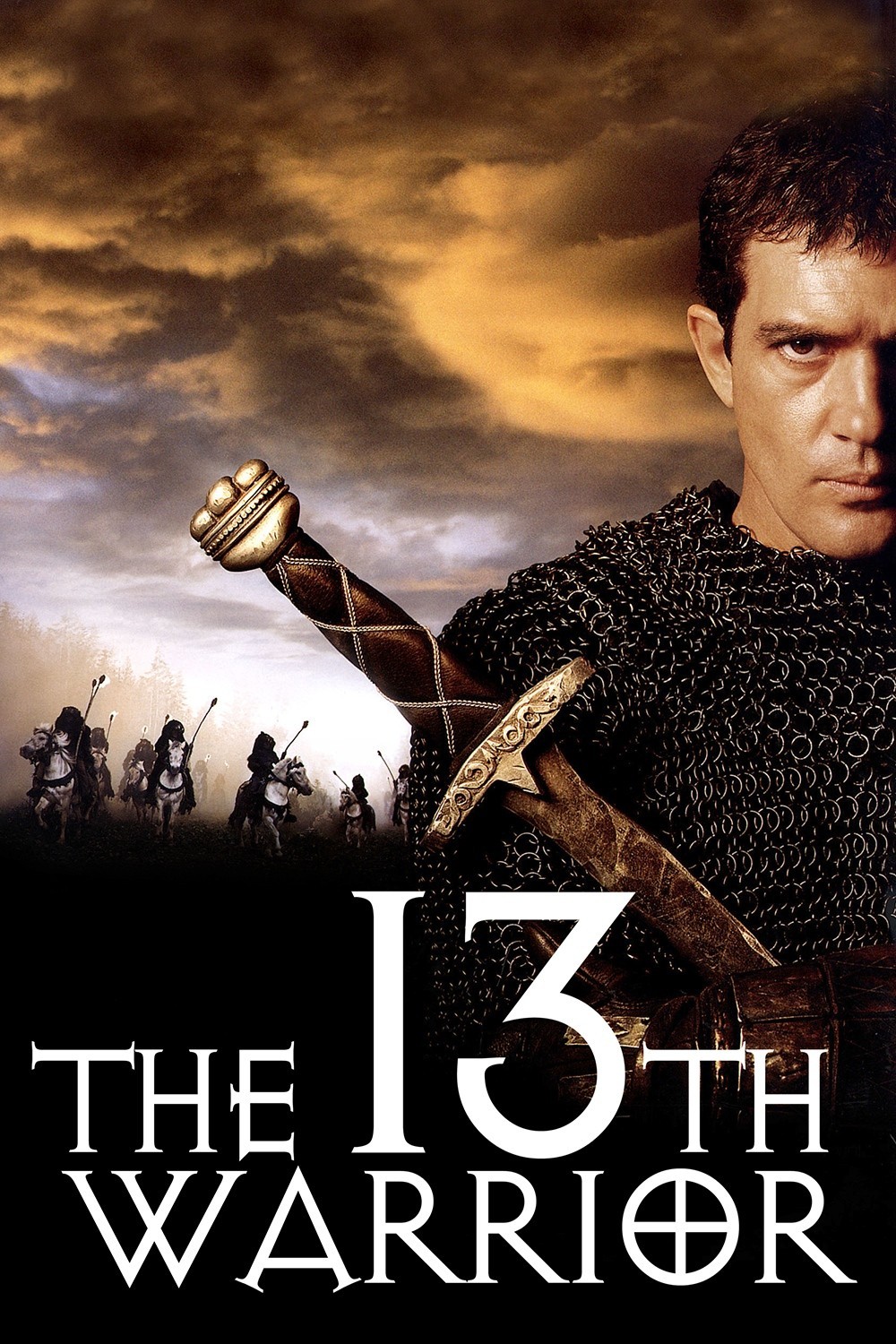
Guilty Pleasure No. 130: The 13th Warrior (dir. by John McTiernan)


“The All-Father wove the skein of your life a long time ago. Go and hide in a hole if you wish, but you won’t live one instant longer. Your fate is fixed. Fear profits a man nothing.” — Herger the Joyous

Few films wear the scars of a difficult production as visibly—and as entertainingly—as John McTiernan’s The 13th Warrior. It is messy, truncated, occasionally incoherent, and visibly caught between two competing creative visions. Yet it also has an atmosphere that many more polished historical adventures lack: wet forests, torchlit halls, thick fog, blackened skies, grim Norse rituals, and a band of warriors who look as though they have spent their entire lives sleeping in armor and drinking themselves toward an early grave. It is not a great film, but it is an undeniably entertaining one—and one of the more fascinating guilty pleasures of the late-1990s blockbuster era.

Loosely adapted from Michael Crichton’s novel Eaters of the Dead, which itself plays with the historical legend of Ahmad ibn Fadlan and folds it into a rough retelling of Beowulf, The 13th Warrior begins with Antonio Banderas as Ahmed ibn Fahdlan. Ahmed is an Arab court poet and diplomat banished from Baghdad after an indiscretion involving a powerful man’s wife. He is sent north as an ambassador, where his refined manners, education, and cultivated worldview put him in immediate contrast with the brutal, loud, heavily armed Norsemen he encounters. The movie gets a surprising amount of mileage out of that culture-clash premise. Ahmed is initially horrified by the Vikings’ hygiene, manners, food, and casual relationship with violence, while the Vikings regard him as an odd, under-equipped foreigner who seems far too elegant to be useful in a fight.

The story kicks into gear when a group of Norse warriors is summoned to aid a distant village terrorized by mysterious attackers known as the Wendol. According to prophecy, thirteen men must go—and the thirteenth cannot be a Northman. Ahmed, despite having no real desire to be involved in this nightmare expedition, becomes the required outsider. From there, the film turns into a lean survival-horror adventure: the warriors travel into an isolated northern settlement where people are being abducted and mutilated by enemies who seem to emerge from the darkness itself. The Wendol wear animal skulls, move through the night like ghosts, and are initially presented less as a human army than as something ancient and supernatural.

That eerie buildup is easily the best thing about The 13th Warrior. McTiernan, the director of Die Hard, Predator, and The Hunt for Red October, knew how to make hostile environments feel dangerous. The village is surrounded by dense woods and oppressive mountains, while the interiors are lit by fire, smoke, and shadows. The film often feels as if it is taking place at the edge of the known world. Even when the plot becomes shaky, the mood holds. There is a genuinely creepy quality to the Wendol’s first attacks, especially when horns sound in the distance and figures descend from the hills in the rain. The movie may never fully sell the mythology behind its villains, but it absolutely sells the fear they inspire.

Banderas is a somewhat unconventional choice for Ahmed, and his casting has always been one of the film’s stranger elements. He brings charisma and physical presence, but the accent situation is obviously all over the place. Still, he makes the character’s gradual transformation satisfying. Ahmed begins as a man who sees himself as superior to these crude northerners, only to discover that their apparent barbarism is paired with courage, loyalty, humor, and a practical intelligence he had underestimated. His evolution into a capable warrior is predictable, but it works because Banderas plays the early discomfort well. The famous moment when Ahmed learns the Norse language simply by listening around the campfire is absurdly accelerated, but it is also one of the movie’s most memorable scenes. It tells the audience, with no subtlety whatsoever, that he has crossed into their world.

The supporting cast gives the film much of its appeal. Vladimir Kulich’s Buliwyf is the quiet center of the group, a noble warrior king whose death is basically foretold from the moment he appears. Kulich has the right imposing, mythic presence for the role, and he makes Buliwyf feel like a living folk hero rather than just another stock Viking chief. Dennis Storhøi, Tony Curran, Richard Bremmer, and the rest of the warriors are not always given much individual development, but they create a convincing sense of companionship. Their banter, drinking, ritualized insults, and battle-ready camaraderie help the group feel like a unit with a history long before Ahmed arrived.

The action is another mixed but memorable part of the experience. McTiernan’s best films are often celebrated for their clarity of geography and movement, but The 13th Warrior is much murkier. Some of that is intentional: fights take place at night, in rain, amid smoke, fire, and chaos. But some of it also feels like a byproduct of an uneven post-production process. The movie is often too dark, too quickly edited, and too vague about what is happening from one beat to the next. Even so, there are flashes of real power. Ahmed forging a sword from a Viking weapon is a solid transformation moment, while the climactic infiltration of the Wendol cave has the pulpy appeal of an old adventure serial filtered through mud, blood, and 1990s studio excess.

The behind-the-scenes drama is arguably just as intriguing as the movie itself. The 13th Warrior became infamous for going significantly over budget and for the creative conflict between McTiernan and the studio. The reported disputes centered on the film’s tone, pacing, and specific scenes, with the studio evidently concerned that McTiernan’s version was too dark, too strange, and too inaccessible for a massive summer release. This was not a minor disagreement over a few trims. It became the kind of production struggle that leaves fingerprints all over the finished film. You can feel the tension between a moody, almost horror-driven historical fantasy and a more conventional action-adventure picture trying to break through the same material.

Michael Crichton, the author of Eaters of the Dead and a major force behind the project, eventually stepped in to oversee reshoots and re-editing. That fact alone makes The 13th Warrior unusually fascinating. It is not every day that the author of the source novel takes such a direct role in reshaping a film after its original director has already completed his work. Crichton reportedly pushed for a more straightforward, audience-friendly version, trimming and restructuring the movie in ways meant to clarify the story and increase its commercial appeal. The result is a film that often feels like two versions grafted together: one a grim, unnerving tale about outsiders confronting an almost prehistoric terror, the other a compressed heroic adventure about a reluctant man discovering his warrior spirit.

That conflict helps explain why the finished movie can feel so abrupt. Characters appear and disappear with little explanation, the Wendol mythology is only partially developed, and the final stretch rushes through material that could have supported a longer, more coherent climax. The film is barely over 100 minutes, yet it sometimes feels as though an entire half-hour of connective tissue vanished somewhere between the shoot and the theatrical cut. This is especially frustrating because there is clearly a richer movie buried inside the existing one. The setting, the central premise, the cultural collision, and the supernatural ambiguity all deserved more room to breathe.

Still, those flaws are part of why The 13th Warrior has endured as a cult favorite. It is easy to imagine a cleaner, more successful version, but it is also difficult to imagine that version being as peculiar or as memorable. The finished film has a strange, bruised personality. It carries the weight of a troubled production, but it also has enough great imagery, strong atmosphere, and old-fashioned adventure momentum to overcome its rough edges. It never reaches the level of McTiernan’s best work, and it is certainly not the definitive cinematic take on Beowulf. But as a cult, guilty-pleasure fantasy adventure, The 13th Warrior delivers more than its reputation might suggest.

Previous Guilty Pleasures

  1. Half-Baked
  2. Save The Last Dance
  3. Every Rose Has Its Thorns
  4. The Jeremy Kyle Show
  5. Invasion USA
  6. The Golden Child
  7. Final Destination 2
  8. Paparazzi
  9. The Principal
  10. The Substitute
  11. Terror In The Family
  12. Pandorum
  13. Lambada
  14. Fear
  15. Cocktail
  16. Keep Off The Grass
  17. Girls, Girls, Girls
  18. Class
  19. Tart
  20. King Kong vs. Godzilla
  21. Hawk the Slayer
  22. Battle Beyond the Stars
  23. Meridian
  24. Walk of Shame
  25. From Justin To Kelly
  26. Project Greenlight
  27. Sex Decoy: Love Stings
  28. Swimfan
  29. On the Line
  30. Wolfen
  31. Hail Caesar!
  32. It’s So Cold In The D
  33. In the Mix
  34. Healed By Grace
  35. Valley of the Dolls
  36. The Legend of Billie Jean
  37. Death Wish
  38. Shipping Wars
  39. Ghost Whisperer
  40. Parking Wars
  41. The Dead Are After Me
  42. Harper’s Island
  43. The Resurrection of Gavin Stone
  44. Paranormal State
  45. Utopia
  46. Bar Rescue
  47. The Powers of Matthew Star
  48. Spiker
  49. Heavenly Bodies
  50. Maid in Manhattan
  51. Rage and Honor
  52. Saved By The Bell 3. 21 “No Hope With Dope”
  53. Happy Gilmore
  54. Solarbabies
  55. The Dawn of Correction
  56. Once You Understand
  57. The Voyeurs 
  58. Robot Jox
  59. Teen Wolf
  60. The Running Man
  61. Double Dragon
  62. Backtrack
  63. Julie and Jack
  64. Karate Warrior
  65. Invaders From Mars
  66. Cloverfield
  67. Aerobicide 
  68. Blood Harvest
  69. Shocking Dark
  70. Face The Truth
  71. Submerged
  72. The Canyons
  73. Days of Thunder
  74. Van Helsing
  75. The Night Comes for Us
  76. Code of Silence
  77. Captain Ron
  78. Armageddon
  79. Kate’s Secret
  80. Point Break
  81. The Replacements
  82. The Shadow
  83. Meteor
  84. Last Action Hero
  85. Attack of the Killer Tomatoes
  86. The Horror at 37,000 Feet
  87. The ‘Burbs
  88. Lifeforce
  89. Highschool of the Dead
  90. Ice Station Zebra
  91. No One Lives
  92. Brewster’s Millions
  93. Porky’s
  94. Revenge of the Nerds
  95. The Delta Force
  96. The Hidden
  97. Roller Boogie
  98. Raw Deal
  99. Death Merchant Series
  100. Ski Patrol
  101. The Executioner Series
  102. The Destroyer Series
  103. Private Teacher
  104. The Parker Series
  105. Ramba
  106. The Troubles of Janice
  107. Ironwood
  108. Interspecies Reviewers
  109. SST — Death Flight
  110. Undercover Brother
  111. Out for Justice
  112. Food Wars!
  113. Cherry
  114. Death Race
  115. The Beast Within
  116. Girl Series
  117. Gone in 60 Seconds
  118. Swordfish
  119. Marked For Death
  120. The Internship
  121. The Angry Red Planet
  122. 2012
  123. Old School
  124. No Escape
  125. In Death Series
  126. Alligator
  127. Little Annie Fanny
  128. Wicked Wanda
  129. Congo

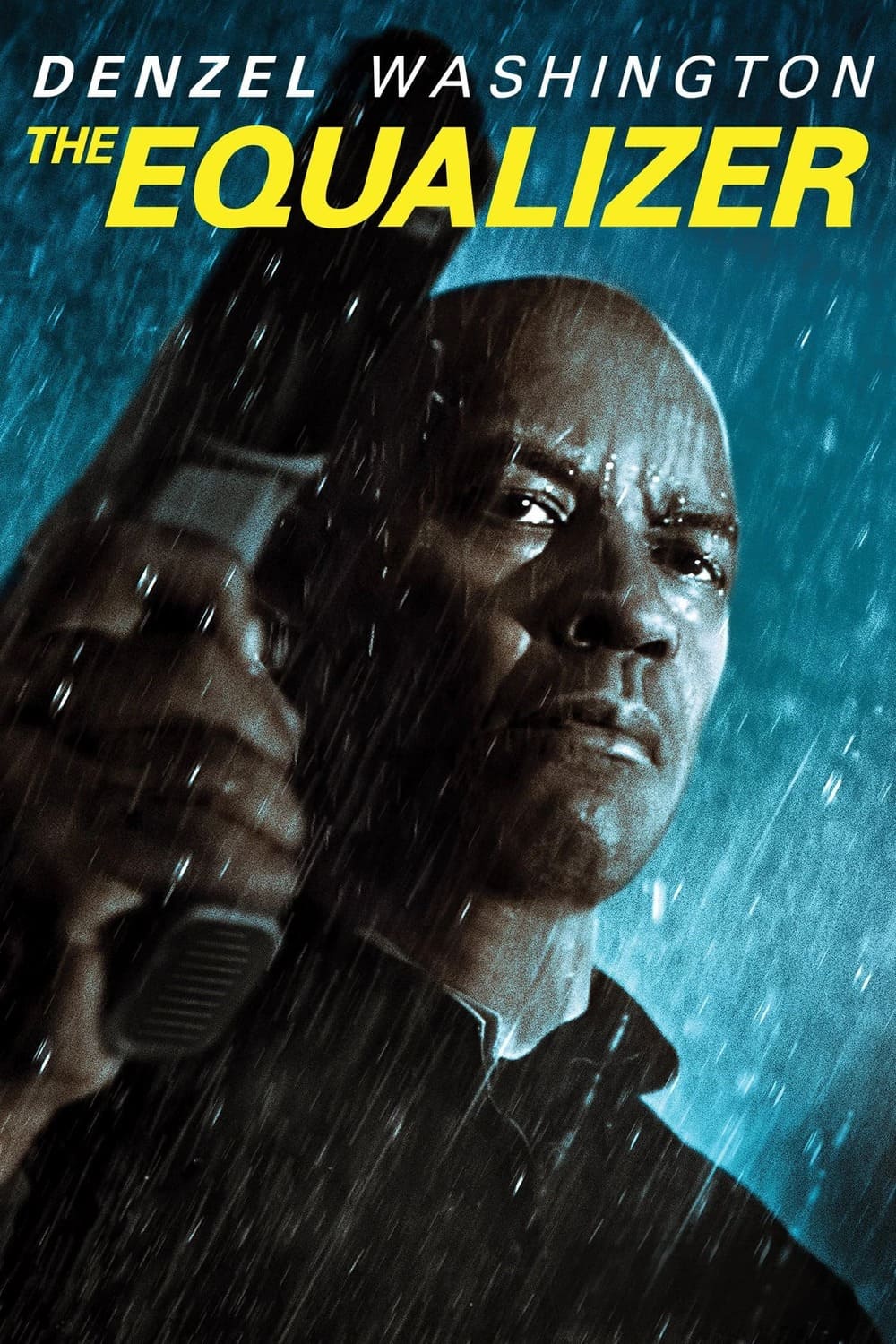
Review: The Equalizer (dir. by Antoine Fuqua)


“When you pray for rain, you gotta deal with the mud too.” — Robert McCall

Antoine Fuqua’s The Equalizer is a film remake of the original 1980s TV series that starred Edward Woodward in the title role, and it feels like a throwback to the gritty, no-nonsense action thrillers of that era, but with a modern polish that only a director like Fuqua can deliver. From the opening frame, you know you’re in for something that’s equal parts stylish and brutal, a film that doesn’t waste time with unnecessary fluff and instead gets straight to the point: justice, served cold and calculated. Denzel Washington plays Robert McCall, a man who looks like your average big-box store employee by day but transforms into a methodical, almost surgical force of retribution by night. The premise is simple—McCall can’t stand to see good people get hurt, and when the Russian mob pushes him too far, he snaps into action—but the execution is anything but.

Where Woodward’s McCall was a more cerebral, world-weary ex-intelligence officer who relied on wit and strategy as much as physical force, Denzel’s version is a man of few words who lets his actions do the talking. Woodward brought a melancholic, almost philosophical edge to the role, giving the original series a more introspective, morally ambiguous tone. Denzel, though, brings a quiet intensity that’s all about controlled fury, shifting the film’s tone toward something more visceral and immediate. It’s less about the internal struggle and more about the sheer efficiency of justice being delivered, which makes Fuqua’s version feel like a high-octane action thriller rather than a brooding character study. This difference in approach is key to why the movie works so well as a modern reboot—it keeps the spirit of the original while amping up the energy to match today’s action standards.

This version of The Equalizer stands out in how it balances its quiet, character-driven moments with explosive bursts of violence. Fuqua has always had a knack for action, but here he takes his time building tension, letting scenes breathe in a way that makes the eventual payoff feel earned. There’s a sequence early on where McCall takes apart a room full of Russian gangsters, and it’s not just the choreography that impresses—it’s the precision. Every movement has purpose, every strike is efficient, and the whole thing unfolds with a kind of balletic brutality. Washington sells it all with that signature calm intensity of his, the kind of performance where you’re never quite sure if he’s about to offer you a cup of tea or put you in the ground. His McCall is a man of discipline, a guy who’s clearly spent a lifetime honing his skills, and it shows in the way he carries himself, whether he’s reading a book in a diner or turning a hardware store into an improvised armory.

The story itself isn’t reinventing the wheel. It’s a classic revenge tale with a heavy dose of vigilante justice, but the devil’s in the details. McCall isn’t some invincible super-soldier; he’s a guy who’s smart, resourceful, and, above all, patient. He doesn’t rush into things. He plans, he observes, and when he finally makes his move, it’s with the kind of cold efficiency that makes you wince and cheer at the same time. The film’s villain, Teddy Rensen, played by Marton Csokas, is a solid antagonist—a slick, ruthless mob fixer who’s used to getting his way. Csokas brings a quiet menace to the role, and his dynamic with Washington crackles with tension, especially in their final confrontation, which is as much a battle of wits as it is a physical showdown.

Fuqua’s direction is a masterclass in pacing and atmosphere. He knows how to make even the simplest scenes feel charged with meaning. Take, for example, the way he frames McCall in his apartment, surrounded by mementos of a past life we only get glimpses of. There’s a sense of history there, a depth to the character that’s never explicitly spelled out but is always felt. And then there’s the action, which is shot with a clarity that’s refreshing in an era where so many directors rely on shaky cam and rapid cuts to hide their lack of choreography. Fuqua lets you see everything, and it makes the violence hit harder because of it. The climactic battle in the hardware store is a perfect example—it’s a long, unbroken take (or at least feels like one) that puts you right in the middle of the chaos, and it’s thrilling precisely because you can follow every punch, every improvised weapon, every desperate move.

The supporting cast does a great job of fleshing out the world around McCall. Chloe Grace Moretz plays Teri, the young prostitute who becomes the catalyst for McCall’s crusade, and she brings a vulnerability to the role that makes her more than just a damsel in distress. She’s tough, but she’s also broken, and Moretz nails that balance. Then there’s Harold, McCall’s coworker and only real friend, played by Bill Pullman. Their scenes together provide some much-needed levity, but they also serve as a reminder that McCall isn’t just a machine—he’s a human being with connections, however tenuous, to the world around him.

One of the things I like most about The Equalizer is how it doesn’t glorify violence so much as it treats it as a necessary evil. McCall doesn’t enjoy what he does; he does it because he feels he has to. There’s a fascinating psychological undercurrent to his conversations with Teri about the nature of the people who hurt others, specifically this idea that the cruel and corrupt always find a way to rationalize their monstrous actions. The film really explores this twisted logic where abusers and criminals somehow convince themselves they are actually the good guys, completely blind to their own wickedness. It cuts to the heart of the movie’s theme: that real justice isn’t always pretty, and sometimes the only way to stop a relentless villain is to step into the darkness and meet them on their own brutal terms. It’s a morally complex idea, and the film doesn’t shy away from it. McCall isn’t a hero in the traditional sense. He’s a man with a very particular set of skills, and he uses them to tip the scales in a world that’s heavily weighted toward the cruel and the powerful.

Visually, the film is stunning. Fuqua and his cinematographer, Mauro Fiore, make Boston feel like a character in its own right, all grimy streets and neon-lit alleys. The color palette is dark and moody, with pops of color—like the red of a taillight or the blue of a neon sign—that stand out in a way that feels almost painterly. And the score by Harry Gregson-Williams is the perfect complement, all pulsing synths and deep, ominous basslines that ratchet up the tension without ever feeling overbearing. It’s the kind of soundtrack that you don’t notice until it’s gone, and then you realize how much it was adding to the experience.

If there’s a downside to The Equalizer, it’s that the plot can feel a bit thin at times. The story is straightforward, almost to a fault, and there are moments where you wish it would delve a little deeper into McCall’s backstory or the larger implications of his actions. But then again, that’s not really what the movie is going for. This isn’t a sprawling epic; it’s a tight, focused thriller that’s more concerned with mood and atmosphere than with intricate plotting. And in that regard, it succeeds admirably. The film is lean, mean, and never boring, with a runtime that flies by because it’s so damn entertaining.

Denzel Washington, of course, is the glue that holds it all together. At this point in his career, he could probably read the phone book and make it compelling, but The Equalizer gives him a role that’s tailor-made for his strengths. McCall is a man of few words, but every line Washington delivers carries weight. Whether he’s calmly negotiating with a gangster or unleashing hell on a group of armed thugs, he commands the screen with an effortless charisma that’s hard to look away from. It’s the kind of performance that reminds you why he’s one of the greatest actors of his generation.

In the end, The Equalizer is a movie that knows exactly what it is and doesn’t apologize for it. It’s a violent, stylish, and endlessly watchable action thriller with a lead performance that elevates it above the usual fare. It doesn’t pretend to be anything more than it is, and that’s part of its charm. In a world where so many films try to be everything to everyone, The Equalizer is content to be a well-made, pulse-pounding revenge story—and it’s all the better for it. If you’re a fan of action movies that don’t skimp on the brains or the brawn, this one’s a must-watch. Just don’t be surprised if you find yourself rooting for a guy who’s technically a vigilante. After all, in a world this unfair, sometimes you need an equalizer.

Scenes I Love: 13th Warrior


Cavatica didn’t know where I borrowed and changed the chant in the beginning of my ThunderCats post previous to this one so I decided what better way to answer his question than using one of Lisa Marie’s favorite past features in the blog. I always did enjoy her “Scenes I Love” posts since it showed that even a bad film could have a redeeming quality with that one perfect scene that redeems the rest. Or it could be a scene that just reinforces just how great the rest of the film truly is.

So, my first attempt at “Scenes I Love” happens to be from the final battle in John Mctiernan’s epic tale of an Arab chronicler becoming sword-brothers with a band of Viking warriors and their king, Buliwfy. I love this scene for the reciting of the Viking Death Prayer by the few defenders left at the end of the film. Buliwfy, the Viking king, begins the prayer to be followed by the rest then finished by Ahmed Ibn Fadlan (Antonio Banderas) just in time to stand fast against a charge of the inhuman “Eaters of the Dead” (really just a remnant tribe of neanderthals).

That prayer is very powerful and with Jerry Goldsmith’s rousing music providing a proper background it’s definitely hard for one not to pick up a sword or axe and stand fast against the incoming horde.

The original Viking Death Prayer

Lo, there do I see my Father..
Lo, there do I see my Mother
And my Sisters and my Brothers..
Lo, there do I see the line
Of my people back to the beginning..
Thay do bid me to take my place among them..
In the Halls of Valhalla,
Where the Brave may live forever.