“Ammo’s cheap, my life ain’t.” — Joe “Grinder” Phillips
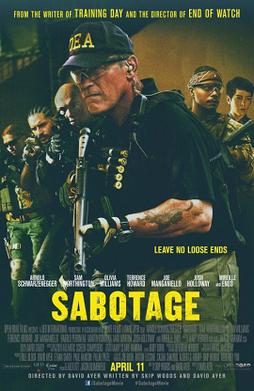
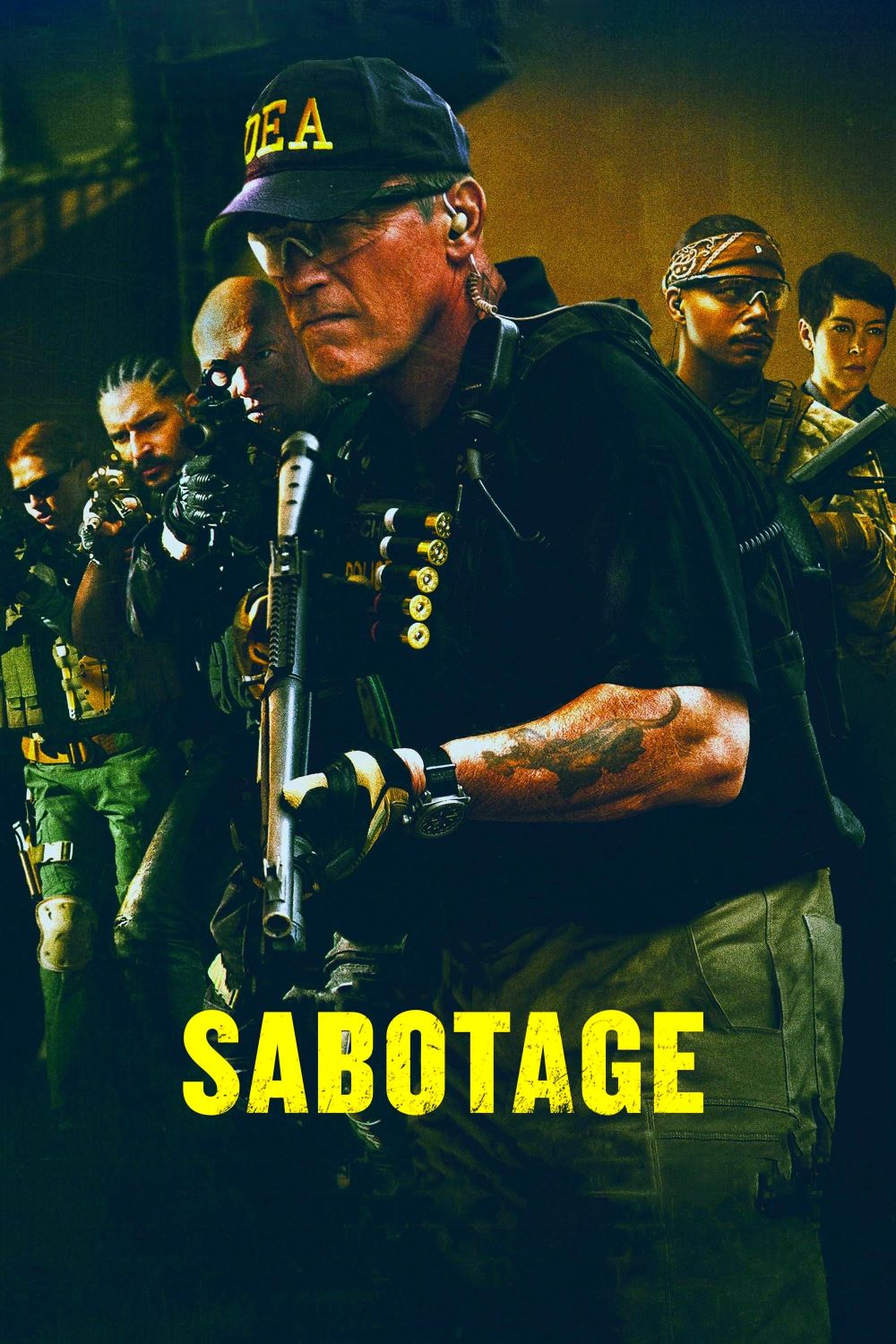
Watching Sabotage, the 2014 David Ayer action-thriller, is a bit like finding a beautiful, high-performance sports car that’s been stripped for parts. It’s got a shiny exterior in Arnold Schwarzenegger, a director known for gritty cop dramas, and a promising cast, but under the hood, the engine is sputtering and the chassis is held together with duct tape and questionable intentions. The film is a strange, often unpleasant beast that seems unsure if it wants to be a complex whodunit, a grim torture-porn horror flick, or a simple action vehicle for its aging star. In trying to be all of them, it mostly succeeds at being a confusing, albeit fascinating, mess.
The film starts with a classic set-up that reeks of potential. Schwarzenegger plays John “Breacher” Wharton, the leader of an elite and ruthless DEA task force. During a cartel raid, the team decides to skim $10 million in cash from the seizure for themselves. Their plan backfires when they go to retrieve the hidden money and find it gone. This creates a perfect powder keg of suspicion and paranoia. While they’re all investigated, no one is charged, and they are put back into action. The plot kicks into high gear when members of the team start getting picked off one by one in increasingly gruesome and inventive ways. Now, Breacher has to find out who is hunting his team, while simultaneously being haunted by a dark secret from his past.
The mystery is clearly meant to be a bloody, modern interpretation of a classic “stranded and hunted” thriller formula. The problem is, the “whodunit” aspect falls flat because the story is just too messy to build any real suspense. The characters are an indistinguishable mass of nicknames like “Monster” (Sam Worthington), “Grinder” (Joe Manganiello), and “Sugar” (Terrence Howard), making it difficult to keep track of who is who, let alone care when they meet their grisly end. The film gives you little reason to invest in them, as they are an intentionally unlikable bunch of thugs who treat civilians with contempt, break the law without a second thought, and generally act like cartoon villains with badges. When a character is killed off, it’s often not a shocking, gut-wrenching twist, but more of a shrug: “Oh, that guy’s gone now.” The plot becomes less about solving a puzzle and more about waiting for the next spectacularly bloody demise.
And those demises are where David Ayer’s direction makes its most “memorable” impact. The violence in Sabotage is not your typical Schwarzenegger shoot-’em-up. It is unflinchingly brutal and hyper-realistic, leaning heavily into the kind of gruesome, elaborate set-pieces that feel borrowed from the horror genre. We’re not talking about clean, one-shot kills; we’re talking about brutal, drawn-out murders involving trains, industrial equipment, and a staggering amount of viscera. The camera lingers on open wounds, bodies nailed to ceilings, and the general gory aftermath of each death with a kind of morbid fascination. The film’s obsession with gore is relentless. It even opens with a scene of Breacher watching a video of his family being tortured, setting a grim, nasty tone that never quite lets up. It feels like Ayer is trying to show the brutal, unglamorous reality of violence, but it quickly crosses the line into exploitation, making the film a punishing watch for anyone not specifically seeking out that level of graphic brutality.
The cast is a mixed bag, and it’s one of the more interesting paradoxes of the film. Schwarzenegger, despite being the star, is a strange fit for this material. Critics noted that he seems to be trying to give a more “dark and complex performance,” mining reserves of darkness he rarely accesses. However, the movie around him doesn’t quite support that ambition. He’s still “Arnold,” and his innate charisma and larger-than-life persona often clash with the grim, nasty world Ayer has created. His presence is too big for the bleak mundanity the movie is striving for, creating a constant tension between the action hero audiences expect and the broken, haunted man the script demands. In stark contrast, it was the supporting female cast that often stole the show. Mireille Enos delivers a truly fearless and unhinged performance as Lizzy, the team’s drug-addicted female member, bringing a level of manic energy that is genuinely engaging. Olivia Williams, as the no-nonsense homicide detective Caroline Brentwood, is also a standout. She plays the “only sane person in the room” with an air of world-weary professionalism that feels like it belongs in a better movie. But even her character is dragged into the muck, with a strange and unnecessary romance that feels forced and out of place.
It’s almost impossible to discuss Sabotage without talking about the tone. The film is relentlessly cynical, presenting a world where the line between law enforcement and the cartels is practically non-existent. Ayer, who has explored the dark side of law enforcement in previous work, seems to be asking a bold question here: what happens when cops are worse than the criminals? The answer, according to the film, is a lot of violence and a total lack of moral compass. This cynical view is further dragged down by a barrage of cheap, sophomoric humor. The script is peppered with scatological jokes, crude sexual banter, and homophobic slurs that feel less like “gritty realism” and more like the writers are trying to be edgy just for the sake of it. This creates a bizarre, off-putting atmosphere where the dark, philosophical musings about corruption are undercut by a high-school-level obsession with bodily functions, making the whole experience feel awkward and juvenile.
In the end, Sabotage is a textbook example of a movie that is sabotaged by its own ambitions. It boasts a director with a distinctive style for crime stories, a legendary action star trying something different, and a cast full of talented actors. Yet, it’s ultimately sunk by a script that can’t balance its whodunit premise with its over-the-top gore, and a tone that can’t decide if it’s a serious crime drama or a nasty, nihilistic joke. It’s not boring, and you can’t say Ayer didn’t try something different with the action genre, but the result is an ugly, mean-spirited, and often just plain unpleasant film. For a fascinating look at what happens when a good idea goes horribly off the rails, Sabotage is a case study in wasted potential. But for a good movie? You’ll want to look elsewhere.