Guilty Pleasure No. 124: No Escape (dir. by Martin Campbell)


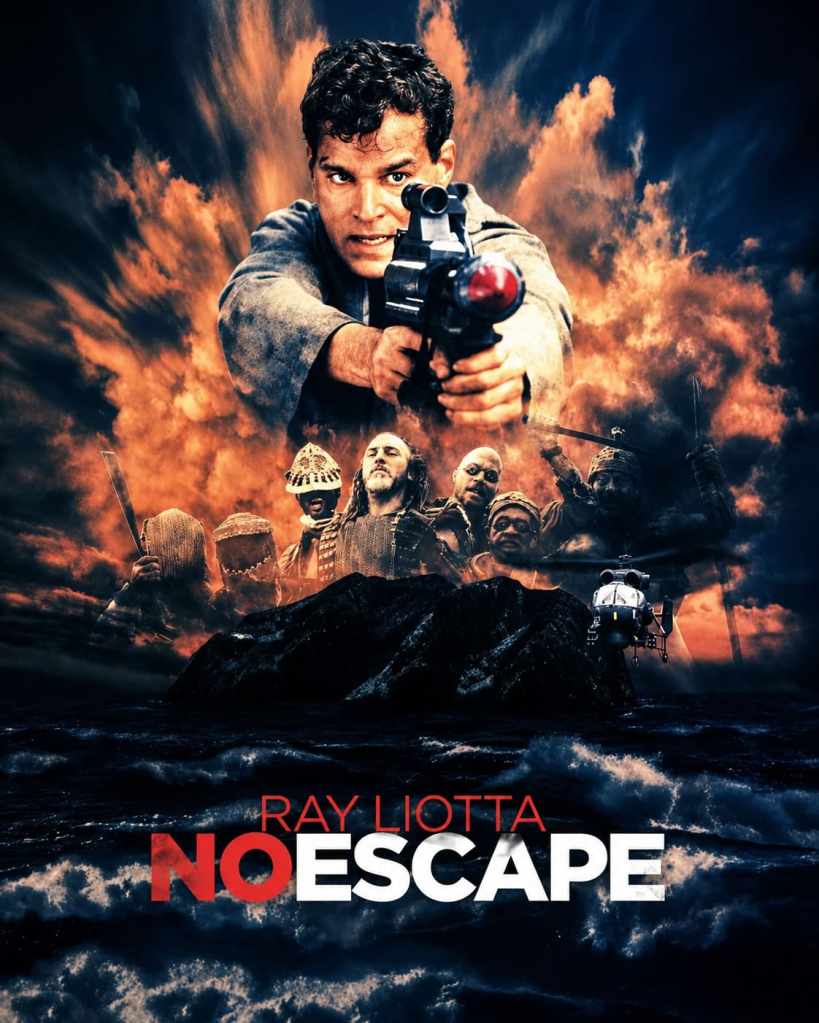
So, No Escape is a movie that, if you’re a fan of mid-90s action flicks, you’ve probably stumbled across on late-night cable at some point. Directed by Martin Campbell, a guy who would go on to resurrect James Bond with GoldenEye, this 1994 sci-fi romp is a strange, almost forgotten artifact from a time when every action movie seemed to be set in a grim, corporate-run future. It’s a movie that borrows so heavily from its predecessors that you could make a drinking game out of spotting the references, yet it does it all with such earnest, sweaty commitment that it’s hard to completely hate. It’s a film that, in a perfect world, should have been a genre classic, but its own bloat and inconsistent rhythm drag it down to the level of a solid, slightly-defective guilty pleasure.

The setup is pure B-movie gold. It’s the year 2022, which felt super futuristic back then, and the world has privatized its prison system. Ray Liotta stars as Captain Robbins, a man sentenced to life on the brutal island prison of Absolom after he kills his commanding officer. The premise of a super-max prison on a remote island, a “civilized” versus “savage” faction of inmates, and a hero who just wants to escape is a greatest-hits medley of Escape from New YorkMad Max 2: The Road Warrior, and Papillon. The film’s villain, Marek, played by a gloriously over-the-top Stuart Wilson, leads a tribe of leather-clad maniacs called the Outsiders, while Lance Henriksen’s Father leads the peaceful, agrarian community of Insiders. Our hero is thrust between them, forced to navigate tribal politics while plotting his getaway. It’s as familiar as an old pair of boots, but there’s a comfort in that familiarity, a sense that you know the beats and can just enjoy the ride.

And for a while, the ride is genuinely fun. Campbell, who clearly has an eye for widescreen spectacle, makes the lush Australian location look both beautiful and hostile. The production design is actually one of the film’s strongest assets; the Outsiders’ camp is a junkyard nightmare, while the Insiders’ village is a quaint, shanty-town paradise built from salvaged scrap. It gives the film a distinct, tactile feel that a lot of sterile sci-fi movies lack. Liotta is perfectly cast as the tough, morally ambiguous soldier. He brings a rough, cerebral quality to the role, making Robbins feel like a guy who’s seen too much and is just plain tired. Stuart Wilson, meanwhile, hams it up as the villain Marek, delivering a performance so broad and gleefully evil that he borders on self-parody, but in a way that’s weirdly compelling and provides some much-needed comic relief. The film feels like it’s building to something great, a tense and explosive showdown between these two drastically different tribes.

The problem is that No Escape simply does not know when to stop. This is a movie with a lean, mean premise that somehow stretches itself out to nearly two hours, and you feel every single minute of the back half. The pacing is wildly inconsistent, lurching between tense survivalist stuff, full-blown action set pieces, and stretches of world-building exposition that just sit there and deflate the momentum the film worked hard to build. There are entire sequences that feel like they exist purely to pad the runtime, and by the time the third act rolls around and Robbins is organizing his prison-break uprising, you’re less excited by the payoff and more just relieved that the movie is finally getting somewhere. A tighter edit, trimming maybe twenty to thirty minutes of the connective tissue, would’ve turned this into a genuinely great B-movie instead of a good one hamstrung by its own indulgence.

That’s really the frustrating thing about No Escape. Everything that makes prison-island and dystopian-exile movies fun is present and accounted for here: a charismatic antihero, a nasty villain, a societal allegory bubbling under the surface, brutal action, and a satisfying underdog uprising. Campbell clearly understood the assignment and delivered those elements competently, sometimes even excitingly. But competent execution of familiar beats can only carry a movie so far when the film refuses to trim the fat, and the sluggish, uneven pacing keeps dragging you out of scenes that should be gripping. It’s the kind of movie that probably could’ve stood shoulder to shoulder with its genre influences if someone in the editing room had been a little more ruthless.

As it stands, No Escape lands squarely in guilty-pleasure territory. It’s not a film you’d necessarily recommend to someone as an essential genre entry, but if you’re already the type who loves this stuff, the dystopian island prisons, the tribal factions, the gruff antihero clawing his way toward freedom, there’s a lot here to enjoy despite the flab. It wears its influences on its sleeve, executes them with more skill than it probably gets credit for, and then undercuts itself by overstaying its welcome. Somewhere in this movie is a tight, mean ninety-minute action flick that could’ve been a minor classic. Instead we got a longer, baggier version that’s still worth a watch on a lazy afternoon, just with the fast-forward button within easy reach for the slower stretches.

Previous Guilty Pleasures

  1. Half-Baked
  2. Save The Last Dance
  3. Every Rose Has Its Thorns
  4. The Jeremy Kyle Show
  5. Invasion USA
  6. The Golden Child
  7. Final Destination 2
  8. Paparazzi
  9. The Principal
  10. The Substitute
  11. Terror In The Family
  12. Pandorum
  13. Lambada
  14. Fear
  15. Cocktail
  16. Keep Off The Grass
  17. Girls, Girls, Girls
  18. Class
  19. Tart
  20. King Kong vs. Godzilla
  21. Hawk the Slayer
  22. Battle Beyond the Stars
  23. Meridian
  24. Walk of Shame
  25. From Justin To Kelly
  26. Project Greenlight
  27. Sex Decoy: Love Stings
  28. Swimfan
  29. On the Line
  30. Wolfen
  31. Hail Caesar!
  32. It’s So Cold In The D
  33. In the Mix
  34. Healed By Grace
  35. Valley of the Dolls
  36. The Legend of Billie Jean
  37. Death Wish
  38. Shipping Wars
  39. Ghost Whisperer
  40. Parking Wars
  41. The Dead Are After Me
  42. Harper’s Island
  43. The Resurrection of Gavin Stone
  44. Paranormal State
  45. Utopia
  46. Bar Rescue
  47. The Powers of Matthew Star
  48. Spiker
  49. Heavenly Bodies
  50. Maid in Manhattan
  51. Rage and Honor
  52. Saved By The Bell 3. 21 “No Hope With Dope”
  53. Happy Gilmore
  54. Solarbabies
  55. The Dawn of Correction
  56. Once You Understand
  57. The Voyeurs 
  58. Robot Jox
  59. Teen Wolf
  60. The Running Man
  61. Double Dragon
  62. Backtrack
  63. Julie and Jack
  64. Karate Warrior
  65. Invaders From Mars
  66. Cloverfield
  67. Aerobicide 
  68. Blood Harvest
  69. Shocking Dark
  70. Face The Truth
  71. Submerged
  72. The Canyons
  73. Days of Thunder
  74. Van Helsing
  75. The Night Comes for Us
  76. Code of Silence
  77. Captain Ron
  78. Armageddon
  79. Kate’s Secret
  80. Point Break
  81. The Replacements
  82. The Shadow
  83. Meteor
  84. Last Action Hero
  85. Attack of the Killer Tomatoes
  86. The Horror at 37,000 Feet
  87. The ‘Burbs
  88. Lifeforce
  89. Highschool of the Dead
  90. Ice Station Zebra
  91. No One Lives
  92. Brewster’s Millions
  93. Porky’s
  94. Revenge of the Nerds
  95. The Delta Force
  96. The Hidden
  97. Roller Boogie
  98. Raw Deal
  99. Death Merchant Series
  100. Ski Patrol
  101. The Executioner Series
  102. The Destroyer Series
  103. Private Teacher
  104. The Parker Series
  105. Ramba
  106. The Troubles of Janice
  107. Ironwood
  108. Interspecies Reviewers
  109. SST — Death Flight
  110. Undercover Brother
  111. Out for Justice
  112. Food Wars!
  113. Cherry
  114. Death Race
  115. The Beast Within
  116. Girl Series
  117. Gone in 60 Seconds
  118. Swordfish
  119. Marked For Death
  120. The Internship
  121. The Angry Red Planet
  122. 2012
  123. Old School

Review: Frank Herbert’s Dune


“Mercy is a word I no longer understand.” — Paul Atreides

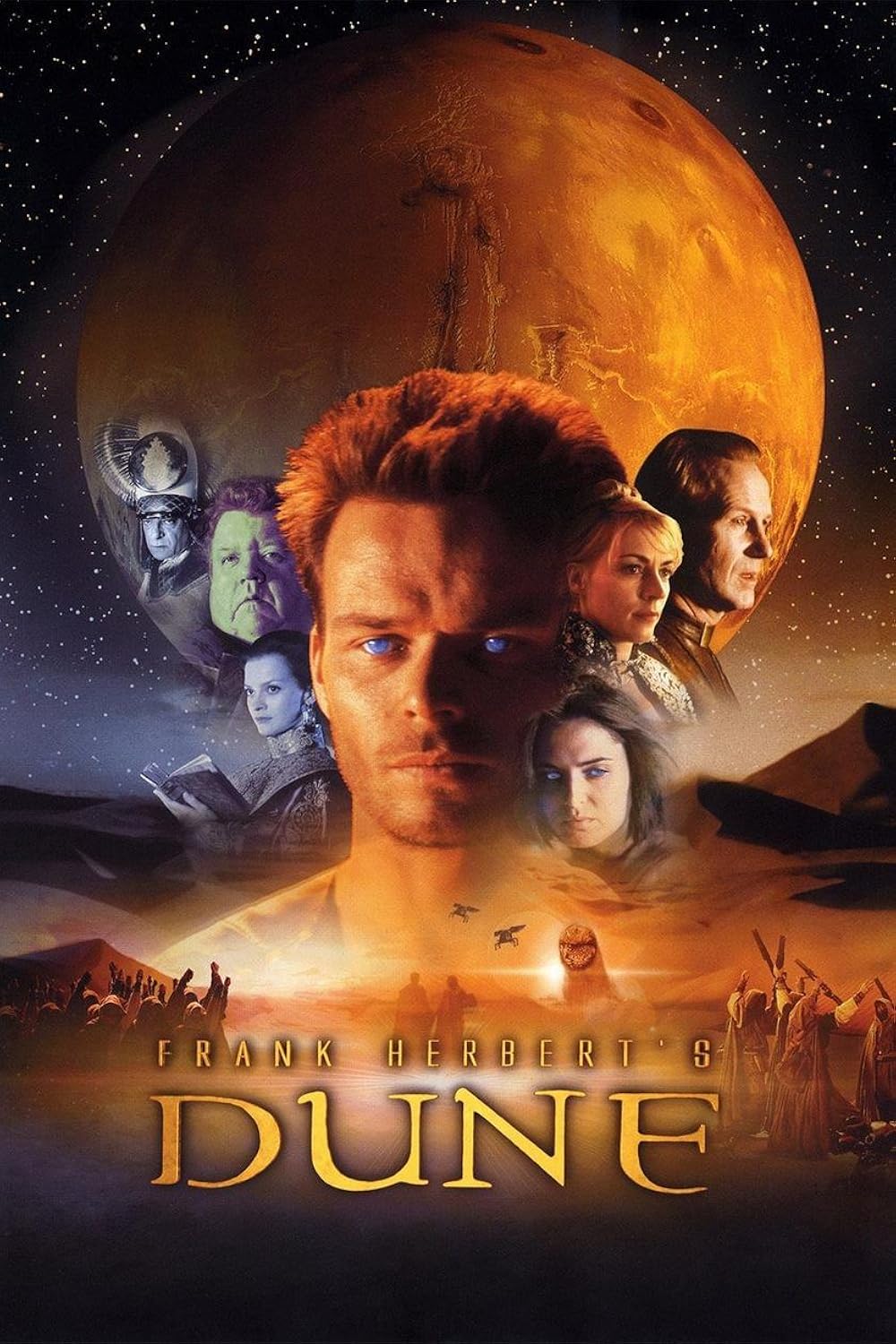
Frank Herbert’s Dune, the 2000 Syfy Channel miniseries, stands as a scrappy yet heartfelt attempt to tame the untamable beast that is Frank Herbert’s sprawling sci-fi epic Dune. Clocking in at nearly four hours across three parts, it doesn’t pretend to be the cinematic knockout punch of Denis Villeneuve’s Dune: Part One and Dune: Part Two, nor does it dive headfirst into the psychedelic rabbit hole of David Lynch’s notoriously bonkers 1984 film. Instead, it carves out its own lane as the faithful workhorse adaptation—the one that prioritizes stuffing in every major plot thread, faction rivalry, and philosophical nugget from the novel without apology. That dogged completeness earns it major points from book purists, even if the early-2000s TV production values leave it looking like a glorious mess next to today’s blockbuster standards. It’s the version you revisit when you want Dune’s full political chessboard laid bare, rough edges and all.

Right from the opening narration, you sense this miniseries is playing a different game. While Villeneuve hooks you with those thunderous sandworm roars and vast desert expanses that make Arrakis feel like a character unto itself, and Lynch blasts you with industrial-gothic sets and nose-plug close-ups that scream “weird,” the Syfy take eases in with expository voiceover and sweeping shots of Caladan’s misty nobility. The budget screams made-for-TV: thopters wobble like cheap models on strings, sandworms shimmer with dated CGI that wouldn’t pass muster even in 2000, and interstellar travel feels more like a quick fade than a hyperspace spectacle. Yet there’s charm in the earnestness—the ornate costumes drip with imperial excess, from House Atreides’ regal blues to the Harkonnens’ sickly pallor, capturing Herbert’s baroque universe better than Lynch’s fever-dream excess or Villeneuve’s minimalist severity. It’s alien and opulent without trying to reinvent the wheel visually, letting the story’s inherent strangeness do the heavy lifting.

What truly sets this adaptation apart is its unhurried commitment to Dune’s core as a tale of interstellar realpolitik, not just laser swords and monster chases. The miniseries luxuriates in the scheming: extended scenes of Bene Gesserit whispering manipulations across generations, Emperor Shaddam IV plotting from his golden throne, and the Spacing Guild’s monopoly stranglehold get room to breathe. Lynch crammed this into a frantic 137 minutes, resorting to on-screen crawls and “the spice must flow” explainers that border on parody, while Villeneuve elegantly implies much of it through mood and subtext, trimming for pace. Here, the trap closes deliberately—Duke Leto’s honorable doom unfolds with all its tragic inevitability, Paul’s Fremen transformation simmers with ecological and messianic tension, and the Baron’s depravity feels like a rotting empire’s symptom. It’s talkier, sure, but that density mirrors the novel’s heady mix of ecology, religion, and colonialism, making the good-vs-evil surface hide a much murkier power grab.

Faithfulness is the miniseries’ superpower, and stacking it against the films drives that home. Lynch’s Dune is a directorial fever dream—brilliant in bursts (those Guild Navigators floating in spice tanks are iconic), but it mangles the timeline, invents “weirding modules” and pain boxes that Herbert never dreamed of, and caps with a cheesy resurrection and empire-toppling finale that feels like fanfic. Villeneuve’s duology is a masterclass in restraint and awe: Part One builds unbearable dread through silence and scale, Part Two unleashes Paul’s holy war turn with chilling clarity, but both demand sequels and sacrifice chunks like Thufir Hawat’s full betrayal arc or the ecological long-view for runtime efficiency. The Syfy version? It hits about 90% of the book’s beats in one self-contained package—Paul drinks the Water of Life, rides the first worm, unites the tribes, all while fleshing out Yueh’s guilt, Gurney’s survival, and Irulan’s expanded role as a scheming narrator who spies on the action. Smart tweaks like inner-monologue voiceovers clarify the mental gymnastics without Lynch’s exposition overload.

The ensemble punches above the production’s weight, delivering performances that ground the sprawl. Alec Newman’s Paul Atreides evolves from callow youth to burdened Kwisatz Haderach with a steely intensity—more seasoned than Kyle MacLachlan’s wide-eyed innocent in Lynch’s film or Timothée Chalamet’s introspective minimalist in Villeneuve’s, but convincingly haunted by prescient visions. William Hurt’s Duke Leto radiates quiet nobility, a paternal rock that Oscar Isaac matches with fiercer charisma but less screen time. Saskia Reeves’ Lady Jessica is a coiled operative, mastering the Voice while Rebecca Ferguson brings feral maternal fire and Francesca Annis floats as an ethereal priestess. Ian McNeice’s Baron Harkonnen oozes grotesque glee, echoing Kenneth McMillan’s scenery-chewing blimp but with slyer malice; Stellan Skarsgård’s version chills as a tactical monster sans the floating fat-suit camp. Chani fares best as Barbora Kodetová’s fierce Fremen equal, outshining Lynch’s rushed Sean Young and edging Zendaya’s mythic close-ups with raw tribe loyalty. Even bit players like Robert Wisdom’s Idaho shine brighter than their film counterparts.

Directorial choices by John Harrison emphasize theatricality over cinema flair, turning court scenes into operatic standoffs that suit Dune’s ritualistic pomp. Princess Irulan’s upgrade—from bookend quotes to active imperial intriguer—adds a vital scheming perspective Lynch ignored and Villeneuve teases for later. The gom jabbar test throbs with intimate terror, Fremen sietches pulse with cultural depth, and the final duel crackles despite modest effects. Pacing lags in spots—the Atreides downfall stretches, subplots like Feyd-Rautha’s gladiatorial intro feel obligatory—but that thoroughness lets overlooked gems like the dinner-table tensions and spice-blow ecology lectures land fully. Brian Tyler’s score swells bombastically, aping Zimmer’s primal dread without the subtlety, yet it propels the saga forward.

Flaws glare under modern scrutiny: effects age like milk (those ornithopters!), editing chops unevenly between threads, and some line deliveries veer stagey next to Villeneuve’s hushed precision or Lynch’s unhinged energy. It lacks the 1984 film’s quotable weirdness (“The sleeper must awaken!”) or the recent epics’ IMAX transcendence, feeling more like a filmed audiobook than immersive event cinema. Still, that scrappiness fits Dune’s prickly soul—ornate yet precarious, cerebral yet visceral. Herbert crafted a warning about heroes and empires; this miniseries trusts you to unpack it, preserving the unsettling texture the smoother films sometimes polish away.

Revisiting after the others clarifies its niche perfectly. Lynch’s Dune is the cult oddity—fractured, visionary, endlessly memeable despite narrative chaos. Villeneuve’s saga is prestige sci-fi at its peak: disciplined, subversive, a slow-burn symphony begging Part Three. The Syfy miniseries? Your completist’s deep cut—comprehensive, unpretentious, ideal for dissecting the guilds, houses, and prophecies on a rainy weekend. Constraints hobble the spectacle, but the ambition to honor Herbert’s labyrinthine blueprint shines through.

Ultimately, Frank Herbert’s Dune miniseries claims no crowns as the ultimate adaptation—that debate rages between Lynch’s deranged heart, Villeneuve’s cool mastery, or the book itself. At around 1150 words, it’s a worthy underdog: earnest, exhaustive, and true to the novel’s tangled genius. Fire it up if you crave Dune’s unfiltered intrigue over heart-pounding visuals. It respects the spice’s full flow, worms and all.

Review: Gotham S1E02 “Selina Kyle”


GothamS1E02

Tonight’s Gotham picked up where the “Pilot” left off and that’s the fallout from the murders of Thomas and Martha Wayne. We find out during the episode that the Wayne family was considered one of the two pillars of the Gotham community which kept the city’s order and status quo. The other pillar being Don Carmine Falcone was a nice touch by the writers. It was this little piece of world-building information that is gradually selling me into this series even this early in it’s freshman season.

The history of Batman, the Wayne family and the underworld which permeates Gotham has been told and retold so many times that it’s hard to imagine that anything new could be added to keep things fresh to hardcore fans of the character and the world. It’s actually been a major problem for comic book and film screenwriters when it’s time to come up with something new and not have it become such a major deviation from the character canon to alienate fans.

Showrunner Bruce Heller must’ve seen something within the backstory and history of some of Batman’s adversaries because he looks to be setting up Carmine Falcone and Fish Mooney as the two main antagonists for season 1. In the comics and in the films we don’t really get to explore these two characters very closely. They’re described as underworld mob bosses and, at times, seen as brutish thugs who just happen to be the heads of their criminal enterprises.

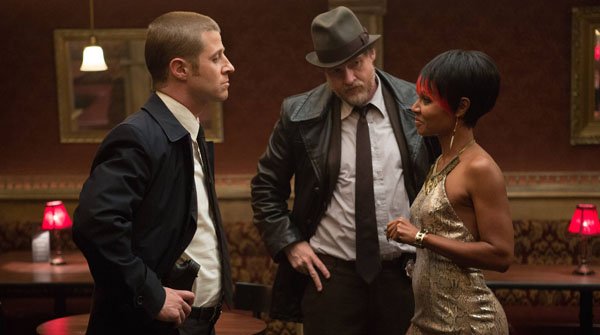
“Selina Kyle” is the title of tonight’s episode though we don’t really see the title character until much later in the episode. The episode itself dealt with a new case for the Gordon and Bullock duo who are still feeling their way around each other. It doesn’t help that Bullock seems to be getting tired of Gordon’s “holier-than-thou” attitude towards him and the rest of the force considering he and many in the force think Gordon killed Cobblepot in the previous episode. We, the audience, know better, but Gordon knows he has to continue to sell that assumption made by everyone.

While tonight’s episode wasn’t as overly busy with cramming as many Batman characters and locations it was still quite packed. In addition to building on the Gordon and Bullock relationship, we also have the episode’s main story about teen runaways being grabbed off the streets by unknown parties. Then there’s still the Wayne murders which the pilot episode showed wasn’t really solved. Will the murders of Bruce’s parents take up the bulk of the first season (I sure hope it doesn’t) or will it get a good enough resolution to help move the season’s narrative towards other more interesting storylines.

gotham-selina-kyle_article_story_large

It’s in the last twenty or so minutes of the episode that we finally get to see Selina Kyle. Camren Bicondova has such a unique look that it’s a bit jarring seeing her, at first. Yet, it’s the actress’ very exotic-look that hints at Bruce Wayne and Batman’s one true love turning into quite the seductive beauty. Yet, tonight’s episode just portrayed Selina Kyle as a tough, street-savvy runaway whose major role this season is the fact that she knows who really killed the Waynes.

Now, what really made tonight’s episode keep the series on an upward trend would be the two characters mentioned in the beginning: Carmine Falcone and Fish Mooney.

These two characters have become more interesting in just two episodes than throughout all the thousands of stories told about Batman through the comics, films and cartoons. As played by John Doman and Jada Pinkett Smith respectively, Falcone and Mooney make the show really interesting. These are not costume wearing villains or mentally-scarred antagonists. They’re hardcore criminals, but who have learned how to work within the system that is Gotham’s elite society. Where the show pushes forward that the Wayne family has been and continues to be a longstanding pillar of Gotham community, the show also seems to intimate that it does so with a sort of tacit acknowledgement of the seedier side of Gotham.

John Doman’s performance as Carmine Falcone continues to impress. There’s an almost paternal quality to the character but one that never tries to hide the brutality that’s made him the boss of all of Gotham’s criminal underworld. There was such a nice transition from polite businessman to sociopath mob boss in a space of a heartbeat during Falcone’s impromptu meeting with Mooney that one had to rewatch the scene more than once to pick it up.

Of course, many will point out that Jada Pinkett Smith as Mooney was just as good, but in a much more showier fashion. No disagreement in this corner. Smith’s performance is the opposite of Doman’s and it will be interesting how the power play between the two bosses will develop and how it’ll affect the rest of the cast of characters on Gotham.

This show still has growing pains to go through, but tonight’s episode was a good way in working through it while still trying to tell a compelling story. One thing Heller seems to have gotten right (whether by accident or deliberately) with this show’s writing is that he’s made the villains more interesting than it’s supposed heroes. That’s always been the case with Batman outside the comics and this show just continues to perpetuate it.

dcdbb92b4b1341fbc16f9bde1f629fc2

Review: Gotham S1E01 “Pilot”


GothamS1E01

“Gotham stands on a knife’s edge” — Carmine Falcone

It’s one of 2014’s most-anticipated new series. The world is superhero crazy right now and it was only time before DC dipped back into the Batman well to base a live-action tv series on their most-successful property.

Gotham doesn’t actually take the usual tack and bring in Batman himself as it’s main character. The show uses one of Batman’s most important allies as the focal point of the show. Jim Gordon has always been one of Batman’s staunchest friends throughout every story ever told about the Dark Knight. This show looks to explore Jim Gordon’s early years as part of the Gotham City Police Department. We still get to see Bruce Wayne as a child and his character and who he will become still loom large over the pilot and, I suspect, the series in general.

The pilot episode was written by the show’s executive producer Bruno Heller and it’s actually too paint-by-the-numbers. It literally tries to introduce as many of the Batman rogues gallery in it’s less-than-an-hour running time. We get a quick intro to not just the Riddler and the Joker, but we also get the early beginnings of the Penguin, Catwoman and Poison Ivy. Don’t even get me started on Batman’s more traditional adversaries in Fish Mooney and Carmine Falcone.

It’s difficult to judge a series on it’s pilot episode since the show is still trying to find it’s identity. We saw this with last year’s other comic book series, Agents of S.H.I.E.L.D., and how it took literally 2/3’s of it’s first season to finally find it’s stable footing before it could even figure out what show it wanted to be. Gotham may just have an easier time to find its way in the superhero entertainment landscape since DC has confirmed that the series will not tie-in with it’s cinematic universe the way Marvel did with it’s own series. This should give Bruno Heller and his writers a much more free hand in molding the show into what they want. Yet, there’s a danger in that freedom in that too much of a drastic deviation from the Batman source will rile up the character’s rabid fanbase.

FOX-Gotham-Exten-1525

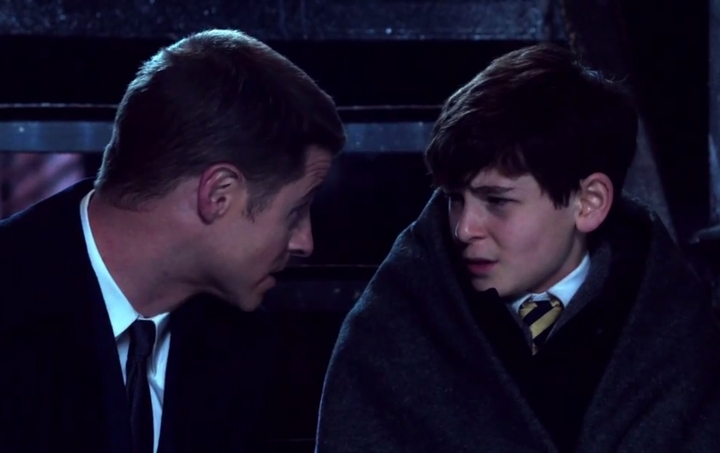
The first episode does arrive with some very good performances from it’s leads. Ben McKenzie as Det. Jim Gordon commands the stage whenever he’s on the screen. He’s able to convey not just the man of integrity we know Jim Gordon to be, but also inject a bit of a darkness to the character that we rarely saw in the films and cartoons, but comic book fans are very well aware of. McKenzie’s Jim Gordon definitely a bit more rougher around the edges but still idealistic than the Gary Oldman take on Jim Gordon who was more seasoned, but also more cynical about the best way to combat crime in Gotham.

Donal Logue as his veteran partner Harvey Bullock does a good job in becoming the bridge for the audience between the principled Gordon and the more corrupt, underbelly of law and order that is Gotham. We’re not sure if he’s a corrupt cop or just one who has learned how to navigate the dangerous waters of the criminal underworld as one of Gotham’s protectors. Time will tell if this version of Harvey Bullock becomes more of the Batman Begins analogue Arnold Flass or the cynical, but loyal cop of the cartoons.

Now, a show about Batman’s hometown wouldn’t be able to call itself by that city’s name if I didn’t mention the rogues gallery that will end becoming Batman’s (and to an extent, Jim Gordon) reason for being. We don’t see colorful costumes or even the recognizable look of Batman’s villains in this pilot episode, but as stated earlier they do try to cram as many of them in this series premiere as they could. It’s almost like a convoy designed to remind audiences that the show will explore not just Jim Gordon’s early days before Batman rises from the shadows, but also the time of the villains before he arrives.

cdn.indiewire.com

Of all the bad guys the show tries to push at the audience in this pilot it’s Fish Mooney as portrayed by Jada Pinkett Smith that stands out most. Her crimelord brings a certain amount of flair to the episode that hints at the over-the-top villainy that will come about once Bruce is all grown up and takes up the mantle of the bat. There’s hints of a past relationship between her and Logue’s Bullock that could turn out to be interesting. Robin Lord Taylor as a young Oswald Cobblepot aka the Penguin is ok, but something in his performance looks like someone trying too hard to bring out in this series the Penguin’s quirky mannerisms that the character looks to be the most cartoony of all introduced in the episode.

Gotham had a good and interesting introductory episode that laid enough stones on the series’ foundation as it moves forward. With only 16 episodes instead of the usual 24 most full-length tv series get Bruno Heller and the show’s writers has less time to create this version of the  Gotham and Batman world we’ve come to expect. Will they manage to inject some new blood into a world that’s been adapted and reimagined through decades of comics, tv and film work or will the series just try to appease the hardcore comic book fanbase thus alienating the wider general audience.

We shall see and future review installments will tell if this site buys into the series with wholeheartedly or end up getting off the ride before it’s over.

Trailer: Riddick (Red Band)


Riddick

In 2000, a small little scifi-horror film came out starring that guy from Saving Private Ryan. We didn’t really recognize him as the household name of Vin Diesel we know now. It was still that guy who was in that Spielberg WWII film. Pitch Black was a modest success, but modestly enough that a sequel was greenlit right after with a much bigger budget. This sequel was less scifi-horror and more of an epic scifi film that was trying to be the Dune of it’s time. The Chronicles of Riddick wasn’t a modest success this time around and plans for a third film to finish off the trilogy never got off the development stage.

Vin Diesel has since become a big star of some caliber with his Fast and Furious franchise. With the success of the latest film in that franchise it looks like Universal had given the Diesel the go-ahead to make a third film in his scifi franchise simply titled, Riddick.

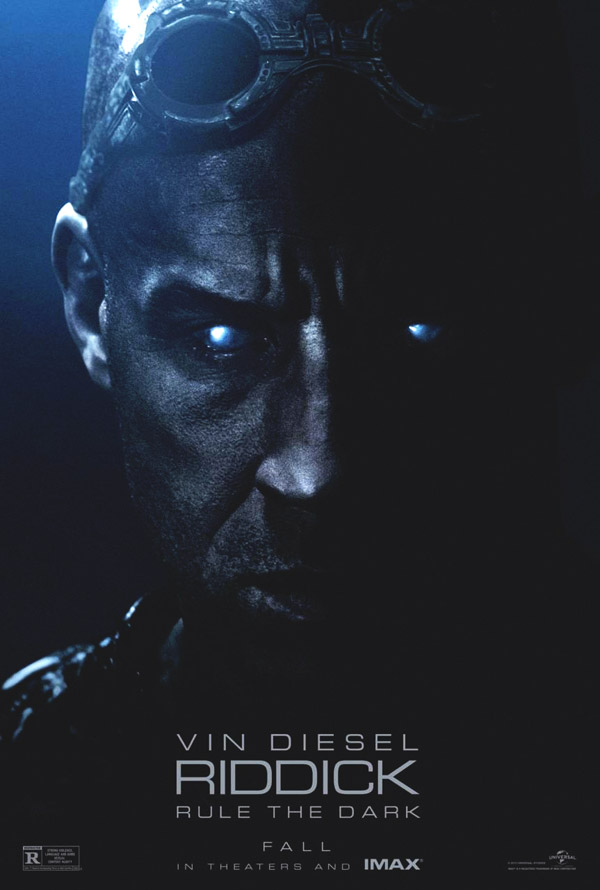
With a more modest budget than the second film, Riddick looks to return Vin Diesel’s character back to something more similar and thus safe. Riddick is back on a death world of a planet inhabited by dangerous critters who mayor may not hunt once an prolonged darkness sets in. Riddkc must also deal with a pesky band of mercenary bounty hunters after his hide. Where the second film tried to build on the character’s background and further his story in a space opera-like way this red band trailer shows that Riddick is best when playing the anti-hero who may or may not be the villain as well as the hero of the story.

Riddick is set for a September 6, 2013 release date.