Review: Shot Caller (dir. by Ric Roman Waugh)


“The fact is, we all started out as someone’s little angel. And a place like this forces us to become warriors or victims. Nothing in between can exist here.” — “Bottles”

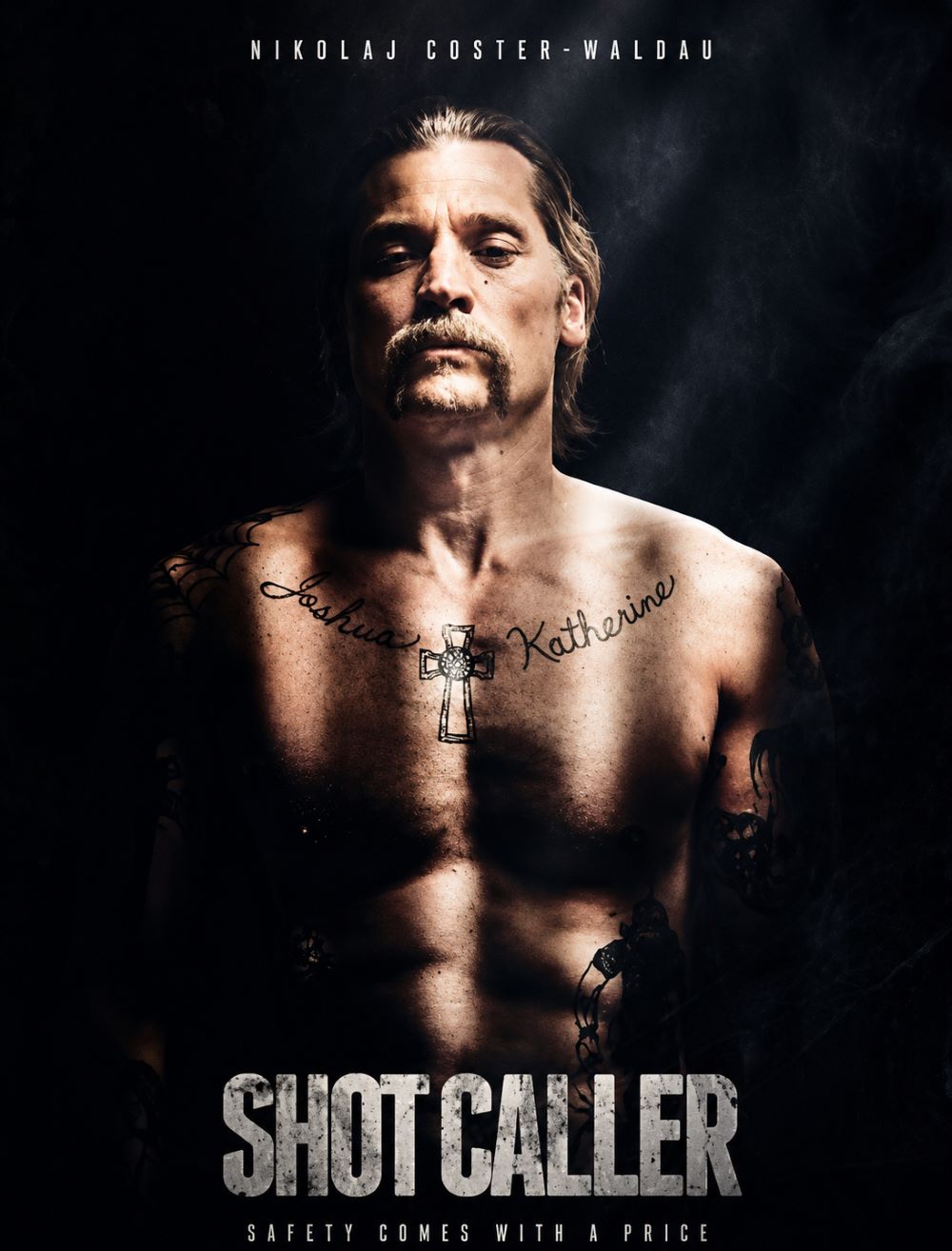
Shot Caller (released in 2017), directed by Ric Roman Waugh, is a gritty, morally complex crime drama that dives deep into the brutal world of prison gangs, redemption, and the blurred lines between justice and survival. Clocking in at just over two hours, it’s a tense, character-driven story that doesn’t shy away from the harsh realities of its setting, delivering a raw and unfiltered look at life behind bars and the psychological toll it exacts.

The film follows Jacob Harlon, played by Nikolaj Coster-Waldau, a successful businessman whose life spirals out of control after a DUI accident leaves his best friend dead. Sentenced to prison, Jacob is thrust into a violent, hierarchical world where survival means adapting to the rules of the Shot Callers—high-ranking gang members who control the prison’s underground economy. The film’s title itself is a nod to this brutal hierarchy, where every decision, every move, is dictated by those at the top. As Jacob navigates this treacherous landscape, he transforms from a naive new inmate into a hardened, strategic player, adopting the moniker “Money” for his financial acumen. His journey is as much about physical survival as it is about the psychological toll of losing his identity and grappling with the moral compromises he’s forced to make.

What makes Shot Caller stand out is its unflinching portrayal of prison life. Waugh, who also co-wrote the screenplay, doesn’t romanticize the violence or the characters. The film opens with a visceral, almost documentary-like sequence of Jacob’s first days in prison, where he’s immediately targeted by a white supremacist gang. The brutality is shocking, but it sets the tone for a story that refuses to sugarcoat the realities of incarceration. The prison scenes are claustrophobic, the tension palpable, and the stakes feel painfully real. Waugh’s direction ensures that every punch, every stab, every whispered threat carries weight. There’s no glorification here—just the cold, hard truth of a system that chews people up and spits them out. Even the brief but chilling appearance of Holt McCallany as The Beast, a high-ranking Aryan Brotherhood member, leaves a lasting impression. Though his screen time is limited, McCallany’s performance is unforgettable, exuding a quiet, menacing authority that underscores the danger lurking in every corner of the prison.

Nikolaj Coster-Waldau delivers a career-best performance as Jacob. Known to many as Jaime Lannister from Game of Thrones, Coster-Waldau sheds his noble, charismatic image to embody a man broken by guilt and reshaped by circumstance. His physical transformation is striking—he bulked up significantly for the role, but it’s his emotional range that truly impresses. Jacob’s arc is one of the most compelling aspects of the film. Early on, he’s a fish out of water, a man clinging to his old life and morals. But as the story progresses, we see the gradual erosion of his principles. The moment he finally snaps and fights back is a turning point, not just for his character but for the audience’s perception of him. By the time he’s released from prison, he’s almost unrecognizable—both physically and psychologically. Coster-Waldau makes you believe every step of this transformation, and it’s a testament to his skill as an actor that you’re rooting for Jacob even as he makes increasingly questionable decisions.

The supporting cast is equally strong. Omari Hardwick plays Shotgun, a high-ranking member of the black gang who becomes Jacob’s reluctant mentor. Hardwick brings a quiet intensity to the role, balancing threats with moments of unexpected humanity. Lake Bell plays Jacob’s wife, Kate, and her performance is heartbreaking in its restraint. Kate’s struggle to hold her family together while her husband is in prison is a grounded counterpoint to the chaos unfolding behind bars. Jon Bernthal, another standout, plays a prison guard with a morally ambiguous role in Jacob’s journey. Bernthal, as always, brings a raw, simmering energy to his scenes, making his character’s motivations feel authentic, even when they’re not entirely clear.

The film’s pacing is deliberate, almost methodical. Waugh takes his time building the world and the characters, and while this might frustrate viewers looking for constant action, it pays off in the long run. The first act is heavy on exposition, introducing the prison’s power structures and the various factions at play. But once Jacob starts to find his footing, the story picks up momentum. The middle act is where Shot Caller really shines, as Jacob’s alliances and rivalries become more complex. The film’s climax is a high-stakes heist that feels both inevitable and earned, a culmination of everything Jacob has learned—and lost—during his time inside.

One of the most interesting themes in Shot Caller is the idea of control. The title itself refers to those who call the shots, but the film constantly questions who really has power in this world. Jacob starts as a man who thinks he’s in control of his life, only to have that illusion shattered. In prison, he learns that control is a fragile, often violent thing, constantly shifting hands. Even after his release, he’s not truly free—he’s still bound by the rules of the criminal underworld he’s now a part of. The film suggests that in a system as broken as this one, no one is ever truly in control. It’s a bleak message, but one that feels authentic to the story being told.

The cinematography, by Dana Gonzales, is another highlight. The prison scenes are shot in a way that emphasizes the claustrophobia and tension of the environment. The color palette is muted, with lots of grays and blues, reflecting the cold, harsh reality of Jacob’s new world. The action sequences, when they do occur, are brutal and realistic, with a handheld camera style that puts you right in the middle of the chaos. There’s no glamour to the violence here—it’s messy, desperate, and often over in seconds.

If Shot Caller has a weakness, it’s that some of its themes and plot points might feel familiar to fans of the genre. The story of a man falling into the criminal underworld and struggling to escape isn’t exactly new. What saves the film from feeling derivative is its commitment to authenticity and its strong performances. Waugh’s script also avoids easy answers. Jacob isn’t a hero, and the film doesn’t pretend he is. He’s a flawed, complicated man making the best of a series of terrible situations. The ending, without spoiling too much, is bittersweet and ambiguous, leaving you to ponder just how much of Jacob’s old self is left—and whether he can ever truly escape the life he’s been drawn into.

Another aspect worth praising is the film’s soundtrack. The score, composed by Antonio Pinto, is understated but effective, using a mix of electronic and orchestral elements to underscore the tension and emotional beats of the story. The use of silence is also notable—there are moments where the absence of music makes the violence or the weight of a decision hit even harder.

Shot Caller is a film that lingers with you long after the credits roll. It’s not an easy watch, and it’s certainly not for the faint of heart. The violence is graphic, the language is harsh, and the themes are heavy. But for those willing to engage with it, the film offers a gripping, thought-provoking experience. It’s a story about survival, identity, and the cost of redemption. Ric Roman Waugh has crafted a prison drama that stands alongside classics like The Shawshank Redemption and American History X, even if it doesn’t quite reach their lofty heights. What it lacks in originality, it makes up for in execution, with stellar performances and a relentless commitment to its vision. In a world where crime dramas often glorify the outlaw life, Shot Caller is refreshingly honest. It doesn’t ask you to root for Jacob because he’s a good guy—it asks you to understand him, flaws and all. And by the end, you do. You understand the choices he makes, even if you don’t agree with them. That’s the mark of a great character study, and Shot Caller delivers on that front in spades. It’s a film that will leave you thinking, long after the final shot fades to black.


Icarus File No. 21: Reach Me (dir by John Herzfeld)


The 2011 film, Reach Me, opens with a rapper named E-Ruption (Nelly) appearing on a morning show and talking about how, while he was serving a prison sentence, he read a self-help book called Reach Me.  It asked him to consider whether or not his childhood self would be happy with his adult self.  The book was written by a mysterious man named Teddy Raymond.  No one knows who this Teddy Raymond is.  He’s never appeared in public.  People film themselves reading the book online and then upload to YouTube as a way of sharing Teddy’s wisdom.  I honestly can think of nothing more annoying and boring than watching someone else read a self-help book but whatever.  I live in Texas.  The movie takes place in California.

Tabloid editor Gerald (Sylvester Stallone) takes a break from action painting to order one of his reporters, Roger King (Kevin Connolly), to track down Teddy Raymond.  Roger wants to write the great American novel.  He doesn’t care about self-help.  He meets Teddy’s associates, Wilson (Terry Crews) and Kate (Lauren Cohan) and Wilson talks about how Teddy magically cured Kate’s stutter.  Roger then wanders around the beach, asking random people, “Teddy Raymond?  Are you Teddy Raymond?”  Oh look!  There’s a guy named Teddy (Tom Berenger) who reluctantly cures Roger of his smoking addiction by ordering Roger to yell at the ocean …. over and over and over again.

Collette (Kyra Segdwick) has just been released from prison.  Reading Teddy’s book has inspired her to try to become a fashion designer.  Collette’s daughter, Eve (Elizabeth Henstridge), is an aspiring actress who was earlier groped by a sleazy star named Keating (Cary Elwes).  Collette and Eve literally crash their car into a car being driven by Wolfie (Thomas Jane), a sociopathic undercover cop who enjoys killing people and who goes to confession after every shooting.  (At the start of the movie, he guns down Danny Trejo.)  The alcoholic priest, Father Paul (Danny Aiello), refuses to hear any more of his confessions.

Meanwhile, wannabe mob boss Frank (Tom Sizemore) is upset because another mob boss, Aldo (Kelsey Grammer), doesn’t treat him with any respect.  Frank sends two of his hitmen, Thumper (David O’Hara) and Dominic (Omari Hardwick), to kill a man who owes him money and to also shoot the man’s dog.  Thumper has been reading Teddy Raymond’s book and doesn’t want to shoot the dog.  Dominic realizes that his heart isn’t into the mob life so, taking the book’s message to heart, he calls Frank and says, “My heart’s not in it.”

(Don’t try that with any real mobsters.)

Eventually, all of the characters do come together.  They don’t exactly come together in a plausible manner but they do all end up at the same location so let’s give the film credit for that.  Let’s also give this film credit for leaving me seriously confused.  I have no idea whether this film was meant to a parody or a celebration of the self-help industry.  At first, I suspected that it meant to be a parody because all of Teddy Raymond’s advice was painfully shallow and the type of basic crap that anyone could come up with.  I actually found myself losing respect for the people who claimed that Teddy had changed their lives.  But at the movie progressed, I realized that I was supposed to take Teddy and his advice seriously.  This was a film that I guess was meant to have something to say but who knows what exactly that was.

That said — hey, everyone’s in this movie!  Director John Herzfeld was a former college roommate of Sylvester Stallone’s and, once Stallone agreed to appear, that apparently convinced a lot of other “name” actors to take the risk as well.  There’s a lot of talent in this film but little of it is used correctly.  Kelsey Grammer as an Italian mobster instead of the editor?  Sylvester Stallone as the editor instead of the Italian mobster?  Thomas Jane as a sociopath who has a girlfriend by the end of the movie, one who smiles and tells him, “Try not to shoot anyone?”  Kyra Sedgwick as an ex-con?  These are all good actors but just about everyone, with the exception of the much-missed Danny Aiello, is miscast.

It’s a true Icarus File.  It was a just a little more self-aware, this would have been a Guilty Pleasure.  But, in the end, self-help cannot help itself.

Previous Icarus Files:

  1. Cloud Atlas
  2. Maximum Overdrive
  3. Glass
  4. Captive State
  5. Mother!
  6. The Man Who Killed Don Quixote
  7. Last Days
  8. Plan 9 From Outer Space
  9. The Last Movie
  10. 88
  11. The Bonfire of the Vanities
  12. Birdemic
  13. Birdemic 2: The Resurrection 
  14. Last Exit To Brooklyn
  15. Glen or Glenda
  16. The Assassination of Trotsky
  17. Che!
  18. Brewster McCloud
  19. American Traitor: The Trial of Axis Sally
  20. Tough Guys Don’t Dance

Film Review: The Mother (dir by Niki Caro)


Jennifer Lopez is …. THE MOTHER!

The Mother is a professional assassin, a former U.S. military operative who has spent the last 12 years isolated in Alaska, hiding out from two of her former associates, drug lord Hector Alvarez (Gael Garcia Bernal) and mercenary Adrian Lovell (Joseph Fiennes).  In the past, The Mother went to the FBI when she discovered that Alvarez and Lovell were involved in human trafficking.  Lovell reacted by killing a bunch of FBI agent and attempting to kill The Mother’s unborn child by stabbing The Mother in the belly.  (I actually gasped in shock at this act of violence.)  Both The Mother and her daughter, Zoe, survived.

The Mother left her daughter to be raised by an FBI agent named William Cruise (Omari Hardwick).  But, twelve years later, Zoe (Lucy Paez) is kidnapped and The Mother has to come out of hiding to rescue her.  It’s a mission that will lead The Mother and Cruise to Cuba and which will eventually bring Lovell and his men back to Alaska.  Along the way, The Mother learns how to forgive herself and to how to open up emotionally and Zoe learns why her mother abandoned her so many years ago.  Zoe also learns that nature can be ruthless and unforgiving.

The Mother isn’t really a bad film as much as it’s just a very predictable film.  It’s very much from the Taken school of cinematic action, with a parent doing whatever is necessary to protect their children.  This is another one of those films where everyone tends to be very grim and there’s a lot of scenes of people coldly threatening each other.  The film opens with the FBI interrogating The Mother and the dialogue was so familiar and the attitudes so reminiscent of every single action film and television show that I’ve seen recently that I had to take a few minutes to remember which film I was watching.  Even The Mother’s eventual trip to snowy Alaska caused me to have flashbacks to both Those Who Wish Me Dead and the recent Dexter revival.  Oddly enough, it also reminded me of Sound of Metal, if just because The Mother‘s one friend in Alaska was played by Paul Raci.  It was nice to see Raci again.  With his haunted eyes and his kindly voice, he’s the type of guardian angel that everyone would want to have.  But again, it just all felt so familiar.

Jennifer Lopez gives a convincing performance as The Mother.  Though the film may be predictable, her commitment to protecting her daughter no matter what was undeniably moving and she and Lucy Paez has a believable mother/daughter relationship.  That said, Jennifer Lopez is always at her best when she’s allowed to play a character with a sense of playfulness and there’s little of that to be found in The Mother.  It’s a grim film about serious characters and it hits all of the expected beats with efficiency but not much more.  When it comes to 2023 Jennifer Lopez films, I still prefer the appealingly silly Shotgun Wedding.

And here are the NAACP Image Award Nominations!


Dear White People

And continuing our awards wrap-up, here are the 2014 NAACP Image Award nominations!

(h/t to awardswatch)

MOTION PICTURE
Outstanding Motion Picture
• “Belle” (Fox Searchlight Pictures/ DJ Films)
• “Beyond The Lights” (Relativity Media)
• “Dear White People” (Lionsgate and Roadside Attractions)
• “Get On Up” (Universal Pictures)
• “Selma” (Paramount Pictures)

Outstanding Actor in a Motion Picture
• Chadwick Boseman – “Get On Up” (Universal Pictures)
• David Oyelowo – “Selma” (Paramount Pictures)
• Denzel Washington – “The Equalizer” (Columbia Pictures)
• Idris Elba – “No Good Deed” (Screen Gems)
• Nate Parker – “Beyond The Lights” (Relativity Media)

Outstanding Actress in a Motion Picture
• Gugu Mbatha-Raw – “Belle” (Fox Searchlight Pictures/ DJ Films)
• Quvenzhané Wallis – “Annie” (Columbia Pictures)
• Taraji P. Henson – “No Good Deed” (Screen Gems)
• Tessa Thompson – “Dear White People” (Lionsgate and Roadside Attractions)
• Viola Davis – “The Disappearance of Eleanor Rigby” (The Weinstein Company)

Outstanding Supporting Actor in a Motion Picture
• André Holland – “Selma” (Paramount Pictures)
• Cedric the Entertainer – “Top Five” (Paramount Pictures)
• Common – “Selma” (Paramount Pictures)
• Danny Glover – “Beyond The Lights” (Relativity Media)
• Wendell Pierce – “Selma” (Paramount Pictures)

Outstanding Supporting Actress in a Motion Picture
• Carmen Ejogo – “Selma” (Paramount Pictures)
• Jill Scott – “Get On Up” (Universal Pictures)
• Octavia Spencer – “Get On Up” (Universal Pictures)
• Oprah Winfrey – “Selma” (Paramount Pictures)
• Viola Davis – “Get On Up” (Universal Pictures)

Outstanding Independent Motion Picture
• “Belle” (Fox Searchlight Pictures/ DJ Films)
• “Dear White People” (Lionsgate and Roadside Attractions)
• “Half of a Yellow Sun” (monterey media inc.)
• “JIMI: All Is By My Side” (XLrator Media)
• “Life of a King” (Animus Films/Serena Films)

Outstanding Writing in a Motion Picture
• Chris Rock – “Top Five” (Paramount Pictures)
• Justin Simien – “Dear White People” (Roadside Attractions and Lionsgate)
• Margaret Nagle – “The Good Lie” (Alcon Entertainment)
• Misan Sagay – “Belle” (Fox Searchlight Pictures/ DJ Films)
• Richard Wenk – “The Equalizer” (Columbia Pictures)

Outstanding Directing in a Motion Picture
• Amma Asante – “Belle” (Fox Searchlight Pictures/ DJ Films)
• Antoine Fuqua – “The Equalizer” (Columbia Pictures)
• Ava DuVernay – “Selma” (Paramount Pictures)
• Gina Prince-Bythewood – “Beyond The Lights” (Relativity Media)
• John Ridley – “JIMI: All Is By My Side” (XLrator Media)

TELEVISION
Outstanding Comedy Series
• “Black-ish” (ABC)
• “House of Lies” (Showtime)
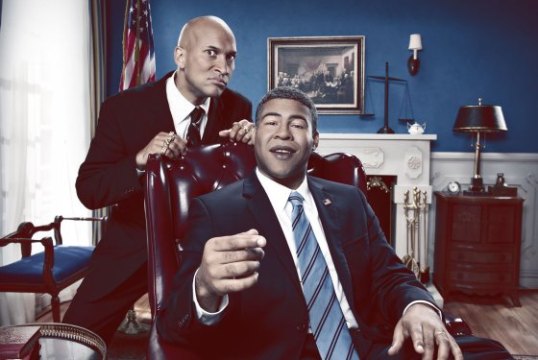
• “Key & Peele” (Comedy Central)
• “Orange is the New Black” (Netflix)
• “Real Husbands of Hollywood” (BET)

Outstanding Actor in a Comedy Series
• Andre Braugher – “Brooklyn Nine-Nine” (FOX)
• Anthony Anderson – “‘Black-ish” (ABC)
• Don Cheadle – “House of Lies” (Showtime)
• Keegan-Michael Key – “Key & Peele” (Comedy Central)
• Kevin Hart – “Real Husbands of Hollywood” (BET)

Outstanding Actress in a Comedy Series
• Mindy Kaling – “The Mindy Project” (FOX)
• Niecy Nash – “The Soul Man” (TV Land)
• Tracee Ellis Ross – “Black-ish” (ABC)
• Uzo Aduba – “Orange is the New Black” (Netflix)
• Wendy Raquel Robinson – “The Game” (BET)

Outstanding Supporting Actor in a Comedy Series
• Boris Kodjoe – “Real Husbands of Hollywood” (BET)
• Glynn Turman – “House of Lies” (Showtime)
• Laurence Fishburne – “Black-ish” (ABC)
• Marcus Scribner – “Black-ish” (ABC)
• Terry Crews – “Brooklyn Nine-Nine” (FOX)

Outstanding Supporting Actress in a Comedy Series
• Adrienne C. Moore – “Orange is the New Black” (Netflix)
• Laverne Cox – “Orange is the New Black” (Netflix)
• Lorraine Toussaint – “Orange is the New Black” (Netflix)
• Sofia Vergara – “Modern Family” (ABC)
• Yara Shahidi – “black-ish” (ABC)

Outstanding Drama Series
• “Being Mary Jane” (BET)
• “Grey’s Anatomy” (ABC)
• “House of Cards” (Netflix)
• “How to Get Away with Murder” (ABC)
• “Scandal” (ABC)

Outstanding Actor in a Drama Series
• LL Cool J – “NCIS: LA” (CBS)
• Omar Epps – “Resurrection” (ABC)
• Omari Hardwick – “Being Mary Jane” (BET)
• Shemar Moore – “Criminal Minds” (CBS)
• Taye Diggs – “Murder in the First” (TNT)

Outstanding Actress in a Drama Series
• Gabrielle Union – “Being Mary Jane” (BET)
• Kerry Washington – “Scandal” (ABC)
• Nicole Beharie – “Sleepy Hollow” (FOX)
• Octavia Spencer – “Red Band Society” (FOX)
• Viola Davis – “How to Get Away with Murder” (ABC)

Outstanding Supporting Actor in a Drama Series
• Alfred Enoch – “How to Get Away with Murder” (ABC)
• Courtney B. Vance – “Masters of Sex” (Showtime)
• Guillermo Diaz – “Scandal” (ABC)
• Jeffrey Wright – “Boardwalk Empire” (HBO)
• Joe Morton – “Scandal” (ABC)

Outstanding Supporting Actress in a Drama Series
• Aja Naomi King – “How to Get Away with Murder” (ABC)
• Alfre Woodard – “State of Affairs” (NBC)
• Chandra Wilson – “Grey’s Anatomy” (ABC)
• Jada Pinkett Smith – “Gotham” (FOX)
• Khandi Alexander – “Scandal” (ABC)

Outstanding Writing in a Comedy Series
• Aisha Muharrar – “Parks and Recreation” – Ann & Chris (NBC)
• Brigette Munoz-Liebowitz – “Brooklyn Nine-Nine” – Road Trip (FOX)
• Mindy Kaling – “The Mindy Project” – Danny and Mindy (FOX)
• Regina Hicks – “Instant Mom” – A Kids’s Choice (Nickelodeon and Nick@Nite)
• Sara Hess – “Orange is the New Black” – It Was the Change (Netflix)

Outstanding Writing in a Drama Series
• Erika Green Swafford – “How to Get Away with Murder” – Let’s Get To Scooping
(ABC)
• Mara Brock Akil – “Being Mary Jane” – Uber Love (BET)
• Warren Leight, Julie Martin – “Law & Order: SVU” – American Disgrace (NBC)
• Zahir McGhee – “Scandal” – Mama Said Knock You Out (ABC)
• Zoanne Clack – “Grey’s Anatomy” – You Be Illin’ (ABC)

Outstanding Television Movie, Mini-Series or Dramatic Special
• “A Day Late and a Dollar Short” (Lifetime Networks)
• “American Horror Story: Freak Show” (FX)
• “Drumline: A New Beat” (VH1)
• “The Gabby Douglas Story” (Lifetime Networks)
• “The Trip to Bountiful” (Lifetime Networks)

Outstanding Actor in a Television Movie, Mini-Series or Dramatic Special
• Blair Underwood – “The Trip to Bountiful” (Lifetime Networks)
• Charles S. Dutton – “Comeback Dad” (UP Entertainment)
• Larenz Tate – “Gun Hill” (BET)
• Mekhi Phifer – “A Day Late and a Dollar Short” (Lifetime Networks)
• Ving Rhames – “A Day Late and a Dollar Short” (Lifetime Networks)

Outstanding Actress in a Television Movie, Mini-Series or Dramatic Special
• Angela Bassett – “American Horror Story: Freak Show” (FX)
• Cicely Tyson – “The Trip to Bountiful” (Lifetime Networks)
• Keke Palmer – “The Trip to Bountiful” (Lifetime Networks)
• Regina King – “The Gabby Douglas Story” (Lifetime Networks)
• Vanessa Williams – “The Trip to Bountiful” (Lifetime Networks)

Key & Peele