Guilty Pleasure No. 122: 2012 (dir. by Roland Emmerich)


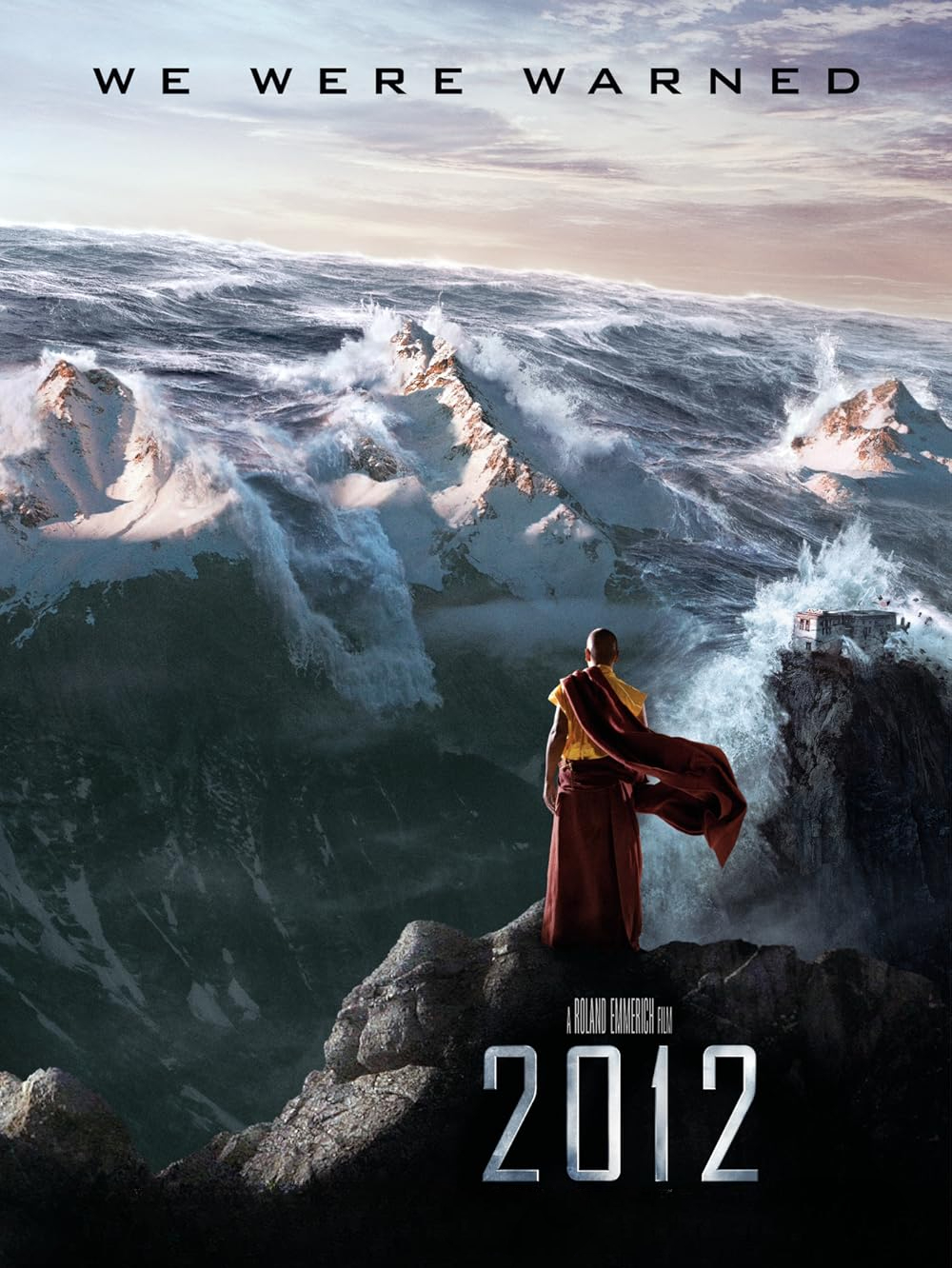
Roland Emmerich has a reputation that precedes him, and it’s not exactly a glowing one. When his name pops up as the director of a new blockbuster, it’s easy to let out an audible groan. He’s not quite in the same league as Uwe Boll for sheer cinematic atrocities, but he gives Michael Bay a serious run for his money in the “most frustratingly inconsistent big-budget filmmaker” category. This is a guy who once showed real promise with cult sci-fi action flicks like Universal Soldier and Stargate, then hit his commercial and creative peak with the wildly entertaining Independence Day. But ever since that 1996 high point, Emmerich’s films have followed a disappointing trajectory, each one seemingly more bloated and less satisfying than the last. Godzilla was a mess. The Day After Tomorrow had its moments but collapsed under its own ridiculousness. So when 2012 rolled around in late 2009, expectations were, to put it mildly, low. Yet somehow, against all odds, Emmerich delivered his most purely enjoyable disaster flick since Independence Day—a film so gleefully, unapologetically over-the-top that it transcends its many, many flaws.

2012 takes the idea of apocalyptic cinema and cranks it up to eleven, then snaps the dial off and sets it on fire. The premise is simple: the Mayan calendar wasn’t just a quirky ancient artifact—it was a warning. The world, as we know it, is set to end in the year 2012, thanks to a series of cataclysmic events triggered by solar neutrinos heating up the Earth’s core. The film spends its first act methodically setting up this global doomsday through two very different perspectives. On one side, you’ve got Dr. Adrian Helmsley, played with quiet intensity by Chiwetel Ejiofor, a scientist who discovers the impending disaster and tries to warn world leaders. On the other, there’s Charlie Frost, a conspiracy theorist radio host played by Woody Harrelson with the kind of manic energy that suggests he might actually believe the world is ending—or at least that his next cup of coffee is. These early scenes are a mix of pseudo-science and doomsday preaching, but they serve their purpose: by the time the first real disaster strikes, you’re primed and ready for the chaos.

And oh, what chaos it is. 2012 isn’t just a disaster movie—it’s a full-blown disaster epic, a nearly three-hour spectacle of global annihilation that feels like Emmerich finally decided to stop holding back. This is a film where entire continents are reshaped, where cities crumble into the sea, and where billions of people meet their end in the most visually inventive ways possible. The destruction of Los Angeles is a particular standout, a sequence so relentless and well-executed that it’s hard not to watch with your jaw hanging open. John Cusack plays Jackson Curtis, a limousine driver and failed novelist who finds himself in the middle of the carnage while trying to pick up his kids from their mother’s new boyfriend’s mansion. As the ground literally splits open beneath him, Curtis has to outdrive an earthquake that’s turning the San Andreas Fault into a real-life game of Frogger. Buildings collapse, freeways pancake, and the entire city slides into the Pacific Ocean in a scene that’s as thrilling as it is absurd. It’s the kind of moment that defines 2012: completely ridiculous, yet undeniably impressive in its sheer audacity.

But Los Angeles is just the appetizer. From there, the film takes us on a world tour of destruction. Yellowstone National Park erupts in a supervolcano explosion that turns the American Midwest into a smoldering wasteland. Mega-tsunamis, some as tall as the Himalayas, crash over entire landmasses, swallowing cities whole. Air Force One gets caught in a pyroclastic flow. And through it all, Cusack’s everyman hero is trying to get his family to safety, which in this case means boarding one of the massive arks built by the world’s governments to preserve humanity—or at least the rich and well-connected. The arks, a last-ditch effort to save a sliver of civilization, become the film’s most fascinating and frustrating element. On one hand, they’re a clever narrative device, forcing the characters into a high-stakes race against time. On the other, they highlight the film’s most glaring ethical and logical inconsistencies. Why are only certain people allowed on board? How did they build these things in secret? And why does Danny Glover’s President Wilson, a man who seems perpetually one step behind the crisis, get to be the moral compass of the story? The answers, of course, are “because the plot demands it” and “who cares, look at that explosion!”

The cast of 2012 is what you’d charitably call an ensemble, though “B-list all-stars” might be more accurate. Cusack is fine as the reluctant hero, though he’s never fully convincing as a man who can outsmart the apocalypse. Amanda Peet plays his ex-wife, Kate, a woman so perpetually exasperated by her former husband that you wonder why she ever married him in the first place. Their kids, played by Liam James and Morgan Lily, are mostly there to scream and look terrified, which they do adequately. Chiwetel Ejiofor brings a much-needed dose of gravitas as the scientist trying to sound the alarm, though even he can’t sell some of the film’s more outlandish scientific explanations. Danny Glover’s President Wilson is… well, he’s Danny Glover as the President, which is about as convincing as it sounds. And then there’s Woody Harrelson, who steals every scene he’s in as Charlie Frost, the conspiracy theorist who may or may not be onto something. Harrelson’s performance is so delightfully unhinged that it almost makes you wish the film had focused more on his character and less on Cusack’s family drama.

And that’s the thing about 2012: the human elements are almost uniformly the weakest part of the film. The dialogue is often clunky, the character arcs are predictable, and the emotional beats frequently fall flat. But none of that matters because Emmerich and his team have crafted a film that’s so visually stunning, so relentlessly paced, and so committed to its own absurdity that you can’t help but get swept up in it. This is a movie that understands exactly what it is: a guilty pleasure, a spectacle, a chance to watch the world end in the most extravagant ways possible. It doesn’t ask you to think too hard or invest too deeply in its characters. It just asks you to sit back, grab some popcorn, and enjoy the ride. And on that front, 2012 delivers in spades.

What’s most impressive about 2012 is the sheer scale of its ambition. This isn’t a film content with destroying a single city or even a single country. Emmerich wants to tear down the entire planet, and he does so with a level of detail and creativity that’s hard not to admire. The visual effects are top-notch, and the film’s destruction sequences are some of the most memorable in the disaster genre. The mega-tsunami that crashes over the Himalayas is a particular highlight, a moment so awe-inspiring in its scope that it’s easy to forget you’re watching a movie that’s otherwise filled with groan-worthy dialogue and one-dimensional characters. And then there’s the final act, where the arks become the stage for a last-ditch effort to save humanity. The sequences aboard the ark are a mix of tension and spectacle, as the characters navigate the chaos of a world literally coming apart at the seams.

Of course, 2012 isn’t without its share of head-scratching moments. The science is, to put it kindly, questionable. The idea that solar neutrinos could heat up the Earth’s core to the point of global destruction is pure fantasy, and the film’s explanation for how the arks were built and funded is so flimsy it might as well not exist. The pacing, too, can be uneven. The first act drags a bit as it sets up the various plot threads, and the final act feels rushed, as if Emmerich realized he had to wrap things up before the runtime hit the three-hour mark. And then there’s the film’s tone, which can be wildly inconsistent. One moment, you’re watching billions of people die in horrific ways; the next, you’re supposed to laugh at a joke from one of the side characters. It’s a balancing act that doesn’t always work, but somehow, it doesn’t derail the film either.

At its core, 2012 is a throwback to the disaster movies of the 1970s, films like The Poseidon Adventure and The Towering Inferno that were more concerned with spectacle than substance. Those films were often criticized for their thin plots and wooden acting, but they endured because they delivered on the one thing that mattered: thrilling, large-scale destruction. 2012 is cut from the same cloth. It’s a film that knows its audience and knows exactly what they want. And what they want, it turns out, is to watch the world end in the most spectacular ways possible. In that sense, 2012 is a resounding success. It’s a bad movie, sure, but it’s a bad movie that’s an absolute blast to watch. It’s the kind of film you put on when you want to turn off your brain, crank up the volume, and lose yourself in the sheer, unadulterated joy of watching everything burn.

So, is 2012 a good film? By most traditional measures, no. The plot is silly, the characters are thin, and the dialogue is often laughable. But as a piece of pure, unfiltered disaster porn, it’s one of the best. Emmerich has always been a director who prioritizes spectacle over subtlety, and 2012 is the purest expression of that philosophy. It’s a film that doesn’t just meet expectations—it exceeds them, if only by virtue of its sheer, unrelenting ambition. And in a world where so many blockbusters feel like they’re playing it safe, there’s something refreshing about a movie that’s willing to go this big, this bold, and this unapologetically over-the-top. 2012 may not be high art, but it’s a hell of a lot of fun. And sometimes, that’s more than enough.

Previous Guilty Pleasures

  1. Half-Baked
  2. Save The Last Dance
  3. Every Rose Has Its Thorns
  4. The Jeremy Kyle Show
  5. Invasion USA
  6. The Golden Child
  7. Final Destination 2
  8. Paparazzi
  9. The Principal
  10. The Substitute
  11. Terror In The Family
  12. Pandorum
  13. Lambada
  14. Fear
  15. Cocktail
  16. Keep Off The Grass
  17. Girls, Girls, Girls
  18. Class
  19. Tart
  20. King Kong vs. Godzilla
  21. Hawk the Slayer
  22. Battle Beyond the Stars
  23. Meridian
  24. Walk of Shame
  25. From Justin To Kelly
  26. Project Greenlight
  27. Sex Decoy: Love Stings
  28. Swimfan
  29. On the Line
  30. Wolfen
  31. Hail Caesar!
  32. It’s So Cold In The D
  33. In the Mix
  34. Healed By Grace
  35. Valley of the Dolls
  36. The Legend of Billie Jean
  37. Death Wish
  38. Shipping Wars
  39. Ghost Whisperer
  40. Parking Wars
  41. The Dead Are After Me
  42. Harper’s Island
  43. The Resurrection of Gavin Stone
  44. Paranormal State
  45. Utopia
  46. Bar Rescue
  47. The Powers of Matthew Star
  48. Spiker
  49. Heavenly Bodies
  50. Maid in Manhattan
  51. Rage and Honor
  52. Saved By The Bell 3. 21 “No Hope With Dope”
  53. Happy Gilmore
  54. Solarbabies
  55. The Dawn of Correction
  56. Once You Understand
  57. The Voyeurs 
  58. Robot Jox
  59. Teen Wolf
  60. The Running Man
  61. Double Dragon
  62. Backtrack
  63. Julie and Jack
  64. Karate Warrior
  65. Invaders From Mars
  66. Cloverfield
  67. Aerobicide 
  68. Blood Harvest
  69. Shocking Dark
  70. Face The Truth
  71. Submerged
  72. The Canyons
  73. Days of Thunder
  74. Van Helsing
  75. The Night Comes for Us
  76. Code of Silence
  77. Captain Ron
  78. Armageddon
  79. Kate’s Secret
  80. Point Break
  81. The Replacements
  82. The Shadow
  83. Meteor
  84. Last Action Hero
  85. Attack of the Killer Tomatoes
  86. The Horror at 37,000 Feet
  87. The ‘Burbs
  88. Lifeforce
  89. Highschool of the Dead
  90. Ice Station Zebra
  91. No One Lives
  92. Brewster’s Millions
  93. Porky’s
  94. Revenge of the Nerds
  95. The Delta Force
  96. The Hidden
  97. Roller Boogie
  98. Raw Deal
  99. Death Merchant Series
  100. Ski Patrol
  101. The Executioner Series
  102. The Destroyer Series
  103. Private Teacher
  104. The Parker Series
  105. Ramba
  106. The Troubles of Janice
  107. Ironwood
  108. Interspecies Reviewers
  109. SST — Death Flight
  110. Undercover Brother
  111. Out for Justice
  112. Food Wars!
  113. Cherry
  114. Death Race
  115. The Beast Within
  116. Girl Series
  117. Gone in 60 Seconds
  118. Swordfish
  119. Marked For Death
  120. The Internship
  121. The Angry Red Planet

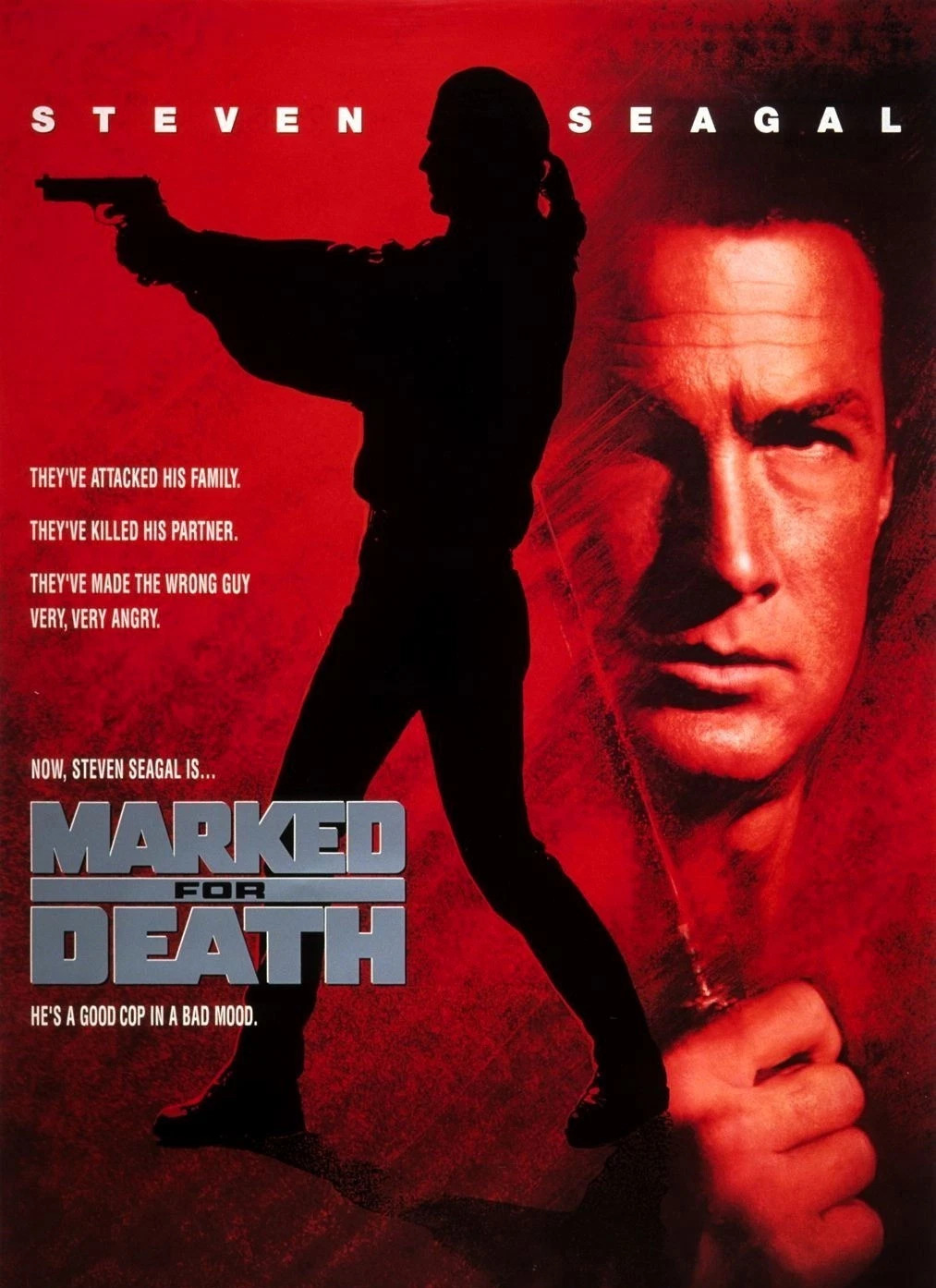
Guilty Pleasure No. 119: Marked for Death (dir. by Dwight H. Little)


There’s a specific, almost mystical, pleasure in watching a movie that is, by almost every conventional standard, a complete mess. It’s a guilty pleasure, that sweet spot where a film is so unapologetically over-the-top, so earnestly ridiculous, that it circles back around to being utterly entertaining. And for my money, few films embody this “so bad it’s good” vibe quite like Steven Seagal’s 1990 action opus, Marked for Death. This is prime, uncut, vintage Seagal, a film that feels like it was beamed in from an alternate dimension where ponytails are a symbol of power, whispering threats is a sign of deep menace, and the streets of Chicago are apparently overrun with voodoo-practicing Jamaican drug lords. It’s silly, sure, but it’s a very specific kind of silly—grounded enough in its grim, urban revenge fantasy to feel almost earnest, which is precisely what makes it work. To put it in perspective, Marked for Death is downright restrained compared to the coked-out, reality-defying lunacy Seagal would unleash just a year later in Out for Justice. That film, with its infamous “anybody seen Richie?” barroom brawl and its general air of sweaty, unhinged mania, operates on a completely different, far more unhinged wavelength. Marked for Death still has one foot in the real world, however wobbly that stance may be, whereas Out for Justice seems to have been fueled by a warehouse full of stimulants and a complete disregard for narrative coherence.

For those who don’t remember the heyday of Seagal-mania, Marked for Death is a perfect time capsule. This was before the bloated, straight-to-DVD era; this was Seagal in his physical prime, slim, athletic, and seemingly capable of snapping every bone in a human body without breaking a sweat. He plays John Hatcher, a burnt-out DEA agent who, after a botched operation in Mexico, decides to retire and seek some peace and quiet by visiting his sister and niece in his old Chicago neighborhood. This is the first of the film’s many logical leaps, because apparently, a retired DEA agent’s idea of a stress-free vacation is moving back to the neighborhood where he grew up and where a violent turf war is raging. It’s a classic action movie setup that requires you to immediately check your brain at the door, but compared to the sheer narrative anarchy of Out for Justice, it practically feels like Shakespeare.

You see, the peace and quiet Hatcher seeks doesn’t exist. The town is being terrorized by a Jamaican drug posse led by the wonderfully named and gloriously performed villain, Screwface. Played with scenery-chewing, eye-rolling relish by Basil Wallace, Screwface is more than just a drug dealer; he’s a voodoo priest with a penchant for giving people a “t’ousand dets wurse dan yoo doo.” He’s a cartoon character in the best possible way, a man so over-the-top that his presence alone elevates the film from a standard revenge flick into something far more memorable. When he declares Hatcher and his family “marked for death,” you can’t help but lean in, not because you’re scared for the hero, but because you want to see what bizarre, hammy line he’s going to come up with next. It’s absurd, but it’s a controlled absurdity, a deliberate performance that knows exactly what movie it’s in. That’s the key difference between this and the later Seagal outings; Marked for Death plays its absurdity with a straight face, whereas Out for Justice feels like it’s sweating and twitching through every frame, as if the filmmakers themselves had just snorted a mountain of the very product their hero was supposedly fighting against.

The plot, such as it is, kicks into gear when a gang shootout at a local bar forces Hatcher into action, and the posse retaliates by shooting up his sister’s house and wounding his young niece. This is the moment where the film’s narrative pivots from “watch the hero mope” to “watch the hero mope and then absolutely obliterate everyone in his path.” The central premise, like many critics have noted, is as formulaic as they come: a former lawman with a troubled past is forced out of retirement to avenge his family using excessive force. One reviewer put it perfectly, noting the film follows the “familiar one-note, bone-crunching action vehicle for Steven Seagal.” And while that might sound like a criticism, in this context, it’s a promise of the guilty pleasures to come. But even within that formula, there’s a certain grim logic that holds it together—something you absolutely cannot say about the gloriously unhinged Out for Justice, where the plot seems to be held together with duct tape and pure, unfiltered rage.

What makes Marked for Death such a classic guilty pleasure is the sheer, unrelenting brutality of the action sequences. This is not the sanitized, quick-cut action of today. This is a film where every punch sounds like a gunshot and every bone snapped echoes with a sickening, satisfying crunch. Director Dwight D. Little, who later went on to direct TV episodes for shows like Prison Break and Bones, stages the action with a “tight handling,” making sure the camera is right there to capture Seagal’s trademark Aikido. The violence is so extreme that it becomes comical. We’re talking broken arms, broken necks, gouged eyes, a decapitation, and a finale so over-the-top that it involves Seagal using a samurai sword to fight his way through a compound. Yet even with all that mayhem, it never quite reaches the hallucinatory, sweaty-palmed frenzy of Out for Justice, where the violence feels less choreographed and more like a bar brawl that somehow escaped onto film stock.

There are moments in Marked for Death that are so ridiculous they deserve their own standing ovation. There’s the infamous department store fight, where Hatcher dismantles a small army of henchmen while surrounded by mannequins and glass displays. It’s a perfect showcase for Seagal’s skills as a fighter and a complete lack of interest in things like, say, civilian casualties or property damage. Then there’s the entire third act, where Hatcher and his buddy Max (played with stoic reliability by the great Keith David), somehow manage to smuggle an entire arsenal of weapons into Jamaica for a final assault on Screwface’s compound. The logic of this is never explained, but it doesn’t matter. We’re given a montage of them prepping their weapons, and the next thing you know, they’re on a plane. It’s this kind of brazen disregard for realism that makes the film such a hoot, but again, it’s a calculated hoot. The cocaine-fueled silliness of Out for Justice would never bother with such a montage—it would just have Seagal appear in Jamaica with a shotgun, no explanation given, because who needs logic when you have that much manic energy coursing through the projector?

Perhaps the most surprising element is that despite the malevolent tone, the film has become a beloved “cult classic” for many. As one reviewer from the time stated, “it’s easy to see how someone could end up not liking Marked for Death. Its plot is ridiculous, it was overly violent for its time period… On the other hand, this is a film that doesn’t seem to care what you think and instead gleefully exist as a throwback to old-school Grindhouse films.” There’s a sense that Seagal and the filmmakers were in on the joke, even if they were playing it completely straight. The film is excessive, ruthless, and mindlessly numbing in all the right ways, a sentiment that perfectly encapsulates its enduring appeal. It’s the cinematic equivalent of comfort food—you know it’s bad for you, but it tastes so good. And it tastes a whole lot more grounded than the chaotic, unfiltered blast of pure id that is Out for Justice, a film that feels like it was edited by a hyperactive squirrel on a sugar rush.

Marked for Death isn’t a great film by any objective measure. The acting is wooden, the dialogue is laughable, and the cultural stereotypes are, to put it mildly, a product of their time. The Miami Herald even noted that Seagal dispatches his foes with “such an obnoxious sense of higher purpose that we get the feeling he’s not in on the fun.” The film’s portrayal of Jamaican culture as a hotbed of violent, voodoo-worshipping drug dealers is certainly problematic and not something that would fly today, which adds to the movie’s bizarre, anachronistic charm. It’s a film that, while considered one of his better works from that era, is far from what you’d call high art. But it knows its lane and stays in it, which is more than you can say for the gloriously unhinged Out for Justice, a movie that seems to have forgotten what lane it was in, swerved into oncoming traffic, and somehow kept driving anyway.

In the end, Marked for Death is the ultimate “bad movie night” experience. It’s a window into a time when action heroes were larger than life, plots were just excuses for mayhem, and a villain named Screwface could be a legitimate threat. It’s a film where you can quote terrible dialogue and cheer for the excessive violence without feeling guilty, because it’s all part of the deal. As one IMDb user succinctly put it, “Marked for Death is a thoroughly entertaining overblown unnecessarily violent & foul mouthed action film, the sort of film which Seagal was perfectly suited to star in. Sure it’s predictable & unoriginal but when a films this much fun who cares?” And honestly, isn’t that the highest praise you can give a movie like this? It’s a big, dumb, brutal, and brilliant piece of schlock that proudly wears its awfulness as a badge of honor. It’s silly, absolutely, but it’s a grounded, almost respectable kind of silly—the kind that makes you appreciate just how far off the deep end Seagal would go with Out for Justice, a film so wildly, unapologetically unhinged that it makes Marked for Death look like a quiet, contemplative drama by comparison.

Previous Guilty Pleasures

  1. Half-Baked
  2. Save The Last Dance
  3. Every Rose Has Its Thorns
  4. The Jeremy Kyle Show
  5. Invasion USA
  6. The Golden Child
  7. Final Destination 2
  8. Paparazzi
  9. The Principal
  10. The Substitute
  11. Terror In The Family
  12. Pandorum
  13. Lambada
  14. Fear
  15. Cocktail
  16. Keep Off The Grass
  17. Girls, Girls, Girls
  18. Class
  19. Tart
  20. King Kong vs. Godzilla
  21. Hawk the Slayer
  22. Battle Beyond the Stars
  23. Meridian
  24. Walk of Shame
  25. From Justin To Kelly
  26. Project Greenlight
  27. Sex Decoy: Love Stings
  28. Swimfan
  29. On the Line
  30. Wolfen
  31. Hail Caesar!
  32. It’s So Cold In The D
  33. In the Mix
  34. Healed By Grace
  35. Valley of the Dolls
  36. The Legend of Billie Jean
  37. Death Wish
  38. Shipping Wars
  39. Ghost Whisperer
  40. Parking Wars
  41. The Dead Are After Me
  42. Harper’s Island
  43. The Resurrection of Gavin Stone
  44. Paranormal State
  45. Utopia
  46. Bar Rescue
  47. The Powers of Matthew Star
  48. Spiker
  49. Heavenly Bodies
  50. Maid in Manhattan
  51. Rage and Honor
  52. Saved By The Bell 3. 21 “No Hope With Dope”
  53. Happy Gilmore
  54. Solarbabies
  55. The Dawn of Correction
  56. Once You Understand
  57. The Voyeurs 
  58. Robot Jox
  59. Teen Wolf
  60. The Running Man
  61. Double Dragon
  62. Backtrack
  63. Julie and Jack
  64. Karate Warrior
  65. Invaders From Mars
  66. Cloverfield
  67. Aerobicide 
  68. Blood Harvest
  69. Shocking Dark
  70. Face The Truth
  71. Submerged
  72. The Canyons
  73. Days of Thunder
  74. Van Helsing
  75. The Night Comes for Us
  76. Code of Silence
  77. Captain Ron
  78. Armageddon
  79. Kate’s Secret
  80. Point Break
  81. The Replacements
  82. The Shadow
  83. Meteor
  84. Last Action Hero
  85. Attack of the Killer Tomatoes
  86. The Horror at 37,000 Feet
  87. The ‘Burbs
  88. Lifeforce
  89. Highschool of the Dead
  90. Ice Station Zebra
  91. No One Lives
  92. Brewster’s Millions
  93. Porky’s
  94. Revenge of the Nerds
  95. The Delta Force
  96. The Hidden
  97. Roller Boogie
  98. Raw Deal
  99. Death Merchant Series
  100. Ski Patrol
  101. The Executioner Series
  102. The Destroyer Series
  103. Private Teacher
  104. The Parker Series
  105. Ramba
  106. The Troubles of Janice
  107. Ironwood
  108. Interspecies Reviewers
  109. SST — Death Flight
  110. Undercover Brother
  111. Out for Justice
  112. Food Wars!
  113. Cherry
  114. Death Race
  115. The Beast Within
  116. Girl Series
  117. Gone in 60 Seconds
  118. Swordfish

Anime You Should Be Watching: May I Ask for One Final Thing? (Saigo ni Hitotsu dake Onegai Shitemo Yoroshī Deshō ka)


“Corrupt nobles are my meat. You will not deny me my meat.” — Scarlet El Vandimion

May I Ask for One Final Thing? delivers a sardonic skewering of otome genre conventions in its 2025 Fall season run, transforming the familiar villainess trope into a relentless satire of noble excess and romantic delusion. Adapted from Nana Ōtori’s light novels with illustrations by Satsuki, the series follows Scarlet El Vandimion, a duchess trapped in an abusive engagement to the insufferable Prince Kyle von Pallistan. The premiere episode wastes no time dismantling expectations: rather than the prince casting off his “wicked” fiancée for a doe-eyed commoner, Scarlet responds to his public betrayal with a devastating one-punch knockout, toppling Kyle, his paramour Terrenezza Hopkins, and a ballroom full of corrupt elites. This brazen inversion establishes the show’s core mode—mocking the otome formula’s predictable beats while reveling in their absurdity, all anchored by Scarlet’s unyielding presence as its emotional and thematic linchpin.

Scarlet El Vandimion stands as such a strong character that whatever flaws the narrative may have are propped up by how exceptionally well-written she is, her complexity elevating the entire production. Voiced masterfully by Asami Seto, whose excellent performance infuses every line with layers of restrained fury, wry sarcasm, and vulnerable steel, Scarlet embodies the villainess archetype with exaggerated precision—her poise and sharp tongue a deliberate caricature of haughty nobility, yet grounded in palpable humanity. Beneath the icy beauty and controlled outer persona lies a very ultra-sadistic, violent, and confrontational individual, a revelation that adds delicious menace to her every action. Years of Kyle’s physical and emotional mistreatment have conditioned her to endure for her family’s sake, forging a restraint that makes her eventual snap all the more cathartic—and terrifying. When he announces his love for the scheming Terrenezza—a parody of the “pure-hearted” heroine with her manipulative glint—Scarlet’s polite facade shatters. Her iconic line, “May I ask for one final thing?” precedes a barrage that sends foes crashing through opulent decor, satirizing the genre’s ritualized humiliations by reversing victim and victor. Seto’s delivery here is pitch-perfect, a silky venom that turns menace into melody, carrying Scarlet from icy composure to explosive triumph and making her the undeniable heart of every scene, her sadistic glee in the chaos impossible to ignore.

What makes Scarlet even more compelling is how unlike similar characters in otome games and stories she feels. Despite being a master of magic and highly proficient in archery, swordplay, and other martial arts, she still prefers to use her hands to do the talking, as if the black leather gloves with studded knuckles are the most natural extension of her personality. That choice says a lot about her: she is not interested in flashy posturing when direct action will do, and she does not waste time pretending that elegant court manners can solve what brute honesty—and a vicious thrill in inflicting pain—can. The gloves become part of her identity, a visual shorthand for a character who understands perfectly well how much power she has and chooses to express it in the bluntest, funniest, and most satisfying way possible, her confrontational nature reveling in the up-close brutality. It also makes her feel sharper than the typical otome heroine or villainess, because her combat style is not just about strength but about attitude—an ultra-violent worldview that prioritizes the raw satisfaction of a personal beatdown over distant spells or refined techniques.

What unfolds is a parade of otome clichés turned on their head: the engagement ball becomes a demolition derby, scheming rivals meet cartoonish ends, and the “evil fiancée” emerges as the sole agent of justice, her fists a blunt rebuttal to whispered intrigues and teary confessions. Scarlet’s strength shines in these moments, her well-crafted arc—from dutiful sufferer to empowered avenger—propelling the satire forward, fueled by the sadistic undercurrent that makes her victories feel wickedly personal. Seto’s voice acting elevates this further, modulating from haughty drawl to deadpan quips amid chaos, ensuring that even formulaic beatdowns feel fresh through her character’s magnetic charisma and the actress’s nuanced range, capturing the thrill Scarlet takes in her violence. The animation amplifies this satirical edge, with character designs that lampoon aristocratic vanity—elaborate wigs and gowns unraveling into chaotic combat poses, faces contorting from smug superiority to slack-jawed panic. Its art style, reminiscent of classic otome, reverse harem romance stories, and even the yaoi genre, makes light of the series’ overall theme, adopting those genres’ polished, ethereal aesthetics—flowing locks, luminous eyes, and dramatic shading—to underscore the very pretensions it skewers, all while Scarlet’s commanding design cuts through the gloss with her predatory intensity.

Action sequences mimic One Punch Man‘s deadpan efficiency, Scarlet’s blows—voiced with Seto’s exhilarating exertion—dispatching antagonists in over-the-top fashion, underscoring the genre’s inflated stakes while highlighting her confrontational preference for hands-on savagery. The score layers orchestral pomp with jarring rock bursts, mirroring the disconnect between noble pretense and brutal reality. Yet the satire sharpens in quieter moments: Scarlet’s mixed-heritage ally highlights the world’s hypocritical prejudices, a nod to otome’s often superficial “fantastic racism,” while bloodied nobles whimper like the damsels they once scorned. Scarlet’s interactions here reveal her depth, her protective instincts and moral clarity making her a beacon amid the farce, propped up flawlessly by Seto’s emotive subtlety that hints at the violent storm beneath.

Romantic subplots receive the same sardonic treatment, with First Prince Julian—Kyle’s upright counterpart, voiced by Wataru Katoh—offering alliance and affection amid slave-trading busts. Scarlet’s dynamic with him pokes at otome’s chivalric fantasies: her post-abuse caution deflates swooning tropes, turning courtship into pragmatic maneuvering, and Seto’s wary inflections add authentic texture to her guarded heart, even as her sadistic side simmers in the background. Side figures, from enslaved unfortunates to scheming lords, function as satirical props—punchable embodiments of entitlement rather than nuanced players—further mocking the genre’s tendency to flatten opposition. Yet Scarlet’s well-written navigation of these elements, her strategic alliances and unapologetic agency, overshadows their shallowness. The narrative arcs from ballroom chaos to noble reckonings and trafficking exposés, all framed as exaggerated justice porn that lampoons revenge isekai’s moral simplicity. Content like violence and abuse allusions fits the older-teen skew, but Scarlet’s robust characterization and Seto’s vocal prowess keep the satire from descending into mere exploitation.

Even its flaws have basis in its themes of deconstructing and turning the otome genre on its head—and Scarlet props them up regardless. Repetition in the “smug jerk arrives, gets obliterated” formula, waning animation enthusiasm later on, and shallow side-character development mirror the very rote predictability and superficiality the series mocks in its source material—turning potential weaknesses into meta-commentary on otome’s formulaic limitations. Thematically, Scarlet wields sarcasm like a weapon, dismantling otome’s core illusions: the redemptive power of true love, the nobility of suffering silence, the inevitability of the heroine’s triumph. Nobles’ powdered facades flying amid beatdowns evoke a farce on privilege, Kyle’s perpetual bruising a running gag on unearned arrogance, but it’s Scarlet’s growth, voiced with Seto’s masterful control, that ties it all together—her ultra-sadistic core making each triumph a dark delight. Meta-awareness rewards genre veterans—every “prince forsakes fiancée” echo inverted for laughs—while the 12-episode structure satirizes seasonal pacing, teasing light novel extensions without deeper commitment. Pacing falters mid-run, but Scarlet’s charisma, amplified by Seto, sustains the bite: Kyle’s whiny bluster and Terrenezza’s cloying falsity become foils that highlight her superiority.

World-building serves the send-up, opulent halls clashing with sordid underbellies in ways that ridicule escapist splendor. Scarlet’s evolution—from corseted symbol of repression to geared-up avenger—mirrors the genre’s own half-hearted empowerment arcs, taken to gleeful extremes, her journey rendered compelling by Seto’s expressive range and the revelation of her violent essence. Mid-season triumphs, like dismantling a trafficking network, blend action with pointed jabs at abuse narratives, while the finale’s noble clash affirms her ascent, albeit in convoluted fashion that self-mockingly apes convoluted plots—yet Scarlet’s resolve carries it through.

This satirical lens polarizes, delighting those weary of otome’s saccharine loops while frustrating purists attached to its comforts. It thrives as guilty-pleasure critique, echoing Kill la Kill‘s irreverence or Magical Girl Ore‘s gender flips, without reinventing the wheel—content to punch holes in the one it rides, thanks to Scarlet’s anchoring strength.

May I Ask for One Final Thing? stands as a 2025 highlight for its biting otome satire, channeling Scarlet El Vandimion’s rampage into a mirror held to genre absurdities. Her well-written depth—icy facade masking an ultra-sadistic, violent confrontational core—her unusual preference for settling things with her fists despite her magical and martial mastery, and Asami Seto’s excellent voice acting prop up every flaw, elevating the caustic glee and trope-torching catharsis into essential viewing for fans ready to laugh at the formula’s follies.

Anime You Should Be Watching

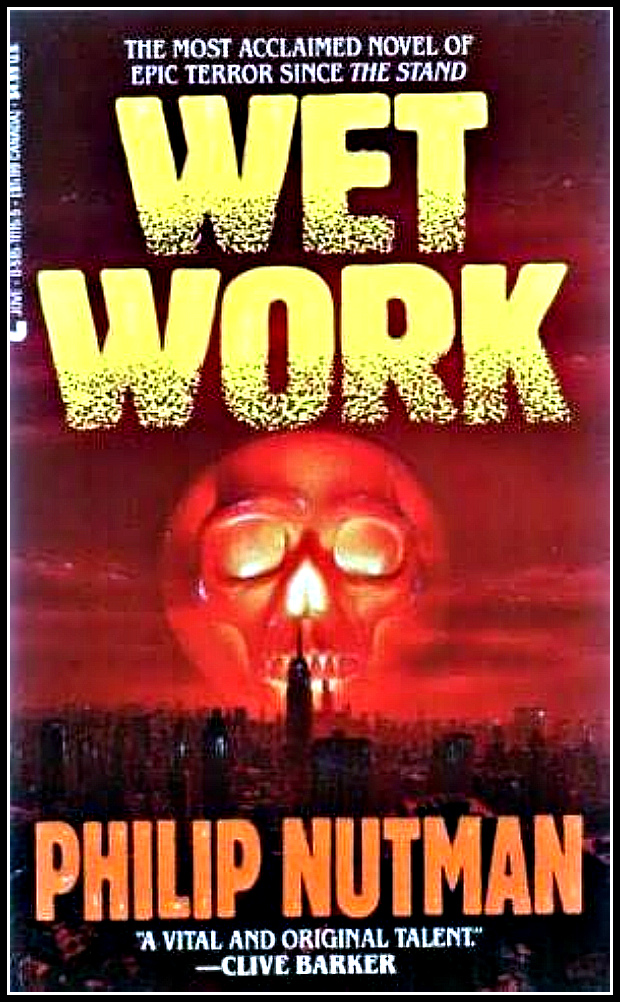
Horror Book Review: Wet Work (by Philip Nutman)


“Wet work” – intelligence community slang for covert operations involving assassination or killing, named for the ‘wet’ bloodshed such missions entail.

Philip Nutman isn’t a name most readers recognize outside of hardcore horror and zombie fiction circles, but within those communities, he’s remembered as an accomplished writer and journalist who carved out a unique space in the genre. For most of his career, Nutman worked as a freelance media journalist and film critic, contributing to magazines like Fangoria and Cinefantastique, where he covered the darker corners of cinema. As a fiction writer, he didn’t produce much in the way of novels, but the one he did publish—Wet Work (1993)—earned him lasting respect among fans who prefer their horror mixed with high-stakes action and cynical political undertones.

Wet Work began as a short story published in George A. Romero and John Skipp’s 1989 anthology Book of the Dead, a milestone collection that helped define zombie fiction as something literary rather than purely pulp. Even within that assembly of strong voices, Nutman’s story stood out for combining government espionage with apocalyptic horror. Expanding it into a full novel only amplified those elements, turning what had been a grim short tale into something closer to an action-horror epic with splatterpunk guts and a spy thriller’s pacing.

The novel opens with CIA operative Dominic Corvino, a member of an elite black-ops unit called Spiral, barely surviving a mission gone wrong in Panama City. From the start, Nutman gives the story a sense of distrust and paranoia—Corvino believes his team was deliberately sabotaged, their deaths engineered by someone inside the CIA. It’s an opening that reads more like a Cold War spy novel than a zombie tale, and that mix of tones is part of what makes Wet Work work so well. Nutman uses what he likely learned as a journalist—his knack for detail, the sense of how bureaucracies function (or fail to)—to give the early chapters an almost procedural authenticity. There’s a lived-in realism to the military and intelligence backdrop that keeps even the most outrageous elements of the story grounded.

Then comes the moment that shifts Wet Work from gritty reality into nightmarish surrealism. As the CIA plotline unfolds, a cosmic event takes place: the comet Saracen passes dangerously close to Earth and leaves behind some kind of invisible residue. It’s never fully explained whether it’s chemical, biological, or something beyond understanding, but its aftereffects begin to change life on the planet. Nutman uses the comet not just as a plot trigger but as a symbol of inevitability—a reminder that humankind’s end won’t always come from weapons or war, but sometimes from something as impersonal as celestial dust. It’s a bit of cosmic horror filtered through the lens of political and societal collapse, an end-of-days scenario that feels both mythic and strangely plausible.

Meanwhile, in Washington D.C., police officer Nick Packard becomes the reader’s main point of connection to the chaos on the ground. Packard starts the day leading a routine shift through the usual headaches of the city, but things unravel fast once Saracen’s effects take hold. Strange attacks start flooding police dispatch, cases of violence erupting in ways no one can explain, and what seem like random acts of brutality turn out to be part of something much larger. The city descends into panic as the dead begin returning to life. Nutman describes this breakdown with a sense of escalating dread that feels almost journalistic—each detail adds up, each scene observed as though through the eyes of someone trying to make sense of something senseless.

The zombies themselves are mostly what readers might expect from stories inspired by George A. Romero: slow-moving, decomposing, and relentless. But Nutman complicates things by hinting that not all of the reanimated are mindless. Some seem to retain fragments of human cunning or memory, enough to make them unpredictable and far more dangerous. This small twist gives the book a chilling edge, making it clear that intelligence doesn’t necessarily counteract monstrosity—it might even make it worse.

Corvino’s section of the novel runs parallel to Packard’s and serves as the darker, more psychological side of the story. He becomes consumed by his mission to find out who betrayed his team in Panama and make them pay. Physically, he’s battered and near his limits, operating in a world that no longer follows the rules of logic or hierarchy. Mentally, he’s trapped between loyalty, fury, and isolation—an operative trained for controlled violence now facing chaos that no training can manage. Nutman writes Corvino as a man unraveling in sync with the world around him. His search for answers feels less like a mission and more like an obsession, a desperate grasp at clarity in a world that’s literally stopped making sense.

Packard’s story, by contrast, brings everything down to a more personal survival narrative. As the crisis worsens, his only goal becomes reaching his wife, stranded in their suburban home outside the city. His journey across a collapsing Washington D.C. is one of the novel’s strongest threads, combining small moments of human connection with scenes of escalating horror. Through him, the reader gets a street-level view of societal breakdown—communications dying, infrastructure collapsing, and people reacting in unpredictable, often violent ways. What makes Packard’s arc compelling is its simplicity; amid government conspiracies and cosmic cataclysms, his is just a story about trying to save someone he loves.

Eventually, Corvino’s and Packard’s paths intersect, and both men come face to face with what’s left of the government. By this stage, authority itself has become just another form of predation. The people who once held power have adapted frighteningly well to the new world, shedding morality and decency like dead skin. Nutman doesn’t paint them as comic-book villains but as survivors whose ethics erode one decision at a time. In typical splatterpunk fashion, the line between humanity and monstrosity blurs completely.

Nutman’s writing in Wet Work is graphic, fast-moving, and unflinching. His descriptions of violence and gore are vivid without slipping into parody, and even when the pacing turns frenetic, it matches the story’s collapse into total madness. Where he stumbles is in a few awkward moments of dialogue and some stilted attempts at sexuality—scenes that read more forced than provocative. But those missteps never fully pull the story off course. If anything, they serve as reminders that Nutman, for all his journalistic precision, was still finding his rhythm in long-format storytelling.

The novel embodies everything bold about early 1990s horror fiction: big ideas, unrestrained violence, and a willingness to splice genres that didn’t normally coexist. Wet Work could just as easily sit beside Dawn of the Dead as it could a paranoid spy novel from the 1980s. Nutman understood that the systems people depend on—government, military, media—are fragile constructs that crumble the second survival becomes personal. That realism, drawn from his background in journalism, grounds the chaos he unleashes. Even at its most supernatural, Wet Work feels uncomfortably plausible because its human failures ring true.

After Wet Work, Nutman shifted back toward shorter forms, writing comics, novellas, and media journalism rather than more novels. In hindsight, that makes his one major book feel all the more significant. It’s the place where all his skills—his eye for detail, his fascination with moral gray areas, and his love of horror excess—come together.

For zombie fiction fans, Wet Work remains a hidden gem worth revisiting. It’s not just a gore-fest or survival tale but a demonstration of how horror doesn’t need to stay confined within its own walls. Nutman showed that the genre can bleed into others—melding espionage, political thriller, and cosmic dread into something distinct and alive. In a field that sometimes plays it safe, Wet Work reminds readers that horror thrives on experimentation, that it’s strongest when it’s hybridized and unpredictable. With Nutman’s death in 2013, any chance of seeing another full-length novel from him is gone, but what remains is proof that horror, when unafraid to evolve, can be far more than blood and fear—it can be reinvention itself.

AMV of the Day: Whatever It Takes (Spy x Family)


It is hard to say that when the anime series Spy x Family premiered in 2022 that it was a surprise hit. The manga it was adapted from (still ongoing) was and is still one of the popular manga currently in publication. It was a series that was going to be a hit even if it had been half-assed.

The latest AMV of the Day comes courtesy of azure ryn and combines Imagine Dragons’ “Whatever It Takes” with scenes from Spy x Family that highlights the balance of Loid Forger trying to balance his super-spy agent work with the fake family he has created as cover for his current assignment. The song really emphasizes the serious side of the series (the series itself is mostly the hijinks of the three characters that forms the Forger Family).

SongWhatever It Takes by Imagine Dragons

AnimeSpy x Family

Creatorazure ryn

Past AMVs of the Day

New Movie Posters for you to see (With trailers included!)


I know, I know, I have been away from posting my normal movie previews and reviews for a while, that is my fault!

But I’ll be back to posting my normal movie previews/reviews soon!

Until then here are some things you can look forward to me previewing and reviewing:

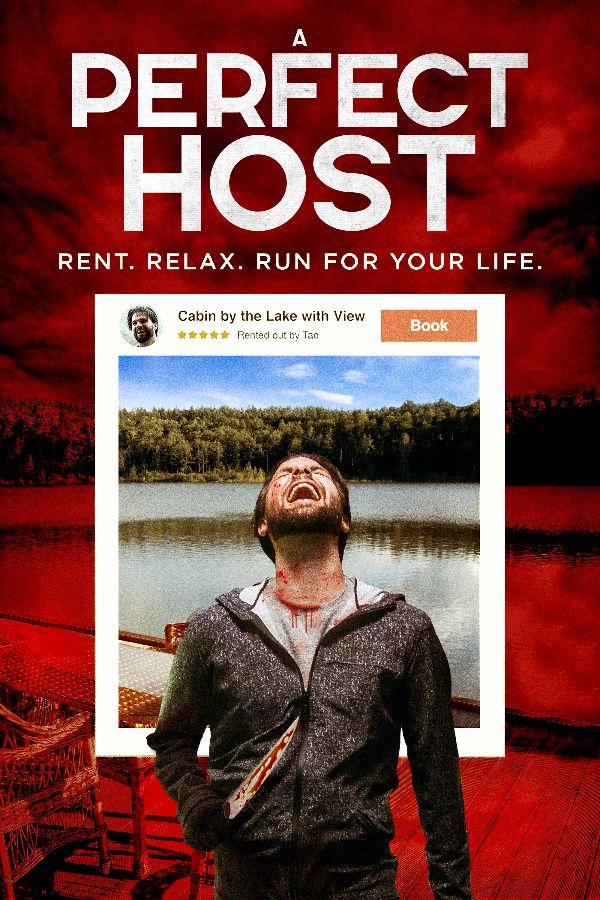
A Perfect Host

2020 movie posters

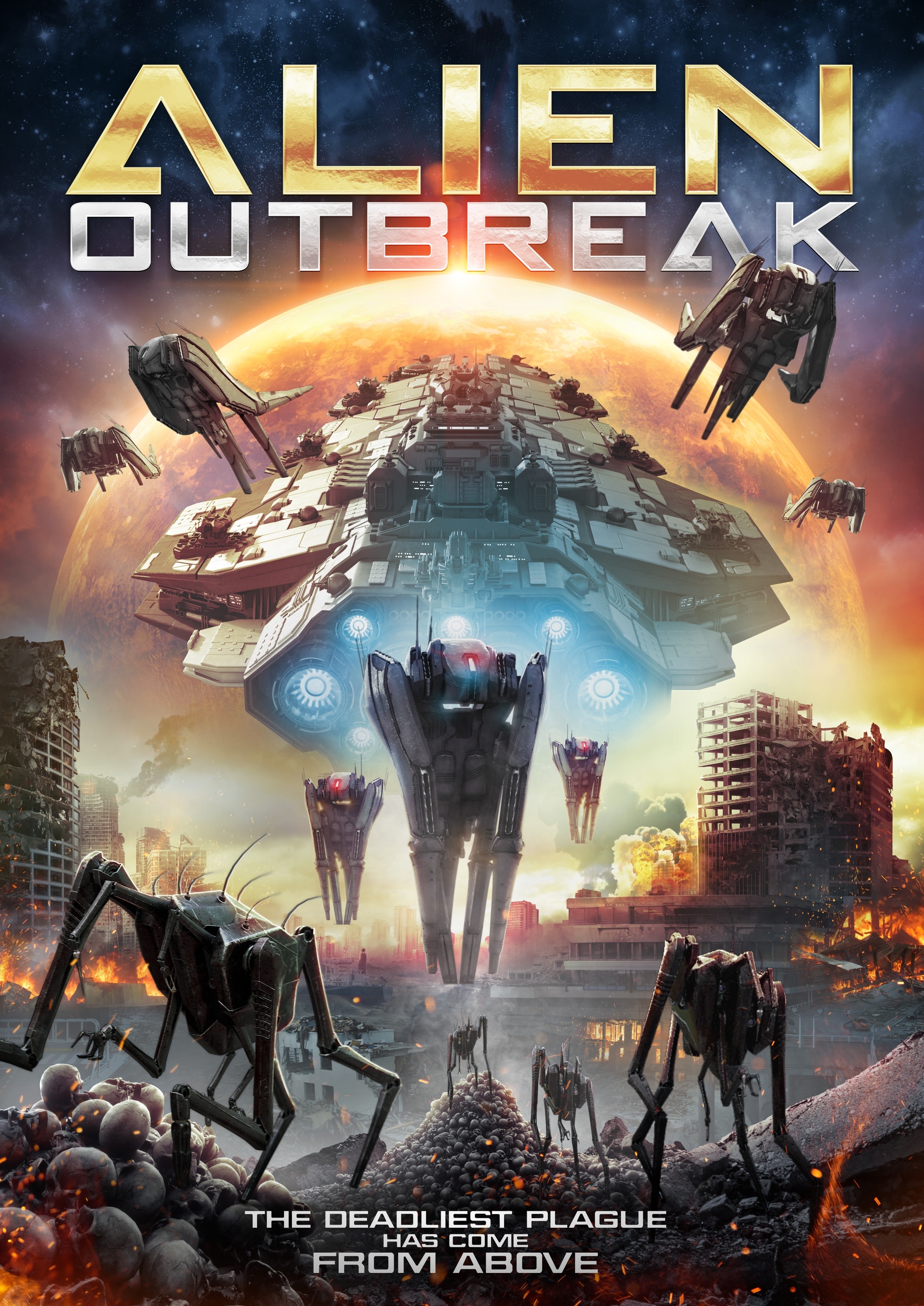
Alien OutBreak

Alien outbreak

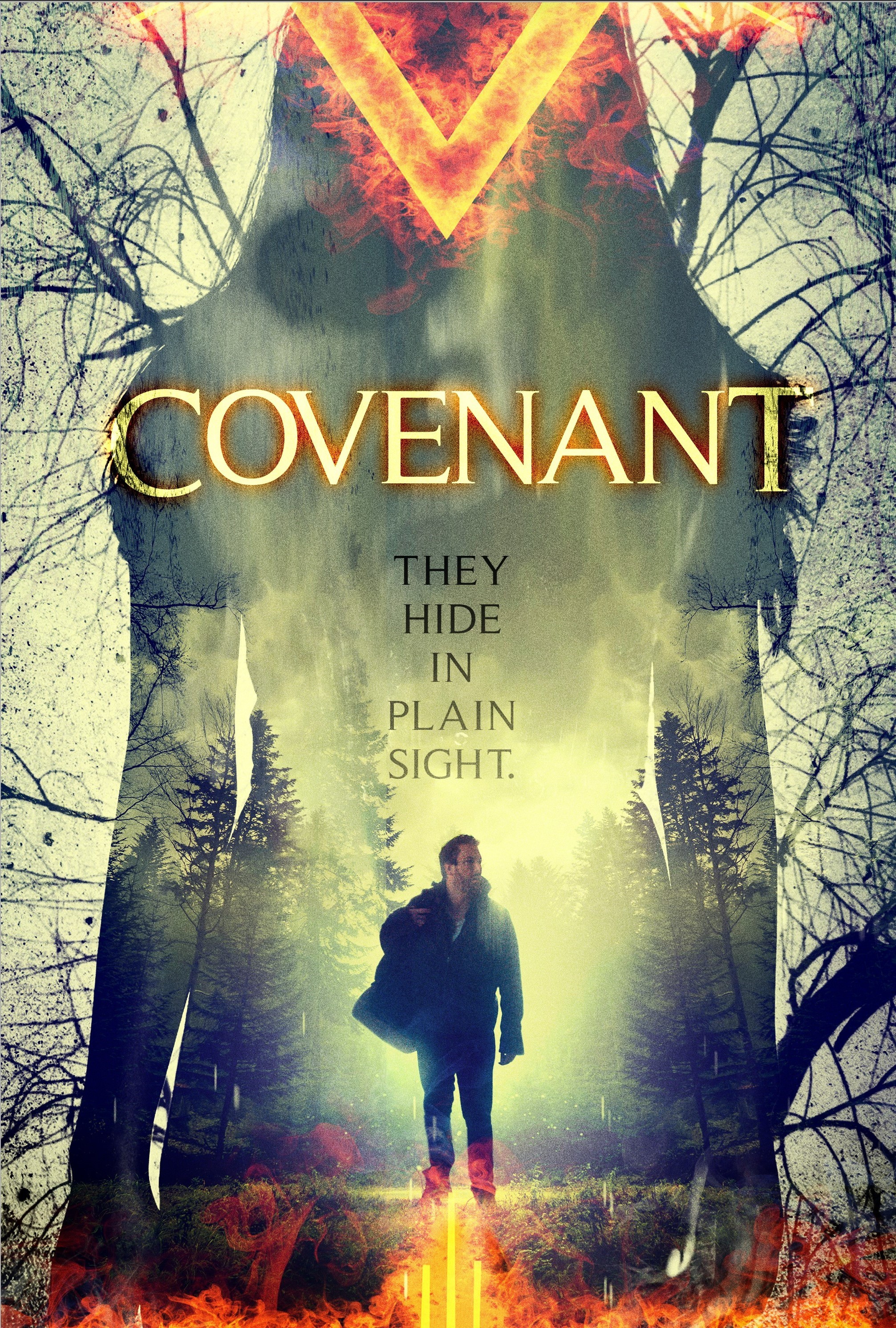
Covenant

Covenant


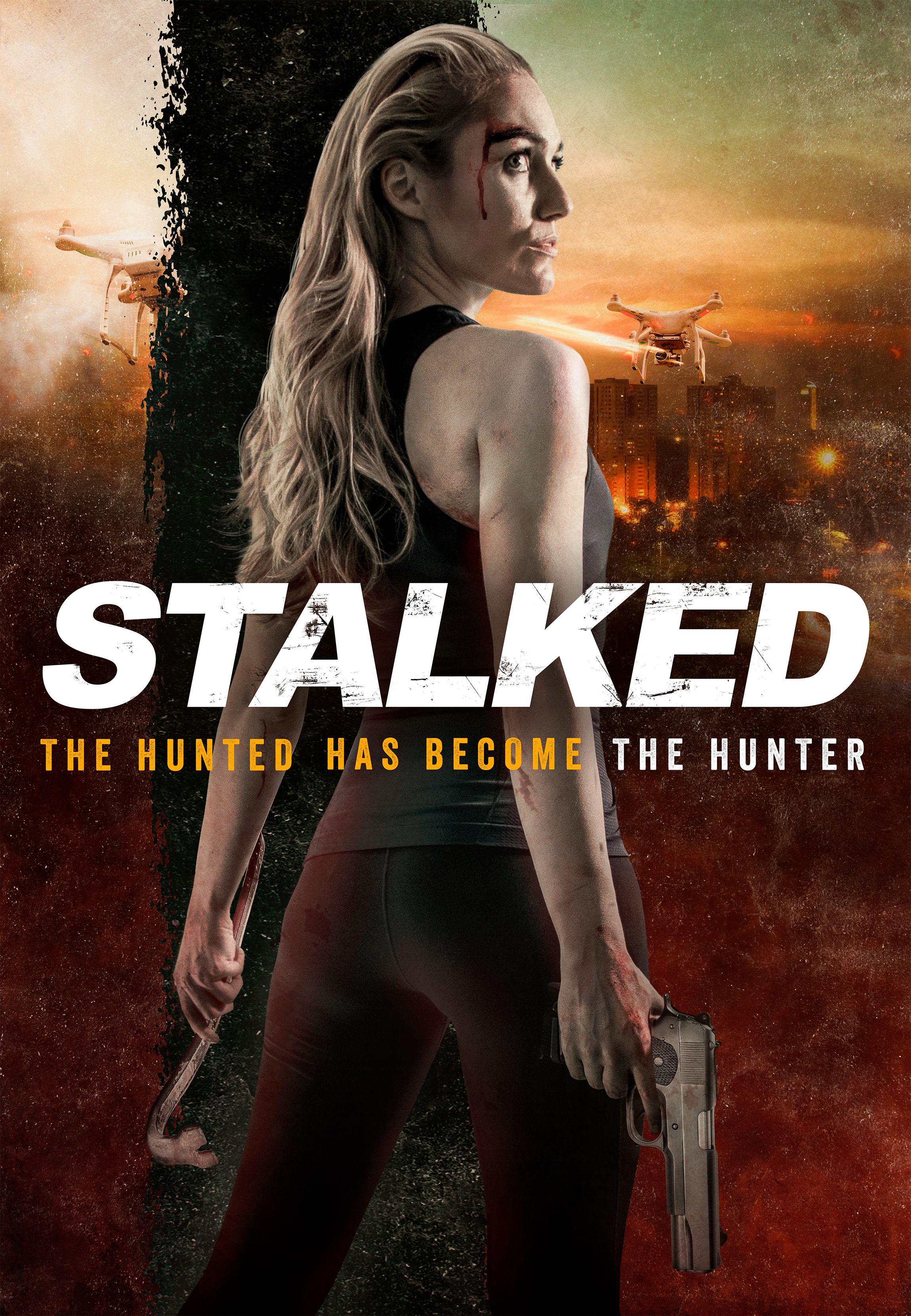
And last, but not least, You might have been…

Stalked

Hope you all enjoyed my tour through my movie screeners I get to watch this month!

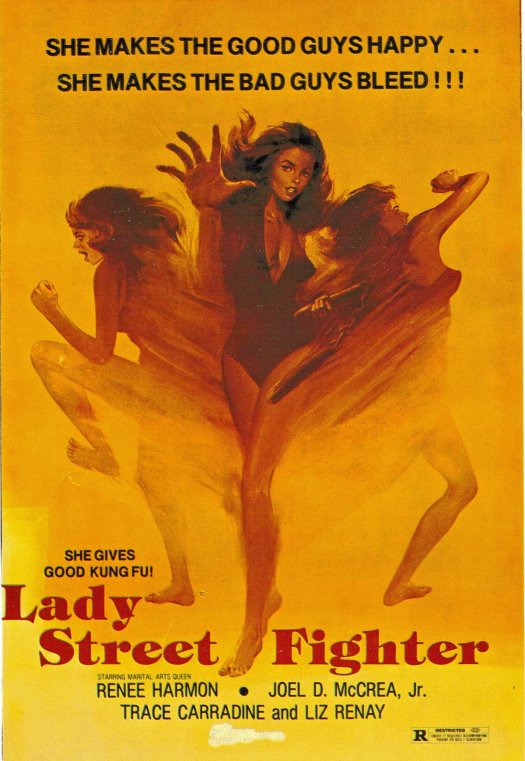
Is LADY STREET FIGHTER The Worst Movie Ever Made? (American General 1981)


gary loggins's avatarcracked rear viewer

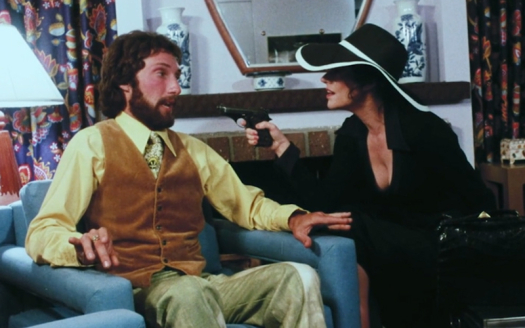
In all my years of watching movies, I’ve seen more than my share of stinkers. But nothing quite prepared me for the total ineptitude that is LADY STREET FIGHTER, starring the immortal Renee Harmon. This wretchedly made film features an incoherent script, horrific cinematography, murky sound, no direction, really bad acting, and an ersatz synth theme ripped off from Morricone’s THE GOOD, THE BAD, & THE UGLY . Let’s put it this way… when Jody McCrea (Bonehead of the Beach Party series) takes your film’s best acting honors, you KNOW you’re in for trouble!!

This senseless excuse for a movie finds Renee out to avenge the death of her sister at the hands of a gang called Assassins Incorporated, or something like that. I’m really not too sure, as the convoluted plot isn’t well defined. The movie starts off promising for Grindhouse fans with a gruesome torture scene (including a…

View original post 228 more words

Kung-Foolery: Jackie Chan in DRUNKEN MASTER (Seasonal Film Corp. 1978)


gary loggins's avatarcracked rear viewer

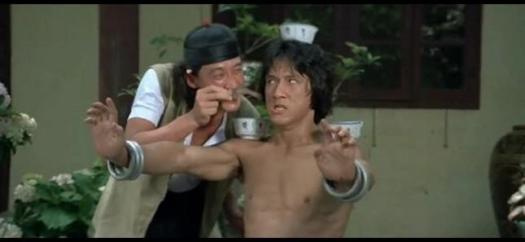
Jackie Chan’s  combination of slapstick comedy and kung-fu action helped make him a worldwide superstar, and DRUNKEN MASTER put him over the top as a cinematic force to be reckoned with. While I’m no expert on the genre, I’ve seen my fare share, and I can tell you this movie’s more than a few belts above because of Chan’s natural charm and comic timing.

As per usual with these films, the plot’s thinner as a Chow Mein noodle, which is okay because who needs a plot when you’ve got Jackie Chan? The dubbed version I saw casts Jackie as Freddie Wong, a rascally scamp whose father runs a kung-fu school. Pop tries to break the spirited Freddie without success, so he sends for Great-Uncle So Hi, a tough old buzzard with a fondness for saki (hence the title!). So Hi drives Freddie so hard with his grueling training the youngster…

View original post 350 more words

In The City: THE WARRIORS (Paramount 1979)


gary loggins's avatarcracked rear viewer


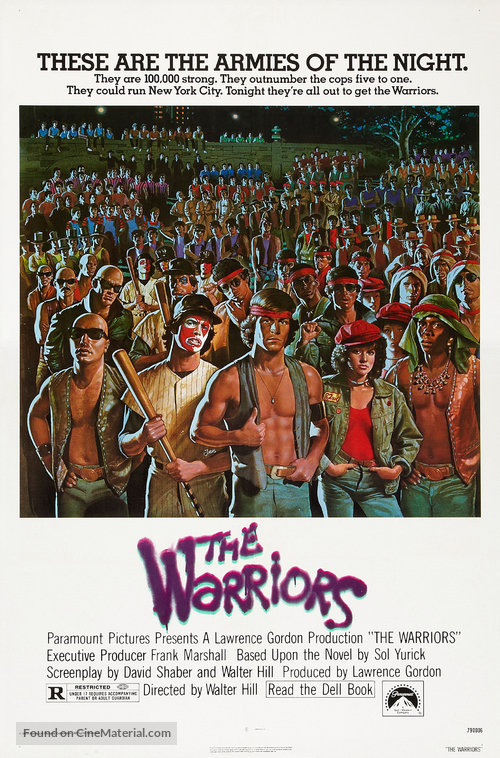
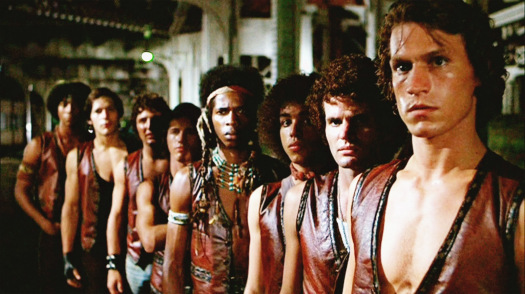
Back in the 70’s, the crowd I hung out with didn’t give a rat’s ass about STAR WARS … THE WARRIORS was THE movie to see! The film reportedly resulted in outbreaks of violence, vandalism, and even three deaths  – including one up in Boston! – and Paramount Pictures pulled all its advertising, because that’s what adults do! Didn’t matter to us, though… everyone already knew about THE WARRIORS and it’s glorification of violence, and all the neighborhood cool kids just had to catch it (including a certain long-haired wiseass who used to amuse his street corner friends with his “useless knowledge” of old movies).

The myriad street gangs of New York City have declared a truce and gathered together for a big meet called by Cyrus, leader of The Riffs. The charismatic Cyrus whips ’em into a frenzy proposing they all organize into one huge gang to control The…

View original post 937 more words

Fast Friends: THUNDERBOLT AND LIGHTFOOT (United Artists 1974)


gary loggins's avatarcracked rear viewer

Clint Eastwood  is posing as a preacher in a small Montana town, giving his Sunday sermon. Meanwhile, carefree Jeff Bridges steals a Trans Am off a used car lot and goes for a joyride. Clint’s sermon is interrupted by a hit man who opens fire in the church, chasing Eastwood down through a wheat field, when Bridges comes speeding along, running the killer down. Clint hops in the Trans Am, and the two become fast friends, setting up THUNDERBOLT AND LIGHTFOOT, a wild and wooly tale that’s part crime caper, part character study, and the directorial debut of Michael Cimino.

Clint plays Korean War veteran John Mahoney, a criminal known as “The Thunderbolt” who pulled off a successful half-million dollar armory robbery. His ex-gang members (George Kennedy ,Geoffrey Lewis ) think he betrayed them, and are out to kill him, but not before finding out where the loot is…

View original post 511 more words