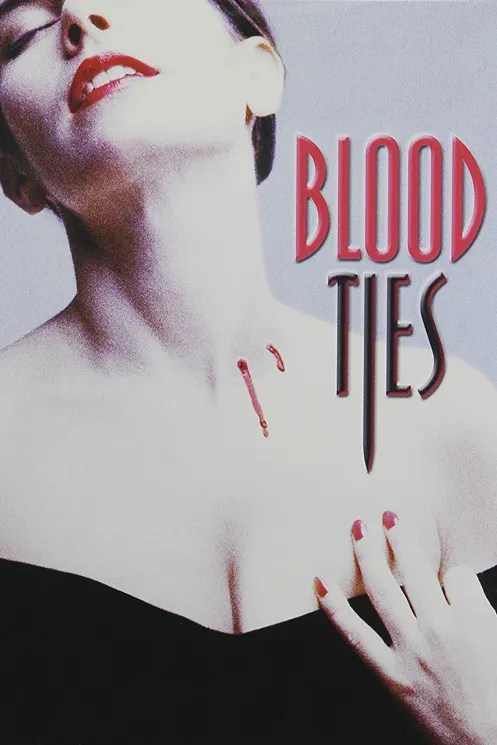
Welcome to Retro Television Reviews, a feature where we review some of our favorite and least favorite shows of the past! This Thursday, I will be reviewing Blood Ties, which aired its only episode on Fox in 1991. The pilot film can be found on Tubi!
Episode 1.1 “Blood Ties”
(Directed by Jim McBride, originally aired on May 27th, 1991)
In Long Beach, California, there is a thriving community of Carpathians. Eli Chelarin (Patrick Bauchau) is the patriarch, a businessman who builds skyscrapers, makes deals, and flies into a rage whenever he learns of anti-Carpathian prejudice. Harry Martin (Harley Venton), born Harlevon Martinescu, is the reform-minded journalist who thinks it is time for the Carpathian community to start mingling with the rest of America. Celia (Michelle Johnson) is Eli’s sultry sister. While Eli is making big business deals and Harry is preaching coexistence, Celia and the younger generation are having a good time.
And then there is Cody Puckett (Jason London), who grew up in small-town Texas and was barely even aware of his Carpathian heritage. That all changed when a group of Carpathian hunters (led by Bo Hopkins) killed Cody’s parents and burned down his house. Cody flees Texas and ends up in California, where he hooks up with his distant relatives.
Harry reveals to Cody that the Carpathians are actually vampires, but that does not mean what Cody initially assumes. Yes, the Carpathians are directly descended from Lilith, and yes, they do have a taste for blood. However, they are not immortal (though they do tend to live to be at least 120). They can go out in the sunlight. They cannot turn into bats. They cannot be stopped by a cross. A wooden stake only kills them because it would kill anyone. The Carpathians are stronger than the average human, but they are not super-strong. (Cody nods and then asks if Carpathians are better at sex than average humans.) In short, the Carpathians are vampires who do not actually get to do any of the fun vampire things. To me, that defeats the whole purpose of being a vampire. Harry and his relatives spend so much time scoffing at misconceptions about vampires that they seem to miss the point: vampires are only interesting as long as they are doing vampire stuff. Vampires that turn into bats will always be more entertaining than vampires who just happen to live a long time.
Blood Ties was a made-for-TV movie that also served as a pilot for a potential series. It is easy to see the direction the series would have taken. Blood Ties mixes 90210-style teenage antics with older adults debating the best way to protect their community. Eventually the Carpathian hunters show up in Los Angeles, and the vampires make quick work of them. Presumably Bo Hopkins would not have been a series regular. Jim McBride’s direction is stylish, and the pilot is well acted, especially by Michelle Johnson. That said, it is hard not to feel that the pilot sabotaged itself by focusing on how the Carpathians were different from traditional vampires. The film rather cavalierly dismisses a lot of things that most horror fans love about vampires. Making the characters vampires who are not really vampires just feels kind of pointless.
Perhaps fortunately, Blood Ties did not become a regular series. If nothing else, that left Jason London available for Dazed and Confused. It is a fair trade.
Roland Emmerich has a reputation that precedes him, and it’s not exactly a glowing one. When his name pops up as the director of a new blockbuster, it’s easy to let out an audible groan. He’s not quite in the same league as Uwe Boll for sheer cinematic atrocities, but he gives Michael Bay a serious run for his money in the “most frustratingly inconsistent big-budget filmmaker” category. This is a guy who once showed real promise with cult sci-fi action flicks like Universal Soldier and Stargate, then hit his commercial and creative peak with the wildly entertaining Independence Day. But ever since that 1996 high point, Emmerich’s films have followed a disappointing trajectory, each one seemingly more bloated and less satisfying than the last. Godzilla was a mess. The Day After Tomorrow had its moments but collapsed under its own ridiculousness. So when 2012 rolled around in late 2009, expectations were, to put it mildly, low. Yet somehow, against all odds, Emmerich delivered his most purely enjoyable disaster flick since Independence Day—a film so gleefully, unapologetically over-the-top that it transcends its many, many flaws.
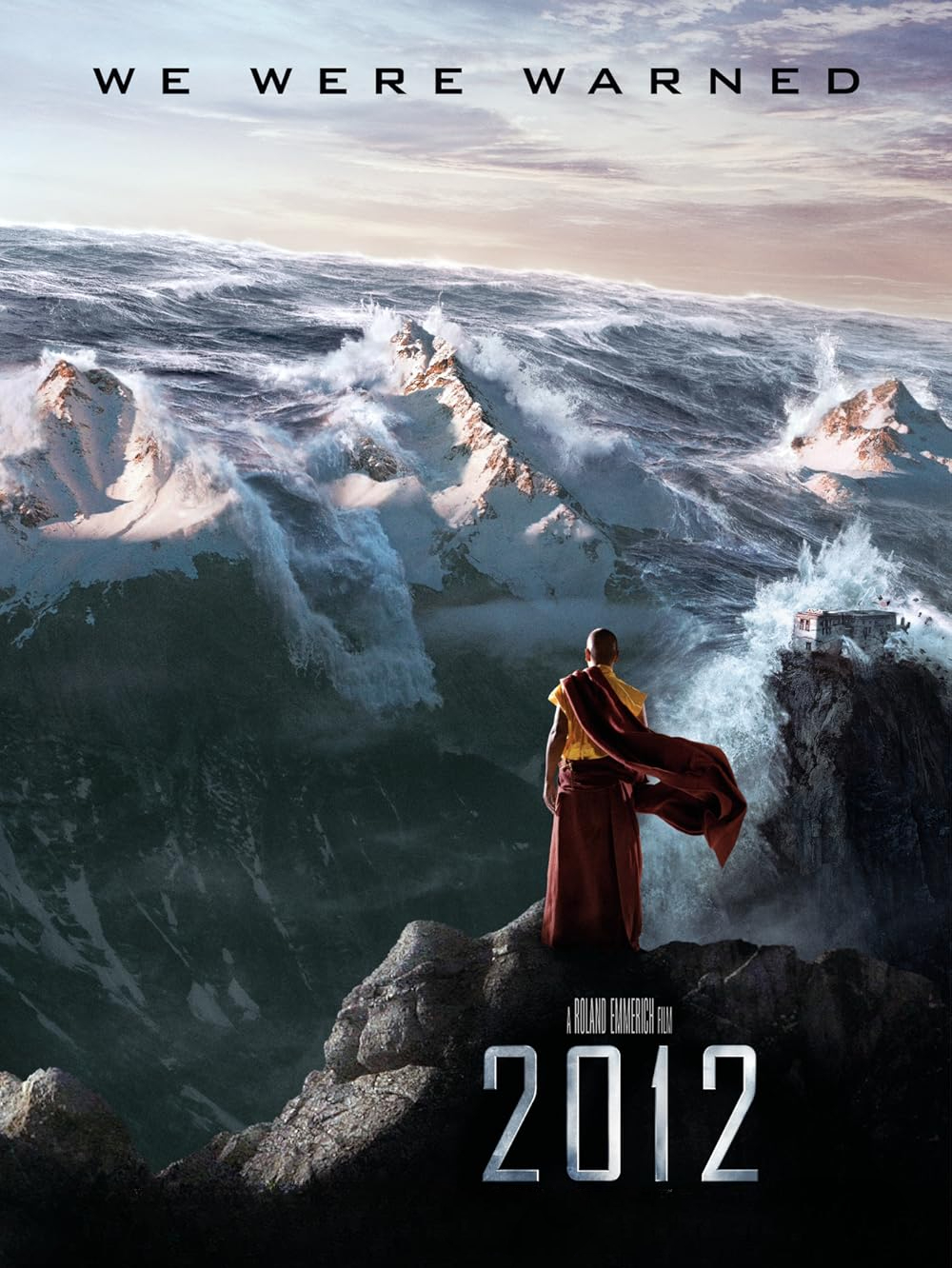
2012 takes the idea of apocalyptic cinema and cranks it up to eleven, then snaps the dial off and sets it on fire. The premise is simple: the Mayan calendar wasn’t just a quirky ancient artifact—it was a warning. The world, as we know it, is set to end in the year 2012, thanks to a series of cataclysmic events triggered by solar neutrinos heating up the Earth’s core. The film spends its first act methodically setting up this global doomsday through two very different perspectives. On one side, you’ve got Dr. Adrian Helmsley, played with quiet intensity by Chiwetel Ejiofor, a scientist who discovers the impending disaster and tries to warn world leaders. On the other, there’s Charlie Frost, a conspiracy theorist radio host played by Woody Harrelson with the kind of manic energy that suggests he might actually believe the world is ending—or at least that his next cup of coffee is. These early scenes are a mix of pseudo-science and doomsday preaching, but they serve their purpose: by the time the first real disaster strikes, you’re primed and ready for the chaos.
And oh, what chaos it is. 2012 isn’t just a disaster movie—it’s a full-blown disaster epic, a nearly three-hour spectacle of global annihilation that feels like Emmerich finally decided to stop holding back. This is a film where entire continents are reshaped, where cities crumble into the sea, and where billions of people meet their end in the most visually inventive ways possible. The destruction of Los Angeles is a particular standout, a sequence so relentless and well-executed that it’s hard not to watch with your jaw hanging open. John Cusack plays Jackson Curtis, a limousine driver and failed novelist who finds himself in the middle of the carnage while trying to pick up his kids from their mother’s new boyfriend’s mansion. As the ground literally splits open beneath him, Curtis has to outdrive an earthquake that’s turning the San Andreas Fault into a real-life game of Frogger. Buildings collapse, freeways pancake, and the entire city slides into the Pacific Ocean in a scene that’s as thrilling as it is absurd. It’s the kind of moment that defines 2012: completely ridiculous, yet undeniably impressive in its sheer audacity.
But Los Angeles is just the appetizer. From there, the film takes us on a world tour of destruction. Yellowstone National Park erupts in a supervolcano explosion that turns the American Midwest into a smoldering wasteland. Mega-tsunamis, some as tall as the Himalayas, crash over entire landmasses, swallowing cities whole. Air Force One gets caught in a pyroclastic flow. And through it all, Cusack’s everyman hero is trying to get his family to safety, which in this case means boarding one of the massive arks built by the world’s governments to preserve humanity—or at least the rich and well-connected. The arks, a last-ditch effort to save a sliver of civilization, become the film’s most fascinating and frustrating element. On one hand, they’re a clever narrative device, forcing the characters into a high-stakes race against time. On the other, they highlight the film’s most glaring ethical and logical inconsistencies. Why are only certain people allowed on board? How did they build these things in secret? And why does Danny Glover’s President Wilson, a man who seems perpetually one step behind the crisis, get to be the moral compass of the story? The answers, of course, are “because the plot demands it” and “who cares, look at that explosion!”
The cast of 2012 is what you’d charitably call an ensemble, though “B-list all-stars” might be more accurate. Cusack is fine as the reluctant hero, though he’s never fully convincing as a man who can outsmart the apocalypse. Amanda Peet plays his ex-wife, Kate, a woman so perpetually exasperated by her former husband that you wonder why she ever married him in the first place. Their kids, played by Liam James and Morgan Lily, are mostly there to scream and look terrified, which they do adequately. Chiwetel Ejiofor brings a much-needed dose of gravitas as the scientist trying to sound the alarm, though even he can’t sell some of the film’s more outlandish scientific explanations. Danny Glover’s President Wilson is… well, he’s Danny Glover as the President, which is about as convincing as it sounds. And then there’s Woody Harrelson, who steals every scene he’s in as Charlie Frost, the conspiracy theorist who may or may not be onto something. Harrelson’s performance is so delightfully unhinged that it almost makes you wish the film had focused more on his character and less on Cusack’s family drama.
And that’s the thing about 2012: the human elements are almost uniformly the weakest part of the film. The dialogue is often clunky, the character arcs are predictable, and the emotional beats frequently fall flat. But none of that matters because Emmerich and his team have crafted a film that’s so visually stunning, so relentlessly paced, and so committed to its own absurdity that you can’t help but get swept up in it. This is a movie that understands exactly what it is: a guilty pleasure, a spectacle, a chance to watch the world end in the most extravagant ways possible. It doesn’t ask you to think too hard or invest too deeply in its characters. It just asks you to sit back, grab some popcorn, and enjoy the ride. And on that front, 2012 delivers in spades.
What’s most impressive about 2012 is the sheer scale of its ambition. This isn’t a film content with destroying a single city or even a single country. Emmerich wants to tear down the entire planet, and he does so with a level of detail and creativity that’s hard not to admire. The visual effects are top-notch, and the film’s destruction sequences are some of the most memorable in the disaster genre. The mega-tsunami that crashes over the Himalayas is a particular highlight, a moment so awe-inspiring in its scope that it’s easy to forget you’re watching a movie that’s otherwise filled with groan-worthy dialogue and one-dimensional characters. And then there’s the final act, where the arks become the stage for a last-ditch effort to save humanity. The sequences aboard the ark are a mix of tension and spectacle, as the characters navigate the chaos of a world literally coming apart at the seams.
Of course, 2012 isn’t without its share of head-scratching moments. The science is, to put it kindly, questionable. The idea that solar neutrinos could heat up the Earth’s core to the point of global destruction is pure fantasy, and the film’s explanation for how the arks were built and funded is so flimsy it might as well not exist. The pacing, too, can be uneven. The first act drags a bit as it sets up the various plot threads, and the final act feels rushed, as if Emmerich realized he had to wrap things up before the runtime hit the three-hour mark. And then there’s the film’s tone, which can be wildly inconsistent. One moment, you’re watching billions of people die in horrific ways; the next, you’re supposed to laugh at a joke from one of the side characters. It’s a balancing act that doesn’t always work, but somehow, it doesn’t derail the film either.
At its core, 2012 is a throwback to the disaster movies of the 1970s, films like The Poseidon Adventure and The Towering Inferno that were more concerned with spectacle than substance. Those films were often criticized for their thin plots and wooden acting, but they endured because they delivered on the one thing that mattered: thrilling, large-scale destruction. 2012 is cut from the same cloth. It’s a film that knows its audience and knows exactly what they want. And what they want, it turns out, is to watch the world end in the most spectacular ways possible. In that sense, 2012 is a resounding success. It’s a bad movie, sure, but it’s a bad movie that’s an absolute blast to watch. It’s the kind of film you put on when you want to turn off your brain, crank up the volume, and lose yourself in the sheer, unadulterated joy of watching everything burn.
So, is 2012 a good film? By most traditional measures, no. The plot is silly, the characters are thin, and the dialogue is often laughable. But as a piece of pure, unfiltered disaster porn, it’s one of the best. Emmerich has always been a director who prioritizes spectacle over subtlety, and 2012 is the purest expression of that philosophy. It’s a film that doesn’t just meet expectations—it exceeds them, if only by virtue of its sheer, unrelenting ambition. And in a world where so many blockbusters feel like they’re playing it safe, there’s something refreshing about a movie that’s willing to go this big, this bold, and this unapologetically over-the-top. 2012 may not be high art, but it’s a hell of a lot of fun. And sometimes, that’s more than enough.
When it comes to true crime cases, few are as disturbing as the story of Paul Bernardo and Karla Homolka.
Paul and Karla were a young, married couple who lived in Ontario. They were both attractive. They were both popular. They were both superficially charming, in the style of someone who you might have taken a class with but the only thing you can really remember about them is their smile. And they were both killers. Paul Bernardo, a wannabe rapper who had previously made his money by smuggling cigarettes and who was also a serial rapist, murdered at the least three teenage girls, including Karla’s sister, Tammy. When Paul was arrested, Karla told prosecutors that she had helped Paul with his murders but only because he threatened and abused her. Prosecutors, perhaps moved by a picture that Karla’s friend took of her bruised face after one of Paul’s beatings, made a deal with her for her testimony. In return for testifying against Paul Bernardo, Karla was convicted only of manslaughter and given a 12-year prison sentence. (She was 23 at the time and would only be 35 when released from prison, assuming that she served the full sentence.) However, during the trial, video tapes of the murders were uncovered and showed that Karla had been a far more active participant in the murders than she had originally admitted. That included the murder of her sister, Tammy.
There were calls to rescind Karla’s plea bargain and to try her for murder but since her plea bargain had only required her to provide enough evidence to convict Paul, it was ruled that she had upheld her end of the bargain. While Paul Bernardo is currently serving his life sentence, Karla Homolka is now free and living somewhere in Canada.
Needless to say, the case drew international attention, both due to the circumstances of Karla’s plea bargain and also to Paul and Karla’s image of being the “Ken and Barbie Of Serial Killers.” It’s a case that continue to haunt Canada, an example of how the accused was ultimately treated with more respect than the victims. For her part, Karla continues to claim that it was all Paul and that she was forced into helping. Paul claims that he and Karla were equal partners and that the actual murders were all committed by Karla. Personally, I think they’re both lying.
2006’s Karla stars Laura Prepon as Karla Homolka. The film opens with her already in prison and being interviewed by a psychiatrist (Patrick Bauchau) who has been assigned to determine if there’s a risk of her reoffending. As Karla tells her story, we see flashbacks of Karla’s life with Paul (Misha Collins). Prepon and Collins are both chillingly believable as the soulless Paul and Karla. Laura Prepon plays Karla as being a narcissistic sociopath who is incapable of understand that she’s not the victim in this story. I imagine that Prepon’s performance probably captures the essence of the real Karla, even if Prepon doesn’t really look like her.
That said, the film itself is largely a surface level exploration of the case. The film’s script attempts to maintain some ambiguity as to whether or not Karla Homolka was a voluntarily participant in the murders or if she actually was just too scared of Bernardo to stop him. Prepon plays her as being a sociopath but the script still tries to play both sides of the debate and, as a result, the film falls flat. The film may be called Karla but it doesn’t really get into her head and, as a result, it has all the depth of an Investigative Discovery special. In the end, the film feels like it’s trying to exploit the notoriety around a famous case without taking a firm position on the case’s biggest controversy. When it comes to the crimes of Karla Homolka, that’s not an option.
First released in 1985, Phenomena is the Dario Argento film with all the insects.
Phenomena is one of the most divisive of Argento’s film. Throughout the years, many critics have cited Phenomena as being the first Argento film to not really work. Some have called it Argento’s worst and most self-indulgent film and the first sign that he had lost his way. At the same time, I know quite a few people who consider Phenomena to be among Argento’s best films. The one thing that both camps seem to have in common is that their takes are all inspired by the film’s use of insects.
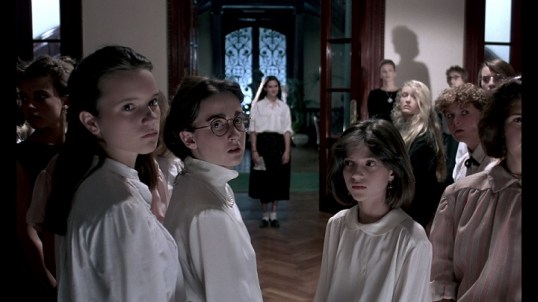
That said, Argento has always claimed that Phenomena is less about the insects and more about a world in which the Nazis conquered Europe. Much as with Argento’s claim that Tenebraeis actually a science fiction film, the idea that Phenomena takes place in a Europe controlled by Nazis can be found but only if you specifically look for it. For instance, the film is set in the Swiss countryside, with a similar emphasis on the mountains and the forests that were present in the German propaganda pictures that were taken of Hitler and his inner circle “relaxing” at his mountain residence. Much of the film takes place at a private school that is named after Richard Wagner, where the privileged students — with their always crisp uniforms and their haughty attitude — feel as if they could be descendants of the kid who sang Tomorrow Belongs To Me in Cabaret. One of the chaperones at the school is a German woman named Frau Bruckner (Daria Nicolodi). Again, much as with Tenebrae, Argento has said the Phenomena takes place in a world where terrible things have happened but the population has collectively decided to forget about them. Willfully forgotten seems to have been a major theme for Argento in the years following his unhappy experience with Inferno.
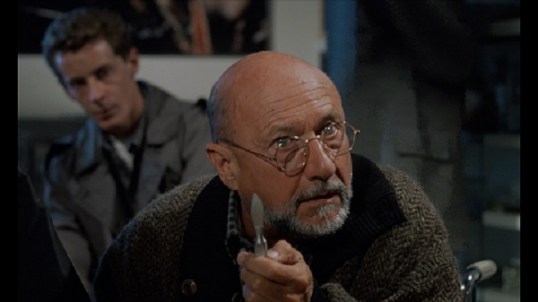
The film opens with the murder of 14 year-old Danish girl named Vera Brandt (played by Fiore Argento, the director’s daughter) who is a part of a tour group but who misses her bus. When she walks through the Swiss countryside in search of help, she comes across a house that’s not as abandoned as it originally. She is attacked and beheaded by the house’s resident. Eight months later, Vera’s decaying and maggot-covered heard is discovered and taken to forensic entomologist John McGregor (Donald Pleasence). Though McGregor uses a wheelchair, he has a monkey named Inga who takes care of him. Inga is quite capable with a straight-razor.
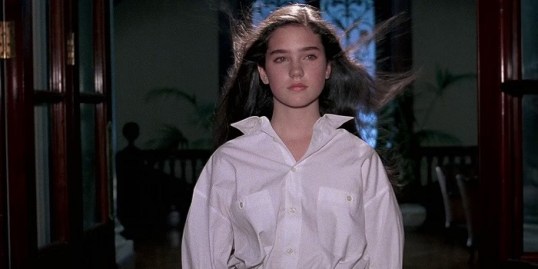
Meanwhile, chaperoned by Frau Bruckner, Jennifer Corvino (Jennifer Connelly) has just enrolled in the Richard Wagner Academy For Girls. Jennifer is the daughter of a Hollywood star. (Argento originally wanted Jennifer to be Al Pacino’s daughter, with Pacino playing himself. Pacino reportedly turned Argento down.) Jennifer is also a sleepwalker who has an intense mental connection with insects. Insects do her bidding and, in return, Jennifer protects them. When Frau Brucker and her chauffeur attempt to kill a bee, Jennifer is able to calm down the bee and set it free from the limo.
Jennifer struggles to fit in at the Academy. Much like Jessica Harper’s Suzy Banyon in Suspiria, she discovers that the other students are an idiosyncratic and not particularly friendly group. Whereas poor Suzy Banyon just had to accept her situation, Jennifer has an army of insects on her side and she’s willing to call them down on her snooty classmates. Of course, when Jennifer isn’t communing with the insects, she’s having to deal with the fact that she witnessed a murder while she was out sleepwalking. Haunted by images of the murder and being stalked by the murderer, Jennifer also learns that Frau Bruckner wants to send her to a mental hospital for being “diabolic.”
Jennifer’s only real friend in Switzerland is John McGregor and it must be said that Donald Pleasence, who was so misused in so many horror films in the 80s and 90s, is perfectly cast as the eccentric but kindly entomologist. Pleasence was one of those actors who could deliver even the strangest of lines with enough gravity to make them memorable and McGregor’s easy acceptance of the idea that Jennifer has a psychic connection with insects make it much easier for the viewer to accept it as well. As well, McGregor’s friendship with the monkey is far more touching than it has any right to be.
Phenomena is an odd mix of giallo and fantasy, with the brutal and violent murders uneasily playing out with more lyrical scenes featuring the beauty of Switzerland and the loyalty of the animal kingdom. Perhaps the best way to view Phenomena is as being an extremely bloody fairy tale, with Jennifer as a Cinderella-figure who depends on nature to stay safe from the adults and the students who stand in for the wicked stepmother and the ugly stepsisters. Visually, there are moments of haunting beauty in the film. There are other moments in which Argento seems to be determined to test how long the audience would be willing to accept the idea Jennifer and her insect army. Because of the whimsical insects, the film is often described as being an oddity in Argento’s filmography but actually, psychic insects and animals would pop up in future Argento films, so it seems that this was something that had obsessed him for a long time. Either that or the negative reaction afforded to Phenomena inspired Argento to continue to use the insects as his way of letting the critics know his true opinion of their worth.
I have to admit that I am amongst those who like Phenomena. It’s such a strange film that it’s hard for me not to admire it and, much as with Suspiria, the film benefitted from having a strong female protagonist in Jennifer Calvino. (For her part, Jennifer Connelly has said that she’s not particularly a fan of Phenomena.) Finally, this is a film that gave Donald Pleasence a chance to show what an engaging actor he could be when he had the right role. Critics be damned, I like this movie!
It was while watching Mega Shark vs. Kolossus that I discovered that, apparently, I have the power to kill fictional characters with my tweets. As soon Dr. Sergie Abramov (Patrick Bauchau) first appeared on screen, I tweeted out my prediction that he was “doomed,” largely because he was “eccentric and old.” 15 minutes later, a group of gun-toting mercenaries showed up and gunned Dr. Abramov down.
AGCK!, I thought, I didn’t really mean to kill him…
Now, normally, I would have to admit that discovering that I possessed that much power would lead to a lot of thought and reflection on my part. But you know what? I was enjoying myself way too much to really feel that bad about getting Dr. Abramov killed. That’s the type of film that Mega Shark vs. Kolossus is. It’s a lot of fun and, if the cost of that fun is that Dr. Abramov had to die … well, so be it.
Produced by the Asylum and directed by Christoper Douglas-Olen Ray (who also directed A House Is Not A Home and Shark Week), Mega Shark vs. Kolossus premiered on SyFy right after Roboshark. I have to admit that, when the film began, I wasn’t sure that anything could successfully follow the brilliance that was Roboshark.
But, Mega Shark vs. Kolossus proved my doubts wrong.
Mega Shark vs. Kolossus is not only a good SyFy film and a worthy entry in the Mega Shark franchise but it’s also a lot of fun. If I could only pick a handful of movies to justify my love of SyFy and Asylum films, Mega Shark vs. Kolossus would definitely be right there with End of the Worldand Jersey Shore Shark Attack.Mega Shark vs. Kolossus has everything — from the knowing humor to the over-the-top action to the flamboyant monsters — that you could possibly want from a SyFy film.
At heart, Mega Shark vs. Kolossus is a delirious homage to the old school Godzilla films where Godzilla would have to reluctantly save humanity from yet another giant monster. (Kolossus is even reminiscent of the robotic Godzilla from Godzilla vs. MechaGodzilla.)
As the film starts, the world has been thrown into chaos as the result of all of the previous Mega Shark attacks. Admiral Jackson (Ernest Thomas) is determined to track down and destroy Mega Shark but Dr. Alison Gray (Illeana Douglas) argues that if we would just leave Mega Shark alone then Mega Shark would leave us alone. Billionaire Joshua Dane (Brody Hutzler) claims to agree with her but is it possible that he has ulterior motives of his own? Well, consider this: has there even been a truly benevolent billionaire in an Asylum film?
Meanwhile, in the Ukraine, Kolossus — a giant robot that was created during the Cold War — has accidentally be activated. Can secret agent Moria King (Amy Rider, who totally kicked ass and who deserves to appear in every subsequent Mega Shark film) and CIA analyst Spencer (Edward DeRuiter, who also wrote the film’s script) figure out how to control Kolossus?
And, finally, will Kolossus and Mega Shark meet and fight? Well, the answer to that one is right in the title of the film.
Mega Shark vs. Kolossus is delirious fun, a surprisingly well-acted and entertaining homage to the great monster movies of the past. Obviously, Mega Shark is the top-billed star here but, for me, the film is really stolen by Kolossus. This behemoth of robotic mayhem dominates almost every scene in which he appears and hopefully, he’ll return for a future movie. Could Sharktopus vs. Kolossus or Roboshark Meets Kolossus be in the future? I certainly hope so!
Mega Shark vs. Kolossus is terrific and entertaining. If you missed it the first time, keep an eye out for a future showing. You will not be disappointed!