Review: For a Few Dollars More (dir. by Sergio Leone)


“When two hunters go after the same prey, they usually end up shooting each other in the back. And we don’t want to shoot each other in the back.” — Col. Douglas Mortimer

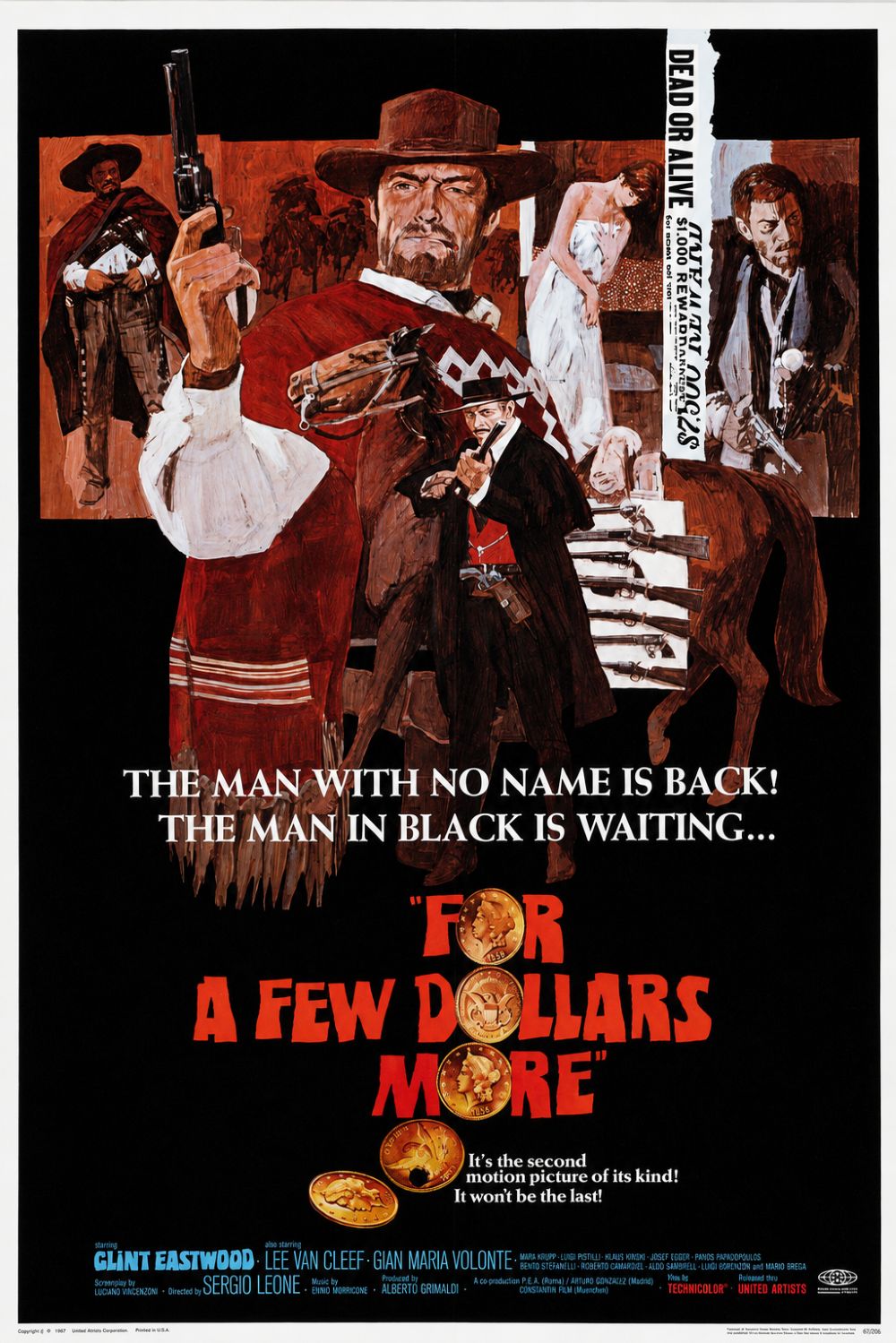
For a Few Dollars More is the moment Sergio Leone’s western style starts to feel fully formed: larger, stranger, more emotionally bruised, and far more confident in its ability to turn silence into suspense. Released in 1965, it serves as the second leg of Leone’s “Dollar’s Trilogy,” following A Fistful of Dollars and preceding The Good, the Bad and the Ugly. It shares the earlier film’s basic ingredients—dusty towns, morally compromised gunmen, crooked institutions, and Ennio Morricone’s unforgettable music—but it is not simply a bigger repeat. Leone takes the stripped-down revenge-and-gold framework of the first movie and gives it a darker emotional center. This is a western about obsession, damaged masculinity, and a world in which violence does not restore order so much as expose how little order existed in the first place.

Clint Eastwood returns as the Man with No Name, although he is called Manco here, and he is still the same lean, poncho-wearing opportunist viewers met in A Fistful of Dollars. He moves through the film with that familiar mixture of cocky calm and barely concealed menace. Manco is a bounty hunter, collecting rewards for dead criminals with an efficiency that makes his work feel almost casual. There is comedy in his early scenes, especially in the way he manages an absurdly large number of wanted men, but the humor has a sharp edge. Manco is not a conventional hero. He is charming because he is capable, because he has style, and because Eastwood knows exactly how little effort the role needs. A squint, a pause, or a hand resting near a gun does more than most full pages of dialogue.

The major difference is that this time Eastwood is not alone at the center of the story. Lee Van Cleef enters as Colonel Douglas Mortimer, another bounty hunter, and his presence gives the film its real dramatic charge. Mortimer is older, more formal, and more openly haunted than Manco. Where Manco seems motivated largely by money and survival, Mortimer carries himself like a man pursuing something much more personal. Their relationship begins as a rivalry, with both men circling the same targets and testing one another’s abilities. Leone gets a lot of mileage out of the contrast: Eastwood is loose and youthful, Van Cleef is rigid and calculating; one looks like he has wandered in from the wilderness, while the other has the manner of a retired officer who never truly left the battlefield.

Their eventual partnership is what makes For a Few Dollars More so satisfying. It is a buddy movie in the least sentimental sense possible. Neither man becomes especially warm or expressive, and their bond is built less on trust than on mutual respect for professional competence. They know the other is dangerous. They also know that the other may be necessary. Leone stages their alliance with a kind of deadpan amusement, particularly when Manco and Mortimer try to outdo each other with increasingly elaborate shooting demonstrations. Those sequences are entertaining because they are absurdly masculine, but the film never lets the spectacle become completely weightless. In this world, skill with a gun is not a sport; it is a qualification for survival.

The villain, Gian Maria Volonté’s El Indio, pushes the film decisively into darker territory than A Fistful of Dollars. Volonté had already played a memorable antagonist in Leone’s previous film, but El Indio is far more unsettling than Ramón Rojo. He is not merely greedy or power-hungry. He is psychologically ruined, driven by trauma and by a sadistic need to revisit it. His recurring pocket-watch motif, paired with Morricone’s chiming melody, becomes one of the film’s great inventions. The tune begins almost innocently, but Leone gradually turns it into a signal of dread. Every time El Indio opens the watch, it feels as though time itself has stopped and everyone nearby has been sentenced to wait for death.

The backstory tied to El Indio is where the movie reveals just how much more disturbing its narrative ambitions are. Leone and his screenwriters introduce subjects that are much uglier than the genre’s usual tales of outlaws and frontier justice: rape, suicide, and the lingering horror of sexual violence. The film does not handle these ideas with contemporary sensitivity, and it is not interested in exploring their victims with the depth they deserve. Still, their presence changes the atmosphere. El Indio’s trauma is not abstract; it is tied to a violent violation and the suicide that follows it. That history does not humanize him in any easy way, nor does it excuse him. Instead, it explains the repetitive, self-destructive pattern of his cruelty. He is obsessed with an event he cannot undo, and he converts that obsession into violence against everyone around him.

That theme of obsession runs through nearly every important character. Mortimer’s pursuit of El Indio turns out to be rooted in a personal wound that has shaped his entire life. His bounty-hunting career, disciplined exterior, and almost mechanical precision are revealed as part of a long-delayed act of vengeance. Manco, meanwhile, is obsessed in a different and less tragic way: with winning, with money, and with proving that he cannot be manipulated. Even the gang’s massive bank robbery has an obsessive quality. It is overcomplicated, theatrical, and clearly more about El Indio demonstrating power over his men than about securing wealth. Leone’s characters do not simply want things. They become imprisoned by them.

The plot itself is fairly direct, though Leone fills it with enough betrayal and shifting alliances to keep it lively. El Indio and his gang target the bank in El Paso, using a jailbreak as part of a larger scheme. Manco and Mortimer separately infiltrate the group, both pursuing the reward on El Indio’s head while working toward their own goals. From there, the film becomes a tense contest of patience. Leone is never in a rush to deliver a payoff. He lets scenes breathe, often lingering on faces, boots, hands, doorways, and empty spaces. In another director’s hands, this could feel slow. Here, it feels like the movie is daring the audience to notice every tiny movement before the gunfire begins.

That visual patience is one of Leone’s greatest strengths. For a Few Dollars More is full of faces that feel weathered by the landscape around them. The film’s close-ups are almost confrontational, catching sweat, stubble, suspicious glances, and flashes of fear. Leone makes the human face as important as the wide-open Spanish locations standing in for the American West. He also understands that scale works best through contrast. A showdown can begin with an extreme close-up of a man’s eyes, then pull back to reveal two tiny figures facing each other in a vast, empty space. The result is both operatic and intimate.

Morricone’s score deserves equal credit for making the movie feel larger than life. The music is less a background element than another character in the story. Whistles, bells, guitar, percussion, and that eerie watch melody give the film a sound unlike the traditional Hollywood western. It is playful in some moments and nightmarish in others. Most importantly, it makes the climactic duel feel like the culmination of everything the film has been building toward. The final confrontation is not just about who draws first. It is about memory, guilt, revenge, and whether a person can ever truly escape the worst moment of their life.

If A Fistful of Dollars was Leone proving that he could reinvent the western with attitude, For a Few Dollars More is him demonstrating that the formula could carry genuine darkness. It is still stylish, funny, and gleefully exaggerated. It still has impossible gunplay, swaggering antiheroes, and scenes designed purely to make the audience grin. But beneath all that is a colder film. Its violence is tied to trauma. Its men are defined by grudges they cannot release. Its most memorable villain is terrifying not because he is invincible, but because he is already spiritually broken.

Eastwood remains iconic, but Van Cleef is arguably the film’s emotional anchor. His performance gives the story weight without ever becoming melodramatic. Volonté, meanwhile, creates one of the great spaghetti-western villains: volatile, wounded, cruel, and unforgettable whenever that pocket watch begins to play. Leone would go even bigger and more ambitious with The Good, the Bad and the Ugly, but For a Few Dollars More may be the trilogy’s most focused character piece. It takes the sparse coolness of its predecessor and adds scars, grief, and a genuinely haunted sense of purpose.

4 Shots From 4 Films: Special Robert De Niro Edition


4 Or More Shots From 4 Or More Films is just what it says it is, 4 shots from 4 of our favorite films. As opposed to the reviews and recaps that we usually post, 4 Shots From 4 Films lets the visuals do the talking!

Today, the Shattered Lens wishes a happy birthday to actor Robert De Niro.  It’s time for….

4 Shots From 4 Robert De Niro Films

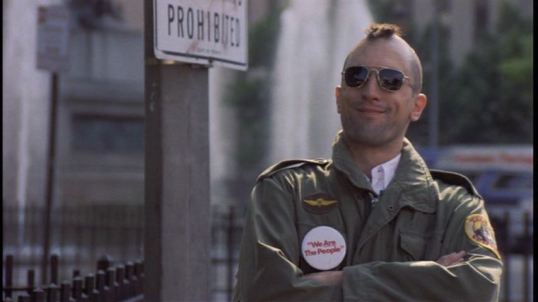
Taxi Driver (1976, dir. Martin Scorsese, DP: Michael Chapman)

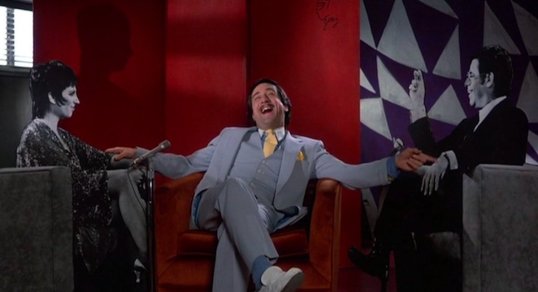
The King of Comedy (1982, dir by Martin Scorsese, DP; Fred Schuler)

Once Upon A Time In America (1984, dir by Sergio Leone, DP: Tonino Delli Colli)

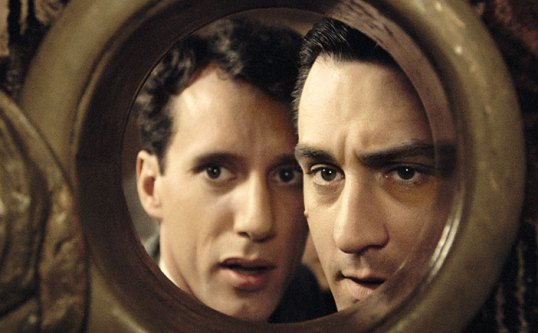
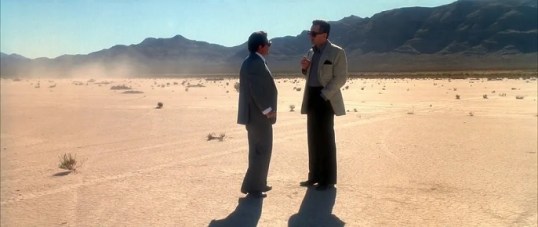
Casino (1995, dir by Martin Scorsese, DP: Robert Richardson)


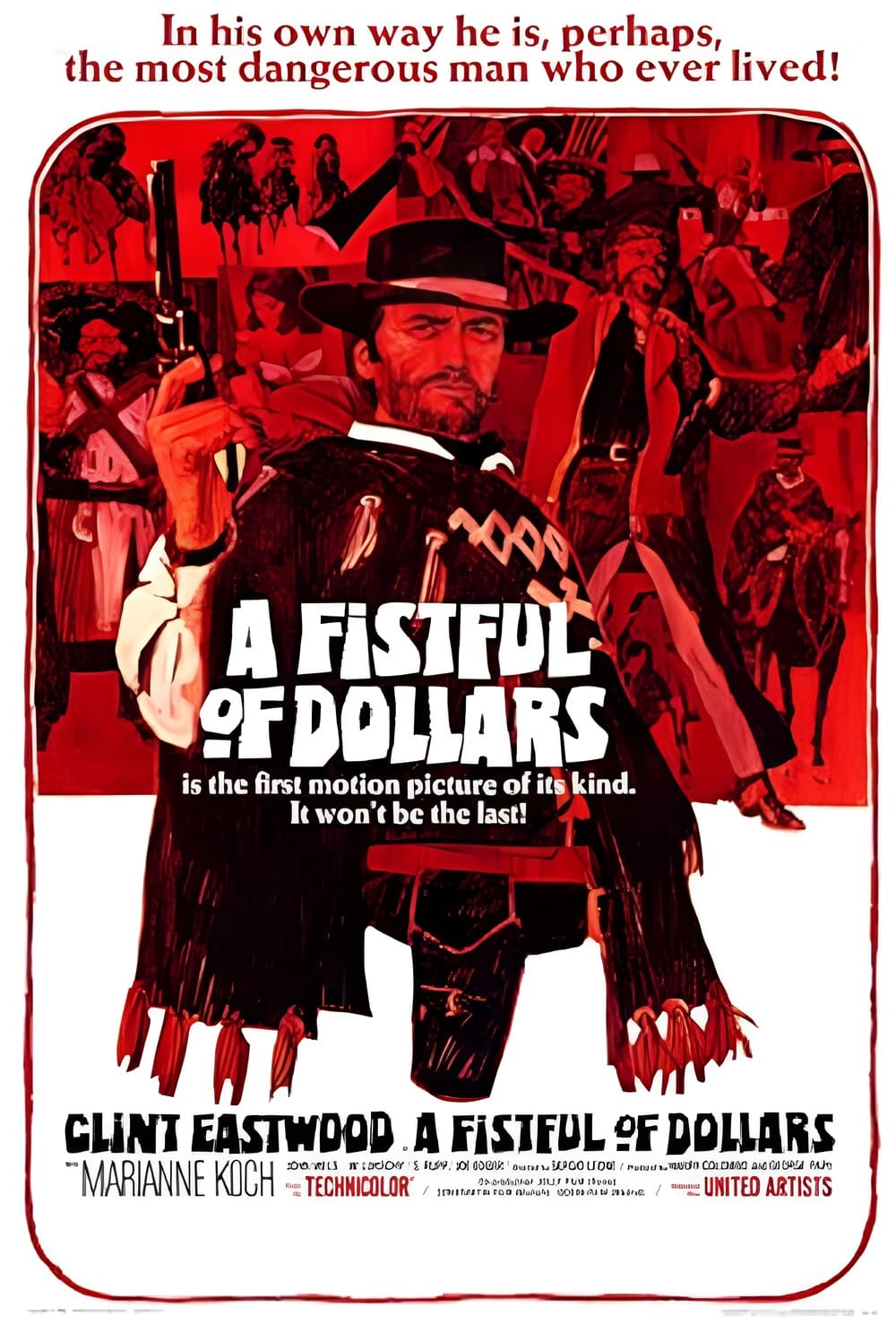
Review: A Fistful of Dollars (dir. by Sergio Leone)


“When a man with a .45 meets a man with a rifle, you said, the man with a pistol’s a dead man. Let’s see if that’s true.” — Joe

When examining the films that fundamentally reshaped a genre, 1964’s A Fistful of Dollars stands as an undeniable cornerstone. Directed by Sergio Leone, this movie didn’t just accidentally stumble into creating a new genre; it grabbed the classic American western by the collar, dragged it into the mud, and spat on its shiny boots. This was the first leg of Leone’s “Dollar’s Trilogy,” and honestly, looking back at it now, it’s kind of crazy to think about how much of an underdog this production was. It was made on a shoestring budget, shot in Spain with a bunch of Italian and Spanish actors speaking different languages and then dubbed over, and it featured a lead actor who was mostly known for playing a lovable cowboy on a little American TV show called Rawhide. Nobody expected A Fistful of Dollars to become a massive international hit, but it did, and it permanently altered the cinematic landscape.

The story itself feels incredibly familiar today, but that’s only because it has been copied and homaged about a million times since. Unapologetically lifting the plot from Akira Kurosawa’s Yojimbo, the film follows a gritty, chain-smoking drifter who rides into a dusty, miserable border town called San Miguel. But the fun part about this cinematic lineage is that Yojimbo wasn’t entirely original either. Kurosawa openly borrowed the core concept from Dashiell Hammett’s hardboiled detective novels, specifically Red Harvest and The Glass Key. Both of those books featured a lone, cynical protagonist who manipulates warring criminal factions fighting it out for control of a corrupt town. So Leone was essentially taking a Japanese interpretation of an American noir trope, stripping it down, and repackaging it as a western. Once our drifter arrives in San Miguel, he quickly realizes the town is torn apart by two rival gangs: the Baxters, a family of American gun-runners, and the Rojos, a ruthless group of Mexican smugglers. Instead of playing the traditional white-hat hero who immediately picks a side and saves the day, our guy does the exact opposite. He decides to play both sides against each other, hiring himself out to the highest bidder, switching loyalties at the drop of a hat, and essentially bleeding the town dry for his own profit. It is a brilliantly cynical setup that completely subverted what western audiences were used to seeing at the time.

And then there is Clint Eastwood. Now, pop culture famously knows him as the Man with No Name, but that is actually the result of a very clever piece of US marketing. In A Fistful of Dollars, his character absolutely has a name: Joe. The American distributors thought the mysterious, anonymous angle sounded cooler for the posters, and the moniker stuck so hard over the decades that most people forget he literally introduces himself as Joe to the locals early on in the movie. Regardless of what you call him, when Leone cast Eastwood, American studios were apparently confused, wondering why an Italian director would want a TV actor to lead a movie. But Leone saw something in Eastwood’s squint, a kind of rugged, lazy menace that was perfect for this new brand of anti-hero. Joe isn’t a knight in shining armor. He’s greedy, he’s manipulative, and he kills people without losing a wink of sleep. But he has an undeniable coolness to him that is just magnetic. The costume design plays a massive part here too. The weathered brown poncho, the stubble, the short cigar clamped in his jaw, and that iconic hat all combined to create a look that felt lived-in and dangerous. Compared to the impeccably groomed, brightly dressed cowboys of the 1950s, Eastwood looked like he actually smelled like sweat, horse hair, and gunpowder.

Of course, a conversation about A Fistful of Dollars is totally incomplete without talking about the villains, because Leone knew how to cast bad guys who were genuinely terrifying. Gian Maria Volonté plays Ramón Rojo, the main antagonist, and he is absolutely phenomenal. Ramón isn’t just a cartoonish thug; he is smart, cold-blooded, and utterly devoid of mercy. There is a famous scene where Ramón is demonstrating the accuracy of his rifle by shooting at the heart of a man he has just murdered at long range, and Volonté plays it with such a creepy, casual indifference that it makes your skin crawl. The Baxters are mostly just pathetic pawns, but the Rojos feel like a legitimate, organized threat, which makes the stakes feel incredibly real. You genuinely believe that if Joe slips up even once, these guys will brutally torture and kill him without a second thought.

Visually, A Fistful of Dollars is an absolute masterclass in atmosphere. Leone was working with a limited budget, but he used what he had to create a style that felt massive. He employed these extreme, lingering close-ups of people’s eyes, sweaty faces, and flies buzzing around, which gave the film an almost unbearable tension. Then he would suddenly cut to these massive, sweeping wide shots of the barren Spanish desert, making the characters look like tiny, insignificant specks in a cruel, uncaring world. The violence was also shockingly graphic for the time. People didn’t just clutch their chests and fall over gracefully like they did in older westerns. They bled, they grimaced in agony, and the gunfights felt loud, chaotic, and messy. Leone stripped away the romanticism of the Wild West and replaced it with a gritty, dirty reality that felt much more authentic, even if it was entirely a fabricated Italian fantasy of America.

You also absolutely have to talk about Ennio Morricone’s legendary musical score. It is basically a character in the film itself. Before A Fistful of Dollars, western soundtracks were mostly made up of traditional orchestral arrangements and folksy songs. Morricone threw that playbook out the window. He used electric guitars, twanging banjos, screaming trumpets, whip cracks, choral chants, and even a bizarre, wailing coyote sound that sounds like a human having a mental breakdown. The main theme is so incredibly catchy and weird that it burrows into your brain and stays there for days. The music didn’t just support the action on screen; it told the audience exactly how to feel, ramping up the tension during the standoffs and giving Eastwood’s character a larger-than-life aura. Without Morricone’s score, the Spaghetti Western genre simply would not exist as we know it.

The pacing of the movie is something that modern audiences might need a minute to adjust to, but it is completely intentional. Leone was in absolutely no rush to get from point A to point B. He wanted to linger on the tension, letting scenes breathe and stretch out to almost uncomfortable lengths. When Eastwood is staring down a group of thugs in the street, Leone holds the camera on their faces for what feels like an eternity. You can see the sweat dripping, you can see the fear building, and by the time the first shot is finally fired, the release of tension is almost physical. It is a slow burn that requires a bit of patience, but it makes the eventual bursts of violence so much more impactful and satisfying. It is the exact opposite of the fast-paced, action-packed blockbusters we get today, and that deliberate slowness is a huge part of its strange, hypnotic charm.

Despite all of Joe’s outward greed and manipulation, there is a subtle emotional core to the film that keeps you totally invested. It comes in the form of Marisol, a woman who is being held captive by Ramón Rojo and used as leverage against her husband. When Eastwood sees the absolute misery of this family, his cold exterior cracks just a little bit. He risks his entire scheme, and his own life, to sneak Marisol and her son out of town in the middle of the night, giving them money to start over. It is a beautifully quiet, understated scene that proves there is still a shred of humanity left underneath all that grit and cynicism. He doesn’t make a big speech about it or ask for thanks; he just does it because it is the right thing to do. It gives the character a moral center without turning him into a traditional good guy, which is a really difficult balancing act that the film pulls off perfectly.

The climax of the film is where everything comes together in a spectacular display of style and sheer badassery. After getting brutally beaten by the Rojos, Eastwood escapes and returns for revenge, utilizing a makeshift iron chest plate hidden under his poncho. Watching him walk slowly down the empty street, taking bullet after bullet to the chest without flinching, while the electric guitar wails in the background is just pure, unadulterated cinema magic. He outdraws Ramón in a final, agonizingly tense standoff, proving that his wits and his nerve are just as deadly as his revolver. It is the perfect payoff to the slow build-up of the entire movie, cementing Joe as an absolute icon of pop culture.

And this endless game of cinematic telephone didn’t stop with Leone. Just as A Fistful of Dollars was heavily “inspired by Yojimbo“—which itself transplanted the 1920s pulp noir concept into the 1860 Edo period—it went on to inspire a whole new wave of imitators looking to put their own spin on the formula. The most obvious example is the 1996 action flick Last Man Standing starring Bruce Willis, which takes the exact same plot of warring factions and a lone drifter playing them against each other, but moves the action to a Prohibition-era Texas border town. It is wild to trace that DNA from a 1920s pulp novel to the 1860 Edo period, to a 1960s Italian western, and all the way to a 1990s Bruce Willis shoot-em-up, proving just how durable and universally cool this basic storyline really is.

Looking at A Fistful of Dollars today, it is easy to see the cracks in its foundation. The dubbing is notoriously clunky, some of the supporting performances are a bit wooden, and the fact that it is a direct rip-off of a Japanese masterpiece is impossible to ignore. But honestly, none of that really matters in the grand scheme of things. Leone took a great story and injected it with so much style, so much attitude, and so much raw energy that it became its own completely distinct entity. As the first leg of Leone’s “Dollar’s Trilogy,” it laid the foundational blueprint that he would later perfect with For a Few Dollars More and absolutely master with The Good, the Bad and the Ugly. But there is something special about this first outing. It has a rougher, scrappier, and more experimental vibe that is incredibly fun to watch. It is the movie that killed the old western and birthed the new one, and for that alone, it deserves every bit of its legendary status.

Brad’s “Scene of the Day” features Woody Strode!


July 25th is the birthday of actor Woody Strode. In celebration of what would have been the icon’s 112th birthday, I’m sharing one of my favorite scenes in the history of cinema, which was made greater by the presence of Strode. One of the genius movies that Sergio Leone made when filming ONCE UPON A TIME IN THE WEST (1968) was casting Jack Elam and Woody Strode as two of the three men waiting for Harmonica to get off the train in the opening scene. It’s a classic!

Let’s Celebrate Bikini Day!


Who wants to go to the beach?

Unknown Artist

Since today is the anniversary of the introduction of the bikini and it is summer time, this seems like the perfect time for some beach fun!  And here to help is a sampling of pulp paperbacks that are perfect for Bikini Day!  Grab one of these and head down to the beach.  Be sure to wear sun screen.

By Leo Summers

by Al Rossi

By Robert McGinnis

Unknown Artist

By Sergio Leone

Unknown Artist

by Don Neiser

By Peter Driben

by Al Rossi

by John Richards


4 Shots From 4 Films: Special Clint Eastwood Edition


4 Shots From 4 Films is just what it says it is, 4 shots from 4 of our favorite films. As opposed to the reviews and recaps that we usually post, 4 Shots From 4 Films is all about letting the visuals do the talking.

Happy birthday, Clint Eastwood!

4 Shots From 4 Clint Eastwood Films

A Fistful of Dollars (1964, directed by Sergio Leone)

A Fistful of Dollars (1964, dir by Sergio Leone)

The Outlaw Josey Wales (1976, dir by Clint Eastwood)

The Outlaw Josey Wales (1976, dir by Clint Eastwood)

Tightrope (1984, dir by Richard Tuggle and Clint Eastwood)

Tightrope (1984, dir by Richard Tuggle and Clint Eastwood)

A Perfect World (1993, dir by Clint Eastwood)

A Perfect World (1993, dir by Clint Eastwood)

Song of the Day: The Good, The Bad, and the Ugly — Main Theme (composed by Ennio Morricone)


Today’s song of the day is the main theme from Leone’s best-known film, The Good, The Bad, and The Ugly.

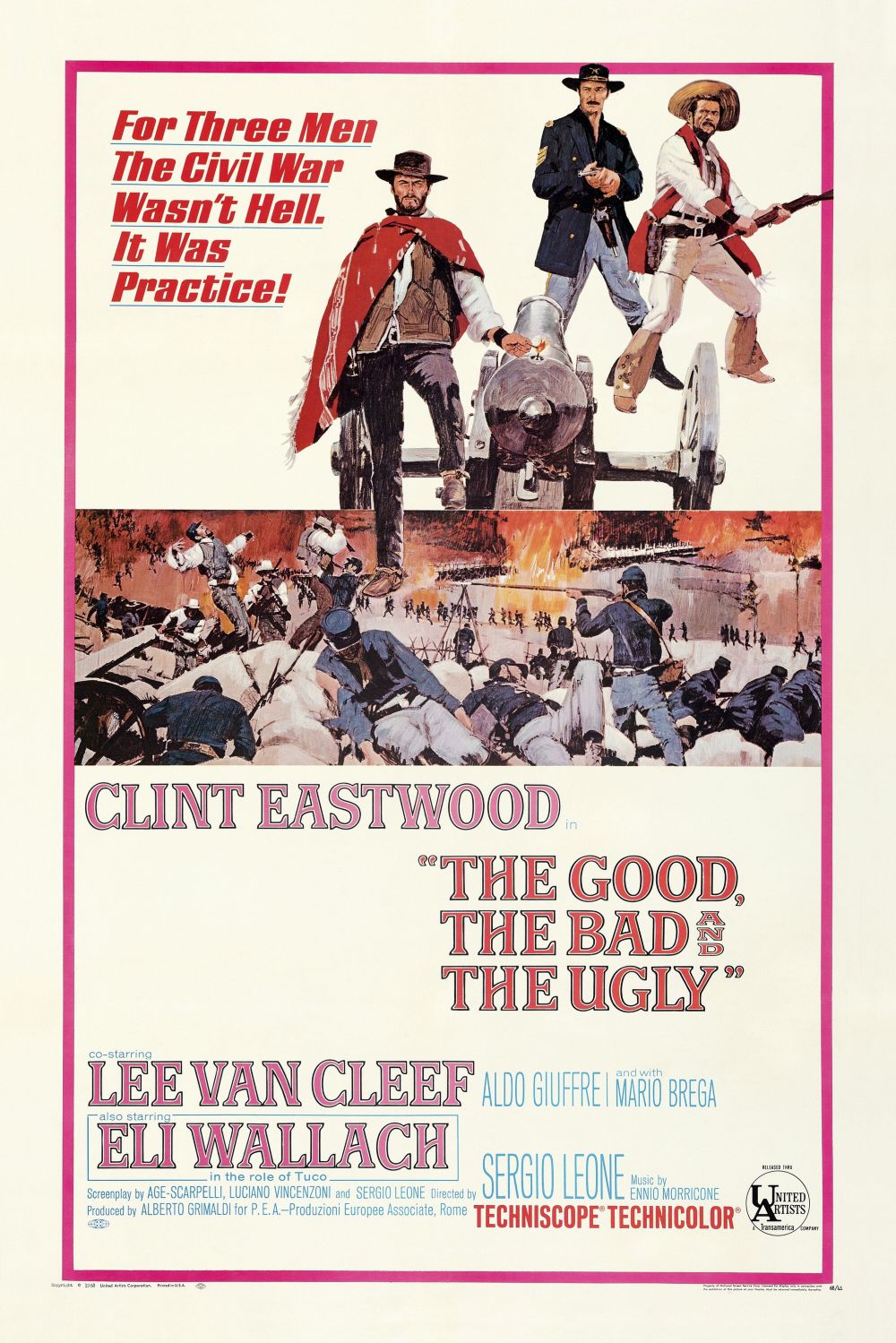
Ennio Morricone’s score is as much of a character in this film as the ones played by Clint Eastwood, Eli Wallach, and Lee Van Cleef.  It perfectly sets the moods, telling us that we’re about to see something that is truly epic.  The opening notes, which have so often been parodied but which have never lost their power, truly capture the feel of Sergio Leone’s mythical vision of the old west.

Scenes That I Love: Once Upon A Time In America


(SPOILERS BELOW)

The final moments of Sergio Leone’s epic 1984 gangster film, Once Upon A Time in America, are filled with questions and mysteries.

The final moments of Sergio Leone’s epic 1984 gangster film, Once Upon A Time in America, are filed with questions and mysteries.

In 1968, who did Noodles (played by Robert De Niro) see standing outside of Max’s mansion?  When the garbage truck pulled up, did the mysterious man get in the truck or was he thrown in by some unseen force?

Why, in 1968, did Noodles see a car from the 1920s, one that was full of people who appeared to be celebrating the end of prohibition?  Was the car really there, in 1968, or was it an element of Noodles’s past as a gangster suddenly popping into his mind?

Once Upon A Time In America (1984, dir by Sergio Leone, DP: Tonino Delli Colli)

When we then see a young Noodles in an opium den, are we flashing back to the 1920s?  Is Noodles remembering the past or is it possible that we’ve been in the 20s the whole time and all of the scenes set in 1968 were actually only a drug-induced dream?

Why, with men looking to kill him and all of his friends apparently dead, does Noodles suddenly smile at the end of the film?  Is that sudden smile a result of the drugs or is there something else going on?

Once Upon A Time In America was Sergio Leone’s final film.  It’s one that he spent decades trying to get made and, once it was finally produced, it was butchered and re-edited by a studio hacks who demanded that the film tell its story in a linear style.  Leone was reportedly heart-broken by how his film was treated.  Some have speculated that his disappointment may have even contributed to the heart attack that eventually killed him.  It was only after Leone passed that his version of Once Upon A Time In America became widely available in the U.S.  This enigmatic epic continues to spark debate.  One thing that can’t be denied is that it’s a brilliant film.

As today is Leone’s birthday, it only seems appropriate to share a pair of scenes that I love, from the ending of Once Upon A Time In America.