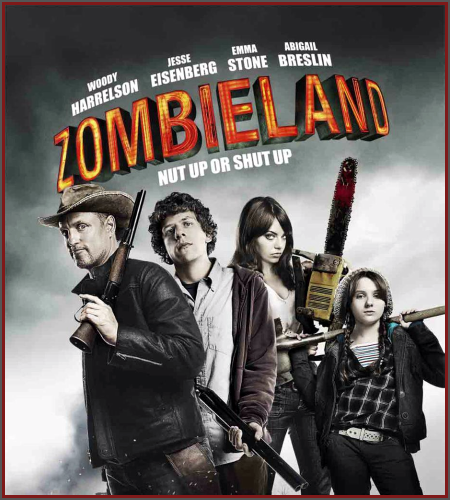
And today is Bill Murray’s birthday so it seems like a good time to share a scene that I love. In this scene from 2009’s Zombieland, Bill Murray proves that not even the zombie apocalypse can stop the Murraycane.
(Unfortunately, Bill comes to a tragic end in Zombieland but at least he gets to enjoy himself for a while.)
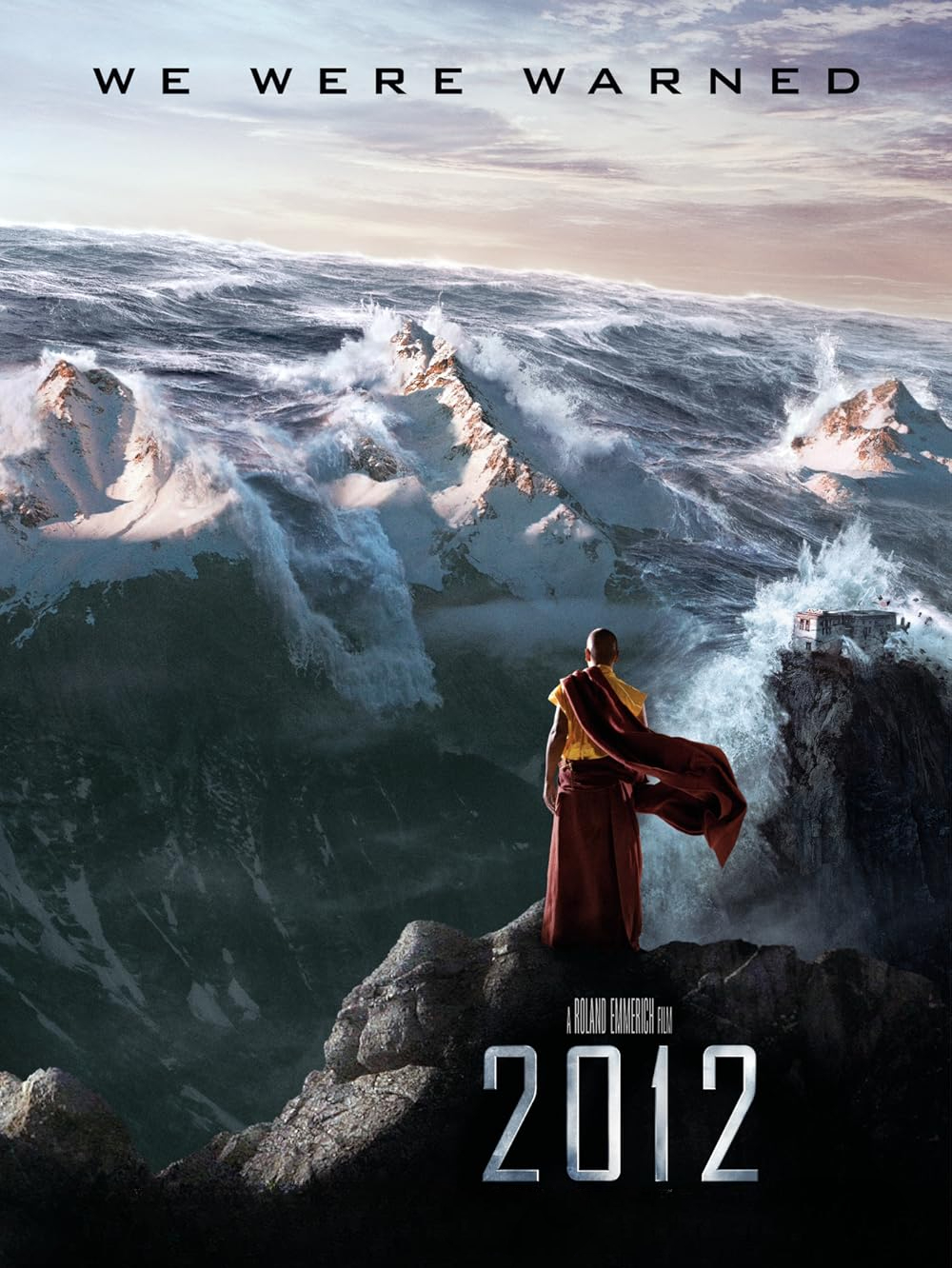
Roland Emmerich has a reputation that precedes him, and it’s not exactly a glowing one. When his name pops up as the director of a new blockbuster, it’s easy to let out an audible groan. He’s not quite in the same league as Uwe Boll for sheer cinematic atrocities, but he gives Michael Bay a serious run for his money in the “most frustratingly inconsistent big-budget filmmaker” category. This is a guy who once showed real promise with cult sci-fi action flicks like Universal Soldier and Stargate, then hit his commercial and creative peak with the wildly entertaining Independence Day. But ever since that 1996 high point, Emmerich’s films have followed a disappointing trajectory, each one seemingly more bloated and less satisfying than the last. Godzilla was a mess. The Day After Tomorrow had its moments but collapsed under its own ridiculousness. So when 2012 rolled around in late 2009, expectations were, to put it mildly, low. Yet somehow, against all odds, Emmerich delivered his most purely enjoyable disaster flick since Independence Day—a film so gleefully, unapologetically over-the-top that it transcends its many, many flaws.
2012 takes the idea of apocalyptic cinema and cranks it up to eleven, then snaps the dial off and sets it on fire. The premise is simple: the Mayan calendar wasn’t just a quirky ancient artifact—it was a warning. The world, as we know it, is set to end in the year 2012, thanks to a series of cataclysmic events triggered by solar neutrinos heating up the Earth’s core. The film spends its first act methodically setting up this global doomsday through two very different perspectives. On one side, you’ve got Dr. Adrian Helmsley, played with quiet intensity by Chiwetel Ejiofor, a scientist who discovers the impending disaster and tries to warn world leaders. On the other, there’s Charlie Frost, a conspiracy theorist radio host played by Woody Harrelson with the kind of manic energy that suggests he might actually believe the world is ending—or at least that his next cup of coffee is. These early scenes are a mix of pseudo-science and doomsday preaching, but they serve their purpose: by the time the first real disaster strikes, you’re primed and ready for the chaos.
And oh, what chaos it is. 2012 isn’t just a disaster movie—it’s a full-blown disaster epic, a nearly three-hour spectacle of global annihilation that feels like Emmerich finally decided to stop holding back. This is a film where entire continents are reshaped, where cities crumble into the sea, and where billions of people meet their end in the most visually inventive ways possible. The destruction of Los Angeles is a particular standout, a sequence so relentless and well-executed that it’s hard not to watch with your jaw hanging open. John Cusack plays Jackson Curtis, a limousine driver and failed novelist who finds himself in the middle of the carnage while trying to pick up his kids from their mother’s new boyfriend’s mansion. As the ground literally splits open beneath him, Curtis has to outdrive an earthquake that’s turning the San Andreas Fault into a real-life game of Frogger. Buildings collapse, freeways pancake, and the entire city slides into the Pacific Ocean in a scene that’s as thrilling as it is absurd. It’s the kind of moment that defines 2012: completely ridiculous, yet undeniably impressive in its sheer audacity.
But Los Angeles is just the appetizer. From there, the film takes us on a world tour of destruction. Yellowstone National Park erupts in a supervolcano explosion that turns the American Midwest into a smoldering wasteland. Mega-tsunamis, some as tall as the Himalayas, crash over entire landmasses, swallowing cities whole. Air Force One gets caught in a pyroclastic flow. And through it all, Cusack’s everyman hero is trying to get his family to safety, which in this case means boarding one of the massive arks built by the world’s governments to preserve humanity—or at least the rich and well-connected. The arks, a last-ditch effort to save a sliver of civilization, become the film’s most fascinating and frustrating element. On one hand, they’re a clever narrative device, forcing the characters into a high-stakes race against time. On the other, they highlight the film’s most glaring ethical and logical inconsistencies. Why are only certain people allowed on board? How did they build these things in secret? And why does Danny Glover’s President Wilson, a man who seems perpetually one step behind the crisis, get to be the moral compass of the story? The answers, of course, are “because the plot demands it” and “who cares, look at that explosion!”
The cast of 2012 is what you’d charitably call an ensemble, though “B-list all-stars” might be more accurate. Cusack is fine as the reluctant hero, though he’s never fully convincing as a man who can outsmart the apocalypse. Amanda Peet plays his ex-wife, Kate, a woman so perpetually exasperated by her former husband that you wonder why she ever married him in the first place. Their kids, played by Liam James and Morgan Lily, are mostly there to scream and look terrified, which they do adequately. Chiwetel Ejiofor brings a much-needed dose of gravitas as the scientist trying to sound the alarm, though even he can’t sell some of the film’s more outlandish scientific explanations. Danny Glover’s President Wilson is… well, he’s Danny Glover as the President, which is about as convincing as it sounds. And then there’s Woody Harrelson, who steals every scene he’s in as Charlie Frost, the conspiracy theorist who may or may not be onto something. Harrelson’s performance is so delightfully unhinged that it almost makes you wish the film had focused more on his character and less on Cusack’s family drama.
And that’s the thing about 2012: the human elements are almost uniformly the weakest part of the film. The dialogue is often clunky, the character arcs are predictable, and the emotional beats frequently fall flat. But none of that matters because Emmerich and his team have crafted a film that’s so visually stunning, so relentlessly paced, and so committed to its own absurdity that you can’t help but get swept up in it. This is a movie that understands exactly what it is: a guilty pleasure, a spectacle, a chance to watch the world end in the most extravagant ways possible. It doesn’t ask you to think too hard or invest too deeply in its characters. It just asks you to sit back, grab some popcorn, and enjoy the ride. And on that front, 2012 delivers in spades.
What’s most impressive about 2012 is the sheer scale of its ambition. This isn’t a film content with destroying a single city or even a single country. Emmerich wants to tear down the entire planet, and he does so with a level of detail and creativity that’s hard not to admire. The visual effects are top-notch, and the film’s destruction sequences are some of the most memorable in the disaster genre. The mega-tsunami that crashes over the Himalayas is a particular highlight, a moment so awe-inspiring in its scope that it’s easy to forget you’re watching a movie that’s otherwise filled with groan-worthy dialogue and one-dimensional characters. And then there’s the final act, where the arks become the stage for a last-ditch effort to save humanity. The sequences aboard the ark are a mix of tension and spectacle, as the characters navigate the chaos of a world literally coming apart at the seams.
Of course, 2012 isn’t without its share of head-scratching moments. The science is, to put it kindly, questionable. The idea that solar neutrinos could heat up the Earth’s core to the point of global destruction is pure fantasy, and the film’s explanation for how the arks were built and funded is so flimsy it might as well not exist. The pacing, too, can be uneven. The first act drags a bit as it sets up the various plot threads, and the final act feels rushed, as if Emmerich realized he had to wrap things up before the runtime hit the three-hour mark. And then there’s the film’s tone, which can be wildly inconsistent. One moment, you’re watching billions of people die in horrific ways; the next, you’re supposed to laugh at a joke from one of the side characters. It’s a balancing act that doesn’t always work, but somehow, it doesn’t derail the film either.
At its core, 2012 is a throwback to the disaster movies of the 1970s, films like The Poseidon Adventure and The Towering Inferno that were more concerned with spectacle than substance. Those films were often criticized for their thin plots and wooden acting, but they endured because they delivered on the one thing that mattered: thrilling, large-scale destruction. 2012 is cut from the same cloth. It’s a film that knows its audience and knows exactly what they want. And what they want, it turns out, is to watch the world end in the most spectacular ways possible. In that sense, 2012 is a resounding success. It’s a bad movie, sure, but it’s a bad movie that’s an absolute blast to watch. It’s the kind of film you put on when you want to turn off your brain, crank up the volume, and lose yourself in the sheer, unadulterated joy of watching everything burn.
So, is 2012 a good film? By most traditional measures, no. The plot is silly, the characters are thin, and the dialogue is often laughable. But as a piece of pure, unfiltered disaster porn, it’s one of the best. Emmerich has always been a director who prioritizes spectacle over subtlety, and 2012 is the purest expression of that philosophy. It’s a film that doesn’t just meet expectations—it exceeds them, if only by virtue of its sheer, unrelenting ambition. And in a world where so many blockbusters feel like they’re playing it safe, there’s something refreshing about a movie that’s willing to go this big, this bold, and this unapologetically over-the-top. 2012 may not be high art, but it’s a hell of a lot of fun. And sometimes, that’s more than enough.
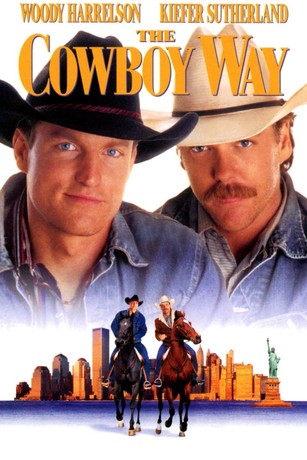
Sutherland portrayed my favorite TV character of all time, when he spent 8 seasons playing Jack Bauer in my favorite TV series of all time, 24. Raylan Givens (Timothy Olyphant) gave him a solid run for his money when I got around to watching the JUSTIFIED series a few years back, but I still believe Bauer edges him out. Another of my favorite shows when I was growing up was CHEERS. And a big reason for that is Woody Harrelson. CHEERS ran from 1982-1993, so when it started I was nine and when it ended I was twenty. I literally grew up on the show. I thought Harrelson’s portrayal of the dim-witted, but lovable and sweet character, Woody Boyd, was so funny. I remember being happy when he started making movies and had some solid success. I’ve always enjoyed THE COWBOY WAY, the film that teamed up Harrelson and Sutherland, so I decided to revisit the 1994 action-comedy on Kiefer’s special day.
IN THE COWBOY WAY, Woody Harrelson plays the somewhat dim-witted and overwhelmingly carefree Pepper Lewis, while Kiefer Sutherland plays the more responsible and extremely serious Sonny Gilstrap, two lifelong friends and rodeo champions from New Mexico. The story kicks off when their long-time friend Nacho Salazar (Joaquin Martinez) disappears after going to New York City to pick up his daughter Teresa (Cara Buono), who has been smuggled into the U.S. from Cuba. Pepper and Sonny decide to head to the big city themselves to track down Nacho, and soon find themselves taking on the murderous human trafficker, John Stark (Dylan McDermott), who murdered Nacho and is forcing his daughter to work in a sweatshop. With only their country boy common sense (well at least Sonny’s), their exceptional rodeo skills, and the help of an empathetic NY cop ((Ernie Hudson), Pepper and Sonny will do whatever it takes to find out what happened to Nacho and save his daughter from a life of modern day slavery.
THE COWBOY WAY is silly and unrealistic at times, with shifts in tone that will make your head spin, but I still love it anyway. This type of action-comedy was commonplace in the 80’s and 90’s, but you don’t see movies like this much anymore. I’ll admit that my personal nostalgia, as well as my lifelong appreciation of Sutherland and Harrelson, plays into my enjoyment of the film. It’s a movie that leans into the once popular formula of outsiders from the country being looked down upon by city slickers, and then proving themselves to be more than capable. Think CROCODILE DUNDEE, but without the romance. This is the kind of movie that is trying its best to give us a good time for our box office dollars. Many in Hollywood have forgotten how to entertain, and it’s such a breath of fresh air to watch movies that exist solely for that purpose, even when they’re not perfect.
As is often the case for me, the cast of THE COWBOY WAY plays a big factor in my enjoyment of the movie. Woody Harrelson is certainly over the top as the irresponsible New Mexico cowboy, but he’s also funny at times and more than capable of handling the action scenes. Kiefer Sutherland’s cowboy is the exact opposite, he’s serious, extremely responsible, and very capable. If nothing else, he needs Harrelson’s character in his life to help him remove the stick from his ass at times! Ultimately, it’s their relationship and banter that carries the film for me. Dylan McDermott is good as the sleazy villain, but if you’ve seen many 80’s and 90’s action movies, he’s pretty much exactly what you’d expect. As a fan of spaghetti westerns, I also enjoyed seeing the genre stalwart Tomas Milian pop up as McDermott’s soon-to-be ex-boss. It’s not a big role but this movie buff appreciated it. Finally, Ernie Hudson is just so likable as the kind-hearted and helpful horse-mounted cop. I like to think that he and Kiefer’s character kept a John McClane / Sgt. Al Powell type relationship going after the events of the movie.
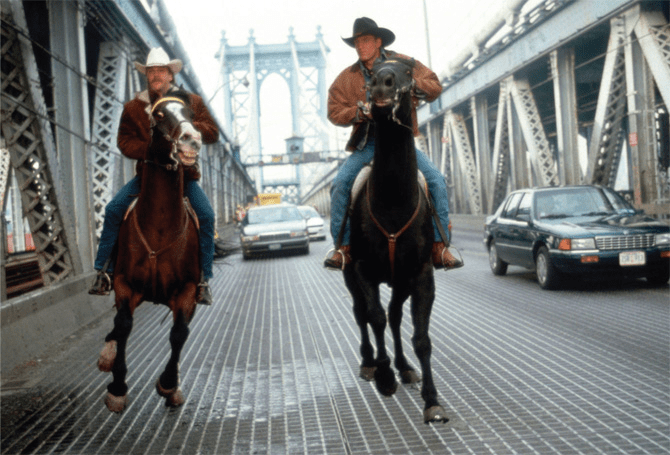
Ultimately, in my opinion, THE COWBOY WAY may not be a great movie by critical standards, but it is a fun movie. If you’re in the mood for 90’s era action-comedy, featuring a great cast, fun stunts (e.g. men on horseback taking on New York City traffic), and a little Travis Tritt on the soundtrack, then you’ll probably have a good time with this one.
“People don’t always know who they are… ’til it’s too late.” — Frank Hamer
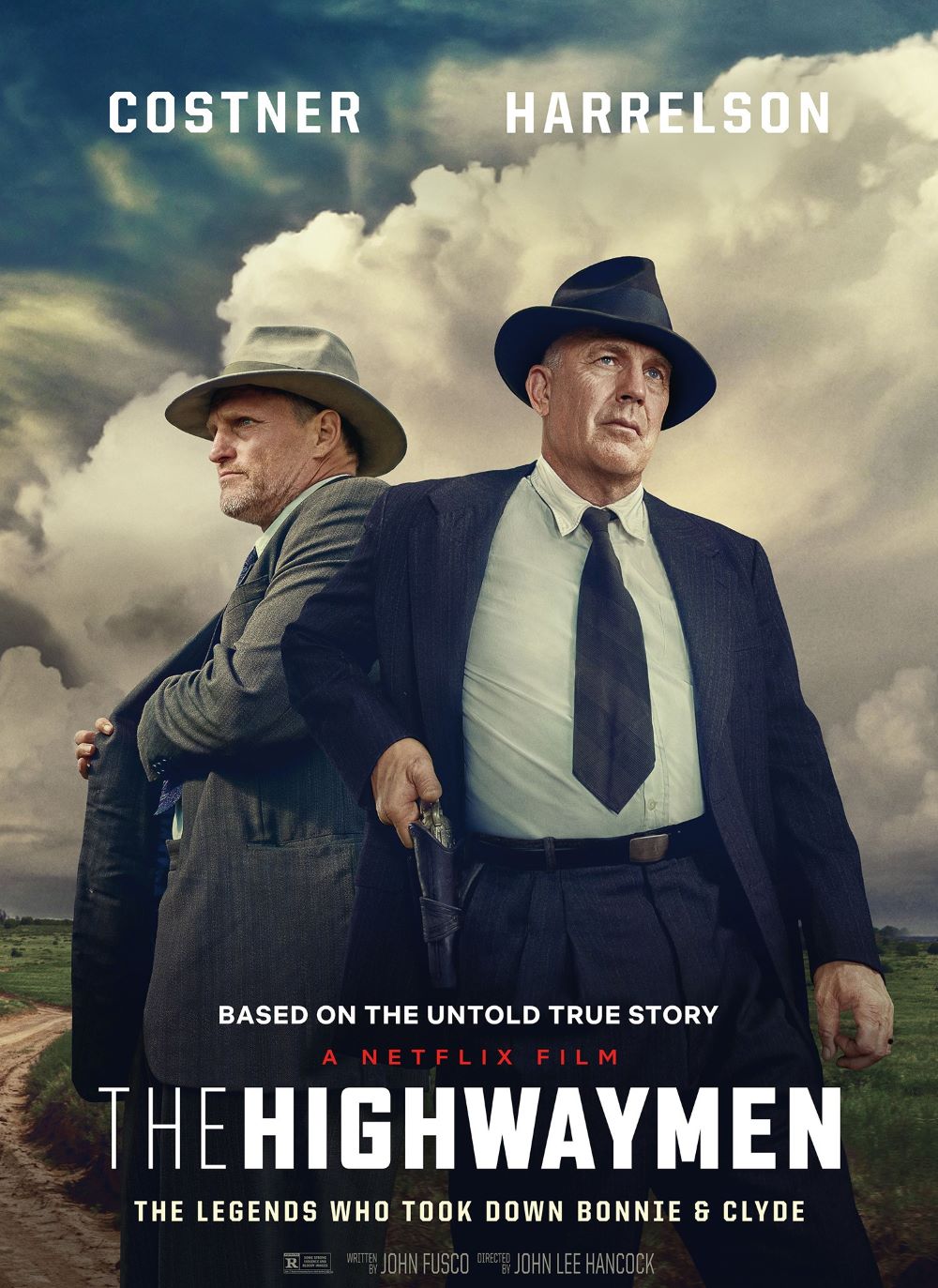
The Highwaymen, as directed by John Lee Hancock, delivers a character-driven, period crime drama that refreshes a story so often mythologized in American pop culture. Instead of glamorizing Bonnie and Clyde, the film spotlights the two former Texas Rangers tasked with ending their crime spree: Frank Hamer (played by Kevin Costner) and Maney Gault (played by Woody Harrelson). Set against the bleak dustbowl landscape of 1934, the film opens with the criminal duo breaking their associates out of Eastham Prison, setting the state of Texas into a panic. In desperation, Governor “Ma” Ferguson authorizes the return of Hamer, a seasoned lawman whose old-school methods have largely been left behind in modern policing.
From the start, The Highwaymen takes its time, inviting viewers into a slower, more contemplative chase rather than the kinetic action often associated with outlaw stories. Hamer, long retired and resistant to rejoining the fight, is persuaded both by the severity of Bonnie and Clyde’s violence and the humiliation his state faces in failing to catch them. Gault, for his part, is recruited despite his own personal struggles, adding a layer of regret and weariness to their partnership. Their pursuit is marked by straightforward detective work—staking out small towns, following trails, and confronting a public that is strangely captivated by the criminals they hunt. The film repeatedly draws attention to the way crowds and the press elevate Bonnie and Clyde, reflecting on an early version of true crime celebrity culture.
The dynamic between Hamer and Gault forms the emotional core of the movie. Their bond is shaped by years of experience, mistakes, and a real sense of being out of place in a society that now doubts their relevance. There’s plenty of banter and friction, but also reflective moments that dig into the costs of life spent in pursuit of justice. Throughout the investigation, the film uses the Texas and Louisiana landscape as a powerful backdrop—the vast, windswept highways underscore the isolation and existential gravity faced by these lawmen. The cinematography favors wide shots and muted colors, giving the chase a feeling of endlessness and melancholy.
Instead of showcasing Bonnie and Clyde as glamorous anti-heroes, the film keeps them at a distance, rarely granting much screen time or dialogue. Violence is handled abruptly and unsentimentally. When it finally arrives, most notably in the climactic ambush, it is portrayed as brutal and inevitable, reminding the viewer that myths are built on blood and public spectacle. The lawmen’s final confrontation results in the infamous shootout, depicted with documentary-like restraint. The aftermath involves a bullet-riddled car towed through throngs of onlookers—an eerie scene that highlights how tragedy becomes spectacle.
One of the film’s greatest strengths is in its portrayal of moral ambiguity. Both Hamer and Gault operate by principles shaped in a different era. Their methods can be rough and unorthodox; they clash with younger law enforcement and the FBI, whose approaches are more bureaucratic, less personal. The film hints at the toll violence and a lifetime in law enforcement has taken on them, including a poignant story from Gault about a tragic accident in his past. These reflections draw out the muted sadness underlying their pursuit, exploring themes of justice, changing times, and what remains after one’s era passes.
Performance-wise, Costner and Harrelson bring authenticity and gravity to their roles. Their chemistry is quiet and real, developed largely through understated scenes—silent drives, awkward motel breakfasts, and occasional arguments broken up by mutual respect. Supporting roles, like Kathy Bates’s steely governor and John Carroll Lynch’s earnest corrections chief, flesh out the historical setting and institutional pressures.
The film doesn’t always dig as deep as it could into the complexities of Depression-era justice, but its restraint and focus on character make up for that. Rather than indulging in nostalgia or sensationalizing violence, it keeps its lens on the human cost—the consequences for the victims, the weariness of the men trying to restore order, and the strange cultural fascination with outlaws. If you’re looking for a grounded historical drama that trades fast action for thoughtful pacing, and puts working-class grit front and center, The Highwaymen is worth the ride.
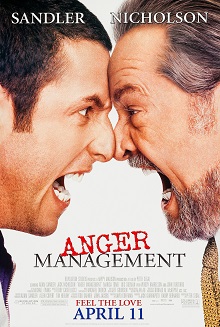
Dave (Adam Sandler), a timid man who has never gotten over being humiliated when he was a teenager, is sentenced to anger management after a slight argument on a plane is blown out of proportion by a taser-wielding shy marshal. His therapist is Dr. Buddy Rydell (Jack Nicholson), whose techniques only seem to exacerbate Dave’s growing anger. Among Dr. Rydell’s methods are giving Dave an unstable “anger buddy” named Chuck (John Turturro), ordering Dave to get revenge on the guy (John C. Reilly) who humiliated on his as a teenager, and also encouraging Dave to cheat on his girlfriend Linda (Maria Tomei) with a woman (Heather Graham) that they meet at bar. Dave goes from timid to angry, Dr. Rydell starts dating Linda, and the whole thing is wrapped up with a totally implausible ending.
The idea of the star of Chinatown and Five Easy Pieces co-starring in an Adam Sandler comedy sounds like it should be exhibit #1 when it comes to talking about the decline of American cinema but I’ve always liked Anger Management. Casting Jack Nicholson as the seemingly insane Dr. Rydell was an inspired choice and Nicholson gives a real performance in the film as opposed to just coasting on his already-established persona. Anger Management came out a year after Adam Sandler’s first dramatic film, Punch-Drunk Love, and, even though Anger Management is a raunchy comedy from the start to finish, Sandler’s performance actually finds the reality in Dave’s situation. Sandler plays Dave as being someone who is sincerely trying his best to get through his court-mandated anger management without losing control. Nicholson and Sandler make for a surprisingly good team.
Of course, it’s an Adam Sandler comedy so it’s not for everyone. The humor is often crude and the film’s final twist is so ridiculous that it can actually leave you feeling like you might need anger management. But Anger Management does show how Jack Nicholson improves anything that he’s involved with and it also shows that Adam Sandler can act when he feels like it. Anger Management also gave us the meme of Jack Nicholson nodding his approval, meaning the film and the performance will live forever.
Based on a novel by James Jones (and technically, a sequel of sorts to From Here To Eternity), 1998’s The Thin Red Line is one of those Best Picture nominees that people seem to either love or hate.
Those who love it point out that the film is visually stunning and that director Terrence Malick takes a unique approach to portraying both the Battle of Guadalcanal and war in general. Whereas Steven Spielberg’s Saving Private Ryan told a rather traditional story about the tragedy of war (albeit with much more blood than previous World War II films), The Thin Red Line used the war as a way to consider the innocence of nature and the corrupting influence of mankind. “It’s all about property,” one shell-shocked soldier shouts in the middle of a battle and later, as soldiers die in the tall green grass of the film’s island setting, a baby bird hatches out of an egg. Malick’s film may have been an adaptation of James Jones’s novel but its concerns were all pure Malick, right down to the philosophical voice-overs that were heard throughout the film.
Those who dislike the film point out that it moves at a very deliberate pace and that we don’t really learn much about the characters that the film follows. In fact, with everyone wearing helmets and running through the overgrown grass, it’s often difficult to tell who is who. (One gets the feeling that deliberate on Malick’s point.) They complain that the story is difficult to follow. They point out that the parade of star cameos can be distracting. And they also complain that infantrymen who are constantly having to look out for enemy snipers would not necessarily be having an inner debate about the spirituality of nature.
I will agree that the cameos can be distracting. John Cusack, for example, pops up out of nowhere, plays a major role for a few minutes, and then vanishes from the film. The sight of John Travolta playing an admiral is also a bit distracting, if just because Travolta’s mustache makes him look a bit goofy. George Clooney appears towards the end of the film and delivers a somewhat patronizing lecture to the men under his command. Though his role was apparently meant to be much larger, Adrien Brody ends up two lines of dialogue and eleven minutes of screentime in the film’s final cut.
That said, The Thin Red Line works for me. The film is not meant to be a traditional war film and it’s not necessarily meant to be a realistic recreation of the Battle of Guadalcanal. Instead, it’s a film that plays out like a dream and, when viewed a dream, the philosophical voice overs and the scenes of eerie beauty all make sense. Like the majority of Malick’s films, The Thin Red Line is ultimately a visual poem. The plot is far less important than how the film is put together. It’s a film that immerses you in its world. Even the seeming randomness of the film’s battles and deaths fits together in a definite patten. It’s a Malick film. It’s not for everyone but those who are attuned to Malick’s wavelength will appreciate it even if they don’t understand it.
And while Malick does definitely put an emphasis on the visuals, he still gets some good performances out of his cast. Nick Nolte is chilling as the frustrated officer who has no hesitation about ordering his men to go on a suicide mission. Elias Koteas is genuinely moving as the captain whose military career is ultimately sabotaged by his kind nature. Sean Penn is surprisingly convincing as a cynical sergeant while Jim Caviezel (playing the closest thing the film has to a main character) gets a head start on humanizing messianic characters by playing the most philosophical of the soldiers. Ben Chaplin spends most of his time worrying about his wife back home and his fantasies give us a glimpse of what’s going on in America while its soldiers fight and die overseas.
The Thin Red Line was the first of Terrence Malick’s films to be nominated for Best Picture and it was one of three World War II films to be nominated that year. However, it lost to Shakespeare In Love.
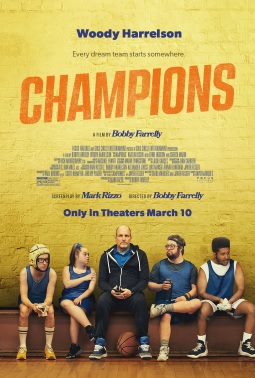
In Champions, Woody Harrelson plays Marcus Marakovich.
Marcus is a basketball coach. He believes that he has the talent and the ability to be a coach in the NBA and he’ll tell that to anyone who will listen. Unfortunately, Marcus also has a reputation for being self-destructive and temperamental. He has sabotaged his career with too many public fights. As his friend and fellow coach Phil (Ernie Hudson) tells him, Marcus knows everything about basketball but he doesn’t know how to connect with the players. Marcus is so concerned with winning that he never gets to know the people that are playing for him.
Of course, Marcus has more problems than just his inability to connect with players. An on-court brawl leads to Marcus losing his assistant coaching job. A drunk driving incident leads to Marcus landing in jail. Phil bails him out but Marcus will still have to do community service to avoid serving time. Marcus is assigned to spend the next 90 days coaching The Friends, a basketball team made up of players who have learning disabilities. Though at first reluctant, Marcus doesn’t want to go to prison and, after a rough start, he and the Friends start to bond. Marcus becomes a better coach and the Friends become a better team and soon, it looks like they might even be playing in the North American Special Olympics Finals in Winnipeg. Along the way, Marcus also falls for Alex (Kaitlin Olson), the sister of one of his players.
Champions is a heartfelt film that suffers from the fact that there’s really not a single surprising moment to be found within it. As soon as Woody Harrelson shows up as a hard-drinking and cynical basketball coach who is looking for one more chance to make it to the NBA, most members of the audience will know exactly what to expect. It’s not a shock that he eventually bonds with his players. It’s not a shock that he falls in love with Alex nor that he eventually calls Alex out for using her brother’s needs as an excuse to not get close to anyone. It’s not even a surprise when Cheech Marin shows up as the cheerful manager of the rec center where the Friends practice. And it’s certainly not a surprise that Marcus’s work with the Friends leads to him getting an offer from an NBA team, an offer that might not be as altruistic as Marcus wants to believe. (The team is mired in a scandal and feels that hiring Marcus would bring them some good publicity.) Marcus is faced with a big decision and the choice that he makes won’t surprise anyone. At one point, Marcus specifically mentions the film Hoosiers, as if the simple act of acknowledging the fact that Champions isn’t exactly breaking new ground will somehow make up for the film’s predictability.
That doesn’t mean that Champions isn’t a likable film, of course. It’s a crowd pleaser. The actors playing the Friends actually are all learning disabled and the film portrays them all as individuals with their own unique personalities and abilities. It’s hard not to get excited for them when they succeed on the court and the film refuses to use any of their disabilities for cheap laughs. The film’s heart is in the right place and there’s always something to be said for that. But, as I watched Champions, I became very much aware that this was a film that I wanted to like more than I actually did. It was hard for me not to compare Woody Harrelson’s well-meaning but self-destructive coach to the similar character than Ben Affleck played in The Way Back. The Way Back worked because it took a familiar character type but then allowed that character and the story to go in an unexpected direction. Watching Champions, it was hard for me to not wish that the film had been willing to take a few more risks.
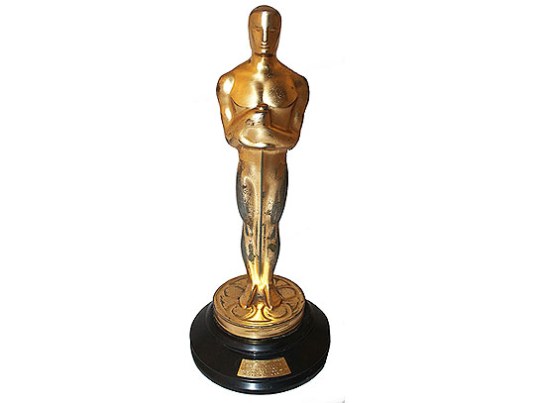
Even though Horrorthon has taken up the majority of my time this October, I still have been watching as this year’s Oscar race has developed over the past 29 days. And that’s a good thing because it’s time for my monthly predictions!
Below, you’ll find my predictions for October! In order to see how my thinking has evolved over the course of the year, be sure to check out my predictions for February, March, April, May, June, July, August, and September!
Best Picture
Babylon
The Banshees of Inisherin
Elvis
Everything Everywhere All At Once
The Fabelmans
She Says
TAR
Till
Top Gun: Maverick
Women Talking
Best Director
Chinonye Chukwu for Till
Todd Field for TAR
Martin McDonagh for The Banshees of Insherin
Sarah Polley for Women Talking
Steven Spielberg for The Fabelmans
Best Actor
Austin Butler in Elvis
Tom Cruise in Top Gun: Maverick
Colin Farrell in The Banshees of Insherin
Hugh Jackman in The Son
Brendan Fraser in The Whale
Best Actress
Naomi Ackie in I Wanna Dance With Somebody
Cate Blanchett in TAR
Olivia Colman in Empire of Light
Danielle Deadwyler in Till
Michelle Yeoh in Everything Everywhere All At Once
Best Supporting Actor
Brendan Gleeson in The Banshees of Insherin
Tom Hanks in Elvis
Woody Harrelson in Triangle of Sadness
Judd Hirsch in The Fabelmans
Ke Huy Quan in Everything Everywhere All At Once
Best Supporting Actress
Jessie Buckley in Women Talking
Claire Foy in Women Talking
Nina Hoss in Tar
Janelle Monae in Glass Onion: A Knives Out Mystery
Horrorthon, my favorite time of year, starts tomorrow! However, before we get lost in the scary season, I want to take one last look at awards season! It’s time for me to update my Oscar nominations. Fortunately, thanks to all of the recent festival premieres, the Oscar picture is finally starting to look a little bit clearer. There’s still a lot of question marks out there and, as always, anything can happen. But, finally, I can say that there’s more to my predictions that just lucky guesses and wishful thinking.
Below, you’ll find my predictions for September! In order to see how my thinking has evolved over the course of the year, be sure to check out my predictions for February, March, April, May, June, July, and August.
Best Picture
Babylon
The Banshees of Inisherin
Elvis
Everything Everywhere All At Once
The Fabelmans
The Menu
TAR
Till
Top Gun: Maverick
Women Talking
A few thoughts on the (potential) nominees:
Babylon, I will admit, I’m including because of the trailer and the fact that it’s a Damien Chazelle film about Hollywood. The Academy likes films about itself and one can argue that after what happened when La La Land was nominated, Chazelle is owed at least a little bit of recognition. Then again, that same argument could have been made for First Man and we know how that turned out.
As for The Menu, I’ve got that in my surprise nominee slot. There’s almost always at least one potential nominee that’s considered to be a long shot until the nominations are announced. Now that we have a set number of ten nominees, the chances that one nominee will be a surprise seems even more certain than before.
Top Gun: Maverick, Elvis, and Everything Everywhere All At Once all came out early in the year but they’ve all achieved the box office success necessary to be remembered.
Till seems like the type of film that the Academy will want to acknowledge, especially with the presidential election right around the corner.
The Banshees of Inisherin, The Fabelmans, TAR, and Women Talking were all acclaimed when they made their festival debuts. Banshees, in particular, went from being a probable also-ran to a surefire contender based on the length of the standing ovation that it received.
Best Director
Chinonye Chukwu for Till
Todd Field for TAR
Martin McDonagh for The Banshees of Insherin
Sarah Polley for Women Talking
Steven Spielberg for The Fabelmans
Best Actor
Austin Butler in Elvis
Tom Cruise in Top Gun: Maverick
Colin Farrell in The Banshees of Insherin
Ralph Fiennes in The Menu
Brendan Fraser in The Whale
Best Actress
Naomi Ackie in I Wanna Dance With Somebody
Cate Blanchett in TAR
Olivia Colman in Empire of Light
Danielle Deadwyler in Till
Michelle Yeoh in Everything Everywhere All At Once
Best Supporting Actor
Brendan Gleeson in The Banshees of Insherin
Tom Hanks in Elvis
Woody Harrelson in Triangle of Sadness
Judd Hirsch in The Fabelmans
Ke Huy Quan in Everything Everywhere All At Once
Best Supporting Actress
Jessie Buckley in Women Talking
Jamie Lee Curtis in Everything Everywhere All At Once
Sally Field in Spoiler Alert
Frances McDormand in Women Talking
Janelle Monae in Glass Onion: A Knives Out Mystery
And today is Bill Murray’s birthday so it seems like a good time to share a scene that I love. In this scene from 2009’s Zombieland, Bill Murray proves that not even the zombie apocalypse can stop the Murraycane.
(Unfortunately, Bill comes to a tragic end in Zombieland but at least he gets to enjoy himself for a while.)