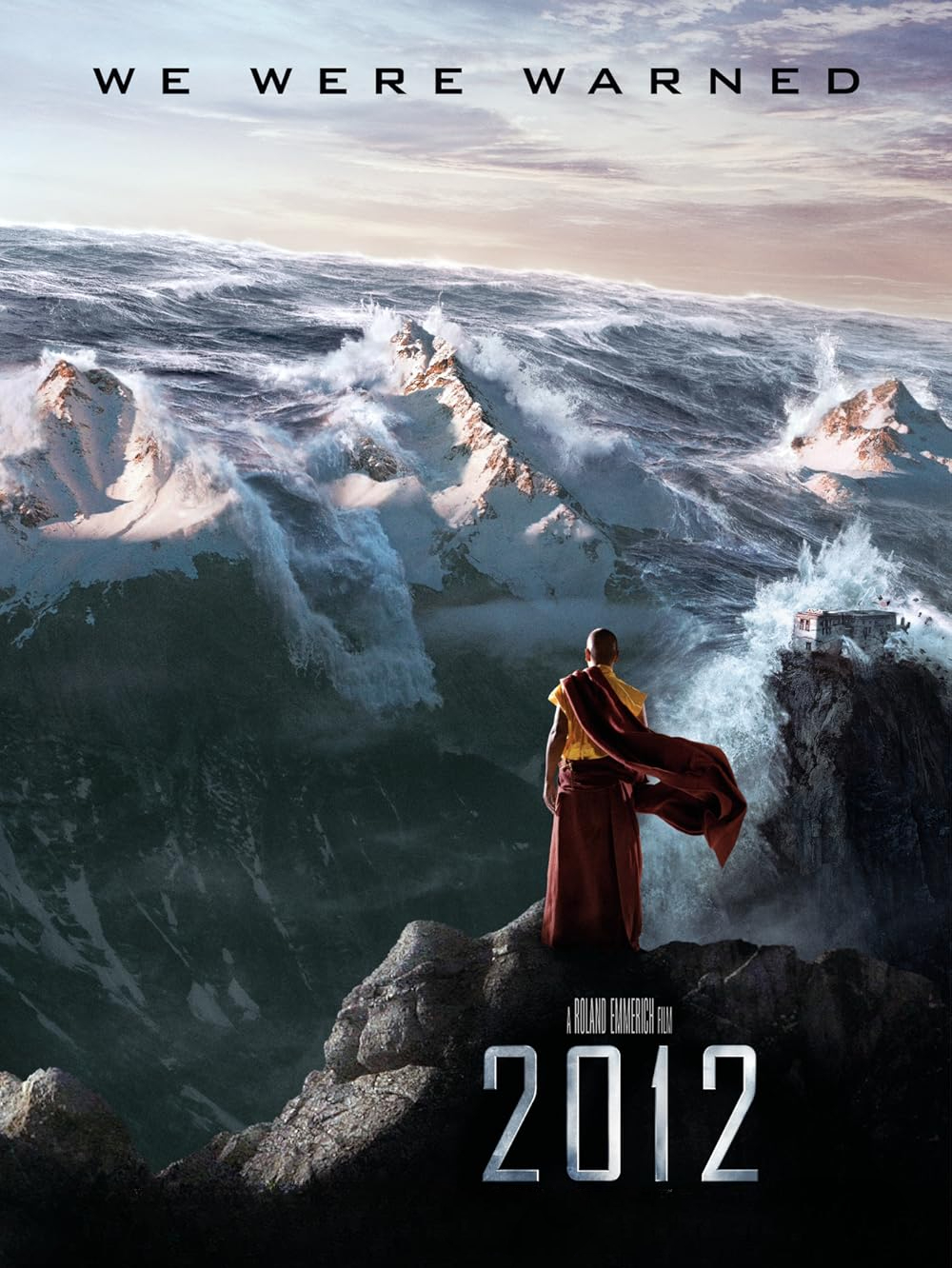
Guilty Pleasure No. 122: 2012 (dir. by Roland Emmerich)


Roland Emmerich has a reputation that precedes him, and it’s not exactly a glowing one. When his name pops up as the director of a new blockbuster, it’s easy to let out an audible groan. He’s not quite in the same league as Uwe Boll for sheer cinematic atrocities, but he gives Michael Bay a serious run for his money in the “most frustratingly inconsistent big-budget filmmaker” category. This is a guy who once showed real promise with cult sci-fi action flicks like Universal Soldier and Stargate, then hit his commercial and creative peak with the wildly entertaining Independence Day. But ever since that 1996 high point, Emmerich’s films have followed a disappointing trajectory, each one seemingly more bloated and less satisfying than the last. Godzilla was a mess. The Day After Tomorrow had its moments but collapsed under its own ridiculousness. So when 2012 rolled around in late 2009, expectations were, to put it mildly, low. Yet somehow, against all odds, Emmerich delivered his most purely enjoyable disaster flick since Independence Day—a film so gleefully, unapologetically over-the-top that it transcends its many, many flaws.

2012 takes the idea of apocalyptic cinema and cranks it up to eleven, then snaps the dial off and sets it on fire. The premise is simple: the Mayan calendar wasn’t just a quirky ancient artifact—it was a warning. The world, as we know it, is set to end in the year 2012, thanks to a series of cataclysmic events triggered by solar neutrinos heating up the Earth’s core. The film spends its first act methodically setting up this global doomsday through two very different perspectives. On one side, you’ve got Dr. Adrian Helmsley, played with quiet intensity by Chiwetel Ejiofor, a scientist who discovers the impending disaster and tries to warn world leaders. On the other, there’s Charlie Frost, a conspiracy theorist radio host played by Woody Harrelson with the kind of manic energy that suggests he might actually believe the world is ending—or at least that his next cup of coffee is. These early scenes are a mix of pseudo-science and doomsday preaching, but they serve their purpose: by the time the first real disaster strikes, you’re primed and ready for the chaos.

And oh, what chaos it is. 2012 isn’t just a disaster movie—it’s a full-blown disaster epic, a nearly three-hour spectacle of global annihilation that feels like Emmerich finally decided to stop holding back. This is a film where entire continents are reshaped, where cities crumble into the sea, and where billions of people meet their end in the most visually inventive ways possible. The destruction of Los Angeles is a particular standout, a sequence so relentless and well-executed that it’s hard not to watch with your jaw hanging open. John Cusack plays Jackson Curtis, a limousine driver and failed novelist who finds himself in the middle of the carnage while trying to pick up his kids from their mother’s new boyfriend’s mansion. As the ground literally splits open beneath him, Curtis has to outdrive an earthquake that’s turning the San Andreas Fault into a real-life game of Frogger. Buildings collapse, freeways pancake, and the entire city slides into the Pacific Ocean in a scene that’s as thrilling as it is absurd. It’s the kind of moment that defines 2012: completely ridiculous, yet undeniably impressive in its sheer audacity.

But Los Angeles is just the appetizer. From there, the film takes us on a world tour of destruction. Yellowstone National Park erupts in a supervolcano explosion that turns the American Midwest into a smoldering wasteland. Mega-tsunamis, some as tall as the Himalayas, crash over entire landmasses, swallowing cities whole. Air Force One gets caught in a pyroclastic flow. And through it all, Cusack’s everyman hero is trying to get his family to safety, which in this case means boarding one of the massive arks built by the world’s governments to preserve humanity—or at least the rich and well-connected. The arks, a last-ditch effort to save a sliver of civilization, become the film’s most fascinating and frustrating element. On one hand, they’re a clever narrative device, forcing the characters into a high-stakes race against time. On the other, they highlight the film’s most glaring ethical and logical inconsistencies. Why are only certain people allowed on board? How did they build these things in secret? And why does Danny Glover’s President Wilson, a man who seems perpetually one step behind the crisis, get to be the moral compass of the story? The answers, of course, are “because the plot demands it” and “who cares, look at that explosion!”

The cast of 2012 is what you’d charitably call an ensemble, though “B-list all-stars” might be more accurate. Cusack is fine as the reluctant hero, though he’s never fully convincing as a man who can outsmart the apocalypse. Amanda Peet plays his ex-wife, Kate, a woman so perpetually exasperated by her former husband that you wonder why she ever married him in the first place. Their kids, played by Liam James and Morgan Lily, are mostly there to scream and look terrified, which they do adequately. Chiwetel Ejiofor brings a much-needed dose of gravitas as the scientist trying to sound the alarm, though even he can’t sell some of the film’s more outlandish scientific explanations. Danny Glover’s President Wilson is… well, he’s Danny Glover as the President, which is about as convincing as it sounds. And then there’s Woody Harrelson, who steals every scene he’s in as Charlie Frost, the conspiracy theorist who may or may not be onto something. Harrelson’s performance is so delightfully unhinged that it almost makes you wish the film had focused more on his character and less on Cusack’s family drama.

And that’s the thing about 2012: the human elements are almost uniformly the weakest part of the film. The dialogue is often clunky, the character arcs are predictable, and the emotional beats frequently fall flat. But none of that matters because Emmerich and his team have crafted a film that’s so visually stunning, so relentlessly paced, and so committed to its own absurdity that you can’t help but get swept up in it. This is a movie that understands exactly what it is: a guilty pleasure, a spectacle, a chance to watch the world end in the most extravagant ways possible. It doesn’t ask you to think too hard or invest too deeply in its characters. It just asks you to sit back, grab some popcorn, and enjoy the ride. And on that front, 2012 delivers in spades.

What’s most impressive about 2012 is the sheer scale of its ambition. This isn’t a film content with destroying a single city or even a single country. Emmerich wants to tear down the entire planet, and he does so with a level of detail and creativity that’s hard not to admire. The visual effects are top-notch, and the film’s destruction sequences are some of the most memorable in the disaster genre. The mega-tsunami that crashes over the Himalayas is a particular highlight, a moment so awe-inspiring in its scope that it’s easy to forget you’re watching a movie that’s otherwise filled with groan-worthy dialogue and one-dimensional characters. And then there’s the final act, where the arks become the stage for a last-ditch effort to save humanity. The sequences aboard the ark are a mix of tension and spectacle, as the characters navigate the chaos of a world literally coming apart at the seams.

Of course, 2012 isn’t without its share of head-scratching moments. The science is, to put it kindly, questionable. The idea that solar neutrinos could heat up the Earth’s core to the point of global destruction is pure fantasy, and the film’s explanation for how the arks were built and funded is so flimsy it might as well not exist. The pacing, too, can be uneven. The first act drags a bit as it sets up the various plot threads, and the final act feels rushed, as if Emmerich realized he had to wrap things up before the runtime hit the three-hour mark. And then there’s the film’s tone, which can be wildly inconsistent. One moment, you’re watching billions of people die in horrific ways; the next, you’re supposed to laugh at a joke from one of the side characters. It’s a balancing act that doesn’t always work, but somehow, it doesn’t derail the film either.

At its core, 2012 is a throwback to the disaster movies of the 1970s, films like The Poseidon Adventure and The Towering Inferno that were more concerned with spectacle than substance. Those films were often criticized for their thin plots and wooden acting, but they endured because they delivered on the one thing that mattered: thrilling, large-scale destruction. 2012 is cut from the same cloth. It’s a film that knows its audience and knows exactly what they want. And what they want, it turns out, is to watch the world end in the most spectacular ways possible. In that sense, 2012 is a resounding success. It’s a bad movie, sure, but it’s a bad movie that’s an absolute blast to watch. It’s the kind of film you put on when you want to turn off your brain, crank up the volume, and lose yourself in the sheer, unadulterated joy of watching everything burn.

So, is 2012 a good film? By most traditional measures, no. The plot is silly, the characters are thin, and the dialogue is often laughable. But as a piece of pure, unfiltered disaster porn, it’s one of the best. Emmerich has always been a director who prioritizes spectacle over subtlety, and 2012 is the purest expression of that philosophy. It’s a film that doesn’t just meet expectations—it exceeds them, if only by virtue of its sheer, unrelenting ambition. And in a world where so many blockbusters feel like they’re playing it safe, there’s something refreshing about a movie that’s willing to go this big, this bold, and this unapologetically over-the-top. 2012 may not be high art, but it’s a hell of a lot of fun. And sometimes, that’s more than enough.

Previous Guilty Pleasures

  1. Half-Baked
  2. Save The Last Dance
  3. Every Rose Has Its Thorns
  4. The Jeremy Kyle Show
  5. Invasion USA
  6. The Golden Child
  7. Final Destination 2
  8. Paparazzi
  9. The Principal
  10. The Substitute
  11. Terror In The Family
  12. Pandorum
  13. Lambada
  14. Fear
  15. Cocktail
  16. Keep Off The Grass
  17. Girls, Girls, Girls
  18. Class
  19. Tart
  20. King Kong vs. Godzilla
  21. Hawk the Slayer
  22. Battle Beyond the Stars
  23. Meridian
  24. Walk of Shame
  25. From Justin To Kelly
  26. Project Greenlight
  27. Sex Decoy: Love Stings
  28. Swimfan
  29. On the Line
  30. Wolfen
  31. Hail Caesar!
  32. It’s So Cold In The D
  33. In the Mix
  34. Healed By Grace
  35. Valley of the Dolls
  36. The Legend of Billie Jean
  37. Death Wish
  38. Shipping Wars
  39. Ghost Whisperer
  40. Parking Wars
  41. The Dead Are After Me
  42. Harper’s Island
  43. The Resurrection of Gavin Stone
  44. Paranormal State
  45. Utopia
  46. Bar Rescue
  47. The Powers of Matthew Star
  48. Spiker
  49. Heavenly Bodies
  50. Maid in Manhattan
  51. Rage and Honor
  52. Saved By The Bell 3. 21 “No Hope With Dope”
  53. Happy Gilmore
  54. Solarbabies
  55. The Dawn of Correction
  56. Once You Understand
  57. The Voyeurs 
  58. Robot Jox
  59. Teen Wolf
  60. The Running Man
  61. Double Dragon
  62. Backtrack
  63. Julie and Jack
  64. Karate Warrior
  65. Invaders From Mars
  66. Cloverfield
  67. Aerobicide 
  68. Blood Harvest
  69. Shocking Dark
  70. Face The Truth
  71. Submerged
  72. The Canyons
  73. Days of Thunder
  74. Van Helsing
  75. The Night Comes for Us
  76. Code of Silence
  77. Captain Ron
  78. Armageddon
  79. Kate’s Secret
  80. Point Break
  81. The Replacements
  82. The Shadow
  83. Meteor
  84. Last Action Hero
  85. Attack of the Killer Tomatoes
  86. The Horror at 37,000 Feet
  87. The ‘Burbs
  88. Lifeforce
  89. Highschool of the Dead
  90. Ice Station Zebra
  91. No One Lives
  92. Brewster’s Millions
  93. Porky’s
  94. Revenge of the Nerds
  95. The Delta Force
  96. The Hidden
  97. Roller Boogie
  98. Raw Deal
  99. Death Merchant Series
  100. Ski Patrol
  101. The Executioner Series
  102. The Destroyer Series
  103. Private Teacher
  104. The Parker Series
  105. Ramba
  106. The Troubles of Janice
  107. Ironwood
  108. Interspecies Reviewers
  109. SST — Death Flight
  110. Undercover Brother
  111. Out for Justice
  112. Food Wars!
  113. Cherry
  114. Death Race
  115. The Beast Within
  116. Girl Series
  117. Gone in 60 Seconds
  118. Swordfish
  119. Marked For Death
  120. The Internship
  121. The Angry Red Planet

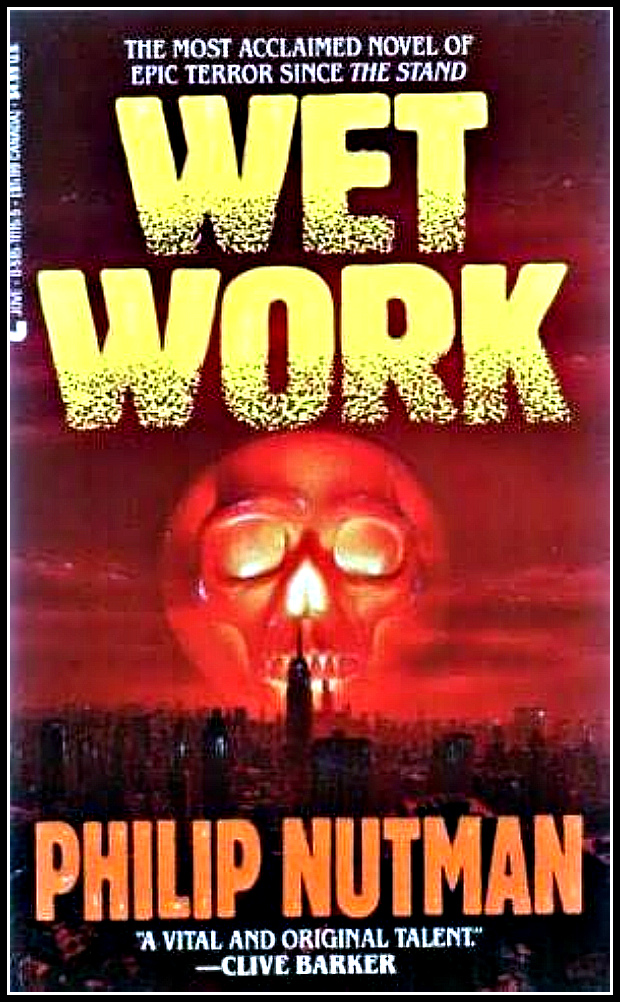
Horror Book Review: Wet Work (by Philip Nutman)


“Wet work” – intelligence community slang for covert operations involving assassination or killing, named for the ‘wet’ bloodshed such missions entail.

Philip Nutman isn’t a name most readers recognize outside of hardcore horror and zombie fiction circles, but within those communities, he’s remembered as an accomplished writer and journalist who carved out a unique space in the genre. For most of his career, Nutman worked as a freelance media journalist and film critic, contributing to magazines like Fangoria and Cinefantastique, where he covered the darker corners of cinema. As a fiction writer, he didn’t produce much in the way of novels, but the one he did publish—Wet Work (1993)—earned him lasting respect among fans who prefer their horror mixed with high-stakes action and cynical political undertones.

Wet Work began as a short story published in George A. Romero and John Skipp’s 1989 anthology Book of the Dead, a milestone collection that helped define zombie fiction as something literary rather than purely pulp. Even within that assembly of strong voices, Nutman’s story stood out for combining government espionage with apocalyptic horror. Expanding it into a full novel only amplified those elements, turning what had been a grim short tale into something closer to an action-horror epic with splatterpunk guts and a spy thriller’s pacing.

The novel opens with CIA operative Dominic Corvino, a member of an elite black-ops unit called Spiral, barely surviving a mission gone wrong in Panama City. From the start, Nutman gives the story a sense of distrust and paranoia—Corvino believes his team was deliberately sabotaged, their deaths engineered by someone inside the CIA. It’s an opening that reads more like a Cold War spy novel than a zombie tale, and that mix of tones is part of what makes Wet Work work so well. Nutman uses what he likely learned as a journalist—his knack for detail, the sense of how bureaucracies function (or fail to)—to give the early chapters an almost procedural authenticity. There’s a lived-in realism to the military and intelligence backdrop that keeps even the most outrageous elements of the story grounded.

Then comes the moment that shifts Wet Work from gritty reality into nightmarish surrealism. As the CIA plotline unfolds, a cosmic event takes place: the comet Saracen passes dangerously close to Earth and leaves behind some kind of invisible residue. It’s never fully explained whether it’s chemical, biological, or something beyond understanding, but its aftereffects begin to change life on the planet. Nutman uses the comet not just as a plot trigger but as a symbol of inevitability—a reminder that humankind’s end won’t always come from weapons or war, but sometimes from something as impersonal as celestial dust. It’s a bit of cosmic horror filtered through the lens of political and societal collapse, an end-of-days scenario that feels both mythic and strangely plausible.

Meanwhile, in Washington D.C., police officer Nick Packard becomes the reader’s main point of connection to the chaos on the ground. Packard starts the day leading a routine shift through the usual headaches of the city, but things unravel fast once Saracen’s effects take hold. Strange attacks start flooding police dispatch, cases of violence erupting in ways no one can explain, and what seem like random acts of brutality turn out to be part of something much larger. The city descends into panic as the dead begin returning to life. Nutman describes this breakdown with a sense of escalating dread that feels almost journalistic—each detail adds up, each scene observed as though through the eyes of someone trying to make sense of something senseless.

The zombies themselves are mostly what readers might expect from stories inspired by George A. Romero: slow-moving, decomposing, and relentless. But Nutman complicates things by hinting that not all of the reanimated are mindless. Some seem to retain fragments of human cunning or memory, enough to make them unpredictable and far more dangerous. This small twist gives the book a chilling edge, making it clear that intelligence doesn’t necessarily counteract monstrosity—it might even make it worse.

Corvino’s section of the novel runs parallel to Packard’s and serves as the darker, more psychological side of the story. He becomes consumed by his mission to find out who betrayed his team in Panama and make them pay. Physically, he’s battered and near his limits, operating in a world that no longer follows the rules of logic or hierarchy. Mentally, he’s trapped between loyalty, fury, and isolation—an operative trained for controlled violence now facing chaos that no training can manage. Nutman writes Corvino as a man unraveling in sync with the world around him. His search for answers feels less like a mission and more like an obsession, a desperate grasp at clarity in a world that’s literally stopped making sense.

Packard’s story, by contrast, brings everything down to a more personal survival narrative. As the crisis worsens, his only goal becomes reaching his wife, stranded in their suburban home outside the city. His journey across a collapsing Washington D.C. is one of the novel’s strongest threads, combining small moments of human connection with scenes of escalating horror. Through him, the reader gets a street-level view of societal breakdown—communications dying, infrastructure collapsing, and people reacting in unpredictable, often violent ways. What makes Packard’s arc compelling is its simplicity; amid government conspiracies and cosmic cataclysms, his is just a story about trying to save someone he loves.

Eventually, Corvino’s and Packard’s paths intersect, and both men come face to face with what’s left of the government. By this stage, authority itself has become just another form of predation. The people who once held power have adapted frighteningly well to the new world, shedding morality and decency like dead skin. Nutman doesn’t paint them as comic-book villains but as survivors whose ethics erode one decision at a time. In typical splatterpunk fashion, the line between humanity and monstrosity blurs completely.

Nutman’s writing in Wet Work is graphic, fast-moving, and unflinching. His descriptions of violence and gore are vivid without slipping into parody, and even when the pacing turns frenetic, it matches the story’s collapse into total madness. Where he stumbles is in a few awkward moments of dialogue and some stilted attempts at sexuality—scenes that read more forced than provocative. But those missteps never fully pull the story off course. If anything, they serve as reminders that Nutman, for all his journalistic precision, was still finding his rhythm in long-format storytelling.

The novel embodies everything bold about early 1990s horror fiction: big ideas, unrestrained violence, and a willingness to splice genres that didn’t normally coexist. Wet Work could just as easily sit beside Dawn of the Dead as it could a paranoid spy novel from the 1980s. Nutman understood that the systems people depend on—government, military, media—are fragile constructs that crumble the second survival becomes personal. That realism, drawn from his background in journalism, grounds the chaos he unleashes. Even at its most supernatural, Wet Work feels uncomfortably plausible because its human failures ring true.

After Wet Work, Nutman shifted back toward shorter forms, writing comics, novellas, and media journalism rather than more novels. In hindsight, that makes his one major book feel all the more significant. It’s the place where all his skills—his eye for detail, his fascination with moral gray areas, and his love of horror excess—come together.

For zombie fiction fans, Wet Work remains a hidden gem worth revisiting. It’s not just a gore-fest or survival tale but a demonstration of how horror doesn’t need to stay confined within its own walls. Nutman showed that the genre can bleed into others—melding espionage, political thriller, and cosmic dread into something distinct and alive. In a field that sometimes plays it safe, Wet Work reminds readers that horror thrives on experimentation, that it’s strongest when it’s hybridized and unpredictable. With Nutman’s death in 2013, any chance of seeing another full-length novel from him is gone, but what remains is proof that horror, when unafraid to evolve, can be far more than blood and fear—it can be reinvention itself.

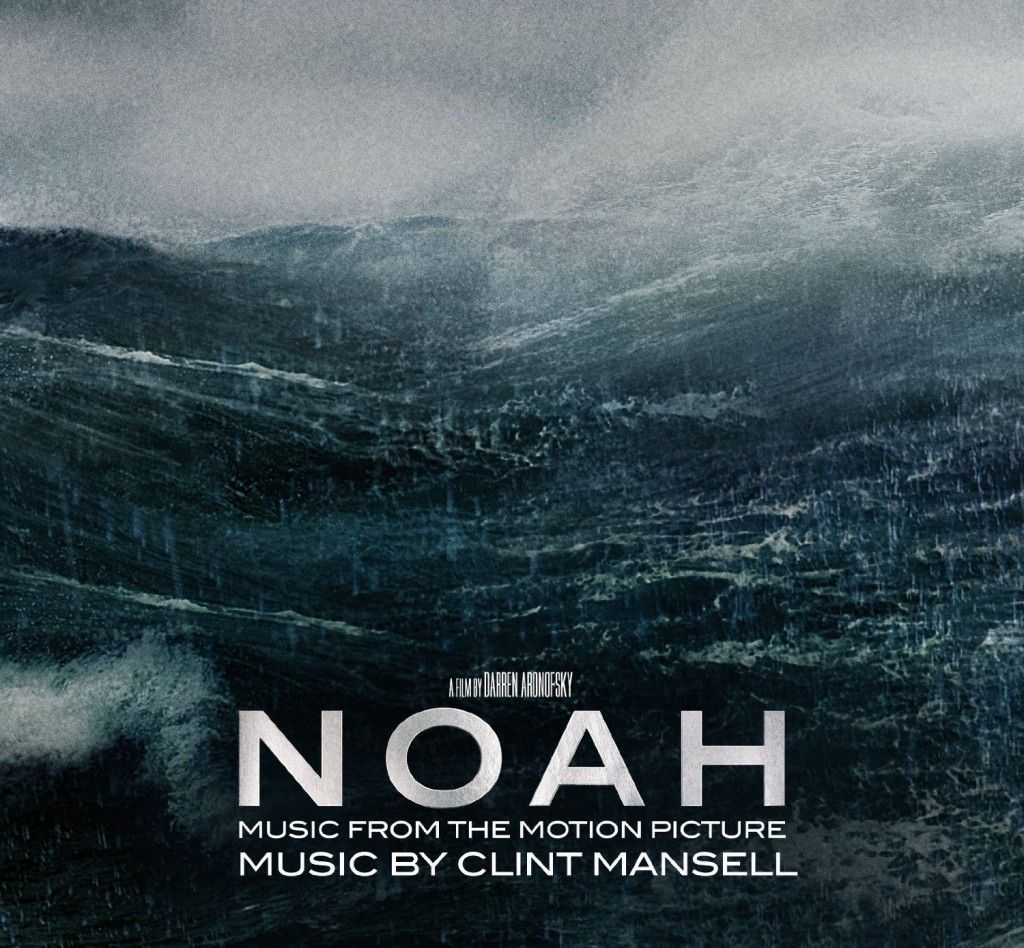
Song of the Day: Make Thee An Ark (by Clint Mansell)


noah-1024x948

I’ve been waiting for quite a long time for the release of Darren Aronofsky’s biblical disaster epic. Now that it’s finally here it also means a new film score from Aronofsky’s collaborator Clint Mansell.

The soundtrack to Noah is definitely on par with past Mansell scored Aronofsky films going all the way back to Pi. It’s a soundtrack that’s both epic, majestic and more than just a tad apocalyptic. One of my favorite tracks from the soundtrack comes at a moment of triumph early on in the film which creates a sense of hope in the face of the approaching divine apocalypse.

“Make Thee An Ark” starts off slowly. Layers on layers build within the string work by the Kronos Quartet who have worked with two Mansell on past Aronofsky films. The track actually has a nice musical throwback to Mansell’s work on The Fountain. It’s probably the influence of that past film which made the Noah soundtrack appeal to me more than the previous ones for Black Swan and The Wrestler.

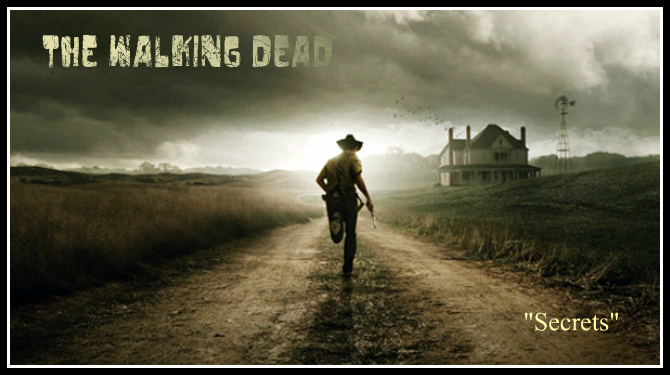
Review: The Walking Dead S2E6 “Secrets”


“Everything is food for something else.” – Carl Grimes

[spoilers within]

“Secrets” is the title for the sixth episode of the new season of The Walking Dead. It’s an episode that really should please not just fans of the gore and action, but also those who like some character and story development in their shows. The first five episodes of this second season has been hit or miss. Those episodes have reinforced some viewer complaints about how the show seems to go nowhere at times. Except for a couple moments of well-done script work involving Daryl Dixon (who happens to be the one character created for the show and absent from the comic book) the writing for this season continues last season’s uneven quality.

The last couple episodes were light on the zombie mayhem, but they were rife with character development and some forward momentum in the story (though Sophia still remains missing) with the discovery made by Glenn the big cliffhanger leading up to tonight’s episode. An episode which more than lives up to it’s title as secrets become known as others remain hidden.

With Glenn’s discovery one would think that the title of tonight’s episode meant Glenn and Maggie trying to keep the secret of the zombies in the barn kept from Rick and the rest of the group. The predicament Glenn finds himself in with Maggie begging him not to tell anyone about the barn then on another side Lori also begging him not to tell anyone that she’s pregnant. Glenn would be the first to tell both women how much he sucks at keeping secrets and the episode wasn’t even past the first ten minute mark when his resolve breaks under Dale’s epic eyebrows and fisherman’s hat.

The secrets which this episode focuses on doesn’t just include the barn and Lori’s pregnancy, but the secrets Shane has been trying to keep from everyone in camp. It’s during the aftermath of a very thrilling and eventful foray into the nearby housing association by Shane and his shooting apprentice in Andrea that Shane’s recent turn to the dark side comes to light with none other than the show’s elder busybody. Everyone in the show seems to tip-toe around the topic of Shane and his behavior, but not Dale who sees danger in Andrea learning from the one person who’s agenda may not lie in the group’s overall safety.

Like the show’s own troubled off-season, the show seems to have made a turn with the last couple episodes into something that seemed to balance well zombie action with the show’s more expositional side. This may not be too much of a surprise since Darabont as show-runner was supposed to have been fired around the filming of episode 4. Could his departure from the show and the promotion of a veteran tv writer and show-runner in Glen Mazzara finally put the show on a much more focused path. It’s a possibility and it could also have been part of Darabont’s plan for the season to have such a long slow-burn. I hate to admit it but as much as I love Darabont as a horror and genre fan I think his departure finally putting the show on the path to consistency on all creative fronts.

The secret about the barn and Lori’s pregnancy, not to mention Shane’s character becoming more and more dark, could’ve been strung along for the length of this season’s 13-episodes, but the last 2-3 episodes seem to dispute that. The show has begun to reveal it’s secrets into the open quite quickly and letting the characters deal with the ramifications and fall out. Already we see a much more spirited Rick react to Lori telling him of her pregnancy and what occurred between her and Shane. We get to see why in the end he’s the leader the group needs now and not Shane or Daryl or even Glenn (as Maggie suggested). He’s thinking of the group and trying to keep them sane in a new world hell-bent on driving all of them beyond the brink and past the breaking point. All that he has suspected since reuniting with his finally are now out in the open and while he’s angry he also looks to trying to work things out. How the knowledge that Shane and Lori got together bears out in future episode will make for some interesting thing times ahead especially for Rick.

This episode definitely put character conflict and drama into the forefront with very little wince-worthy moments. Everyone reacted in an organic way to everything suddenly coming out into the open. Even Andrea has begun to make the turn from helpless, suicidal to someone who may become the group’s most important protector. While the episode continues on last week’s high points it still had the Sophia issue which continues to plague the show. The writers will need to reward it’s viewers’ patience (and growing lack of in regards to the missing girl) and make sure the Sophia question gets an answer and soon.

There’s just one more episode left before the show goes on it’s mid-season break. From the look of things the show looks to be heading towards this break on a high note. It would be interesting to see how the Mazzara-led writing group deals with the ramifications of tonight’s episode with the mid-season finale.

Notes

  • For a kid who has been shot then operated on just days before (unless the show has skipped showing some days pass by) Carl looks to have recovered quite well.
  • Great to see Carl wearing Rick’s sheriff’s deputy hat. That look on Carl remains one of the comic book series’ most iconic image.
  • Seeing Carl learn how to shoot and do it well could be a sign that the show may soon start dealing with putting this show back on track in regards to the Rick-Lori-Shane triangle.
  • Steven Yeun’s role as Glenn continues to grow and he’s definitely got the awkward moments of the character done to a T.
  • I think T-Dog as a character either needs to grow or he needs to go. He’s been mostly absent from this season outside his fever-induced ranting to Dale a couple episodes back.
  • We finally get to see more and more how the Greene family sees the zombies and why they keep them cooped up in the barn. Some people will say what they’re doing is stupid. I think it’s a nice shout-out to the tenement scene in the beginning of Romero’s Dawn of the Dead where people kept their dead locked up because they still thought of them as loved ones who might still get cured or whose culture teaches them to respect the deceased.
  • Lauren Cohan as Maggie continues to be one of this season’s highlight. Her reaction once back on the farm toward’s Lori after her and Glenn have themselves a zombie encounter was very nice. Lori’s horrified reaction was great.
  • For those wondering what that piece of badass metal Glenn used to go aggro on the pharmacy zombie. It’s a Gerber Gator Machete Pro  and retails on Amazon for $41.63 with nylon sheath.
  • If Glenn wasn’t confused about how Maggie feels about him then tonight’s episode will drive him crazy. Still great to see that the show has one relationship born out of genuine interest and not out of necessity (though for Maggie it may have started as one it sure doesn’t seem to be that now).
  • I know there are people out there calling for support of Team Shane, but I think everyone should get behind Team Glenn. He seems to be the one out of everyone in the group to be the most level-headed one notwithstanding the awkward with girls and not being able to keep a secret routine.
  • I know that there are many out there who hate Andrea because of the past 4-5 episodes going back to last season’s finale, but tonight definitely saw her go from victim to survivor and do so with a bang. Love the moment out in the middle of that suburban street as a calmness washes over her face and every shot begins to land true.
  • Dale gets to use those epic eyebrows of his and say how it really is when it comes to Shane.
  • Finally, the show’s cold opening of Patricia breaking the chickens’ legs before dumping them into the group of zombies in the barn should not be pleasing PETA and this show probably not in PETA’s must-see list since the pilot episode.

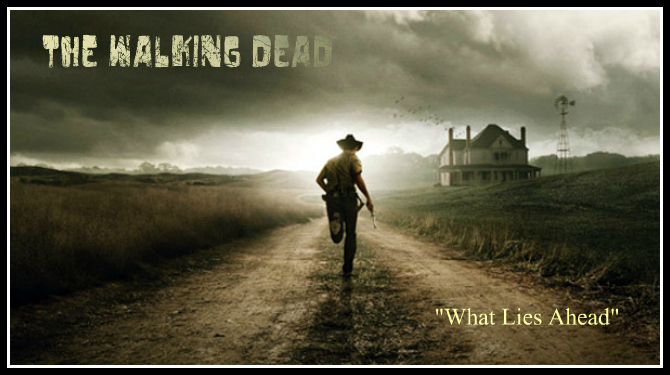
Review: The Walking Dead S2E1 “What Lies Ahead”


“It’s all about slim chances now.” – Rick Grimes

The first season of AMC’s The Walking Dead was a runaway hit for the network. Despite the inaugural season being a a truncated 6-episode long one the series gained a huge following that included long-time fans of the Robert Kirkman long-running zombie comic book series, but also new ones. The Walking Dead would have it’s showrunner and tv series creator Frank Darabont to thank for bringing it to a wider audience which is why this second season premiere brings with it a sense of bittersweet to the proceedings. This past summer saw Darabont fired from the very show he had helped create due to creative and financial differences with the show’s parent network in AMC.

Does this mean the show will suffer as it moves forward without it’s leader at the helm? If the premiere episode of season two is any clue then the show has hit the ground running and doesn’t seem to be in a hurry to stop to mourn the firing of it’s leader.

“What Lies Ahead” begins with the survivors soon after their narrow escape from the destruction of the CDC in Atlanta. The group’s number is now one less and any chances of a cure to what has caused the zombie apocalypse and a hopeful future seems slim at best and a hopeless exercise in futility at it’s worst. Rick (Andrew Lincoln) continues to be the group’s de facto leader which seems to wear on him now that he doesn’t just have his wife and son to think about but others as well. The episode does show that Rick’s acceptance of leadership in the group might be more out of necessity and less about him wanting to lead. No one, from his partner Shane (Jon Bernthal) to the wise, old Dale (Jeffrey DeMunn) seem to want the job and everyone seems willing to blame Rick for every instance of danger the group finds itself in.

Just like the pilot episode of the first season this new season doesn’t skimp on the tension. Frank Darabont wrote this first episode and his handling of the group’s first encounter with a moving “herd” of zombies show’s that he hasn’t lost the ability to create tension and just build it past the point of unbearable. This entire sequence with the group hiding beneath abandoned cars on the interstate with countless zombies walking past just inches away has to be one of the signature scenes of this season and more than a match for Rick’s solitary walk through the empty hospital in the pilot episode.

The bulk of the episode doesn’t come down too much from the tension and dread built up during this “herd” scene. It continues to keep the tension level at a fever pitch as the group must now search for one of their own who has gone missing during the “herd” march. The tension doesn’t just come from the situation Rick and the group find themselves in, but from the cracks and fractures that has begun to appear within the collective group. It’s these fractures which becomes the impetus for some character building that the first season rarely seem to have time for.

We still see repercussions from decisions made in the last season continue to make itself known. Whether it’s Shane wallowing in self-pity for losing what he thought was a ready-made family he had created for himself once Rick reappeared right up to Andrea’s bitterness towards Dale for having saved her from her choice to commit suicide in the last episode of the first season. It’s through the interaction between some of the factions being created through these particular characters that we begin to see the stress of this new world beginning to wear on them. Not to mention how they all seem to blame Rick for the situation they find themselves in. Which made it a suprising turn of events when was left to Lori to defend her husband and put everyone in their place. Her little speech near the end of the episode went a long way in establishing her character as one who sought redemption not in self-pity but in supporting the one person she understand to be the most qualified to see them through alive.

The episode wasn’t all positive. What hampered the first season was still quite evident in this season two premiere. While most of the writing was much improved from the first season there was still some parts in the episode when the dialogue seemed forced and not something which came about organically. It’s a testament to the performances by the whole cast that most people watching the show wouldn’t notice it much. Some stand out performances has to be the husband and wife team of Andrew Lincoln and Sarah Wayne Callies. Then there’s Norman Reedus as Daryl who continues to grow as a character beyond the typical redneck many thought him to be during the first season. With Reedus’s portrayal of Daryl one could see that he might not agree with some of Rick’s moral choices and decisions but he respects the man for actually making a decision instead of being wishy-washy. Daryl knows and understand, just as Lori does, that Rick is their best chance at surviving.

“What Lies Ahead” is a great start to a new season of The Walking Dead. While the firing of Darabont as showrunner from the show (replaced by a more than qualified Glen Mazzara) does hang like a dark cloud over the premiere that still shouldn’t detract from this episode’s quality. It’s an episode that really doesn’t dwell on allowing the rest of the world to catch it’s breath from start to finish while at the same time still allowing for characters to grow. This episode even ends in a cliffhanger that should be quite familiar for fans of the comic book, but should be quite a shock to the system for those who haven’t read a page of Kirkman’s comic.

Rick said in the beginning of the episode, after seeing the destruction of the CDC and getting the news that there’s really no more way to turn back the clock on this apocalypse, that it was all about “slim chances” now and from what this episode showed even slim might be too hopeful a word. These are people living on borrowed time and one can say that they’re already the walking dead. Time to see if Rick’s word’s will be rewarded with safety and salvation or just new levels of hell they must navigate through.

Notes

  • Chandler Riggs as Carl looks to be getting more and more comfortable in the role. His line delivery don’t seem as flat as they were in the first season.
  • Steven Yeun didn’t get as much time on the screen, but his gleeful reaction at being handed one of the bladed weapons was priceless. Like a kid in a candy store.
  • I noticed that while Frank Darabont wrote this episode the name shown during the beginning of the film was the name Ardeth Bay. For genre geek fans that name should sound familiar. It was a nice touch and better than just using the usual Alan Smithee.
  • We see more clues as to zombie behavior in this episode as Daryl once again proves that the stink of the dead bodies will hide living humans from zombies as he drapes corpses over himself and T-Dog during the “herd” march.
  • Love the line reading by Norman Reedus as his Daryl looks up at the large crucifix in the abandoned chapel and says “Hey J.C….taking requests”.
  • Gore content in this episode still continues the series trademark of being quite high for a network tv series. I’m still surprised at how much the show has gotten away with. Tonight’s signature gore scene has to be the impromptu zombie autopsy and trying to find out if their missing group member is in its stomach.
  • This episode deviated very much from the comic book, but when it mattered most it used one of the early shockers in the comic book series to end the episode on a huge note.

Horror Review: Dead City (by Joe McKinney)


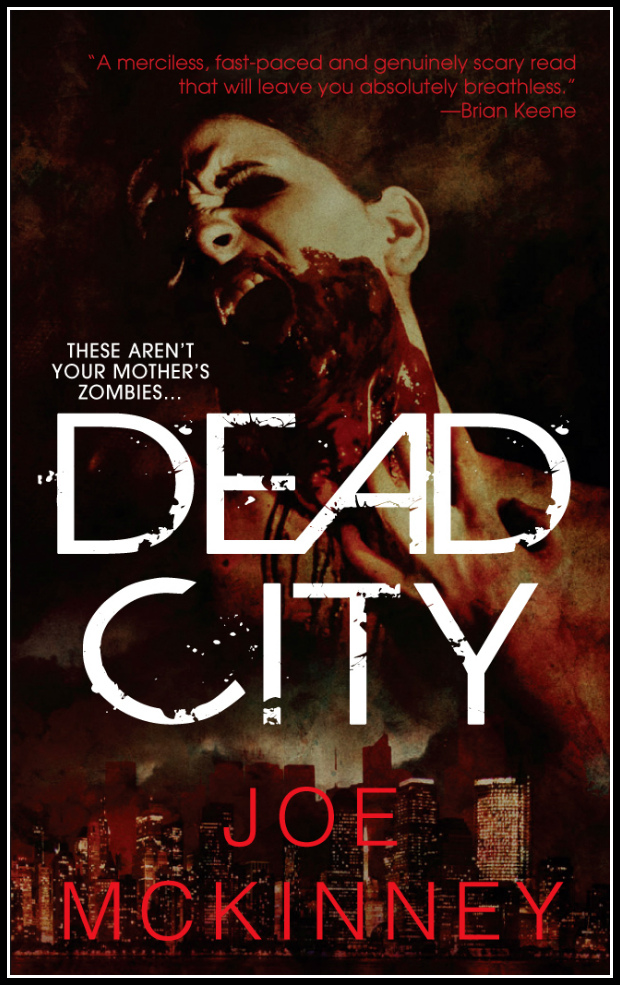
Joe McKinney’s debut novel, Dead City, is quite an impressive piece of writing for a first-timer. It’s doubly impressive for taking the zombie tale and just making it unfold as one long nightmare with little or no prelude or wasted exposition about what led up to it. McKinney’s novel is not overlong or full of filler chapters that does nothing but try to extend the telling of the tale far longer than necessary.

Dead City is not too different from many of the zombie novels and stories that continues to see a renaissance of sorts these past couple years. McKinney takes a more novel approach in his setting by using the hurricane disasters which plagued the Gulf from Katrina and onwards. It is during the aftermath of a series of non-stop super hurricanes hitting the Texas Gulf Coast where we meet the main protagonist of this novel. Eddie Hudson is a police officer in the San Antonio Police Department who we see balancing the problems he’s having with his wife with that of the devastation left by the passing of the major hurricanes over San Antonio. The action and horror begins pretty quickly as Hudson and his partner for the night head off to a disturbance call in one of San Antonio’s neighborhoods. What they encounter at the scene is one they’ve not been trained for. Confusion and lack of relevant knowledge to combat the newly zombified citizens of San Antonio leads to disaster for Hudson and the rest of his police and emergency services brothers.

McKinney does a great job of showing the confusion and disbelief Hudson goes through as a real-life horror film comes to life in front of his very eyes. There’s the disbelief in seeing their attackers continue to move towards him and his partner with a focused determination despite being pepper sprayed at point-blank range, then hit by shotgun beanbags then to lethal gunshots to the body. It is only when shot cleanly through the head and thus destroying the brain do their crazed assailants finally stop for good. This revelation comes way too late from most of Hudson’s fellow police officers and he’s left to his own dwindling supplies of ammunition and a vow to get to his own family before the nightmare he’s seen reaches them. Along the way Hudson meets up with other survivors from undocumented workers, a high school teacher and amateur zombie researcher, to other fellow officers who have managed to survive the first few hours of the zombie outbreak.

Throughout Hudson’s attempts to get to his wife and six month-old son, more of the extent of the zombie outbreak makes itself know to Ernie and those who tags along with him as they travel the streets of a devastated San Antonio. McKinney gets high marks from this fan of the zombie genre for not shying away from describing the sort of damage these zombies can do to a human body. The gore quotient in Dead City is quite high and I think one that would satisfy any fan like myself. In fact, I will very much like to see how this novel will look like adapted into a film. The story is pretty simple and a horror road trip through a devastated city with the simple goal of a man trying to find his family amongst all the horror he has seen and still to see.

Dead City is by no means a perfect novel and at times it shows. Characters sometimes have a certain cookie-cutout feel to them. From the gung-ho and adrenaline junkie cop whose wisecracking attitude is suppose to balance out the near-desperation and panic Hudson seems to be in all the time. Then there’s the angry black man whose mistrust of the police makes him blind to the need for cooperation. Some characters seem to be there looking to become a major role in the making then quickly gone thirty pages later under the assault and tearing hands and teeth of the zombies. I think the size and length of the novel may be one reason why characterization on some of the people on the periphery got a bit shortchanged. It doesn’t bring down the overall quality of the story but it does show that this is indeed a debut novel. But with the amount of quality storytelling McKinney was able to put together I am more than confident that this writing style will improve with each successive book.

In the end, Joe McKinney’s Dead City is one roller-coaster ride of a debut horror novel which doesn’t pull its punches. The story never lets up for a moment to give our main protagonist a moment of respite from the dangers around him. Like Officer Ernie Hudson, the reader becomes bombarded with horrific images after horrific images and only until the end to we find the respite and time to relax. I hope McKinney has more tales of the undead ahead of him and that he shares it with those likeminded people who displa the same kind of interest in the black sheep of the monster genre. I very much recommend Dead City to those who enjoy a very good zombie yarn.

Horror Review: 28 Days Later (dir. by Danny Boyle)


For decades, the zombie film genre has been defined by the rules established by the grandfather of the modern zombie story, George A. Romero. His 1968 landmark horror film Night of the Living Dead transformed what had once been a gothic creature rooted in the voodoo folklore of Haiti and the Caribbean into an apocalyptic force symbolizing social collapse and human weakness. The film not only terrified audiences but also laid the foundational blueprint for every zombie movie that followed. Romero’s zombies weren’t merely monsters — they were a reflection of humanity’s fears, prejudices, and inner decay. His influence has remained so pervasive that, even today, filmmakers working in horror are inevitably responding to his legacy, whether they realize it or not.

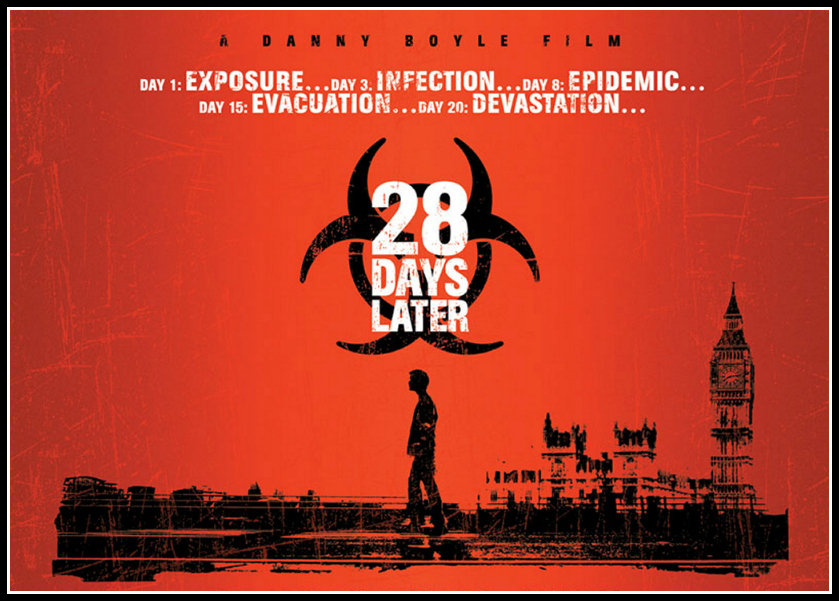
Through the years, there have been numerous attempts to deviate from Romero’s formula. The most prominent early success came in the 1980s with the Return of the Living Dead series — a clever horror-comedy franchise that infused dark humor and punk aesthetics into the genre. Yet even that beloved cult entry eventually lost steam. True reinvention did not arrive until 2002, when British filmmaker Danny Boyle and screenwriter Alex Garland collaborated on 28 Days Later, a project that both revitalized the zombie genre and split its devoted fan base down the middle. Was it truly a “zombie” film, or something else entirely? That very debate remains unresolved more than twenty years later.

Boyle’s film begins not with a supernatural curse or the reanimation of the dead, but with a catastrophic act of human arrogance. A group of naïve animal-rights activists break into a research laboratory to rescue chimpanzees subjected to bureaucratic cruelty. However, they find that these animals have been injected with a rage-inducing virus — the product of bioengineering rather than black magic. One of the activists, horrified by what she witnesses, ignores the pleas of a desperate scientist and frees a chimp, unleashing a pandemic that will decimate Britain within weeks. This opening sequence is both economical and horrifying: the origins of the apocalypse come from compassion twisted into recklessness. Boyle establishes his tone immediately — quick editing, grainy digital video, and an oppressive sense of realism create a world that feels disturbingly possible.

The narrative then leaps forward twenty-eight days. In a now-iconic sequence, the protagonist Jim (played by Cillian Murphy) awakens from a coma in an abandoned London hospital. His disorientation mirrors that of the audience: sterile hallways littered with trash, flickering lights, a haunting silence broken only by the hum of wind through the empty city. When Jim emerges into the sunlight, the camera captures a London entirely devoid of people, its majestic landmarks standing as hollow monuments to civilization’s sudden collapse. This is one of cinema’s most unforgettable depictions of isolation. The haunting score by John Murphy and the use of Godspeed You! Black Emperor’s instrumental “East Hastings” heighten the apocalyptic stillness, transforming London into a ghost metropolis.

Jim’s bewilderment only deepens when he seeks refuge in a church — a setting traditionally associated with salvation — only to find it desecrated by carnage. His presence awakens a horde of infected individuals who charge at him with terrifying speed. Unlike Romero’s slow, lumbering undead, Boyle’s infected are human beings transformed by a virus that amplifies their aggression to animalistic extremes. They move like predators, sprinting at prey with berserk fury. Jim narrowly escapes thanks to two survivors, Selena (Naomie Harris) and Mark (Noah Huntley), who introduce him to the brutal new rules of existence: infection spreads through blood contact, turning victims within seconds, and hesitation means death.

The trio’s uneasy alliance soon crumbles after Mark becomes infected, forcing Selena to kill him without hesitation. This harrowing moment establishes her as one of the film’s strongest and most pragmatic characters — a refreshing departure from the damsel archetype that has long haunted horror cinema. Jim and Selena later encounter Frank (Brendan Gleeson), a good-natured taxi driver, and his teenage daughter Hannah (Megan Burns), who have been surviving in a fortified apartment building. Together they form a fragile surrogate family and travel in search of a military broadcast promising safety and a potential cure.

Boyle deftly blends moments of human warmth amid horror. Scenes like the group’s scavenging trip through an abandoned grocery store — a darkly comic echo of Dawn of the Dead’s consumer satire — offer glimpses of joy and normalcy. The countryside sequences, shot with a painterly eye, contrast the urban decay of London with the serene beauty of a world reclaiming itself from human control. Nature, the film quietly suggests, endures long after people have vanished.

Their journey leads them to a fortified mansion commanded by Major Henry West (Christopher Eccleston), a British officer whose soldiers claim to have “the answer to infection.” The supposed sanctuary quickly reveals a darker truth. West’s band of men have descended into moral depravity, promising their commander that the promise of “women” will restore morale. The film shifts from survival horror to psychological thriller as the real threat emerges — not the infected outside, but the monstrousness within human beings when order collapses. In this descent into militaristic patriarchy and madness, Boyle channels the spirit of Romero’s Day of the Dead, where the military’s illusion of control becomes the true source of terror.

Boyle and Garland’s reinvention of the zombie mythos was revolutionary. Longtime fans of Romero’s shambling undead initially resisted the notion that 28 Days Later even qualified as a zombie movie. After all, its creatures weren’t reanimated corpses but living people overtaken by an uncontrollable virus. Yet their function within the story — relentless, dehumanized embodiments of contagion and rage — served the same thematic role as zombies always had: mirrors for society’s breakdown. The debate over whether the infected “count” as zombies is less important than the fact that Boyle redefined the genre’s emotional and kinetic language. His infected didn’t just pursue victims; they hunted them. Their blistering speed and screams injected pure chaos into what had once been slow, creeping dread.

The technical and artistic choices heightened the film’s intensity. Shot largely on digital video with handheld cameras, 28 Days Later looked raw and immediate, more like found footage than polished fiction. This realism bridged the gap between old-school horror and the new century’s fixation on viral outbreaks and global instability. Coming in the post-9/11 era, its images of deserted cities and military lockdowns felt eerily prescient, foreshadowing later fears of pandemics and authoritarian control.

The performances ground the film emotionally. Cillian Murphy’s portrayal of Jim evolves from bewildered innocence to hardened survivor, serving as the audience’s emotional compass. Naomie Harris delivers one of the genre’s most capable female performances, blending vulnerability with ferocity. Brendan Gleeson, always magnetic, brings compassion and tragedy to Frank — a man whose paternal instincts ultimately lead to heartbreak. Christopher Eccleston’s Major West stands as a chilling embodiment of human corruption in crisis: the soldier who insists he is saving civilization while replicating its worst impulses.

Despite being produced on a modest budget of roughly eight million dollars, Boyle’s film achieved a scale and impact far greater than its resources suggested. The empty London shots — achieved by closing key streets at dawn for only minutes at a time — remain astonishing feats of logistical precision and cinematic audacity. More importantly, the film’s minimalist production enhanced its believability. Everything about 28 Days Later feels lived-in, grimy, and plausible.

Two decades on, 28 Days Later continues to stand as one of the most influential horror films of the 21st century. Its success reinvigorated a genre that had grown stale and inspired a wave of imitators across film, television, and video games, from Zack Snyder’s Dawn of the Dead remake to AMC’s The Walking Dead. Beyond its cultural impact, it remains a haunting meditation on rage — personal, societal, and political. Boyle and Garland transformed horror into a canvas for existential dread, exploring how quickly civility unravels when survival becomes the only law.

Whether one calls it a zombie film or not hardly matters anymore. 28 Days Later breathed new life into the undead myth, shattering old rules and redefining what modern horror could be. The debate it sparked continues, but one truth is undeniable: the genre has never been the same since Jim first walked through that silent, ruined London — a world devoured not by the dead, but by the terrifying rage of the living.

Film Review: The Prophecy (dir. by Gregory Widen)


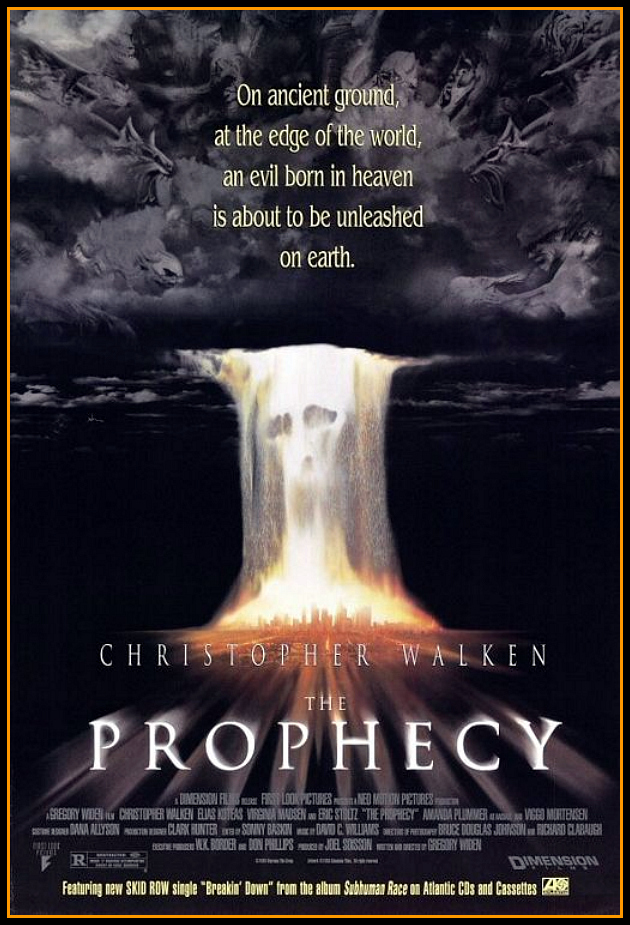
I first found out about this little cult film starring the very awesome Christopher Walken around 1993 or so when I was at the local Waldenbooks (yes there used to be bookstores not named Barnes & Noble or Borders back in the day) looking at the latest issue of Fangoria. Inside the magazine they were doing a brief feature on an upcoming horror film tentatively called God’s Army. All I saw was that it was to star Christopher Walken and it had gore and angels in it. That alone peaked my interest and I was looking forward to seeing it in the theaters. Almost two years passed and nothing about it was ever heard again until I visited the video rental place near my house and saw a VHS tape (yeah, those big videocassette thingies) with the title of The Prophecy and starring Christopher Walken.

This was the film I was so hyped to seeing in the theaters. The title had changed from it’s earlier (and much cooler) one of God’s Army. It would seem that it’s film distributor had little to no faith in the box-office potential of the film and just delayed it’s release to the point that when it did come out no one knew about it barely anyone saw it. It was a real damn shame since filmmaker Gregory Widen made such a good film that was able to mash-up horror, angels and a detective story all in one without creating a mess of things.

The Prophecy was about the war in heaven we were never taught about in Sunday school. We all know about the war in heaven where Lucifer and the rebel angels who followed him tried to overthrow God. That didn’t go over so well for Lucifer and he and his band of fallen angels were cast out into Hell by God and his right-hand man the Archangel Michael. This film talks about the second war in heaven soon thereafter which no one outside those who wrote little-known apocryphal texts about it (and being apocryphal they never were included in the Bible). This war now had a new group of angels led by the Archangel Gabriel rebelling against God for choosing humans (talking monkeys as these new rebels called them) above all living creatures including the angels themselves for God’s love. This war was now in a state of stalemate after countless millenia, but a prophecy about a soul so dark and evil was to be the tipping point for either side. This particular soul was to be found on Earth and whoever acquires it would break the stalemate and finally bring this second war to an end.

With this in mind we have Walken as the Archangel Gabriel coming down to Earth to look for this soul so he can finally win the war for his side (which also means the end of mankind). It’s the angel Simon (played by Eric Stoltz) who comes down to stop him from getting this soul or, at the very least, hide it from Gabriel. With these two factions of angels vying to acquire this soul we have a Detective Thomas Daggett smack in the middle of the case investigating all the weird happenings and deaths surrounding the battle between these two factions. The dead bodies of angels begin to appear on morgue slabs looking like eyeless, hermaphroditic specimens and angelic script found in crime scenes brings Daggett back to his time studying to be a priest before images of angels warring amongst themselves breaks him down and he quits the seminary to become a cop instead.

It would come down to these three factions racing against time to acquire this dark soul.

The film is not as gory as it’s feature in Fangoria made it out to be, but it is quite violent and bloody that I understand why it got the horror label attached to it. It’s more a dark fantasy thriller more than horror. It’s rare in today’s film that we see angels portrayed as the bloodthirsty beings that the really are. The film even points out this oft-ignored detail of God’s messengers. Angels are always the ones God sends to punish or send a very serious message to his chosen beings that is Man. The Prophecy shows this aspect of angels in full light and how their attitudes about humanity might lead some of them to hate God for raising Man above even them.

Christopher Walker does a great job conveying Gabriel’s hate and contempt for humans. His Gabriel is like one of those pundits always on tv (both liberal and consevative) who are so into their sides’ message that they never see the other side as anything but the enemy. One could almost say that Walken’s Gabriel is like then apocalypse-hungry version of Glenn Beck and Keith Olbermann in one body. This is not to say that Walken goes over-the-top with his performance. In fact, he’s quite subdued in how he uses those many tics and voice mannerisms a whole cottage industry has grown around in.

Walken’s portrayal of Gabriel infuses what could’ve become a one-note villain with lots of layers and complexities that the rest of the cast were able to play off from. His character would be terrifying one moment then smoothly switch over to being funny and charming then back to terror. It’s due to his great performance that the other cast members like Stoltz as the weary, loyal angel Simon and Koteas as the fallen religious cop Daggett were able to bring their own performance to another level. This is quite a feat since the dialogue in the film was a mixed bag of horror cliches and interesting Biblical-speak about secret wars, apocryphal books and prophecies. The film even has a nice appearance of the first fallen angel himself and none other than Viggo Mortensen plays Lucifer.

The Prophecy does have a feeling that it was always one misstep away from becoming an awful film. This had happened with 2010’s Legion and did that film about angels and the apocalypse turn out to be a huge steaming pile of shit-turd. But while Dimension Film saw the film fall over on the side of bad for myself and those who have come to admire and love this cult classic the film stayed balance between good and bad. Widen’s film never went over to the side of becoming a truly great film, but it also never fell on the side that Legion ended up on. What Prophecy ended up becoming was a film that was almost grindhouse in nature, but even then it still looked too good with too many good performances to be given that label. The fact that it contains one of Christopher Walken’s best performances speaks well of a film that many critics during it’s early days had dismissed as just another bad horror film.

In the end, this film became just one of the many little-gems that got lost in film studio money politics. I definitely would recommend this cult film to people who haven’t seen it, but I would tell them to stop at just this film and not even go near the four sequels which came after it.

Stephen King’s The Stand to Trip Up Onto the Big-Screen


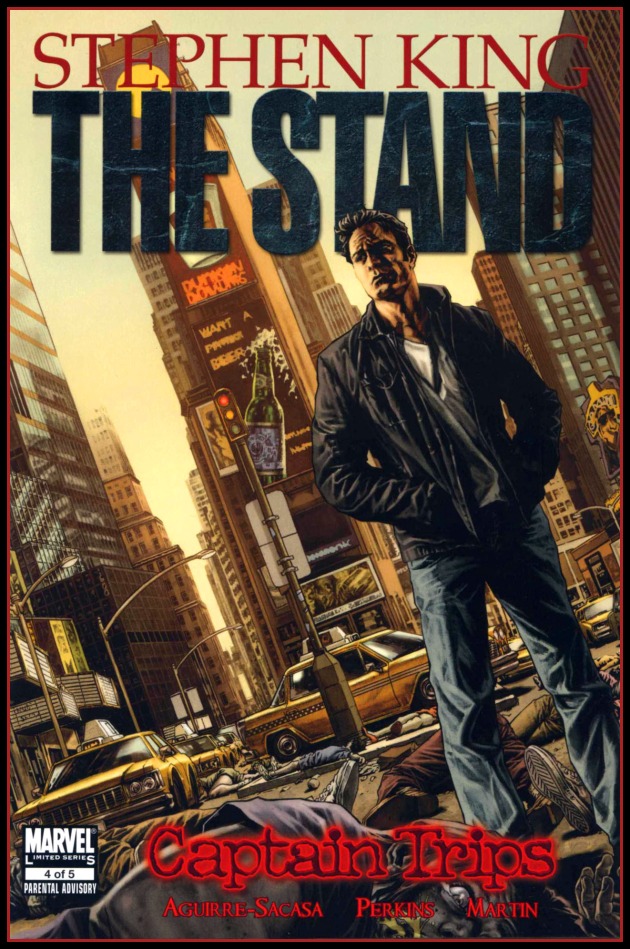
Stephen King properties sure has been heating up around Hollywood of late. For the past month or so we’ve had almost weekly news about Ron Howard’s plans for King’s massive book series, The Dark Tower. Today news that the role of Roland Deschain, the Gunslinger, has been offered to Spanish-actor Javier Bardem shows that the planned film adaptation of The Dark Tower is moving forward.

Now, according to The Hollywood Reporter blog Heat Vision, Warner Brothers and CBS Films are planning to co-produce the film adaptation of another Stephen King property and one many of his fans consider as their favorite. I consider myself one of those fans and I’m actually quite excited that these two studios are looking to adapt the epic, apocalyptic novel The Stand.

The novel already was adapted into a mini-series by Mick Garris in 1994, but that adaptation didn’t satisfy the book’s fans as its producers were hoping for. This planned film adaptation looks to give The Stand a grand stage to be shown to its old and new fans. While trying to adapt a novel that is over 1200 pages long might seem daunting the same was said about trying to adapt a novel that was three times it’s length and that one succeeded beyond anyone’s expectations. If Peter Jackson can take The Lord of the Rings and create an epic masterpiece out of such a dense piece of literature I think King’s The Stand should make just as good a transition.

Here’s to hoping that this particular apocalyptic project gets on the fast track and doesn’t get bogged down in development hell the way another apocalypse-themed film project has found itself in: Max Brook’s zombie epic novel, World War Z.

Source: The Hollywood Reporter

Song of the Day: The Man Comes Around (by Johnny Cash)


We’ve now reached the final day of what has been a week-long horror-themed “Song of the Day” feature for the site. It’s quite appropriate that this final day also lands on Halloween and I’m sure many will approve of this final choice to cap off the week.

A week which has seen Italian film composers and prog-rock bands chosen for creating and contributing some of the best and most memorable themes to horror films which will stand the march of time. We’ve seen an epic song from a Montreal band whose music has the apocalyptic sound to it. There’s also two entries from films created by a master of the horror genre in John Carpenter.

The week began with Goblin’s main title theme for George A. Romero’s original Dawn of the Dead. With Halloween night the premiere of the long-awaited and heavily-hyped tv adaptation of Robert Kirkman’s The Walking Dead comic book series (by none other than Frank Darabont himself) I thought what better way to bookend Goblin’s theme for the Romero zombie epic than by picking Johnny Cash’s song “The Man Comes Around”. One of the last songs penned and sang by The Man In Black himself and properly used by filmmaker Zack Snyder to  be the intro music for his remake of Dawn of the Dead.

This song with its gospel-like (though not as hopeful as most) sound and it’s apocalyptic and Biblical lyrics just speaks of the apocalypse like no other song from this past week has done. It comes off almost like a prophecy come down and spoken by one of God’s main dudes. This song when paired with the scenes of the zombie apocalypse crashing down on an unsuspecting world in Snyder’s film instantly made it a favorite with all zombie fans everywhere and introduced The Man In Black to a whole new set of fans.

I would like to think that when the zombie apocalypse does arrive it would be to this song as I and those who share my belief in how to survive such an event ready ourselves for whatever may come.

The Man Comes Around

And I heard as it were the noise of thunder
One of the four beasts saying come and see and I saw
And behold a white horse

There’s a man going around taking names
And he decides who to free and who to blame
Everybody won’t be treated all the same
There’ll be a golden ladder reaching down
When the Man comes around

The hairs on your arm will stand up
At the terror in each sip and in each sup
Will you partake of that last offered cup?
Or disappear into the potter’s ground
When the Man comes around

Hear the trumpets, hear the pipers
One hundred million angels singing
Multitudes are marching to the big kettledrum
Voices calling, voices crying
Some are born and some are dying
It’s Alpha and Omega’s kingdom come

And the whirlwind is in the thorn tree
The virgins are all trimming their wicks
The whirlwind is in the thorn tree
It’s hard for thee to kick against the pricks

Till Armageddon no shalam, no shalom
Then the father hen will call his chickens home
The wise man will bow down before the throne
And at His feet they’ll cast their golden crowns
When the Man comes around

Whoever is unjust let him be unjust still
Whoever is righteous let him be righteous still
Whoever is filthy let him be filthy still
Listen to the words long written down
When the Man comes around

Hear the trumpets, hear the pipers
One hundred million angels singing
Multitudes are marching to the big kettledrum
Voices calling and voices crying
Some are born and some are dying
It’s Alpha and Omega’s kingdom come

And the whirlwind is in the thorn tree
The virgins are all trimming their wicks
The whirlwind is in the thorn tree
It’s hard for thee to kick against the pricks

In measured hundredweight and penneypound
When the Man comes around.

Close (Spoken part)
And I heard a voice in the midst of the four beasts
And I looked and behold, a pale horse
And his name that sat on him was Death
And Hell followed with him.