Retro Television Review: Crime Story 1.1 “Pilot”


Welcome to Retro Television Reviews, a feature where we review some of our favorite and least favorite shows of the past!  On Mondays, I will be reviewing Crime Story, which ran on NBC from 1986 to 1988.  The entire show can be found on Tubi!
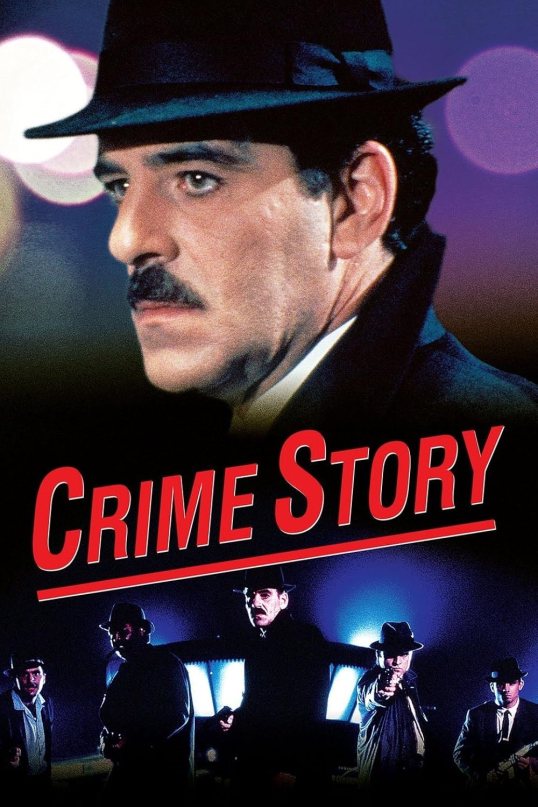
In 1986, riding high on the success of Miami Vice, Michael Mann signed on as executive producer of Crime Story, a cop show that Mann imagined would run for five seasons and which would follow a group of cops and gangsters from 1960s Chicago to 1980s Las Vegas.  The show was co-created by former Chicago cop Chuck Adamson and it starred another former Chicago cop, Dennis Farina.

Though generally well-received by critics, Crime Story struggled in the ratings.  The show’s highly serialized-nature made it difficult for audiences to follow.  (This was in the pre-streaming age, when viewers couldn’t just get online and catch up with what they may have missed.)  Crime Story only lasted for two seasons but it has since developed a strong cult following and is now regularly listed as one of the best cop shows ever made.

I’m going to find out if that’s true over the next few months.  Two weeks ago, I finished up Miami Vice.  Now, it’s time for Crime Story.

Episode 1.1 “Pilot”

(Dir by Abel Ferrara, originally aired on September 18th, 1986)

In Chicago, on a rainy night in the early 1960s, a group of masked robbers hold up a fancy restaurant and then try to escape with a group of terrified hostages.  On the scene is the Major Crimes Unit, led by the grim Lt. Torello (Dennis Farina, a former real-life cop).  The end result is that all of the robbers end up dead, the hostages end up traumatized, and one of Torello’s men, the obviously doomed Wes Connelly (William Russ), appears to be losing his mind over the violence that he has to deal with every day.

The plot of the pilot is actually pretty simple.  A gang of thieves is holding up restaurants, banks, and stores in Chicago.  Torello believes that an ambitious gangster named Ray Luca (Tony Denison) is behind the robberies and Torello is correct.  The cool and sociopathic Ray is working with Johnny O’Donnel (David Caruso).  O’Donnel may be a childhood friend of Luca’s but his parents are friends with Torello.  When gangster Phil Bartoli (Jon Polito) orders Luca to kill O’Donnel after the latter robs one of Bartoli’s jewelry stores, it’s personal all-around.

Plot-wise, it’s pure Michael Mann.  The cops and the gangsters are both obsessive.  Luca will kill anyone to get ahead in the underworld.  Oddly, his only real loyalty seems to be to his dumbest henchman, Pauli Taglia (John Santucci, a real-life former jewel thief who was once arrested by Dennis Farina).  Torello may be fighting on the side of the law but he’s often just as quick to resort to violence as Luca.  Director Abel Ferrara’s style can be seen in a scene where Torello is visited by the ghost of the recently murdered Wes Connelly.  Torello is burned out and paranoid, flying into a rage when he sees his wife, Julie (Darlanne Fluegel), dancing with another man at a wedding.  (The man in question turns out to be Torello’s cousin, whom Torello didn’t even recognize because he apparently doesn’t have much of a connection to anyone outside of the police force.)  Towards the end of the episode, there’s a shoot-out in a department store and it’s hard not to notice that neither the crooks nor the cops seem to be all that concerned with the innocent bystanders trying to not get caught in the crossfire.

The pilot is dark, gritty, and, in its way, as stylized as any episode of Miami Vice.  It never seems to stop raining and, even during the day, the skies are permanently gray and dark.  The early 60s are recreated like a fever dream of pop culture, with rock and roll on the soundtrack, cars with tail fins screeching down the street, and Bartoli living in a house that looks more like a tacky diner then a true home.  Torello and his men wear their dark suits and trenchcoats the way that soldiers wear their uniforms.

It’s an effective pilot, though we don’t really get to know much about the men working with Torello at the Major Crimes Unit.  Bill Smitrovich, in the role Detective Danny Krycheck, establishes himself as being Torello’s second-in-command but that’s about it.  Stephen Lang appears in a handful of scenes as David Abrams, a liberal public defender who is the son of a prominent gangster.  Both Luca and Torello seem to want to make David into an alley and the episode hints that he will eventually have to make a choice.  The episode ends with Luca in sunny Florida, meeting with veteran gangster Manny Weisbord (Joseph Wiseman).  Torello, meanwhile, remains in dark Chicago.

The Crime Story pilot was deemed good enough to be released as a feature film in Europe.  It also led to a series on NBC, which I will be reviewing here, every Monday!  On the basis of the pilot, I’m looking forward to it.

Review: Hellfire (dir. by Isaac Florentine)


“What you started here today? About to get a whole lot worse.” — Nomada

Hellfire is the kind of mid-budget, throwback action-thriller that knows exactly which bar it’s aiming for—and then mostly clears it with room to spare. Set in 1988 and built around a classic “mysterious drifter wanders into a rotten town” premise, it leans hard into familiar tropes but finds some personality in its cast, pacing, and sense of place. It’s not a game-changer for the genre, but if you’re in the mood for a lean, old-school small-town showdown, it gets the job done more often than not.

The setup is comfort food for action fans. A nameless drifter, played by Stephen Lang, rolls into the dying Southern town of Rondo, where the locals are quietly suffocating under the control of drug boss Jeremiah Whitfield, a politician-connected crime lord who pretty much owns the place. The bar owner Owen gives the drifter some work and a meal, the sheriff shows up to strongly suggest he move along, and you can basically feel the town holding its breath, waiting for somebody—anybody—to push back. That somebody, obviously, is this guy, who’s soon nicknamed Nomada and revealed to be an ex–Green Beret with a messy past and a higher capacity for violence than his weathered demeanor suggests. The story is straightforward to the point of being telegraphed, but that simplicity is part of its appeal; you always know what lane Hellfire is driving in.

Performance-wise, the movie’s biggest asset is Lang. At this point, watching him settle into the “old guy you really shouldn’t mess with” archetype is half the fun, and Hellfire plays that card well. He doesn’t oversell the trauma angle, but the film gives him just enough flashbacks and quiet beats—like those bath-time war memories—to suggest a guy who’s been stuck in fight mode for decades and doesn’t know what to do with peace. His physicality is still convincing, and director Isaac Florentine is smart about staging the action around what Lang does well, letting him move with purpose instead of pretending he’s 30 years younger. He’s not reinventing the “wandering warrior” type, but he grounds Nomada enough that you buy people trusting him even when they’re terrified. There’s a warmth under the stubble and scars that gives the character a little more dimension than the script strictly requires.

The supporting cast is a mixed bag, but the core players are solid. Harvey Keitel’s Jeremiah Whitfield is exactly the kind of villain you expect in this setup: soft-spoken, smug, and insulated by money and enforcers. He doesn’t get a ton of screen time, but there’s something appropriately gross about how casual he is with other people’s lives, like he’s already factored their suffering into his monthly budget. Dolph Lundgren shows up as the corrupt sheriff Wiley, playing the heavy who’s technically the law but functionally just another thug with a badge. Lundgren brings some weary menace to the role, and there’s a nice little tension in how much he’s genuinely bought into Jeremiah’s world versus how much he’s just too compromised to get out. Scottie Thompson’s Lena, Owen’s daughter, is the emotional anchor; she’s the one with something real to lose, and while the film doesn’t push her arc especially far, she’s likable enough that you care when things go sideways.

On the weaker end, Michael Sirow turns in a caricature performance as Spencer, the entitled and whiny son of Jeremiah, all sneers and petulance that feels like it stepped straight out of a ’80s cartoon villain playbook without any nuance to back it up. Similarly, Johnny Yong Bosch as enforcer Zeke sleepwalks through every scene that isn’t action, delivering a by-the-numbers performance for a character supposed to be the crime boss’ dangerous right-hand man; even in the fights, it’s rote and uninspired, missing the edge that could’ve made Zeke a real threat.

On the character side, Hellfire actually does a bit more groundwork than you might expect from what is essentially a B-movie revenge Western in modern dress. The early stretch spends time letting you feel the town’s exhaustion and fear—bars that are half-empty, people looking over their shoulders, everyone resigned to Jeremiah’s stranglehold. That world-building pays off once the violence kicks in, because it’s clear what’s at stake beyond simple body count or spectacle. The film also tries to deepen Nomada’s backstory, hinting at survivor’s guilt and a lingering sense that he’s been wandering from one moral debt to another, but it never quite connects those dots in a satisfying way. By the time the movie starts circling around for a full-circle emotional payoff, you can see what it’s going for, yet the groundwork feels a little thin, like pages were cut or ideas left half-developed.

Pacing-wise, Hellfire is tighter than its 95-ish-minute runtime might imply, and that’s mostly a compliment. The first half is surprisingly light on action, preferring to simmer instead of boil; you get a few scuffles and tense stand-offs, but Florentine holds back on the big fireworks. When things finally explode—hostages, ambushes, warehouses, the works—the film shifts into a mode that feels like controlled chaos, mixing gunfights, hand-to-hand scraps, and vehicle beats with a clarity that’s increasingly rare in this budget range. The trade-off is that the final act feels a bit rushed, like the movie suddenly remembered it had to tie off multiple arcs and body the main villains within a fairly strict time limit. The last stretch does what you expect it to do, including Jeremiah’s fiery fate, but it doesn’t linger long enough to fully earn the emotional weight it’s shooting for.

The action itself sits in that “serviceable to occasionally inspired” space. Florentine, coming from a background in stunt-heavy genre work, keeps things clean and legible; you always know who’s shooting at whom and from where. The shootouts can get cheesy—there’s a bit of that “nobody can hit anyone until the plot needs it” energy—but there are also flashes where staging and geography line up to deliver genuinely satisfying beats. A warehouse sequence where Nomada protects Lena while taking out multiple attackers is a standout, capturing both his tactical skill and the desperation of the situation. The film clearly favors quality over volume; genre die-hards who want wall-to-wall mayhem might wish for more set pieces, but the ones you get mostly land. If anything, some of the tonal shifts—bouncing from grim brutality to borderline goofy machismo—don’t always mesh perfectly, though that’s also kind of baked into the retro B-movie DNA.

Visually, Hellfire doesn’t reinvent the wheel, but it looks better than a lot of its DTV-adjacent peers. Shot in Arkansas and set in the late ’80s, it leans into dusty small-town Americana: sun-faded storefronts, weathered bars, lonely roads. Ross W. Clarkson’s cinematography keeps things grounded, with an emphasis on practical locations and natural light that makes the town feel like an actual lived-in place rather than a backlot abstraction. The period setting isn’t showy—you’re not constantly being smacked with nostalgia props—but it subtly shapes the world, especially in how isolated and cut-off Rondo feels without modern communication and surveillance everywhere. The score by Stephen Edwards does what it needs to do, nudging tension along without ever becoming a character in its own right.

Where the film stumbles is mostly in how predictable and occasionally clumsy it can be. You can see many of the beats coming from miles away: the town’s breaking point, the betrayals, who will die to motivate whom. There is one darker turn that genuinely catches you off guard, and it helps shake the movie out of its comfort zone for a bit, but the script overall is content to color inside the genre lines. Some dialogue leans on cliché, and a few supporting characters feel like they wandered in from a rougher first draft—the kind of broad sketches you’ve seen a dozen times before. It’s never bad enough to sink things, but it does cap how high Hellfire can climb; this is a movie that’s satisfied with solid rather than special.

Still, taken on its own terms, Hellfire works. It gives Stephen Lang a solid platform to do what he does best, surrounds him with a fun mix of seasoned character actors, and delivers enough muscular, clearly shot action to justify the ticket or rental. The town feels real enough that you actually care whether Nomada cleans it up, and the film respects the basics: clear stakes, likable underdogs, villains you’re happy to see go down in flames. If you go in expecting a tight, modest, R-rated throwback with a few rough edges and a couple of standout moments rather than a new genre benchmark, you’ll probably come away satisfied. It’s generic, sure—but it’s the kind of generic that remembers to give you characters to root for, action you can actually see, and just enough personality to make the ride worth taking.

Avatar: Fire and Ash Review (dir. by James Cameron)


 “The fire came from the mountain… Eywa did not come. So I went to the fire, and I learned its way” – Varang

Avatar: Fire and Ash plays like a massive, molten crescendo for Cameron’s Pandora saga—visually overwhelming, emotionally heavier than the last two entries, but also very familiar in ways that will either feel comfortingly mythic or a little déjà vu, depending on your tolerance for repetition. The ash-choked skies, lava rivers, and volcanic Na’vi clans are often more compelling than some of the story beats, and the final stretch delivers the kind of operatic, war-movie scale that makes the three-plus-hour runtime go down easier than it should, even though the film clearly didn’t need to run this long.

This time around, the series leaves behind the cool blues and oceanic calm of the previous chapter for a harsher, volcanic corner of Pandora that feels like a nature documentary shot in a furnace. Jagged black rock, roiling lava, and smoke-stained skies dominate the frame, with creatures and plant life that look as if they evolved to survive heat and ash rather than coral reefs and open water, giving the movie an immediately distinct visual identity even when the story rhythms feel familiar.

At the center of this environment are the Ash People, or Mangkwan clan, a Na’vi group shaped by relentless scarcity and violence. They ride creatures adapted to fire and ash instead of waves, cover themselves in soot-black markings, and fight using a deliberate blend of traditional Na’vi weaponry and repurposed human tech, putting them ideologically at odds not just with the human invaders, but with other Na’vi clans who still cling to older, more spiritual ways of living with Eywa.

The story picks up with Jake and Neytiri’s family still reeling from Neteyam’s death, and the film leans hard into unresolved grief as its emotional baseline. Jake doubles down on his protector persona, treating every decision as a matter of survival, while Neytiri’s pain expresses itself as barely controlled rage, and that emotional weather trickles down to their children, who are increasingly frustrated at being treated like liabilities. The problem is that a lot of this family dysfunction was already unpacked in the second film, so instead of evolving those arcs, the script often feels like it is rehashing earlier conflicts.

The dynamic between Jake and Lo’ak is the clearest example of this repetition. Jake’s exasperation with Lo’ak’s impulsive, run-toward-the-bullets mentality resurfaces again and again, echoing arguments audiences have already seen: the father insisting his son isn’t ready, the son bristling at never being trusted. These moments still have emotional sting, but they circle the same drain so often that entire conversations could have been trimmed or removed without sacrificing character depth, and tightening that thread alone would have shaved a noticeable chunk off the runtime.

Where the film becomes more thematically interesting is in how it reframes Pandora’s conflict. Instead of a simple “Na’vi versus humans” setup, it pits the more traditional Na’vi clans—those still committed to a symbiotic relationship with Eywa—against the Ash People, whose warlike nature and embrace of human weaponry make them ideological outliers. That split plays as a pointed echo of historical events in the Americas, where European colonial powers armed and favored specific Indigenous nations to fight their neighbors, turning native communities into proxies in conflicts that ultimately benefitted outsiders more than the people doing the actual bleeding.

The analogy becomes sharper in how human forces hang back and quietly exploit these new divisions. By giving the Ash People access to superior firepower and nudging them toward confrontation, the outsiders effectively inflame existing grievances and reshape local power dynamics, much like colonial regimes once did by supplying guns and promises to one group while framing another as the enemy. The result is a Pandora that feels more fractured and politically complex, where internal Na’vi conflict is as dangerous as external invasion.

Varang, the leader of the Ash People, is one of the film’s strongest assets. She’s portrayed as a true believer who has taken real suffering and twisted it into a doctrine of purifying destruction, convinced that burning the world is the only way to save it. The character blends zealotry and charisma in a way that makes her both frightening and compelling, and she wields faith, desire, and fear as weapons with unnerving ease, giving the movie a volatile energy whenever she’s on-screen.

Her alliance with Quaritch pushes the story into darker, more uncomfortable territory. What begins as a pragmatic arrangement—a trade of firepower and influence for help tracking Jake—evolves into a twisted, intimate partnership that underlines just how far both are willing to go to achieve their goals. Their connection is meant to feel toxic and predatory, and it succeeds on that front, though some viewers may find the intensity of those scenes off-putting compared with the relatively straightforward romance and family dynamics of earlier entries.

On a craft level, the film is almost absurdly polished. Even if it no longer feels like a quantum leap in visual effects, the execution is meticulous: volcanic vistas glow with molten light, ash storms swirl with tactile grit, and the interplay of fire, smoke, and bioluminescence gives many shots a painterly quality. The action sequences rely on clear geography and patient staging, so even when the screen is full of creatures, machines, and chaos, it remains surprisingly easy to track who is where and what’s at stake.

The final act is where the movie unleashes everything it has: parallel battles on land, in the air, and over volatile seas, stitched together into a long, escalating crescendo. Familiar James Cameron signatures return—heroic last-second saves, nature itself intervening, climaxes that mirror earlier films—but the pacing of these sequences is handled with enough control that they rarely collapse into pure noise. Still, you can’t help but feel that with a leaner, more disciplined buildup, that climax would have hit even harder.

Structurally, the story leans heavily on patterns that loyal viewers will recognize. There is yet another relocation to a new culture, another period of uneasy assimilation, another slow slide into open warfare, and another sacrificial, emotionally charged finale. Whether that comes across as mythic repetition or simple recycling depends on how patient you are with Cameron’s tendency to “rhyme” his narratives rather than reinvent them.

Most of the main character arcs feel like refinements rather than reinventions. Jake remains the guilt-ridden warrior father terrified of losing his children; Lo’ak edges closer to full-on protagonist status as the reckless but big-hearted son; Kiri’s mystical bond with Eywa deepens while remaining intentionally enigmatic; and Quaritch once again fills the role of relentless, personal antagonist. With the same father–son friction repeatedly dragged back into the spotlight, the emotional landscape can feel stuck in place, and a stricter editorial hand might have refocused attention on the fresher elements—like Varang and the Ash People’s worldview.

Tonally, the film pushes into darker territory while still staying within a mainstream rating. The battles feel more brutal, with a greater emphasis on the physical cost of arrows, explosions, and close-quarters fighting, and there’s a persistent sense that no one is truly safe. That harshness extends to the emotional side as well, as the Sully family finds itself cornered into choices where every option exacts a price, reinforcing the idea that survival in this version of Pandora demands constant compromise.

Thematically, Avatar: Fire and Ash weaves together ideas about faith, extremism, and the way trauma can be weaponized. The Ash People act as a distorted mirror of earlier Na’vi cultures: a society that has taken genuine pain and turned it into an excuse for cruelty, abandoning balance in favor of cleansing violence. Layered on top of that is the divide-and-rule dynamic, where more technologically advanced outsiders stoke internal conflicts for their own advantage, mirroring how colonial powers in the Americas encouraged Indigenous groups to fight one another while expanding their control and extracting resources.

Despite all the digital wizardry, the performances still manage to cut through. Jake and Neytiri’s scenes carry the weight of years of loss and sacrifice, and there’s a believable exhaustion in the way they argue and compromise. The younger characters, especially Lo’ak and Kiri, feel more rooted and central than they did before, which helps sell the gradual shift toward a new generation, even if the script keeps dragging them back through conflicts that feel like reruns instead of genuine evolution.

At the same time, the movie sometimes undercuts its best character work in its rush to reach the next big set piece. Quieter moments that might have deepened side characters or given the Ash People’s beliefs more nuance are often compressed or sidelined, while scenes rehashing Jake and Lo’ak’s issues are allowed to run long. If the film had trusted audiences to remember the family dysfunction carried over from the second installment and cut down on repeated arguments, those smaller, richer beats could have had more space—and the whole piece would likely feel tighter and more focused.

For viewers already invested in Pandora, Avatar: Fire and Ash is clearly built for the biggest screen available: the volcanic vistas, layered sound design, and carefully staged action set pieces are all engineered to overwhelm in the best way. It delivers a darker chapter without abandoning the earnest, sometimes corny sincerity that has always defined this series, and as a conclusion to this phase of the story, it feels emotionally full even as it insists on revisiting familiar territory and stretching its narrative longer than necessary.

For more casual viewers or anyone who found the earlier films predictable, this is unlikely to be the conversion point. The structure is recognizable, the dialogue is often workmanlike rather than sharp, and the movie leans so hard into repeating certain family conflicts that it can feel like the story is padding itself instead of evolving. But if you can live with those flaws—the repetition, the length, the occasional heavy hand—the combination of technical craftsmanship, volcanic imagery, heavy emotional stakes, and that quietly pointed commentary on colonial-era divide-and-rule tactics makes Avatar: Fire and Ash a fiery, flawed, but undeniably impressive ride.

Avatar: The Way of Water Review


“I see now. I can’t save my family by running. This is our home. This is our fortress. This is where we make our stand.” — Jake Sully

Avatar: The Way of Water delivers jaw-dropping visuals and a sincere dive into family struggles, but it drags under its three-hour weight with repetitive plotting and uneven character depth that keeps it from breaking truly new ground.

James Cameron returns to Pandora over a decade after the original Avatar, catching up with Jake Sully and Neytiri as they’ve built a sprawling family amid fragile peace—only for human colonizers, the so-called Sky People, to crash back with upgraded tech, ruthless determination, and a deeply personal grudge led by a vengeful Colonel Quaritch reborn in Na’vi avatar form. This forces the Sullys into a desperate flight to the Metkayina, a reef-dwelling Na’vi clan whose ocean-adapted physiology and customs—broader tails for swimming, gill-like breathing aids, a deep spiritual bond with marine life—present a whole new cultural and environmental challenge, transforming the story from the first film’s jungle rebellion into a watery survival tale laced with themes of displacement and adaptation.​

What truly sets the film apart, even if the story treads familiar “pursued heroes vs. imperial baddies” territory without bold twists, is how it masterfully expands the Avatar universe’s worldbuilding, turning Pandora from a singular bioluminescent jungle into a teeming planet with diverse ecosystems and cultures. The Metkayina villages perch on floating lattices of woven kelp and coral, lit by phosphorescent anemones pulsing like underwater stars, while daily life revolves around symbiotic ties with ilu (skittish six-finned mounts) and skimwings (leathery ocean skimmers); nomadic Tulkun society—intelligent, philosophical whale-like beings communicating via sonic songs—clings to a strict non-violence “tulkun way” brutally shattered by human whalers.

These layers emerge organically through the Sullys’ awkward integration, like mastering fluid sign language or breath-holds for deep dives, and the spectacle dazzles relentlessly, powered by advancements in hyperrealistic CG that continue to erode the uncanny valley effect on characters—Na’vi faces now convey micro-expressions of pain, joy, and exhaustion with lifelike subtlety, their skin textures responding to water and light in ways that feel organic rather than synthetic.​

Bioluminescent reefs glow in electric blues and greens, iridescent fish schools dart through sun-dappled shallows, and massive Tulkun glide with skyscraper grace and scarred hides. Cameron’s pioneering underwater motion capture—actors in massive tanks layered with tactile CG—makes every bubble, flipper stroke, and coral sway palpably real, as Na’vi teens free-dive twisting kelp forests and maze-like atolls in lung-burning tension. The film also pushes 3D technology to new heights since the first film, baked natively into every frame rather than tacked on as a post-production gimmick—this integral approach ensures depth pops organically, from swirling plankton clouds enveloping swimmers to layered reef foregrounds framing distant horizons.​

The action peaks in the third-act frenzy of ship crashes against waves, flare-lit dogfights, Tulkun rams crumpling hulls, and a claustrophobic flooding vessel breach where air dwindles second-by-second. Cameron’s chaos clarity—echoing The Abyss or Titanic—ties stakes to family peril, amplified by thundering sound (crashing surf, whale calls, Na’vi gasps) and Jon Landau’s IMAX polish into sensory overload.

Family drives the lived-in, flawed emotional core: Jake (Sam Worthington’s gravelly gravitas) wrestles fatherhood’s math—stern orders backfiring into guilt—as he clashes with impulsive Lo’ak (Britain Dalton’s sulky edge), whose outsider rage forges a bond with scarred Tulkun Payakan, flipping “monster” tropes for real agency; dutiful Neteyam buckles under expectations, innocent Tuk (Trinity Jo-Li Bliss) witnesses horrors, and mystic Kiri—Grace’s avatar-born daughter linked to Eywa—teases lore like planetary souls, while Neytiri (Zoe Saldana’s fiery sorrow) simmers with grief-fueled, mama-bear savagery, her outbursts piercing deeper than rifles.​

These arcs convert invasions into gut punches on protection, belonging, parental failures, and war’s selfish costs—specific melodrama over generic heroism. Yet simplicity amplifies flaws over runtime: a chase loop (hunts, hides, teen trouble, repeat) grates, with middle sags of cultural lessons (sign language, ilu taming, Tulkun reverence) feeling like filler; humans are greed caricatures—whalers gutting pacifists for longevity goo amrita, suits enabling genocide—lacking nuance despite Earth’s biosphere desperation nods, preaching eco-colonialism to the choir. Neytiri gets benched post-roars (a co-lead letdown), Quaritch dangles complexity (death memories, Spider ties) but snarls relentlessly; reef archetypes (wise Tonowari, omen-Ronal, bully-to-ally Aonung) lopsided the cast, Tulkun elders out-nuancing humans.​

The film’s themes land with sincere force: whaling atrocities, from harpooned flesh and bloodied seas to a mother’s primal rage, hammer home human irredeemability without much subtlety, while family adaptation explores “forest people” taunts, strained bonds, and Eywa’s mystical interventions that weave personal growth into planetary balance—heartfelt without ironic quips, either refreshing in its earnestness or manipulative depending on your taste. Pacing remains deeply polarizing, offering immersive vibes for world-huggers who savor the slow builds but feeling bloated and front/back-loaded for plot purists impatient with the expansion-heavy middle.

Ultimately, Avatar: The Way of Water triumphs as a visual banquet and saga extender, hooking viewers with its aquatic marvels, raw parental fears, peerless craft (hyperreal CG and improved 3D elevating it), and smart universe growth through new clans, beasts, and lore seeds—all sans true narrative reinvention, as bloated length, repetitive echoes, and flat foes keep it from pantheon status. Fans of Pandora dive in sated; skeptics surface impressed by the technical wizardry yet impatient with the sprawl. It’s pure Cameron—huge swings promising more sequels ahead. Worth submerging for the spectacle.

One Battle After Another Wins In Austin


The Austin Film Critics Association has announced their picks for the best of 2025.  The winners are in bold.

Best Picture
Bugonia
Frankenstein
Marty Supreme
One Battle After Another
The Secret Agent
Sentimental Value
Sinners
The Testament of Ann Lee
Train Dreams
Weapons

Best Director
Paul Thomas Anderson, One Battle After Another
Ryan Coogler, Sinners
Josh Safdie, Marty Supreme
Guillermo Del Toro, Frankenstein
Joachim Trier, Sentimental Value

Best Actress
Jessie Buckley, Hamnet
Rose Byrne, If I Had Legs I’d Kick You
Jennifer Lawrence, Die My Love
Amanda Seyfried, The Testament of Ann Lee
Emma Stone, Bugonia

Best Actor
Timothée Chalamet, Marty Supreme
Leonardo DiCaprio, One Battle After Another
Ethan Hawke, Blue Moon
Michael B. Jordan, Sinners
Wagner Moura, The Secret Agent

Best Supporting Actress
Odessa A’zion, Marty Supreme
Inga Ibsdotter Lilleaas, Sentimental Value
Amy Madigan, Weapons
Wunmi Mosaku, Sinners
Teyana Taylor, One Battle After Another

Best Supporting Actor
Benicio Del Toro, One Battle After Another
Jacob Elordi, Frankenstein
David Jonsson, The Long Walk
Sean Penn, One Battle After Another
Adam Sandler, Jay Kelly

Best Ensemble
The Long Walk
Marty Supreme
One Battle After Another
Sinners
Wake Up Dead Man: A Knives Out Mystery

Best Original Screenplay
Ronald Bronstein and Josh Safdie, Marty Supreme
Ryan Coogler, Sinners
Zach Cregger, Weapons
Kleber Mendonça Filho, The Secret Agent
Eskil Vogt and Joachim Trier, Sentimental Value

Best Adapted Screenplay
Paul Thomas Anderson, Thomas Pynchon, One Battle After Another
Clint Bentley, Greg Kwedar, Denis Johnson, Train Dreams
Park Chan-wook, Lee Kyoung-mi, Jahye Lee, Don McKellar, Donald E. Westlake, No Other Choice
Guillermo del Toro, Mary Shelley, Frankenstein
Will Tracy, Jang Joon-hwan, Bugonia

Best Cinematography
Michael Bauman, One Battle After Another
Autumn Durald, Sinners
Darius Khondji, Marty Supreme
Dan Laustsen, Frankenstein
Adolpho Veloso, Train Dreams

Best Editing
Andy Jurgensen, One Battle After Another
Stephen Mirrione, F1: The Movie
Michael P. Shawver, Sinners
Joe Murphy, Weapons
Ronald Bronstein and Josh Safdie, Marty Supreme

Best Original Score
Daniel Blumberg, The Testament of Ann Lee
Alexandre Desplat, Frankenstein
Ludwig Göransson, Sinners
Jonny Greenwood, One Battle After Another
Trent Reznor and Atticus Ross (NiN), Tron: Ares

Best International Film
It Was Just an Accident
No Other Choice
The Secret Agent
Sentimental Value
Sirāt

Best Documentary
Come See Me In The Good Light
Orwell: 2+2=5
The Librarians
The Perfect Neighbor
Predators

Best Animated Film
Arco
Elio
KPop Demon Hunters
Little Amelie or the Character of Rain
Zootopia 2

Best Voice Acting/Animated/Digital Performance
Oona Chaplin, Avatar: Fire & Ash
Arden Cho, Audrey Nuna, KPop Demon Hunters
Will Patton, Train Dreams
Stephen Lang, Avatar: Fire & Ash
Zoe Saldaña, Avatar: Fire & Ash

Best Stunt Work
Ballerina
F1: The Movie
Mission: Impossible – The Final Reckoning
One Battle After Another
Sinners

Best Visual Effects
Avatar: Fire & Ash
F1: The Movie
Frankenstein
Sinners
Superman

Best Remake/Franchise Film
Avatar: Fire & Ash
Frankenstein
Superman
Wake Up Dead Man: A Knives Out Mystery
28 Years Later

Best First Film
Andrew DeYoung, Friendship
Carson Lund, Eephus
Charlie Polinger, The Plague
Kristen Stewart, The Chronology of Water
Eva Victor, Sorry, Baby

Here are the 2025 nominations of the Austin Film Critics Association!


Here are the 2025 nominations of the Austin Film Critics Association!

Best Picture
Bugonia
Frankenstein
Marty Supreme
One Battle After Another
The Secret Agent
Sentimental Value
Sinners
The Testament of Ann Lee
Train Dreams
Weapons

Best Director
Paul Thomas Anderson, One Battle After Another
Ryan Coogler, Sinners
Josh Safdie, Marty Supreme
Guillermo Del Toro, Frankenstein
Joachim Trier, Sentimental Value

Best Actress
Jessie Buckley, Hamnet
Rose Byrne, If I Had Legs I’d Kick You
Jennifer Lawrence, Die My Love
Amanda Seyfried, The Testament of Ann Lee
Emma Stone, Bugonia

Best Actor
Timothée Chalamet, Marty Supreme
Leonardo DiCaprio, One Battle After Another
Ethan Hawke, Blue Moon
Michael B. Jordan, Sinners
Wagner Moura, The Secret Agent

Best Supporting Actress
Odessa A’zion, Marty Supreme
Inga Ibsdotter Lilleaas, Sentimental Value
Amy Madigan, Weapons
Wunmi Mosaku, Sinners
Teyana Taylor, One Battle After Another

Best Supporting Actor
Benicio Del Toro, One Battle After Another
Jacob Elordi, Frankenstein
David Jonsson, The Long Walk
Sean Penn, One Battle After Another
Adam Sandler, Jay Kelly

Best Ensemble
The Long Walk
Marty Supreme
One Battle After Another
Sinners
Wake Up Dead Man: A Knives Out Mystery

Best Original Screenplay
Ronald Bronstein and Josh Safdie, Marty Supreme
Ryan Coogler, Sinners
Zach Cregger, Weapons
Kleber Mendonça Filho, The Secret Agent
Eskil Vogt and Joachim Trier, Sentimental Value

Best Adapted Screenplay
Paul Thomas Anderson, Thomas Pynchon, One Battle After Another
Clint Bentley, Greg Kwedar, Denis Johnson, Train Dreams
Park Chan-wook, Lee Kyoung-mi, Jahye Lee, Don McKellar, Donald E. Westlake, No Other Choice
Guillermo del Toro, Mary Shelley, Frankenstein
Will Tracy, Jang Joon-hwan, Bugonia

Best Cinematography
Michael Bauman, One Battle After Another
Autumn Durald, Sinners
Darius Khondji, Marty Supreme
Dan Laustsen, Frankenstein
Adolpho Veloso, Train Dreams

Best Editing
Andy Jurgensen, One Battle After Another
Stephen Mirrione, F1: The Movie
Michael P. Shawver, Sinners
Joe Murphy, Weapons
Ronald Bronstein and Josh Safdie, Marty Supreme

Best Original Score
Daniel Blumberg, The Testament of Ann Lee
Alexandre Desplat, Frankenstein
Ludwig Göransson, Sinners
Jonny Greenwood, One Battle After Another
Trent Reznor and Atticus Ross (NiN), Tron: Ares

Best International Film
It Was Just an Accident
No Other Choice
The Secret Agent
Sentimental Value
Sirāt

Best Documentary
Come See Me In The Good Light
Orwell: 2+2=5
The Librarians
The Perfect Neighbor
Predators

Best Animated Film
Arco
Elio
KPop Demon Hunters
Little Amelie or the Character of Rain
Zootopia 2

Best Voice Acting/Animated/Digital Performance
Oona Chaplin, Avatar: Fire & Ash
Arden Cho, Audrey Nuna, KPop Demon Hunters
Will Patton, Train Dreams
Stephen Lang, Avatar: Fire & Ash
Zoe Saldaña, Avatar: Fire & Ash

Best Stunt Work
Ballerina
F1: The Movie
Mission: Impossible – The Final Reckoning
One Battle After Another
Sinners

Best Visual Effects
Avatar: Fire & Ash
F1: The Movie
Frankenstein
Sinners
Superman

Best Remake/Franchise Film
Avatar: Fire & Ash
Frankenstein
Superman
Wake Up Dead Man: A Knives Out Mystery
28 Years Later

Best First Film
Andrew DeYoung, Friendship
Carson Lund, Eephus
Charlie Polinger, The Plague
Kristen Stewart, The Chronology of Water
Eva Victor, Sorry, Baby

Sinners Wins In Washington!


The Washington DC Area Film Critics Association have announced their picks for the best of 2025!  The winners are in bold!

Film
Hamnet
Marty Supreme
One Battle After Another
Sentimental Value
Sinners

Director
Paul Thomas Anderson – One Battle After Another
Ryan Coogler – Sinners
Jafar Panahi – It Was Just an Accident
Josh Safdie – Marty Supreme
Chloé Zhao – Hamnet

Actor
Timothée Chalamet – Marty Supreme
Leonardo DiCaprio – One Battle After Another
Joel Edgerton – Train Dreams
Ethan Hawke – Blue Moon
Michael B. Jordan – Sinners

Actress
Jessie Buckley – Hamnet
Rose Byrne – If I Had Legs I’d Kick You
Cynthia Erivo – Wicked: For Good
Chase Infiniti – One Battle After Another
Renate Reinsve – Sentimental Value

Supporting Actor
Benicio del Toro – One Battle After Another
Jacob Elordi – Frankenstein
Delroy Lindo – Sinners
Sean Penn – One Battle After Another
Stellan Skarsgård – Sentimental Value

Supporting Actress
Ariana Grande – Wicked: For Good
Inga Ibsdotter Lilleaas – Sentimental Value
Amy Madigan – Weapons
Wunmi Mosaku – Sinners
Teyana Taylor – One Battle After Another

Youth Performance
Miles Caton – Sinners
Cary Christopher – Weapons
Shannon Mahina Gorman – Rental Family
Jacobi Jupe – Hamnet
Mason Thames – How to Train Your Dragon
Nina Ye – Left-Handed Girl

Voice Performance
Jason Bateman – Zootopia 2
Arden Cho – KPop Demon Hunters
Ginnifer Goodwin – Zootopia 2
Yonas Kibreab – Elio
Ke Huy Quan – Zootopia 2

Motion Capture Performance
Oona Chaplin – Avatar: Fire And Ash
Stephen Lang – Avatar: Fire And Ash
Zoe Saldaña – Avatar: Fire And Ash
Sigourney Weaver – Avatar: Fire And Ash
Sam Worthington – Avatar: Fire And Ash

Ensemble
Hamnet
It Was Just an Accident
Marty Supreme
One Battle After Another
Sentimental Value
Sinners
Wake Up Dead Man

Original Screenplay
It Was Just an Accident
Marty Supreme
Sentimental Value
Sinners
Weapons

Adapted Screenplay
Bugonia
Frankenstein
Hamnet
One Battle After Another
Train Dreams

Animated Film
Arco
Elio
KPop Demon Hunters
Little Amélie Or The Character Of Rain
Zootopia 2

Production Design
The Fantastic Four: First Steps
Frankenstein
Hamnet
Sinners
Wicked: For Good

Cinematography
Frankenstein
Marty Supreme
One Battle After Another
Sinners
Train Dreams

Editing
F1: The Movie
Hamnet
Marty Supreme
One Battle After Another
Sinners

Score
Frankenstein
Hamnet
Marty Supreme
One Battle After Another
Sinners

Joe Barber Award for Portrayal of Washington, DC
Anniversary
Captain America: Brave New World
A House of Dynamite
Nuremberg
Thunderbolts

Stunts
F1: The Movie
Mission: Impossible – The Final Reckoning
One Battle After Another
Sinners
Superman

Documentary
Come See Me in the Good Light
The Librarians
Orwell: 2+2=5
The Perfect Neighbor
Put Your Soul on Your Hand and Walk

Foreign Language Film
It Was Just an Accident
Left-Handed Girl
No Other Choice
The Secret Agent
Sentimental Value

Here are the nominations of the Washington DC Area Film Critics Association!


Here are the nominations of the Washington DC Area Film Critics Association!

Film
Hamnet
Marty Supreme
One Battle After Another
Sentimental Value
Sinners

Director
Paul Thomas Anderson – One Battle After Another
Ryan Coogler – Sinners
Jafar Panahi – It Was Just an Accident
Josh Safdie – Marty Supreme
Chloé Zhao – Hamnet

Actor
Timothée Chalamet – Marty Supreme
Leonardo DiCaprio – One Battle After Another
Joel Edgerton – Train Dreams
Ethan Hawke – Blue Moon
Michael B. Jordan – Sinners

Actress
Jessie Buckley – Hamnet
Rose Byrne – If I Had Legs I’d Kick You
Cynthia Erivo – Wicked: For Good
Chase Infiniti – One Battle After Another
Renate Reinsve – Sentimental Value

Supporting Actor
Benicio del Toro – One Battle After Another
Jacob Elordi – Frankenstein
Delroy Lindo – Sinners
Sean Penn – One Battle After Another
Stellan Skarsgård – Sentimental Value

Supporting Actress
Ariana Grande – Wicked: For Good
Inga Ibsdotter Lilleaas – Sentimental Value
Amy Madigan – Weapons
Wunmi Mosaku – Sinners
Teyana Taylor – One Battle After Another

Youth Performance
Miles Caton – Sinners
Cary Christopher – Weapons
Shannon Mahina Gorman – Rental Family
Jacobi Jupe – Hamnet
Mason Thames – How to Train Your Dragon
Nina Ye – Left-Handed Girl

Voice Performance
Jason Bateman – Zootopia 2
Arden Cho – KPop Demon Hunters
Ginnifer Goodwin – Zootopia 2
Yonas Kibreab – Elio
Ke Huy Quan – Zootopia 2

Motion Capture Performance
Oona Chaplin – Avatar: Fire And Ash
Stephen Lang – Avatar: Fire And Ash
Zoe Saldaña – Avatar: Fire And Ash
Sigourney Weaver – Avatar: Fire And Ash
Sam Worthington – Avatar: Fire And Ash

Ensemble
Hamnet
It Was Just an Accident
Marty Supreme
One Battle After Another
Sentimental Value
Sinners
Wake Up Dead Man

Original Screenplay
It Was Just an Accident
Marty Supreme
Sentimental Value
Sinners
Weapons

Adapted Screenplay
Bugonia
Frankenstein
Hamnet
One Battle After Another
Train Dreams

Animated Film
Arco
Elio
KPop Demon Hunters
Little Amélie Or The Character Of Rain
Zootopia 2

Production Design
The Fantastic Four: First Steps
Frankenstein
Hamnet
Sinners
Wicked: For Good

Cinematography
Frankenstein
Marty Supreme
One Battle After Another
Sinners
Train Dreams

Editing
F1: The Movie
Hamnet
Marty Supreme
One Battle After Another
Sinners

Score
Frankenstein
Hamnet
Marty Supreme
One Battle After Another
Sinners

Joe Barber Award for Portrayal of Washington, DC
Anniversary
Captain America: Brave New World
A House of Dynamite
Nuremberg
Thunderbolts

Stunts
F1: The Movie
Mission: Impossible – The Final Reckoning
One Battle After Another
Sinners
Superman

Documentary
Come See Me in the Good Light
The Librarians
Orwell: 2+2=5
The Perfect Neighbor
Put Your Soul on Your Hand and Walk

Foreign Language Film
It Was Just an Accident
Left-Handed Girl
No Other Choice
The Secret Agent
Sentimental Value

Join #MondayMuggers For MANHUNTER!


Hi, everyone!  Brad and his wife Sierra are on vacation so guess is who is guest hosting the #MondayMuggers live tweet tonight?  That’s right …. me!

Tonight’s movie will be MANHUNTER (1986), the classic Michael Mann-directed thriller that introduced the world to the characters of Will Graham, Jack Crawford, Francis Dollarhyde, and Hannibal Lecter!  (Though it’s spelled Lektor in this film.)  Check out the trailer!

You can find the movie on Prime and then you can join us on twitter at 9 pm central time!  (That’s 10 pm for you folks on the East Coast.)  See you then!

Film Review: Public Enemies (dir by Michael Mann)


2009’s Public Enemies is a portrait of the battle for the soul and imagination of America.

The films take place during the Great Depression.  With Americans struggling to pay their bills and many citizens out-of-work and feeling desperate, a new breed of folk hero has emerged.  Men like my distant relative Pretty Boy Floyd (Channing Tatum) and Alvin Karpis (Giovanni Ribisi) may be criminals who make their living by robbing banks but, to a nation of angry people who feel like they’ve been forgotten by the government and betrayed by the wealthy, they’re rebels who are challenging the system.  They are viewed as being modern-day Robin Hoods, even though very few of them actually bother to give the money that they steal back to the poor.

John Dillinger (Johnny Depp) is perhaps the most famous of the criminals who have been declared a “public enemy” by the FBI.  The handsome and charismatic Dillinger becomes almost a living legend, the man who cannot be captured by law enforcement.  He becomes a folk hero but with the twist that his own death seems inevitable.  Dillinger lives by his own set of rules and the press loves him even as they hungrily anticipate his violent end.

Pursuing Dillinger and the other so-called public enemies is a young FBI agent named Melvin Purvis (Christian Bale).  Purvis’s job is not only to capture or eliminate men like Dillinger.  It’s also to somehow figure out a way to replace them in the public’s imagination.  Through the use of what was then-considered to be revolutionary techniques (like fingerprinting and phone taps), Purvis tracks down one public enemy after another and soon, he’s becoming as much of a folk hero as the people that he’s pursuing.  If Dillinger and his cohorts represent the ultimate rebellion against an ineffectual system, Purvis and his success suggest that maybe the system actually can get something accomplished.  Unfortunately, for Purvis, he not only has to deal with the challenge of capturing Dillinger but also with the growing jealousy of his publicity-hungry boss, J. Edgar Hoover (Billy Crudup).  As is typical of the heroes of Michael Mann’s film, Dillinger and Purvis may be on different sides of the law but they have more in common than they realize.  Neither one can trust the people that they’re working with.

I remember that I was really excited about Public Enemies when it was first released in 2009.  I’m fascinated by the Depression-era outlaws and Dillinger’s story is certainly an interesting one.  (I’ve always enjoyed the theory that Dillinger faked his death, even though I don’t believe it for a second.)  Michael Mann seemed like the perfect director for the material and Johnny Depp seemed like ideal casting.  I have to admit that I was a little bit disappointed in the film itself, which was poorly paced and stuck so closely to the facts of the case that it led me to realize that Dillinger will always be more interesting as a legend than an actual person.  (I’ll concede that was probably the film’s point.)  There were moments of brilliance in the film.  The scene where Dillinger escaped from custody was wonderfully done.  Stephen Graham’s unhinged performance as Baby Face Nelson was excellent.  Johnny Depp had the right look for Dillinger but I have to admit that I found myself a little bit bored with Christian Bale’s Melvin Purvis.

Looking back today, though, the film feels almost prophetic.  That may seem like an odd thing to say about a film set in the past but Public Enemies portrait of an America caught between celebrating the rule of law and the excitement of rebellion feels very relevant to what’s happening today.  In retrospect, Public Enemies is a portrait of the contradiction at the heart of America, a country with a culture of both rebellion and loyal patriotism.  Public Enemies portrays a battle the continues to this day.

Public Enemies (2009, dir by Michael Mann, DP: Dante Spinotti)