Welcome to Retro Television Reviews, a feature where we review some of our favorite and least favorite shows of the past! On Saturdays, I will be reviewing Baywatch, which ran on NBC and then in syndication from 1989 to 2001. The entire show can be viewed on Tubi.
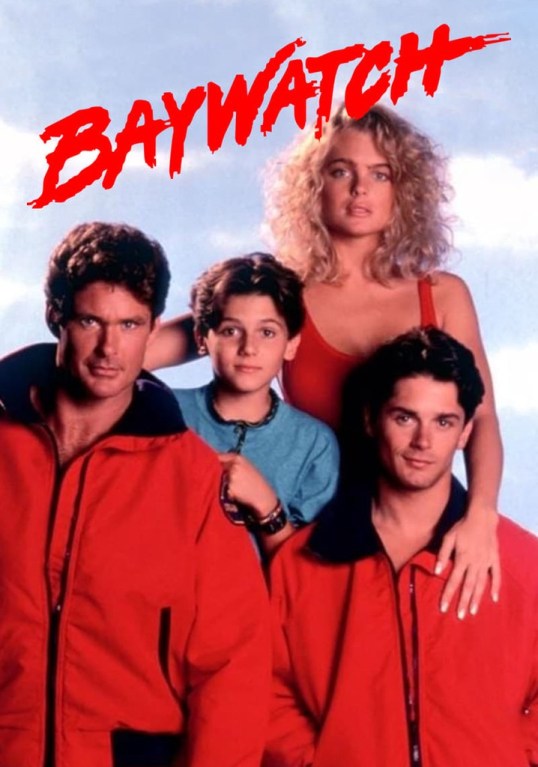
This week, Baywatch concludes the two storylines that began in the previous episode. Will Mitch get over his guilt? Will Eddie be able to keep his job? Who will star in this week’s slow motion monologue? These are the important questions that come with saving lives for a living.
Episode 2.10 “The Trophy, Part Two”
(Dir by Douglas Schwartz, originally aired on November 18th, 1991)
The beach is in chaos!
Bitter over being in a wheelchair and also being single, Turner continues to take dangerous risks. At one point, he decides to go hang-gliding to prove that not being able to walk doesn’t have to keep anyone from flying. At another point, we get one of those priceless Baywatch montages where Turner imagines himself being able run down the beach.
Mitch still feels guilty over Turner’s condition but eventually, even Mitch has to kneel down beside the guy and say that enough is enough. And really, that’s all it takes. Turner accepts that his ex, Megan, is now dating a hunky marine biologist named Ross and he moves on. Megan was played by Vanessa Angel and, according to the imdb, this was her final appearance on Baywatch. This was also Daniel Quinn’s final appearance as Turner. So I guess that storyline’s now over. Mitch still seemed to be feeling pretty guilty but he’ll have to learn how to deal with that on his own because Eric Turner is out of here!
(Quinn would go on to play two other characters on Baywatch and he also had a role in the Baywatch spin-off, Pacific Blue. I guess someone in the head office really liked him.)
Meanwhile, Eddie is bitter because, after being arrested for statutory rape, he’s been suspended from being a lifeguard. Well, Eddie, that’s life. That’s pretty much what would happen to any lifeguard in those circumstances. Eddie spends a lot of time on this show demanding to be treated like everyone else and then getting angry when it happens.
When Eddie’s accuser, Caroline (played by a young A.J, Langer), attempts to commit suicide by jumping off the pier, Shauni is there to rescue her. Having been rescued from drowning, Caroline confesses that she made up the story about Eddie because she wanted to impress her friends on the beach. Eddie is reinstated and Caroline says that she’s going to return home to Pennsylvania and get some psychiatric help.
This episode was pretty anti-climatic. For all the dramatic potential of Mitch’s guilt, Caroline’s accusations, and Eddie’s bitterness, both stories pretty much just ended with the sources of all the drama agreeing to live somewhere other than California. If only life was always that simple!
In the end, this episode was typical Baywatch. Yes, there was some drama. But the most important thing was always getting the next montage.
Welcome to Retro Television Reviews, a feature where we review some of our favorite and least favorite shows of the past! On Saturdays, I will be reviewing Baywatch, which ran on NBC and then in syndication from 1989 to 2001. The entire show can be viewed on Tubi.
This week, Eddie in trouble!
Episode 2.9 “The Trophy: Part 1”
(Dir by Douglas Schwartz, originally aired on November 11th, 1991)
Awkward teenager Caroline Larkin (A.J. Langer) doesn’t have any friends because her family’s poor and she’s from Ohio. The only person on the beach who shows her any kindess is Eddie the lifeguard. When Caroline tries to impress the rich girls on the beach by claiming to have been seduced by Eddie, the main mean girl makes sure that Caroline’s father finds out. Eddie is shocked when he’s arrested and charged with statuatory rape …. despite the fact the fact that almost the same thing happened to Craig during the first season of the show.
What makes thing particularly awkward is that Eddie is arrested just as he and Shauni are getting ready to go to a chairty gala. Shauni finally got Eddie into a tux and then Eddie gets the handcuffs slapped on.
Meanwhile, parapalegic lifeguard Eric Turner (Daniel Quinn) returns. He’s still in love with Megan (Vanessa Angel), the Australian lifeguard. But he’s also bitter about having to use a wheelchair. This is one of those stories that would be compelling if we had the slightest idea who Turner and Megan were before this episode aired. This is also one of those episodes where totally new people show up and everyone acts as if they were there from the start of the series. (In all fairness, Megan has appeared on the show before but her role has never been particularly large.) Everyone else know who Eric Turner but we, the viewers, have never heard of him before.
Anyway, this is a two-part episode so neither storyline is resolved. Since I’m taking next week off for America’s 250th birthday celebration, Eddie’s going to have to wait in jail for a while. However, two weeks from now, we’ll see if Eddie can clear his name!
Welcome to Retro Television Reviews, a feature where we review some of our favorite and least favorite shows of the past! On Saturdays, I will be reviewing Baywatch, which ran on NBC and then in syndication from 1989 to 2001. The entire show can be viewed on Tubi.
This week, we meet Mitch’s brother.
Episode 2.5 “The Fabulous Buchanan Boys”
(Dir by Gus Trikonis, originally aired on October 14th, 1991)
Mitch’s brother, Buzz (Tim Thomerson), shows up with his 12 year-old son, Kyle (Chance Michael Corbitt)! Mitch is reunited with Buzz and they both realize that they’re two old beach bums who are not getting any younger. That’s especially true in the case of Buzz. The show makes it clear that Buzz is Mitch’s older brother but we’re still left wondering just how much older. With his gray hair and his weathered features, Tim Thomerson looks like he’s nearly 70 while Hasselhoff appears to be in his late 30s.
And that’s pretty much it.
Okay, in all fairness to the show, there is a bit more of a plot than just Buzz showing up but none of it adds up to much. Mitch’s girlfriend, reporter Kaye Morgan (Pamela Bach), is pressured by her father to kill a story about a dangerous pier. Kyle has a bad attitude and has an accident while surfing at that pier. Luckily, the lifeguards are able to save him. Eduardo (Buzz Belmondo) sells bikinis on the beach but — ha ha — the bikinis dissolve when soaked in salt water. Eddie and Shauni have to help a lot of suddenly naked people get out of the water. “We’re in syndication!” the show loudly announces. Meanwhile, I’m left to wonder why you would buy a bikini from a stranger with a pencil-thin mustache.
For the most part, though, this was a montage episode. The plot was secondary to the music playing behind slickly edited montages of Buzz and Mitch bonding. Buzz and Kyle leave town at the end of the episode but, given how close Buzz and Mitch are, I’m sure that Buzz will return frequently in the future.
Welcome to Retro Television Reviews, a feature where we review some of our favorite and least favorite shows of the past! On Saturdays, I will be reviewing Baywatch, which ran on NBC and then in syndication from 1989 to 2001. The entire show can be viewed on Tubi.
This week, we start season 2 of Baywatch. Canceled by NBC, Baywatch found a new home in syndication. The show was re-launched with a special two-hour premiere. (For subsequent re-airings, the premiere was split into two episodes.)
Episode 2.1 and 2.2 “Nightmare Cove”
(Dir by Gregory J. Bonnan, originally aired on September 23rd, 1991)
On the one hand, the basic idea is the same. David Hasselhoff plays Mitch Buchanan, a divorced father who loves nothing more than being a lifeguard. Eddie (Billy Warlock) and Shauni (Erika Eleniak) are two young lifeguards who are in love (though their engagement from the previous season is not mentioned). Don Thorpe (Monte Markham) is Mitch’s no-nonsense boss. The sunsets are still beautiful. The beaches are still inviting.
And yet, there are a few differences:
Craig, Cort, Gina, Garner, and Trevor are nowhere to be seen. (Craig, Cort, and Garner will all eventually return. Gina and Trevor will never be mentioned again.)
Hobie, Mitch’s son, is now played by Jeremy Jackson.
Richard Jaeckel, who played doomed life guard Al Edwards in the pilot film, is now playing Ben Edwards, who apparently is meant to be the same character as Al. (Mitch specifically mentions that Ben broke his leg when the pier collapsed, retconning Al’s heroic death into a mere injury.)
Cort may be gone but there’s a new money-hungry lifeguard named Harvey (Tim McTigue).
The second season premiere features even more musical montages than appeared in the first season.
The second season premiere features a lot of random shots of women in skimpy bikinis.
The red Baywatch one-piece swimsuits are back but now, they’re considerably tighter and more high-cut.
The new Baywatch was airing in syndication.
I get the feeling that the Baywatch cameraman probably got together and all chanted, “Syndication, baby!” before running out onto the beach. Even though the second season premiere is still far from what Baywatch would eventually become, one can already see the development of the aesthetic that led to it becoming the number one show for 90s frat boys and dads suffering from a midlife crisis.
As for this episode, there are rumors of an underwater monster and everyone wants in on the action. Mitch saves an underwater photographer and falls in love for an episode. Hasslehoff’s then-wife, Pamela Bach, plays a reporter whose editor wants sensationalized stories about the “beast of the bay.” Of course, the beast of the bay is actually just the creation of an offshore oil company who wants to drill and ruin the environment because why not? Luckily, one of the lifeguard, Devon (Andrea Thompson), is also an environmental activist. Of course, Andrea Thompson is not listed in the opening credits so I imagine we’ll never see Devon again.
While Mitch is investigating the monster, Shauni rescues a little girl from drowning and then gets involved in the family’s life. The family is black and the little girl’s brother is being recruited by a street gang so the very white Shauni arranges from him to join the junior lifeguards instead. Shauni’s critical father (Albert Stratton) is impressed but I have to admit that I found the storyline to be a bit condescending. Like a lot of 90s shows, Baywatch was at its weakest when it tried to deal with real-life issues. It’s hard not to notice that whenever a guest actor who wasn’t white showed up on episode of Baywatch, they were always either being tempted or pressured to join a gang or they were trying to get out of the gang lifestyle.
In this episode, there’s an odd moment when Hobie decides to go into a storm drain and pretend to be the monster, which leads to a panic on the beach and monster hunters showing up with guns. Mitch shows up and ends the situation before it gets too out-of-hand but you really do have to wonder if maybe Hobie would be better off with his mother. I mean, seriously, Mitch — what are you doing here? Your son is apparently an idiot who never learned anything from the dozen or so times his life was put in danger during the first season.
Finally, Thorpe gets promoted and he wants Mitch to take his place as chief. Mitch argues that the new chief should be Ben Edwards. Since apparently Ben has the power to come back from the dead, I can see Mitch’s logic. In the end, Thorpe agrees.
And that’s it for this episode. It’s definitely Baywatch but it’s still not quite as fun as the show would eventually become once it fully embraced just how ludicrous things could get in syndication. This episode — and I imagine the rest of this season — feels like a show that is still making the transition from network television to anything-goes syndication. Eventually, the show will get David Charvet, Pamela Anderson, and David “The Bulge” Chokachi. During season 2, it was still just Billy Warlock and Erika Eleniak.
Welcome to Retro Television Reviews, a feature where we review some of our favorite and least favorite shows of the past! On Wednesdays, I will be reviewing the original Love Boat, which aired on ABC from 1977 to 1986! The series can be streamed on Paramount Plus!
This week, the ship is a casino!
Episode 7.16 “The Buck Stops Here/For Better or Worse/Bet on It”
(Dir by Richard Kinon, originally aired on January 14th, 1984)
It’s a gambling cruise!
Of course, it’s all for charity. The Love Boat has been turned into a floating casino but all of the money that the passengers lose will be donated to the Flanders Hospital. Florence Flanders (Celeste Holm) is yet another old friend’s Captain Stubing’s and he’s happy to welcome her aboard. He is less happy to see Florence’s ne’er-do-well brother, Frank (Richard Jaeckel). Frank is in debt to another passenger, Al Dixon (Richard Ponzini). Frank is willing to cheat and steal to get the money to pay off Al. When Stubing calls Frank out on it, Frank threatens to reveal that Florence’s deceased husband had a mistress.
One of the people cheated by Frank is newlywed Nancy Sidon (Leah Ayres), who is upset about the prospect of having to move in with her in-laws. Her husband, Stewart (Shea Farrell), says that it’s perfectly normal to move back in with your parents after you get married. He also doesn’t want Nancy gambling. When Nancy loses all of her money, she fears that she’s going to lose Stewart as well. Fortunately, Frank has a change of heart and returns all of the money that he stole. Not only has Nancy avoided divorce but she now has enough that she and Stewart won’t have to move in with the in-laws.
Meanwhile, Michael Borden (McClean Stevenson) is carrying a very valuable silver dollar with him. When Sally (Jo Ann Pflug) accidentally puts the silver dollar in a slot machine, Michael has a near breakdown. He obsessively pulls on the lever, hoping to win back his silver dollar. Soon, he’s broke. However, Sally puts her final dollar in the slot machine, pulls the lever, and hit the jackpot. Michael wins back his silver dollar and he also finds love. To be honest, Sally could do better.
This was a rather low-key and almost moody episode. The laugh track was notably muted. On the one hand, the show celebrated gambling for charity. On the other hand, nearly everyone’s life was ruined in the casino. Richard Jaeckel gave a good performance as the conflicted Frank. Not giving a good performance was McClean Stevenson, who came across as being so cranky and whiny that I found myself hoping he would never win back his silver dollar.
In 1976’s Grizzly, something is making a national park a lot less inviting.
Campers are turning up dead. Bloody body parts are being found buried underneath leaves. It’s obvious that a bear is to blame but reports seem to indicate that this isn’t just any bear. This is a super bear, standing 8 feet tall and capable of knocking down an observation tower and picking up a helicopter. This is the most dangerous bear known to man and the park has to be closed.
Closing the park during tourist season!? Surely not!
Does this all sound familiar? Grizzly came out a year after Jaws. In all fairness to Grizzly, there were a lot of movies that ripped-off Jaws. As a matter of fact, there are still movies ripping off Jaws. The Jaws films eventually ended up ripping off themselves with three sequels. Still, it’s hard to ignore just how blatantly Grizzly rips off Jaws. We get shots from the bear’s point of view. Christopher George plays the sheriff who keeps demanding that the park be closed down until the bear has been taken care of. Andrew Prine is the hippie bear expert. Richard Jaeckel is the crotchety old man who knows more about bears that just about anyone else in the world. In Jaws, they needed a bigger boat. In Grizzly, they need a bigger helicopter. Jaws features scenes of people fleeing from the water. Grizzly features an unintentionally funny shot of hundreds of panicked campers fleeing down the side of a mountain.
Grizzly is Jaws, without the water and without the wit. And yet, in its own grim way, it works well enough. The fact of the matter is that bears are scary and the bear in Grizzly is really, really big. The gore effects are memorably grotesque and, perhaps even more so than Jaws, Grizzly goes out of its way to establish that anyone can die. As for the actors, I’ve always enjoyed seeing Christopher George in films like this. He was one of those actors who always seemed to try to give a convincing performance, even when he was appearing in a film that no one would mistake for a classic. Richard Jaeckel and Andrew Prine also do their best to bring their characters to life.
Finally, I should mention that the film ends on a properly silly and over-the-top note. Actually, it’s not that much different from the ending to Jaws. It’s just that Jaws was made with such skill that even the silly moments worked. Grizzly was directed by William Girdler, who was no Steven Spielberg. At the end of Grizzly, I found myself shouted, “Why didn’t someone just do that in the first place!?” Then again, if they had, we never would have gotten all of those point of view shots of the bear wandering through the forest while growling like an 70s obscene phone caller.
As a final note, I defy anyone to watch Grizzly without imagining Werner Herzog narrating the bear’s activities. It cannot be done!
“And kill any officer in sight. Ours or theirs?” — Victor Franko
The Dirty Dozen is one of those war movies that feels like it was built in a lab for maximum “guys-on-a-mission” entertainment: big stars, a pulpy premise, plenty of attitude, and a third act that goes full-tilt brutal. It is also, even by 1967 standards, a pretty gnarly piece of work, and how well it plays today depends a lot on how comfortable you are with its mix of macho camaraderie, anti-authoritarian swagger, and disturbingly gleeful violence.
Directed by Robert Aldrich and released in 1967, The Dirty Dozen is set in 1944 and follows Major John Reisman (Lee Marvin), a rebellious U.S. Army officer assigned to turn a group of twelve military convicts into a commando unit for a suicide mission behind enemy lines just before D-Day. The deal is simple and grim: survive the mission to assassinate a gathering of German high command at a chateau, and your death sentence or long prison stretch gets commuted; fail, and you die as planned, just a little earlier and with more explosions. It is a high concept that plays almost like a war-movie prototype of the “villains forced to do hero work” formula that modern blockbusters keep revisiting.
The film’s biggest asset is its cast, stacked with personalities who bring a rough, lived-in charm to what could have been a lineup of interchangeable tough guys. Lee Marvin’s Reisman is the glue: a cynical, gravel-voiced officer who clearly hates bureaucratic brass almost as much as the criminals he is supposed to whip into shape, and Marvin plays him with a dry, weary sarcasm that avoids hero worship even as the film asks you to root for him. Around him, you get Charles Bronson as Wladislaw, a capable former officer with a chip on his shoulder; John Cassavetes as Franko, the volatile, insubordinate troublemaker; Jim Brown as Jefferson, whose physical presence and final-act heroics leave a strong impression; and Telly Savalas as Archer J. Maggott, a violently racist, fanatically religious, and almost certainly deranged soldier sentenced to death for raping and beating a woman to death. Savalas never softens that portrait, playing Maggott with a creepy combination of sing-song piety and sudden bursts of viciousness that makes him deeply uncomfortable to watch and the one member of the Dozen who feels like an outright monster even compared to the other killers. He sells Maggott’s self-justifying religiosity—quoting scripture, talking about being “called on” by the Lord—as both delusional and dangerous, so every time he starts sermonizing, it feels like a warning siren that things are about to go bad, and that pays off in the finale where his obsession with “sinful” women sabotages the mission. Even smaller roles from Donald Sutherland, Clint Walker, and others get memorable beats, which helps the ensemble feel like an actual crew rather than background noise.
For much of its runtime, the film plays like a rough-and-rowdy training camp movie, and that middle stretch is where a lot of its charm sits. Reisman’s solution to building teamwork is basically to grind the men down, deny them basic comforts, and force them to build their own camp, leading to the nickname “the Dirty Dozen” when their shaving kits are confiscated and they slip into permanent grime. The squad slowly gels through a mix of forced labor, competitive drills, and a memorable war-games exercise where they outsmart a rival, straight-laced unit led by Colonel Breed (Robert Ryan), which lets the film indulge in its anti-authority streak by making the rule-breakers look smarter than the regulation-obsessed brass. Savalas’s Maggott adds a constant sense of volatility to these scenes, his presence giving the group dynamic a genuine horror edge that keeps the movie from becoming a simple “lovable rogues” fantasy and making viewers eager to see him punished.
That anti-establishment energy is one of the reasons The Dirty Dozen hit so hard with audiences in the late 1960s, especially as public attitudes toward war and authority were shifting in the shadow of Vietnam. The movie clearly enjoys showing higher-ranking officers as petty, hypocritical, or out of touch, while Reisman and his misfit killers get framed as the ones who actually understand how war really works: dirty, improvisational, and morally compromised. Critics at the time noted that this defiant attitude, coupled with the convicts’ transformation into rough heroes, gave the film a rebellious appeal that helped it become a box office smash even as traditional war films were losing their shine.
Where the film becomes more divisive is in its moral perspective, or arguably its lack of one. From the start, these are not misunderstood saints: several of the men are condemned to death for murder, others for violent crimes and serious offenses, and the script never really suggests they were framed or unfairly treated. Yet once they are pointed at Nazis, the movie largely invites you to cheer them on, leaning into the idea that in war, the ugliest tools might be the most effective, and that conventional standards of justice and morality can be suspended if the target is the enemy. Maggott stands apart here as the line the film refuses to cross into sympathy, with Savalas’s committed and unsettling performance underlining how poisonous he is even to other criminals.
The climax at the chateau is where this tension really spikes. The mission involves infiltrating a mansion where German officers and their companions are gathering, rigging the place with explosives, and driving the survivors into an underground shelter that is then sealed and turned into a mass deathtrap with gasoline and grenades. It is a sequence staged with brutal efficiency and undeniable suspense, but it is also deeply unsettling, essentially pushing the protagonists into orchestrating a massacre that includes unarmed officers and civilians in evening wear, and the film offers minimal reflection on that horror beyond the visceral thrills. Maggott’s instability forces the team to react mid-mission, heightening the jagged tonal mix of rousing action and casual atrocity.
This blend of rousing action and casual atrocity did not sit well with many critics in 1967. Contemporary reviews complained that the film glorified sadism, blurred the line between wartime necessity and psychopathic cruelty, and practically bathed its criminals “in a heroic light,” encouraging what one critic called a “spirit of hooliganism” that was socially corrosive. Others, however, praised Aldrich for making a tough, uncompromising adventure picture that pushed back against sanitized war clichés, arguing that the cruelty and amorality felt like a more honest reflection of war’s ugliness, even if the film coated it in action-movie swagger and gallows humor. Savalas’s Maggott amplifies this debate, singled out by fans as a great, memorable character who adds real repulsion without turning into a cartoon.
From a modern perspective, the violence itself remains intense but not especially graphic by contemporary standards; what lingers is the attitude around it. The movie’s glee in letting some of these characters off the moral hook, contrasted with the genuinely disturbing behavior of someone like Maggott, creates that jagged tonal mix: part old-school “men on a mission” yarn, part cynical commentary on the kind of men war turns into tools. Depending on your tolerance, that mix either gives the film an edge that keeps it from feeling like simple nostalgia, or it plays as carelessly flippant about atrocities that deserve more introspection than a last-minute body count and a fade-out.
On a craft level, though, The Dirty Dozen still works surprisingly well. Aldrich keeps the film moving across a long runtime by building distinct phases: the recruitment and introduction of each convict, the training and bonding section with its rough humor and humiliation, and the final mission that shifts into suspense and near-horror. The action is clear and muscular, the editing sharp enough that you rarely lose track of who is where, and the sound design—even recognized with an Academy Award for Best Sound Effects—helps the chaos of the finale land with blunt impact.
At the same time, the structure exposes a few weaknesses. The early sections do such a good job of sketching out personalities that some characters feel underused or abruptly sidelined once the bullets start flying, and the film’s length can make parts of the training montage drag, especially if you are less enamored with its barracks humor and macho posturing. The writing also leans on broad types—psychopath, wisecracking crook, stoic professional—which the cast elevates, but the script rarely pushes them into truly surprising territory, beyond a few late-movie acts of sacrifice.
Still, as a piece of war-movie history, The Dirty Dozen earns its reputation. It helped popularize the template of the misfit team thrown into an impossible mission, a structure that later shows up everywhere from ensemble war pictures to superhero teams and modern “suicide squad” stories. Its mix of black humor, anti-authoritarian streak, and violent catharsis captures a specific late-1960s mood, even as its politics and ethics remain muddy enough to spark debate decades later. Savalas’s turn as Maggott ensures that edge never dulls, keeping the film’s thrills packaged with a moral outlook as messy and conflicted as the men it sends to kill.
For someone coming to it fresh now, the film plays as a rough, sometimes exhilarating, sometimes queasy ride: entertaining as pulp, compelling as an ensemble showcase, and troubling in the way it treats brutality as both a necessary evil and a spectator sport. If you are interested in the evolution of war cinema or the origins of the “ragtag squad on a suicide mission” trope, The Dirty Dozen is absolutely worth watching, with the understanding that its strengths—like Savalas’s chilling Maggott—come wrapped in those ethical ambiguities.
Welcome to Retro Television Reviews, a feature where we review some of our favorite and least favorite shows of the past! On Saturdays, I will be reviewing Baywatch, which ran on NBC and then in syndication from 1989 to 2001. The entire show can be purchased on Tubi.
Today, I start a new series of reviews. Since I already did Baywatch Nights, it just made sense to go ahead and do Baywatch. All together, this show ran for 11 and a movie so it should only take 241 weeks to finish up the series….
“Baywatch: Panic At Malibu Pier”
(Dir by Richard Compton, originally aired on April 29th, 1989)
It’s not easy being a lifeguard.
That would seem to be the main theme running through Panic at Malibu Pier, the two-hour movie that also served as a pilot for Baywatch. Consider the drama:
Mitch Buchanan (David Hasselhoff) loves the beach and he loves getting in the water but it’s cost him his marriage and now, his ex-wife (Wendie Malick) is suing for sole custody of their young son, Hobie (Brandon Call). Hobie doesn’t like going to school. He doesn’t understand why he can’t just spend all day on the beach like his father. Mitch, meanwhile, has been promoted to lieutenant of Baywatch and he’s now no longer supposed to do rescues. He’s just supposed to supervise the other lifeguard. His boss, Captain Thorpe (Monte Markham), is very insistent on that. Mitch explains that he doesn’t even like wearing socks. Ewwww. You have to wear socks, Mitch!
Eddie Kramer (Billy Warlock) is a rookie lifeguard. He finished at the top of his class but he’s also a tough kid from Philadelphia who grew up in the foster system. Shauni (Erika Eleniak) is another rookie lifeguard who freezes up when she has to provide CPR to a drowned girl. Her mentor, Jill (Shawn Weatherly), tells Shauni that it happens to every lifeguard. I bet it’s never happened to Mitch. Shauni seems to have a crush on Eddie and Eddie seems to be driven to prove himself. Eddie has guts because he wears a Philadelphia t-shirt in California.
Al Gibson (Richard Jaeckel) is the veteran lifeguard who is reaching retirement age and who dies at the end of the episode and gets a big lifeguard funeral on the beach.
Trevor (Peter Phelps) is the Australian lifeguard who calls everyone “mate.”
Finally, Craig Pomeroy (Parker Stevenson) is the attorney who prefers to spend his time in his lifeguard tower. Even when he should be at the office and working for his clients, Craig just hangs out at his tower. He saves the life of a disturbed teenager named Laurie (Madchen Amick). Laurie subsequently becomes obsessed with him. When the married Craig tells her to stay out of his lifeguard tower and stop taking off all of her clothes, she accuses Craig of assaulting her. Later, she tries to murder Craig’s wife (Gina Hecht). This all could have been avoided if Craig had just gone to his office like he was supposed to.
This pilot film for Baywatch has everything that the show would make famous — stiff line deliveries from the supporting cast, red swimsuits, David Hasselhoff’s earnestly goofy sincerity, slow motion, and plenty of musical montages. Amongst the guest cast, Madchen Amick stands out at the obsessive Laurie, showing an ability for handling melodrama that would be put to good use on Twin Peaks. Take a drink every time Mitch says, “Rescue can,” and see how long you can go before passing out. Unlike a lot of pilots that don’t really resemble the eventual show, Panic at Malibu Pier is unmistakably Baywatch.
And, watching it, you can see why the show eventually became a success. The beach scenery is nice. The men are athletic, the women are pretty, and the slow motion is cool the first time you see it. Of course, the most important thing about the pilot — and the show itself — is that it doesn’t require a good deal of attention. It’s one of those things where you can step away from the screen for a few minutes and then come back without having worry about having missed anything important.
Panic at Malibu Pier was a ratings hit. Baywatch followed. We’ll get into that next week.
Welcome to Retro Television Reviews, a feature where we review some of our favorite and least favorite shows of the past! On Tuesdays, I will be reviewing the original Fantasy Island, which ran on ABC from 1977 to 1984. Unfortunately, the show has been removed from most streaming sites. Fortunately, I’ve got nearly every episode on my DVR.
And now, it’s time for …. wait? What? *sigh* Okay.
Episode 6.10 “Operation Breakout/Candy Kisses”
(Dir by George W. Brooks, originally aired on January 15th, 1983)
My fantasy would be to be able to review this episode.
Ever since Fantasy Island was yanked down on all the streaming sites, I’ve been watching the show off of my DVR. A few years ago, I recorded nearly every episode off of one of the retro stations. (Sadly, the station also appears to no longer be broadcasting the show.) Unfortunately, nearly is not all and this is one of the episodes that I did not record. So, obviously, I can’t review it.
I can talk a little bit about it because I did watch this episode a few years ago. When I read the plot description on the imdb — Wheelchair-bound Kentucky racehorse breeder Rowena Haversham wants one last chance to win a race; and self-professed failure Danny Clements of Boston wants to turn his life around by breaking an American agent out of a tough foreign prison. — a bit of it came back to me. I remembered that Rowena (Ann Turkel) was given what she thought was a magic riding crop but that, at the end of the episode, Roarke revealed that the only magic was Rowena’s belief in herself. I think Rowena was transformed into a younger version of herself and she befriended a young rider played by Jill Whelan and ended up falling in love with Whelan’s father, who played by John Beck and not Gavin MacLeod. And I remember that Ben Murphy played the guy who entered the prison to save the American spy but it turned out that the prison was run totally by women and the spy was having the time of his life. I remember bits and pieces but it’s been a few years and I still wouldn’t feel comfortable even trying to tell you whether or not the episode worked.
So, consider this to be a placeholder. If I ever find Fantasy Island streaming somewhere or if someone is kind enough to reupload the show to YouTube, I’ll come back and review this episode.
Until then, my fantasy is for an official home video release of the entire series as opposed to just the first few seasons. Seriously, this is a fun show and one that still has a lot of fans. Yanking it off of Tubi to make room for the Fox reboot that only lasted for two seasons really doesn’t make a bit of sense.
John Carpenter has directed 18 features film, from 1974’s Dark Starto 2010’s The Ward. Some of his films have been huge box office successes. Some of his films, like The Thing, were box office flops that were later retroactive recognized as being classics. Carpenter has made mainstream films and he’s made cult favorites and, as he’s always the first to admit, he’s made a few films that just didn’t work. When it comes to evaluating his own work, Carpenter has always been one of the most honest directors around.
Amazingly, Carpenter has only directed one film that received an Oscar nomination.
That film was 1984’s Starman and the nomination was for Jeff Bridges, who was one of the five contenders for Best Actor. (The Oscar went to F. Murray Abraham for Amadeus.) Bridges played the title character, an alien who is sent to Earth to investigate the population and who takes on the form of the late husband of Jenny Hayden (Karen Allen). The Starman takes Jenny hostage, though its debatable whether or not he really understands what it means when he picks up her husband’s gun and points it at her. He and Jenny drive across the country, heading to Arizona so that he can return to his ship. Pursued by the government (represented by the sympathetic Charles Martin Smith and the far less sympathetic Richard Jaeckel), the Starman learns about emotions, eating, love, and more from Jenny. Jenny goes from being fearful of the Starman to loving him. Carpenter described the film as beingIt Happened One Night with an alien and it’s not a bad description.
After Jenny and the alien visitor make love in a boxcar, the Starman says, “I gave you a baby tonight,” and that would be an incredibly creepy line coming from a human but it’s oddly charming when uttered by an alien who looks like a youngish Jeff Bridges. Bridges definitely deserved his Oscar nomination for his role here. Speaking with an odd accent and moving like a bird who is searching for food, Bridges convincingly plays a being who is quickly learning how to be human. The Starman is constantly asking Jenny why she says, does, and feels certain things and it’s the sort of thing that would be annoying if not for the way that Bridges captures the Starman’s total innocence. He doesn’t mean to be a pest. He’s simply curious about everything.
Bridges deserved his nomination and I would say that Karen Allen deserved a nomination as well. In fact, it could be argued that Allen deserved a nomination even more than Bridges. It’s through Allen’s eyes that we see and eventually come to trust and then to love the Starman. Almost her entire performance is reactive but she makes those reactions compelling. I would say that Bridges and Allen deserved an Oscar for the “Yellow light …. go much faster” scene alone.
Carpenter agreed to make Starman because, believe it or not, The Thing had been such a critical and commercial flop that it had actually damaged his career. (If ever you need proof that its best to revisit even the films that don’t seem to work on first viewing, just consider Carpenter’s history of making films that were initially dismissed but later positively reevaluated. Today, The Thing, They Live, Prince of Darkness, and In The Mouth of Madness are all recognized as being brilliant films. When they were first released, they all got mixed reviews.) Carpenter did Starman because he wanted to show that he could do something other than grisly horror. Starman is one of Carpenter’s most heartfelt and heartwarming films. That said, it also features Carpenter’s trademark independent streak. Starman not only learns how to be human but, as a result of the government’s heavy-handed response to his arrival, one can only assume that he learns to be an anti-authoritarian as well.
Starman is one of Carpenter’s best films and also a wonderful showcase for both Karen Allen and Jeff Bridges.