
Horror Film Review: The Blob (dir. by Chuck Russell)


“Listen to me, Briggs, think for a minute, do you suppose an army of guys in plastic suits show up every time a meteor falls?” — Brian Flagg

A monster doesn’t need claws, teeth, or even a face to ruin your evening. Sometimes a wobbling mass of pink slime will do just fine, especially when the filmmakers know how to make every inch of it look hungry. Chuck Russell’s The Blob (1988) takes a premise that could easily inspire nothing but giggles and turns it into a nasty, energetic horror show. A more cynical and violent remake of the original 1958 creature feature, it succeeds by taking its ridiculous threat seriously without forgetting how much fun a ridiculous threat can be. The movie has a wonderfully direct goal: make you squirm, then make you enjoy it.

The setup wastes little time getting things moving. Something falls from the sky near the small California town of Arborville, a curious man gets too close, and an unpleasant discovery becomes a rapidly growing emergency. Among those caught in the chaos are cheerleader Meg Penny, played by Shawnee Smith, and local rebel Brian Flagg, played by Kevin Dillon. Russell and co-writer Frank Darabont (yes, that Frank Darabont) introduce their community through familiar faces and recognizable social divisions. You don’t need an elaborate history of the town to understand it. A few interactions establish who belongs, who gets judged, and who assumes they have everything under control.

That economical approach is one of the movie’s strengths. Rather than spending ages explaining why you should care, it gives the characters enough personality to register and lets the situation do the rest. The familiarity also creates expectations that the film enjoys upsetting. Certain people seem important, certain places seem safe, and certain decisions seem sensible. None of those impressions is especially reliable. Without spoiling the surprises, the early stretch makes it clear that this isn’t a particularly generous movie toward its characters. That unpredictability gives the action an extra charge because you can’t always settle comfortably into the usual horror-movie rules.

The effects provide the biggest reason to watch, though, and they remain impressively unpleasant. The creature has a thick, sticky physicality that makes it feel like something occupying the same space as its victims. It stretches, swells, and presses into places where nothing that size should fit. The makeup work makes the consequences of contact horribly clear without reducing every attack to the same bloody image. Some shots look more convincing than others, but even the rough edges have charm. There’s visible imagination behind the grotesquerie, and the craftsmanship gives this shapeless thing a stronger screen presence than plenty of monsters with elaborate designs.

What makes those effects work dramatically is Russell’s attention to setting. He doesn’t simply keep dropping the creature in front of another person and repeating the process. A hospital sequence establishes the danger, a diner encounter turns an everyday location into a nightmare, and a phone booth provides a particularly tense confrontation. The movie theater sequence adds a bigger dose of public panic. Each has its own rhythm and identity, which keeps the attacks from blurring together. The details are best left unspoiled, but the overall effect is clear: ordinary spaces become much less comforting when the monster doesn’t need to use the door.

Smith gives the movie its most dependable human presence. Meg could have remained a stock cheerleader reacting to things happening around her, but the film allows her to become increasingly decisive. Smith sells that progression without making it feel like a sudden personality transplant. Meg is scared, sometimes overwhelmed, and still willing to act when someone needs help. That’s a simple foundation for a horror heroine, but it works. She gives the audience someone to follow emotionally while the effects department does its worst. The performance never demands that the movie slow down to admire her courage; it lets her choices establish it.

Dillon has a slightly harder time escaping the shorthand built into Brian. The motorcycle, leather jacket, and long hair make his outsider status obvious almost immediately. A few early moments push the misunderstood-bad-boy routine harder than necessary. Still, Dillon brings an appealing scruffiness to the role, and his attitude fits a story in which respectability doesn’t necessarily equal good judgment. His partnership with Meg works because their differences matter less as the emergency grows. They don’t need elaborate backstories or a heavily emphasized romance to hold the film together. Their shared determination supplies enough momentum between the bigger horror sequences.

The remake’s cynicism becomes especially noticeable when official intervention enters the picture. Without giving away the later developments, the film questions whether looking organized and speaking confidently should automatically earn anyone’s trust. That suspicion gives the story a sharper edge than its goofy monster might suggest. The danger exposes weaknesses in the community rather than simply giving everyone an obvious enemy to unite against. It isn’t deep political analysis, but it doesn’t need to be. The contrast between an openly destructive creature and people claiming to manage the crisis provides another source of tension, making the human side of the disaster feel troubling in its own way.

There are limitations. Several supporting characters are drawn broadly, and some dialogue does little more than announce the personality type delivering it. The explanatory passages aren’t as engaging as the visual storytelling, particularly once the audience already understands the immediate stakes. A few effects shots also strain against the production’s ambitions. Yet Russell rarely lets those problems stall the movie for long. He keeps the pace brisk while giving the suspense enough room to develop. Just as importantly, the occasional humor doesn’t turn the whole thing into a spoof. You can laugh at the situation and still care when it turns ugly.

What ultimately makes The Blob work is the confidence of its execution. It knows its monster is absurd, knows its characters are familiar, and knows the audience came expecting a mess. Then it delivers that mess with enough invention and nerve to make the familiar feel exciting again. The harsher attitude distinguishes it from the original, but the appeal remains refreshingly basic: a town, a growing threat, and people scrambling to stay ahead of it. Russell makes a faceless pile of goo feel like a genuine screen villain. That’s no small achievement for something that looks like it escaped from the dessert table.
Retro Television Review: Baywatch 3.1 and 3.2 “River of No Return”


Welcome to Retro Television Reviews, a feature where we review some of our favorite and least favorite shows of the past!  On Saturdays, I will be reviewing Baywatch, which ran on NBC and then in syndication from 1989 to 2001.  The entire show can be viewed on Tubi.

This week, we start the third season!

Episodes 3.1 and 3.2 “River of No Return”

(Dir by Douglas Schwartz, originally aired on September 14th, 1992)

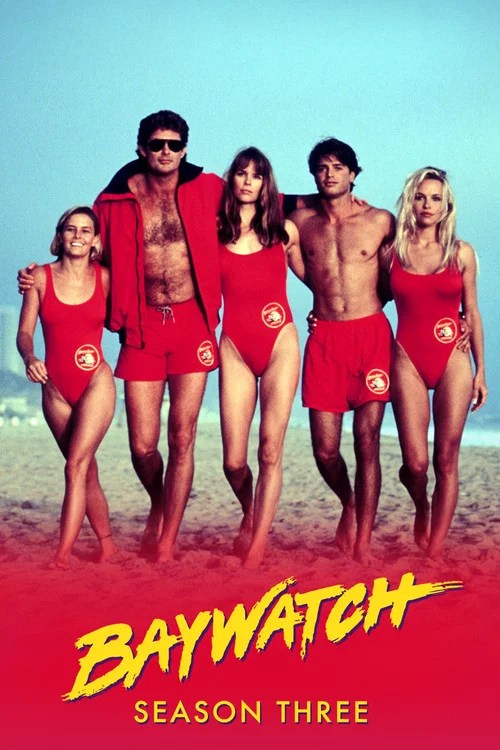
The third season of Baywatch begins with Mitch learning of the death of his uncle, an eccentric old prospector who always claimed that he was going to find gold. Mitch and Hobie decide to head to Northern California to investigate, and Eddie and Shauni agree to join them. For Eddie, it’s a chance to have one last adventure with Mitch before he heads off to Australia as part of the lifeguard exchange program. For Shauni, it’s a chance to reveal to Eddie that he knocked her up. For the show, it’s a chance to introduce CJ Parker (Pamela Anderson), a river guide who plays the saxophone and who gives good relationship advice.

Yes, this episode was Pamela Anderson’s first appearance on Baywatch. It turns out that, before she was a sax-playing river guide, CJ was a lifeguard, and Mitch would love it if she would return to the beach. Oddly, even though everyone already knows CJ, no one has ever mentioned her before. Considering that she was apparently a legendary lifeguard, you would think that she would have been mentioned in the past.

However, before CJ can return to the beach, she has to help Mitch and the gang find the gold mine that Mitch’s uncle found shortly before he died. Unfortunately, Drew (Bill McKinney) and Lonny (Mickey Jones), two no-good rednecks, also want to find the mine.

Meanwhile, back at the beach, Summer Quinn (Nicole Eggert) and her mother, Jackie (Susan Anton), have moved to Los Angeles to get away from Jackie’s abusive ex, Jed (Geoffrey Scott). Jed follows them but, fortunately, he’s put in his place by Matt Brody (David Charvet), a rich kid who is hoping to become a lifeguard. Like all of the other prospective lifeguards, Matt Brody is curious about “Bobby Quinn,” who is new to California and who was apparently a champion swimmer back in Pennsylvania. At the lifeguard try-out, Summer tells Matt that Summer is just a nickname and her first name is actually Roberta.

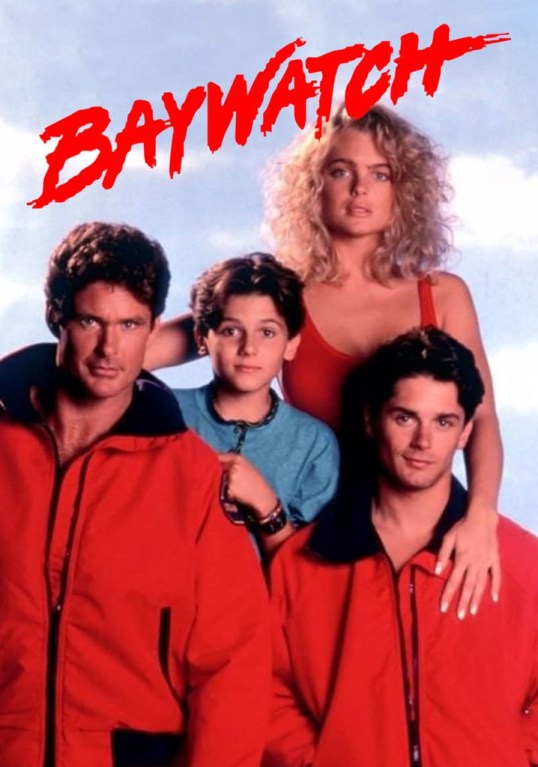
This two-part episode largely exists to introduce Pamela Anderson, Nicole Eggert, and David Charvet as regulars. All three of them do pretty well for their first episode. They all seem like they actually want to be there, which is quite a contrast to Billy Warlock and Erika Eleniak, both of whom have subsequently been pretty vocal about not being happy with the direction the show took during the second season. Of course, as soon as Eggert and Charvet show up, it’s easy to see that there’s no longer going to be room for Warlock and Eleniak. So, it’s not a shock when this episode ends with Shauni and Eddie marrying and leaving Baywatch.

This was a good way to start the season. Yes, the whole gold mine thing was a bit silly, but it gave David Hasselhoff a chance to do the earnest action hero thing, and it also introduces Pamela Anderson, who—in this episode at least—comes across as being surprisingly natural and down-to-earth in the role of CJ.

Next week, Matt goes undercover and meets even more new characters!


Retro Television Review: Baywatch 2.22 “Summer of ’85”


Welcome to Retro Television Reviews, a feature where we review some of our favorite and least favorite shows of the past!  On Saturdays, I will be reviewing Baywatch, which ran on NBC and then in syndication from 1989 to 2001.  The entire show can be viewed on Tubi.

This week, season 2 comes to an end!

Episode 2.22 “Summer of ’85”

(Dir by Michael Berk, originally aired on May 18th, 1992)

This was the second-season finale, and it is an odd note to end on. David Hasselhoff is billed and never appears. Baywatch without Mitch is already a strange choice for a season finale; making the hour an Eddie-and-Shauni murder-mystery-slash-old-flame reunion makes it stranger. Tom McTigue’s Harvey has a prominent role in this episode but Hasselhoff, the show’s center of gravity is missing, and you feel it.

As for the plot: frustrated by life on a cramped boat and partly at Harvey’s urging, Shauni drags Eddie to a psychic named Rosalind (the one and only Toni Basil!). Eddie is a skeptic. When Rosalind tells him he will soon meet his first true love, Eddie says that Shauni already is. Rosalind disagrees.

Soon afterward, Eddie spots a woman sketching on a sailboat who looks painfully familiar. He is sure she is Lorna Cosgrove (Michelle Rogers). Eddie was fifteen when he first met her while vacationing at a friend’s place on Nantucket. Lorna asked if she could paint him. He agreed. Eventually he lost his virginity to her but, later that night, he saw an older man at her door, got jealous and never spoke to her again.

When Eddie approaches the woman, she denies being Lorna and calls herself Caitlin. The next day, she pays a boy to deliver a copy of the painting to Eddie’s tower. That not only proves she is Lorna; it also proves she was a terrible painter. I have seen motel art more impressive than her portrait of Eddie fishing.

Shauni is suspicious, and with good reason. There is a warrant for Lorna’s arrest. The same night Eddie slept with her, her husband was shot, and Lorna was the prime suspect. Can Eddie prove she is innocent?

That continuity, for those who care about that sort of thing, in this episode is a mess. In “Point of Attack,” Eddie claimed he did not even see the ocean until he was nineteen.  The first season established that he was Philadelphia street kid who grew up in the foster system.  And yet, in this episode, here he is at fifteen, on Nantucket, fishing, posing, and losing his virginity in a beach house. As well, this episode plants Shauni and Eddie on a houseboat, with Shauni announcing that they have to get an apartment. The previous episode, “Game of Chance,” had just moved her onto that boat after a fight with her father. Earlier in the season, though, the show had already treated them as live-in partners, sometimes in an apartment. Continuity be damned, I guess.  It’s almost as if the show’s writers just didn’t care.

In the end, Baywatch without Hasselhoff is pointless. That said, Toni Basil is amusing as Rosalind.  This is definitely a case of a performer giving a better performance than the material deserved.

That closes the first syndicated season of Baywatch, and the second season of the series overall. For the most part, season 2 was dumb and fun. The best episodes used Hasselhoff’s innate earnestness. The worst got too cutesy, especially “Now Sit Right Back and You’ll Hear a Tale,” the one where Eddie dreams he is on Gilligan’s Island. Billy Warlock and Erika Eleniak were both adequate as Eddie and Shauni, but neither was happy with the show’s turn once it entered syndication, and that unhappiness often showed.

Next week, we start season 3!

Retro Television Review: Baywatch 2.21 “Game of Chance”


Welcome to Retro Television Reviews, a feature where we review some of our favorite and least favorite shows of the past!  On Saturdays, I will be reviewing Baywatch, which ran on NBC and then in syndication from 1989 to 2001.  The entire show can be viewed on Tubi.

This week, Harvey has a gambling problem.

Episode 2.21 “Game of Chance”

(Dir by Georg Fenady, originally aired on May 11th, 1992)

Harvey (Tom McTigue), the lifeguard who always appears in the opening credits but rarely does anything in the actual show, actually gets a storyline in this episode.

Harvey is on a boat in the ocean, taking part in a floating poker game. Mitch kayaks out to the game so he can tell Harvey to “fold” and get to work. Harvey, however, has a great hand. He wins everyone’s money. Unfortunately, a masked man then shows up and steals all the money for himself. (Whoever put this poker game together should have splurged a little on security.) Mitch and Harvey investigate the robbery and eventually discover that the thief owns an amphibious jeep. This leads to a less-than-exciting chase scene and Hasselhoff making jokes about a talking car.

Meanwhile, Shauni is frustrated because her father doesn’t approve of her dating Eddie. Even after Eddie saves Shauni’s older sister from drowning, her father continues to look down on him. Shauni finally decides to defy her father and move in with the man she loves. This would be really touching except for the fact that Shauni and Eddie have supposedly been living together for a while now. Just last week, someone asked Shauni what it was like to live with Eddie. I’m going to guess that this episode was originally meant to air earlier in the season but, for some reason, got pushed to the back.

This was all pretty silly, and the script itself felt like something left over from the first season, when Shauni was still a spoiled princess, Eddie was a rough-edged former delinquent, and John Cort was the resident trouble-making lifeguard.

Next week, the second season comes to an end.

Retro Television Review: Baywatch 2.20 “The Big Spill”


Welcome to Retro Television Reviews, a feature where we review some of our favorite and least favorite shows of the past!  On Saturdays, I will be reviewing Baywatch, which ran on NBC and then in syndication from 1989 to 2001.  The entire show can be viewed on Tubi.

This week, someone has turned a lagoon into a death trap!

Episode 2.20 “The Big Spill”

(Originally aired on May 4th, 1992)

This week, Lane Brody returns!

Now, if you’re like me, your initial reaction to that is to say, “Who?” When I first saw Lane Brody (played by Jeff Lester) at Baywatch Headquarters, I found myself wondering why everyone was so happy to see him, because I didn’t have the slightest idea who he was. For once I decided to do some research instead of just making a wild guess as to what was going on.

What I found is a little messier than the episode implies. Jeff Lester had appeared once in season 1, in “Old Friends”—but as Lance Jarvis, a different character. This episode presents Lane as a former Baywatch lifeguard turned environmental activist and as Mitch’s old friend. The writers seem to have assumed viewers would greet him like a returning regular and be immediately invested in his story.  One has to admire the show’s confidence, if nothing else.

In this episode, Lane is established as being a member of Green Force, a group of environmentalists who take “direct action” against hunters and oil companies. Mitch agrees with Green Force’s belief in protecting the environment, but he feels that their tactics are counterproductive. When Hobie and his friend Brenda (Patricia Supancic) get sick after a dip in a polluted lagoon, Mitch reconsiders his stand.

Lane is convinced that the lagoon was polluted by Transicon Industries. When he sneaks into a Transicon chemical plant to look for evidence, he’s attacked by the company’s goons and then framed for polluting the lagoon himself. With Lane out of commission, it’s up to Mitch and Shauni to break into the plant and find the evidence. Fortunately, Ben Edwards has some wave runners they can use to make their escape. Everyone at Baywatch is united in their love for Lane Brody.

This was another action-oriented installment of Baywatch. The message is sincere, but the villains are such caricatures that it’s hard to take the show seriously. It ends with Mitch and a recovering Hobie surfing in the ocean. It’s a nice moment of bonding.

Finally, I have no proof of this, but I find it interesting that this episode seems to indicate Lane Brody was willing to return to Baywatch, and that season 3 then introduced a new lifeguard named Matt Brody. As far as I know, Lane and Matt weren’t related, but it still wouldn’t surprise me if Matt was originally going to be Lane. Again, that’s all just speculation on my part. It could also just be that someone on the show liked the last name Brody.

Retro Television Review: Baywatch 2.19 “The Lost Treasure of Tower 12”


Welcome to Retro Television Reviews, a feature where we review some of our favorite and least favorite shows of the past!  On Saturdays, I will be reviewing Baywatch, which ran on NBC and then in syndication from 1989 to 2001.  The entire show can be viewed on Tubi.

This week, Harvey gets to do something.

Episode 2.19 “The Lost Treasure of Tower 12”

(Dir by Cliff Bole, originally aired on April 27th, 1992)

After a season of appearing in the opening credits and rarely anywhere else, Harvey (Tom McTigue) finally gets a storyline. Because Mitch is going on a camping trip, he has Harvey replace him as the teacher of a windsurfing class. Harvey is excited because the students all attend a local girls’ school. That would presumably mean they’re teenagers, while Harvey appears to be in his thirties.

As Ben correctly deduces, Harvey has no idea how to windsurf. This becomes obvious as soon as Harvey and Ben meet the bikini-clad students on the beach. (Harvey tells all the girls to write down their phone numbers. Again: the girls are teenagers, and Harvey is definitely not.) After watching Harvey struggle with the basics, the students start to walk away. Ben steps up and announces that he can teach them. What follows is a montage of the girls windsurfing while a dejected Harvey stares straight at the camera.

That’s the B-plot. The A-plot features Michael Bendetti as Ian, a poet who lives on the beach and finds a box of stolen jewels a thief buried in the sand. Ian uses the jewelry to bankroll his courtship of Shauni. (Ian has a crush.) The thieves aren’t happy about that.

This episode just felt off. With his obsessive crush on Shauni, Ian comes across as a stalker, and yet I think we were supposed to be charmed by how relentless he was. There’s even an extended fantasy sequence in which Ian imagines dancing with Shauni under a chandelier suspended above the beach. Meanwhile, the main thief is so cruel that he throws the episode out of whack. It’s hard to reconcile a scene of Newmie and Eddie pulling a dead body out of the ocean with the lightweight humor of Harvey trying to windsurf.

This episode confirms something I’ve suspected from the moment I started reviewing this show. The early seasons of Baywatch worked best when they focused on David Hasselhoff’s somewhat corny but undeniably earnest portrayal of Mitch Buchannon. Whenever Hasselhoff isn’t in an episode (or appears in just one scene), the cynicism at the heart of the show — and the emptiness of its style-heavy approach — is much harder to ignore.

In short, Baywatch needed the Hoff.

Retro Television Review: Baywatch 2.18 “Sharks Cove”


Welcome to Retro Television Reviews, a feature where we review some of our favorite and least favorite shows of the past!  On Saturdays, I will be reviewing Baywatch, which ran on NBC and then in syndication from 1989 to 2001.  The entire show can be viewed on Tubi.

This week, we meet Eddie’s never-before mentioned brother.

Episode 2.18 “Sharks Cove”

(Dir by Monte Markham, originally aired on April 20th, 1992)

Shauni’s friend Debbie Kent (Monica Lacy) throws a party on the beach with her boyfriend, Zack (Spencer Rochfort). When Debbie and Zack get in the water, Debbie suddenly yells out Zack’s name and is then apparently pulled below the surface by something. Zack runs back to the beach and says that a shark got Debbie.

Shauni, who is still haunted by Jill’s shark-related death in season one, insists on investigating this one on her own. She quickly figures out that Debbie faked her death because her father (Ernie Lively) was putting too much pressure on her to become a competitive, Olympic-class swimmer. It turns out that Debbie has just been hiding out in Zack’s trailer for the past few hours.

Meanwhile, Eddie decides to bring his older half-brother, Bobby (Blake Gibbons), to the beach. Bobby is schizophrenic and lives on a ranch, but his therapist thinks it would be a good idea for Bobby to spend the weekend with Eddie. Bobby ends up stealing a lifeguard outfit and running off. When Eddie eventually finds him, Bobby is on the edge of the pier, trying to rescue someone who isn’t really there. Bobby plunges into the ocean. Eddie saves his life, and hopefully he pays to get Bobby a new therapist, because this one obviously had no idea what she was talking about.

This was a strange episode. Baywatch previously established Eddie as a former juvenile delinquent from Philadelphia who came to Malibu to get away from the gang life. This episode features flashbacks of Eddie and his brother growing up in California, and Eddie is presented as the one who pays for Bobby to stay at the ranch, despite the fact that Eddie was previously portrayed as having come to California without a dime to his name.  (Eddie even slept in his lifeguard tower until Gina and Craig agreed to take him in.)  The first season also established that Eddie had a younger sister who drowned.  In this episode, he has an older half-brother who was schizophrenic and, in the flashbacks, there’s no sign of a sister.  Baywatch is not exactly a monument to continuity.

As for Debbie, she returns home and is forgiven by her father. Considering that lifeguards and police officers have been spending the last day or so searching for her, I assumed she would be in a bit more trouble than she was. Faking your own death is not something that I would recommend.

The Hoff was barely in this episode. Maybe it was his week off.

Retro Television Review: Baywatch 2.17 “The Chamber”


Welcome to Retro Television Reviews, a feature where we review some of our favorite and least favorite shows of the past!  On Saturdays, I will be reviewing Baywatch, which ran on NBC and then in syndication from 1989 to 2001.  The entire show can be viewed on Tubi.

This week, Mitch gets the bends (snicker)!

Episode 2.17 “The Chamber”

(Dir by Gregory J. Bonann, originally aired on March 2nd, 1992)

Mitch has a lot to think about. Summer is nearly over, and Gayle wants Hobie to return to Ohio for school. Craig, now living in Connecticut, sends Mitch a letter offering to help him get a job as a salesman. It would mean more money, but also a lot of traveling — and no more lifeguarding.

Mitch takes to the ocean in a kayak to clear his head. When he comes across a panicked boy on a boat, he learns that the boy’s father was scuba diving and is trapped 90 feet underwater. Mitch free-dives to free the father. Both men reach the surface, but they’ve both got …. THE BENDS!

The bends may have a silly name, but it’s a real condition, and it can be fatal. Because the father is in worse shape, he goes into the decompression chamber first. Mitch isn’t doing well either, so Baywatch rushes him back to the mainland and puts him in their own chamber. Then everyone waits for Mitch to recover.

And Mitch has flashbacks. Flashback after flashback. That’s right: this is a clip show. This is Baywatch at its cheapest. This is Baywatch showing clips that featured a totally different actor playing Hobie. Eventually, once the show runs out of clips, Mitch has a brief out-of-body experience — and then he wakes up.

This is Baywatch at its silliest, but it’s also David Hasselhoff at his most earnest. Say what you will about the show, Hasselhoff always seemed to take it very seriously. Or at least he did until Baywatch Hawaii. Luckily, that’s several seasons away.

Clip shows always feel like a wasted episode, but they’re also incredibly easy to review. This episode has that going for it.

Retro Television Review: Baywatch 2.16 “Sea of Flames”


Welcome to Retro Television Reviews, a feature where we review some of our favorite and least favorite shows of the past!  On Saturdays, I will be reviewing Baywatch, which ran on NBC and then in syndication from 1989 to 2001.  The entire show can be viewed on Tubi.

This week, a floating drug lab means trouble!

Episode 2.16 “Sea of Flames”

(Dir by Gregory J. Bonnan and Douglas Schwartz, originally aired on February 17th, 1992)

Hobie has a nightmare in which he sees Mitch floating in the ocean and looking confused as a speedboat roars up behind him. “BEHIND YOU, DAD!” Hobie yells right before waking up.

Mitch says that the bad dream is no big deal, but Hobie is convinced that he’s seen the future. Mitch laughs off Hobie’s concerns. Mitch is more worried about convincing the city council to approve a funding increase so the lifeguards can buy some supercool wave runners.

Mitch should be worried about Eddie, who is such a terrible lifeguard that he doesn’t even notice that Scorch (Devino Tricoche) is wandering around the beach and setting fires. Scorch is a street performer who eats fire as part of his act. But after he gets a batch of bad designer drugs, he sets Eddie’s lifeguard tower on fire. Even though Eddie is sitting in the tower at the time, he doesn’t notice the flames until it’s nearly too late. After jumping off the tower in slow motion, Eddie drags Scorch to safety. “Sumo! Sumo! Sumo!” Scorch says.

Hey, there’s a boat called Sumo that’s docked in the harbor. Could it be a floating drug lab? Of course it is! When the drug dealers decide to sail away, Mitch gets a chance to show off on a wave runner! But when Mitch falls off the wave runner, he finds himself stranded in the ocean. Uh-oh, there’s a speedboat coming up behind him!

Hobie’s ghostly voice rings out: “BEHIND YOU, DAD!”

Mitch ducks out of the way just in time. OH MY GOD, HOBIE IS MAGIC!

While Mitch is busy capturing the drug dealers, Ben is once again depressed over getting old. When he investigates a house that has supposedly been empty for decades, he meets the actress (Constance Towers) who once lived there. Back when he was a young lifeguard, Ben had a crush on her. When she invites him into the house, he discovers that she has a framed picture of him that she took when he was young and standing on his lifeguard tower. She had a crush on him as well, but back then, dating a lifeguard would have led to a career-ending scandal. And now they’re both old, so what can anyone do? Oh well. Sorry, Ben, your life sucks.

But Mitch’s life is great! At the end of the episode, he thanks Hobie for having his nightmare. Hobie says he also had a dream where Mitch got married. “Blonde or brunette?” Mitch asks.

This was another silly episode of Baywatch, but as we all know, this series is at its most entertaining when it’s silly. As usual, Hasselhoff delivers even the most ludicrous of lines with an earnestness that is actually kind of charming in its own weird way. Ben’s storyline was kind of sad, but since the only reason Ben is on this show is to show that getting older sucks, it’s to be expected.

The important thing is that Mitch gets his wave runners and the ocean is now a safer place.

Retro Television Review: Baywatch 2.15 “Big Monday”


Welcome to Retro Television Reviews, a feature where we review some of our favorite and least favorite shows of the past!  On Saturdays, I will be reviewing Baywatch, which ran on NBC and then in syndication from 1989 to 2001.  The entire show can be viewed on Tubi.

This week, Mitch and Hobie are scared!

Episode 2.15 “Big Monday”

(Dir by Gregory J. Bonnan, originally aired on February 10th, 1992)

Hobie has a problem.  A huge tropical wave is scheduled to hit the beach on Monday and all of his friends are looking forward to surfing it.  His friends all say that Hobie is “chicken” because he won’t take the big waves.  Hobie goes to Shauni for advice.  Shauni offers to help him learn how to be a better surfer.  Hobie wonders why he can’t be more like his dad.  Mitch isn’t scared of anything.

Actually, Mitch is terrified of that big wave.  Every time that someone mentions it, Mitch flashes back to watching a friend get washed away by a giant wave in 1961.  With a new wave approaching, Mitch is scared that the same thing will happen again.  Luckily, a visiting Hawaiian surfer just happens to be around to give Mitch an enchanted necklace.

Kaye, Mitch’s little-seen girlfriend, befriends a deaf girl on the beach.  She tries to convince the girl’s mother to allow her to enroll Kaye in a sign language class.  The girl’s mother is scared that her daughter will always be an outsider unless she learns how to read lips.  (One of the teachers at the school is played by future Oscar nominee Paul Raci.)

Will Hobie prove that he can handle the waves?

Will Mitch overcome his guilt over his friend’s death?

Will Kaye convince the mother to enroll her daughter in sign language class?

Yes, yes, and yes.  This is Baywatch.  Other than that lifeguard getting killed by a shark, there are no unhappy endings.

As for this episode, I’ll give it some credit for having one unifying theme.  All of the stories are connected by the theme of conquering your fears.  Actually having a narrative theme is definitely a step forward for this show.  That said, it’s still Baywatch.  Everything happens a bit too easily in this episode.  Yes, this episode says, fear is real.  But, if you stick around for 40 minute, your fears will magically disappear in time for the end credits to roll.

This was a silly episode but at least its heart was in the right place.