Retro Television Review: Homicide: Life On The Street 6.6 “Birthday”


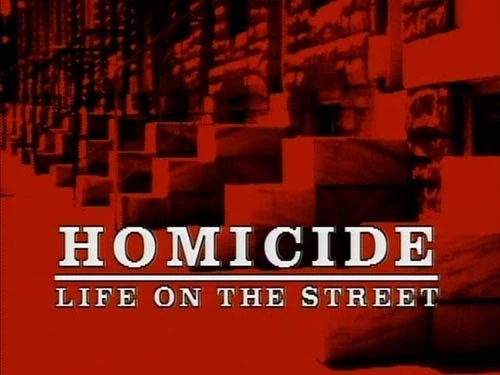
Welcome to Retro Television Reviews, a feature where we review some of our favorite and least favorite shows of the past!  On Sundays, I will be reviewing Homicide: Life On The Street, which aired from 1993 to 1999, on NBC!  It  can be viewed on Peacock.
This week, it’s yet another Falsone episode.

Episode 6.6 “Birthday”

(Dir by Alison MacLean, originally aired on November 7th, 1997)

This episode is an example of the good, the bad, and the ugly.

The good part of the episode is that Mary Pembleton finally goes into labor and gives birth to a son.  Andre Braugher was so intense on this show that it was always nice to see an episode where Frank could just be happy.

The bad is that Georgia Rae Mahoney has surveillance camera footage of Kellerman killing Luther Mahoney.  The Mahoney stuff is just getting dragged out.  As Luther Mahoney, Erik Todd Dellums was a magnificent villain.  Hazelle Goodman is considerably less compelling as Georgia Rae but, then again, the writers aren’t doing her any favor by having Georgia Rae always talk like a comic book villain.

The ugly is that the main storyline is yet another Falsone story.  This time, Falsone, Lewis, and Stivers investigate the rape and violent assault of a woman named Grace Riviera (Allison Folland).  As you might expect, Falsone takes the case — wait for it — PERSONALLY!  When one suspect doesn’t give Falsone the answers that he wants in the box, Falsone beats him up.  He guarantees Giardello that he will close the case.  Giardello responds that he likes Falsone.  Well, good for Giardello, I guess.

As I’ve said before, there’s several problems with Falsone’s character.  The biggest one is that Falsone doesn’t really have much depth, especially when compared to characters like Pemblton, Bayliss, or even Lewis.  He’s a collection of cop show cliches.  He’s the epitome of everything that Homicide was supposed to be against.  Jon Seda’s one-note performance is jarring when compared to the rest of the cast.  Callie Thorne’s Laura Ballard may not be a particularly interesting addition to the ensemble but at least Thorne can show a hint of emotion.

The biggest problem with Falsone is the way that this season keeps trying to force him on the viewer.  If a viewer wants to watch Pembelton, Bayliss, Munch, or any of other other detective solve a murder, they’re out of luck.  It’s the Falsone show!

This episode ends with Falsone going to the hospital to tell Grace that he’s arrested the man who attacked her, just to discover that Grace died.  It’s not the shocking moment that the show meant it to be.  And emotionally, it falls flat because it’s a Falsone moment.

Homicide is the series that I want to review.  I have no interest in The Falsone Show.

Retro Television Review: Homicide: Life On The Street 5.17 “Kaddish”


Welcome to Retro Television Reviews, a feature where we review some of our favorite and least favorite shows of the past!  On Sundays, I will be reviewing Homicide: Life On The Street, which aired from 1993 to 1999, on NBC!  It  can be viewed on Peacock.

This week, both Munch and Pembleton go on an inner journey.

Episode 5.17 “Kaddish”

(Dir by Jean de Segonzac, originally aired on February 21st, 1997)

When Munch and Kellerman investigate a crime scene in which a woman has been found murdered, Munch is stunned when the woman is revealed to be Helen Rosenthal, his high school crush.  In between flashbacks to Munch’s awkward teen years, Munch and Kellerman investigate the crime.  At first, it seems like the murderer might be one of two former classmates, one of whom was Helen’s ex-husband.  Ultimately, the truth turns to be much simpler.  As if so often the case, Helen was the victim of stranger.  She was in the wrong place at the wrong time.

During the investigation, Munch bonds with Helen’s daughter, Sarah (Jean Louisa Kelly).  Per Jewish law, Helen is buried within 24 hours and Munch and Kellerman later attend her shiva, where Munch begs out of being a part of the minyan.  Because Kellerman has apparently never met a Jewish person in his life, Munch has to explain to him the concept of sitting shiva and reciting the Kaddish.  On the one hand, I wish this episode didn’t resort to making Kellerman into a total doofus.  (At one point, he even asks what a “shiksa” is,) but, on the other hand, I did appreciate that it dealt with a side of Munch that we really haven’t seen before.  As a viewer, I’m so used to seeing Munch as just being the squad’s resident cynic that it was interesting to see him dealing with issues of faith.

Speaking of faith, Pembleton is continually to struggle with his.  He even goes to Mass in this episode and remember a debate he once had with a nun about whether or not any signs of God can be found while working as a homicide detective.  Pembleton does find a sign towards the end of the episode.  Called in when a woman dies in home hospice care, Bayliss and Pembleton discover that no murder occurred.  Instead, the woman has passed with a look of peace on her face and a crucifix on her nightstand.  Having lost his family and nearly his life, Pembleton finally seems to have found his faith.  And I’m glad about that because Pembleton the Heretic was getting to be a bit of a slog.

This was a good episode, one that used death as a way to shine a light on life.  Richard Belzer gave one of his better performances in the role of John Munch and, as always, Andre Braugher was outstanding as Pembleton.  I’m also happy to say that Pembleton and Bayliss are once again partners.  That’s the way it should be.