Retro Television Review: St. Elsewhere 4.13 “To Tell The Truth”


Welcome to Retro Television Reviews, a feature where we review some of our favorite and least favorite shows of the past! On Fridays, I will be reviewing St. Elsewhere, a medical show which ran on NBC from 1982 to 1988.  The show can be found on Daily Motion.
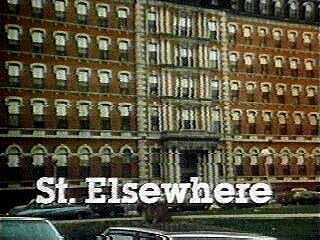
Has John Doe finally discovered his real identity?

Episode 4.13 “To Tell The Truth”

(Dir by Mark Tinker, originally aired on January 15th, 1986)

Last week’s episode ended with an abortion protester hiding a bomb in a custodial cart. The majority of this episode features various characters pushing that cart around the hospital, leaving us to wonder if and when the bomb is going to go off. At one point, even Dr. Craig gives the cart a frustrated shove. When the bomb finally does go off, it’s sitting outside the hospital gift shop. The hospital survives. An orderly is seriously injured. And Morrison gets to yell at the bomber (Rob Garrison).

Fiscus isn’t in the hospital when the bomb goes off. Instead, he’s out doing his Westphall-mandated community service. Fiscus is sent out on house calls, visiting elderly patients in their homes and doing follow-up exams. Fiscus hates it, and it’s easy to see why. For the most part, the old people are stereotypes. This episode is a rare case of St. Elsewhere trying too hard to be sentimental.

(And yes, when Fiscus complains, you can be sure that Westphall is ready with a long monologue about the time he spent in Ethiopia.)

The Valeres (George DelHoyo and Deborah May) are both getting frustrated with their inability to conceive. With Dr. Turner currently visiting her hometown in Mississippi, Ehrlich and Chandler have taken over the case. Ehrlich recommends that the Valeres consider adoption. Chandler, however, tells them that they should continue with IVF.

After a long day in court, Lucy slaps Helen, declares them to be even, and then drops her lawsuit.

Finally, Ramsey Headley (Ellis Rabb) and Lucinda Ferrare-Headley (Carrie Nye) show up at the hospital and claim that John Doe No. 6 is their long-lost brother and the heir to their family’s fortune. John Doe No. 6, who had been experimenting with being Shakespeare, says that he knows them and that he now realizes that he is Thomas Headley of New Orleans. Auschlander is happy that John has found his identity, but he’s still sad to see him go. (Auschlander does not seem to notice that the Headleys all speak like characters in a bad Tennessee Williams play.) After John leaves, the hospital gets a call from a “New Orleans sanitarium,” informing them that two of their patients have escaped and are heading to Boston. Yikes! If John returns next week, this will be a funny little incident. If he doesn’t, I’m never going to forgive Auschlander for letting him leave with two obvious charlatans.

This week’s episode was .… well, it was okay. It had its good moments, like the suspense with the custodial cart and the John Doe storyline. But it also got a bit too sentimental with the old people, and I’m at the point where I’m going to scream if I have to listen to another Westphall lecture about life in Ethiopia.

Let’s just be happy that the show didn’t kill Santa Claus again.
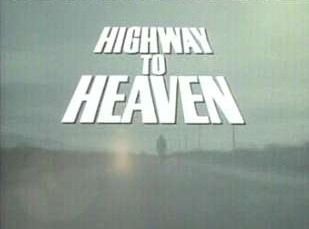
Late Night Retro Television Review: Highway to Heaven 4.16 “Back to Oakland”


Welcome to Late Night Retro Television Reviews, a feature where we review some of our favorite and least favorite shows of the past!  On Thursdays, I will be reviewing Highway to Heaven, which aired on NBC from 1984 to 1989.  The entire show is currently streaming on Tubi and several other services!

This week, Mark rejoins the police force and discovers that things have changed since he last wore the blue.

Episode 4.16 “Back to Oakland”

(Dir by Michael Landon, originally aired on February 3rd, 1988)

Jonathan and Mark return to Mark’s old hometown of Oakland, California.  When Mark stops by his old precinct, he discovers that most of the police force is home with “blue flu,” protesting budget cuts.  Mark volunteers to return to active duty for a few days.  He’s paired up with his former partner, Frank Lawler (Kenneth Kimmins).

Mark, however, discovers that things have changed in his absence.  Cops are viewed with suspicion by the people that they are supposed to be serving.  And Frank is an unrepentant racist who expects Mark to have his back no matter what.

Jonathan, meanwhile, gets a job as a security guard at an all-black apartment complex.  “You’re the first white man to ever work here,” he’s told by the landlady (Fran Bennett).  The landlady’s son, Albert (Guy Killum), doesn’t trust white people and resists Jonathan’s attempts to reach out to him.

When Albert is caught shoplifting by Mark and Frank, Frank takes him into a back alley.  Frank removes his handcuffs and dares Albert to take a swing at him.  Mark steps out of the store just in time to see Frank shoot and kill Albert.

“He attacked me!” Frank says.

“I put cuffs on him,” Mark says.

In the end, Mark refuses to cover for Frank.  Jonathan arranges for Albert’s younger brother (Kenny Ford, Jr.) to meet with Frank’s son (Mark Sussman).  The episode ends with the two of them introducing each other.

This episode was Highway to Heaven at its most earnest and heartfelt.  I imagine there are some that would complain that this episode attempts to “both sides” the issue of racism.  Both Albert and Frank are portrayed as being obsessed their hatred of another race.  That said, only one of the two men is portrayed as being in a position to kill the other and potentially get away with it.  The scene of Mark, who has spent the entire series bragging about his time as an Oakland cop, taking a stand and telling the truth about what happened in the alley is surprisingly powerful.  Mark does the right thing and he does it without hesitation.  Is the ending of the episode a bit naive?  Perhaps.  But it’s so sincerely done that it’s hard not to appreciate the show’s intentions.

In other words, this episode was an example of what Highway to Heaven did well.  It’s not subtle but it’s so heartfelt that the viewer can’t help but be moved.

Embracing The Melodrama #12: Giant (dir by George Stevens)


Giant

Let’s continue to embrace the melodrama by taking a look at the 1956 best picture nominee, Giant.

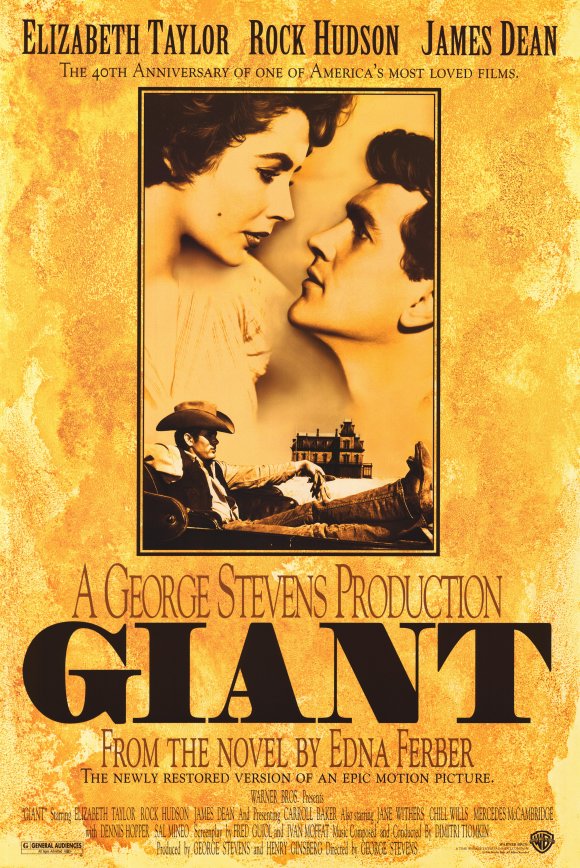
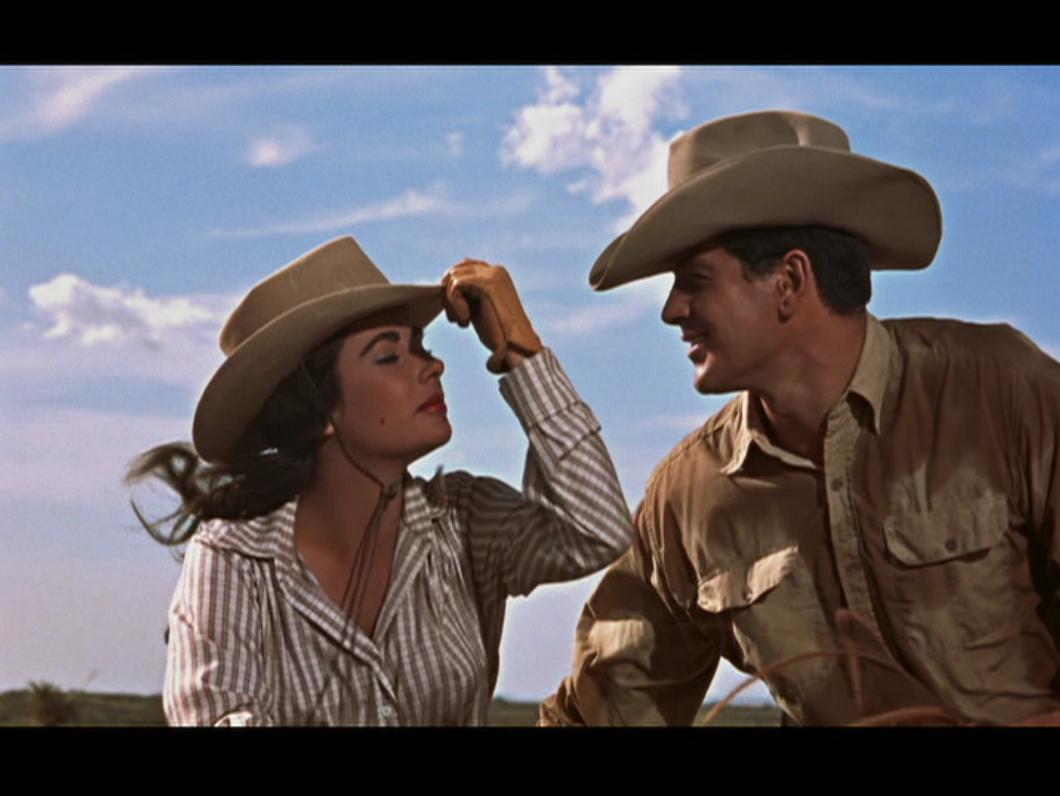
Giant is a film about my home state of Texas.  Texas rancher Bick Benedict (Rock Hudson) goes to Maryland to buy a horse and ends up returning to Texas with a bride, socialite Lesley Lynnton (Elizabeth Taylor).  At first, Lesley struggles to adapt to the harsh and hot Texas landscape.  Bick’s sister, Luz (Mercedes McCambridge) takes an instant dislike to Lesley and Bick is annoyed by Lesley’s concern over the living conditions of the Mexicans that work on Bick’s ranch.  It sometimes seems like the only person who appreciates Lesley is Jett Rink (James Dean), an ambitious ranch hand who secretly loves her and who is planning on becoming a rich man.  That’s exactly what happens when oil is found on the land around Bick’s ranch.  While Bick stubbornly clings to the past, oilman Jett represents both the future of Texas and the nation.  Meanwhile, Bick and Lesley’s son (played by a very young Dennis Hopper) challenges his father’s casual bigotry when he falls in love with a Mexican girl.

Taylor and Hudson

Giant is appropriately named because it is a huge film.  Clocking in at 201 minutes, Giant tells a story that spans several decades and features a big cast that is full of familiar faces, all struggling for their chance to somehow stand out from everyone else around them.  Even the film’s wonderful panoramic shots of the empty Texas landscape only serve to remind us of how big the entire film is.  To a certain extent, the size of Giant‘s production is to be understood.  In the 1950s, Hollywood was having to compete with television and they did this by trying to make every film into a major event.  You watch a movie like Giant and you practically hear the old Hollywood moguls shouting at America, “See!?  You can’t get that on your precious TV, can you!?”

For those of us watching Giant today, the length is both a blessing and a curse.  It’s a curse because the movie really is too damn long.  The opening scenes drag and many of them really do feel superfluous.  It’s hard not to feel that the real story doesn’t really start until about 90 minutes into the movie.  And once the story really does get started,  there’s still way too much of it for it all to be crammed into one sitting.  Oddly enough, you end up feeling as if this extremely long film is still not telling you everything that you need to know.  If Giant were made today, it would probably be a two-part movie on either HBO or Lifetime and it would definitely feature a lot more sex.

However, to be honest, one of the reasons that I did enjoy Giant was because it was as big as it was.  I mean, the film is about Texas so of course it should be a little excessive!  Everything’s bigger in Texas and that includes our movies.  Add to that, Giant may be too long but it uses that length to deals with issues that are still relevant today — oil, immigration, and racial prejudice.  Rock Hudson may not have been a great actor but he is at least convincing as he transitions from bigotry to tolerance.

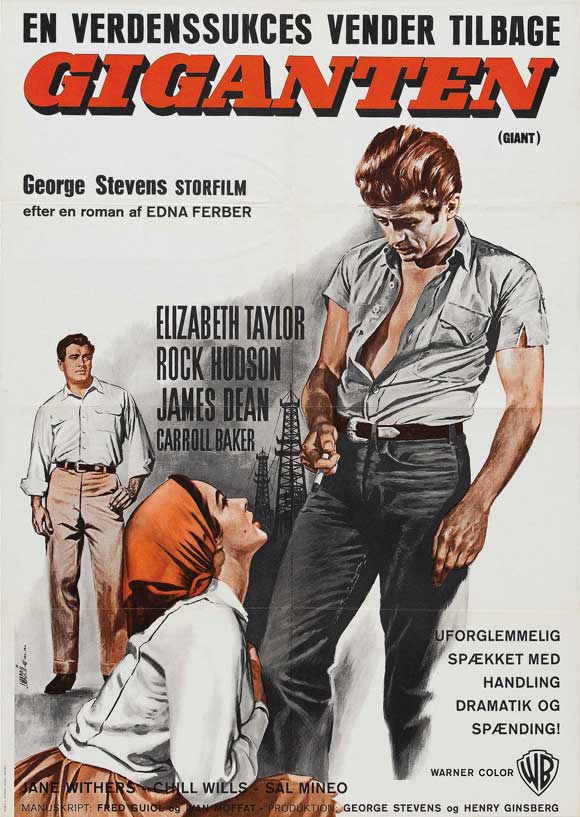
But really, when it comes to Giant, most people are only interested in James Dean.  And they definitely should be because Dean gives a great and compelling performance here.  Dean brings all of the emotional intensity of the method to material that one would not naturally associate with method acting and the end result is amazing to watch.  Giant was released after Dean had been killed in that infamous car wreck.  I can only imagine what it must have been like to be sitting in a theater in 1956 and to see this compelling and charismatic actor towering above the world on the big screen while aware, all the time, that his life had already been cut short and he would never been seen in another film.

James Dean

Even better, Dean’s new style of acting clashes perfectly with Hudson’s old style of acting, making the conflict between Bick and Jett feel all the more real and intense.  Much as Bick represents old Texas and Jett represents the new Texas, Hudon and Dean represented the two sides of Hollywood: the celebrity and the artist.  Needless to say, Dean wins the battle but, surprisingly, Hudson occasionally manages to hold his own.

I can’t necessarily say that Giant is an essential film.  A lot of people are going to be bored by the excessive length.  But if you’re a fan of James Dean or if you’re from Texas, Giant is a film that you need to see at least once.

elizabeth_taylor_giant_swedish_movie_poster_2a