Welcome to Retro Television Reviews, a feature where we review some of our favorite and least favorite shows of the past! On Sundays, I will be reviewing Homicide: Life On The Street, which aired from 1993 to 1999, on NBC! It can be viewed on Peacock.
This episode made me cry.
Episode 6.4 “The Subway”
(Dir by Gary Felder, originally aired on December 5th, 1997)
It’s another morning in Baltimore. Salesman John Lange (Vincent D’Onofrio) goes to the local subway station with his girlfriend, Sarah (Laura MacDonald). Sarah goes on her morning run. John enters the station so he can catch his train to work. John is wearing a suit and he’s moving quickly and impatiently. When he reaches the platform, something happens. We see John and a shorter man falling forward as the train pulls in. We see the bystanders gasp. And then we see that John is pinned between the train and the platform. Only the upper half of his body is visible. The lower half of his body is twisted underneath the train. John is still alive.
Homicide is called because, even though John is breathing and shouting, everyone knows that he’ll soon be dead. Pembleton and Bayliss arrive. Bayliss interviews Larry Bierdon (Bruce MacVittie), a man who claims that he was pushed at the same time as John. Pembleton talks to John Lange. For once, Pembleton — who has always tried to remain coolly detached — finds himself dealing one-on-one with a man whose name will soon be going up on the board.
John is confused and he’s angry and he’s demanding to know why he hasn’t been freed yet. He yells at the EMT (Wendee Pratt) who is checking his blood pressure and continually asking him if he’s feeling anything. Everyone seems to know that John Lange only has 30 to 40 minutes left. Everyone but John. But eventually, Lange figures it out. While everyone else — the EMTs, the firemen, the cops — go about their job like any other day (and the EMT herself gets annoyed with John’s constant abuse), John Lange hopes that he’ll somehow get that million to one shot that will allow him to be freed from the platform without dying in the process.
Falsone and Lewis search for Sarah. Actually, “search” is a bit too generous a term for what they do. Falsone and Lewis wander around the harbor and glance at any women who they see jogging. Lewis talks about how much he hates getting older. They spend a lot of time shooting the breeze. At one point, Sarah runs by them and they don’t notice.
At the station, Bayliss discovers that Larry Bierden previously shoved a man in front of a subway in Chicago. Larry was placed in a psychiatric ward. When he was released, he moved to Baltimore and did it again. It becomes obvious that there was no grand reason for Larry pushing John. If Larry hadn’t pushed John, he would have pushed someone else. John’s death is a random case of being in the wrong place at the wrong time.
As for John, he finally starts to feel the pain of being pinned. The EMT explains that she can’t give him painkillers in his current state because it will reduce the miniscule chance that they have of saving his life. Pembleton sits down next to the train and holds Lange’s hand. Pembleton talks about his stroke. Lange talks about how sugar maple leaves will turn whenever it rains. Lange tells Pembleton, “I’m okay,” just before the EMTS inflate the airbags that push the train away from the platform. Lange is freed and dies immediately.
Pembleton steps outside the station, where Bayliss is joking with a uniformed cop about how Larry Bierden apparently thought he could get away with doing the exact same thing that he did in Chicago just by moving to a different city. Pembleton stops to stare at Bierden, who is handcuffed in a squad car. “I want my ID back,” Bierden says, a complaint that he’s been repeating ever since Bayliss initially took his expired drivers license away from him.
As they get in their own car, Pembleton asks Bayliss if he knew that sugar maple leaves turn when it rains. Bayliss says that he didn’t. “Learn something new every day,” a shaken Pembleton says.
Meanwhile, Sarah runs past the station, little knowing that John has just died.
This was an incredibly powerful episode, one that had me sobbing from the minute I saw John trapped between the train and the platform. Vincent D’Onofrio gives an incredible performance as John Lange, one that works because the show itself refuses to sentimentalize the character. John Lange is angry and abrasive and the show doesn’t ask us to like him. Instead, it asks us to acknowledge the humanity that we all share. Lange may not have been a likable person but he was still a person. If he hadn’t been pushed, he would have gone to work like any other day. Instead, because he was pushed, he spends 40 minutes dealing with the realization that he’s going to die. He’s pissed off and he has every right to be.
This was an emotionally draining episode. As I watched, I kept flashing back to my Dad in home hospice care and his final words to me: “I don’t understand what’s happening. I feel so weak.” I was exhausted by the time the episode ended. John Lange wanted to say goodbye to his girlfriend and instead, he said goodbye to Frank Pembleton, the stranger who comforted him in his final minutes.
(Would it have killed Lewis and Falsone to have looked a little harder? To be honest, their failure to find her was realistic and it kept the episode from descending into sentimentality. Still, I’ve never been quite as annoyed with Meldrick Lewis as I was while watching The Subway. Given the previous three episodes of Homicide, I guess I should just be happy that the show didn’t have Falsone magically figure out a way to save John’s life.)
This was one of the best television episodes that I’ve ever seen. And I never want to watch it again.
Welcome to Retro Television Reviews, a feature where we review some of our favorite and least favorite shows of the past! On Sundays, I will be reviewing Homicide: Life On The Street, which aired from 1993 to 1999, on NBC! It can be viewed on Peacock.
This week, the Wilson case is finally resolved.
Episode 6.3 “Blood Ties, Part 3”
(Dir by Mark Pellington, originally aired on October 31st, 1997)
“Yo, Frank!” Detective Ballard yells at Pembleton at the start of this episode and I have to admit that I immediately cringed at the sound of it. The man’s name is “Detective Pembleton.” Ballard has done nothing so far to give her the right to address Homicide’s best character as “Yo, Frank!”
Of course, the main theme of this episode seemed to be all the detective who have been with the show since the beginning suck and that the new arrivals can do no wrong.
Take Falsone, for instance! After a drug dealer is murdered, Falsone proves himself to be the only one who can talk to the dealer’s traumatized child. Lewis is a buffoon in this episode, gloating over the dead dealer and traumatizing the kid while trying to lead him through the police station. But Falsone? He knows exactly what to say and, with his gentle prodding, the kid identifies the murderer of his parent as being a narcotics detective who is on the Mahoney payroll. When Lewis asks Falsone why he’s so awesome, Falsone explains that he’s divorced and he misses his own kids….
OH MY GOD! He’s a young detective who gets results and he’s divorced! For a show that previously avoided stereotypes, Homicide is going out of his way to promote a big one in the form of Detective Falsone.
Meanwhile, the Wilson case is resolved. It turns out that Ballard was totally correct and Pembleton was totally wrong. Melia was killed by a member of the Wilson family and, to the surprise of absolutely no, the murderer turns out to be Hal Wilson (Jeffrey Wright, giving perhaps the worst performance of his distinguished career), the twitchy son of Felix. Hal was obsessed with Melia and flew into a rage when he found out she was sleeping with his father. Pembleton even gets Hal to admit it but –– Law & Order plot twist time! — Felix and Hal were only willing to talk to Pembleton on the condition that they weren’t Mirandized so the confession is inadmissible. (That doesn’t seem like something that the normally meticulous Pembleton would agree to but whatever.) Felix, Hal, and the entire family leave Baltimore for San Diego.
Afterwards, Ballard track Pembleton down and tells him that she’s going to be a Baltimore homicide detective whether he likes it or not. Pembleton admits that he was wrong. Watching the scene, one gets the feeling that the show is telling us, “Who needs Pembleton and Bayliss and all those boring cops when we’ve got new cop who are young and sexy and infallible?”
And here’s the thing. There’s nothing wrong with bringing in new characters. There’s nothing wrong casting attractive actors in those roles. There is something wrong with pushing the characters to whom we’ve grown attached aside and insisting that we instead embrace new characters that we barely know.
This was a disappointing ending for the first three-parter of the series. The season has just started and I’m already sick of Falsone trying to prove that the Luther Mahoney shooting wasn’t justified. I’m sick of everyone talking about George Rae Mahoney as if she’s some total badass as opposed to a plot device. And I’m tired of my favorites being pushed to the side.
Welcome to Retro Television Reviews, a feature where we review some of our favorite and least favorite shows of the past! On Sundays, I will be reviewing Homicide: Life On The Street, which aired from 1993 to 1999, on NBC! It can be viewed on Peacock.
This week, the investigation into Melia’s murder continues.
Episode 6.2 “Blood Ties: Part 2”
(Dir by Nick Gomez, originally aired on October 24th, 1997)
Detectives Munch and Kellerman investigate a murder at Camden Yards, where the Orioles are playing the A’s and also where someone beat a loudmouth New Yorker to death in the stairwell. Munch and Kellerman’s investigation is hindered by the fact that there’s a baseball game going on and every single witness would rather watch the action on the field then discuss the murder. In fact, most of them don’t even consider it a crime to kill a Yankees fan. Eventually, even Kellerman decides that he’d rather just watch the game.
In the end, though, Kellerman and Munch do make an arrest. The murderer turns out to be another Yankees fan who was upset because he thought the Yankees were going to be playing the Orioles. He’s even willing to sign a confession as long as he’s allowed to watch the end of the game.
Meanwhile, Pembleton and Bayliss continue to investigate the murder of Felix Wilson’s maid, Melia. While Ballard and Gharty think that Pembleton should be looking at the Wilsons (and Gharty specifically feels that Pembleton is biased because the Wilsons are black and rich), Pembleton theorizes that the maid was killed by her abusive ex-boyfriend. However, when it turns out that the boyfriend is still in prison in Haiti, Pembleton finally calls in Felix Wilson.
In the Box, Pembleton tells Felix that Melia had sex before she was murdered and that he needs a blood and hair sample so that both Felix and his son Hal (Jeffrey Wright) can be eliminated as suspects. “I had sex with her,” Felix says. Felix goes on to say that he didn’t kill her. Later, Felix’s attorney shows up at the station and announces that Felix has not only exercised his right to legal counsel but he will also not be submitting either his blood or his hair without a court order. Both Pembleton and Giardello are left shaken. Could Felix Wilson, a man admired by both of them, be a murderer?
This episode was an improvement on last week’s episode. Munch and Kellerman got a decent, non-Luther Mahoney storyline. The Wilson storyline is bringing out the best in both Yaphet Kotto and Andre Braugher and the great James Earl Jones is perfectly cast as Felix Wilson. Ballard and Gharty held their own against Pembleton and Bayliss and, as opposed to last week, both of them seemed like they actually belonged in the Homicide Unit. There was a great breakroom confrontation between the four detectives. Even better, there was a genuinely funny scene in which Bayless called in his junior high French teacher to talk to the police in Haiti.
And yet, we still had to sit through a bunch of nonsense with Detective Falsone. Falsone is still investigating the Luther Mahoney shooting, even though no one has asked him to do and all of the detectives involved were cleared of any wrongdoing. Why, Falsone, why? Why is Falsone so determined to prove that Lewis and Kellerman did something wrong in the shooting? Why are we expected to sympathize with a character like Falsone? This episode even features Falsone having a chance meeting with Dr. Cox and flirting with her. Hey, Falsone — that’s Kellerman’s routine! What the Hell!?
This would be a fine episode if not for Falsone and his vendetta against his fellow cops. The show is really determined to try to make me like Falsone but …. I don’t think it’s going to happen.
Welcome to Retro Television Reviews, a feature where we review some of our favorite and least favorite shows of the past! On Sundays, I will be reviewing Homicide: Life On The Street, which aired from 1993 to 1999, on NBC! It can be viewed on Peacock.
This week, we start season 6.
Episode 6.1 “Blood Ties: Part 1”
(Dir by Alan Taylor, originally aired on October 17th, 1997)
It’s a new season of Homicide and, while Pembleton and Bayliss have been off working in the robbery division, some changes have occurred. Sgt. Howard has left Homicide to work in another division. Brodie’s documentary won an Emmy and he’s moved to Los Angeles. Melissa Leo and Max Perlich are no longer a part of the cast.
Instead, we have three new detectives. Gharty and Falsone (ugh!) are now full-time members of the squad. Joining them is Laura Ballard (Callie Thorne), a recent transfer from Seattle. When Pembleton and Bayliss return to Homicide, the first that they see is Ballard and Gharty being given a commendation for solving “the Rico case.” Meanwhile, Falsone is walking around the squad room like he owns the place. Giardello praises the new detectives and basically acts as if Pembelton and Bayliss are useless.
And listen, as much as I dislike Falsone and Jon Seda’s mumbling performance in the role, I do think that Peter Gerety is well-cast as Gharty. And Callie Thorne seems like she’ll do a good job as Ballard, even if this episode does spend a bit too much time trying to convince us that she’s the greatest detective since Frank Pembleton. But, when it comes to Homicide, I want to follow detectives like Munch, Lewis, Pembleton, and Bayliss. I want to watch as Kellerman battles his demons and Giardello battles his superiors. My point is that I don’t care about these new people. I don’t care that Ballard is a hotshot detective. I don’t care that Gharty is a blue-collar guy who is looking to prove himself. I can’t stand Falsone. I don’t want any of these people to be the new lead characters on the show. I want Melissa Leo with her weird accent. What are we even doing here, Homicide?
This episode, however, seemed to be determined to force the new characters on me. For instance, Georgia Mahoney (Hazel Goodman) is in town, looking to get revenge for the death of her brother Luther. She’s got people shooting at Lewis, Kellerman, and Terri Stivers. Needless to see, Lewis and Kellerman get involved in tracking down and arresting not only Georgia but also Junior Bunk (Mekhi Phifer), Luther’s incompetent nephew. However, Falsone gets involved too. This means that we have to sit through an entire scene of Falsone attempting to interrogate Kellerman about the Mahoney shooting and the inconsistencies in the statements given by Lewis, Stivers, and Kellerman.. Hey, Falsone — YOU’RE THE NEW GUY! WE LIKE KELLERMAN! LEAVE HIM ALONE, YOU MUMBLING DOUCHEBAG!
Meanwhile, at a banquet honoring distinguished businessman and civil right activist Felix Wilson (James Earl Jones), a young Haitian woman is found beaten to death in the men’s room. Her name is Melia and she worked for the Wilsons. Now, in this case, Pembleton and Bayliss are the primaries but Ballard and Gharty still come along to provide support and soon, Ballard and Pembleton are arguing about the best way to handle the investigation. Ballard thinks that Pembleton is going easy on Felix Wilson because of Wilson’s standing in the black community. Pembleton thinks that Ballard should remember who the primary investigator is. And myself, I’m wondering why Pembleton and Ballard are having the type of conversations that Pembleton used to have with Bayliss. Whenever Pembleton and Bayliss debate prejudice, it works because we know who Pembleton is and we know how Bayliss is. We don’t know enough about Ballard for her debate with Pembleton to really mean anything.
Apparently, Homicide was nearly cancelled after the end of season 5. When it was renewed, it was done on the condition that had to improve its rating and win its time slot. This episode feature a lot of action. A man on a motorcycle fires at Falsone and Lewis. A sniper hits Kellerman in the arm. The cops stop Georgia’s private plane from taking off and arrest her. Visually, this episode is brightly lit and there’s none of the odd camera angles that dominated the previous few seasons. Comparing this episode to the episodes that came before it creates a tonal whiplash that can only be compared to going from the Steve Carell-led Office to the Ed Helms version. It’s not necessarily bad but it just doesn’t feel right.
This episode ends with Georgia in jail and Pembleton still investigating the death of Melia. Season 6 is off to a start and I’m not really happy about how it’s going so far but we’ll see what happens.
Welcome to Retro Television Reviews, a feature where we review some of our favorite and least favorite shows of the past! On Sundays, I will be reviewing Homicide: Life On The Street, which aired from 1993 to 1999, on NBC! It can be viewed on Peacock.
This week, season 5 comes to a close.
Episode 5.22 “Strangers And Other Partners”
(Dir by Kenneth Fink, originally aired on May 16th, 1997)
It’s all hands on deck as the Homicide squad investigates the murder of Beau Felton. This episode opens with Giardello announcing that Pembleton will be the primary and that they will all be working with Detective Falsone (Jon Seda) of the auto squad and Detective Gharty (Peter Gerety) of Internal Affairs.
“I ain’t working with anyone from IID!” Falsone snaps.
Hey, Falsone — you’re a guest star. Shut up and do what you’re told, you prick.
The fifth season finale is a mess. Some of that is because Beau Felton was never a strong enough a character for his death to have the emotional kick that it’s obviously meant to have. Felton was not Crosetti. Felton wasn’t some sort of beloved icon. Felton was a jerk whose storylines were usually the least interesting of the show’s first three seasons.
An even bigger problem is that the emphasis is not on the detectives who we all know and love but instead on Falsone and Gharty. Falsone and Gharty go from being at each other’s throats to teaming up to use a shared informant to get the evidence they need to go after Felton’s murderer. Peter Gerety does a good job as Gharty. It helps that Gharty has a compelling storyline. He’s a cop that many people have dismissed as being a coward. He’s trying to prove himelf.
Falsone, on the other hand …. seriously, what is the deal with this douchebag? He spends this episodes strutting around in his stupid leather jacket, threatening to beat up people. I get that he’s supposed to be a tough cop but he just comes across like a jackass with anger management issues. It doesn’t help that actor Jon Seda gives a one-note performance in the role.
This whole episode is basically an introduction for Gharty and Falsone. The other Homicide cops are pushed to the side so that these two can grab some legitimacy before becoming regular characters during season 6. Gharty seems like he’ll be an okay addition to the ensemble. Falsone, on the other hand, should be allowed nowhere near a show like Homicide.
While all of that is going on, Kellerman and Cox are both struggling with their drinking. I’m a little bit tired of Kellerman and Cox, to be honest. Kellerman, at least, has a compelling storyline with the Luther Mahoney shooting. Dr. Cox, on the other hand, is starting feel superfluous. No one from the Homicide squad can step into a bar without running into Dr. Cox.
Finally, Pembleton and Mary meet and agree to give their marriage another try. Good.
This episode (and the season) ends with Felton’s murderer still on the run. Giardello announces that the Baltimore police department is instituting a new policy in which detectives will rotate from unit to unit. “In three months,” he tells the detectives, “none of us may be here.”
Season 5 was pretty good so it’s unfortunate that the finale was a mess. The strength of Homicide has always been its ensemble of quirky, flawed, and heart-breakingly human cops. Using the final episode of the season to focus on a one-note character like Paul Falsone almost feels insulting to the rest of the cast.
Welcome to Retro Television Reviews, a feature where we review some of our favorite and least favorite shows of the past! On Sundays, I will be reviewing Homicide: Life On The Street, which aired from 1993 to 1999, on NBC! It can be viewed on Peacock.
This week, we discover that Daniel Baldwin will not be returning to Homicide.
Episode 5.21 “Partners and Other Strangers”
(Dir by Leslie Libman and Larry Williams, originally aired on May 9th, 1997)
A call to investigate what appears to be a suicide leads Pembleton and Brodie to an isolated house in Baltimore. The dead man has been found with a shotgun in his hands and his face blown apart. It’s not until Pembleton looks at the dead man’s ID that he discovers that the man is former Detective Beau Felton.
Played by Daniel Baldwin, Felton was originally a major character on Homicide. He was the cynical, sweaty detective who had an affair with Megan Russert, a partnership with Kay Howard, and a marriage with a crazy woman who wouldn’t let him see his kids. Felton is the one who Robin Williams yelled at for being an insensitive ass in the Bop Gun episode. As the series progressed and the focus shifted from characters like Felton and Bolander to Pembleton and Bayliss, Felton was given less and less too. Daniel Baldwin was fired from the series at the end of season 3. Felton was said to have been suspended for his rowdy behavior at a convention.
The episode fills us in on what happened to Felton after his suspension. He apparently retired from the force and then stopped returning phone calls. He disappeared and everyone else moved on. At first, the squad room wonders if they could have done anything to prevent Felton’s suicide. Howard and Lewis (who lost his previous partner to suicide and who nearly lost Kellerman to the same thing) are especially hit hard. We get several flashbacks to the episodes that featured Felton and we’re reminded of just how much Daniel Baldwin used to sweat when he was on the show.
Dr. Cox takes a look at the skull fragments and the blood splatter and she realizes that Felton didn’t kill himself. He was shot in the back of the head and then someone tried to make it look like he committed suicide. Pembleton, Howard, and Bayliss are now investigating the murder of Beau Felton and they’re getting some help.
Megan Russert flies in from France to offer up her skills as an investigator. If I remember correctly, Russert was never that good of a detective but it’s nice that she showed up.
Detective Paul Falsone (Jon Seda), from the auto theft squad, says that Felton was working with a notorious group of car thieves. Falsone wants to help the investigation for …. reasons, I guess.
Even if I didn’t already know that Falsone and Gharty are going to become regular characters during season six, it would be obvious from the introductions they’re given in this episode. Peter Gerety, who later played a sympathetic judge on The Wire, is fine in the role of Gharty. But I can already tell that Falsone is going to annoy me. Some of it is because his character is the type of cliche that Homicide has, to this point, avoided. He’s a young rebel who gets results …. HIS WAY! From the minute he shows up, he’s telling Howard and Pembleton how they should conduct their investigation and it’s kind of annoying. I mean, who the Hell is this jerk? As played by Jon Seda, Falsone mumbles the majority of his dialogue and he just doesn’t seem like he belongs on Homicide.
This is a two-parter so we’ll see how the investigation wraps up (or doesn’t) next week. Oddly, I have to admit that Felton’s death didn’t really have the type of emotional impact that the show seemed to think that it would. Unlike the lovably eccentric Crosetti, Felton was never really that interesting of a character. Far more impactful than the squadroom thinking about all of the times Felton acted like a jerk was the scene where Pembleton followed Bayliss to his uncle’s home. Later, Pembleton told Bayliss that he now understood why Bayliss has been missing work. In the past, this would have led to a fight between the two of them but both Bayliss and Pembleton have grown over the season. Pembleton apologizes for following Bayliss. (“I’m a detective. It’s what I do.”) Bayliss opens up about how he’s struggling with the concept of forgiveness. As always, the show’s heart is with Bayliss and Pembleton.
Before The Wire, there was Homicide: Life On The Streets.
Based on a non-fiction book by the Baltimore Sun’s David Simon, Homicide: Life on the Streets aired for seven seasons on NBC, from 1993 to 1999. For five of those seasons, Homicide was the best show on television. Produced and occasionally directed by Barry Levinson, Homicide was filmed on location in Baltimore and it followed a group of Homicide detectives as they went about their job. From the start, the show had a strong and diverse ensemble, made up of actors like Andre Braugher, Ned Beatty, Jon Polito, Melissa Leo, Kyle Secor, Clark Johnson, Richard Belzer, Daniel Baldwin, and Yaphet Kotto. When Polito’s character committed suicide at the start of the third season (in a storyline that few other shows would have had the courage to try), he was replaced in the squad by Reed Diamond.
Homicide was a show that was willing to challenge the assumptions of its audiences. The murders were not always solved. The detectives didn’t always get along. Some of them, like Clark Johnson’s Meldrick Lewis, had such bad luck at their job that it was cause for alarm whenever they picked up the ringing phone. As played by Andre Braugher, Frank Pembleton may have been the most brilliant detective in Baltimore but his brilliance came with a price and his non-stop intensity even led to him having a stroke while interrogating a prisoner. Kyle Secor played Pembleton’s partner, Tim Bayliss. Bayliss went from being an idealistic rookie to a mentally unstable veteran murder cop in record time, spending seven seasons obsessing on his first unsolved case. Homicide dealt with big issues and, much like its spiritual successor The Wire, it refused to offer up easy solutions.
Despite the critical acclaim and a much hyped second season appearance by Robin Williams (playing a father who was outraged to hear the detectives joking about the murder of his family), Homicide was never a ratings success. After five seasons of perennially being on the verge of cancellation, the producers of Homicide finally caved into NBC’s demands. The storylines became more soapy and the cases went form being random and tragic to being what the detectives had previously dismissively called “stone cold whodunits.” New detectives joined the squad and the focus shifted away from the more complex veterans. Not only did this not improve ratings but also those who had been watching the show from the start were not happy to see Pembleton and Bayliss being pushed to the side for new characters like Paul Falsone (Jon Seda) and Laura Ballard (Callie Thorne). Falsone, in particular, was so disliked that there was even an “I Hate Falsone” website. At the end of the sixth season, Andre Braugher left the show and that was the end. The seventh season limped along, with Bayliss growing increasingly unstable. The show ended with the implication of Bayliss turning into a vigilante and resigning from the Baltimore PD. It was not a satisfying ending. Richard Belzer’s John Munch moved to New York and became a regular on Law & Order: SVU but the rest of the detectives and their fates were left in limbo.
Fortunately, on February 13th, 2000, NBC gave Homicide another chance to have a proper conclusion with Homicide: The Movie.
Homicide: The Movie opens with a montage of Baltimore at its best and its worst, a reminder that Homicide never abandoned the city that had supported it for seven years. While other shows recreated New York or Chicago on a soundstage, Homicide was always an authentic product of Baltimore. Lt. Al Giardello (Yaphet Kotto) is now running for mayor on a platform calling for drug legalization. When Giardello is shot at a campaign stop, all of the current and former members of the Homicide Unit come together to investigate the case. While Giardello fights for his life, Pembleton and Bayliss partner up for one final time.
Homicide: The Movie fixes the main mistake that was made by the final two seasons of the show. Though all of the detectives get their moment in the spotlight (and all true Homicide fans will be happy to see Richard Belzer and Ned Beatty acting opposite each other for one final time), the focus is firmly on Pembleton and Bayliss. It doesn’t take long for these two former detectives, both of whom left the unit for their own different reasons, to start picking up on each other’s rhythms. Soon, they’re talking, arguing, and sometimes joking as if absolutely no time has passed since they were last partnered up together. But, one thing has changed. Bayliss now has a secret and if anyone can figure it out, it will be Frank Pembleton. What will Pembleton, the moral crusader, do when he finds out that Bayliss is now a killer himself?
The movie follows the detectives as they search for clues, interview suspects, and complain about the state of the world. However, in the best Homicide tradition, the investigation is just a launching point to investigate what it means to be right or wrong in a city as troubled as Baltimore. In the movie’s final half, it becomes more than just a reunion movie of a show that had a small but fervent group of fans. It becomes an extended debate about guilt, morality, and what it means to take responsibility for one’s actions. The final few scenes even take on the supernatural, allowing Jon Polito and Daniel Baldwin a chance to appear in the reunion despite the previous deaths of their characters.
Despite being one the best shows in the history of television, Homicide: Life on the Streets is not currently streaming anywhere, not even on Peacock. (Considering how many Homicide people later went on to work on both Oz and The Wire, it would seem like it should be a natural fit for HBOMax.) From what I understand, this is because of the show’s signature use of popular music would make it prohibitively expensive to pay for the streaming rights. Fortunately, every season has been released on home video. Homicide: The Movie is on YouTube, with the music removed. The movie’s final montage is actually more effective when viewed in complete silence.
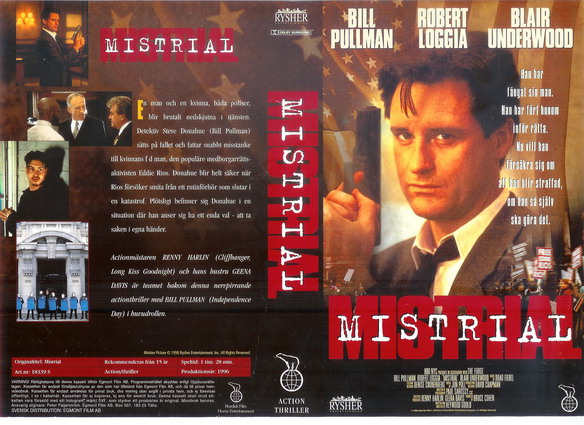
When a NYPD cop and her partner are murdered, overworked and stressed-out Detective Steve Donohue (Bill Pullman) follows a trail of circumstantial evidence that leads him to the door of the cop’s ex-husband, a community activist named Eddie Rios (Jon Seda). Donohue’s attempt to arrest Rios goes terribly wrong and results in a shootout that leaves Rios’s second wife and bother dead before the handcuffs are eventually slapped on his wrists.
Rios may be the one on trial but Donohue is now the one facing judgment. With protesters lined up outside the courthouse and the city’s mayor (James Rebhorn) more interested in his own reelection than in the pursuit of justice, Donohue knows that the only way he’ll be vindicated is if Eddie Rios is convicted. Unfortunately, that’s not what happens. Rios’s sleazy attorney (played by Josef Sommer) gets most of the evidence tossed out of court on a technicality and it appears that Rios is going to walk free. That’s when Donohue decides to take the court itself hostage, pulls out a gun, and demands that Rios immediately be put on trial for a second time, with the jury hearing all of the evidence that was originally thrown out of court.
Mistrial is an example of the good-cop-pushed-over-the-edge genre. Up until a few years ago, this was a very popular genre. Today, of course, it feels tone deaf and it’s a lot more difficult to sympathize with a cop, even a fictional one, complaining about being restricted by the constitution. The main problem with Mistrial is that it’s established early on that Eddie Ramos is guilty so there’s no real tension as to whether Donohue is doing the right thing by demanding a second trial. If there had been some ambiguity about whether or not Ramos was the murderer that Donohue claims he is, it would have made the film much more interesting and less predictable. The other problem is that Bill Pullman is just too naturally earnest and clean-cut to be convincing as an overworked cop who has been pushed into doing something crazy. Remembering back to the 90s, I think someone like Gary Sinise or William L. Petersen could have pulled off the role but Pullman’s just not right for it.
Robert Loggia has a few good moments as Pullman’s sympathetic captain. This was the 2nd time that Pullman and Loggia co-starred together. The first time was in Independence Day. The 3rd time would be in Lost Highway, a film that’s as different from Mistrial as day is from night.
Whenever the subject of Twin Peaks comes up, that question gets asked a lot. Marshall played the sensitive (and oft-ridiculed) motorcycle-riding rebel James Hurley on Twin Peaks and, after the show’s cancellation, he went on to play a key supporting role in A Few Good Men. Marshall’s role may not have been huge but he managed to hold his own against actors like Tom Cruise, Jack Nicholson, and Kevin Bacon.
And then after A Few Good Men, nothing.
Why did James Marshall disappear?
He starred in a movie called Gladiator.
No, not the Russell Crowe movie that won all the Oscars. This Gladiator is about Tommy Riley (played by James Marshall), a teenager who moves to Chicago from Massachusetts. As one of the only white kids in his new neighborhood, Tommy finds himself being harassed by the local gangs. One night, he gets into a fight in a parking lot. (Fortunately, none of the neighborhood gangs carry guns or knives. They settle everything with fists.) Pappy Jack (Robert Loggia) is so impressed with Tommy’s fighting skills that he recruits Tommy to fight in illegal, underground boxing matches. Normally, Tommy would say no but he needs the money to help his father (John Heard) pay off his gambling debts.
Once recruited, Tommy is trained by the wise Noah (Ossie Davis) and works for boxing promoter, Jimmy Horn. Horn is played by all-purpose bad guy Brian Dennehy, who gives such a villainous performance that even Lance Henriksen would say, “Dude, dial it down a notch.” Tommy befriends two other boxers, Romano (Jon Seda) and Lincoln (Cuba Gooding, Jr.). At the time that Gladiator was filmed, Marshall was hot off of Twin Peaks and Gooding was hot off of Boyz ‘n The Hood. Fortunately, Gooding’s role is actually pretty small so he survived Gladiator and was able to go on to win an Oscar for Jerry Maguire and play O.J. Simpson in American Crime Story. Marshall was less lucky.
At one time, I thought that no one could be a least convincing boxer than Damon Wayans was in The Great White Hype. Then I watched Gladiator and saw James Marshall dancing around the ring and throwing punches. Normally, good editing can be used to disguise a lack of athletic ability but both Marshall and Gooding are so miscast as boxers that all the editing in the world can’t help. Jon Seda, who actually was an amateur boxer before getting into acting, is more convincing in the ring but his character is so saintly that anyone watching will know better than to get too attached to him.
A still notorious flop at the box office, Gladiator was directed by Rowdy Herrington but it’s no Roadhouse.
“I may have dropped into Normandy on D-Day, but I still had Liberty in Paris or London. You Gyrenes had jungle rot and malaria.”
In 2001, HBO came out with a mini-series that detailed the experiences of the men of Easy Company, 506th Parachute Regiment of the 101st Airborne. This series was produced with loving care by Tom Hanks and Steven Spielberg. Two men who were instrumental in the success of an earlier World War 2 project called Saving Private Ryan. This series was called Band of Brothers and became one of the most critically-acclaimed mini-series of its time and has become part of the staple of military-themed shows and films that gets shown on Memorial and Veterans Day in the United States.
Even as this series was only a year old there was talk from some of its admirers about whether HBO and the team of Hanks and Spielberg would re-visit this era Tom Brokaw called “The Greatest Generation”. To re-visit and tell the stories of the men who fought on the other side of the European Theater in what was an even more hellish battlezone in the Pacific. It took almost 9 years, but the ending result is the mini-series called simply The Pacific.
The Pacific tells the story of three Marines of the 1st Marine Corps Division from their time before their unit ships out to the Pacific Theater of Operations and through some of the bloodiest and most savage battlefields of World War 2. There’s Gunnery Sgt. John Basilone (played by Jon Seda) who would show the sort of stoic heroism people nowadays would dismiss as a figment of Hollywood writers, but who actually did all the things only seen in action films. Bookending Basilone would be two newcomers to the art of war in PFC Robert Leckie (James Badge Dale of AMC’s recently cancelled series, Rubicon) and Cpl. Eugene “Sledgehammer” Sledge (Joseph Mazzelo from Jurassic Park). These two Marines are our guide through the unending hell that were the battles in Gen. MacArthur’s island-hopping campaign to beat back the Army and Naval forces of Imperial Japan.
It’s also these two men and their memoirs which detail their experiences during the war in the Pacific which make up the bulk of the narrative for the series. One would be Sledge’s With the Old Breed: At Peleliu and Okinawa which many consider as one of the best first-hand accounts of combat in the Pacific. The other one is Helmet for My Pillow by Leckie which was a more personal account of his time from Marine boot camp and experiencing a type of warfare in the Pacific which was new to a young man from the States. A type of warfare where the enemy didn’t surrender and would sacrifice his life in the service of one’s Emperor.
Basilone, Sledge and Leckie’s stories never come together but were told in concurrent fashion to show the audience the differing views of each. All three would go through the same meat-grinder that were the battles in immortalized places named Guadalcanal, Cape Gloucester, Peleliu, Iwo Jima and Okinawa.
We see Basilone’s heroism on Guadalcanal make him into a Stateside hero and taken away from those he fought beside to help push war bonds for the government. This change in environment for him doesn’t sit well with Basilone as we see the survivor’s guilt in him. Why does he get all the celebrity attentions when others like him were still fighting and dying the same battles he was just in months before. His story is the most poignant of the three as he finds happiness while training new Marines for the war only for his need to get back into the fight win out. The fact that all this happened for real makes his story even more memorable. Hollywood writers have tried to capture such moments and often-times fail. It was great to see Basilone’s story told for everyone to see that the world past, present and future has real-life heroes that Hollywood could never replicate but only imitate.
Jon Seda’s performance was in-line with what one thinks a gung-ho Marine should be but he brought a sense of realism to the role. He didn’t try to make Basilone more a hero than he already was. I like to compare his performance to that of Tom Hanks’ Capt. Miller in Saving Private Ryan and Damian Lewis’ Maj. Dick Winters in Band of Brothers. He was a man who did acts of bravery as seen by others on the battlefield and one which made him a celebrity to the civilians Stateside. But in the end he just saw it as him doing his job as he was trained and trying to keep his men alive. He didn’t see himself as a hero and while his Stateside role of war hero pushing war bonds did bring some perks he never fit in. Seda’s work in Part Eight where he meets his future wife was some of the best work in this series.
In Leckie’s story we see a man swept up in the great enlistment drive which happened right after the Japanese attack on Pearl Harbor. His story sees a cocky and smart young man wanting to do his part for the war effort yet not knowing the sort of sacrifices he’ll have to make or the horrors he will witness and inflict to survive day-to-day. We see Leckie quick to make friends in his unit during their training and then through their baptism of fire in the Battle of Tenaru before seeing the real horror of the war in the Pacific as his unit and the rest of the 1st Marine Division land of the island of Guadalcanal.
His time on Guadalcanal would soon erase any romanticized notion of honor and glory in battle Leckie may have had when he decided to enlist. As a writer in his civilian life prior to the war’s start he would continue to write his experiences in-between battles and skirmishes with the Japanese. Even when friends in his unit would die each and every day it seems Leckie seemed to want to keep that savagery at bay with his writing which would become a basis for his wartime memoirs. His story ends midway through the series and we won’t see him again until the final denouement as we see Leckie’s life as a civilian once again after the war. His final time in the warzone would be on the Battle of Peleliu (one of the bloodiest battles in USMC history and one that would be steeped in tragedy afterwards) where a severe concussive blast would render him unable to fight. It’s scenes on one of the hospital ships off the coast of Peleliu where Leckie’s own survivor’s guilt is temepered by the realization that any more time out in the battlefield would surely strip him of his humanity and turn him into the growing examples of battle-scarred and psychologically damaged Marines who have seen and done too many horrible things to ever return back to their civilian life intact.
The final episode shows Leckie (with James Badge Dale in a confident and cocky turn) the one who seem to adjust to the life back to civilian life with a modicum of ease. While he still carries the scars of battle in his psyche its that time in the Pacific which has also given Leckie the confidence to get his old job back at the local paper he used to work for and woo the pretty girl next door he had been shy and awkward with in the very first episode. While his performance wasn’t as good as Seda it was still a noteworthy one which brought the person of PFC Robert Leckie to the masses watching this series.
Lastly, we come to the third of the three whose story the series revolves around. The story of one Cpl. Eugene Sledge who, like Leckie, wanted to do his part for the war effort. While his young age at the start of the war prohibited him from enlisting without his parents’ consent he finally gets a chance a year later when he is of age and just in time for him to join the Corps, train and see his first taste of combat in the Pacific on the killing grounds of Peleliu then the hellish nightmare battlefields of Okinawa.
Sledge’s story is the most complex and runs the gamut of dark emotions a young man should never have to take. His young idealism in helping his country in its time of need will get some tempering even before he ships out to become a Marine. His father tells him of having to treat young men from an earlier era from another major war which had engulfed the world. His father spoke about how some of these young men who came back whole physically didn’t do so psychologically. He spoke about how the horrors of war seemed to have “ripped the souls” from these returning young men and how he didn’t want his son to go through the same thing. But as young, headstrong men who think they’re invincible are wont to do he enlists anyway.
The performance by Joseph Mazzello (hard to believe this young man is the same young boy who ran and escaped from CGI raptors and T-Rex on Spielberg’s Jurassic Park) tops all other performances in this cast full of noteworthy and great acting work. We don’t just see his Sledge go through each horrific scene after scene of battle and its aftermath with is emotional and psyche gradually sliding down into the abyss, but we could actually see Mazzello’s body, mannerisms and the look in his eyes make the same changes. I fully bought into his performance as the young idealistic young man from Mobile, Alabama slowly turned into the same uncaring, savage Marine one had to become to survive the war in the Pacific. He had seen enough bodies of Marines and enemy Japanese torn apart and strewn about everywhere one looked that one became inured to them.
One of the most powerful scenes in the series has Sledge confronted by the aftermath of what he and his mortar-team might have been responsible for. It was deep into the campaign to take the island of Okinawa and Sledge and his fellow Marines have been brought to the edge of insanity by all the fighting. A fight which has some of them questioning why the enemy just doesn’t surrender. An enemy willing to suicide charge into heavily armed Marines and also willing to herd Okinawan civilians into the line of fire. It’s this brutality by the enemy and mirrored by his fellow Marines which brings Sledge to a darker side of his nature which we as an audience don’t see a way out for him. But in the scene close to the very end of Part Nine brings Sledge back from the abyss and reminds him that there’s still humanity in him and the very Marines he has been with since the beginning. His reaction afterwards to a group of new Marines killing a young Japanese soldier for sport sickens him. We see Sledge realizing how just days and months before he was spouting the very same savage hate for the enemy as these newly arrived Marines looking for their first kill.
Of the three it’s Sledge who will carry the deepest scars of the Pacific for the rest of his life. We see the extreme difficulty he has in adjusting back to civilian life. Nightmares haunt his nights and flashbacks of the battlefields hound his steps in the daytime. His mental and emotional breakdown as he tries to go back to hunting with his father encapsulates this series at its most basic core. This series doesn’t have the camaraderie and brotherhood established between fellow soldiers that its predecessor had. While Band of Brothers also showed the horrors of war in Europe it was balanced by the hope that everyone in Easy Company had their brothers in arms to back them up when the bullets flew and shells exploded. This wasn’t the case in the Pacific.
Sure the were the same camaraderie and brotherhood, but the type of enemy fought in abject conditions which made downtime from battle almost as bad as the battle themselves didn’t bring hope. It only brought misery and a fatalistic view of the world Sledge and his fellow Marines existed right there and then. His breakdown in the final episode shows how those who fought in the Pacific definitely bore deeper scars and returned more damaged than their European brothers. Scars not just inflicted by the enemy but those they’ve inflicted on themselves by fighting savagery with their own form of savagery. It was a kill or be killed world and returning back from that brink didn’t happen to everyone and those who were able to return did so not whole.
I understand that some were disappointed by how The Pacific turned out. How it didn’t live up to the standards created by Band of Brothers. Some have said that there was no main focus to the narrative the way its predecessor strictly followed the men of Easy Company through the battles in Europe. They’ve pointed out how some episodes took too much time to get to the battle scenes. I think trying to compare The Pacific to Band of Brothers is foolish and a doesn’t give this follow-up mini-series the proper due it deserves.
The Pacific wasn’t trying to tell Band of Brother in the Pacific. While the two series do take place in the same world war the circumstances surrounding the storylines in both series diverge to take different paths. The first series almost seem like men fighting for a common cause and the good fight against tyranny. The Pacific is all about revenge. Revenge and payback for Pearl Harbor at first then as the series moves forward it becomes revenge and brutality for seeing their buddies die. This series showed nothing noble about the fighting in the Pacific. It was just a struggle to survive from one day to the next.
So, while this series may not be the second coming of Band of Brothers it does stand on its own merits and I think was the more powerful of the two. It didn’t flinch away or dismiss the darker side of the “good guys” and showed that war truly is hell and that those who fight and live through it were truly never the same. I say watch The Pacific and stop trying to compare it to Band of Brothers or any of the several shows dealing with the current wars. The Pacific should be watched as seen as the bookend to Band of Brothers. A darker journey to seeing the war of the “Greatest Generation” from the eyes of those who fought and died on the islands and jungles of the Pacific.