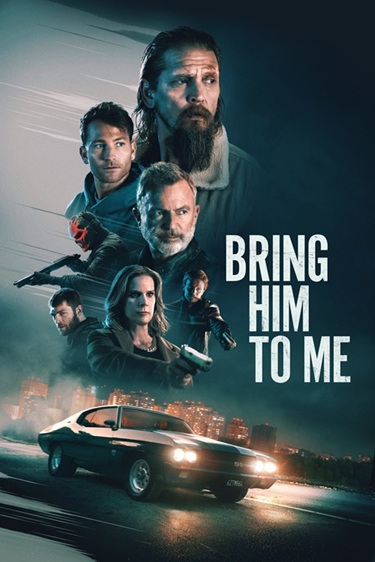
Insomnia File #79: Bring Him To Me (dir by Luke Sparke)


What’s an Insomnia File? You know how some times you just can’t get any sleep and, at about three in the morning, you’ll find yourself watching whatever you can find on cable or streaming? This feature is all about those insomnia-inspired discoveries!

Are you having trouble getting to sleep tonight?  Is your excitement about the upcoming Horrorthon keeping you awake?  Well, if that’s case, you can always go over to YouTube and watch the 2023 film, Bring Him To Me.

In Bring Him To Me, Barry Pepper plays the driver.  He’s a quiet man, a career criminal who is good at his job but who also doesn’t seem to particularly like it.  We don’t really learn much about the Driver, at least not until the very end of the film.  But one look at Pepper’s rough-hewn face and his world-weary eyes tells us more about him than any monologue could.  He’s someone who has seen things that he would rather forget.

In this film, his job is to transport a talkative and asthmatic man credited as being the Passenger (Jamie Costa).  We do eventually learn the Passenger’s name and quite a bit about his family situation.  That’s because the Passenger will not stop talking.  While the Driver is trying to do his job and transport the Passenger without getting emotionally involved in any of it, the Passenger simply will not stop revealing details about himself.

The film takes place entirely at night.  The Driver finds himself being pursued by a number of different people, including a shady pawn shop owner (Sam Neill) who wants vengeance for both a theft and a beating.  The film doesn’t always follow a linear timeline so it takes a while before it becomes clear just exactly what’s going on.  Fortunately, there’s enough action and moral ambiguity to hold the viewer’s attention.  This is the type of film that demands a lead who can keep everything from spinning out of control and Barry Pepper fulfills the role admirably.

I have to admit that, when Bring Him To Me started, I didn’t have much hope for it.  The non-linear timeline, the occasional forced quirkiness of the dialogue, and the constant cursing made the film seem like it was just another heist film made by someone who was trying to be the next Tarantino.  That said, the film won me over.  Barry Pepper won me over.  The gorgeous night cinematography won me over.  And eventually, even the twisty story won me over.  In the end, director Luke Sparke managed to bring all the disparate elements together into an intriguing noir-flavored film.

Bring Him To Me surprised me by actually being a decent movie.  That’s one of the fun things about watching a random movie in the middle of the night.  You never know what you might discover.
Previous Insomnia Files:

  1. Story of Mankind
  2. Stag
  3. Love Is A Gun
  4. Nina Takes A Lover
  5. Black Ice
  6. Frogs For Snakes
  7. Fair Game
  8. From The Hip
  9. Born Killers
  10. Eye For An Eye
  11. Summer Catch
  12. Beyond the Law
  13. Spring Broke
  14. Promise
  15. George Wallace
  16. Kill The Messenger
  17. The Suburbans
  18. Only The Strong
  19. Great Expectations
  20. Casual Sex?
  21. Truth
  22. Insomina
  23. Death Do Us Part
  24. A Star is Born
  25. The Winning Season
  26. Rabbit Run
  27. Remember My Name
  28. The Arrangement
  29. Day of the Animals
  30. Still of The Night
  31. Arsenal
  32. Smooth Talk
  33. The Comedian
  34. The Minus Man
  35. Donnie Brasco
  36. Punchline
  37. Evita
  38. Six: The Mark Unleashed
  39. Disclosure
  40. The Spanish Prisoner
  41. Elektra
  42. Revenge
  43. Legend
  44. Cat Run
  45. The Pyramid
  46. Enter the Ninja
  47. Downhill
  48. Malice
  49. Mystery Date
  50. Zola
  51. Ira & Abby
  52. The Next Karate Kid
  53. A Nightmare on Drug Street
  54. Jud
  55. FTA
  56. Exterminators of the Year 3000
  57. Boris Karloff: The Man Behind The Monster
  58. The Haunting of Helen Walker
  59. True Spirit
  60. Project Kill
  61. Replica
  62. Rollergator
  63. Hillbillys In A Haunted House
  64. Once Upon A Midnight Scary
  65. Girl Lost
  66. Ghosts Can’t Do It
  67. Heist
  68. Mind, Body & Soul
  69. Candy
  70. Shortcut to Happiness
  71. Dallas Cowboy Cheerleaders
  72. Dallas Cowboy Cheerleaders II
  73. Don’t Kill It
  74. Listen To Me
  75. 300 Miles For Stephanie
  76. Hackers
  77. Rolling Vengeance
  78. Nails

Film Review: Go (dir by Doug Liman)


“What is rock and roll?” — Fire Up The Shoeshaw by Lionrick

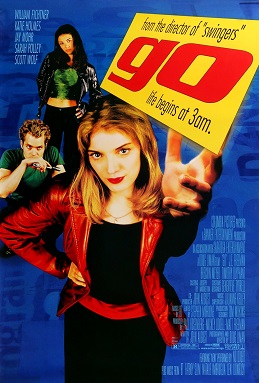
In 1999’s Go, Sarah Polley plays Ronna, a supermarket cashier who is on the verge of getting kicked out of her apartment because she can’t pay the rent. (As Julianne Moore put it in Boogie Nights, “My landlord is a real jerk.”) When Adam (Scott Wolf) and Zack (Jay Mohr) approach her and ask if she can hook them up with twenty ecstasy pills, Ronna agrees. Her co-worker, Simon (Desmond Askew), is a low-level dealer and he’s gone to Las Vegas for the weekend. Ronna decides to get the pills from Simon’s connection, Todd Gaines (Timothy Olyphant). Because Ronna doesn’t have enough money to pay Todd, she agrees to leave her friend Claire (Katie Holmes) behind as collateral.

Meanwhile, Simon goes to Vegas with Marcus (Taye Diggs), Singh (James Duval), and Tiny (Breckin Meyer). While Singh and Tiny deal with the consequences of eating too much shrimp and Marcus deals with people assuming that he must work at the casino, Simon nearly burns down the hotel and then manages to piss off both a bouncer (Jimmy Shubert) and his father (J.E. Freeman).

Finally, in the film’s third storyline, Adam and Zack are revealed to be two soap opera actors who are secretly dating and who were busted by a bizarre cop named Burke Halverson (William Fichtner). Halverson wants Adam and Zack to help him set up Todd Gaines. However, beyond that, Halverson really wants Adam and Zack to have Christmas dinner with him and his wife (Jane Krakowski). Adam and Zack suspect that Halverson has ulterior motives and he does. However, it turns out that neither one of them could have guessed what Halverson really wants them to do.

Go is one of those films that seems like the greatest thing ever made when you’re a teenager and you’re watching it at your friend’s house with the volume turned down super low so that their parents don’t come in the room and ask why William Fichtner is wandering around naked while talking to Jay Mohr about cologne. Under those circumstances, it makes sense that the employees of a grocery store would all look like models and that they would spend their break playing the dead celebrity game. When you’re the right age, it doesn’t matter that Todd Gaines is a homicidal drug addict. All that matters is that Timothy Olyphant has probably never been sexier than he was in this film.

Once you grow up, it becomes a bit more obvious that Ronna, Simon, and even Adam and Zack are basically complete and total idiots and that they really have no one to blame but themselves for the trouble that they get into. When you’re a teenager and you watch Go, you ask yourself, “How could anyone evict someone during the holidays!?” When you’re an adult and you watch Go, you ask yourself, “Why didn’t you just pay your rent, Ronna?”

That said, I still love Go. Yes, it’s basically a rip-off of Pulp Fiction, but it’s still an energetic, well-acted, and surprisingly funny movie and I love the soundtrack. I love the fact that the film actually earns the right to be called Go by giving us a narrative that never stops to catch its breath. It’s a film about being young and being stupid and it perfectly captures why so many of us have nostalgia for the mistakes we made years ago. Go was Doug Liman’s follow-up to Swingers and feels like the type of film that would have been produced by Trent and Sue. It’s derivative, irresponsible, and oddly charming. It’s a mix of Los Angeles and Vegas that encourages us all to never stop moving.

The TSL Grindhouse: The Black Connection (dir by Michael Finn)


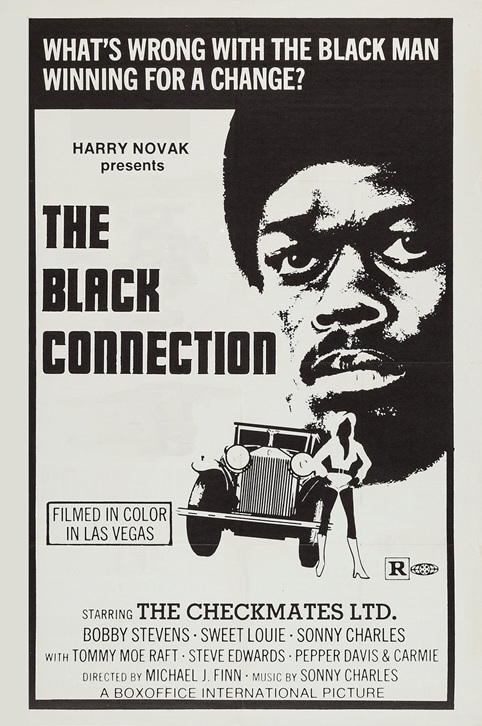
Miles Carter (Bobby Stevens) is a smooth-talking Vegas drug dealer who owes the Mafia a good deal of money due to some missing cocaine.  Knowing that he’s in trouble but still confident that he can outsmart a bunch of goombahs in ill-fitting suits, Miles heads to Albuquerque so he can make another drug deal that will net him enough money to pay off the mob.  But Miles isn’t actually planning on paying back the mob.  Instead, he’s planning on taking whatever money he makes and then fleeing to Mexico.  However, the Mafia has an assortment of overweight hit men with bad haircuts and they’ve all been sent to take down Miles.

That’s the plot of 1974’s The Black Connection.  Or, at least, I think that’s the plot.  It’s not a particularly easy film to follow.  The film starts out with nearly thirty minutes of minor characters talking to each other and making phone calls.  Once Miles does finally show up, it’s difficult to really know what he’s trying to pull because 1) the dialogue is so muddled that it’s nearly impossible to make out and 2) Bobby Stevens was not a particularly good or compelling actor.  Instead, he was the lead singer for a band called The Checkmates, ltd.  His bandmates appear in minor roles and also perform the film’s rather generic score.  Bobby Stevens supposedly came up with the story for The Black Connection but it’s interesting to note that, in the opening credits, there’s no “written by” credit.  Instead, someone is credited with being a script supervisor.   That would perhaps explain why the film doesn’t really seem to be complete story as much as it’s just a bunch of random scenes that have been strung together.

The Black Connection is not a long film but I would still say that it’s probably about 60% filler.  This is one of those films where no one does anything without announcing that they’re going to do it and then debating whether or not they should actually do it before doing it.  It’s revealed that phones make Miles paranoid and yet the entire film is full of people talking and talking and talking on the phone.  I lost track of how many shots there were of people dialing a landline and then waiting for someone to answer.  There were also multiple shots of people in phone booths.  At times, the film felt as if it should have been put in a time capsule so that, decades later, people could experience what it was like to live in the days before the invention of the iPhone.

There are a few scenes that work or, at the very least, are watchable.  A scene in which a fat mobster shows off his karate skills is interesting because …. well, he’s a fat mobster.  A scene in which two other mobsters grin while firing their guns into a car is notably gruesome and made all the more disturbing by the joy that the mobsters take in their work.  Finally, the film ends on a downbeat note that would probably be more effective if not for the buckets of fake blood that were apparently splattered around right before the director shouted, “Action!”

This film was produced by the infamous Harry H. Novak.  It’s nowhere near as sleazy as some of Novak’s other films.  That’s actually kind of a shame.  Sometimes, sleaze is the only thing that can save a film this inept.

Film Review: Swingers (dir by Doug Liman)


“Vegas, baby, Vegas!”

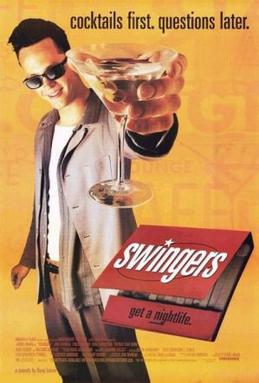
1996‘s Swingers is a very quotable movie.  “You’re so money and you don’t even know it,” is one of the more famous lines.  Whenever I watch the movie, I always laugh when Mike (Jon Favreau) reacts to Sue (Patrick Von Horn) pulling a gun during an argument in a parking lot by saying, “Haven’t you seen Boyz N Da Hood?  Now, one of us is going to get shot!”  But for me, my favorite line will always be Trent yelling “Vegas, baby, Vegas!” as he drives Mike to Nevada’s best-known city.

There’s a sincerity to the way Trent yells it, one that you might miss on your first viewing.  Trent is the aspiring actor who is confident and who always seems to know the right thing to say and who manages to keep his cool no matter how potentially embarrassing the situation.  He’s a bit immature and a little bit loud but he’s the type of friend that every group needs.  Mike is a comedian who moved from New York to Los Angeles.  He hosts a night at a comedy club.  He also asks for an application when he goes to Starbucks.  He’s just been dumped by his girlfriend and he’s struggling to get over her.  He’s still in that stage where all he can talk about is his former relationship.  He’s the sweet guy who makes you go “Awww!” and little else.

Trent is convinced that a trip to Vegas is what Mike needs.  Mike is trying convince himself that Trent is right.  It’s a long and a hot drive.  When Trent suddenly yells, “Vegas, baby, Vegas!,” it’s not just his way of keeping Mike awake.  It’s his way of promising Mike that things are going to get better.  To Trent, Vegas is the solution to all of Mike’s L.A. woes.  Once they arrive in Vegas, Trent neve stops believing.  It doesn’t matter that he and Mike get exiled from the high rollers table at a casino and end up gambling with a bunch of elderly tourists.  It doesn’t matter that the waitress (Deena Martin) that Trent picks up lives in a rundown mobile home.  And, in the end, it even doesn’t matter that Mike ends up spending the entire night telling the waitress’s roommate about his ex-girlfriend.  What matters is that Trent believes that he has the solutions to everyone’s problems.  For Mike, that solution is Vegas.  For Sue, it’s playing hockey.  Everyone has their own personal Vegas.

Swingers is a classic example of American independent film.  Jon Favreau wrote the script and based it on his own experiences as a struggling actor.  The cast was largely made up by Favreau’s friends.  Vince Vaughn has said that Trent was largely based on himself, which is why he asked that there be at least one scene that revealed that Trent really did care about his friends.  The story is deliberately loose.  Mike tries to get over his ex-girlfriend while receiving largely useless advice from his friends.  Rob (Ron Livington) moves to Los Angeles and provides somewhat gentler advice than Trent.  Sue pulls a gun on some wannabe white gangstas and talks about how he grew up on the tough streets of Los Angeles.  (He actually grew up in Anaheim.)  The effortlessly cool Charles (Alex Desert) declares every party that the group goes to to be “dead.”  As a group they spend a lot of time talking about movies.  They complain about Tarantino stealing from other directors before an extended sequence of them walking in slow motion down a Los Angeles street while the Average White Band plays on the soundtrack.

The heart of Swingers together is the very real friendship between the characters. with Trent holding it all together.  Mike and Sue tolerate each other because they both want to hang out with Trent.  Even the momentary crisis caused by Sue pulling his gun on the guys in the parking lot is solved by the fact that the guys all want to hang out with Trent as well.  Problems in Swingers are not solved by guns or high-speed chases.  They’re solved by video games, beer, dancing, and maybe a trip to Vegas.  They’re solved by doing your own thing and not worrying about “the rules.”  They’re solved by just being in the right place at the right time.   They’re solved by Mike dancing with Heather Graham and then hanging up on his ex right when she’s saying, “I love–”

Today, of course, Swingers is very much a period piece.  It’s a film from a time when you actually had to get in a car and drive to Vegas if you wanted to gamble.  It’s a film from a period where Mike has to ask permission to use someone else’s phone to call his ex and when there was a grace period between leaving a bad message on a machine and having to worry about anyone having heard it.  For me, it’s always interesting to see Vince Vaughn, Jon Favreau, and Ron Livingston back when they were all still so young and, in the case of Vaughn and Favreau, thin.  It’s a film that celebrate friendship, love, and being young enough to still feel like anything can happen.

It’s a film that celebrates everyone’s personal Las Vegas.

Guilty Pleasure No. 131: Sudden Death (dir by Peter Hyams)


Oh, Sudden Death, how I love you!

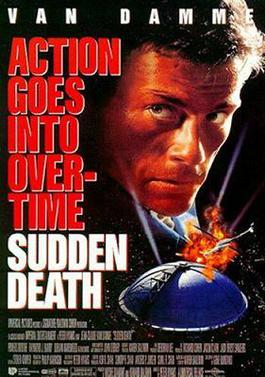
At first glance, 1995’s Sudden Death appears to just be another “Die Hard in a—” type of film. The final game of the Stanley Cup Final is being played in Pittsburgh. The Vice President (Raymond J. Barry) will be attending. Security’s tight, but not tight enough to stop rogue Secret Service agent Joshua Foss (Powers Boothe) and his band of quirky mercenaries. The hockey players continue to fight on the ice. The fans in the stadium continue to cheer every punch thrown and tooth knocked out. None of them know they are currently being held hostage as part of Foss’s plot to extort the government out of several billion dollars.

Fireman Darren McCord (Jean-Claude Van Damme) is at the game with his son and his daughter. He just wants a good bonding experience with his children. Instead, in true John McClane fashion, he finds himself sneaking around the arena, trying to defuse the bombs Foss has set and also trying to rescue the Vice President. It’s not easy, even for someone like Jean-Claude Van Damme.

As I said, this film was obviously inspired by Die Hard. But not even Bruce Willis ever found himself fighting for his life against a terrorist wearing a big penguin costume. Van Damme not only defuses bombs but also finds time to put on a goalie’s costume and hit the ice. He manages to block the puck, then looks up at the stands and gives his son a meaningful look. Even with the mask covering his face, his son recognizes him. Meanwhile, up in the VIP box, Powers Boothe appears to be having a wonderful time chewing the scenery. Even though he’s playing the bad guy in a Die Hard rip-off, Boothe doesn’t make the mistake of trying to imitate the great Alan Rickman. Instead, Boothe brings his own rugged style to the role of Joshua Foss. It’s hard not to appreciate a villain who can casually threaten to blow up a stadium without breaking a sweat. When someone sensibly points out that Foss would probably die in the explosion as well, he merely shrugs as if to say, “Let’s do it and be legends.”

And I haven’t even gotten to the bit with the helicopter yet….

Sudden Death is a big, ludicrous, and wonderful movie. It’s the type of action film that could only have starred Van Damme. Sylvester Stallone and Bruce Willis may have been better actors, but Stallone would have taken the project too seriously and Willis’s wiseass persona would have sabotaged the film’s more earnest moments. Arnold Schwarzenegger may have been bigger, but there’s no suspense to watching Schwarzenegger beat up someone in a penguin costume. Steven Seagal would have made you root for the penguin. Only Van Damme could have played Darren McCord and made you cheer for him whether he was fighting terrorists or trying to impress his children. Director Peter Hyams directs with an anything-goes sort of energy. The same genius that somehow made me cry when Elliott Gould and James Brolin ran through the cemetery in Capricorn One is present in Sudden Death’s best scenes.

Sudden Death is a true pleasure. No need to feel too guilty about this one!

Previous Guilty Pleasures

  1. Half-Baked
  2. Save The Last Dance
  3. Every Rose Has Its Thorns
  4. The Jeremy Kyle Show
  5. Invasion USA
  6. The Golden Child
  7. Final Destination 2
  8. Paparazzi
  9. The Principal
  10. The Substitute
  11. Terror In The Family
  12. Pandorum
  13. Lambada
  14. Fear
  15. Cocktail
  16. Keep Off The Grass
  17. Girls, Girls, Girls
  18. Class
  19. Tart
  20. King Kong vs. Godzilla
  21. Hawk the Slayer
  22. Battle Beyond the Stars
  23. Meridian
  24. Walk of Shame
  25. From Justin To Kelly
  26. Project Greenlight
  27. Sex Decoy: Love Stings
  28. Swimfan
  29. On the Line
  30. Wolfen
  31. Hail Caesar!
  32. It’s So Cold In The D
  33. In the Mix
  34. Healed By Grace
  35. Valley of the Dolls
  36. The Legend of Billie Jean
  37. Death Wish
  38. Shipping Wars
  39. Ghost Whisperer
  40. Parking Wars
  41. The Dead Are After Me
  42. Harper’s Island
  43. The Resurrection of Gavin Stone
  44. Paranormal State
  45. Utopia
  46. Bar Rescue
  47. The Powers of Matthew Star
  48. Spiker
  49. Heavenly Bodies
  50. Maid in Manhattan
  51. Rage and Honor
  52. Saved By The Bell 3. 21 “No Hope With Dope”
  53. Happy Gilmore
  54. Solarbabies
  55. The Dawn of Correction
  56. Once You Understand
  57. The Voyeurs 
  58. Robot Jox
  59. Teen Wolf
  60. The Running Man
  61. Double Dragon
  62. Backtrack
  63. Julie and Jack
  64. Karate Warrior
  65. Invaders From Mars
  66. Cloverfield
  67. Aerobicide 
  68. Blood Harvest
  69. Shocking Dark
  70. Face The Truth
  71. Submerged
  72. The Canyons
  73. Days of Thunder
  74. Van Helsing
  75. The Night Comes for Us
  76. Code of Silence
  77. Captain Ron
  78. Armageddon
  79. Kate’s Secret
  80. Point Break
  81. The Replacements
  82. The Shadow
  83. Meteor
  84. Last Action Hero
  85. Attack of the Killer Tomatoes
  86. The Horror at 37,000 Feet
  87. The ‘Burbs
  88. Lifeforce
  89. Highschool of the Dead
  90. Ice Station Zebra
  91. No One Lives
  92. Brewster’s Millions
  93. Porky’s
  94. Revenge of the Nerds
  95. The Delta Force
  96. The Hidden
  97. Roller Boogie
  98. Raw Deal
  99. Death Merchant Series
  100. Ski Patrol
  101. The Executioner Series
  102. The Destroyer Series
  103. Private Teacher
  104. The Parker Series
  105. Ramba
  106. The Troubles of Janice
  107. Ironwood
  108. Interspecies Reviewers
  109. SST — Death Flight
  110. Undercover Brother
  111. Out for Justice
  112. Food Wars!
  113. Cherry
  114. Death Race
  115. The Beast Within
  116. Girl Series
  117. Gone in 60 Seconds
  118. Swordfish
  119. Marked For Death
  120. The Internship
  121. The Angry Red Planet
  122. 2012
  123. Old School
  124. No Escape
  125. In Death Series
  126. Alligator
  127. Little Annie Fanny
  128. Wicked Wanda
  129. Congo
  130. The 13th Warrior

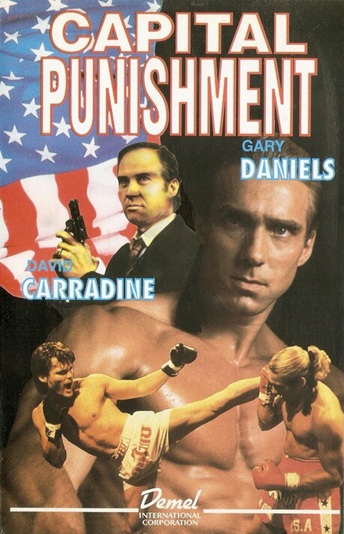
Capital Punishment (1991, directed by David Huey)


A new synthetic drug nicknamed “Kick” is creating havoc in Asia. “9 out of 10 children have been born with birth defects” due to their parents using Kick.  A syndicate led by Nakata (Tadashi Yamashita) is planning on brining Kick into the United States.  The government does the only thing that makes sense.  They turn to a kickboxer named James Thayer (Gary Daniels) to stop the Kick from entering the U.S.  The only problem is that Nakata was once James’s sensei and the head of the DEA (David Carradine) is secretly working with Nakata!

The plot doesn’t make any sense.  Does it have to?  If you’re watching this movie because Gary Daniels is in it, you know what you’re getting into.  Scene after scene, Daniels beats someone up.  He beats them up outside.  He beats them up in hallways.  He beats them up on rooftops.  Sometimes, I wasn’t sure who he was beating up or why but that’s to be expected with a Gary Daniels films.  Eventually, the bad guys kidnap Gary’s equally lethal wife (Ava Fabian) and Gary finally gets some motivation.  Even when motivated, Gary Daniels can’t act but he still does his best with the weak one-liners that the script gives him.  He’s the human equivalent of Homer Simpson shouting, “Die, bad robots, die!”  (With a cool dry wit like that, I could be an action hero.)

Don’t get too excited about David Carradine being second-billed.  He spends most of this movie either on the phone or driving a truck.  Do get excited over the way he calls Gary Daniels a “son of a bitch” at the end of the movie.  It’s as if he finally woke up.  As Nakata, Tadashi Yamashita is more committed to his role than either Daniels or Carradine.  He gets to deliver the inevitable “I am a capitalist” speech.

This may sound weird but I feel like I could watch this film a hundred times more.  It has no coherent plot.  It has absolutely no budget.  But it did have nonstop fights and Gary Daniels stiffly trying to joke after killing someone.  It’s dumb but hypnotic, the type of film where a bad guy gets shoved out of a helicopter for asking if he’ll be getting a fair share of the loot and no one really seems to notice.

I don’t know why it’s called Capital Punishment.  Does it matter?

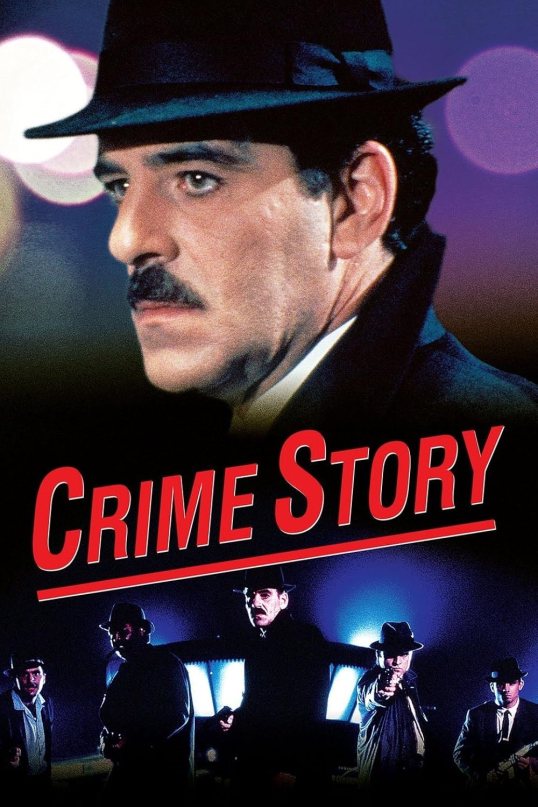
Retro Television Review: Crime Story 1.21 “Ground Zero”


Welcome to Retro Television Reviews, a feature where we review some of our favorite and least favorite shows of the past!  On Mondays, I will be reviewing Crime Story, which ran on NBC from 1986 to 1988.  The entire show can be found on Tubi!

This week, the first season comes to a close.

Episode 1.21 “Gound Zero”

(Dir by Peter Medak, originally aired on March 13th, 1987)

In Las Vegas, the media is focused on two things: the upcoming atomic bomb test at Yucca Flats and the trial of Ray Luca.

Pauli, the star witness, is being kept in an underground bunker at an Air Force base. Danny comments on the fact that, if America and Russia do go to war and an atomic missile hits Nevada, Pauli would probably be the only survivor. It would be up to Pauli to repopulate the planet. Torello eventually allows Pauli’s girlfriend, Donna (Audrey Matson), to start visiting him. Donna says she loves Pauli. Torello shrugs.

Pauli keeps his end of the deal. He testifies against Luca. However, Frank Holman gives an interview outside the courtroom and tells the press that Luca was the king of organized crime in Las Vegas. The next day, the headline of the local newspaper announces that Luca was the “king of crime.” Disguising himself as the waiter assigned to deliver room service to the sequestered jury, Holman makes sure that the jurors see the headline. The trial judge has no choice but to declare a mistrial. As he walks out of the courtroom, Luca stops in front of Pauli and tells him, “You did what you had to do,” and apologizes for raping Donna.

In Vegas, Luca is upset to discover that gangster Nat Martino (James Russo) is moving in on his territory. Luca is prepared to go to war, but Manny Weisbrod informs Luca that he is to work with Martino. Weisbrod no longer has any confidence in Luca’s abilities. At the same time, Torello learns that Martino is actually an informant. Torello arranges for that information to get leaked to Luca. When Luca heads over to Martino’s favorite brothel, Torello and the other members of the MCU are waiting for him.

Breaking into Martino’s room, Luca manages to shoot and kill Martino before taking several bullets himself. Wounded, Luca escapes through a back window. Pauli, having decided that his place is with Luca, is there to pick him up and drive him out of town.

The next day, a bandaged Luca discovers that Pauli has driven him out to his latest hideout, a seemingly abandoned house in the desert. The house is full of mannequins. Luca looks at a chair and sees that it is the property of the Atomic Energy Commission. Realizing that they’re at Yucca Flats, Pauli and Luca run out to Pauli’s car. As they drive through the desert, a mushroom cloud blossoms in the distance.

And the episode ends!

Did Luca and Pauli escape the nuclear test? Hopefully, we’ll find out next week. I hope they did because it’s hard to imagine Crime Story without them. They were a great pair of villains.

The first season was good, if uneven. The pilot was outstanding, but some of the subsequent Chicago episodes seemed to lose their focus. Torello’s domestic drama was never as interesting as the show wanted it to be, and it took me a while to really warm up to David Abrams and his abrasive idealism. The other members of the MCU often felt like ciphers. (Even after 21 episodes, I still don’t feel like I know much about any of them beyond their almost cult-like loyalty to Torello.) But when the show moved to Vegas, things improved immeasurably. The glitz of Vegas worked perfectly for the show’s hyperreal style, and Stephen Lang’s performance in the role of David Abrams improved as well.

That said, Dennis Farina was the main strength of the first season. Farina played Torello as being intense, ruthless, and maybe just a little unhinged. The only real difference between Luca and Torello is that Torello carries a badge and Luca doesn’t have the Constitution holding him back. Otherwise, Luca really does represent Torello’s own dark side. In his pursuit of Luca, Torello isn’t just trying to enforce the law. He’s also trying to destroy the man that, had Torello not joined the police force, he could have become.

Next week, we’ll start the second season!

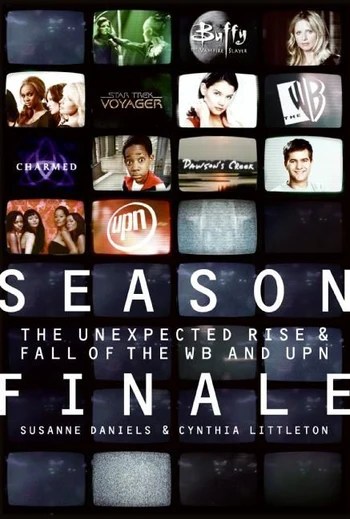
The Adventures of a History Nerd: Season Finale: The Unexpected Rise and Fall of the WB and UPN by Susanne Daniels and Cynthia Littleton


I miss the WB.

The so-called fifth television network launched in 1995 and ceased operations in 2006. That’s when the WB merged with the sixth television network, UPN, and became known as the CW. (The CW still exists, even though I haven’t watched it since they canceled Dynasty in 2022.) The WB never got much respect from the critics, even though some very important shows aired on the network. Buffy the Vampire Slayer was a WB show. So were Angel, Charmed, Felicity, One Tree Hill, Supernatural, Gilmore Girls, 7th Heaven, Roswell, Smallville, and What I Like About You. Most critics usually considered those shows the exception to the rule. They were the shows that aired in between stuff like Beauty and the Geek and Nick Freno: Licensed Teacher. Well, that’s fine. For those of us of a certain age, it didn’t matter that the WB aired a lot of shows that only lasted a few weeks. What mattered is that the network was home to the shows we planned our nights around.

Critically, UPN got even less respect than the WB. I associated the channel with Star Trek and professional wrestling, neither of which held much appeal for me in the aughts. However, when Buffy switched from the WB to UPN, I followed it to its new network. I watched Veronica Mars and idolized the title character. I watched America’s Next Top Model and cheered for any model who had the guts to talk back to the judges.

The 2006 merger between the two networks hit me harder than it probably should have. I had grown up with the WB and UPN as scrappy rivals, two networks that were continually battling for fifth place. They were the networks that aired shows that seemed to actually speak to what I was going through in my life at the time. It almost felt like a sacrilege to have the two networks come together. Even though some of my favorite shows continued on the CW, things just never felt the same. If the WB and UPN felt like cocky upstarts, the CW seemed like something that had been born out of defeat.

First published in 2007, Season Finale: The Unexpected Rise and Fall of the WB and UPN is a look at the short but colorful history and rivalry of the WB and UPN. Co-author Susanne Daniels was the president of entertainment at the WB, so it’s not surprising that the book tends to go into more detail about the WB’s operations than UPN’s. It makes for an entertaining read. Daniels writes like someone who truly loves television, and the book has plenty of behind-the-scenes information about the shows I grew up with. If nothing else, the WB sounds like it was a fun place to work. UPN, meanwhile, sounds like it was a place where everyone was continually jealous of the WB and also stressed over having to defend programming like Shasta McNasty and The Secret Diary of Desmond Pfeiffer.

The book is only 19 years old, but there are times when it feels like an artifact from a distant age. It was written before #MeToo, before woke, even before the rise of streaming. When I recently reread it, I found myself cringing when I reached the section about the creation and casting of 7th Heaven. The original choice for the role of the saintly Reverend Camden was Beau Bridges, but Bridges turned out to be too expensive. When an executive mentions Stephen Collins, the response is: “I’ve always liked him.”

AGCK!

Of course, today that’s not something anyone would voluntarily say about Stephen Collins. But in 2007 he still had that image of being the type of nice, down-to-earth guy you’d be happy to have as a neighbor. Reading the book reminded me of just how shocked almost everyone was when Collins’s ex-wife first released the tapes of him admitting to inappropriately touching a minor. At the time, I think a lot of people assumed Collins was somehow being set up because that just wasn’t the image he had at all. Of course, Collins himself later admitted it was true.

The book is full of people who have since fallen from grace, and as such it becomes very tempting to try to read between the lines. Joss Whedon is described as being talented but intense, and reading about him reminded me of just how much some of us used to really respect Whedon and his shows. (For the record, I grew disenchanted with Whedon in December of 2016 when he tweeted that it was offensive to say “Happy holidays” because, for him, “they won’t be.” Get over yourself, Joss.) Les Moonves shows up toward the end of the book, and there are frequent references to his reputation for being a hard-driving boss. Even Harvey and Bob Weinstein make a cameo appearance, sending two of their goons down to basically hold Dawson’s Creek creator Kevin Williamson hostage until he finished a rewrite on Scream 2. Reading about Collins, Whedon, and Moonves serves to make you appreciate people like Williamson, Amy Sherman-Palladino, and even Aaron Spelling, all of whom come across as relatively well-adjusted creative people.

Toward the end of the book, Susanne Daniels writes about going to the Emmys with her husband, producer Greg Daniels. The Office wins its only Emmy for Outstanding Comedy Series and Suzanne watches as Greg joins his college friend Conan O’Brien on stage. It’s a sweet moment but also one that, when read today, reminds us of just how much things have changed over the past two decades. Network shows no longer win Emmys. The Office fell apart after NBC boss Jeff Zucker (in a move that feels like it could have been lifted from the early days of UPN) decided not to offer Steve Carell a new contract. The Office was eventually rediscovered when it started streaming on Netflix, and even today people are more likely to remember it as a show they binged online than one they watched every week on NBC. When the book first came out, I shared Susanne Daniels’s frustration over the WB becoming the CW. Today, when I read it, I feel bad for whoever decided to launch a new network right on the edge of the streaming era.

Season Finale is a compulsively readable portrait of the way things once were. Thanks for the memories.


Film Review: Rambo III (dir by Peter MacDonald)


In 1988’s Rambo III, John Rambo (Sylvester Stallone) has finally found peace.  He’s also apparently found a good cosmetologist because his hair looks amazing.

Having destroyed the town of Hope and belatedly won the Vietnam War, Rambo is now living with a bunch of Buddhist monks in Thailand.  The only time he fights is so he can win money that he then donates to the monastery.   When Sam Trautman (Richard Crenna) and CIA agent Robert Griggs (Kurtwood Smith) show up and ask him to lead a team of mercenaries into Afghanistan, Rambo refuses.  Even though Afghanistan is occupied by the same type of Russians that Rambo defeated when he returned to Vietnam, Rambo still refuses.  Not even seeing pictures of dead civilians can sway Rambo.  Rambo is a man of peace now.  Griggs thinks he’s a coward but Trautman understands.  However, when Trautman is forced to lead the mercenaries himself, he ends up getting captured by the Russians.  Now, Rambo feels that he has no choice but to head to Afghanistan to save the only real friend that he has.

For better or worse, Rambo III is a film of its time.  It went into production when the Russians were occupying Afghanistan and they were losing a war with the Mujahideen and several other tribes.  (In fact, the Russians actually announced that they would be withdrawing from Afghanistan just a few days before Rambo III opened.)  In the best 80s tradition, Rambo spends the majority of this movie blowing up communists.  If you’re actually aware of the amount of harm that communism — especially the type that was practiced by the Russians — has actually done to the world, there’s something very satisfying about watching it get defeated by one rugged individualist.  You can quote Marx and Lenin all you want.  It’s not going to do you any good when Rambo rams into your helicopter with a tank.

At the same time, it’s hard to watch Rambo III without thinking about how some of the Mujahideen (though certainly not all) later formed what would become Al-Qaeda and The Taliban.  Though the Russians were repelled, Afghanistan itself fell apart as the tribes that were once (as seen in Rambo III) united in their fight against Russia then turned on each other.  And, of course, America itself would later get drawn into its own war in Afghanistan, one that ended with the then-President making an ignominious and chaotic exit, 13 members of the U.S. military being killed during the 2021 Kabul airport attack, and the Taliban once again coming to power.

All of that aside, though, what type of movie is Rambo III?  It’s the longest of all the First Blood films and it doesn’t have the emotional power of the first film or the unapologetically over-the-top vibe of the second film.  The opening scenes in Thailand almost feel like a parody of a Rambo film.  And yet, once the action finally starts, Rambo III is definitely entertaining.  As played by Marc de Jonge, the main Russian is so evil that you really do find yourself looking forward to his inevitable one-and-one confrontation with Rambo.  Rambo III may not be the best for the First Blood films but it understands that sometimes, it’s just fun to watch the bad guys explode.  Speaking of exploding, there’s a scene where Rambo cauterizes a wound with gunpowder.  Apparently, after the film came out, someone attempted to do this in real life and blew off his leg.  Don’t try to be Rambo, folks.  There can be only one.

It’s interesting to see Rambo and Trautman fighting together.  Trautman may not be as big as Rambo but he’s still a badass in his own way.  Assuming that Trautman was roughly the same age as the actor who played him, he was 60 years old and still withstood Russian torture.  In the first film, Trautman took credit for creating Rambo.  In the third film, he glad that he did.

Film Review: Not Without My Daughter (dir by Brian Gilbert)


In 1991’s Not Without My Daughter, Sally Field plays Betty Mahmoody, a Michigan housewife who marriage to Dr. Sayyed “Moody” Mahmoody (Alfred Molina) is perfect until he convinces her to travel with him to his native Iran.  Moody says that the trip will only be for two weeks and that it will give his family a chance to finally meet their five year-old daughter, Mahtob (Sheila Rosenthal).  Once they arrives in Iran, Betty meets Moody’s family and is immediately made to feel unwelcome.  The men glare at her and the women seem to be annoyed that she’s bringing unwanted attention to them.  Betty struggles to fit in, covering her head and trying not to complain.  But then Moody announces that he’s decided that he will not be returning to America and that Betty and Mahtob will be staying in Iran with him.

I’m not really a huge fan of saying that a show or a movie “could not be made today,” because I often feel that’s just code for saying that you’ve reached the age where people younger than you no longer care about your taste in music or have the patience to explain the latest slang to you.  There’s no real shame in reaching that point.  It happens to everyone eventually.  (Even I find myself getting unreasonably worked up over people using “ate” as a way to praise something.)  There’s a lot of movies that would not be made today because cultural changes.  Sometimes that’s a good thing and sometimes that’s a bad thing but it’s mostly just an inescapable fact of life.  The thing to remember is that there is a difference between would and could.

Could Not Without My Daughter be made today?  Of course, it could.  It just wouldn’t be made by a major studio and it probably wouldn’t star an acclaimed actress like Sally Field.  Today, Not Without My Daughter would probably be made by a small studio somewhere in Utah and it would probably star Taryn Manning.  The major studios would be too worried about being accused of being Islamophobic to make a movie in which a seemingly charming man turns into a monster as soon as he returns home to the Middle East.  One imagines that they would probably move the action to a Mennonite community.

And it must be said that Not Without My Daughter does not feature many sympathetic Iranians.  There are a few who help Sally Field escape but they are presented as being the exception to the rule.  Even more importantly, they’re portrayed as not being particularly religious.  While Moody does start to change as soon as he and his wife land in Tehran, the film suggests that Moody’s main problem is that he’s desperate to please his male relatives.  He seems to be desperate to show that he has not allowed himself to become westernized.  For him, that means turning his wife into a virtual prisoner and declaring that she will not be allowed to see their daughter unless she submits to his demands and accepts his abuse.

Here’s the thing, though.  Iran has one of the worst human rights records out there.  Women’s rights are severely restricted in Iran.  Women are legally required to cover their hair and wear modest clothing.  Legally, husband do hold the power in the household.  They can forbid their wives from leaving the country and, as shown in this movie, they are given sole custody of their children.  The Morality Police are a real thing and women have been killed for not covering their hair.  There’s a reason why so many brave Iranian women have risked their lives to protest the Iranian government.  Being opposed to the War with Iran is not a justification for turning a blind eye to Iran’s human rights record.  Yes, one can quite rightly complain that there aren’t many sympathetic Iranians to be found in Not Without My Daughter but let’s not pretend that there isn’t some truth to the scenes where Betty is warned that she has not properly covered her head.

In the end, Not Without My Daughter is a heavy-handed but crudely effective film.  Sally Field is instantly sympathetic as Betty.  Alfred Molina is frightening as Moody.  There’s not a subtle moment to be found but I still cheered when Betty made her escape.