Film Review: Wild Style (dir by Charlie Ahearn)


In 1982’s Wild Style, real-life New York graffiti artist Lee Quiñones plays a fictional New York graffiti artist named Raymond. Real-life New York promoter Fab 5 Freddy plays fictional New York promoter Phade. Real-life New York underground documenter Patti Astor plays fictional New York underground documenter Virginia.

You get the idea. Wild Style is a feature film that feels more like a documentary. Set and filmed in the Bronx, it’s a portrait of New York at its most gritty and also a look at how those living outside of Manhattan made their voices heard. Raymond may be a financially struggling teenager living in a neighborhood that looks like someone recently set off a bomb, but he’s also Zoro, a New York legend whose tag is regularly carried through the city on the subway trains that he paints at night. Throughout the film, rap is portrayed as a language of their own, a way for the residents of New York’s neglected neighborhoods to communicate with each other in their unique way and with their own rhythm. Wild Style is a film that celebrates both graffiti and rap as a form of liberation as opposed to just another commercial enterprise. Considering just how mainstream and commercial both rap and graffiti have become, it’s interesting to be reminded that both of them once meant something.

Wild Style is a hang-out film. The members of New York’s underground art scene sit around and talk, and the film is less about what they say and more about the fact that they just exist and they’re willing to risk getting arrested to make their voices and their names known. In Vincent J. Cannato’s The Ungovernable City, there’s a section devoted to both Mayor John V. Lindsay’s hatred of graffiti and to those who argued that graffiti was a legitimate art form. At a press conference to show off the city’s newest subway cars, Lindsay was shocked to discover that they had already been tagged before they had even made their first run. While Norman Mailer is quoted as approving of graffiti, other critics claim that the only reason the rich celebrated the “authenticity” of graffiti was because it was largely appearing on buildings and in neighborhoods that they didn’t spend any time in. That tension shows up in Wild Style when Raymond complains about a group of graffiti artists who have sold out and are now accepting commissions and painting murals. It’s also present in the character of Virginia, who often seems to be simply slumming with the artists. It’s easy to imagine her returning to Manhattan and bragging to all of her friends about how beloved she is in the Bronx.

For a history nerd like me, Wild Style is an essential film. It’s a time capsule of life in the Bronx in the early ’80s. For all the time that is devoted to Raymond painting and various early hip-hop artists performing, the most haunting images are the empty lots and abandoned buildings that make up the film’s scenery. Looking at the Bronx, one can understand why the residents had to find their own unique way to make themselves heard. Abandoned by a city that only cared about Manhattan, the characters in Wild Style have created a world of their own, with its own rules and customs.

Wild Style is a time capsule. I mean, we have to face the truth. No one is going to build a working time machine in our lifetime. Films like Wild Style are about as close as we’re going to get.
Film Review: Dance (dir by Brett Bentman)


Donny Jackson (Keon Joel) has just been released from prison.  He was convicted of a murder that was actually the fault of his corrupt, criminal-minded Uncle Tim (Marx Mitchell).  As Donny explains it, he spent five years as a Marine, fighting in the desert, and then he came home to find the police waiting for him at the airport.

The only reason why Donny has been released early is because of his brother Jerry (Justin Ross Martin), a well-connected lawyer.  From the minute Donny gets out of prison, it’s awkward.  He has a huge tattoo on his neck and a manner that makes it clear that it’s been a while since he’s been able to let down his guard and trust anyone.  He moves in with Jerry and his wife (Melissa Chick) but he’s haunted not just be his time in prison but also by what he saw while serving in the Middle East.

His probation officer finds him a job as a maintenance worker at a dance studio.  That’s where he meets Claire (Isabella Olivas), a dance instructor who doesn’t flinch when Donny tells her that he was in prison for murder.  Claire can see who Donny is on the inside.  (Claire’s father claims that Claire has a weakness for people who need someone to fix them.)  Donny and Claire start to fall for each other.  But then Uncle Tim shows up….

2024’s Dance is a low-key and low budget film about redemption and I really liked it.  I appreciated that neither Donny nor Claire were idealized.  Donny wasn’t portrayed as just being a victim of the system.  Instead, he was someone who was frequently his own worse enemy.  Claire’s compassion felt real but so did her family’s concern.  This wasn’t one of those films where love was able to magically solve every problem.  I also appreciated the way that Claire’s love of dancing was incorporated into the movie.  Again, this wasn’t one of those dance films where Claire and Donny were suddenly perfect dance partners.  This isn’t the type of dance film where all of the problems in the world are solved by coming in first in some competition.  Instead, it was a film about two damaged people trying to make a connection.

I appreciated that the film dealt with the difficulty that that recent incarcerated often have when trying to adjust to life on the outside.  After I graduated from college, I worked as an administrative assistant in a law office and I got see firsthand how crime and incarceration was often a never-ending cycle.  Someone committed a crime.  They went to jail.  When they got out of jail, they were required to get a job but very few people were willing to hire anyone with a criminal record.  When someone is released into a world where they don’t have any real prospects, it shouldn’t be a surprise when they return to doing the stuff that got them sent to jail in the first place.  Crime becomes a career and doing time just becomes a part of the job.  It’s a viscous cycle and one that Dance seemed to understand.

Finally, I should mention that Dance was at least partially shot in Carrollton, Texas.  The fact that it was shot in a real town as opposed to some glitzy recreation of a town adds to the film’s effectiveness.  Dance is a real story that takes place in the real world.


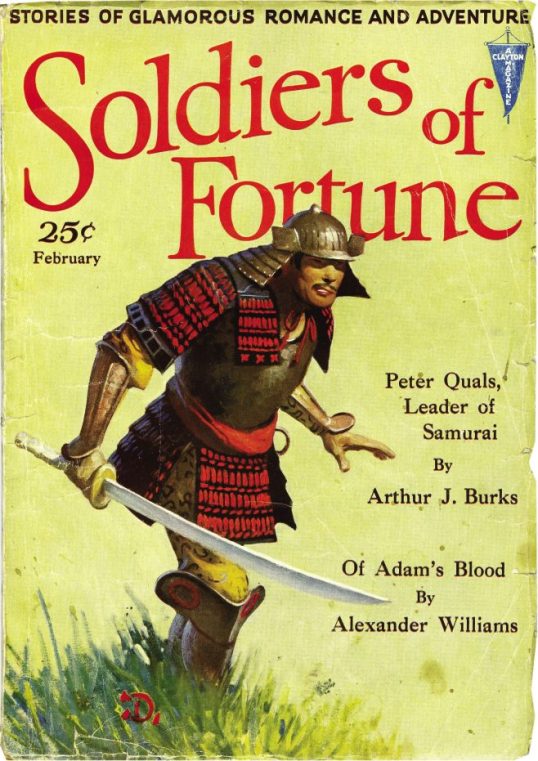
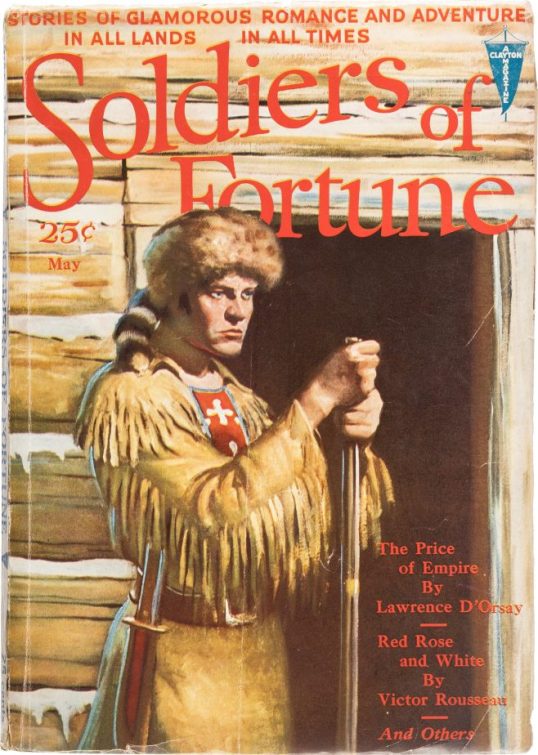
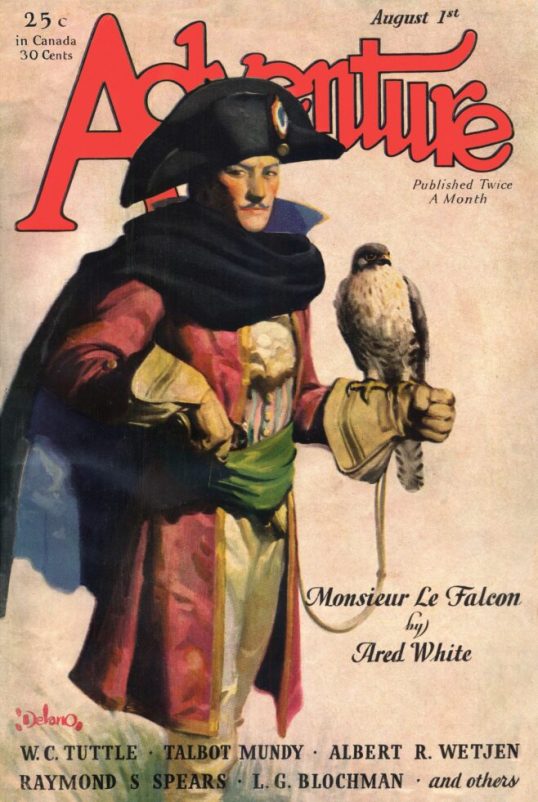
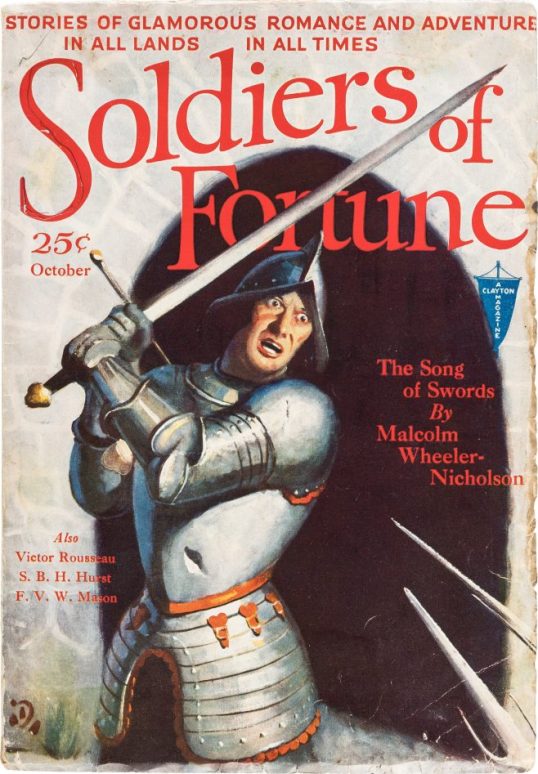
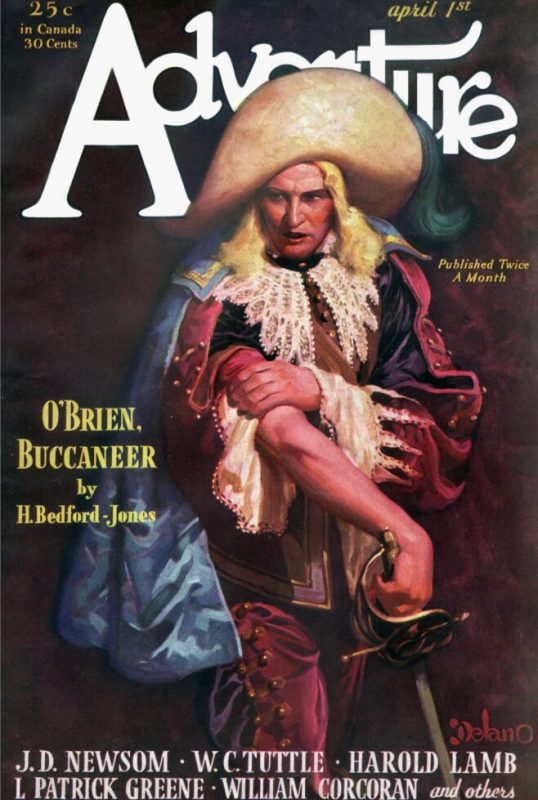
Artist Profile: Gerard C. Delano (1890 — 1972)


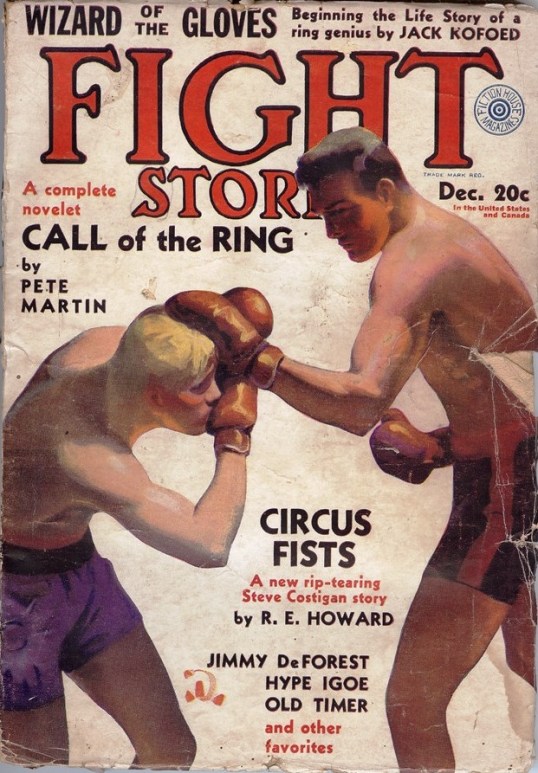
As a painter, Gerard C. Delano was best-known for his paintings of the Navajo people and their way of life.  Before he took up painting, he worked as an illustrator and cover artist for several pulp publications.  He was educated at the Art Students League of New York and the Grand Central School of Art.  He is often credited as being the first western artist to regularly include cactus in the background of his paintings.

Here’s a small sampling of Delano’s work for the pulps.

Icarus File No. 33: A Chorus Line (dir by Richard Attenborough)


A Chorus Line always leaves me feeling angry.

Now, I should make clear that I’m talking about the 1985 film adaptation and not the show that ran for 6,137 performances on Broadway.  The original show was a tribute to the so-called Broadway gypsies, the dancers who went from show to show and performed anonymously behind the star.  It was a portrait of both the veteran performers and the young up-and-comers who still dreamed of someday moving out of the chorus and becoming stars on their own.  When it opened in 1975, it was considered to be groundbreaking in its frankness about things like sexuality and aging.  It featured heartbreaking monologues and, even more importantly, amazing songs.  The show was a true tribute to people who lived to be on stage.

The movie, on the other hand, is about a jerk of a director named Zack (Michael Douglas) and his ex-girlfriend, a rather self-absorbed dancer named Cassie (Alyson Reed).

My main issue with the film can be seen right at the start.  We watch as a large group of dancers are put through a strenuous audition process.  Everyone is working hard, trying to make an impression on Zack in the little time that they have.  Zack sits in the darkness of the theater, a malevolent presence with a sharp, cigarette-shaped voice.  Most of the dancers will only know him as the pitiless voice that dismisses them from the audition.  We watch as everyone pushes themselves.  The older dancers try to ignore the aches and pain that come with age.  The younger dancers are desperate to finally get their big break.  It’s an exciting sequence, one that shows just how much hard work goes into even getting through the auditions to be a finalist for a part in the chorus.

The only dancer who isn’t there is Cassie.  Cassie has just flown into New York.  She’s stuck in traffic.  She doesn’t arrive until towards the end of the initial eliminations.  She is greeted by the assistant choreographer, Larry (Terrence Mann, who gives one of the better performances in the film).  At first, Zack refuses to allow Cassie to audition.  Cassie says she needs the job.  Zack replies that she’s too good to just be a member of the Chorus Line.

Now, actually, Zack is right about one thing.  Cassie should not be allowed to audition.  But it’s not because she’s too good to be in the chorus.  She shouldn’t be allowed to audition because she didn’t show up on time!  She’s showed up late!  There are sixteen finalists and only 8 spots available.  The other finalists showed up on time and have spent the entire day dancing and proving themselves.  They’ve worked hard for their spot.  They fought for the opportunity.  Cassie just shows up late and basically acts as if she’s entitled to take away one of their spots.

We’re continually told that Cassie is special but we don’t really see any evidence of it.  A lot of that is because the film was rather stodgily directed by Richard Attenborough, who stages each scene in a way that makes everyone — including Cassie — seem rather bland.  One wishes the film could have been directed by a Bob Fosse or a Stanley Donen or a Vincente Minnelli or even a Rob Marshall.  All four of those director knew (or, in Marshall’s case, know) how to shoot a dance number so that the dancer’s personality and skill comes through.  Under Attenborough’s direction, everyone comes across as being vaguely generic.  Indeed, Attenborough focuses the film so much on Zack and Cassie’s relationship that the other performers get pushed to the side.  Some of the show’s best songs are either not featured or just occur in the background.  Attenborough’s film takes a show that was meant to be a celebration of an ensemble and instead turns it into a star vehicle.

Both the film and the show end with a rather heart-breaking scene in which 8 dancers are told to step forward before Zack thanks them for their time and sends them home.  In the show, it’s reflection of life on Broadway.  The director picks who he thinks is best for the show.  Sometimes, that means that a likable or talented actor is still not cast.  In the film, it feels cruel because we notice that Zack sent home 8 dancers who showed up on time and worked hard but still made room for Cassie, who didn’t.  (Notably, in the show, Cassie and Zach had the same relationship as in the film but Cassie also showed up on time for the audition.)  Now, I will say that Zach casting someone with whom he had a personal relationship over someone who he didn’t is probably realistic but it’s still annoying.

It’s debatable whether A Chorus Line could have ever been made into an effective film.  That said, picking Richard Attenborough to direct and an apparently disinterested Michael Douglas to star certainly didn’t help matters.

Previous Icarus Files:

  1. Cloud Atlas
  2. Maximum Overdrive
  3. Glass
  4. Captive State
  5. Mother!
  6. The Man Who Killed Don Quixote
  7. Last Days
  8. Plan 9 From Outer Space
  9. The Last Movie
  10. 88
  11. The Bonfire of the Vanities
  12. Birdemic
  13. Birdemic 2: The Resurrection 
  14. Last Exit To Brooklyn
  15. Glen or Glenda
  16. The Assassination of Trotsky
  17. Che!
  18. Brewster McCloud
  19. American Traitor: The Trial of Axis Sally
  20. Tough Guys Don’t Dance
  21. Reach Me
  22. Revolution
  23. The Last Tycoon
  24. Express to Terror 
  25. 1941
  26. The Teheran Incident
  27. Con Man
  28. Looker
  29. 1776
  30. Here
  31. The Adventures of Brisco County, Jr.
  32. The Cable Guy

Film Review: The Music Machine (dir by Ian Sharp)


In 1979’s The Music Machine, Gerry Pearson (Gerry Sundquist) is a directionless young man who is living in Camden, North London.  He lives with his parents (Brenda Fricker and Johnnie Wade) and he really doesn’t have much to look forward to in life.  He can spend his days living on the dole or he can get a job that will leave him with no hope for advancement.  It’s London.  It’s England.  It’s 1979.  There’s no chance for moving up in the world.  The only thing that Gerry has going for him is that he loves to dance at London’s most low-key discotheque, The Music Machine.

Wow.  Trust the British to make a depressing disco movie!

Actually, that’s not quite fair.  The Music Machine was obviously inspired by Saturday Night Fever and, once you get past the image of John Travolta in that white suit, that’s not a particularly happy movie either.  Indeed, one could argue that Saturday Night Fever is even more depressing than The Music Machine.  I mean, in Saturday Night Fever, Barry Miller jumps off a bridge and John Travolta spends the entire film treating Donna Pescow like crap.  Even Karen Lynn Gorney isn’t smart enough to realize that she was insulted by Laurence Olivier.  Travolta may look good in that white suit but he ultimately ends up sitting alone on a subway with a big bandage on his face.

That said, Saturday Night Fever is not an unbearable depressing film to watch.  That’s because the film’s narrative moves with an infectious energy, there are small moments of humor that lighten the mood, and Travolta gives such a charismatic performance as Tony that it’s hard not to forgive him even when he’s at his worst.

Unfortunately, The Music Machine doesn’t really have any of that.

It does have a plot that closely follows Saturday Night Fever.  Gerry wants to win a dance contest and the chance to appear in a film.  His partner is the sophisticated Claire (Patti Boulaye).  Whereas Tony Manero had the confidence to come up with his own moves, Gerry is mentored by DJ Laurie (a youngish Clarke Peters, who would later go on to appear in The Wire and Da Five Bloods).  Unfortunately, the film itself never comes close to capturing Saturday Night Fever‘s relentless narrative drive and, in the lead role, Gerry Sundquist comes across as being more petulant than smoldering.  If we forgave Tony Manero his missteps because he seemed to be so committed to his dancing, it’s harder to forgive Gerry because he’s just so whiny.  The Music Machine soundtrack is full of generic disco tunes.  There’s no Bee Gees.  There’s no Yvonne Elliman.  There’s not even a Fifth of Beethoven!

Of course, the main problem with The Music Machine is that it’s painfully obvious that Gerry Sundquist didn’t know how to dance.  That’s a bit of problem when the entire movie is supposed to be a celebration of moving with the music.  The director handles Sundquist’s lack of dancing ability by filming him from the waist up and having the other dancers move around him.  It doesn’t help.  In fact, it just makes you even more embarrassed for him.  Watching this film, I thought about how, in Silver Linings Playbook, the whole point of the dance scene was that Bradley Cooper and Jennifer Lawrence were terrible dancers but they still went out and gave it their all without apology.  In that case, it was charming.  In the case of The Music Machine, you just feel bad for everyone else on the dance floor.

Oh, this review is becoming so negative!  I don’t like ending on a negative note so let me just say that Clarke Peters’s charisma shines through.  He’s definitely the best part of the film.

Join #MondayMania For Secrets In The Air!


Hi, everyone!  Tonight, on twitter, I will be hosting one of my favorite films for #MondayMania!  Join us for 202o’s Secrets In The Air (a.k.a. Mile High Escorts)!

You can find the movie on Prime and then you can join us on twitter at 9 pm central time!  (That’s 10 pm for you folks on the East Coast.)  See you then!

Scenes That I Love: Tony Soprano Dreams Of A House In The Sopranos


With our annual Horrorthon starting in three days, I thought that this would be an appropriate time to share a creepy scene that I love from The Sopranos.

The Sopranos was well-known for its dream sequences. For me, this dream from the season 4’s Calling All Cars is one of the best and scariest of the series. It’s full of menace and ominous atmosphere, from the minute we see Tony being led to the house by the deceased Ralphie. And then, when that mysterious shadow appears on the staircase — AGCK!

I look forward to inviting you inside the TSL House of Horrors this October.

4 Shots From 4 Films: Special Horrorthon Preview


4 Or More Shots From 4 Or More Films is just what it says it is, 4 shots from 4 of our favorite films. As opposed to the reviews and recaps that we usually post, 4 Shots From 4 Films lets the visuals do the talking!

With October approaching, it will soon be time for our annual Horrorthon here at the Shattered Lens.  We’ve been working hard getting things ready!  Here are 4 shots from 4 of the many films that we will be reviewing this October.

4 Shots From 4 Horror Films

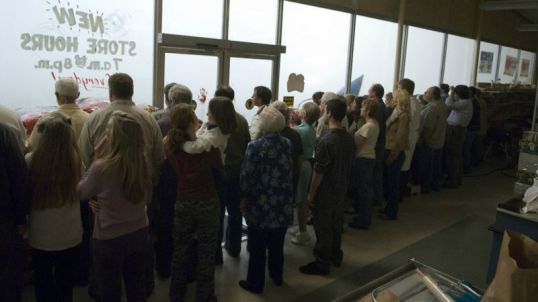
The Mist (2007, dir. by Frank Darabont)

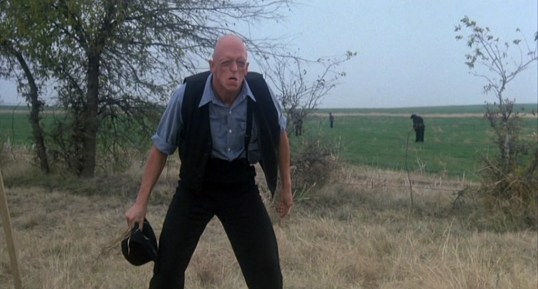
Deadly Blessing (1981, dir by Wes Craven)

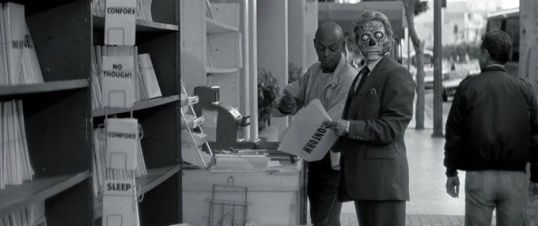
They Live (1988, dir by John Carpenter)

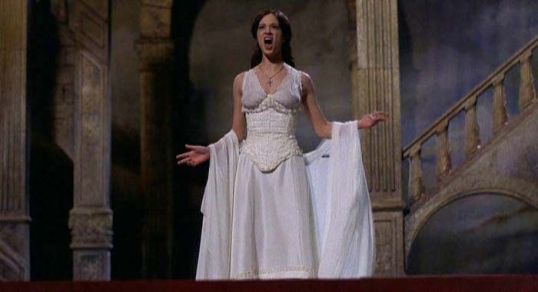
The Phantom of the Opera (1998, dir by Dario Argento)

Monday Live Tweet Alert: Join Us for A Better Tomorrow!


As some of our regular readers undoubtedly know, I am involved in hosting a few weekly live tweets on twitter and occasionally Mastodon.  I host #FridayNightFlix every Friday, I co-host #ScarySocial on Saturday, and I am one of the five hosts of Mastodon’s #MondayActionMovie!  Every week, we get together.  We watch a movie.  We snark our way through it.

Tonight, for #MondayActionMovie, the film will be John Woo’s A Better Tomorrow!

If you want to join this watch party, just hop onto Mastodon, pull up A Better Tomorrow on YouTube, start the movie at 8 pm et, and use the #MondayActionMovie hashtag!

Enjoy!