Live Tweet Alert: Watch Daybreakers With #ScarySocial!


As some of our regular readers undoubtedly know, I am involved in a few weekly live tweets on twitter.  I host #FridayNightFlix every Friday, I co-host #ScarySocial on Saturday, and I am one of the five hosts of #MondayActionMovie!  Every week, we get together.  We watch a movie.  We tweet our way through it.

Tonight, for #ScarySocial, I will be hosting Daybreakers!  This vampire film co-stars Sam Neill!

If you want to join us on Saturday night, just hop onto twitter, start the film at 9 pm et, and use the #ScarySocial hashtag!  The film is available on Prime!   I’ll be there co-hosting and I imagine some other members of the TSL Crew will be there as well.  It’s a friendly group and welcoming of newcomers so don’t be shy!


Join #TubiThursday For In The Mouth Of Madness!


Hi, everyone!  Tonight, on Mastodon, I will be hosting the #TubiThursday watch party!  Join us for In The Mouth of Madness, starring Sam Neill!

You can find the movie on Tubi or YouTube and you can join us on Mastodon at 9 pm central time!  (That’s 10 pm for you folks on the East Coast.)  We will be using #TubiThursday hashtag!  See you then!

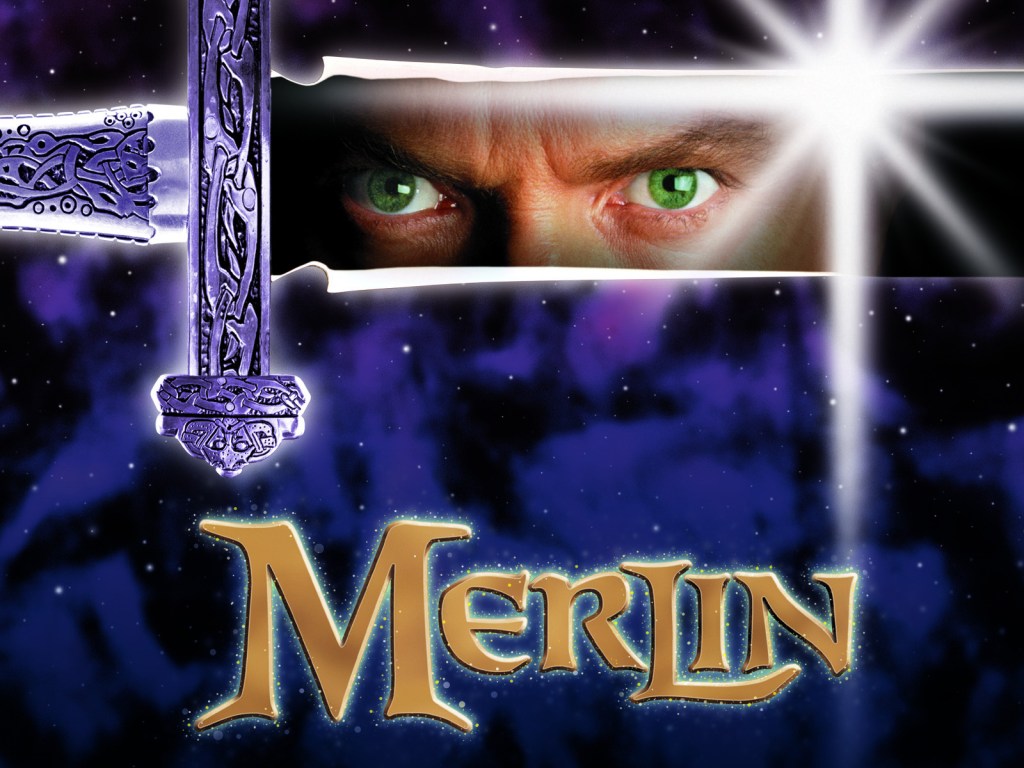
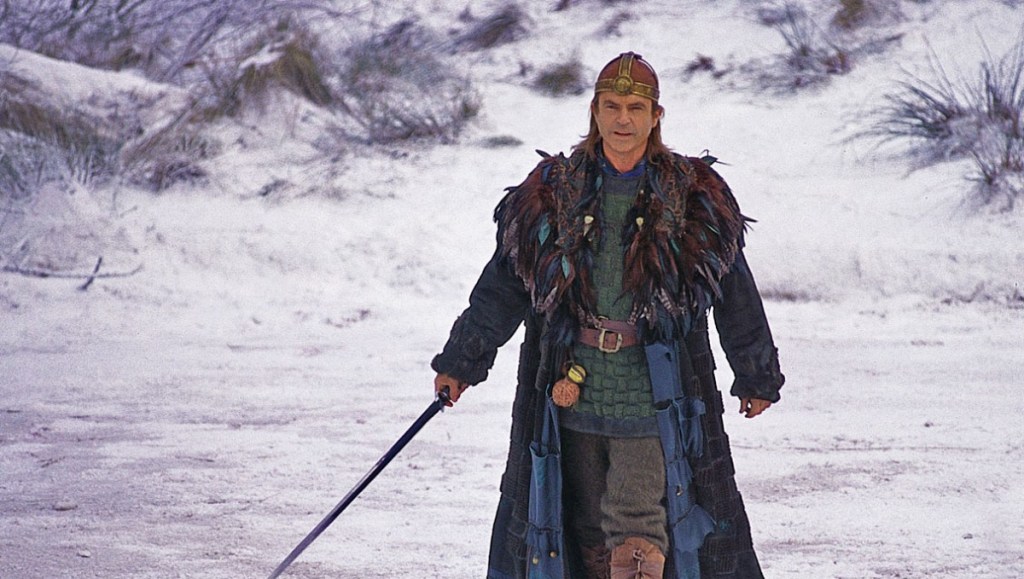
Brad revisits the mini-series MERLIN (1998), starring Sam Neill!


I hated reading the news that Sam Neill had recently passed away. As an obsessed movie fan going back to the mid-80’s, I had especially enjoyed his work in films like DEAD CALM (1989) and THE HUNT FOR RED OCTOBER (1990) prior to him starring in Steven Spielberg’s juggernaut JURASSIC PARK (1993)! Like so many others, I was wowed in the theater watching the film, and Neill was so good in it. From that point forward, he was a part of our lives no matter what the film or television series. We all kind of felt like we knew him. When I was looking back through his filmography, I was reminded of the TV mini-series MERLIN, that I made sure to watch each night when it premiered on NBC in April of 1998. I have not watched it since the original broadcast, but in tribute to Sam Neill, I decided I’d revisit the series again this week.

To somewhat set the stage, some TV mini-series were extremely big deals back in the ‘90’s, and MERLIN was a major “event!” This was before streaming services like Netflix or Amazon were pumping out a new 6-part series every other week. In those days, when something like MERLIN premiered on network TV, a lot of people would make sure they were at home every night so they could be sure to see these ambitious stories play out. With an extraordinary cast led by Sam Neill, and its fresh take on the Arthurian legend, MERLIN would be a massive ratings and critical success for NBC.

In complete honesty, at that time in my life, I had my eye on the series because one of my favorite actors, Rutger Hauer, has a role as the evil, power mad King Vortigern. I have also been a big fan of the legend of King Arthur, I guess going all the way back to when I was a kid and watching Disney’s THE SWORD IN THE STONE! But this time I was here to celebrate Sam Neill, and I must say he’s very good as Merlin. Neill’s Merlin is much more than an all-knowing wizard guiding King Arthur. Rather, he’s a man who experiences the full spectrum of human emotion. We see him fall in love, suffer heartbreak, admit his own mistakes, and then fight on behalf of the world when just about everyone else is gone. The character of Merlin was personalized for me for the first time in my life, and I give Neill’s likable performance full credit for that. In a career with so much great work, this is another excellent achievement.

MERLIN has an incredible supporting cast. Rutger Hauer, Helena Bonham Carter, Miranda Richardson, John Gielgud, James Earl Jones, Isabella Rossellini, Martin Short, Billie Whitelaw, Lena Headey, and many others bring the story to life and remind us just how big a production this really was. Of the supporting performances, Miranda Richardson, who plays dual roles, Helena Bonham Carter, and Martin Short really stood out the most to me. Hauer leaves a memorable impression despite relatively limited screen time. Neill, Carter, and Short would all be nominated for Primetime Emmy Awards for their acting, but none would win the award. The series would be nominated for a total of 15 Primetime Emmy awards, taking 4 of them home, mostly in technical categories.

Looking back on MERLIN after thirty years, I would have to say I appreciate it more now than I did then. I like the fact that it takes its time exploring big ideas like good vs. evil, destiny, sacrifice, and the unstoppable passage of time. I also like the visual effects, which may very much be a product of 1998, but I think they provide a charm that helps sell this timeless story. There’s a reason some stories are told for centuries, and this series does honor to the legend.

Just this past week, I made arrangements for my wife and I to spend a week on the beach in Perdido Key, FL at the end of the summer. The last time I was there was during the summer of 2019. As I sat on the beach back at that time, I received a notification on my phone that Rutger Hauer had passed away. Having been a fan of his for over thirty years, I just remember being sad that another one of my movie heroes was gone. Time doesn’t stop for anyone, and while my wife and I will be enjoying that same beach next month, there’s no doubt that I’ll think about Hauer, and now Sam Neill. Actors leave us, but their work lives on forever, and sometimes that work is legendary. Thanks for all the great memories, Sam.

Rest in Peace, Sam Neill


This news hurts.

Sam Neill has died at the age of 78.  He has recently battled cancer but his family has released a statement saying that he was cancer-free at the time of his death.  He passed away “surrounded by loved ones.”

And the world is mourning.

He was Dr. Alan Grant, the earnest scientist from Jurassic Park.  He was the Russian who wanted to live in Montana in The Hunt For Red October.  He was one of the most charismatic horror villains of all time in The Final Conflict.  He classed up films like Event Horizon.  His performance in In The Mouth Of Madness was one of the few to truly bring Lovecraft to life.  On a personal level, he was one of those people who just seemed to radiate decency, whether he was promoting a film or talking about his farm.

Rest in peace, Sam Neill.

I Watched Molokai: The Story of Father Damien (1999, Dir. by Paul Cox)


In the late 19th Century, a leper colony was established on the Hawaiian island of Molokai.  Officially, the Kalaupapa Leprosy Settlement was said to be for the care of people with leprosy, which was then raging across Asia.  Unofficially, it was a prison where lepers were isolated from the rest of society and left to die.  Any leper who tried to leave the colony would be shot on sight.  Father Damien, a Belgian priest, was one of the few people willing to walk amongst the lepers.  When he was first sent to the colony, he was ordered to only administer last rites to the dying and to not allow himself to be touched.  Instead, Damien stayed and ministered to the lepers, knowing that he would probably never be allowed to leave.  For 16 years, Damien ministered to the colony.  Even after he himself grew sick, he continued his ministry and continued to be an advocate for his fellow lepers until he died.

Molokai: The Story of Father Damien is a wonderful film about the life and ministry of Father Damien.  The movie features a lot of familiar actors in small roles, like Sam Neill, Kris Kristofferson, Peter O’Toole, Tom Wilkinson, and Alice Krige.  But the star of the film is David Wenham, who portrays the kindness and dedication of Father Damien without ever making him seem idealized or boring.  Father Damien is guided by both his faith and his belief that no one should be abandoned.  It’s not always easy to watch.  The horrors of leprosy are unflinchingly portrayed.  But, by the end of the movie, it doesn’t matter if you’re Catholic or not.  You’re just thankful for men like Father Damien.

Saint Damien of Molokai was canonized by Pope Benedict XVI in 2009.

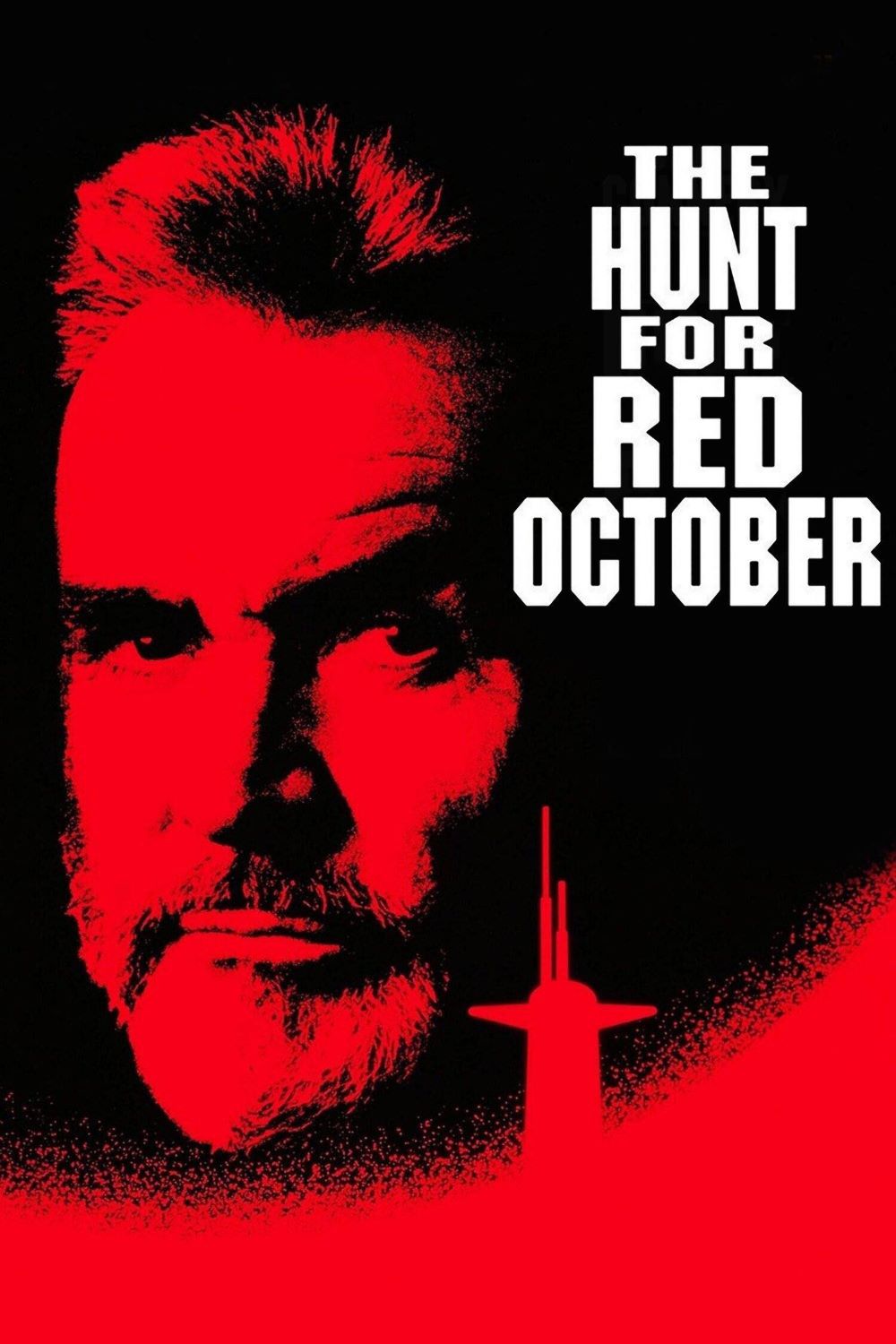
Review: The Hunt for Red October (dir. by John McTiernan)


“I’m a politician. Which means that I am a cheat and a liar, and when I’m not kissing babies, I’m stealing their lollipops.” — Dr. Jeffrey Pelt, National Security Advisor

The Hunt for Red October glides into the tail end of Cold War cinema like a stealthy sub cutting through midnight swells, packing a smart mix of spy intrigue and nail-biting underwater showdowns that keep you locked in from the opening credits. Directed by John McTiernan, fresh from helming Die Hard, this 1990 adaptation of Tom Clancy’s doorstopper novel smartly distills pages of naval geekery into a taut, propulsive thriller where Soviet skipper Marko Ramius—Sean Connery in full brooding mode—pilots the formidable Red October, a behemoth sub with a hush-mode propulsion system that ghosts past detection like a shadow in fog.

McTiernan shines in wrangling the script from Clancy’s tech-heavy tome, slicing through the babble to propel the story with crisp momentum and unrelenting suspense, turning potential info-dumps into pulse-quickening beats that hook casual viewers and sub nerds alike. The premise grabs fast: Ramius’s bold maneuvers ignite a transatlantic frenzy, with U.S. and Soviet forces locked in a paranoid standoff over what looks like an imminent crisis. That ’80s-era distrust simmers perfectly here, crammed into a runtime that pulses with fresh urgency decades later, amplified by those dim-lit sub corridors in steely teal tones that squeeze the air right out of the room.

Alec Baldwin embodies Jack Ryan as the reluctant brainiac from CIA desks, sweaty and green around the gills yet armed with instincts that cut through official noise like a periscope through chop. Pulled from family downtime—teddy bear in tow—he injects everyday stakes into the global chessboard, proving heroes don’t need camo or cockiness, just smarts and stubbornness. Connery’s Ramius dominates as a haunted vet with a personal chip on his shoulder, steering a tight-knit officer corps including Sam Neill’s devoted second-in-command, their quiet bonds hinting at deeper loyalties amid the red menace.

Standouts fill the roster seamlessly: James Earl Jones lends gravitas as the steady Admiral Greer backing Ryan’s wild cards; Scott Glenn commands the American hunter sub with laconic steel; Jeffrey Jones brings quirky spark to the sonar savant whose audio tricks flip the script on silence. The dialogue crackles with shorthand lingo and understated jabs, forging a crew dynamic that’s as pressurized as the hull plates, pulling you into hushed command post vibes without a whiff of cheesiness.

​​

McTiernan elevates the genre by leaning on wits over blasts—thrilling pursuits deliver without dominating, letting mind games and split-second calls drive the dread, all while streamlining Clancy’s minutiae into seamless propulsion. Gadgetry gleams without overwhelming: the sub’s whisper-quiet tech sparks clever cat-and-mouse in hazard-filled depths, ramping uncertainty to fever pitch. Pacing builds masterfully from war-room skepticism—Ryan battling brass skepticism—to heart-in-throat ocean dashes, every frame taut as a bowstring. Practical models and effects ground the peril in gritty tangibility, no digital gloss, evoking Ice Station Zebra‘s frosty traps but streamlined into a relentless machine that dodges the older film’s drag. It’s a clinic in balancing spectacle and smarts, where tension coils from isolation’s cruel math: one ping too many, and it’s lights out.

On the eyes and ears front, the movie plunges into submersed nightmare fuel—consoles pulsing crimson in battle stations, scopes piercing mist-shrouded waves, silo bays looming like sleeping leviathans. McTiernan tempers his action flair for thinker-thrills; Basil Poledouris’s great orchestral score surges with iconic power through the chases—those brooding horns, choral swells, and rhythmic pulses echoing engine throbs have etched into legend, pounding your chest like incoming cavitation and elevating every dive. Audio wizardry seals the immersion: hull groans, ping echoes, bubble roars craft a metallic tomb where errors echo eternally. Flaws peek through—early scenes drag with setup chatter, foes skew broad-stroked—but the core hunt erases them, surging to a sharp, satisfying close that nods to Ryan’s budding legend without overplaying the hand.

’90s tentpole lovers and thaw-era history fans find a benchmark here, as the film plays the long con of trust amid torpedoes, fusing bombast with nuance that reboots chase in vain. It bottles superpower jitters spot-on—frantic commands clashing with strike debates—yet softens adversaries via Connery’s world-weary depth and Neill’s subtle conviction. Endless rewatches uncover gems: crew hints dropped early, sonar hacks foreshadowing real tech leaps. Baldwin’s grounded Ryan—chopper-barfing, suit-clashing, chaos-navigating—earns triumphs the hard way, contrasting Das Boot‘s bleak grind with upbeat ingenuity that feels won, not waved. Poledouris’s motifs linger post-credits, a symphonic anchor boosting replay pulls.

Endurance stems from mastering sub-horror’s essence: solitude sharpening choices, where flubs invite apocalypse. Ramius embodies defector realism—war-weary idealist mirroring history’s turncoats—while Clancy’s specs (sub classes, velocities) anchor without anchoring down. McTiernan sidesteps flags; zero flag-waving, pure operator craft in dodges and climactic finesse that blends brains with boom. Quirks delight—the premier’s bluster, aides’ cool calculus—padding a 134-minute gem that exhales you surfacing, amped. Expands on score’s role too: “Hymn to Red October” choral rise mirrors Ramius’s quiet rebellion, threading emotional undercurrents through mechanical mayhem, a Poledouris hallmark outlasting the film.

Bottom line, The Hunt for Red October captivates via cerebral kick—shadow games in fluid physics, intellect over muscle, audacious plays punking empire folly. Sparks post-view chin-strokes on allegiances and risks. Connery’s gravelly “One ping only, Vasily” endures as gold; storm-watch it, trade sofa for sonar station—raw thrill spiked with savvy. Sub saga staple? This silent stalker nails every target.

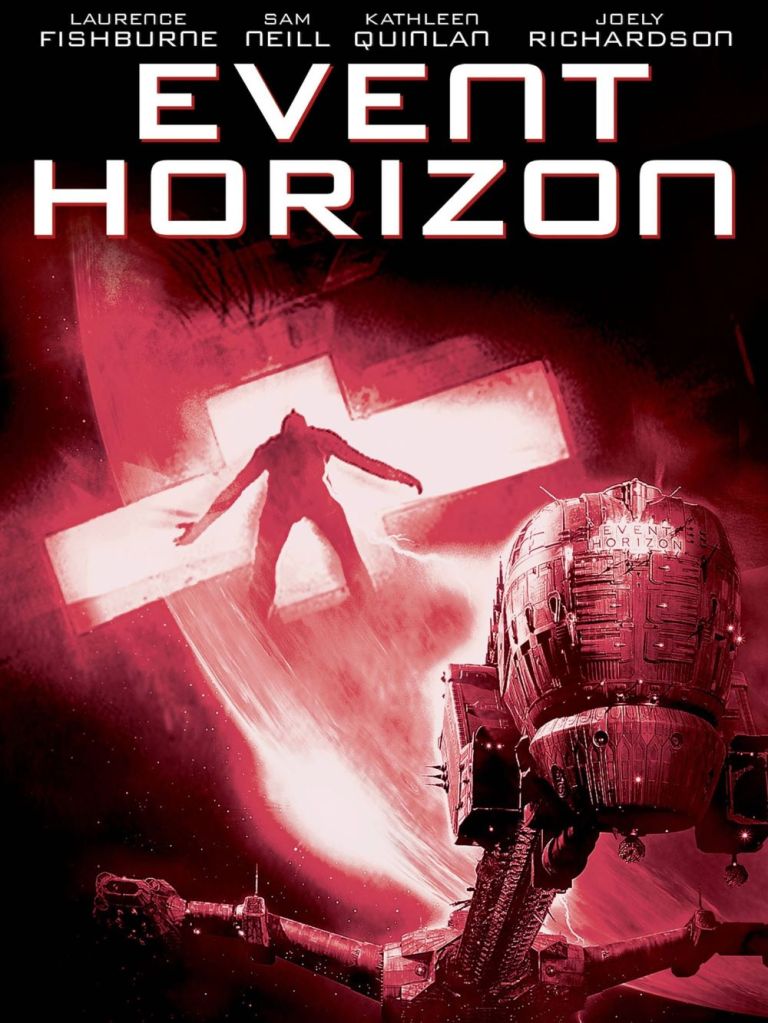
Horror Review: Event Horizon (dir. by Paul W. S. Anderson)


“You know nothing. Hell is only a word. The reality is much, much worse.” — Dr. Weir

Paul W.S. Anderson’s 1997 film Event Horizon stands out as a memorable mix of science fiction and horror, remembered for its gripping atmosphere and disturbing visuals. The story is set in 2047: a rescue crew aboard the Lewis and Clark is sent out to recover the long-missing spaceship Event Horizon, a vessel built to test a new kind of faster-than-light travel. Onboard with them is Dr. William Weir, the Event Horizon’s creator, who explains that the ship vanished after first activating its “gravity drive,” which can fold space to allow for instant travel across vast cosmic distances.

Soon after reaching the drifting Event Horizon, the crew discovers signs of mass violence and horror. They recover a disturbing audio message and realize something traumatic happened to the original crew. As they search for survivors, they experience intense and personal hallucinations—memories and fears brought to life by the ship. It becomes clear that the Event Horizon didn’t just jump through space; it traveled to a place outside reality, a nightmarish interdimensional realm resembling hell.

What makes Event Horizon particularly unique is its concept of hell as an alternate dimension that can infect and corrupt whatever or whoever crosses into it. The ship’s gravity drive doesn’t simply facilitate faster travel—it accidentally opens a gateway to this chaotic, malevolent place. This portrayal of hell as a dangerous interdimensional reality that preys on minds and bodies echoes the idea found in the massive gaming property Warhammer 40K, where hell is depicted as the Warp, a dimension of chaos that corrupts and drives people insane. Like the Warp, the film’s hell is an unpredictable, hostile realm where sanity and physical form break down, infecting and warping everything that comes into contact.

Visually, the film relies on claustrophobic corridors, flickering lights, and unsettling sounds to keep the audience off-balance. The design of the ship itself—part gothic cathedral, part industrial nightmare—adds to the sense of unease and dread throughout. The use of practical effects and detailed sets grounds the sci-fi terror in something tangible, making it all feel more immediate and believable.

Event Horizon also hints at bigger philosophical questions: how far should science go, and what happens when the drive for knowledge is unchecked by ethics or humility? The gravity drive is a technological wonder, but it’s treated with little caution by its inventor, and the catastrophic results suggest that some discoveries may be better left unexplored. The ship becomes both a literal and figurative vehicle for exploring the limits of human ambition and the dangers of pushing beyond them.

As the movie builds toward its climax, the rescue crew faces increasingly desperate odds. The possessed Dr. Weir, now an outright villain, sees the hellish dimension the gravity drive visited as the next step for humanity—a place of chaos and suffering. Multiple characters die in gruesome ways, and the survivors have to fight their own fears and the haunted ship itself. The ending is chilling and ambiguous, leaving open the possibility that the ship’s evil has not been fully contained.

At release, Event Horizon divided critics and audiences. Some found the violence and nightmare imagery too intense or the story too messy to follow. Others praised its ambition and the way it blends psychological horror with cosmic sci-fi. Over the years, the film has developed a cult reputation, frequently cited as one of the more effective and original space horror movies. Its legacy can be seen in later media, especially in video games that tackle similar haunted spaceship scenarios.

However, the film is not without flaws. Many viewers and critics point out uneven pacing, especially in the second half where tension sometimes drains away. The characters often act inconsistently or make choices that feel unrealistic for trained astronauts, which undermines the suspense. The script’s tonal shifts—from serious psychological drama to moments that unintentionally verge on camp—can jolt the viewer out of the experience. The use of jump scares is sometimes predictable, and the film’s heavy reliance on loud, chaotic sequences instead of quiet suspense can feel overwhelming. Some CGI effects haven’t aged well, contrasting with the otherwise impressive practical effects and set design. Acting performances are mixed too; while Sam Neill and Laurence Fishburne are strong, some supporting cast members lack conviction, making emotional engagement uneven.

Importantly, Event Horizon represents Paul W.S. Anderson at his most subtle and effective in directing. Compared to many of his later films, where his style often becomes frenetic and unchecked—possibly due to a lack of producer control—Event Horizon is more controlled, atmospheric, and haunting. This balance between style and substance makes it one of Anderson’s better directorial works, if not his best to date. The film showcases his interest in spatial geography, the use of negative space, and claustrophobic production design, all elements he would expand on in his later work but never as effectively deployed as here. The haunting visual touches, combined with his ability to direct actors and maintain tension, set Event Horizon apart from his more bombastic, less focused later entries.

Despite its flaws, Event Horizon remains gripping and memorable. Its strengths lie in combining deeply personal psychological horror with the vast, terrifying unknown of space and alternate realities. The film explores not just external threats, but also how guilt, fear, and trauma can be weaponized by forces beyond human understanding. For viewers seeking more than a standard haunted spaceship story, Event Horizon offers a disturbing, thought-provoking glimpse into the dark frontier of science, faith, and madness. It stands as a cult classic of sci-fi horror that continues to inspire discussion about the dangers of pushing too far into the unknown.

Memoirs of an Invisible Man (1992, directed by John Carpenter)


An accident at a laboratory renders stock analyst Nick Holloway (Chevy Chase) invisible.  CIA agent David Jenkins (Sam Neill) wants to recruit Nick to be an assassin but Nick doesn’t want to kill people.  He just wants to make his date with Alice (Daryl Hannah).  With Jenkins and his agents in pursuit, Nick flees to a beach house belonging to his friend George (Michael McKean) and tries to figure out what to do with his life now that no one can see him.  Fortunately, Alice is staying at the beach house too.  Nick and Alice fall in love but Jenkins is close behind.

Based on a science fiction novel by H.F. Saint, Memoirs of an Invisible Man started out as a vanity project for Chevy Chase, who felt that the film’s mix of comedy and drama would establish him as a serious actor.  The project went through a series of directors, including Ivan Reitman and Richard Donner, but in the end no one wanted to work with the special effects necessary to create the impression of invisibility and, even more importantly, no one wanted to work with Chase.  When the film was finally offered to John Carpenter, he was reluctant to do another studio film because of his bad experience with They Live.  He finally agreed because it had been four years since his last film.

The special effects in Memoirs of an Invisible Man are still impressive and the chase scenes show off Carpenter’s abilities as an action director.  The movie flopped with critics and audiences but that was not Carpenter’s fault.  Carpenter keeps the story moving and gets good performances out of Sam Neill and even Daryl Hannah.  The problem with the movie is that Chevy Chase is miscast as an action hero and he tries too hard to give a serious performance.  Carpenter later said he wanted to add more comedy to the film and to emphasize Chase’s talent for physical comedy but Chase refused to do so.  Chase also resented wearing the blue bodysuit that would be used to render him invisible onscreen and often removed the suit early, ruining whatever else Carpenter had planned to shoot during the day.  You can add John Carpenter to the long list of directors who have said they will never work with Chevy Chase again.

One good thing did come out of Memoirs of an Invisible Man.  Carpenter met and enjoyed working with Sam Neill.  (Memoirs of an Invisible Man probably would have worked better in Neill and Chase had switched roles.)  Neill would go on to star in Carpenter’s next film, In The Mouth of Madness.