Horror Film Review: Kill List (dir. by Ben Wheatley)


“It doesn’t feel wrong. They’re bad people. They deserve to suffer.” — Jay

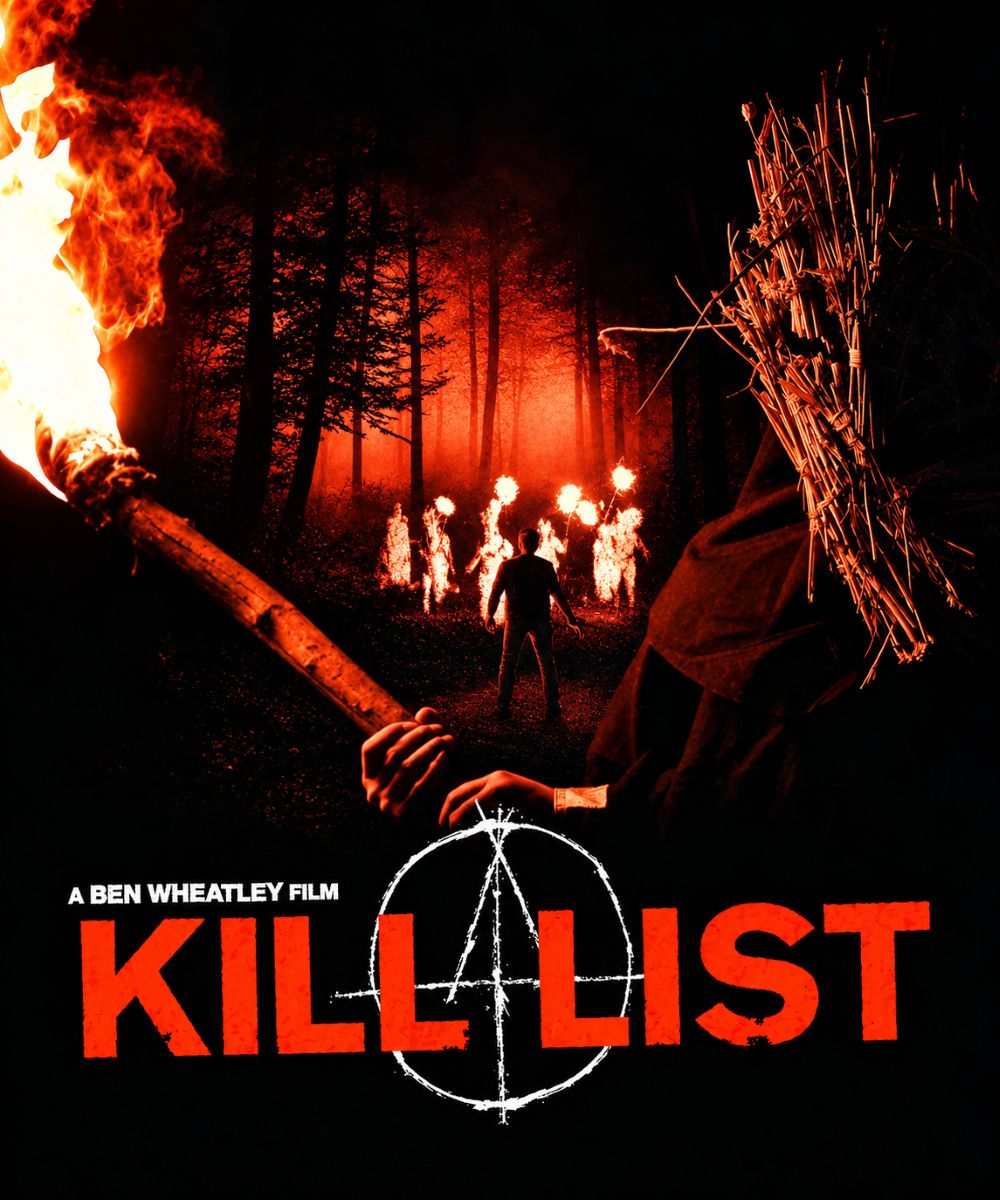
There is something especially unsettling about a horror film that refuses to let you know it is a horror film until you are already trapped inside it. Ben Wheatley’s Kill List begins in the familiar, grimy territory of a British crime thriller, but its slow, deliberate transformation into full-blown cosmic and folk horror makes it one of the most unnerving films of the 2010s.

Jay, a former soldier turned contract killer, has been out of work for months after a botched assignment in Kyiv. His wife Shel is fed up with his anger, his drinking, and his lack of direction. Their marriage is strained, their finances are collapsing, and their home feels less like a place of comfort than a pressure cooker waiting to explode. Rather than starting with a monster, a murder, or a flashy supernatural hook, Kill List starts with domestic tension. It places the audience in a home where every conversation feels like it could become a screaming match, and every small complaint seems connected to a much larger emotional wound.

That grounded, unpleasant realism is a huge part of why Kill List works so well. Wheatley does not rush to tell the audience what kind of movie they are watching. For a while, it plays almost like a rough, deeply uncomfortable British domestic drama, with the sort of bickering and passive-aggressive resentment that feels overheard rather than scripted. Jay and Shel’s arguments are messy, mean, and often funny in a dark way, while Jay’s friendship with his old colleague Gal has a lived-in quality. These are not glamorous movie hitmen trading cool one-liners. They are middle-aged men with bills to pay, bad tempers, old wounds, and a job they would probably rather not be doing if they had any other viable option.

Jay’s decision to accept a new killing contract with Gal initially pushes Kill List further into thriller territory. The assignment comes from a wealthy, unsettling client who hires them to eliminate three targets: a priest, a librarian, and a member of Parliament. That setup sounds straightforward enough, and Wheatley lets the film function for a time like a grimy, morally rotten crime thriller. Jay and Gal investigate their targets, plan their attacks, and move through a world of rural estates, anonymous offices, abandoned buildings, and shadowy back rooms. There is tension, but it is the tension of men entering dangerous situations without knowing whether they are being watched or manipulated.

What makes the film increasingly unnerving is that every target seems to know more than Jay and Gal do. The victims do not merely fear death. In some cases, they appear grateful for it. They refer to Jay as though he has been expected, almost as if he has been chosen for a role he does not understand. The priest calls him “the harbinger,” while the librarian thanks him after being killed. These details are not explained in a neat, comforting way. Wheatley plants them casually, allowing confusion to gather in the background while Jay becomes more violent, unstable, and paranoid.

That gradual descent is what makes Kill List so effective. It starts off more like a thriller, or even a bleak crime drama, but slowly makes its way into full-blown horror by the time the end credits begin rolling. The film does not suddenly flip a switch and announce that it has become a supernatural nightmare. Instead, it lets the atmosphere become stranger one scene at a time. A symbol appears carved into a mirror. A strange man silently watches from the woods. A dinner party turns from awkward to deeply hostile. A pair of masked figures emerge at the edge of a field. By the time the movie reaches its final stretch, the feeling is no longer one of criminal danger but of being trapped inside a ritual that began long before Jay understood he was involved.

Wheatley’s direction is crucial here. Kill List has a raw, handheld, low-budget immediacy that makes the violence feel especially ugly. There is very little stylization separating the audience from what is happening. The film is not interested in making murder look slick, cathartic, or exciting. When Jay attacks someone, it feels brutal, chaotic, and emotionally damaging. The violence is often sudden, but it is never casual. It leaves a stain on the scene, on the characters, and on the viewer. Jay’s behavior becomes increasingly alarming because his anger is not framed as toughness. It is framed as a dangerous loss of control.

Neil Maskell gives an excellent performance as Jay, a man whose emotional state is always sitting somewhere between numbness and eruption. He is not an easy protagonist to like, and that is part of the point. Jay can be cruel, childish, frightening, and self-destructive. Yet Maskell also makes him feel recognizably human, especially in the quieter moments with his son, Sam. Those scenes matter because they give the final act its real emotional weight. Jay is not just a professional killer being targeted by an unknown force; he is a husband and father whose damaged life is about to be pulled into something far worse than a failed job.

Michael Smiley is equally strong as Gal, who initially comes across as the more stable, reasonable half of the duo. He is calmer than Jay, more socially functional, and less openly volatile. But the movie gradually reveals that Gal has his own weaknesses and blind spots. Their friendship feels genuine, even when it is poisoned by secrecy, resentment, and the increasingly bizarre circumstances surrounding the contract. MyAnna Buring also deserves credit as Shel. She could have easily been reduced to the stereotypical nagging wife in a lesser film, but Buring makes her sharp, vulnerable, manipulative at times, and visibly exhausted by the life she shares with Jay.

The horror in Kill List becomes especially potent because it draws from both cosmic and folk-horror traditions without fully settling into either one. The cult imagery, hidden rituals, strange symbols, rural landscapes, and anonymous masked figures all give the film a folk-horror texture. There is a distinctly British unease to the countryside in the final act: fields that should feel open instead feel isolating, and a rural community becomes a place where ancient, secretive violence can exist just out of sight. At the same time, the movie’s cosmic-horror side comes from the sense that Jay has stumbled into a system too vast and unknowable for him to comprehend. He thinks he is taking a contract. In reality, he may be participating in a process that has been designed around him from the beginning.

That sense of predestination is one of the film’s most disturbing qualities. Kill List never overexplains the cult, its beliefs, or exactly how much control it has over the characters’ lives. Some viewers may find that frustrating, especially because the ending refuses to provide a clean mythology or a tidy resolution. But that ambiguity is also why the film lingers. The cult is scary not because the audience receives a detailed rulebook, but because its reach appears to be everywhere. It can infiltrate a job, a social gathering, a family home, and even the choices Jay believes he is making freely.

The ending is famously shocking, but it is not shocking only because of its cruelty. It works because the movie has carefully built Jay into a man who responds to fear with rage and violence. The final revelation turns that trait against him in the most devastating possible way. It is bleak, tragic, and almost mythic in its nastiness. The final image does not feel like a twist for the sake of a twist. It feels like the horrifying completion of a ritual that the audience has been watching take shape without fully recognizing it.

Kill List is not a comfortable watch, and it is not a horror movie that tries to please the audience with easy scares or a reassuring explanation. Its slow burn can feel deliberately abrasive, especially in the early domestic scenes, but that patience pays off. Wheatley takes a grim thriller about two hitmen and gradually transforms it into a nightmare of conspiracy, fate, cult ritual, cosmic dread, and folk-horror menace. By the end, the film has moved so far from its seemingly familiar premise that it feels like the ground has disappeared beneath it. That is what makes Kill List so memorable: it does not simply become horrifying. It reveals that horror was there all along, hiding inside every uneasy conversation, every unexplained symbol, and every choice Jay thought was his own.

Retro Television Review: Crime Story 1.21 “Ground Zero”


Welcome to Retro Television Reviews, a feature where we review some of our favorite and least favorite shows of the past!  On Mondays, I will be reviewing Crime Story, which ran on NBC from 1986 to 1988.  The entire show can be found on Tubi!

This week, the first season comes to a close.

Episode 1.21 “Gound Zero”

(Dir by Peter Medak, originally aired on March 13th, 1987)

In Las Vegas, the media is focused on two things: the upcoming atomic bomb test at Yucca Flats and the trial of Ray Luca.

Pauli, the star witness, is being kept in an underground bunker at an Air Force base. Danny comments on the fact that, if America and Russia do go to war and an atomic missile hits Nevada, Pauli would probably be the only survivor. It would be up to Pauli to repopulate the planet. Torello eventually allows Pauli’s girlfriend, Donna (Audrey Matson), to start visiting him. Donna says she loves Pauli. Torello shrugs.

Pauli keeps his end of the deal. He testifies against Luca. However, Frank Holman gives an interview outside the courtroom and tells the press that Luca was the king of organized crime in Las Vegas. The next day, the headline of the local newspaper announces that Luca was the “king of crime.” Disguising himself as the waiter assigned to deliver room service to the sequestered jury, Holman makes sure that the jurors see the headline. The trial judge has no choice but to declare a mistrial. As he walks out of the courtroom, Luca stops in front of Pauli and tells him, “You did what you had to do,” and apologizes for raping Donna.

In Vegas, Luca is upset to discover that gangster Nat Martino (James Russo) is moving in on his territory. Luca is prepared to go to war, but Manny Weisbrod informs Luca that he is to work with Martino. Weisbrod no longer has any confidence in Luca’s abilities. At the same time, Torello learns that Martino is actually an informant. Torello arranges for that information to get leaked to Luca. When Luca heads over to Martino’s favorite brothel, Torello and the other members of the MCU are waiting for him.

Breaking into Martino’s room, Luca manages to shoot and kill Martino before taking several bullets himself. Wounded, Luca escapes through a back window. Pauli, having decided that his place is with Luca, is there to pick him up and drive him out of town.

The next day, a bandaged Luca discovers that Pauli has driven him out to his latest hideout, a seemingly abandoned house in the desert. The house is full of mannequins. Luca looks at a chair and sees that it is the property of the Atomic Energy Commission. Realizing that they’re at Yucca Flats, Pauli and Luca run out to Pauli’s car. As they drive through the desert, a mushroom cloud blossoms in the distance.

And the episode ends!

Did Luca and Pauli escape the nuclear test? Hopefully, we’ll find out next week. I hope they did because it’s hard to imagine Crime Story without them. They were a great pair of villains.

The first season was good, if uneven. The pilot was outstanding, but some of the subsequent Chicago episodes seemed to lose their focus. Torello’s domestic drama was never as interesting as the show wanted it to be, and it took me a while to really warm up to David Abrams and his abrasive idealism. The other members of the MCU often felt like ciphers. (Even after 21 episodes, I still don’t feel like I know much about any of them beyond their almost cult-like loyalty to Torello.) But when the show moved to Vegas, things improved immeasurably. The glitz of Vegas worked perfectly for the show’s hyperreal style, and Stephen Lang’s performance in the role of David Abrams improved as well.

That said, Dennis Farina was the main strength of the first season. Farina played Torello as being intense, ruthless, and maybe just a little unhinged. The only real difference between Luca and Torello is that Torello carries a badge and Luca doesn’t have the Constitution holding him back. Otherwise, Luca really does represent Torello’s own dark side. In his pursuit of Luca, Torello isn’t just trying to enforce the law. He’s also trying to destroy the man that, had Torello not joined the police force, he could have become.

Next week, we’ll start the second season!

Here Are The Nominees of the 2020 Indiana Film Journalists Assosciation!


Bad Education

The Indiana Film Journalists Association (IJA) has announced their nominees for the best of 2020!  They’ll be announcing the winners on December 21st!

What I like about these nominations is that there’s a lot of them.  2020 may have been a difficult year for many but there were a lot of good films released and it does seem kind of silly (as it does every year) to limit things to some sort of arbitrary number.  Why only nominate 10 films when you could nominate 20 or 30?  Many of the nominees below will appear on my own personal best lists in January.

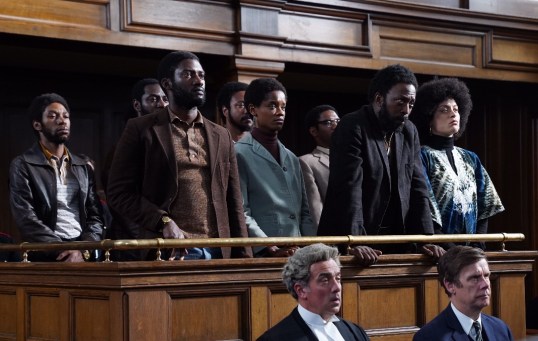
The other thing that I like about these nominees is that the include films like Bad Education and Mangrove.  There’s some debate as to whether or not these films should be considered Oscar eligible.  I feel that they should be so it’s nice to see that the folks in Indiana agree with me!

Here are the nominees:

BEST FILM
Da 5 Bloods
Another Round
The Assistant
Athlete A
Bad Education
Crip Camp: A Disability Revolution
Dick Johnson is Dead
Emma.
The Father
First Cow
I’m Thinking of Ending Things
Ma Rainey’s Black Bottom
Minari
The Nest
Never Rarely Sometimes Always
Nomadland
One Night in Miami
Palm Springs
The Personal History of David Copperfield
Possessor
Promising Young Woman
Small Axe: Mangrove
Song Without a Name
Soul
Sound of Metal
The Trial of the Chicago 7
The Twentieth Century
The Vast of Night

BEST ANIMATED FEATURE
Onward
Soul
Wolfwalkers

BEST FOREIGN LANGUAGE FILM
76 Days
Another Round
Bacurau
Beanpole
La Dosis
Song Without a Name

BEST DOCUMENTARY
76 Days
All In: The Fight for Democracy
Athlete A
Boys State
Crip Camp: A Disability Revolution
Desert One
Dick Johnson is Dead
Disclosure
John Lewis: Good Trouble
The Last Out
Miss Americana
MLK/FBI
Time
Totally Under Control
Welcome to Chechnya

BEST ORIGINAL SCREENPLAY
Lee Isaac Chung – Minari
Brandon Cronenberg – Possessor
Pete Docter, Mike Jones and Kemp Powers – Soul
Sean Durkin – The Nest
Emerald Fennell – Promising Young Woman
Kitty Green – The Assistant
Eliza Hittman – Never Rarely Sometimes Always
Tobias Lindholm and Thomas Vinterberg – Another Round
James Montague and Craig W. Sanger – The Vast of Night
Matthew Rankin – The Twentieth Century
Andy Siara – Palm Springs
Aaron Sorkin – The Trial of the Chicago 7
Alice Wu – The Half of It

BEST ADAPTED SCREENPLAY
Christopher Hampton and Florian Zeller – The Father
Armando Iannucci and Simon Blackwell – The Personal History of David Copperfield
Charlie Kaufman – I’m Thinking of Ending Things
Mike Makowsky – Bad Education
Kemp Powers – One Night in Miami
Jonathan Raymond and Kelly Reichardt – First Cow
Ruben Santiago-Hudson – Ma Rainey’s Black Bottom
Chloé Zhao – Nomadland

BEST DIRECTOR
Lee Isaac Chung – Minari
Brandon Cronenberg – Possessor
Pete Docter – Soul
Sean Durkin – The Nest
Emerald Fennell – Promising Young Woman
Kitty Green – The Assistant
Eliza Hittman – Never Rarely Sometimes Always
Kirsten Johnson – Dick Johnson is Dead
Charlie Kaufman – I’m Thinking of Ending Things
Regina King – One Night in Miami
Spike Lee – Da 5 Bloods
Melina Léon – Song Without a Name
Steve McQueen – Small Axe: Mangrove
Matthew Rankin – The Twentieth Century
Kelly Reichardt – First Cow
Aaron Sorkin – The Trial of the Chicago 7
George C. Wolfe – Ma Rainey’s Black Bottom
Alice Wu – The Half of It
Chloé Zhao – Nomadland

BEST ACTRESS
Haley Bennett – Swallow
Jessie Buckley – I’m Thinking of Ending Things
Carrie Coon – The Nest
Viola Davis – Ma Rainey’s Black Bottom
Sidney Flanigin – Never Rarely Sometimes Always
Julia Garner – The Assistant
Han Ye-ri – Minari
Leah Lewis – The Half of It
Rachel McAdams – Eurovision Song Contest: The Story of Fire Saga
Frances McDormand – Nomadland
Pamela Mendoza – Song Without a Name
Cristin Milioti – Palm Springs
Elisabeth Moss – The Invisible Man
Carey Mulligan – Promising Young Woman
Aubrey Plaza – Black Bear
Margot Robbie – BIrds of Prey (and the Fantabulous Emancipation of One Harley Quinn)
Anya Taylor-Joy – Emma.

BEST SUPPORTING ACTRESS
Jane Adams – She Dies Tomorrow
Maria Bakalova – Borat Subsequent Moviefilm
Toni Collette – I’m Thinking of Ending Things
Olivia Colman – The Father
Olivia Cooke – Sound of Metal
Allison Janney – Bad Education
Margo Martindale – Blow the Man Down
Talia Ryder – Never Rarely Sometimes Always
Youn Yuh-jung – Minari

BEST ACTOR
Christopher Abbott – Possessor
Ben Affleck – The Way Back
Riz Ahmed – Sound of Metal
Kingsley Ben-Adir – One Night in Miami
Paul Bettany – Uncle Frank
Chadwick Boseman – Ma Rainey’s Black Bottom
Eli Goree – One Night in Miami
Anthony Hopkins – The Father
Hugh Jackman – Bad Education
Jude Law – The Nest
Delroy Lindo – Da 5 Bloods
Mads Mikkelsen – Another Round
Jesse Plemons – I’m Thinking of Ending Things
Eddie Redmayne – The Trial of the Chicago 7
Steven Yeun – Minari

BEST SUPPORTING ACTOR
Chadwick Boseman, Da 5 Bloods
Bo Burnham – Promising Young Woman
Bill Burr – The King of Staten Island
Peter Capaldi – The Personal History of David Copperfield
Colman Domingo – Ma Rainey’s Black Bottom
Aldis Hodge – One Night in Miami
Caleb Landry Jones – The Outpost
Alan Kim – Minari
Frank Langella – The Trial of the Chicago 7
Orion Lee – First Cow
Ewan McGregor – BIrds of Prey (and the Fantabulous Emancipation of One Harley Quinn)
Bill Murray – On the Rocks
Leslie Odom, Jr. – One Night in Miami
Paul Raci – Sound of Metal
J.K. Simmons – Palm Springs
Dan Stevens – Eurovision Song Contest: The Story of Fire Saga
David Strathairn – Nomadland
David Thewlis – I’m Thinking of Ending Things

BEST VOCAL / MOTION CAPTURE PERFORMANCE
Sean Bean – Wolfwalkers
Tina Fey – Soul
Jamie Foxx – Soul
Oliver Platt – I’m Thinking of Ending Things
Donald Ray Pollock – The Devil All the Time
Ben Schwartz – Sonic the Hedgehog

BEST ENSEMBLE ACTING
Da 5 Bloods
Another Round
The Devil All the Time
I’m Thinking of Ending Things
The King of Staten Island
Ma Rainey’s Black Bottom
Minari
One Night in Miami
The Personal History of David Copperfield
She Dies Tomorrow
The Trial of the Chicago 7
Uncle Frank

BEST MUSICAL SCORE
Erick Alexander and Jared Bulmer – The Vast of Night
Terence Blanchard – One Night in Miami
Ludovico Einaudi – Nomadland
Ludwig Göransson – Tenet
Emile Mosseri – Minari
Richard Reed Parry – The Nest
Trent Reznor and Atticus Ross – Soul
William Tyler – First Cow
Jay Wadley – I’m Thinking of Ending Things
Isobel Waller-Bridge and David Schweitzer – Emma.
Benjamin Wallfisch – The Invisible Man
Jim Williams – Possessor

BREAKOUT OF THE YEAR
Maria Bakalova (actress) – Borat Subsequent Moviefilm
Max Barbakow (director) – Palm Springs
Emerald Fennell (writer / director) – Promising Young Woman
Sidney Flanigin (actress) – Never Rarely Sometimes Always
Alan Kim (actor) – Minari
Orion Lee (actor) – First Cow
Leah Lewis (actress) – The Half of It
Darius Marder (writer / director) – Sound of Metal
Andrew Patterson (director) – The Vast of Night
Tayarisha Poe (writer / director) – Selah and the Spades
Kemp Powers – co-writer / co-director for Soul and writer for One Night in Miami
Matthew Rankin (writer / director) – The Twentieth Century
Andy Siara (writer) – Palm Springs
Autumn de Wilde (director) – Emma.

HOOSIER AWARD
Athlete A
Eliza Hittman, writer / director of Never Rarely Sometimes Always and graduate of Indiana University

ORIGINAL VISION AWARD
After Midnight
Assassin 33 A.D.
Dick Johnson is Dead
I’m Thinking of Ending Things
Possessor
Promising Young Woman
She Dies Tomorrow
The Twentieth Century
The Vast of Night
Vivarium

Mangrove

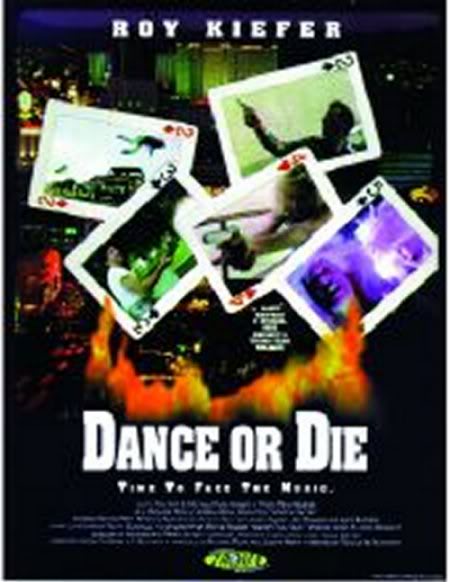
Embracing the Melodrama #35: Dance or Die (dir by Richard Munchkin)


Dance or Die

Every month, the Alamo Drafthouse has something that they call the Video Vortex.  This is where, for one night only, they show a movie that are only available on VHS.  For the most part, these movies are usually very obscure, often quite strange, and, not surprisingly, really, really bad.  However, on the plus side, it only costs a dollar to get into Video Vortex and it gives people like me a chance to see films with titles like Dance or Die.

In all probability, of the 50 films that I’m reviewing in this series, Dance or Die is probably the one that nobody else has ever heard of.  That’s understandable because Dance or Die is a pretty bad film and, when it was released way back in 1987, it apparently went straight to video.  If not for the fact that the Alamo Drafthouse is just a few blocks away from me, I would probably never have heard of — much less seen — Dance or Die.

Dance or Die tells the story of Jason Chandler (Roy Kieffer), a choreographer who is also a recovering drug addict.  Jason spends his time either choreographing a show or teaching a dance class.  That’s not me being a vague reviewer.  That’s me pointing out the fact that the film itself seems to be unsure just what exactly it is that Jason spends all of his time doing, beyond the fact that it somehow involves dancing.  At the end of the movie, there’s a hilariously bad dance performance that Jason apparently choreographed.  (I say bad but I have to admit that it’s believably bad and I’ve been involved in worse.)  Are the dancers Jason’s students or are they supposed to be professionals?  Who knows?

We’re also left uncertain as to just when exactly Jason was a drug addict or what he was addicted to or anything else like that.  All we know is that he goes to meetings that have a definite AA feel to them and he has heart-to-heart talks with his drug counselor.  He often says that he’s feeling tempted to return to his old way but what were those ways?

And another thing — if Jason’s a recovering drug addict, is it really a good idea for him to be roommates with a guy who spends all of his spare time selling cocaine out of their apartment?  If I was Jason’s counselor, I’d probably tell him to find a new roommate.  However, in all fairness, the roommate (whose name I never caught — in fact, I’m not sure if it’s ever stated) does tell Jason not to touch any of the cocaine.

And here’s another question for you — why do Jason and his roommate keep an aquarium in their back yard?  It’s just sitting out there with a bunch of confused fish wondering why they’re not being kept in the living room.  When Jason’s roommate holds an outdoor barbecue, a bunch of gangster pop up out of nowhere and gun everyone down and, sad to say, the aquarium is destroyed.

Fortunately, during the massacre, Jason was out doing whatever the Hell it is that he does all day.  (For the most part, it looks like he spends most of his time driving his car.  The film takes place in Las Vegas and you better believe that whenever Jason goes out for a drive, he makes sure to go by a few locations that scream, “Hey, we filmed in Vegas!”)  Jason is naturally upset to discover a bunch of dead people in his house and he’s even more upset when a homicide detective suggests that maybe Jason knows more than he’s telling.  But Jason doesn’t do anything crazy like move out of the house.  Even after he starts to get threatening phone calls, Jason stays in the house.

It turns out that Jason’s roommate hid a file somewhere in the house.  Jason spends most of the movie searching for that file and he even gets desperate enough to bring in a psychic at one point.  However, the file really doesn’t matter.  What does matter is whether or not Jason will be able to resist the temptation to start using drugs again.  Will Jason resist his demons?  Will he find love with one of the two women who are inexplicably attracted to him?  And will the presence of gun-toting gangsters ruin the big dance performance?

Oh, the drama!

Yes, Dance or Die is a pretty inept film but it’s one of those films that, quite unintentionally, has a compellingly surreal feel to it.  It may not work as a thriller or an attempt to explore addiction but it does definitely work as a piece of performance art.  Add to that, there’s dancing!  To be honest, I could have used a lot more dancing but the final performance of Jason’s dance troupe (or students or whatever they’re supposed to be) simply has to be seen to be believed.

Now, I know what you’re wondering.  “Gee, Lisa, how can I see this movie?”

Well, fear not.

The movie is below!