Three years after blowing up the town of Hope, John Rambo (Sylvester Stallone) is …. workin’ on the chain gang…. (I hope you sang it.) However, Colonel Sam Trautman (Richard Crenna) has a suggestion for Rambo. He can get a full pardon if he infiltrates Vietnam and investigates what might be a POW camp….
So begins 1985’s Rambo: First Blood Part II!
When viewers first met John Rambo in 1982’s First Blood, he was a drifter who was obviously uncomfortable with dealing with other people. Haunted by both his experiences in Vietnam and the way he was treated when he returned to his own country, Rambo was someone who largely wanted to be left alone. He was the ultimate outsider. When he asked Brian Dennehy’s Sherriff Teasle where he could get a cop of coffee, Teasle told him to go over the border and have his coffee in Canada. (Is there anything more insulting than to tell a Vietnam veteran to go to Canada like a draft dodger?) Rambo was someone who could take care of himself. He was someone who knew how to survive in the wilderness. But, in the first movie, he was not superhuman. Rambo was considerably banged up by the end of First Blood. The other thing that is sometimes overlooked is that, as far as his time in Hope was concerned, Rambo never deliberately killed anyone. The only person who died in First Blood was a sadistic police officer who was so determined to get a shot at Rambo that he accidentally tumbled out of a helicopter. When Rambo fought, it was in self-defense. Rambo had plenty of opportunities (and, by today’s cultural standards, reasons) to kill Sheriff Teasle and his deputies but he didn’t. Things are a bit different in the sequel. Rambo: First Blood Part II transforms Rambo from a relatively realistic character into the comic book action hero that everyone knows today. Rambo’s gone from being a hulking drifter to being a muscle-bound warrior.
The film doesn’t waste any time getting Rambo out of prison and over to Thailand. The obviously duplicitous Murdock (Charles Napier) tells Rambo that his mission is solely to take pictures and not to engage with the enemy. (You may be wondering why anyone would recruit Rambo for a mission that doesn’t involve engaging with the enemy and it’s a fair question.) Soon, Rambo is in the jungles of Vietnam, meeting up with a rebel named Co (Julia Nickson), and heading up river with a bunch of pirates. Needless to say, Rambo is soon engaging with the enemy.
Rambo: First Blood Part II is an undeniably crude film. Clocking in at 96 minutes, the film makes it clear that it doesn’t have any time to waste with characterization or debate. Sylvester Stallone rewrote James Cameron’s original script and he gives a performance that has little of the nuance that was present in the first film. And yet, the film has an undeniable hypnotic power to it. It’s pure action. Rambo exists to blow up his enemies, whether it’s with a gun or an explosive arrow or the missiles fired from a stolen helicopter. Because the bad guys are all arrogant sadists who exist to remind American viewers of the humiliation of its first military defeat, there’s an undeniable pleasure in watching them get defeated by one motivated warrior who refuses to be held back by the paper pushers in charge. Murdock tells Rambo not to rescue any POWs. Rambo responds by machine gunning Murdock’s office. It’s pure wish fulfillment and it is cathartic to watch. It’s perhaps even more cathartic to watch today, after the twin traumas of the COVID lockdowns and the chaotic withdrawal from Afghanistan. Murdock becomes a stand-in for every incompetent bureaucrat who ever let America down. The Murdock who tells Rambo not to rescue any Americans is little different from the men who told business that they had to close and who tried to dictate whether or not people could leave their homes. The Murdock who was prepared to leave American behind is the same person who did leave Americans behind in Kabul. Rambo’s anger is the anger of everyone who values freedom above obedience.
Rambo kills a lot of people in the sequel but none of them are American. He’s a patriot, albeit an angry one who will never forgive his country for not caring about its veterans as much as they cared about it. “Do we get to win this time?” Rambo ask Trautman and it’s a moment that, like much of the movie, is both crudely simplistic but is powerful in its refusal to be complicated. Rambo: First Blood Part II is a fantasy but it’s also a plea to be allowed to succeed. Forget the rules. Forget the regulations. Just allow the people to win.
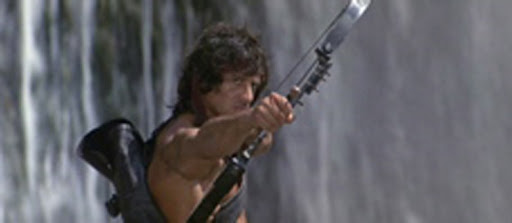
Rambo: First Blood Part II (1985, dir by George Pan Cosmatos, DP: Jack Cardiff)


Pingback: Lisa Marie’s Week In Review: 4/27/26 — 5/3/26 | Through the Shattered Lens
Pingback: Lisa Marie’s Week In Review: 9/14/26 — 9/20/26 – Through the Shattered Lens
Pingback: Film Review: Rambo III (dir by Peter MacDonald) – Through the Shattered Lens