“You were wronged. Now you have the chance to get even… if you want it.” — Agent Graves
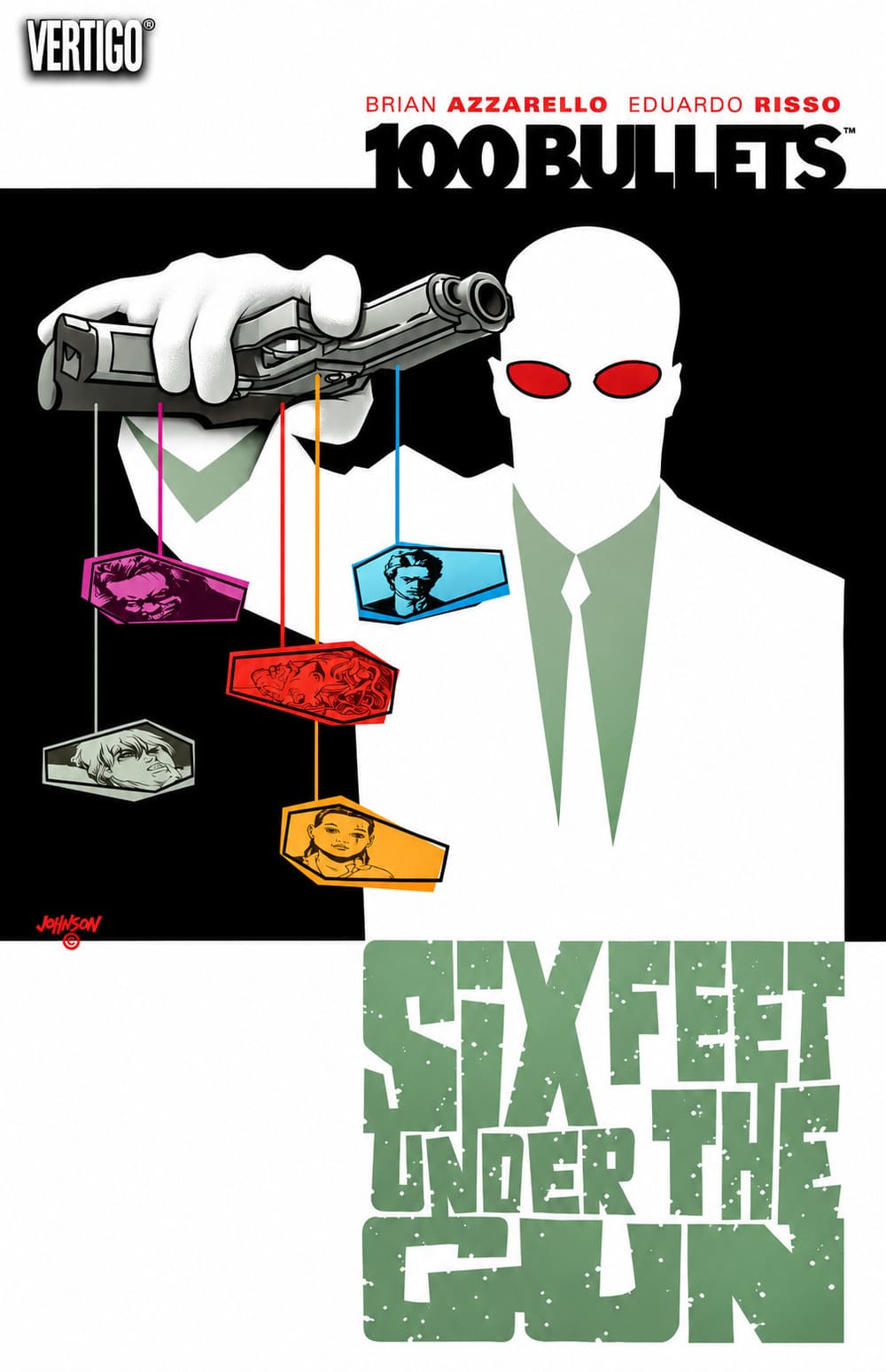
After the bandaged faces, missing memories, and private-eye trouble of The Counterfifth Detective, Six Feet Under the Gun takes a different approach. Rather than follow one unlucky character through a sustained mystery, Brian Azzarello and Eduardo Risso check in with several familiar faces. Collecting issues #37–42, this sixth volume offers six stand-alone chapters while the conflict surrounding Graves, Shepherd, and the Trust keeps getting uglier. It sounds like a breather, but in 100 Bullets, catching your breath usually means somebody has stopped choking you long enough to ask a question.
The key word here is transition, though that makes the collection sound less entertaining than it actually is. This is not simply six issues of people waiting for the next big storyline. Azzarello uses the shorter format to examine what these characters have become and how poorly their old lives fit them now. The larger conspiracy matters, but the best material comes from smaller encounters: visiting a neighborhood, approaching an abandoned relationship, or discovering that going back does not necessarily mean going home.
Dizzy Cordova’s return to her Chicago neighborhood gives the volume an immediate emotional connection to the beginning of the series. She was our introduction to Graves’s offer, and revisiting her old surroundings provides a useful measure of how far things have moved. The interesting question is no longer simply whether she will take revenge. It is whether the person who accepted that opportunity can still belong to the life she left behind. Familiar streets do not offer much comfort when you have become unfamiliar to yourself.
That is a smart direction for the series because it keeps Dizzy from becoming just another recruit in somebody else’s secret war. Her background matters. So do the people and places that existed before Graves arrived with his briefcase. The visit makes the conspiracy feel less abstract: whatever Graves and Shepherd are building, it involves pulling people away from recognizable lives. Dizzy’s chapter works because the cost is there without requiring another long explanation of the Trust’s history.
Cole Burns’s visit to the girlfriend he deserted offers another variation on that same discomfort. There is something inherently awkward about a dangerous professional trying to reconnect with an ordinary relationship. Being good at surviving the world of the Minutemen does not mean being equipped to explain yourself to somebody you hurt. This is where the shorter chapters earn their place. Azzarello can let a personal encounter carry the weight instead of immediately burying it beneath another elaborate conspiracy reveal.
The collection also keeps the powerful characters in view. The Medici material connects family privilege with the uglier business of maintaining authority, while Graves and Shepherd become more revealing without becoming easy to trust. Shepherd is particularly effective because competence has never been his problem; understanding what he actually wants is another matter. These chapters give the political maneuvering more definition, but thankfully nobody suddenly delivers a convenient speech explaining everything. The answers make the relationships more dangerous, not more comfortable.
Lono, meanwhile, remains the kind of presence who makes a scene feel unsafe before anything has happened. His established brutality gives him an immediate advantage over the other characters, and over the reader: you expect him to make things worse. Spending more time around him helps balance the quieter material. Where a reunion can generate tension through hesitation, Lono generates it through the possibility that hesitation will not be allowed. The book needs both kinds of menace to keep its separate chapters from feeling interchangeable.
One of the collection’s strongest ideas is that the people outside the conspiracy still matter. A chapter involving a couple witnessing an accident becomes a nasty little sequence of changing expectations and consequences. It brings the series back toward the compact morality tales that made its original premise so effective. You do not need to control a criminal dynasty to make a disastrous decision. Sometimes an unexpected opportunity is enough, especially when desperation starts disguising itself as good luck.
The downside is that Six Feet Under the Gun assumes you have been paying attention. A returning character can carry an entire chapter, but only if you remember why that person matters. Readers coming straight from Milo Garret’s more concentrated story may find this collection scattered. That is a fair complaint. The book trades sustained momentum for a wider view, and some encounters feel more like preparation than payoff. It is an effective installment, but not a particularly sensible place to start the series.
Risso is what makes those changes in focus feel natural. His economical drawing gives each character a distinct presence, while the bars, streets, and worn-down surroundings keep the book grounded in something dirtier than conspiracy diagrams. Patricia Mulvihill’s coloring deserves credit, too. Working around Risso’s heavy blacks, she gives the scenes atmosphere without fighting the drawing. The result is stylish without looking clean, which is exactly right for a story where even a quiet conversation seems to leave a stain.
100 Bullets Vol. 6: Six Feet Under the Gun is less about delivering one big knockout than reminding us how many people are standing within punching distance. Its separate stories deepen relationships, revisit unfinished business, and make the coming conflict feel personal rather than merely complicated. The structure occasionally slows the forward drive, but the character work earns that pause. Azzarello and Risso make checking in feel threatening, funny, and uncomfortable. By now, even a visit to an old girlfriend can feel like walking into an ambush.
100 Bullets Volume Reviews

