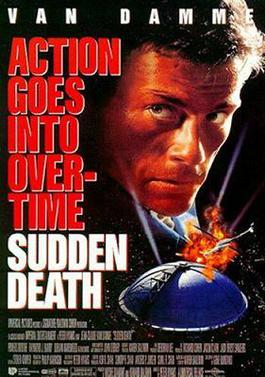
Guilty Pleasure No. 131: Sudden Death (dir by Peter Hyams)


Oh, Sudden Death, how I love you!

At first glance, 1995’s Sudden Death appears to just be another “Die Hard in a—” type of film. The final game of the Stanley Cup Final is being played in Pittsburgh. The Vice President (Raymond J. Barry) will be attending. Security’s tight, but not tight enough to stop rogue Secret Service agent Joshua Foss (Powers Boothe) and his band of quirky mercenaries. The hockey players continue to fight on the ice. The fans in the stadium continue to cheer every punch thrown and tooth knocked out. None of them know they are currently being held hostage as part of Foss’s plot to extort the government out of several billion dollars.

Fireman Darren McCord (Jean-Claude Van Damme) is at the game with his son and his daughter. He just wants a good bonding experience with his children. Instead, in true John McClane fashion, he finds himself sneaking around the arena, trying to defuse the bombs Foss has set and also trying to rescue the Vice President. It’s not easy, even for someone like Jean-Claude Van Damme.

As I said, this film was obviously inspired by Die Hard. But not even Bruce Willis ever found himself fighting for his life against a terrorist wearing a big penguin costume. Van Damme not only defuses bombs but also finds time to put on a goalie’s costume and hit the ice. He manages to block the puck, then looks up at the stands and gives his son a meaningful look. Even with the mask covering his face, his son recognizes him. Meanwhile, up in the VIP box, Powers Boothe appears to be having a wonderful time chewing the scenery. Even though he’s playing the bad guy in a Die Hard rip-off, Boothe doesn’t make the mistake of trying to imitate the great Alan Rickman. Instead, Boothe brings his own rugged style to the role of Joshua Foss. It’s hard not to appreciate a villain who can casually threaten to blow up a stadium without breaking a sweat. When someone sensibly points out that Foss would probably die in the explosion as well, he merely shrugs as if to say, “Let’s do it and be legends.”

And I haven’t even gotten to the bit with the helicopter yet….

Sudden Death is a big, ludicrous, and wonderful movie. It’s the type of action film that could only have starred Van Damme. Sylvester Stallone and Bruce Willis may have been better actors, but Stallone would have taken the project too seriously and Willis’s wiseass persona would have sabotaged the film’s more earnest moments. Arnold Schwarzenegger may have been bigger, but there’s no suspense to watching Schwarzenegger beat up someone in a penguin costume. Steven Seagal would have made you root for the penguin. Only Van Damme could have played Darren McCord and made you cheer for him whether he was fighting terrorists or trying to impress his children. Director Peter Hyams directs with an anything-goes sort of energy. The same genius that somehow made me cry when Elliott Gould and James Brolin ran through the cemetery in Capricorn One is present in Sudden Death’s best scenes.

Sudden Death is a true pleasure. No need to feel too guilty about this one!
Previous Guilty Pleasures

  1. Half-Baked
  2. Save The Last Dance
  3. Every Rose Has Its Thorns
  4. The Jeremy Kyle Show
  5. Invasion USA
  6. The Golden Child
  7. Final Destination 2
  8. Paparazzi
  9. The Principal
  10. The Substitute
  11. Terror In The Family
  12. Pandorum
  13. Lambada
  14. Fear
  15. Cocktail
  16. Keep Off The Grass
  17. Girls, Girls, Girls
  18. Class
  19. Tart
  20. King Kong vs. Godzilla
  21. Hawk the Slayer
  22. Battle Beyond the Stars
  23. Meridian
  24. Walk of Shame
  25. From Justin To Kelly
  26. Project Greenlight
  27. Sex Decoy: Love Stings
  28. Swimfan
  29. On the Line
  30. Wolfen
  31. Hail Caesar!
  32. It’s So Cold In The D
  33. In the Mix
  34. Healed By Grace
  35. Valley of the Dolls
  36. The Legend of Billie Jean
  37. Death Wish
  38. Shipping Wars
  39. Ghost Whisperer
  40. Parking Wars
  41. The Dead Are After Me
  42. Harper’s Island
  43. The Resurrection of Gavin Stone
  44. Paranormal State
  45. Utopia
  46. Bar Rescue
  47. The Powers of Matthew Star
  48. Spiker
  49. Heavenly Bodies
  50. Maid in Manhattan
  51. Rage and Honor
  52. Saved By The Bell 3. 21 “No Hope With Dope”
  53. Happy Gilmore
  54. Solarbabies
  55. The Dawn of Correction
  56. Once You Understand
  57. The Voyeurs 
  58. Robot Jox
  59. Teen Wolf
  60. The Running Man
  61. Double Dragon
  62. Backtrack
  63. Julie and Jack
  64. Karate Warrior
  65. Invaders From Mars
  66. Cloverfield
  67. Aerobicide 
  68. Blood Harvest
  69. Shocking Dark
  70. Face The Truth
  71. Submerged
  72. The Canyons
  73. Days of Thunder
  74. Van Helsing
  75. The Night Comes for Us
  76. Code of Silence
  77. Captain Ron
  78. Armageddon
  79. Kate’s Secret
  80. Point Break
  81. The Replacements
  82. The Shadow
  83. Meteor
  84. Last Action Hero
  85. Attack of the Killer Tomatoes
  86. The Horror at 37,000 Feet
  87. The ‘Burbs
  88. Lifeforce
  89. Highschool of the Dead
  90. Ice Station Zebra
  91. No One Lives
  92. Brewster’s Millions
  93. Porky’s
  94. Revenge of the Nerds
  95. The Delta Force
  96. The Hidden
  97. Roller Boogie
  98. Raw Deal
  99. Death Merchant Series
  100. Ski Patrol
  101. The Executioner Series
  102. The Destroyer Series
  103. Private Teacher
  104. The Parker Series
  105. Ramba
  106. The Troubles of Janice
  107. Ironwood
  108. Interspecies Reviewers
  109. SST — Death Flight
  110. Undercover Brother
  111. Out for Justice
  112. Food Wars!
  113. Cherry
  114. Death Race
  115. The Beast Within
  116. Girl Series
  117. Gone in 60 Seconds
  118. Swordfish
  119. Marked For Death
  120. The Internship
  121. The Angry Red Planet
  122. 2012
  123. Old School
  124. No Escape
  125. In Death Series
  126. Alligator
  127. Little Annie Fanny
  128. Wicked Wanda
  129. Congo
  130. The 13th Warrior

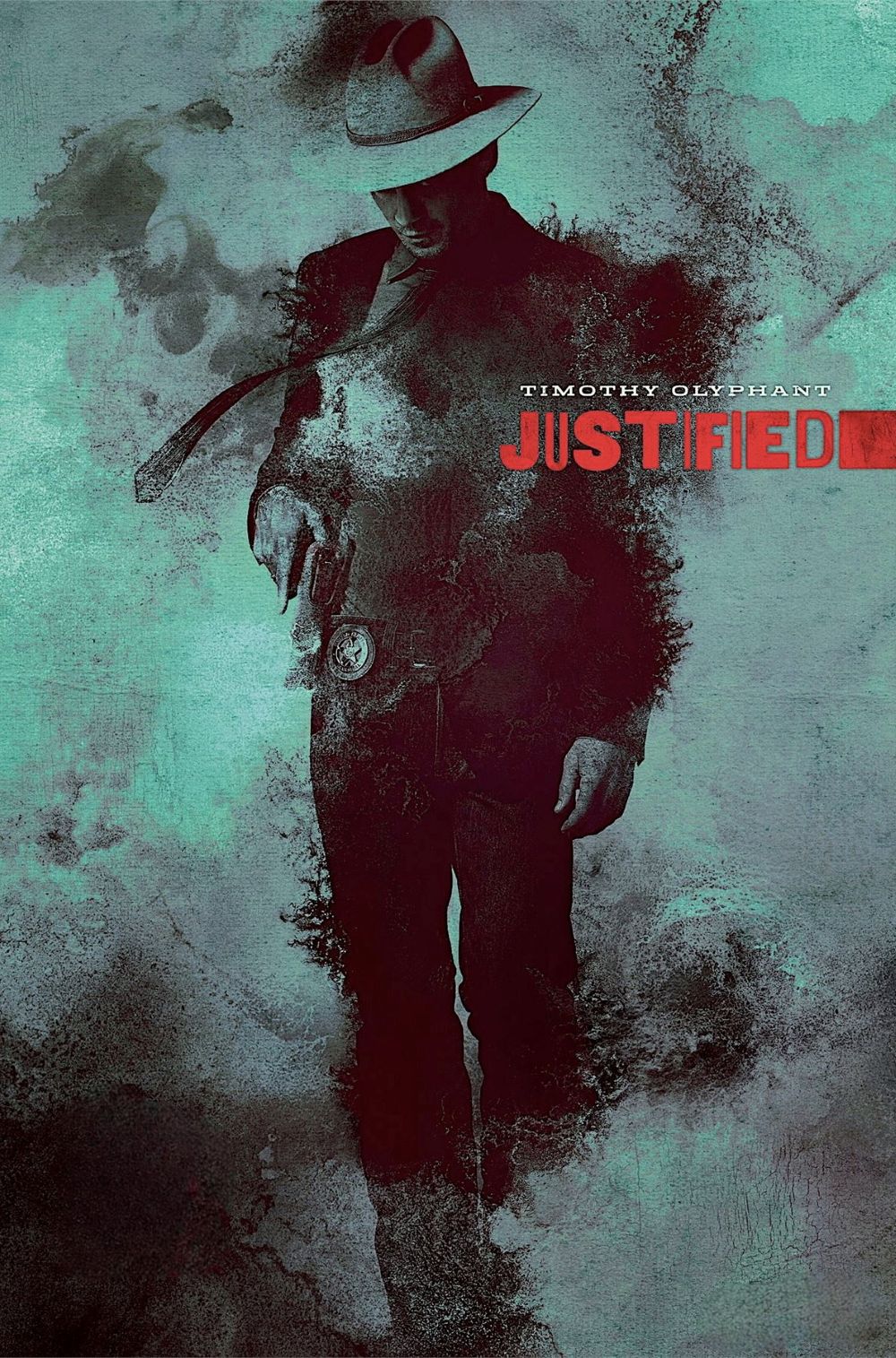
Review: Justified (by Graham Yost)


“You do a good job of hiding it. And I suppose most folks don’t see it. But honestly? You’re the angriest man I have ever known.” — Winona Hawkins (describing Raylan Givens)

Justified is one of those rare TV shows that feels like a perfectly aged whiskey—smooth, rich, and with a kick that lingers long after you’ve finished a glass. Adapted from Elmore Leonard’s stories featuring the sharp-shooting, quick-witted U.S. Marshal Raylan Givens, the FX series is a masterclass in character-driven storytelling, sharp dialogue, and the kind of moral ambiguity that makes you question who you’re really rooting for. At the heart of it all is Timothy Olyphant as Raylan, a man who carries the weight of his past like a well-worn leather jacket, and Walton Goggins as Boyd Crowder, the charismatic, Bible-quoting criminal who might just be the most compelling villain—or antihero—you’ve ever seen on screen.

What makes Justified stand out in a sea of crime dramas is its refusal to take itself too seriously, even when the stakes are life-or-death. The show thrives on its dialogue, which crackles with the kind of wit and rhythm you’d expect from Leonard’s work. Raylan’s dry, understated humor is a constant delight, whether he’s trading barbs with a suspect, outsmarting a room full of criminals, or just trying to keep his cool in the face of his own family’s dysfunction. Olyphant delivers every line with a mix of charm and menace, making Raylan feel like a man who’s seen it all but hasn’t lost his sense of humor—or his moral compass, however bent it might be. There’s a scene early in the series where Raylan gives a criminal 24 hours to leave town, and the way Olyphant sells the quiet intensity of that moment is a testament to his ability to command the screen without raising his voice. He’s the kind of hero who doesn’t need to shout to be heard.

But as good as Olyphant is, Justified might just belong to Walton Goggins as Boyd Crowder. Boyd is the kind of character who could’ve been a cartoonish villain in lesser hands, but Goggins turns him into something far more fascinating. A former coal miner turned criminal mastermind, Boyd is equal parts philosopher, showman, and cold-blooded killer. He quotes the Bible one minute and pulls a trigger the next, all while delivering monologues that somehow make his twisted logic sound almost reasonable. Goggins’ performance is electric, and his chemistry with Olyphant is the kind of alchemy that elevates the entire series. Their dynamic is a dance—sometimes a waltz, sometimes a knife fight—where neither man is entirely sure who’s leading. Boyd isn’t just a thorn in Raylan’s side; he’s a dark reflection of him, a man who also grew up in the same rough-and-tumble world of Harlan County, Kentucky, but chose a different path. Their rivalry is the backbone of the show, and every scene they share is a masterclass in tension and subtext.

Then there’s Ava Crowder, Boyd’s sister-in-law and a force of nature in her own right, portrayed with fierce intelligence by Joelle Carter. Ava’s relationship with Boyd is a rollercoaster of love, hate, and everything in between. Their dynamic is just as compelling as the one between Raylan and Boyd, filled with a volatile mix of loyalty, betrayal, and an undeniable connection that neither can fully shake. Ava’s journey from a woman trying to escape her family’s criminal past to a power player in her own right is one of the show’s most compelling arcs. She’s tough, resourceful, and just as morally complex as the men around her, and her interactions with Boyd crackle with the same energy and tension as his showdowns with Raylan. Whether they’re working together, scheming against each other, or caught in some messy in-between, their relationship adds another layer of depth to the show’s already rich tapestry of characters.

The supporting cast is just as strong, filled with characters who feel like they’ve been lifted straight out of a Leonard novel. There’s Art Mullen, Raylan’s boss and the closest thing he has to a father figure, played with gruff warmth by Nick Searcy. And let’s not forget the various criminals, informants, and eccentric locals who populate Harlan County, each one memorable in their own right. Whether it’s the hilariously unhinged Dickie Bennett or the stoic, loyal Limehouse, the show’s roster of side characters ensures that every episode is packed with personality.

What’s so refreshing about Justified is that it never feels the need to over-explain itself. The dialogue is sharp and efficient, often delivering character development and plot twists in the same breath. The show trusts its audience to keep up, and it rewards that trust with some of the most satisfying writing on television. The banter isn’t just clever—it’s purposeful, revealing layers of the characters and their relationships without ever feeling like exposition. And the action? It’s as tight and precise as Raylan’s aim. The shootouts are sudden and brutal, but they’re never gratuitous. Every pull of the trigger feels earned, and the tension leading up to those moments is often as gripping as the violence itself.

The setting of Harlan County is almost a character in itself. The show paints a vivid picture of a place where the law is more of a suggestion than a rule, and where family loyalty often trumps justice. The rugged, coal-dusted landscape mirrors the moral grayness of the stories being told. This isn’t a world of clear-cut heroes and villains; it’s a world where everyone has their own code, and where the line between right and wrong is as blurry as the smoke from a freshly fired revolver. Raylan himself is a product of this environment, and his struggle to reconcile his past with his present is one of the show’s most compelling threads. He’s a man who left Harlan to become a marshal, but Harlan—and its ghosts—never really left him.

One of the show’s greatest strengths is its ability to balance humor and darkness. Even in its grimmest moments, Justified never loses its sense of fun. The writers have a knack for undercutting tension with a well-placed joke or a bit of absurdity, and the result is a show that’s as entertaining as it is thought-provoking. Whether it’s Raylan’s deadpan reactions to the chaos around him or Boyd’s theatrical antics, there’s always a moment to lighten the mood, even when the stakes are at their highest. This balance keeps the show from ever feeling too heavy, and it makes the darker moments hit even harder when they do arrive.

If there’s one thing Justified doesn’t get enough credit for, it’s its consistency. Over six seasons, the show rarely misfires. The writing remains sharp, the performances stay top-notch, and the stories continue to surprise. Even when it dips into more serialized storytelling in its later seasons, it never loses sight of what makes it special: the characters and their relationships. And when the series finally reaches its conclusion, it does so in a way that feels both satisfying and true to everything that came before. There are no easy answers in Justified, no neat bows tied around its themes. Instead, it leaves you with the sense that life—and justice—is messy, complicated, and often unfair.

At its core, Justified is a show about men and women shaped by their pasts, trying to carve out a future in a world that doesn’t always make it easy. Raylan Givens is a hero, but he’s not a saint. Boyd Crowder is a villain, but he’s not without his own twisted sense of honor. Ava Crowder is a survivor, navigating a world where loyalty is a currency and trust is a luxury. The beauty of the show is that it lets these characters exist in all their complexity, never forcing them into boxes they don’t fit into. And with dialogue that snaps like a twig underfoot and performances that bring every word to life, it’s a series that’s as rewarding to revisit as it is to experience for the first time. If you’re a fan of stories where the characters are as rich as the plot, and where every line of dialogue feels like it’s been polished to a shine, then Justified is the kind of show you’ll want to savor. It’s a modern classic, plain and simple.

A Scene That I Love: The Machete Fight from Walk Hard: The Dewey Cox Story


For me, there was no more touching film scene in 2007 than this one from Walk Hard: The Dewey Cox Story.  After years of blaming Dewey for accidentally chopping his brother Nate in half, Dewey’s father finally realizes that it could have happened to anyone.

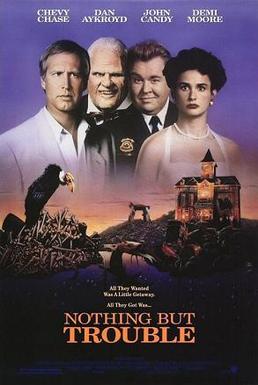
Nothing But Trouble (1991, directed by Dan Aykroyd)


Publisher Chris Thorne (Chevy Chase) is eager to get to know lawyer Diane Lightson (Demi Moore) so he agrees to drive her and two Brazilian hangers-on from Manhattan to New Jersey.  The Brazilians encourage Chris to take a detour, which leads to him running a stop sign, getting into a high-speed chase with chief of police Dennis Valkenheiser (John Candy), and being detained in the dilapidated village of Valkhenheiser.  Dennis decides to leave town with the Brazilians, leaving Chris and Diane to face the wrath of 106 year-old Judge Alvin “J.P” Valkenheiser (Dan Aykroyd).  Judge Valkenheiser has spent decades killing anyone who breaks the law in his village, though he also kills anyone who he just dislikes.  The Judge assumes Chris is a banker (and he hates bankers) and is prepared to kill him unless he marries the Judge’s granddaughter, Eldona (John Candy, in drag).  This town is nothing but trouble and Chris and Diane have to escape.

Nothing But Trouble was both the directorial debut and swan song for Dan Aykroyd.  (Aykroyd also wrote the script, from a story that was written by his brother, Peter.)  The film was an notorious box office bomb and watching, it’s easy to see why.  The story is all over the place, awkwardly mixing humor and horror.  Anyone who has seen the early seasons of Saturday Night Live knows that young Dan Aykroyd was one of the funniest people around but, when it comes to the movies, he’s always worked better with a collaborator than on his own.  As a director, Aykroyd throws a little bit of everything into Nothing But Trouble and the movie feels overstuffed.

As an actor, though, Aykroyd is funny.  Whatever laughs are to be found in Nothing But Trouble are largely the result of his performance as the Judge.  Chevy Chase seems bored.  Demi Moore actually gives a decent performance but she plays her role straight.  John Candy is likable as Dennis but too cartoonish as Eldona.  Aykroyd, however, so commits himself to playing the 106 year-old judge that he wrings laughs from even the weakest of lines.  Criticize Aykroyd the director all you want, Aykroyd the actor delivers.

One final note: The rap group Digital Underground makes a cameo appearance as themselves, performing in the Judge’s courtroom after getting arrested for speeding.  When I was watching Chevy Chase mugging for the camera and Dan Aykroyd walking around hunched over, I hardly expected to see a young Tupac Shakur suddenly show up but he did.  Digital Underground’s cameo is one of the film’s better moments, even if they don’t perform The Humpty Dance.

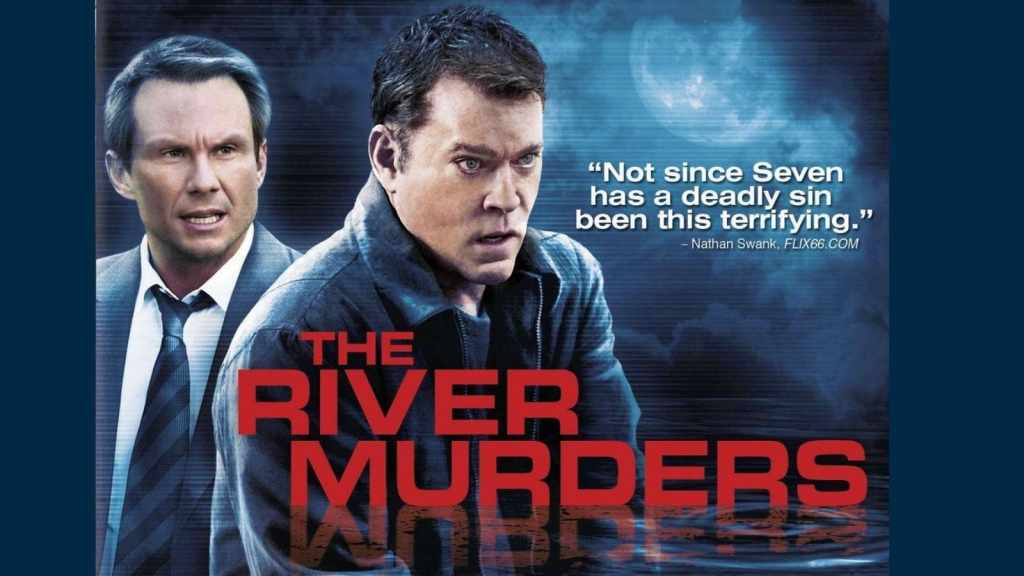
#MondayMuggers presents THE RIVER MURDERS (2011) starring Ray Liotta, Ving Rhames & Christian Slater!


Every Monday night at 9:00 Central Time, my wife Sierra and I host a “Live Movie Tweet” event on X using the hashtag #MondayMuggers. We rotate movie picks each week, and our tastes are quite different. Tonight, Monday April 28th, Sierra has chosen THE RIVER MURDERS (2011) starring Ray Liotta, Ving Rhames, Christian Slater, and Raymond J. Barry. 

The plot revolves around a homicide detective (Liotta) who becomes the prime suspect in a series of murders when the FBI uncovers his close personal ties to all of the victims.

This sounds pretty good to me, so join us tonight for #MondayMuggers and watch THE RIVER MURDERS! It’s on Amazon Prime. The trailer is included below:

Lisa Marie Reviews An Oscar Nominee: Born On The Fourth of July (dir by Oliver Stone)


In 1989, having already won an Oscar for recreating his Vietnam experiences in Platoon, director Oliver Stone returned to the war with Born On The Fourth Of July.

Based on the memoir of anti-war activist Ron Kovic, Born on the Fourth of July stars Tom Cruise as Kovic.  When we first meet Kovic, he’s growing up on Long Island in the 50s and 60s.  He’s a clean-cut kid from a nice family.  He’s on the school wrestling team and he’s got a lot of friends.  When he was just 15, he heard John F. Kennedy telling people to ask what they can do for their country and he was inspired.  He decided he wanted to join the Marines, despite the fact that his father (Raymond J. Barry) was still haunted by the combat that he saw in World War II.  (In one of the film’s better scenes, a young Kovic notices that the elderly veterans marching in the Independence Day parade still flinch whenever they hear a firecracker.)  He enlists in the Marines after listening to a patriotic speech from a recruiter (played by Tom Berenger).  Ron runs through the rain to attend his prom and has one dance with Donna (Kyra Sedgwick), on whom he’s always had a crush.  There’s nothing subtle about the way that Stone portrays Kovic’s childhood.  In fact, one might argue that it’s a bit too idealized.  But Stone knows what he’s doing.  The wholesomenss of Kovic’s childhood leaves neither him nor the viewer prepared for what’s going to happen in Vietnam.

Vietnam turns out not to be the grand and patriotic adventure that Kovic thought it would be.  After Sgt. Kovic accidentally shoots one of his own men in a firefight, he is ordered to keep quiet about the incident.  After he is wounded and paralyzed in another firefight, Kovic ends up in a Hellish VA hospital, surrounded by men who will never fully recover from their mental and physical wounds.  Kovic is eventually returns home in wheelchair.  The film then follows Kovic as he goes from defending the war in Vietnam to eventually turning against both the war and the government.  At one point, he ends up with a group of disabled vets in Mexico and there’s a memorable scene where he and another paraplegic (Willem Dafoe) attempt to fight despite having fallen out of their chairs.  Eventually, Kovic returns to America and turns his anger into activism.

There’s nothing subtle about Born On The Fourth Of July.  It’s a loud and angry film and Oliver Stone directs with a heavy-hand.  Like a lot of Stone’s films, it overwhelms the viewer on a first viewing and it’s only during subsequent viewings that one becomes aware of just how manipulative the film is.  Tom Cruise gives a good performance as Ron Kovic but his transformation into a long-haired, profane drunk still feels as if it happens a bit too abruptly.  A good deal of the film centers on Kovic’s guilt about accidentally killing one of his men but the scene where he goes to the soldier’s family and asks them for forgiveness didn’t quite work for me.  If anything, Kovic came across as being rather self-centered as he robs the man’s mother and father of the belief that their son had at least died heroically in combat as opposed to having been shot by his own sergeant.  Did Kovic’s need to absolve himself really give him the right to cause this family more pain?  Born on the Fourth Of July is an effective work of agitprop.  On the first viewing, you’ll want to join Kovic in denouncing the military and demanding peace.  On the second viewing, you’ll still sympathize with Kovic while also realizing that he really owes both his mother and father an apology for taking out his anger on them.  By the third viewing, you’ll be kind of like, “Wow, I feel bad for this guy but he’s still kind of a jerk.”  That said, when it comes to making an effective political film, Adam McKay could definitely take some lessons from Oliver Stone.  Born On The Fourth of July is at its best when it simply captures the feeling of living in turmoil and discovering that the world is not as simple a place as you once believed.  As idealized as the film’s presentation of Kovic’s childhood may be, anyone who has ever felt nostalgia for an earlier and simpler world will be able to relate.

Oliver Stone won his second Best Director Oscar for Born On The Fourth Of July.  The film itself lost Best Picture to far more genteel version of the past, Driving Miss Daisy.


Flight of the Living Dead: Outbreak On A Plane (2007, directed by Scott Thomas)


Bad news!  There’s a zombie outbreak on a 747 jumbo jet!  That’s what you get for trying to transport a scientist who has been infected with a “super warrior” virus on a commercial flight.  It’s fine as long as she’s in her container but it just takes a little turbulence for her to get free and start infecting everyone.

This movie was advertised as being the first movie about a zombie outbreak on a plane and yes, it came out the same time as Snakes on a Plane.  Flight of the Living Dead makes good use of its limited setting.  Not only do the handful of uninfected passengers have to maneuver around the undead in a tight space but they have to figure out how to get off the plane before it either runs out of fuel or gets blown up by the fighter jets that are following it.  The plane setting also reveals a new way to dispose of zombies, though it also means disposing of many of the living as well.

Flight of the Living Dead was better than I expected.  The characters are all cardboard but the action is fast and furious and that it was all happening the air did bring a new element of suspense to the familiar story.  Zombie movies are dime a dozen but this one’s not bad.  The next time I have to fly anywhere, I’m going to make sure I’m seated as far to the back of the plane as possible.

Film Review: Cop (dir by James B. Harris)


First released in 1988, Cop stars James Woods as Lloyd Hopkins, a homicide detective who does not …. wait for it …. GO BY THE BOOK!

Actually, has there ever been a movie about a homicide detective who always made sure to go by the book?  I’m sure there has been but I really can’t think of any off the top of my head.  Whenever a homicide detective shows up as the main character of a movie, you can be sure that he’s going to drink too much, carouse too much, and get yelled at by his superiors.  If the movie involves a serial killer, you can be sure that the detective and the killer are going to be mirror images of each other, two renegades who have found differing ways to work out their issues with the world.

As much as we talk about the cliché of the cop who does it his way, would we really want to see a movie about a cop who plays by the rules?  I mean, most people dread having to deal with cops.  It’s not just that cops usually bring bad news.  It’s also that dealing with a cop means having to spend a lot of time while they slowly and methodically go through all of their procedures.  There have been so many times that I’ve been pulled over speeding and I’ve just wanted to yell, “Just write the ticket!”  Most people agree that we need some sort of police force, regardless of what the Defund folks say.  But most people also hate following the rules, especially when those rules feel rather arbitrary.  That’s the appeal of the renegade cop.  The renegade cop fills a purpose in society but, at the same time, he dislikes dealing with all of the usual cop nonsense as much as the rest of us.

As for Lloyd Hopkins, he’s hyperactive, jittery, sleazy, and a terrible father and husband.  He cheats on his wife.  He tells his daughter all about the gory details of his job.  (His daughter, it should be noted, seems to enjoy hearing them.)  He obsesses on the crimes that he investigates and he pursues murderers with a fanaticism that suggests that Lloyd knows that he’s just one bad life choice away from becoming one of them himself.  (And, indeed, Lloyd kills quite a few people over the course of Cop, even allowing one person to get into another room and get a shotgun just so Lloyd will have an excuse to shoot him.)  Lloyd is someone who is dangerous to know but, at the same time, he’s also probably the only person who can stop the killer who is seemingly committing random murders in Los Angeles.

The plot is typical of films about obsessive detectives pursuing faceless killers but Cop stands out due to the director of James B. Harris and the lead performance of James Woods.  Harris creates an atmosphere of continual unease, one in which the viewers gets the feeling that anyone could become the killer’s next victim at any moment.  James Woods, meanwhile, plays Lloyd as being a live wire, someone who simply cannot stop thinking and talking because he knows that the minute he does, he’s going to have to take a serious look at the wreck of his life and his own less-than-stable behavior.  Lloyd may be a self-destructive bastard but he’s a compelling self-destructive bastard and, in this film’s version of Los Angeles, he’s about as close as one can get to avenging angel.  The film is full of good actors, like Charles Durning, Lesley Ann Warren, and Raymond J. Barry, but it is ultimately James Woods’s show.  Lloyd gets the film’s final line and it’s a killer but it works because, by the time he utters it, the viewer feels as if they have gotten to know Lloyd.

Cop is based on Blood on the Moon, a novel by James Ellroy.  I have not read that novel so I don’t know how closely Cop sticks to Ellroy’s original plot.  Nor do I know how James Ellroy felt about Cop, which was the first movie to be based on his work.  That said, Ellroy’s writing and Harris’s film share a dark vision of humanity and a subversive sense of humor.  Ellroy has often declared himself to be the world’s great crime novelist and, from what I’ve read of his work, I would tend to agree.  Cop is certainly not the greatest crime movie ever made (nor is it the best film to ever be adapted from Ellroy’s writing) but it’s still pretty damn good.

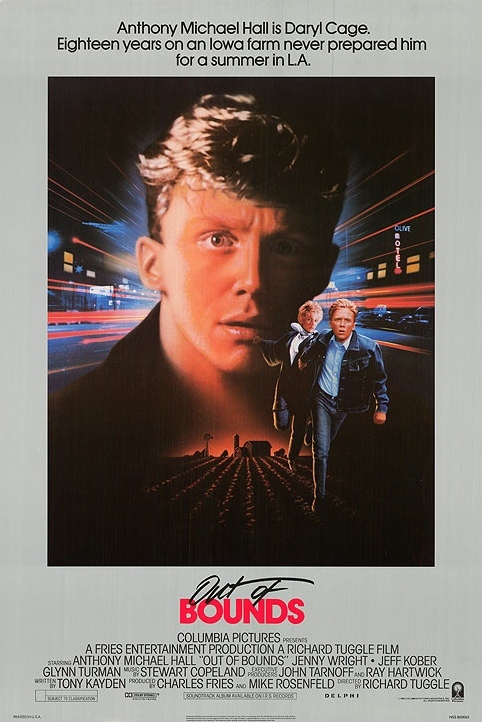
Film Review: Out of Bounds (dir by Richard Tuggle)


Just a country boy

Born and raised in South Des Moines

He took the midnight bus to anywhere….

That’s the story of Darryl Cage, the protagonist of the 1986 film, Out of Bounds.  Played by Anthony Michael Hall, Darryl is an Iowa farm boy who goes to Los Angeles to live with his brother.  Unfortunately, when his flight lands, Darryl’s suitcase is switched with another one that’s full of cocaine!  Darryl becomes an accidental drug mule and end up getting his brother killed!  WHAT A DUMBASS!

So now, Darryl is on the run.  He’s a small town farmer in the big city, trying to avoid bad guy Roy (Jeff Kober) and the police, led by Lt. Delgado (Glynn Turman).  Fortunately, Darryl meets an aspiring actress named Dizz (Jenny Wright).  Dizz gives him a makeover and introduces him to the Los Angeles club scene.  Siouxsie and the Banshees make a cameo appearance at one club.  They perform one song and fortunately, it’s Cities in the Dust.  Unfortunately, they don’t actually get involved in the plot of the film.  I would have liked to have seen Siouxsie beat up Jeff Kober.  But it doesn’t happen.

Out of Bounds is one of the many films that came out in the mid-to-late-80s in which the actors who were (somewhat unfairly) considered to be Brat Packers attempted to prove that they were capable of doing more than just projecting teen angst.  Judd Nelson and Ally Sheedy, for instance, starred in a forgettable neo-noir called Blue City.  Andrew McCarthy starred in an interesting but ultimately uneven film called Kansas.  Emilio Estevez not only starred in Wisdom but he directed it too.  And Anthony Michael Hall starred in Out of Bounds.

Anthony Michael Hall was best-known for playing nerdy characters in Sixteen Candles and The Breakfast Club and it’s probable that he was attempting to escape being typecast when he took his role in Out of Bounds.  This was Anthony Michael Hall’s chance to play an action hero!  Unfortunately, Anthony Michael Hall made the same mistake that many of his peers made while trying to give the performance that would allow them to break free of the Brat Pack label.  He tried too hard.  While Glynn Turman, Jeff Kober and Jenny Wright obviously understood the type of  rather silly movie that Out of Bounds was going to be and they modified their performances accordingly, Anthony Michael Hall apparently tried to duplicate the method intensity of Marlon Brando or James Dean.  In other words, Hall took the film far more seriously than it deserved to be taken.

Out of Bounds get off to a bad start as soon as it opens with Anthony Michael Hall on the farm in Iowa.  There’s absolutely nothing about the young Anthony Michael Hall that leaves on with the impression that he’s ever spent any time on a farm.  Everything about him screams Hollywood before he even lands in Los Angeles.  Hence, it gets difficult to really buy him as being the wide-eyed innocent that everyone else views him as being.  Since a good deal of the film’s plot is dependent upon Hall being naïve, that’s a problem.  He may be a farm boy but he certainly doesn’t freak out after shooting someone.  He’s also somehow learned how to throw a knife straight into someone’s gut.  Out of Bound‘s director, Richard Tuggle, directed two films for Clint Eastwood so he obviously knew how to frame a fight scene but Hall is so miscast that it’s impossible to really get into the movie.

The film is pretty much stolen by Jenny Wright and Jeff Kober.  Kober is properly menacing and, just as she did in Near Dark and I, Madman, Jenny Wright works wonders with a role that could have just been formulaic.  Jenny Wright has apparently retired from acting.  Jeff Kober still shows up in movies and on television, usually playing villains.  (Earlier this year, he played yet another drug trafficker on General Hospital.)  Watching them give compelling performance in a film like Out of Bounds, it’s hard not to feel that both of them deserved bigger career than they had (or, in Kober’s case, still have).

The film is also stolen by its soundtrack, which is very 80s but in the best possible way.  Adam Ant, The Smiths, the aforementioned Souixsie and the Banshees, they all make an appearance and provide the film with a bit of narrative momentum that it would otherwise lack.  Watching the film, 80s Los Angeles comes across like a fun place.  No wonder Darryl Cage wanted to stay even though everyone was trying to kill him.

Out of Bounds is ultimately pretty forgettable and it didn’t make Anthony Michael Hall into an action star.  But, that’s okay.  Like a lot of former Brat Packers, he’s proven himself to be a reliable character actor.  There is life after high school.  Even more importantly, there’s also life after Iowa.

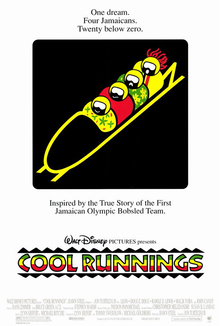
An Olympic Film Review: Cool Runnings (dir by Jon Turtletaub)


Like all good people, I am currently obsessed with the Winter Olympics.  Earlier this week, I asked some of my closest friends if they could recommend some good films about the Winter Games.  Almost everyone who replied recommended that I check out Cool Runnings, a film from 1993.

So, I did.

And I’m glad that I did.

Cool Runnings is one of those sports movies that’s based on a true story, though I imagine it’s probably a very loose adaptation.  Jamaica is a country with a long and proud Olympic history.  Since the 1948 Summer Olympics, Jamaican athletes have won a total of 77 medals, the majority of them in individual and relay sprinting events.  However, Jamaica didn’t compete in the Winter Olympics until 1988, when the Jamaican Bobsled Team made their debut.  According to contemporary news reports, the Jamaicans were folk heroes at the ’88 Winter Games and other teams would frequently help them out by lending them equipment.  Though the Jamaicans were never really a medal contender, they were personally popular and everyone was upset when their bobsled crashed during one of their qualifying runs.

That, of course, isn’t exactly the story that’s told in Cool Runnings.  In Cool Runnings, the Jamaican bobsled team is ridiculed by all of the snobs on the other teams, with the Germans especially going out of their way to be condescending.  Their first run is a disaster but their second run puts them into medal contention and causes people all over the world to spontaneously break into applause.  It’s a sports film, after all.  For a sports film to work, there has to be adversity before there can be victory.  Cool Runnings does stick close enough to the real story that the Jamaicans do end up crashing their sled.  However, in the film version, the team proudly carries their bobsled over the finish line while, again, people all around the world applaud.  Even a woman with a Russian flag claps.  And yes, it’s all pretty hokey but who cares?  It made me cry.

It’s a well-done film, one that is unapologetically sentimental and all the better for it.  Before I watched the film, I didn’t know anything about how the bobsled worked, beyond the fact that it involved four people and that everyone had to jump into the sled after launching it.  But, ultimately, it didn’t matter that I didn’t know much about bobsledding.  From the moment that film started, with scenes of aspiring Olympians running across sunny Jamaica, it had my attention.

When the film starts, Derice Bannock (Leon Robinson) is hoping to compete in the Summer Olympics but, at the qualifying trial, Derice and another runner, Yul Brenner (Malik Yorba), end up tripping over yet another runner, the likable and enthusiastic Junior Bevil (Rawle D. Lewis).  Out of contention for the Summer Olympics, Derice decides to try to find a way to go to the Winter Olympics.  Fortunately, there’s a former Olympic bobsledder, Irv Blitzer (John Candy), living nearby and Derice’s best friend, Sanka (Doug E. Doug) is a champion push cart racer.

The film follows Irv and the four Jamaicans on their unlikely journey to Canada.  It’s a comedy with a dramatic heart.  Yes, Sanka may need help getting his helmet over his hair (“Thanks, coach,” he says whenever Irv pounds down the helmet) but the film also takes the time to explore why it’s so important for these four to compete in the first place.  It might be tempting to make fun of Yul Brenner when he talks about how he wants to live in Buckingham Palace but the film makes clear just how important this improbable dream is for Yul and everyone else.  No one may give the Jamaican bobsled team a chance but Jamaica never stops believing in them.

It’s an incredibly sweet little movie, featuring likable performances and a heart-warming story.  I highly recommend it to anyone looking for a good sports story.