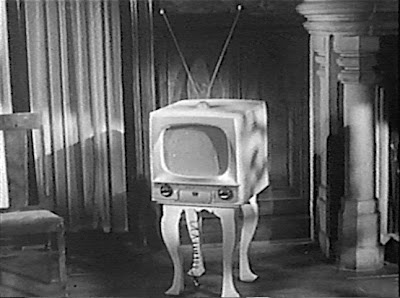
Welcome to Late Night Retro Television Reviews, a feature where we review some of our favorite and least favorite shows of the past! On Saturdays, I will be reviewing Saved By The Bell, which ran on NBC from 1989 to 1993. The entire show can be purchased on Prime!
It’s the aftermath of Zack and Kelly’s break-up! Who will survive!?
Episode 3.5 “The Aftermath”
(Dir by Don Barnhart, originally aired on September 21st, 1991)
Last week, Kelly got a job at The Max and developed a crush on her boss, Jeff (Patrick Muldoon). Zack and Kelly broke up at the school dance. Kelly asked Zack if they could still be friends. “Always,” Zack said.
It turns out that Zack was lying. This episode finds him bitter and obsessed. Screech and Slater take him out to the movies but — oh no! — Kelly and Jeff walk in. Jessie, Lisa, and Screech each set Zack up on a blind date. Zack goes out with Jessie’s fat friend and she eats all of his popcorn. Lisa’s friend is more interested in talking about the books of Jackie Collins than watching the movie. And Screech’s cousin turns out to be a perfectly nice and pretty blonde. (“She’s adopted,” Screech explains.)
Zack takes Screech’s cousin to The Max and dances with her… in front of Kelly! And they’re dancing to… A12 on the jukebox! “That’s Zack and Kelly’s song!” Screech says. Apparently, it’s a song that doesn’t have a title or much of a beat. “A12 is sacred!” Kelly says. “It was sacred until you dumped me for that jerk!” Zack says.
Now, I’m a bit torn here. Zack’s definitely in the wrong here, but is A12 actually sacred? I mean, it’s not mentioned in any other episode. And while Zack is definitely trying to make Kelly feel bad, Kelly is being pretty self-righteous for someone who didn’t break up with her boyfriend until after she kissed another guy. I guess my feeling is that sacred songs pretty much went out the window as soon as Kelly and Zack broke up.
Anyway, Screech’s cousin throws her milkshake on Zack.
Lisa’s Sweet Sixteen birthday party is approaching! Zack says he won’t come if Kelly and Jeff are invited. Lisa tells him that she’ll invite whoever she wants. At first, Zack refuses to go to the party, but then Screech has a heart-to-heart talk with him. Screech basically tells Zack that he’s being a whiny loser. Imagine what it must have been like to hear that from Screech, of all people.
Kelly and Jeff show up at the party. At first, Slater shows admirable loyalty to his friend Zack by giving Jeff the cold shoulder. Then Jeff mentions that he wrestled in high school. “Won my division a few times,” Jeff says. That’s all it takes for Slater to be like, “Zack who?”
Zack does come to the party. He apologizes for being a jerk. He tells Jeff to take care of Kelly. Zack tells us that he doesn’t know if he’ll ever get over Kelly. We’re left to wonder why he doesn’t just stop time if he’s so miserable…
This episode benefits from the presence of Patrick Muldoon, who makes Jeff into a likable “frat boy babe stealer.” It’s too bad that, in his next appearance, Jeff will have had a total personality transplant, because this episode actually made a pretty good point about the importance of accepting breakups and giving people a chance.
“That is my family, but that’s not my home. My home is back in 1978!” — David Freeman
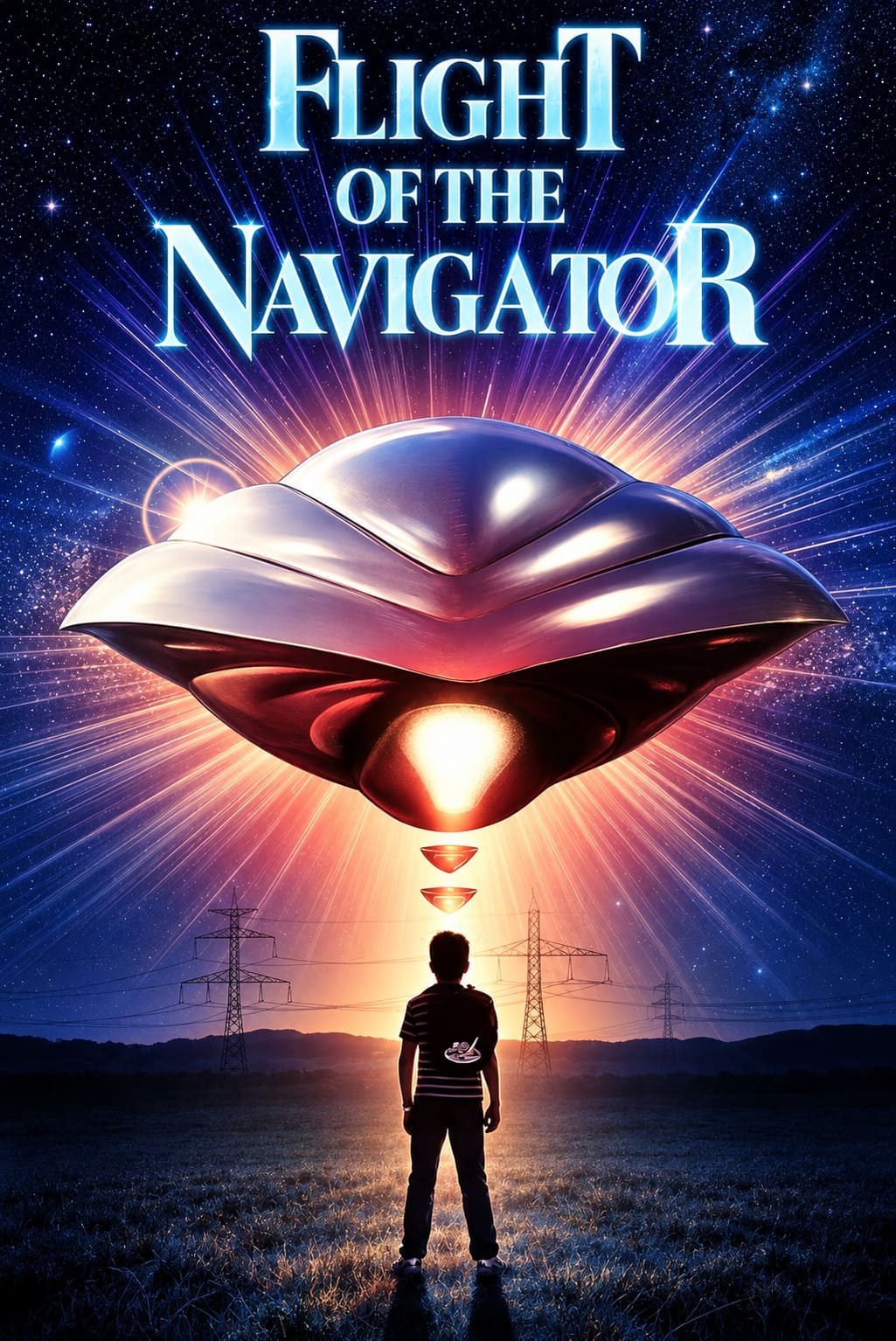
Flight of the Navigator turns a child’s worst possible homecoming into an unexpectedly funny, wistful, and imaginative science-fiction adventure. Released in 1986, it begins as a modest suburban mystery before expanding into a story about time displacement, missing years, alien technology, and the strange loneliness of returning home to a life that has moved on without you. It has the glossy, accessible surface of a Disney adventure, but there is a surprisingly melancholy idea at its center: what would it feel like to lose eight years of your life while everyone you love has had to live through them without you?
The movie follows David Freeman, a 12-year-old boy who disappears in 1978 after going into the woods to retrieve his younger brother Jeff. David wakes up in 1986, apparently having been gone only a few hours from his own point of view. The shock is immediate. His parents are older, Jeff is now his taller teenage brother, the family has moved, and David has become a long-unsolved missing-person case. This opening stretch is probably the film’s strongest material because it plays the scenario straight enough to make it genuinely unsettling. David is not simply a kid dropped into a flashy futuristic world; he is a child abruptly disconnected from the only reality he knows.
That emotional hook gives Flight of the Navigator more weight than many similar children’s adventures. David’s confusion is easy to understand, and the film wisely lets the situation breathe before revealing all of its science-fiction machinery. The sight of his family recognizing him after years of grief is touching, but it also comes with discomfort. David wants everything to return to normal, while his parents are overwhelmed by the impossible fact that their vanished son has returned unchanged. The movie does not dig into the full psychological consequences of that situation, because it is still fundamentally a family adventure, but it gives the idea enough attention to make the stakes feel personal.
Once NASA becomes involved, the story shifts into a more conventional but still entertaining sci-fi mode. Doctors discover that David has advanced knowledge in his brain that he cannot consciously explain, and the mystery leads him to a crashed alien spacecraft. The ship, known as the Trimaxion Drone Ship, is the movie’s most iconic element. Its smooth silver form, with no visible seams or conventional cockpit, still looks appealing because it has a simple, alien elegance. It is not overly busy or mechanical in the way many science-fiction vehicles are. Instead, it resembles a floating metallic organism, something sleek and strange that could plausibly have appeared in a child’s dream.
The ship’s computer, MAX, is what really gives the movie its personality. Voiced by Paul Reubens, MAX begins as a calm, efficient artificial intelligence but gradually becomes sillier and more mischievous after downloading human information from David’s era. Reubens’ performance is a major reason the character works. He does not simply do a recognizable Pee-wee Herman routine, although the playful vocal energy is certainly there. MAX’s changing voice and increasingly erratic sense of humor make him feel like an alien intelligence trying to imitate human behavior and getting it only partly right.
There is a fine line between amusing and annoying when a movie lets its comic sidekick become too hyperactive, and Flight of the Navigator occasionally crosses it. MAX can become a little much, especially during the later scenes where he starts cracking jokes, changing his vocal effects, and behaving like an overexcited child with access to interstellar technology. Still, that energy is part of what makes the film feel uniquely of its era. MAX is not as polished or emotionally sophisticated as later animated or CGI companions, but he remains memorable because he is odd. His humor feels less like a studio-tested collection of one-liners and more like a machine that has accidentally discovered cartoons, pop culture, and sarcasm all at once.
Joey Cramer carries much of the movie as David, and he gives the role more sincerity than the material sometimes requires. He is believable as a regular kid who becomes frightened, angry, curious, and eventually exhilarated by what is happening around him. David is not written as a perfect young hero. He can be stubborn and impulsive, especially when he decides he has to take control of his own situation, but that makes sense. Adults have spent much of the story examining him, restraining him, and treating him as a scientific puzzle. His decision to escape with MAX is reckless, yet it also feels like the response of a child who is desperate to reclaim some agency.
The film’s visual effects deserve credit for helping sell its larger ideas. By modern standards, the effects are obviously dated in places, particularly when the ship changes shape or moves at impossible speeds. Yet the movie uses its effects well enough that they remain charming rather than distracting. The morphing sequence in which the ship transforms into its sleeker form was especially impressive for the time, and even now it has an appealing practical-digital hybrid quality. It does not look completely real, but it looks imaginative. The ship has presence, and the movie understands the pleasure of simply watching it fly through clouds, skim across water, or streak through the night sky.
The electronic score by Alan Silvestri is another major part of the film’s identity. Silvestri is often associated with larger, more overtly heroic scores, especially in films such as Back to the Future, but his work here is more synthetic and futuristic. The music helps create a sense of wonder while also grounding the film in the mid-1980s. It can sound very much of its time, with prominent synthesizers and a clean electronic texture, but that is not a weakness. The score fits a movie about an ordinary kid encountering a cold, shiny, unknowable piece of advanced technology.
One of the better things about Flight of the Navigator is that it does not make its protagonist’s adventure entirely consequence-free. David gets to fly an alien ship, travel at incredible speeds, and encounter a universe beyond his suburban life. That is the wish-fulfillment element, and the film delivers it well. At the same time, the adventure exists because something has gone wrong in David’s life. His journey begins with loss. The movie never becomes as emotionally dark as its premise could allow, but it never completely forgets that David has been separated from his family and displaced in time.
The ending is satisfying because it returns the story to that emotional core. David’s ultimate choice is not just about whether he wants to keep flying around with MAX. It is about whether he can go home, even if home is no longer exactly what it was. The resolution is neat and arguably a little too convenient, but it earns its feel-good payoff. This is a family film, after all, and the movie knows that its audience wants the wonder of space travel without being left in despair over the time-travel implications.
In the end, Flight of the Navigator remains a warm, inventive, and slightly strange piece of 1980s science-fiction. It is not a perfect movie. Some of the comedy is broad, the adults at NASA are more functional than memorable, and the story occasionally rushes past ideas that could have been explored more deeply. But its central concept is strong, its spaceship is iconic, its score is distinctive, and its combination of melancholy and fun gives it more staying power than many nostalgia-driven family movies. It captures the feeling of being a kid who wants to escape into the unknown, while also recognizing that the people waiting at home are what make that escape matter.
Again, I didn’t watch much TV this week. I wish I could say that it was because I was busy watching horror movies in anticipation of Horrorthon but mostly it was just because I wasn’t feeling that good. I started out with a touch of arthritis in my big toe making it difficult for me to walk or sleep. Luckily that only lasted a day. However, as soon as that was vanquished, I ended getting hit by my allergies. I was congested all the way through Friday. On the plus side, I recovered enough that, on Saturday, I could go outside and spray a bunch of wasps that were trying to build a nest on the side of the empty house next to mine.
I did watch Big Brother. I kind of wrote about it over at Reality TV Chat Blog. The show just hasn’t done much for me this year.
I watched a few episodes of SCTV on Netflix. Love that Count Floyd!
My wife and I visited the South Fork Ranch a few years ago to celebrate her fond memories of watching DALLAS with her granny. It was a wonderful visit, and I surprised her for her birthday that year by buying her the entire DALLAS TV series on DVD. Since then we’ve watched every single episode of the original DALLAS television series, all of the DALLAS television movies, and every single episode of the reboot series! By my count that’s a total of 396 TV episodes and 3 TV movies. That’s a lot of hours… and Linda Gray was in most of them. Based on that alone, this beautiful lady seems like a beloved member of the family.
Happy Birthday, Linda! Thanks for all the wonderful memories. Here’s a sample of some of her best scenes on DALLAS!
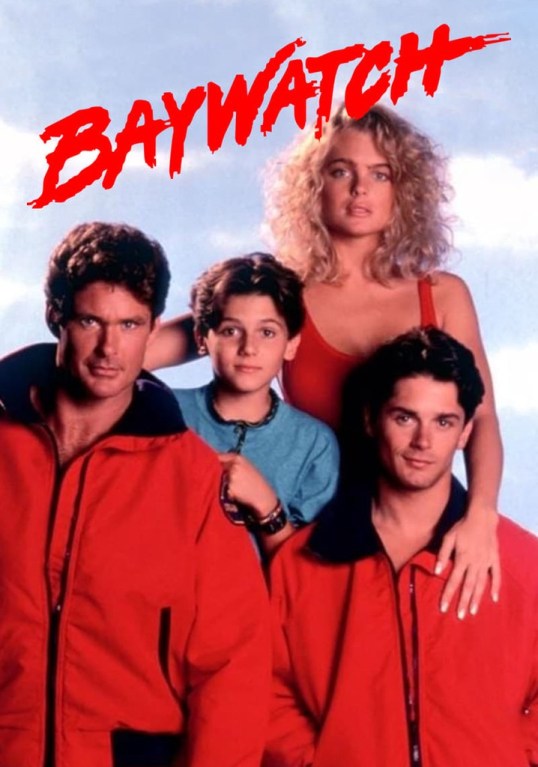
Welcome to Retro Television Reviews, a feature where we review some of our favorite and least favorite shows of the past! On Saturdays, I will be reviewing Baywatch, which ran on NBC and then in syndication from 1989 to 2001. The entire show can be viewed on Tubi.
This week, Harvey gets to do something.
Episode 2.19 “The Lost Treasure of Tower 12”
(Dir by Cliff Bole, originally aired on April 27th, 1992)
After a season of appearing in the opening credits and rarely anywhere else, Harvey (Tom McTigue) finally gets a storyline. Because Mitch is going on a camping trip, he has Harvey replace him as the teacher of a windsurfing class. Harvey is excited because the students all attend a local girls’ school. That would presumably mean they’re teenagers, while Harvey appears to be in his thirties.
As Ben correctly deduces, Harvey has no idea how to windsurf. This becomes obvious as soon as Harvey and Ben meet the bikini-clad students on the beach. (Harvey tells all the girls to write down their phone numbers. Again: the girls are teenagers, and Harvey is definitely not.) After watching Harvey struggle with the basics, the students start to walk away. Ben steps up and announces that he can teach them. What follows is a montage of the girls windsurfing while a dejected Harvey stares straight at the camera.
That’s the B-plot. The A-plot features Michael Bendetti as Ian, a poet who lives on the beach and finds a box of stolen jewels a thief buried in the sand. Ian uses the jewelry to bankroll his courtship of Shauni. (Ian has a crush.) The thieves aren’t happy about that.
This episode just felt off. With his obsessive crush on Shauni, Ian comes across as a stalker, and yet I think we were supposed to be charmed by how relentless he was. There’s even an extended fantasy sequence in which Ian imagines dancing with Shauni under a chandelier suspended above the beach. Meanwhile, the main thief is so cruel that he throws the episode out of whack. It’s hard to reconcile a scene of Newmie and Eddie pulling a dead body out of the ocean with the lightweight humor of Harvey trying to windsurf.
This episode confirms something I’ve suspected from the moment I started reviewing this show. The early seasons of Baywatch worked best when they focused on David Hasselhoff’s somewhat corny but undeniably earnest portrayal of Mitch Buchannon. Whenever Hasselhoff isn’t in an episode (or appears in just one scene), the cynicism at the heart of the show — and the emptiness of its style-heavy approach — is much harder to ignore.
As some of our regular readers undoubtedly know, I am involved in a few weekly live tweets on Twitter and Mastodon. I host #FridayNightFlix every Friday, I co-host #ScarySocial on Saturday, and I am one of the five hosts of #MondayActionMovie! Every week, we get together. We watch a movie. We tweet our way through it.
Tonight, at 10 pm et, #ScarySocial presents Saturn 3!
If you want to join us this Saturday, just hop onto twitter, start the movie at 10 pm et, and use the #ScarySocial hashtag! It’s a friendly group and welcoming of newcomers so don’t be shy.
4 Shots From 4 Films is just what it says it is, 4 shots from 4 of our favorite films. As opposed to the reviews and recaps that we usually post, 4 Shots From 4 Films is all about letting the visuals do the talking.
4 Shots From 4 Surreal Films
Mirrormask (2005, directed by Dave McKean)
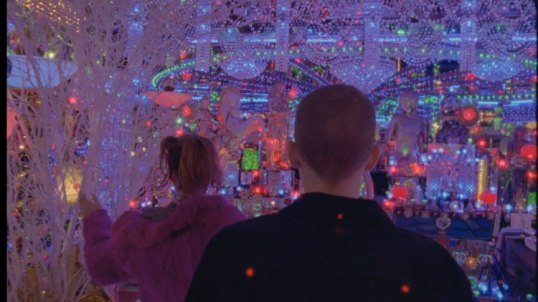
Enter the Void (2009, directed by Gaspar Noe)
Pina (2011, directed by Wim Wenders)
Post Tenebras Lux (2012, directed by Carlos Reygadas)
The Black Sabbath YouTube channel lists this as being the official music video for Rock ‘N’ Roll Heaven and the IMDb says that the video was released in 1976 so that’s what I’m going with. I’m going to assume that this video was filmed at one of the American stops during the first part of the Technical Ecstasy Tour.
Like most 70s music videos, this is a pretty basic performance clip, one that lets the band do the talking.