Retro Television Review: Homicide: Life On The Street 5.19 “Deception”


Welcome to Retro Television Reviews, a feature where we review some of our favorite and least favorite shows of the past!  On Sundays, I will be reviewing Homicide: Life On The Street, which aired from 1993 to 1999, on NBC!  It  can be viewed on Peacock.

This week, the Luther Mahoney saga comes to an end.

Episode 5.19 “Deception”

(Dir by Peter Medak, originally aired on April 25th, 1997)

A Nigerian drug courier is found dead in a hotel room and, of course, that means that Kellerman, Lewis, and Stivers are going to get another chance to go after Luther Mahoney.  After covering up the death of the actual courier, the police send in an undercover officer who delivers a batch of “bad” drugs to Mahoney’s middleman, Antonio Brookdale (Christopher Mann).  When the drugs hit the street, it leads to a revolt amongst Mahoney’s customers.  No one is buying from Mahoney and that causes Mahoney to lose his temper.  Luther Mahoney can handle almost anything but he can’t handle losing money.

Mahoney demands that Antonio meet him at a public park.  What Mahoney doesn’t know is that the police — including Kellerman, Stivers, and Lewis — have got the park staked out.  When Mahoney, in a fit of rage, shoots both Brookdale and an innocent mother with her kids, the police rush to the scene.  A panicked Mahoney jumps in his vehicle and drives away, leaving his crew behind to get arrested.

Lewis tracks Mahoney down to his apartment, where Mahoney is desperately packing up his money.  The sight of Mahoney causes Lewis to lose control.  He starts hitting Mahoney, demanding to know why Mahoney had to kill so many people when he could have just been content to sell drugs.  Mahoney manages to grab Lewis’s gun.  Kellerman and Stivers burst into the apartment with their own guns drawn.  Seeing them, Mahoney lowers his gun and says, “What are you going to do?  Read me my rights?”

“You have the right to remain silent….” Kellerman says, before shooting and killing Mahoney.

OH MY GOD, KELLERMAN JUST EXECUTED LUTHER MAHONEY!

Technically, you could argue that, as Mahoney was still holding the gun, the shooting was justified.  Mahoney lowered the gun but he never dropped it.  Nor did Mahoney ever say that he was surrendering.  Instead, he laughed and mocked the cops.  If Mahoney had raised the gun quickly enough, he probably could have gotten at least one shot in before Stivers and Kellerman had time to take action.  Then again, Kellerman also never ordered Mahoney to drop the gun.  Instead, he just shot him.  After Mahoney falls, Kellerman asks Lewis and Stivers if either has a problem with what happened.  “Nope,” Lewis says.  Stivers, however, doesn’t look convinced that the shooting was justified.

It’s a shocking moment but it’s also a moment that feels somewhat inevitable.  Kellerman has spent this entire season with people accusing him of being crooked.  Even though he was never charged, even his fellow detectives assumed that he must have been doing something to get in trouble in the first place.  Meanwhile, Mahoney killed numerous people and smirked every time that he got away with it.  Kellerman snapped and probably committed a crime.

If that’s not bad enough, Munch is contacted by Punchy DeLeon (Lewis Black), a small-time mobster who has just spent ten years in prison on a murder charge.  Punchy tells Munch that he knows that a criminal associate of his, Jimmy Pugliese, was murdered and buried in section C of the parking lot at the Plimco race track.  With Munch and Brodie in attendance, the parking lot is dug up and …. nothing is found.  Munch does some further investigating and discovers that Pugliese had a girlfriend named Fallon (Deborah Hazlett).  When he drives out to see her, he discovers that Pugliese (Brian Hemmingsen) is still alive.  Pugliese orders to Much to get off his front porch.  Much leaves, not realizing that he’s been followed by Punchy.

Back at the office, Sgt. Howard tells Munch not to worry about it because there hasn’t been an actual homicide.  However, then Fallon shows up and says that Pugliese has disappeared.  Munch drives out to Plimco, where he finds Punch waiting for him in Lot C.  Punchy explains that he took the fall for a murder the Pugliese committed.  Because Pugliese didn’t keep his promise to take care of Punchy’s wife while Punchy was in prison, Punchy used Munch to track down Pugliese.  And now, Pugliese really is buried under the parking lot.  (It helped that the parking lot itself was already ripped up due to Munch searching for the body the first time.)  Munch tells Punchy that he’s going back to prison.  Punchy replies that he did ten years for a murder he didn’t commit and suggests that should allow him to commit one murder without punishment.  It doesn’t work that way, which is kind of sad because Punchy was a likable guy.

Finally, Bayliss and Pembleton decide to be partners again.  Good news!  But Bayliss is also buying groceries for the uncle who molested him.  What the Hell, Bayliss!?

Seriously, this episode got dark!

Well, dark or not, this was one of the better episodes of season 5.  This was Homicide at its most cynical.  Luther Mahoney is dead but someone else will inevitably take his place and now Kellerman really has committed a crime.  (For all the cheering the cops do as they listen to Mahoney incriminate himself on tape, it’s not going to be much comfort to children of the innocent woman that he shot in the park.)  For once, Munch actually does his job well and the end result is a man getting murdered and Punchy going back to prison.

One final note: I will miss the magnificently evil performance of Erik Dellums, who played Luther Mahoney with the right mix of arrogance, hubris, and ruthlessness.  A good villain is hard to find!

Retro Television Review: Homicide: Life On The Street 4.12 “The Hat”


Welcome to Retro Television Reviews, a feature where we review some of our favorite and least favorite shows of the past!  On Sundays, I will be reviewing Homicide: Life On The Street, which aired from 1993 to 1999, on NBC!  It  can be viewed on Peacock.

This week, incompetence reigns.

Episode 4.12 “The Hat”

(Dir by Peter Medak, originally aired on January 19th, 1996)

There’s a running theme in this week’s episode and that theme is incompetence.

With Russert having been demoted all the way back to detective, there is now a captain’s vacancy.  The squad room is convinced that Giardello is going to get promoted.  For that matter, Giardello is also convinced that he’s going to be promoted.  Instead, the promotion goes to Roger Gaffney (Walt MacPherson), the racist martinet former homicide detective who nearly got into a fist fight with Pembleton during the white glove murder investigation.

(Giardello, for all of his strengths, has never played the political game as well as those around him.)

Munch thinks that a lawyer who he arrested for murder is going to be convicted.  However, it turns out that the video that Brodie shot at the crime scene shows that a key piece of evidence was mishandled.  Munch tells Brodie to erase the tape.  Brodie refuses to tamper with evidence.  (“It’s illegal,” he says.)  As a result, the murderer walks free.  And while it’s true that Brodie’s refusal to erase the tape did lead to an guilty man walking, it’s also true that it wouldn’t have been a problem if the cops on the scene hadn’t screwed up in the first place.

Finally, Lewis and Kellerman are sent to Pennsylvania to pick up Rose Halligan (Lily Tomlin), a woman suspected of murdering her husband in Baltimore.  Lewis and Kellerman are supposed to go straight to Pennsylvania and then come right back to Maryland, without making any unnecessary stops.  Instead, they screw up.  Kellerman decides to stop off at a run-down amusement park that he remembers from his childhood.  Later, Lewis and Kellerman stop off at a diner so they can get some dinner.  When Rose excuses herself to go to the restroom, they not only remove her handcuffs but they also allow her to go unaccompanied.  Needless to say, Rose escapes, makes her way back to Baltimore, and stabs her husband’s mistress to death before getting Lewis and Kellerman track her down.

Lily Tomlin was this episode’s big guest star, for better or worse.  Sometimes, when a big name appears on a television show, it becomes obvious that there wasn’t anyone around who was willing to tell them that they were overacting just a bit and that would certainly seem to be the case here.  Rose is a music teacher so this episode really tests one’s tolerance for Lily Tomlin singing opera.  That said, Tomlin was quietly effective at the end of the episode, sitting out on a porch while her former friend lay dead in the house.  Rose says she was returning her friend’s hate and, indeed, the dead woman in wearing the hat that Rose wore throughout almost the entire episode.

All said, I enjoyed this episode.  Lewis and Kellerman may be incompetent but they’re still entertaining to watch.  As for the hated Roger Gaffney getting the job that Giardello deserved …. well, isn’t that always the way?

Retro Television Review: Homicide: Life On The Street 3.19 “Colors”


Welcome to Retro Television Reviews, a feature where we review some of our favorite and least favorite shows of the past!  On Sundays, I will be reviewing Homicide: Life On The Street, which aired from 1993 to 1999, on NBC!  It  can be viewed on Peacock.

This week …. is the Homicide Unit cursed?

Episode 3.19 “Colors”

(Dir by Peter Medak, originally aired on April 28h, 1995)

A Turkish teenager who is dressed and made up like a member of KISS is lying dead on a front porch.  Jim Bayliss (David Morse) claims that the teenager was banging on his door and acting aggressive.  He says that he grabbed his gun to protect his family and that he ordered the teenager to get off his porch before he shot him.  The teen’s friend, who was standing a few feet away, says that the victim raised his hands before he was shot and that he was only at the house because he was trying to go to a party and got the wrong address.

Pembleton thinks that Jim shot the teenager even though he knew the teen was no longer a threat and because he was angered by the teen’s broken English.  It’s true that Jim did once get into a fight in a bar with someone who was visibly Middle Eastern.  Jim’s wife mentions that Jim gets annoyed with people who can’t speak English.  Pembleton says that Jim is so prejudiced that he doesn’t even think twice about assuming the worse about anyone who isn’t white.

Complicating things is that Jim Bayliss is the cousin of Tim Bayliss.

Tim spends almost the entire episode trying to defend his cousin.  He asks Giardello for permission to be in the Box during the interrogation,  (Giardello refuses, rightly pointing out that Tim has a conflict of interest.)  Later, while watching the interrogation, Tim gets so angry that he breaks a two-way mirror.  Oddly, the one thing that Tim doesn’t do is tell his cousin to ask for a lawyer, which would have ended the interrogation before it could even get started.  Eventually, Ed Danvers, who we haven’t seen much of this season, takes Jim before a Grand Jury and the Grand Jury declines to indict.  Everyone in the courtroom applauds but Tim is left to wonder if Pembleton was correct about his cousin.

At one point, Bolander says that he fears that the Homicide Squad may be cursed and then he lists all of the things that have happened over the course of the third season — Crosetti committed suicide, three detectives were nearly killed in a shooting, Munch opened a bar, and now Bayliss and Pembleton are fighting.  Bolander has a point.  It’s a bit much, particularly when you compare it to the first two seasons.  Homicide took a melodramatic turn during the third season.  That doesn’t mean that the show hasn’t been good.  The acting continues to be amazing.  But it’s still quite a contrast to how the show started.

As for this episode, David Morse kept you guessing as Jim Bayliss.  At first, Jim just seems like a harried home owner who wanted to protect his family.  As the episode progresses, his anger becomes more and more pronounced until the viewer is left feeling that Jim was destined to eventually shoot someone.  That said, this episode was occasionally a bit too much on the nose in its storytelling.  It also left unaddressed something that should have been a bigger issue.  Should Pembleton have been allowed to investigate the case or lead the interrogation, considering that Tim is his partner?  Giardello was rightly concerned about Tim’s conflict of interest but he never addressed the fact that Pembleton potentially had one as well.

Next week, season 3 comes to an end.

Retro Television Review: Homicide: Life On The Street 3.8 “All Through The House”


Welcome to Retro Television Reviews, a feature where we review some of our favorite and least favorite shows of the past!  On Sundays, I will be reviewing Homicide: Life On The Street, which aired from 1993 to 1999, on NBC!  It  can be viewed on Peacock.

It’s time to celebrate the holidays!

Episode 3.8 “All Through The House”

(Dir by Peter Medak, originally aired on December 16th, 1994)

It’s Christmas in Baltimore!  Decorations are up.  A heavy snow is falling.  The Homicide Detectives are starting the night shift on Christmas Eve …. there’s no way this is going to be depressing, right?

  • Russert and Lewis (who no longer has a permanent partner because Crosetti committed suicide) investigate the murder of a woman who was set on fire.  The victim’s mother (Nancy Marchand) is in the midst of throwing a Christmas party and refuses to acknowledge the fact that her daughter is dead.  Instead, she obsesses on the amount of red decorations.  It’s a human moment.  How would you react if you found out a member of your family had been murdered on Christmas Eve?
  • Still, this storyline kind of reinforced the fact that it really doesn’t make much sense for Russert to be a regular on the show.  She’s a shift commander but it’s a totally different shift from the one that the rest of the characters work.  She was originally introduced having an affair with Beau but that appears to be over.  Russert really has nothing to do and her choosing to work Christmas Eve didn’t really make much sense.
  • Scheiner, the crusty old medical examiner, shows up wearing a Santa hat.  Assistant State’s Attorney Ed Danvers also makes an appearance.  He mentions that he’s got someone coming to his apartment to celebrate Christmas Eve with him but Kay is working!  Did they break up!?
  • Meanwhile, Bolander and Much investigate the mystery of a dead man dressed as Santa Claus….
  • SERIOUSLY, HOMICIDE!?
  • Much suggests that Santa was killed by angry elves.
  • Okay, Homicide, that made me laugh.
  • Munch thinks that the man is someone who has been ringing the bell for the Salvation Army for decades.  Bolander says that they need to inform the man’s child….
  • STOP IT, HOMICIDE!
  • While Bolander goes to the morgue to try to get a positive ID on the guy, Munch sits in an apartment with a kid who want stop talking about how his father promised to spend Christmas Eve with him….
  • WHY ARE YOU DOING THIS, HOMICIDE!?
  • Munch takes the kid out.  They go bowling.  They hit some baseballs.  The kid’s antagonistic and Munch is miserable.
  • Oh wait!  The kid’s father is alive!  Yay!  It turns out that someone stole his Santa Claus outfit and that person — that thief of holiday joy — is the one who was brutally murdered while dressed as jolly old St. Nick.
  • Uhmm …. that’s still pretty depressing but at least the kid’s not an orphan.
  • Back at headquarters, a disheveled Bayliss tries to get someone to play Hearts with him because he needs to make some quick money.
  • Seriously, what’s happening with Bayliss?  He went from being clean-cut and idealistic to being a somewhat seedy, convenience store-robbing burnout in record time!

Merry Christmas, everyone!  This was a good episode, actually.  Any episode that involves Munch getting frustrated is usually enjoyable and Russert and Lewis made for a good team.  And, in the end, Santa was not dead.  It’s a Christmas miracle!

Horror Scenes That I Love: Trish Van Devere Explores The House In The Changeling


Since it’s Thanksgiving in Canada, it seems appropriate that today’s horror scene that I love should come from one of the best Canadian horror films of all time and….

What?

No, it’s not the disco scene from Prom Night!  Anyway, I’ve already shared that scene like a thousand times….

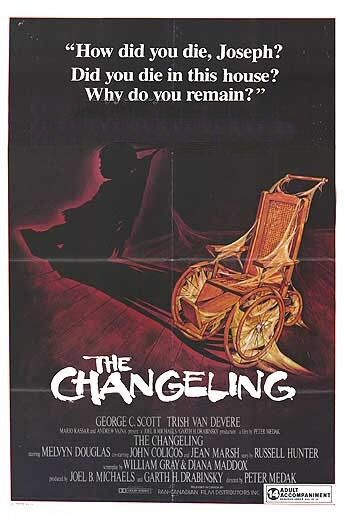
No, this scene is from the 1980 film, The Changeling.  Directed by Peter Medak, the film is about a house that’s haunted by the spirit of a boy who was murdered there decades ago.  When George C. Scott moves into the house, he discovers the truth about not just the murder but the political conspiracy that led to it.  It’s a really good movie.  You should watch it.

Anyway, in this atmospheric scene, Trish Van Devere explores the house.  It’s always a bit strange to watch a horror scene devoid of context but let me just say that The Changeling is such an atmopsheric and intense ghost film that you’ll never want to wander around a potentially haunted house again once you’ve seen it!

4 Shots From 4 Canadian Horror Films: The Changeling, Prom Night, Videodrome, Cube


4 Shots From 4 Films is just what it says it is, 4 shots from 4 of our favorite films. As opposed to the reviews and recaps that we usually post, 4 Shots From 4 Films lets the visuals do the talking.

Happy Thanksgiving, Canada!  Today’s edition for 4 Shots From 4 Films is dedicate to you!

4 Shots From 4 Canadian Horror Films

The Changeling (1980, dir by Peter Medak)

Prom Night (1980, dir by Paul Lynch)

Videodrome (1983, dir by David Cronenberg)

Cube (1997, dir by Vincenzo Natali)

A Movie A Day #44: Let Him Have It (1991, directed by Peter Medak)


The year is 1953.  The place is Croydon.  Derek Bentley (Christopher Eccleston) is 19 years old but has the mental capability of an 11 year-old.  Unable to hold down a job and judged unfit for the national service, Derek drifts into a gang led by 16 year-old Christopher Craig (Paul Reynolds).  When Derek and Craig are caught burglarizing a warehouse, it leads to a tense rooftop confrontation between Craig and the police.  Derek has already been captured by the time that the police demand that Craig hand over his gun.  Bentley shouts, “Let him have it, Chris!”  Craig opens fire, killing one officer.

Because he’s a minor, Craig is only facing a prison sentence for killing the police officer.  But, as a legal (if not mental) adult, Derek will be hung if he’s found guilty.  Under the common purpose doctrine, it doesn’t matter that Derek didn’t actually shoot the gun.  The only thing that matters is what Derek meant when he said, “Let him have it, Chris!”  Derek says that he was telling Craig to hand over his gun.  The Crown says that Derek was ordering Craig to open fire.

Let Him Have It is based on a true story.  The case of Derek Bentley was one of the many cases that eventually led to the death penalty being abolished in the UK.  Let Him Have It was released at the height of a long campaign to secure a pardon for Derek.  That pardon was finally issued in 1998, though it was too late to help Derek Bentley.

Let Him Have It is a powerful and angry docudrama, one that reveals in searing detail how Derek was railroaded by the British legal system.  In his film debut, Eccleston gives a powerful performance as Derek and he is ably supported by both Paul Reynolds and, in the role of Derek’s father, Tom Courtenay.  Let Him Have It leaves little doubt as to why the case of Derek Bentley remained a cause célèbre for 45 years after his initial trial.

Shattered Politics #45: The Changeling (dir by Peter Medak)


Changeling_ver1If you love horror movies, you have to track down and see The Changeling.

First released in 1980, The Changeling stars George C. Scott as John Russell, a composer.  At the start of the film, he watches helplessly as both his wife and his daughter are killed in a horrific auto accident.  The grieving John leaves his New York home and relocates to Seattle, Washington.  With the help of a sympathetic realtor, Claire Norman (Trish Van Devere), John finds and rents a previously abandoned Victorian mansion.

At first, it seems that John is alone with his grief.  But, as you can probably guess, it quickly becomes apparent that John isn’t alone in his house.  Windows shatter.  Doors slam.  And, most dramatically, every night a mysterious banging sound echoes through the house.  Slowly, John comes to suspect that his house might be haunted…

And, of course, it is!  It’s no spoiler to tell you that because the film is admirably straight forward about being a ghost story.  And what a clever ghost story it is.  I don’t want to give too much away so I’ll just say that the story behind the ghost involves a powerful family, an age-old scandal, and a powerful U.S. Senator (played, with a mixture of poignant sadness and menace, by Melvyn Douglas).

The Changeling is a very well-done and effective ghost story.  For the most part, director Peter Medak emphasizes atmosphere over easy shocks, the end result being a film that maintains a steady feeling of dread and sticks with you long after the final credit rolls up the screen.  George C. Scott is well-cast as John Russell, capturing both the character’s grief and his curiosity.  (There’s actually a very interesting subtext to the film, in that investigating death actually gives John a reason to live.)  At the time the film was made, he was married to Trish Van Devere and the two of them have a very likable chemistry.  And, as previously stated, Melvyn Douglas makes for a great quasi-villain.

(It’s interesting to compare Douglas’s intimidating work here with the far more sympathetic performances that he gave, around the same time, in Being There and The Seduction of Joe Tynan.)

My favorite scene in The Changeling comes when John and Claire hold a séance in order to try to discover what the ghost wants.  The séance team is made up one woman who asks questions, one woman who channels the spirit and writes down his answers, and one man who reads the answers after they’re written.  It’s a wonderfully effective scene, dominated by the eerie sounds of questions being asked, answers being scribbled, and then being shakily read aloud.  It’s probably one of the best cinematic séances that I’ve ever seen.

The Changeling is a wonderful mix of political intrigue and paranormal horror. It was also the first film ever to win a Genie award for Best Canadian Film, which just goes to prove the 90% of all good things come from Canada.