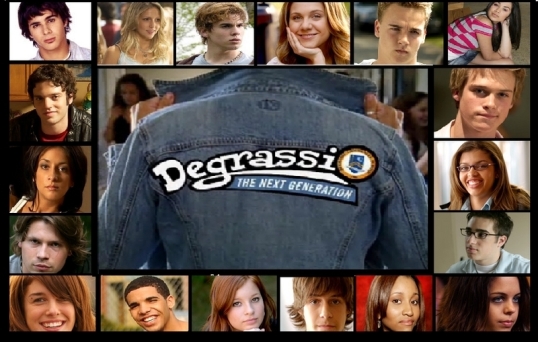
Welcome to Late Night Retro Television Reviews, a feature where we review some of our favorite and least favorite shows of the past! On Sunday, I will be reviewing the Canadian series, Degrassi: The Next Generation, which aired from 2001 to 2015! The series can be streamed on YouTube and Tubi.
This week, Degrassi does detention.
Episode 3.16 “Take On Me”
(Dir by Philip Earnshaw, originally aired on February 16th, 2004)
One Canadian Saturday, Jimmy, Hazel, Sean, Toby, and Ellie all find themselves serving detention while Mr. Raditch works out in the gym. Sean has detention for talking back to Raditch. Jimmy and Toby have detention for hacking into the school’s computer system to change one of Jimmy’s grades. Hazel was caught looking at porn in her computer class. Ellie says that she has detention because she skipped class, but actually, she’s there because she’s gathering information for a story about the thefts at Degrassi. She has a tape recorder in her backpack and is recording every conversation. By the end of detention, Raditch has realized that he was apparently being too hard on his students (because who hasn’t tried to hack into their school’s system, right?), Hazel and Jimmy are dating, Sean and Ellie are dating, and Toby …. well, Toby doesn’t really get much of anything out of the experience. The show’s writers had obviously run out of things for Toby to do.
This is the famous Breakfast Club episode of Degrassi, and it’s one of those homages that people either love for its sincerity or dislike for how obvious it makes everything. I’ve always liked this episode, and I actually reviewed it a few years ago. My feelings haven’t really changed since I wrote that first review, so I won’t rehash it all here. I will say that, when I rewatched this episode, I did find myself cringing a little more than usual at how thoroughly it rips off The Breakfast Club. The scene where Sean says that he doesn’t join groups is a bit overwritten. That said, Stacey Farber and Daniel Clark had such a natural chemistry that, even after all these years, I still find myself wondering how different Degrassi would have been if the show had made Ellie and Sean into a couple earlier than it did. After all the drama with Manny’s pregnancy and Rick putting Terri into a coma, this episode provided a nice relief and a reminder that serving detention can be fun as long as you have the right attitude.
I still like this episode, even if Mr. Raditch’s decision to let everyone leave early still doesn’t make any sense. Most schools would have expelled Jimmy and Toby for doing what they did. Seriously, they were getting off easy with one day of detention!
“Zombies, exploding heads, creepy-crawlies… and a date for the formal. This is classic, Spanky.” — Detective Ray Cameron
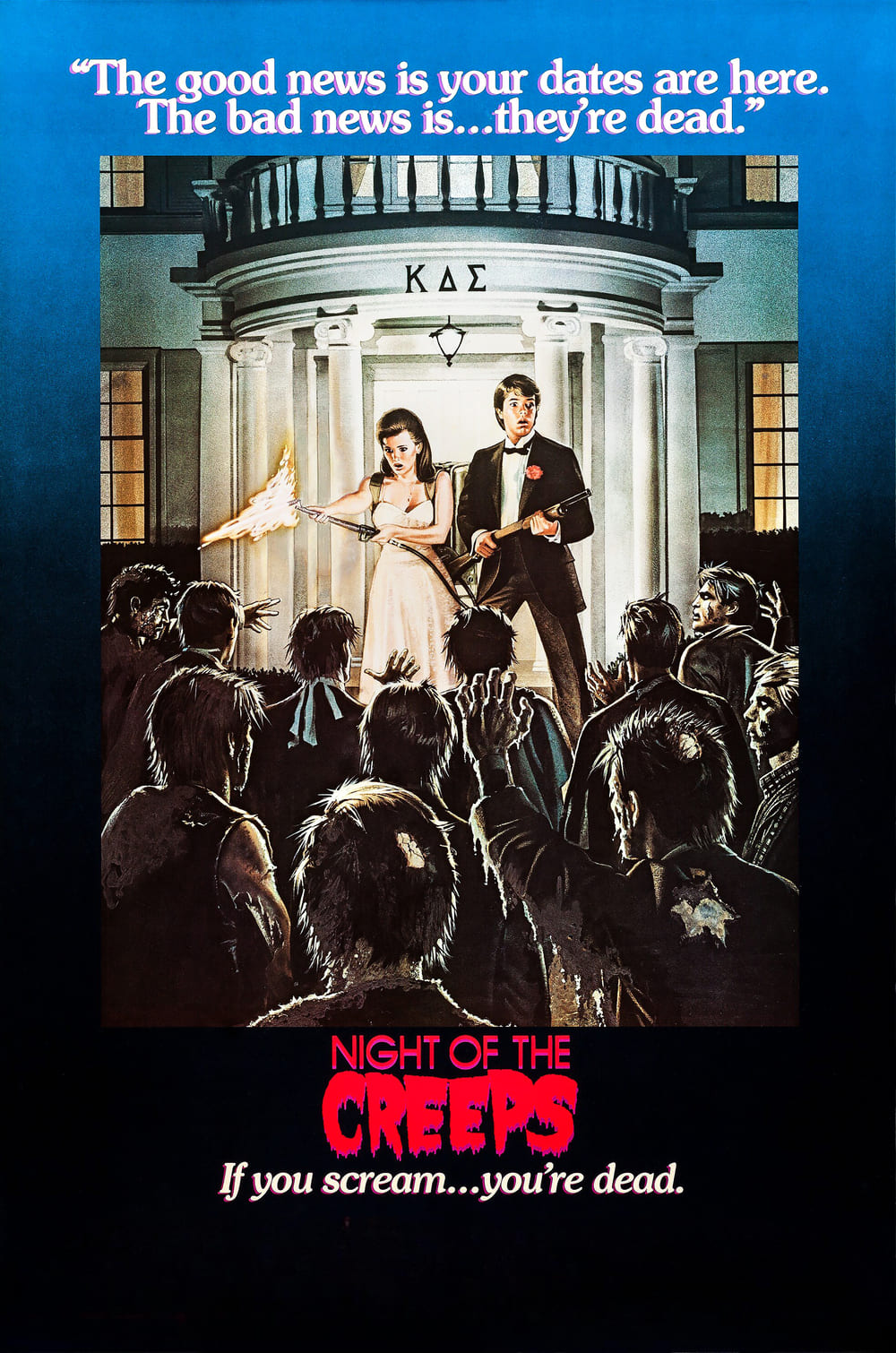
College is supposed to be a time for making questionable choices, but accidentally helping alien parasites invade campus probably falls outside the usual learning experience. That’s the basic joke behind Night of the Creeps, and Fred Dekker gets an impressive amount of mileage out of it. His 1986 horror comedy mixes the social embarrassment of a campus movie with the bodily violations of a creature feature, then throws in a detective who looks like he hasn’t enjoyed either company or daylight in years. The ingredients are familiar, but the combination has real personality. It’s messy, funny, occasionally touching, and much more interested in entertaining you than looking respectable.
Before the college kids get their chance to make everything worse, Dekker establishes that trouble has been brewing for decades. An opening aboard an alien spacecraft leads into a black-and-white stretch set in 1959, where young love runs into both an escaped axe murderer and an extraterrestrial experiment. It’s a wonderfully excessive introduction, almost daring you to question whether one movie needs all these threats. Somehow, the pieces fit. The opening establishes a history that will eventually catch up with the present, making the later outbreak feel like the continuation of a very bad night rather than a completely random disaster.
In 1986, Chris Romero, played by Jason Lively, has more ordinary concerns. He’s interested in Cynthia Cronenberg, played by Jill Whitlow, and figures pledging a fraternity might improve his romantic prospects. His best friend J.C., played by Steve Marshall, accompanies him on an initiation assignment to steal a corpse. This is, unsurprisingly, not a great plan. Their search brings them to a preserved body, and disturbing it helps unleash the alien slugs that drive the rest of the story. Dekker makes the escalation amusingly direct: Chris wants a more exciting social life, and the universe supplies one with considerably more decomposing flesh than he probably imagined.
The campus setting gives the movie an enjoyable contrast between petty problems and catastrophic ones. Fraternity status and romantic competition seem important until people start becoming breeding grounds for something from outer space. Still, the college-comedy material is also where the film feels most routine. The fraternity antagonists are obnoxious in predictable ways, and Chris spends a fair amount of time being the awkward underdog you’ve seen before. Lively keeps him sympathetic, but the character could use more spark. Cynthia is similarly likable without being especially developed. Whitlow gives her warmth, though the romance never becomes as engaging as the friendships surrounding it.
J.C. is a big reason those friendships work. Marshall brings a loose, teasing energy that makes his exchanges with Chris feel comfortable rather than written purely to deliver information. He can recognize that his friend is being ridiculous without making his affection seem conditional. That gives their relationship some substance beneath the jokes. In a lesser version of this movie, J.C. would exist only to encourage the romance and provide sarcastic commentary. Here, he becomes its emotional anchor. When the danger reaches him, the film briefly stops feeling like a harmless parade of genre references, and that change carries a genuine sting.
Tom Atkins gives the movie a different kind of personality as Detective Ray Cameron. He’s gruff, sarcastic, and seemingly irritated that another day has required his participation. Atkins knows exactly how to sell the dialogue, making “Thrill me” sound like the natural greeting of someone who expects disappointment and would appreciate being surprised. But Cameron isn’t just a collection of quotable lines. His connection to the events of 1959 gives his bitterness a history. Atkins lets that sadness sit beneath the swagger, which makes the character entertaining without reducing him to a tough-guy impersonation. He’s easily the strongest presence whenever he enters a scene.
Dekker deserves credit for allowing those feelings to coexist with the ridiculousness. Night of the Creeps has an obvious sense of humor about itself, but it doesn’t treat caring about its characters as another joke. The actors generally play the danger straight, leaving the comedy to emerge from their reactions and the increasingly unreasonable situation. That approach gives the darker moments room to land. The movie has heart, not because it pauses to insist on its importance, but because friendship and regret remain meaningful even when someone’s head might become a delivery system for space slugs.
The practical effects make that threat suitably unpleasant. There’s something especially nasty about creatures that don’t need to overpower you so much as find an opening, and the slugs turn an exposed mouth into a source of tension. The walking corpses have a grubby physicality that suits the film’s scrappy atmosphere. You can enjoy the craftsmanship while still appreciating how disgusting the result looks. The pacing isn’t quite as dependable: a few stretches of campus business delay the monster action, and the shifts between broad comedy and distress occasionally feel abrupt. Once the outbreak builds toward the formal dance, though, the movie finds the momentum it needs.
What ultimately makes Night of the Creeps work is that its foolish decisions have consequences worth caring about. Chris’s attempt to improve his college experience opens the door to a grotesque disaster, but Dekker doesn’t leave the story at “look what these idiots did.” He gives the characters reasons to stand by one another when their ordinary concerns become irrelevant. That makes the finale more satisfying than a simple procession of creature effects. The movie delivers its share of slime, corpses, and deadpan jokes, then leaves behind a surprisingly warm impression. For a story about things crawling inside people, it’s remarkably good company.
It’s almost time for Halloween! This upcoming week, we will be wrapping up another Horrorthon and celebrating another holiday. I hope everyone has enjoyed October so far. I am proud of the TSL Crew and the great work they’ve done this year!
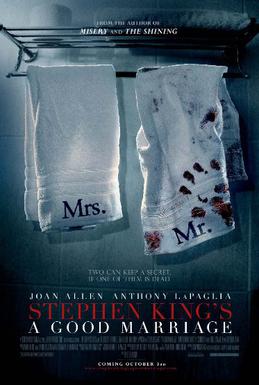
After 25 years of being married to a man who seems like a good provider with a stable (albeit sometimes dull) personality, Darcy Anderson (Joan Allen) comes across evidence in their garage that leads her to suspect that her husband (Anthony LaPaglia) might be the serial killer known as Beadie. When he comes home from a business trip, he admits that he is indeed Beadie and suggests that maybe it would be best for everyone if she just moved on from it. He promises not to kill anyone else and she promises not to go to the police. She has something else in mind.
A Good Marriage benefits from an interesting premise, but it suffers from a dull presentation. I think the film’s director was trying to drive home the idea of the Andersons just seeming like an everyday couple by taking a non-flashy approach to the story, but the end result is pretty boring, and Joan Allen and Anthony LaPaglia aren’t convincing as a long-time married couple even before the husband’s hobbies are revealed. Stephen King wrote the screenplay, adapting his own novella, but King’s dialogue can sometimes sound stiff when people have to actually recite it out loud. After the fourth or tenth awkward, middle class conversation, I was on the verge of begging for something interesting to actually happen. The movie could have jettisoned all of the stuff about the husband’s childhood friend without losing much.
Back when she was still doing movie, Joan Allen cornered the market on frustrated housewife roles and maybe that’s why she only seemed to be going through the motions here. Anthony LaPaglia also seems bored with his character and never make us believe anyone would ignore years of compulsive homicide to stay with him. Only Stephen Lang really makes an impression, playing a detective who feels like a convenient case of dues ex machina. This movie could have used some Langoliers.
Welcome to Retro Television Reviews, a feature where we review some of our favorite and least favorite shows of the past! On Sundays, I will be reviewing Homicide: Life On The Street, which aired from 1993 to 1999, on NBC! It can be viewed on Peacock.
Finally, it’s time for another Bayliss/Pembleton episode!
Episode 6.9 “Closet Cases”
(Dir by Leslie Libman and Larry Williams, originally aired on January 2nd, 1998)
Finally, we’ve got another Pembleton/Bayliss episode!
Well, don’t get too excited. It’s not perfect. We still have to sit through some scenes of Falsone arguing with his wife and complaining about not having custody of his kids. And the Georgia Rae Mahoney storyline is continuing to drag on. This week, she sends Kellerman a videotaped message in which she explains that there is no tape of Kellerman murdering Luther. She just told Kellerman that to see how he would react. And since Kellerman reacted like a murderer, Georgia has decided that she is going to eventually kill Kellerman. “You won’t see it coming!” she says. Whatever.
As for Bayliss and Pembleton, they investigate the murder of a gay businessmen who was left in dumpster, clad in lingerie. Gay nightclub owner Chris Rawls (Peter Gallagher) helps out with the investigation, introducing Pembleton and Bayliss to the community. What’s interesting about this storyline is that, for once, the roles of Pembleton and Bayliss are reversed. Bayliss is fascinated by Baltimore’s gay community while Pembleton is the one who keeps saying things like, “I don’t need to see two men dancing.” Usually, Pembleton is the open-minded one while Bayliss is the one who is uptight.
In fact, it’s such a role-reversal that it doesn’t always ring true. In the past, Bayliss has been so uncomfortable around any type of non-straight, non-missionary position sex that it feels very out of character for him to suddenly marvel about how how everyone at a gay bar is having a good time. To the show’s credit, Pembleton does mention this. Bayliss replies that he hasn’t been happy for a long time and he’s wondering if maybe he needs to change his outlook. He points out that the murder victim was in a relationship for 12 years. That’s longer than any relationship that Bayliss has ever had.
(This episode opens with Bayliss and Dr. Cox breaking up which — eh. I never bought them as a couple to begin with.)
The murderer turns out to be sociopathic male sex worker, who taunts Bayliss in the Box, saying that he can tell that Bayliss is attracted to him. Bayliss smirks. The suspect offers to confess if Bayliss tells him that he likes his ass. Bayliss slowly repeats the suspect’s words back at him. The suspect confesses. It’s an odd scene. I’m kind of preferred it when the detectives would actually have to put some effort into tricking their suspects into saying the wrong. So far, in season 6, everyone is just confessing.
At the end of the episode, Rawls asks Bayliss to come to a wine testing with him and Bayliss says yes. Pembleton is shocked and tells Bayliss that Chris was asking him on a date. Bayliss says he understands that. He adds, “I’m not gay” before then saying that he finds Chris Rawls to be witty and intelligent.
And here’s the thing. As always, Andre Braugher and Kyle Secor totally sell it. Even though Bayliss’s words and actions seem totally out-of-character after everything we’ve seen over the past five seasons, Kyle Secor makes it work. Bayliss deserves some happiness.
And I deserve some more Bayliss/Pembleton episodes. Seriously, this season has been so Falsone-centric that I was starting to forget just what a great team Andre Baugher and Kyle Secor truly were.
It’s Sunday and it’s October and that means that it’s time for another edition of Lisa Marie’s Favorite Grindhouse trailers! For today, we have six trailers from the early 70s. This was the era when horror started to truly get …. well, horrific!
The Bird With The Crystal Plumage (1970)
First off, we have the blood and scream-filled trailer for Dario Argento’s The Bird With The Crystal Plumage. This Italian thriller made quite a splash when it was released in America. Indeed, for many Americans, this was their first exposure to the giallo genre. This would go on to become Argento’s first (and, so far, only) film to be nominated for a Golden Globe. (Read my review here!)
2. House of Dark Shadows (1970)
Speaking of blood and screaming, 1970 also saw the release of House of Dark Shadows. Personally, I think this is one of the best vampire films ever. The trailer is heavy on atmosphere.
3. The Devils (1971)
In 1971, British director Ken Russell scandalized audiences with The Devils, a film so shocking that it was thought it would never be seen in its full form. However, times change….
4. Tombs of the Blind Dead (1972)
Italy was not the only country sending horror films over to the United States. From Spain came the Tombs of the Blind Dead.
5. The Last House on the Left (1972)
Speaking of controversy, Wes Craven made his directorial debut with the infamous The Last House OnTheLeft. The trailer featured one of the greatest and most-repeated horror tag lines of all time.
6. Dracula A.D. 1972 (1972)
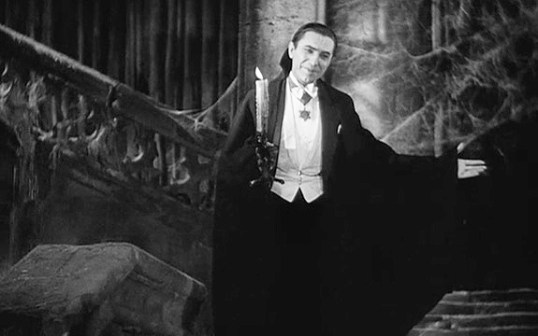
Finally, even as horror cinema changed and became more extreme, Hammer Studios continued to tell the long and twisted story of Count Dracula. They brought him into the present age and dropped him in the middle of hippie-infested London. No matter how much the rest of the world changed, Dracula remained Dracula.
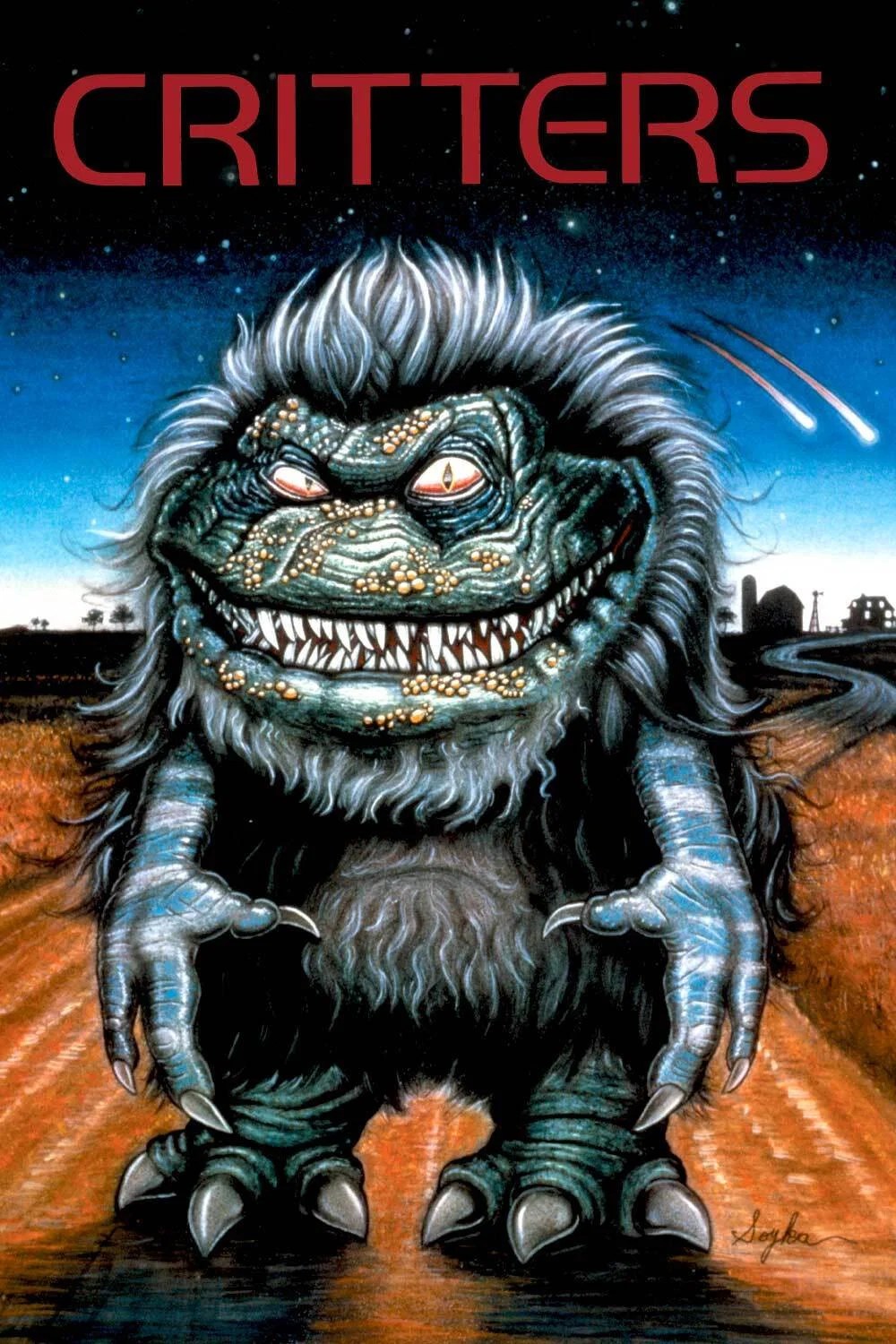
Some movie monsters want to conquer the planet. The creatures in Stephen Herek’s Critters seem perfectly happy eating their way through whatever happens to be standing on it. There is something refreshing about villains with such uncomplicated priorities, especially when they look like the contents of a clogged vacuum cleaner fitted with shark teeth. This is the sort of movie where the appeal is right there in the premise: nasty little aliens descend on rural America, and a perfectly ordinary family has to survive the visit. As an ’80s genre guilty pleasure, it delivers the goods with an appealing lack of pretension.
The story gets moving when a group of carnivorous aliens escapes from an extraterrestrial prison facility and makes its way to Earth. Their arrival puts the Brown family’s Kansas farm directly in the path of a feeding frenzy, while two shape-shifting bounty hunters follow close behind. Unfortunately, these heavily armed visitors are not especially concerned about keeping the peace or leaving buildings intact. Between the hungry fugitives and their destructive pursuers, an otherwise quiet community gets more excitement than it could possibly need. The setup is ridiculous, but Herek understands that explaining it too much would only spoil the fun.
What gives Critters some substance beneath the silliness is its interest in the people whose evening gets ruined. The Browns are not especially complicated characters, but their everyday disagreements and familiar household routines make them feel like a family rather than a collection of future victims. Spending time with them before the attack also gives the farmhouse a sense of normality worth protecting. The monsters are not simply invading a convenient horror-movie location; they are barging into somebody’s home. That modest distinction helps the film generate more audience investment than its toothy little troublemakers might initially suggest.
Scott Grimes makes Brad an easy young hero to root for. He has enough mischievous energy to seem capable of causing problems before the aliens ever arrive, but he never becomes so obnoxious that his survival feels like an obligation. His resourcefulness grows naturally out of that personality, giving the movie a kid protagonist who can participate in the action without seeming completely detached from his surroundings. There is a pleasing wish-fulfillment element to watching an underestimated youngster step up when things go wrong. Grimes sells that without turning Brad into an impossibly polished miniature action star.
Dee Wallace provides another important source of credibility as Brad’s mother, Helen. She brings warmth and urgency to situations that, described out loud, sound almost impossible to play straight. That commitment helps establish the film’s balance: the audience can laugh at the monsters without feeling that the characters are merely participating in a comedy routine. The family’s fear and concern remain sincere even when the surrounding action gets goofy. Critters does not require powerhouse dramatic performances, but it benefits enormously from actors willing to treat an attack by murderous furballs as an actual emergency.
Naturally, the furballs themselves are the main attraction. They look like what would happen if the Tribbles from Star Trek suddenly decided to stop being cute and start being mean and really, really hungry. Their dark hair, glowing eyes, enormous mouths, and projectile quills turn an otherwise cuddly shape into something you would desperately want off your lap. The fun comes from their rotten personalities as much as their physical design. These are greedy, bad-tempered little creatures whose curiosity usually leads directly to destruction. Their appetite drives the action, but their attitude gives it flavor, making them entertaining even when they are doing little more than looking for their next meal.
The practical effects contribute plenty of charm, although they do not always maintain the illusion. Some movements are stiff, and certain shots make the creatures look exactly like the puppets they are. Still, their physical presence gives the mayhem a satisfying texture. They seem to belong in the same messy environment as the furniture, debris, and frightened actors around them. The movie also benefits from not making them too adorable. They can be funny without losing that unpleasant suggestion of something that might bite straight through your hand. Their limitations are visible, but so is the craftsmanship behind their grotesque little faces.
The bounty hunters bring a broader, more cartoonish kind of entertainment. Terrence Mann plays Ug, who adopts the appearance of rock star Johnny Steele, while his partner Lee cycles through human identities played by Ethan Phillips, Jeremy Lawrence, and Don Keith Opper. Mann does most of the pair’s comedic heavy lifting, giving Ug a wonderfully straight-faced intensity that makes his rock-star appearance and excessive firepower even funnier. Their destructive pursuit suggests that Earth’s rescuers might require almost as much cleanup as its invaders. These scenes provide some welcome absurdity, although they also contribute to uneven pacing. Whenever the film moves away from the farmhouse, the pressure surrounding the Browns tends to ease. The hunters are amusing, particularly Mann, but their antics are not always as engaging as the central siege.
The resemblance to Gremlins is difficult to ignore, but Critters works best when it is not treated as a contest. It offers a smaller, scrappier variation on miniature-monster chaos, with a straightforward survival story holding everything together. The scares are limited, the plotting is thin, and the effects occasionally wobble, yet the movie remains likable because it commits to its own ridiculous appeal. There is no need to pretend it is a neglected masterpiece to appreciate its pleasures. Sometimes a decent creature feature only needs an appealing cast, a little suspense, and some ugly space pests making a spectacular nuisance of themselves. Critters understands the assignment.
If you’ve ever spent any time on the political side of X, formerly known as Twitter, you know that it can be an ugly and hateful place. Writers Nick Cuse and Damon Lindelof have certainly spent some time in that part of Twitter, because they’ve created a story that understands its absurdity and then uses that silliness as the basis for a bloody and funny action thriller. THE HUNT was quite controversial when it was released back in 2020, so I decided to finally check it out for myself.
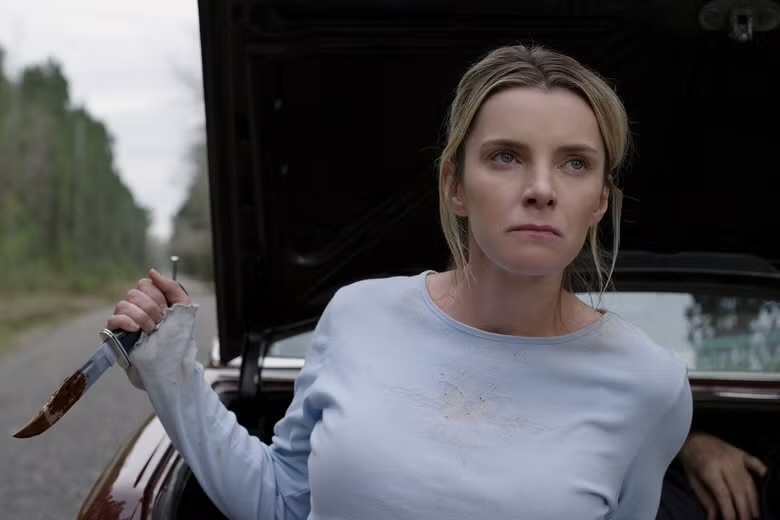
The story begins with a group of strangers waking up in the middle of nowhere, confused, gagged, and wondering how in the hell they ended up that way. The field they’re in has a large crate that contains a sharply dressed pig, as well as a variety of guns and knives. Once they’ve helped themselves to the weapons, all hell breaks loose, with several of them being immediately killed in brutal ways. We soon learn that they’re being hunted by a group of wealthy elites who are sick and tired of dealing with these conspiracy-spreading, climate-denying deplorables and have decided to do something about them. One thing they didn’t account for was the amazing fighting and survival skills of Crystal May Creasey, played by Betty Gilpin. Before long, Crystal has turned the tables and the hunters have become the hunted.
I’m just going to say it right off, Gilpin is incredible as Crystal. I had not really seen her before, but I’m definitely going to be on the lookout for some of her other work. She plays Crystal with a confident coolness, which makes her reactions to the madness around her that much more effective. Hilary Swank, who plays the leader of the elites, knows her way around a fight scene, and their showdown delivers big time. Think of the fight between Uma Thurman and Vivica A. Fox in KILL BILL, and you’ll get an idea of their fight’s intensity, but this one lasts longer. The cast is sprinkled with some well-known actors like Amy Madigan, Justin Hartley, Macon Blair and Emma Roberts. I’ll just say that this isn’t the kind of film where you want to get too attached to the characters and leave it at that!
Did I mention earlier that THE HUNT is graphically violent? We know we’re in for a bloody ride when a guy’s eyeball is ripped from its socket in the second scene. The film will go on to present a wide array of impalings, blown up bodies, close-range shotgun blasts, long-distance rifle splatters, and many other creative deaths. While the violence is shown in graphic detail, it’s also played with an exaggerated sense of humor that made it easier for me to watch. It’s also presented in a way that matches the tone of the story.
What really sets this movie apart for me, though, is its political satire. I spent quite a bit of time on Twitter during Donald Trump’s first term, and this movie does an outstanding job of painting both sides in the broadest of strokes that are instantly recognizable for those in the know. The deplorables consist of a variety of conspiracy theorists, gun rights absolutists, big game hunters, and rednecks. The conspiracy theorists get it the worst, with something ridiculous to say for every occasion, even though a couple of times they’re revealed to be right! On the other hand, the elites have a hard time carrying on a conversation because they’re always correcting each other’s word usage, and they’re constantly lecturing everyone around them. And for a group of people who are never wrong, the elites make a crucial factual error that threatens to upend their entire plan. I’ll leave all of those details for you to discover, but I like that director Craig Zobel and his writers take aim at the absurdity of the entire online political spectrum, with no one getting a free pass. For me, that’s a big part of what makes THE HUNT so much fun. Beneath all the blood and guts is a recognizable version of the silly social media politics that I watched play out online just a few years ago.
I think those who understand the toxicity of American politics in the time of Donald Trump will get the most out of this film, but I still think it can work as entertainment for those who don’t. The action is energetic, the violence is outrageous, and it has a wonderfully twisted sense of humor. And it has Betty Gilpin, who plays one of the toughest, most badass female characters I’ve seen in a movie in a long time. Hell, she was worth the watch for me!