2021’s A Father’s Fight tells the story of Bo Lawson (Travis Hancock).
Bo was an up-and-coming boxer who appeared to have a great future ahead of him. He was married to Kacie (Sarah Cleveland). He was a father. He had everything to look forward to. But then, Bo gave all of that up because of his addiction to alcohol. His fighting career ended. Kacie left him. Bo is now washed-up and struggling to make a living. He can’t hold down a job because of his drinking, and the fact that he doesn’t have employment, boxing, or a family to occupy him means that he has a lot of free time to pursue his vices.
Bo is approached by his former trainer, Sal (John French). Sal trained both Bo and another fighter named Dylan (Paul Lincks). While Bo crashed and burned, Dylan went on to become the champion. Now, Dylan is planning on retiring, but he wants to end his career in his hometown with one last fight against Bo. Bo could use the money. Sal is willing to train him but only if Bo cleans himself up. Bo attends AA. He trains hard. He tries to win back his wife. And he learns that there are things that are more important than winning one fight.
A Father’s Fight is an interesting film. For a movie about boxing, it’s surprisingly talky. There are long, extended sequences of Bo talking about his struggles and Kacie talking about their marriage. The scenes have a slight improvisational feel to them. While they may not be the most visually exciting scenes that I’ve ever seen in a boxing movie, they do have a welcome authenticity to them. This is a sports film where the human drama feels as important as the question of who is going to win the big fight. What I appreciated about the film is that it didn’t let Bo off easy. The film understands that fixing Bo’s marriage is going to take more than just Bo going to AA and earning his chips. To his credit, Bo understands that as well. Bo is not in denial about his alcoholism or his self-destructive behavior. He understands that he needs to change his life and that it’s not going to be easy. The film never makes the mistake of idealizing or excusing its addict. That makes it all the more inspiring when Bo manages to stick with his recovery.
Compared to most boxing films, A Father’s Fight is rather low-key. This film doesn’t attempt to recapture the feel of Rocky Balboa running down a street in Philadelphia while “Gonna Fly Now” plays on the soundtrack. Bo’s efforts to become a better man are often lonely, and the only victory is his own knowledge that things aren’t as bad as they were the previous day. It’s less a sports film and more a portrait of life in Middle America. I live in Middle America so I could relate to the film. A Father’s Fight turned out to be far better than I was expecting.
Welcome to Late Night Retro Television Reviews, a feature where we review some of our favorite and least favorite shows of the past! On Saturdays, I will be reviewing Saved By The Bell, which ran on NBC from 1989 to 1993. The entire show can be purchased on Prime!
This week, the sage of Jessie’s stepbrother continues.
Episode 3.11 “Wicked Stepbrother: Part Two”
(Dir by Don Barnhart, originally aired on November 2nd, 1991)
Picking up where the previous episode ended, Eric and Lisa survive wrecking Belding’s car. Neither one gets checked by a doctor or anything sensible like that. As a matter of fact, Lisa thinks it’s the most exciting thing that’s ever happened to her. She had so much fun on her date with Eric that she even asks him if he wants to go to the MC Hammer concert with her.
Meanwhile, Zack and Slater have to figure out how to raise the $610 needed to fix the car. They decide that, since lying has worked out so well for them so far, they should hold a rigged raffle. Students pay Zack and Slater for the tickets, not realizing that it’s already been set up for Screech to win. The raffle takes place in Mr. Sachs’s math class. As Mr. Sachs solves a math problem on the board, he reads out each number. The class applauds each numeral. “I’ve never seen such math enthusiasm!” Mr. Sachs exclaims. Of course, Screech has the winning number.
When Screech is initially reluctant to hand over the money that he “won,” Eric overhears Zack and Slater threatening him in the locker room. Eric tries to blackmail Zack and Slater into giving him the money for his date with Lisa. Zack reveals that the only reason Lisa went on her first date with Eric was because Zack bribed her with the MC Hammer tickets.
Eric confronts Lisa at the Max. Lisa admits the truth. Eric says he never wants to speak to her again. As Jessie watches, Lisa sobs that, “At first, I didn’t like him. Now, I don’t like me!” Awww! Poor Lisa!
Things get even more complicated when Belding returns early and wants to see his car. It turns out that Eric convinced the auto shop teacher to totally take the car apart. (“Uh-oh,” the studio audience says.) When Jessie finds out, she marches into her former bedroom and punches Eric in the face. That black eye is all Eric needs to realize that he hasn’t been very nice. Eric puts Belding’s car back together. Belding thinks that Slater did a wonderful job installing his CD player.
Eric also decides to return to New York but the entire gang comes over and asks him to stay in California. Yay! They’re all friends now! I’m sure we’ll be seeing Eric a lot over the next few episodes. And even if we don’t see him, I’m sure that Jessie will occasionally mention him, right? I mean, you can’t just introduce a stepbrother, make him the center of a two-part episode, and then just forget about him, can you? That would be crazy!
Speaking of crazy, this episode drives me up the wall. The rigged lottery. The car prank. The desperate attempts to keep Belding from realizing that his car was in an accident. It’s all a bit much and it all could have been avoided by the students of Bayside not acting like idiots. I abhor idiot plots and that’s pretty much what this entire episode was.
If anything did redeem this episode, it was Slater getting tired of being told to fix the car and snapping, “I don’t need this pressure!” You tell ’em, Slater!
I watched quite a few episodes on Monday and Tuesday, in between watching horror films and writing reviews. They make for very nice background noise. There’s something very relaxing about listening to John Taffer yell at a bad bar owner.
Barney Miller (Weeknights, FETV)
I watched two episodes of this classic 70s sitcom on Tuesday. In the first episode, Detective Harris (Ron Glass) lost a court case and got extremely drunk as a result. James Cronwell guest starred as a not unsympathetic lawyer. The episode ended with a prison singing High Hopes in an attempt to cheer up Harris and a still drunk Harris looking for his gun. (Luckily, Captain Miller had taken the gun away from him earlier.) The second episode featured one the detectives getting hit with a paternity suit. Captain Miller (Hal Linden) remained calm even while everyone else was losing their head. It was actually a pretty funny show. The humor was pretty much entirely character-based.
Diff’rent Strokes (Tubi)
Mr. Drummond caught Arnold and Dudley smoking! An important lesson was learned. Unfortunately, it was a bit too late for Dudley’s father, who was so addicted that even the prospect of lung surgery couldn’t make him stop.
I watched two episodes on Friday. One was about 80s street music. A more recent episode was about a less-than-impressive heavy metal band from Oklahoma.
Congratulations to the Milwaukee Brewers on winning Game 2 of the World Series!
Just like Game One, this one felt like it could have gone either way. We’re just two games in but this World Series really is reminding me of everything that I love about baseball! We’ve got two likable teams, two enthusiastic fandoms, and a lot of very talented players. I don’t even mind that the National League has jumped out to a two game lead. Baseball is about the fundamentals and I respect any time that has mastered them as long as that team isn’t the Blue Jays.
This was another close game. For most of it, I had one eye on The Raven and one on the field. A good movie and a good game of baseball, that’s what I call a perfect night!
Of course, I still have to say, “Go Rays!” There’s still a lot more baseball to be played and I’m not counting my American League champions out of anything!
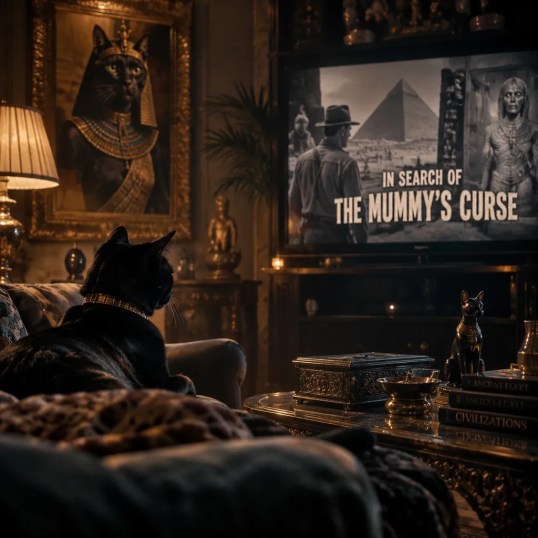
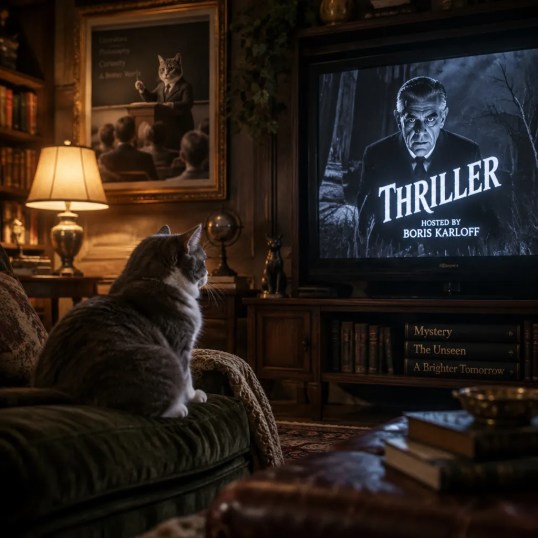
For tonight’s televised horror, we have yet another classic episode of the Boris Karloff-hosted anthology series, Thriller!
In the Wig for Miss Devore, Sheila Devore (Patricia Barry) is an actress looking to make a comeback. She’s recently been cast in a film about a real-life witch who was executed centuries ago. Sheila’s so determined to make the part her own that she’s even willing to wear a wig that once belonged to the dead witch.
Needless to say, that proves to be a mistake for her.
During a flight from Los Angeles to Boston, ten passengers fall asleep and then wake up to discover the plane is otherwise deserted. Conveniently, one of the passengers (David Morse) is also a pilot and he’s able to fly the plane to Bangor airport, which is as deserted as Graham Platner’s campaign office. As the other passengers try to figure out where they are and what’s going on, bond trader Craig (Bronson Pinchot) worries about the Langoliers, monsters that chase lazy people. Craig’s father told him about the Langoliers and sure enough, it turns out that they’re real and they’re eating time.
There have been a lot of really bad movies made out of the work of Stephen King and this might be the worst. It was actually made for television and it aired over two nights in May of 1995. I can remember everyone watching it and, even among the generally easy-to-please crowd that I went to school with, everyone agreed it was pretty bad. Do you have a friend who claims that Stephen King can do no wrong? Show them all three hours of The Langoliers, which sticks pretty closely to King’s original novella.
The premise isn’t really that bad. It’s the type of thing that shows like The Twilight Zone and The Outer Limits used to work wonders with. The problem is that the movie drags on for a punishing 180 minutes and Bronson Pinchot is the only member of the cast who really shows much energy. In fact, Pinchot shows almost too much energy. I get that Pinchot was trying to show everyone that he wasn’t Serge and he wasn’t Cousin Balki, but his performance as Craig is so Type A that it’s tiring to watch. The movie also suffers because eventually the Langoliers show up and they look like a bunch of demonic Pac-Men.
Sometimes, a picture says a thousand words:
I know that some people now say that The Langoliers is underrated or it’s “so bad that it’s good.” Don’t buy it. Instead, watch one of Tom Holland’s genuinely good horror films, like the original Child’s Play or Fright Night. Don’t subject yourself to this.
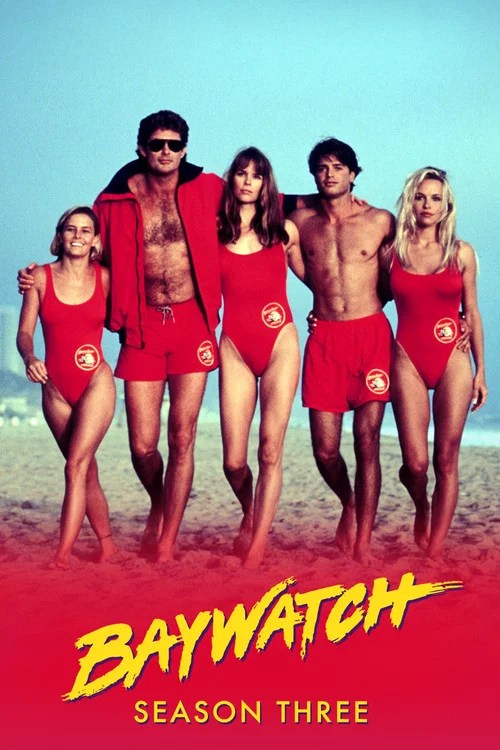
Welcome to Retro Television Reviews, a feature where we review some of our favorite and least favorite shows of the past! On Saturdays, I will be reviewing Baywatch, which ran on NBC and then in syndication from 1989 to 2001. The entire show can be viewed on Tubi.
This week, two new regulars join the cast.
Episode 3.3 “Tequila Bay”
(Dir by Lyndon Chubbuck, originally aired on September 27th, 1992)
Despite not having graduated from lifeguard school yet, Brody is given an undercover assignment by Mitch. Someone has been attacking surfers who try to surf the waters off Tequila Bay, and Brody is sent in to find out who is responsible.
Gee, who could it be? How about that gang of angry-looking teenagers standing on the rocks and glaring as Matt and another surfer, Jimmy Slade (Kelly Slater), greet each other in the water? It is pretty easy to see that the gang is trying to keep other surfers off “their” beach. What I find strange is that the gang consists of about seven people, but only two of them are carrying surfboards. What are the other five getting out of this?
As for Jimmy Slade, he is a philosophical surfer who thinks the water belongs to everyone. He lives in a van. He does not have a phone, but he does have a board, and his life is all about the waves. When he sees Brody paddling in the ocean, he greets him not as a potential rival but as a fellow surfer. And when the evil surf gang tries to run Brody and Slade off, Slade throws a few hard punches of his own.
Jimmy Slade is played by Kelly Slater, a professional surfer who joined Baywatch for its third season. In the Summerfest special, Slater said he joined the cast because he wanted to introduce surfing to the world. I have read a more recent interview in which he says he joined at the urging of his agent and regretted it almost immediately. Not only did fellow surfers give him a hard time about selling out, but Slater also read a script for an episode that featured a surfboard-stealing octopus.
And indeed, Slater gives a performance in this episode that suggests he had already figured out acting was not for him. He delivers his lines stiffly and without much personality. Slater himself abandoned acting after his time on Baywatch. He is a far better surfer than an actor.
Slade does agree to teach Summer how to surf, though the Tequila Bay gang again tries to ruin things by putting barbed wire in the ocean. Slade ends up with a few bad cuts, but it looks as if he will also get a girlfriend. As for the gang, they are arrested by Garner and Mitch.
Meanwhile, the new lieutenant shows up at Baywatch to replace the promoted Captain Thorpe. Mitch is stunned when his new boss turns out to be Stephanie Holden (Alexandra Paul), a woman with whom he once had a torrid affair. She broke his heart when she failed to meet him at Catalina. How badly did she hurt Mitch? Badly enough that he tells Ben he feels like Humphrey Bogart in Casablanca. Wow, Mitch. Overdramatic much?
Overdramatic is the word for David Hasselhoff in this episode. If the first two seasons featured Hasselhoff as an easygoing beach bum, this one features him as an angry, emotionally wounded ex-lover. Unfortunately, Hasselhoff is at his least convincing when he is playing anger. He comes across as petulant. Alexandra Paul may not play Stephanie with much depth, at least not in her first episode, but you still feel sorry for her, because Mitch is being such a jerk.
However, when Stephanie and Mitch work together on the beach to save a drowning man, Mitch realizes that Stephanie is good at her job. He has been asked to write a letter to Captain Thorpe about whether Stephanie should be assigned to Baywatch. Mitch writes that she should definitely be his boss. Could this mean love for Mitch? Let’s hope so!
This episode was way too overdramatic to be taken seriously. The Tequila Bay gang was made up of some of the least intimidating baddies ever to show up on Baywatch. Seriously: the ocean is for everyone.
Today’s Blast from the Past comes from a 1978 episode of SCTV.
Count Floyd (Joe Flaherty) is excited because he believes that he finally has a scary movie to show everyone, Blood-Sucking Monkeys From West Miffin, Pennsylvania. Unfortunately, the film hasn’t shown up in time to be featured on the show so Floyd does his best to let the viewers know what they would have seen if the movie had shown up.
“Even if it kills me, I’ll be better off than I am now.” — Matt Hagen
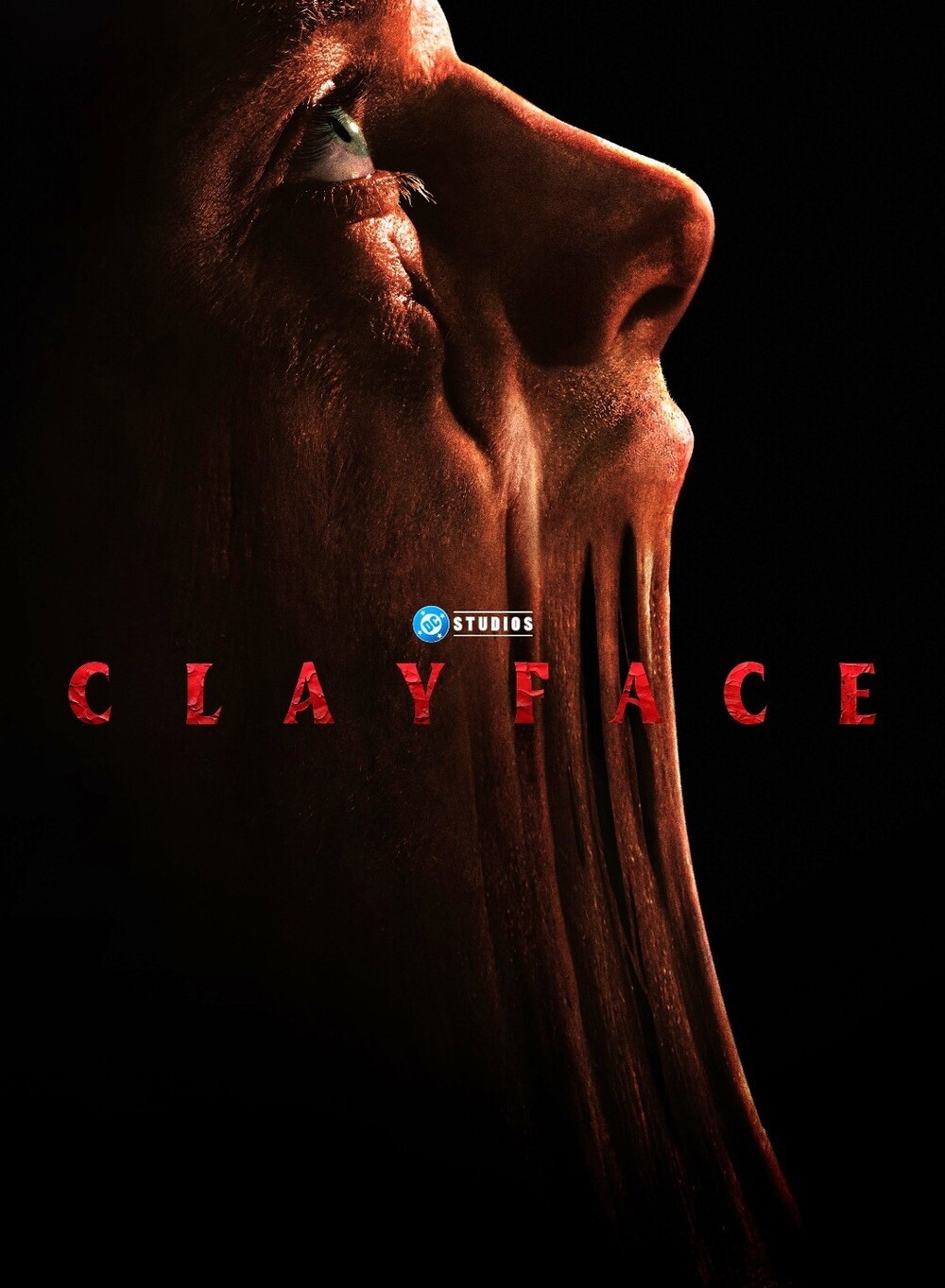
The most unsettling thing about Clayface isn’t watching a man lose his face; it’s realizing how much of his life was built around having the right one. James Watkins’ take on the DC villain turns that insecurity into a nasty little body-horror tragedy, following someone who has confused being desirable with being worth something. Beneath the collapsing features and increasingly grotesque transformations is a recognizable fear: that losing the thing people admire about you means losing their interest altogether. The film doesn’t explore that idea as deeply as it could, but it gives the horror a compelling emotional foundation beyond the spectacle of a comic-book monster taking shape.
At the center is Matt Hagen, played by Tom Rhys Harries, an actor whose rising career is derailed by a disfiguring attack. His appearance has opened doors for him, and losing it threatens more than his next role. It destroys the version of himself he thought he could count on. Desperate for a way back, he turns to Dr. Caitlyn Corr, played by Naomi Ackie, whose experimental treatment promises to repair the damage. Naturally, the results come with complications. The interesting question isn’t whether the miracle will turn into a nightmare, but how much Matt is willing to overlook once he starts recognizing himself in the mirror again.
That desperation makes Matt more compelling than a character who simply gets powers and becomes dangerous. His problem begins before his body starts changing: he already depends on other people to tell him what he’s worth. That insecurity connects naturally to his profession. An actor who can physically become someone else sounds like a wish fulfilled, until transformation stops being a choice. There’s a cruel logic to giving someone obsessed with recovering his identity a body that won’t hold one. The screenplay occasionally spells things out too neatly, but the central idea gives the nastiness something to work with beyond its shock value.
Harries does a lot to keep that idea grounded. He makes Matt’s appeal believable without turning him into someone whose suffering automatically excuses everything he does. His desperation is understandable even when his choices become selfish or disturbing, and the performance handles that balance well. His humiliation doesn’t immediately become theatrical rage. It lingers, making him defensive, needy, and increasingly willing to justify himself. Even when the movie pushes him toward more recognizable villain territory, Harries preserves traces of the frightened person underneath. Matt doesn’t have to remain likable to remain interesting, and the performance understands the difference between earning sympathy and demanding it.
Ackie gives the film another human connection that it needs. Corr could have been little more than the scientist who introduces the treatment and explains why everybody should be worried. Instead, her warmth complicates a relationship already shaped by unequal needs. Matt wants his life back; she wants her work to succeed. Those desires overlap without being identical, making their connection more engaging than the mechanics of the experiment. The romantic element also gives their scenes a tragic-monster quality. Not every emotional beat lands with equal force, but the performances keep their relationship from feeling like a mandatory break between transformations.
Those transformations are where Watkins delivers the movie’s most immediate pleasures, assuming “pleasures” is the right word for watching somebody’s anatomy stop cooperating. The real discomfort comes from the instability. A face should stay recognizable even when everything else changes, and Clayface makes that familiarity feel temporary. The makeup and prosthetic work give Matt’s deterioration an unpleasant physical texture, encouraging a queasy fascination with damage that’s difficult to look at and harder to ignore. At its best, the body horror feels wet, awkward, and difficult to contain rather than polished into something comfortably spectacular. There’s enough physical nastiness here to give Matt’s desperation a genuinely disturbing shape.
Even without the DC Comics pedigree or the connection to Batman, Clayface would still be a compelling body-horror film. The recognizable name might get people interested, but Matt’s desperation, the disturbing effects, and the tragedy of losing control over his identity are what make it work. There’s no need to know where he fits into Gotham or who he might eventually fight. His story has enough emotional weight and gruesome imagination to stand on its own. The comic-book background adds another layer, but it isn’t holding the movie together. That independence makes it feel like an actual horror story rather than franchise homework dressed up with gore.
For an R-rated body-horror film, though, Clayface plays it surprisingly safe. That might sound odd given the grotesque imagery, but graphic violence and genuinely unsettling ideas aren’t the same thing. There are moments when Matt’s transformation seems ready to take the movie somewhere stranger, only for it to retreat toward familiar revenge-thriller territory. The issue isn’t simply that it needs more blood or more elaborate effects. A more Cronenbergian approach could have pushed further into how his changing body alters his desires, his relationships, and his understanding of himself. The film is willing to make Matt look monstrous, but more hesitant to explore what becoming something other than human might actually feel like.
That restraint becomes especially noticeable as Matt gains control over his abilities. Early on, his body feels like a threat he can’t escape. Later, it increasingly becomes a weapon. The shift makes sense for the story, but it changes the experience from watching someone endure a nightmare to watching him inflict one. There’s nasty fun in that, especially when the film embraces its lurid side, but his inability to trust his own body generates more unease than his ability to make other people afraid of it. As the confrontations become more conventional, the movie sacrifices some of the uncertainty that makes its earlier stretches so effective.
The comparisons with The Fly and Darkman are hard to avoid, from scientific possibility curdling into catastrophe to the disfigured man pursuing revenge. The relationship between appearance and personal value also invites comparisons with The Substance. Those connections help explain the film’s appeal, but they highlight what feels underdeveloped, too. Clayface has an industry full of people who judge surfaces and a protagonist whose surface becomes impossible to maintain. That’s fertile ground. Sometimes the movie digs into it; sometimes it settles for a familiar revenge beat with a more disgusting visual payoff. The latter can be entertaining without being quite as satisfying.
Even with those reservations, Clayface succeeds because enough humanity survives beneath the grotesquerie. Harries gives the film a wounded center, while Ackie helps keep its emotional stakes from disappearing into the effects work. Watkins delivers the gruesome spectacle, but the sadness underneath gives it staying power. The film doesn’t fully realize its strongest ideas, and its reluctance to follow them into truly uncomfortable territory keeps it from becoming something exceptional. Still, its best moments make physical transformation feel painfully personal. Matt can change his appearance, but finding a face he can live with turns out to be the harder problem.
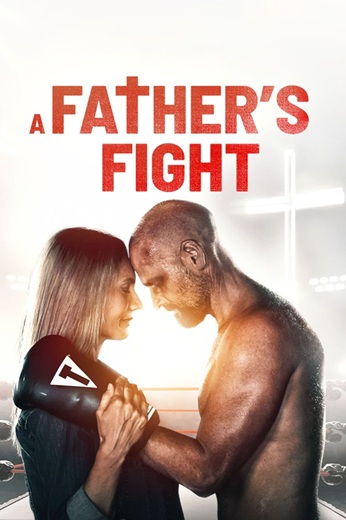 2021’s A Father’s Fight tells the story of Bo Lawson (Travis Hancock).