Shot straight-on-video, 2013’s My Refuge is a film about the end of the world.
Maybe.
It’s actually somewhat difficult to explain what’s going on in My Refuge. It’s an ensemble film, one that is apparently taking place in a small city in Arizona. (That’s according to the plot summary on Tubi. The film itself doesn’t give us as specific location, though it certainly looks like it’s taking place in the arid Southwest.) It’s an ensemble film, one that has a dizzying amount of characters. The majority of the character never meet each other and quite a few are never even named. After reports come in that New York City (which is pretty far away from Arizona) has been hit with a nuclear bomb, the characters all deal with the impending end of the world in their own way.
One woman quit her retail job and makes plan to finally finish that novel that she started years ago.
One teenage girl overdoses and is rushed to the hospital, where her family watches and prays.
A woman obsessively cleans her house and accuses her husband of having an affair. Her husband says that he was tempted but he never actually went through with it but, eventually, he decides that being tempted is just as bad.
A criminal seeks revenge on the cop who shot his best friend.
A married couple look forward to the birth of their first child.
A preacher preaches.
The news reports that more bombs are on the way.
People pray in the street and prepare for the unknowable future.
The film’s message is clear. Even with the world descending into chaos and the end apparently right around the corner, the people in this film find peace and hope through their belief in God. He is their refuge in terrible times. The film itself is not as preachy as I probably just made it sound and it deserves some credit for acknowledging that all of the characters have a good reason to be worried about the future. I mean, nuclear war is a big deal, regardless of what you may believe about the afterlife.
The narrative is difficult to follow. This is a low-budget,straight-to-video film and it’s pretty clear that the majority of the performers were not professionals. There’s a lot of awkward line readings and moments that don’t quite make sense. Everyone tends to blend together. Normally, I would say that would be a problem for an ensemble film but, oddly enough, it kind of works here. In the end, everyone is in the same boat. All of their individual drams are going to reach the same conclusion, regardless of how they may feel about it.
The film is only 79 minutes long but, as is so often the case with earnest , shot-on-video productions, the pace is slow and things aren’t helped by a muddy soundtrack that sometimes makes it a struggle to understand what the characters are saying. Amateur filmmakers often tend to overlook the importance of clean and understandable sound.
My Refuge is flawed but sincere. At its best, it captures the shock and fear that would surround any major calamity. It’s a confusing film but, for many people, these are confusing times.
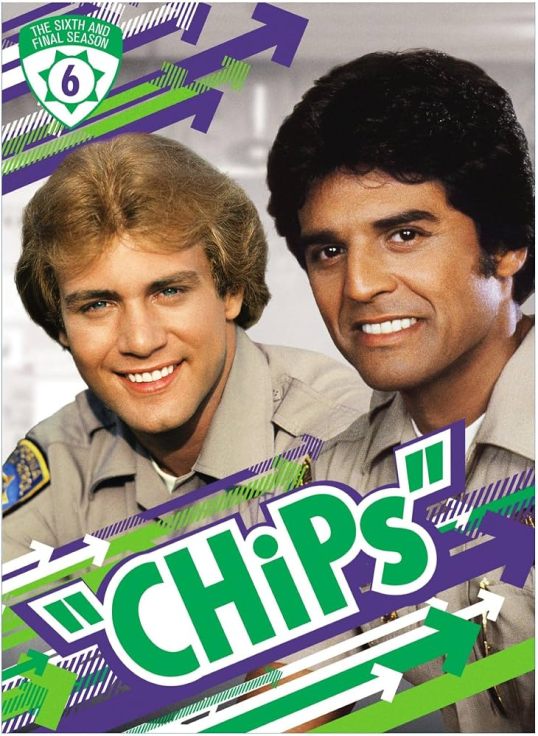
Welcome to Late Night Retro Television Reviews, a feature where we review some of our favorite and least favorite shows of the past! On Mondays, I will be reviewing CHiPs, which ran on NBC from 1977 to 1983. The entire show is currently streaming on Prime!
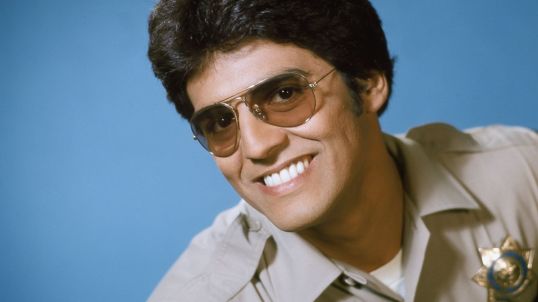
This week, Ponch meets David Caruso.
Episode 6.12 “Hot Date”
(Dir by John Florea, originally aired on January 9th, 1983)
Ponch, whose fiancée was tragically killed just four episodes ago, is super-excited because his new girlfriend is going to be in town for the weekend. Lori (Catherine Hickland) is a flight attendant and, from the dialogue, it sounds like she and Ponch have been an item for a while. So, was Ponch seeing her while he was engaged? What a jerk!
Unfortunately, Jake (Brendan Burns) and Charlie (David Caruso) are also in town. Jake was busted and sent to prison by Ponch and Bobby. (That’s kind of weird since Bobby is still in his probationary period and hasn’t even been with the Highway Patrol for more than a year. Maybe it was a short prison sentence.) Now that Jake’s out, he wants revenge. He and Charlie take Ponch, Lori, and the annoying housekeeper (Ivy Bethune) hostage in Ponch’s apartment.
Meanwhile, at headquarters, Bobby and Kathy (Tina Gayle), talk two runaways (Brad Savage and Michelle Riskas) into returning home. Kathy also receives flowers from a unknown man. (The first set of flowers is delivered by someone wearing a gorilla suit.) Kathy’s unknown admirer turns up at the station. It turns out to be an old widower (Phil Silvers) to whom Kathy was once polite.
While all of this is going on, Getraer tires to impress the captain (John Ericson) during the station’s annual inspection. I guess he manages to do that, despite Grossman having an expired driver’s license and Officer Webster (Clarence Gildyard, Jr.) getting mud on his car while chasing a criminal. (Was Webster just supposed to let the criminal escape so the car would stay clean?) The whole inspection plot just kind of disappears.
The majority of this episode deals with Ponch being held hostage and it’s pretty dreary. As I’ve explained many times in the past, I absolutely hate episodes that feature people being held hostage because it’s always the same thing. Ponch tries to negotiate. Jake yells a lot. Charlie is dumb but loyal. It’s nothing that hasn’t been done a hundred times in the past. It’s boring. Eventually, Bobby calls the apartment and Ponch is able to tip him off that something’s happening. Bobby, Getraer, and Bruce show up to take down the bad guys.
For whatever reason, everyone overacts in this episode. In the role of Ponch’s houseskeeper, Ivy Bethune is almost unbearable. David Caruso also goes more than a little overboard as Charlie. Unfortunately, none of it does anything to liven up a fairly dull episode.
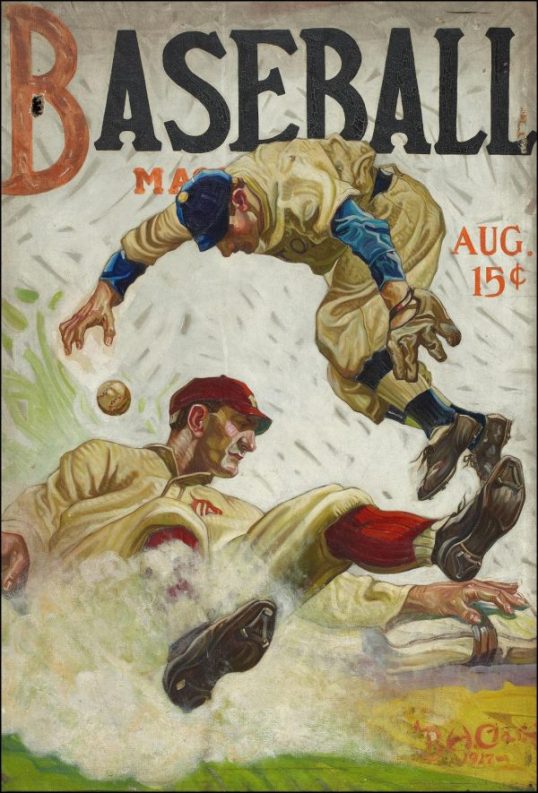
If you’re a baseball fan, today was an exciting day. Two games were played and both of them ended with an upset victory.
In Game 2 of the NLCS, the Brewers won their second game in a row by a score of 7 to 4. If the Brewers ended up winning the National League pennant over the Dodgers, it’ll be both a huge upset and it will also be the team’s first time to go to the World Series.
Meanwhile, in Game 1 of the ALCS, the Guardians defeated the favor Ray by a score of 7-3. I was cheering for the Rays but I like the Guardians too so this series is almost a win-win for me.
Personally, I’m hoping for a Brewers vs Rays World Series because it would be a first World Series appearance for both teams. I’d love to see some history made!
For now, congratulations to both the Brewers and the Guardians!
For our final episode of Fear Itself, we have Echoes. In this episode, a man discover that he was a killer in a previous life. Director Rupert Wainwright also directed the remake of The Fog. Does anyone remember that remake?
Though this episode was meant to air in 2008, the show went on hiatus and was then cancelled before it could air. It was finally released in 2009, as a part of the Fear Itself box set.
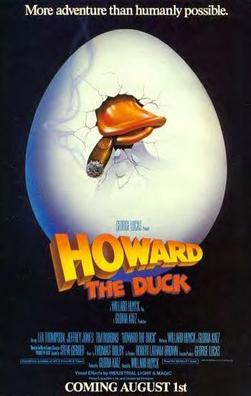
There’s a scene in Howard the Duck where Tim Robbins looks like he briefly wants to strangle the title character, and I don’t blame him. Howard the Duck (voiced by Chip Zien) is not a very likable character in this movie. Due to an experiment with a laser spectroscope, he’s been transported from his planet to Earth. He’s in a world he didn’t make, and he doesn’t stop complaining for one moment. As for Tim Robbins, he plays Phil Blumburtt, a laboratory assistant who is a friend of Beverly Switzler (Lea Thompson), the aspiring singer who is also Howard’s girlfriend. Beverly ends up getting abducted by Dr. Jennings (Jeffrey Jones), Phil’s boss, who has been possessed by a space monster that was brought to Earth by the same spectroscope that caught Howard. Howard wants to return to his planet, but he also wants to manage Beverly’s band; first, though, he has to defeat the space monsters.
Produced by George Lucas and based on the character created by Steve Gerber, Howard the Duck was a notorious box office bomb when it was first released in 1986, and it’s actually one of the reasons why it took so long for Marvel to start regularly producing films. I watched it recently to see if it had gotten any better with age, but no, it’s still pretty bad. Lea Thompson is cute, likable, and probably a little bit too sexy for a film about a talking duck, but otherwise, it’s a typical ’80s mix of action, comedy, and science fiction that gets too buried under its special effects to really be effective.
The main problem with the movie is its version of Howard himself. According to Steve Gerber, Howard the Duck was originally envisioned as being an animated film, but Lucas decided to do the film live-action, which meant creating a duck suit for Ed Gale to walk around in. Unfortunately, the suit doesn’t look like a duck, animated or real. It made Howard look like a puppet. The scenes of an underwear-clad Beverly rolling around with a duck were already strange enough without making the duck look like a ventriloquist dummy. The movie also didn’t capture the personality that made Howard so memorable in the comic books. In the comic books, Howard is cynical, easily irritated, and frustrated with the madness of everyday life. He’s an intellectual duck who wants to be left alone. In the movie, he tells a lot of bad jokes and is only once seen smoking his famous cigar. The satire that was at the heart of Gerber’s creation is lost as Howard instead tries to save Earth from being conquered by another group of aliens.
The movie never really decides if it wants to be a comedy or a big-budget action film. The movie not only damaged George Lucas’s reputation as a producer, but it also ended Willard Huyck’s career as a director. Howard the Duck is still a beloved character amongst readers. I remember the entire theater applauding when he showed up in Guardians of the Galaxy, looking like a real talking duck and voiced by Seth Green. He was featured in several episodes of What If…?. There might be a movie future for this duck yet.
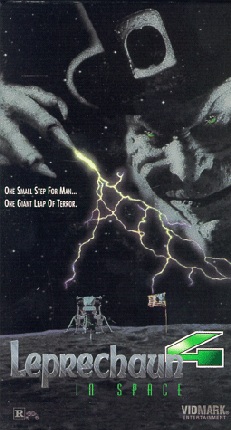
In the far future, the Leprechaun (Warwick Davis) is living on another planet where he’s trying to marry a space princess and he’s interfering with Earth’s mining operations. A bunch of Space Marines show up and take the Leprechaun out. One of the Marines decides to take a leak on the Leprechaun’s remains. The reborn Leprechaun later springs out of the Marine’s penis, which I guess is one of those leprechaun powers that usually goes unmentioned. The Space Marines are in trouble and so is the franchise. A sudden trip into space is usually a pretty good sign that you’ve run out of ideas.
I was hoping that this one, like the second and the third Leprechaun films, would turn out to be better than I remembered but no, it was still pretty crappy. Obviously, continuity has never been too big a deal in these movies but what is an Irish leprechaun doing on a different planet and why does it now take a group of Space Marines to stop him whereas once all it took was Jennifer Aniston? Sending the Leprechaun into space sounds like it should work but the action is slow and the script is lacking in even providing a few good one liners. I don’t think much thought was given to the film, beyond tossing the little guy into orbit.
As always, Warwick Davis is the strength of the franchise. He’s the main reason why I always want these movies to be better than they actually are. Otherwise, Leprechaun 4 doesn’t even work on a camp level. The movie ends with a giant leprechaun hand giving everyone the finger. Was that meant to be for the Space Marines or the audience?
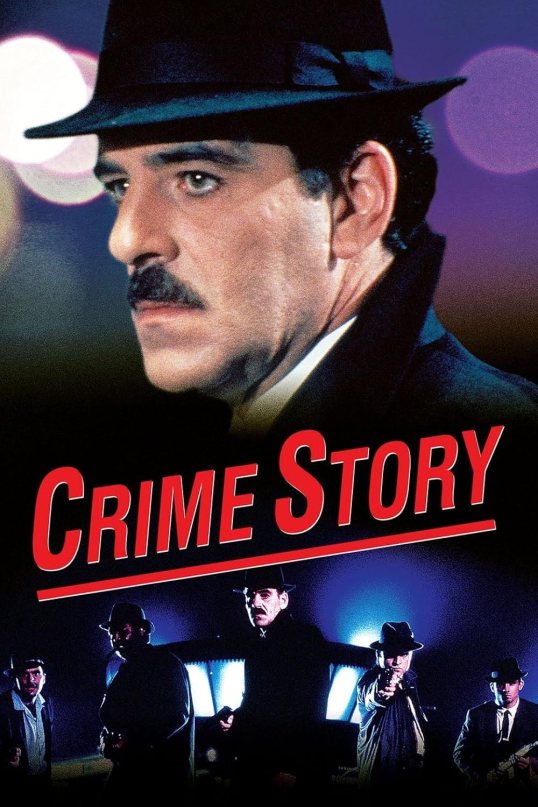
Welcome to Retro Television Reviews, a feature where we review some of our favorite and least favorite shows of the past! On Mondays, I will be reviewing Crime Story, which ran on NBC from 1986 to 1988. The entire show can be found on Tubi!
This week, Julie returns.
Episode 2.2 “Blast From The Past”
(Dir by Eugene Corr, originally aired on September 29th, 1987)
Torello’s ex-wife, Julie (Darlanne Fluegel), is in Las Vegas with her new husband, Dr. John Newhouse (David Soul). While Julie waits outside, John steps into a bank to withdraw some money. He ends up walking straight into a bank robbery. When one of the four robbers is shot and wounded by a security guard, Newhouse tries to stanch the young criminal’s bleeding. Newhouse explains that he’s a doctor. The leader of the gang, Smilin’ Jack (James Remar), took a bullet to the hand during the robbery, so he abducts Newhouse so that he can take care of both his hand and the other robber.
Newhouse is held prisoner in a trailer park in the middle of the desert. Needing to launder the stolen money, Smilin’ Jack calls his old friend, Frank Holman. Holman, who has moved on from his singing career and now wants to shoot stag films, comes out to the trailer park. He brings his movie camera. Soon, the trailer park is full of aspiring actresses.
Meanwhile, Julie goes to Torello and asks for his help. Torello puts the investigation into Las Vegas organized crime on hold so that he can find Dr. Newhouse. The other members of the Task Force have no problem with this because they all worship the ground that Torello walks on. And, of course, Torello ends up sleeping with Julie before eventually tracking down Smilin’ Jack and rescuing Dr. Newhouse.
This episode was pretty boring. Holman trying to become a filmmaker provided some amusing moments, but otherwise this was a fairly standard crime melodrama. James Remar brought a certain demented energy to the character of Smilin’ Jack, but the character was still obviously just a one-off villain from the minute he first appeared.
This was the second episode to not feature Luca and Pauli, both of whom are presumed dead despite the fact that Tony Denison and John Santucci are still listed in the opening credits. Crime Story’s narrative momentum really slows down when it’s just Torello’s story. He needs a worthy adversary and, without Luca around, he doesn’t have one.
Hopefully, next week’s episode will be a bit more interesting.
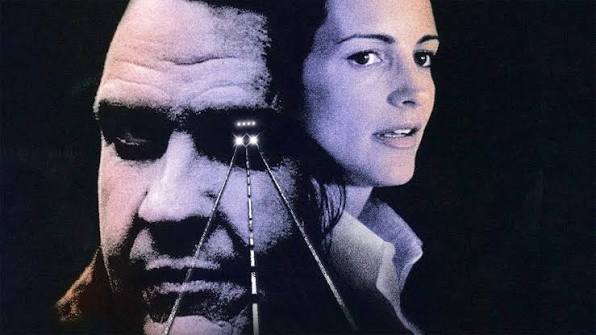
BLACKTOP opens on stand-up comic David (Lochlyn Munro) in the middle of his act at an out of the way truckers bar. His girlfriend Sylvia (Kristin Davis) is at the show, and she doesn’t look very happy. After the show, we find out that David & Sylvia’s relationship is not in a good place at all. She wants to settle down and get married, and he wants to keep performing his shows even though his career is going nowhere. When he tells her he’s agreed to perform three more nights the next weekend at that same place, she blows a gasket and wants to get out of there. Conveniently, a nice trucker named Jack (Meat Loaf), who she had only just met a little earlier, is there handy, and she asks him for a ride out of town in his truck, Goliath. He happily agrees, almost too happily, because it turns out he just might be a serial killer. Sensing something’s off and wanting to get his girlfriend back, David takes off after them, hoping to find them before she becomes the next victim.
That’s the basis for this “mad trucker” thriller that premiered on HBO back in October of 2000. If the story sounds ludicrous to you, just know that it is. It takes a completely stupid decision to kick off the events of the story. Seriously Sylvia, David may be a bit of a loser, but do you have to abandon him and ride off into the night with a trucker you don’t know, who looks like Meat Loaf, just to make a point?!! Don’t you think you may be overreacting?!! Some might say that I’m making too big of a deal about this, that it’s just a plot device to set the story of “terror in a big rig” in motion. You are correct in some ways, but her moronic decision stuck with me through the rest of the movie. Later, when she was supposed to be tough, smart and resourceful, I kept thinking about her dumb decision that put her in this predicament, and how many people had already been killed or seriously maimed because of it.
The story also includes these silly little details like Jack leaving clues for David along the way so that he can have a chance to find them. Somehow Jack can perfectly predict David’s exact route and speed so he can place all these notes at the perfect places on the road, with some of them pretty complicated. And he does this without Sylvia even noticing. Sylvia isn’t exactly the most observant person around. Nothing proves this any more than a scene where Jack has Sylvia sit close to him so he can show her how to drive the big rig. While he’s giving her tips, David is trying to drive up and save her. The mad trucker does all this swerving and slamming on breaks and sliding and plays it all off like he’s just showing her some easy and safe driving moves. Sylvia never realizes David is anywhere near them, and since Jack hasn’t gone full psycho yet, she doesn’t seem to care. Maybe I’m just not that big of a fan of Kristin Davis, either. I never really liked her on SEX AND THE CITY, and I don’t like her that much in this either, even though I did kind of like the scenes where she took off her shirt and wandered around in her bra.
Not to sound like this is pick on Kristin Davis day, because I didn’t care for Lochlyn Munro as David either. He was supposed to be this stand-up comic, but he wasn’t funny at all. I mean some people were laughing because the script said so, but he’s lucky tomatoes weren’t being thrown at him. I found everything bland and boring about him, even though he drove a Red 1959 Edsel. That was actually kind of funny, as he kept taking on the big rig with it. I don’t think I’ve ever seen an Edsel / Peterbilt duel in a movie before, but it happens here several times.
By far the best part of BLACKTOP for me was watching Meat Loaf as Trucker Jack. Loaf had played a villainous trucker in BLACK DOG with Patrick Swayze a couple of years earlier, so the filmmakers must have reasoned that the public wanted more. I’ll admit that his character in this does seem awfully nice at first, and the people around seem to think he’s a pretty good guy too. But he also has this look in his eyes, and when he stops turning on the charm, he’s ready to kill. He’s a kind and empathetic ear to Kristin’s character one moment, and then he’s cutting off someone’s ear with his big knife the next. He’s fixing a nice meal for Kristin one moment, and then he’s shooting at David right in front of her with his high-powered rifle the next. Once she sees that side of him, she starts trying to fight back, and that’s when he gets to go over the top. When he gets to be crazy Trucker Jack, the kind of guy who hangs sides of beef along with murdered victims in the freezer in his truck; those were my favorite parts of the movie.
I know my review sounds very critical in places, and I don’t want to come off too hard on the film. If you’re looking for some solid big rig stunt driving work, and a very simple story featuring a psychopathic truck driver, you could have some fun with this one. Meat Loaf has some fun in his role, so if you’re a fan you should enjoy his work. Just keep your expectations low and don’t ever think that any of the characters are about to make some smart decisions. That seems to be the recipe for enjoying this trip down the BLACKTOP!
Lis and I have been rewatching the Twilight movies this October. Yesterday, we watched New Moon and then Eclipse.
In Eclipse, Edward (Robert Pattinson) and the Cullens have returned to Forks because Edward was just so depressed not being near Bella (Kristen Stewart), and Bella somehow flew all the way to Italy to be with him without getting in very much trouble with her father. Edward has asked Bella to marry him, but Bella is upset that Edward won’t “change me,” and she’s also wondering if maybe she and Jacob (Taylor Lautner) are meant to be more than just friends. The first time I saw this movie, I was Team Edward all the way, but now I see Jacob as being the better choice because he could provide her with a stable and protective home without having to transform her into a supernatural creature beforehand.
While Bella is trying to choose between Edward and Jacob, vampire Victoria Sutherland (Bryce Dallas Howard) is gathering an army of “newborn” vampires to attack the Cullens and kill Bella to get revenge for the death of her lover, James, in the first Twilight film. Alice (Ashley Greene) is having visions of the newborns attacking. The Cullens enter an alliance with the werewolves to keep Bella safe.
There’s a lot going on in this movie. I feel bad for anyone who watched Eclipse as their first Twilight movie because they probably had no idea why Dakota Fanning showing up with her red eyes was such a big moment. Even while Bella is trying to pick between Edward and Jacob and get ready for the big battle, life goes on in Forks. She goes to her high school graduation, where Jessica (Anna Kendrick) is the valedictorian. She’s living both the life of a teenager and being vampire-stalked at the same time. Her father even tries to have “the talk” with her, but it’s not necessary. Edward doesn’t want to turn her into a vampire and he doesn’t want to have sex before marriage. He’s a 104-year-old virgin. That’s how strongly he believes in waiting for someone you love. That’s one of those things that seems sweet the first time you hear it and then obsessive the second time.
I liked Eclipse, even if parts of it seem pretty dumb now. My sister and I both agreed that it was foolish of Bella to ask Edward to make her a vampire before she even knew if they were sexually compatible. Becoming a vampire is an even bigger commitment than going exclusive. But it’s a fantasy. The big battle at the end is exciting and it actually happens instead of just being Alice having a vision. Edward proves that he can fight just as well as Jacob. I still think Jacob would be the better provider.
“For once in your life, be brave! Be brave for them.” — Finlay
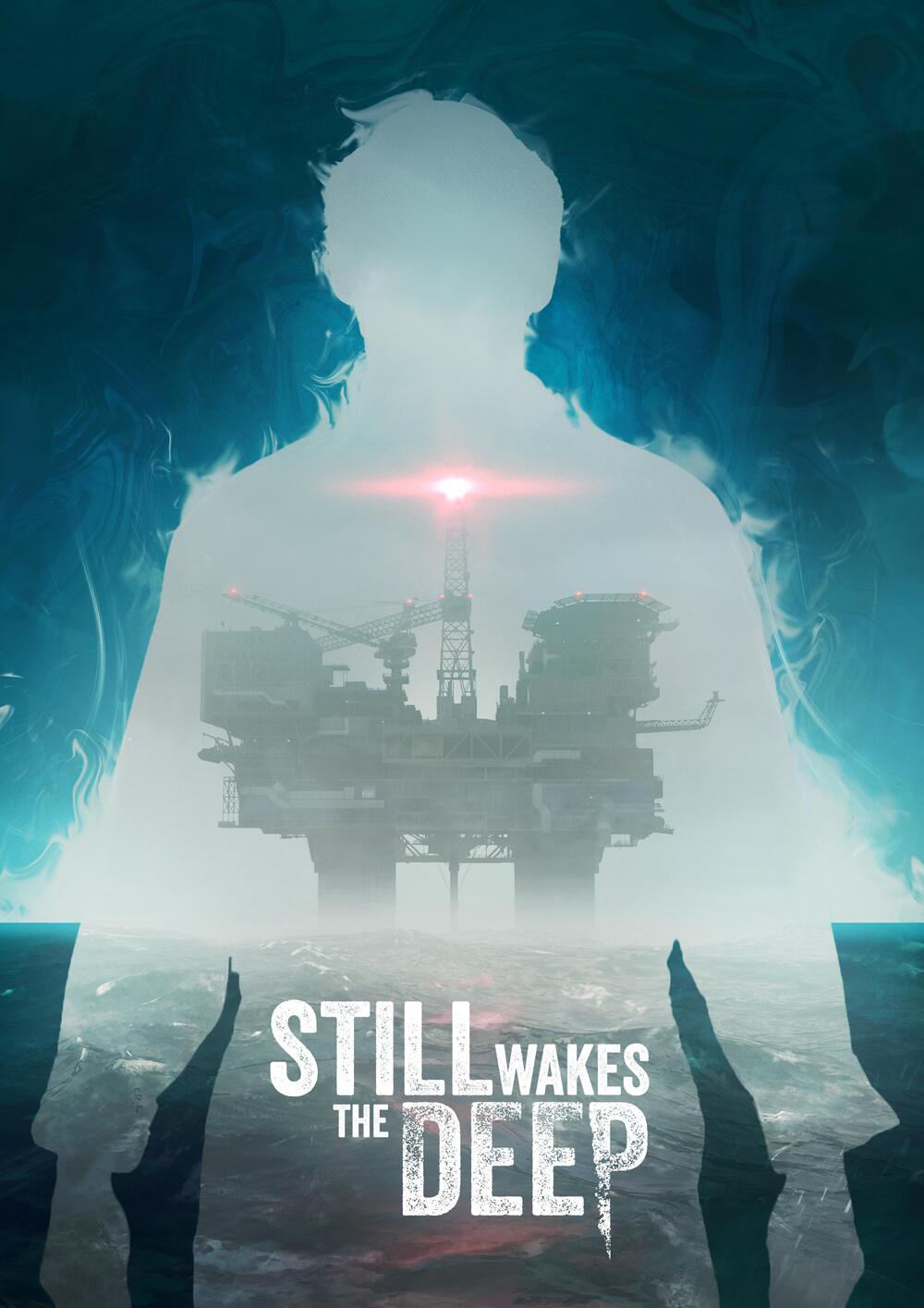
The ocean doesn’t care whether you make it home, and Still Wakes the Deep never lets you forget it. Even before its supernatural nightmare takes shape, the game makes life aboard an offshore oil rig feel like a fragile arrangement between people, machinery, and an environment that could swallow them without a second thought. Released in 2024 by British developer The Chinese Room, this first-person psychological horror game builds its strongest moments around that vulnerability. It isn’t the most mechanically ambitious horror game out there, but its unsettling setting, convincing performances, and emotional stakes make it more than a guided tour through some impressively disgusting scenery.
Set in December 1975, the story follows Cameron “Caz” McLeary, an electrician working aboard the Beira D oil rig in the North Sea off Scotland. Caz has brought plenty of trouble with him. His relationship with his family is strained, problems back home are catching up with him, and his job isn’t exactly secure. He’s already having a miserable time before the drilling operation disturbs something that should have remained buried. Once disaster strikes, getting off the rig becomes much more complicated than finding a boat. The appeal of that setup is how naturally it connects his personal circumstances with the surrounding danger. Home matters because his life there is unfinished, not because the script needs a convenient reason for him to survive.
Before everything falls apart, the game gives you enough time with the crew to understand what kind of place the Beira D is. Conversations are blunt, personalities clash, and the dialogue has the rough familiarity of people who work and live in close quarters. The regional accents and casual swearing help establish a workplace rather than a collection of horror-game characters waiting for their turn to scream. Nobody needs a lengthy introduction to suggest a history with the people around them. That makes the disaster more effective when it arrives. The rig isn’t just a location being destroyed; it’s a little community whose everyday routines suddenly become impossible.
Caz helps hold that human side together. Alec Newman’s performance gives him an appealing mixture of irritation, fear, stubbornness, and genuine concern for his coworkers. He isn’t instantly heroic, and the game doesn’t pretend that his personal problems make him especially noble. He can be difficult, but he remains understandable. More importantly, he sounds like someone struggling to cope with events rather than someone performing bravery for an audience. His family stays emotionally present even when the immediate situation demands all his attention. That connection gives the ocean beyond the rig a particular cruelty: somewhere past all that freezing water is a life he still has reasons to return to.
The Beira D itself does an enormous amount of the work. Its cramped interiors, exposed walkways, and heavy industrial machinery create a setting where comfort always seems temporary. Indoors, there’s barely enough room to feel safe; outdoors, the sea makes every exposed crossing feel worse. The visual detail grounds the place without making it inviting, while the lighting turns familiar spaces into increasingly hostile territory. What starts as an unpleasant workplace gradually becomes an environment you can no longer trust. The game understands that a damaged walkway or a flooding compartment can be frightening without a monster standing in the middle of it.
Sound design strengthens that feeling of instability. Machinery strains, metal bangs, and horrible noises travel through spaces where you can’t always see their source. The rig feels active even when you’re standing still, and not in a reassuring way. Sometimes you’re listening for a creature; sometimes you’re wondering whether the structure around you is about to give out. That overlap is one of the game’s best qualities. The supernatural threat doesn’t replace the practical dangers of being offshore. It makes them worse, leaving Caz caught between something impossible and hazards that require no explanation whatsoever.
The body horror is particularly effective because it corrupts people and spaces the game has already made recognizable. Human forms become grotesquely distorted, but traces of the people underneath remain, especially in their voices. That makes the creatures upsetting in a way that goes beyond impressive monster design. There’s something cruel about hearing recognizable humanity survive inside a body that has become a threat. The game draws on familiar science-fiction horror territory, but its specific setting and working-class cast give that material personality. These aren’t simply monsters loose on an oil rig. They’re part of the destruction of the crew’s shared world.
Playing Still Wakes the Deep is more straightforward than its imagery might suggest. There’s no combat system, so you spend your time navigating damaged sections of the rig, completing simple environmental tasks, climbing through obstacles, and avoiding threats. Keeping Caz defenseless is the right call. Handing him increasingly powerful weapons would undermine the sense that he’s an ordinary person trying to survive something far beyond him. The physical traversal also gives the experience more activity than the “walking simulator” label suggests. At its best, the game makes crossing a dangerous gap or moving through a compromised section of the rig feel like a substantial ordeal.
Still, its narrow design can become a problem. The game usually has a specific route and a specific solution in mind, and it doesn’t take long to notice how firmly it steers you toward both. Stealth encounters can lose some tension once their intended pattern becomes clear, while practical objectives occasionally feel like errands placed between dramatic scenes. There’s a meaningful difference between being trapped by the disaster and being restricted by the design. Still Wakes the Deep sometimes makes the latter too obvious. Anyone hoping for flexible survival systems, substantial exploration, or demanding puzzles will probably find its interactions thin.
That simplicity does help keep the focus on the characters and atmosphere, though. Without inventory juggling or repeated combat encounters, the game can move directly between physical danger and quieter emotional moments. Its roughly six-to-seven-hour length also suits the premise, even if some trips around the rig feel stretched out. The original story is strongest when it treats survival as something more complicated than reaching safety. Caz’s connection to his family, his responsibilities to the crew, and the terrifying circumstances around him give its horror an emotional dimension that carries beyond the immediate disaster.
The expansion Siren’s Rest, released in June 2025, picks up that lingering emotional thread rather than simply repeating Caz’s ordeal with another character. Set in 1986, it takes you beneath the North Sea to the wreck of the Beira D, where a specialist diving team hopes to uncover what happened and bring answers to the families of the lost crew. You play Mhairi, the leader of the dive, exploring the remains of a place that players know far better than she initially does. It’s a smart way to continue the story: the original shows the catastrophe from inside, while the expansion examines what it leaves behind.
That change of perspective gives the return to the rig a different kind of sadness. Spaces that once contained conversations, arguments, and hurried attempts to survive have become submerged remnants of those lives. Mhairi’s work involves photographing remains, collecting personal belongings, and examining evidence, turning familiar locations into places of recovery rather than escape. The connection to the original isn’t just geographical. Its crew members become people whose absence has shaped families for years, extending the first game’s concern with home and responsibility beyond the boundaries of Caz’s experience. The sea may have swallowed the rig, but it hasn’t neatly ended the story for everyone onshore.
Mechanically, Siren’s Rest replaces much of the original’s climbing and scrambling with underwater navigation. A cutting torch, crowbar, and camera give Mhairi practical ways to investigate the wreck, while her connection to the diving bell and communication with her colleague Rob reinforce how dependent she is on equipment and other people. The danger now comes with the added discomfort of being submerged inside a ruined industrial structure. The original made the water outside feel like something to avoid at all costs; the expansion makes entering it the entire premise. That reversal is a strong atmospheric hook, even when the interactions remain fairly straightforward.
The expansion is less convincing as a major escalation of the horror. Its roughly two-to-three-hour length makes it a compact follow-up, but that brevity also leaves less room for its new relationships to develop. Mhairi’s search gives the story a human focus, and the unsettling wreck provides plenty of atmosphere, yet the experience doesn’t consistently turn those advantages into scares as memorable as the original’s. It also shouldn’t be approached as a comprehensive explanation of every supernatural mystery. Its interests lean more toward grief, personal connection, and the desire for closure than toward spelling out exactly what the drilling uncovered. That restraint can preserve the unease, but it may frustrate players expecting more concrete answers.
Taken together, Still Wakes the Deep and Siren’s Rest tell a more interesting story than a simple disaster followed by a cleanup mission. The original makes you care about the people trapped aboard the Beira D, while the expansion asks what their loss means to those left searching for them. The base game remains the stronger experience, with a fuller cast and a more immediate sense of danger, but the follow-up gives its setting an effective second life as a place of mourning and investigation. Neither offers especially deep gameplay, yet both understand the value of putting human concerns inside an inhuman environment. The ocean remains indifferent throughout. What gives the story its weight is that the people living with the consequences never can be.