Today’s horror song of the day is the only hymn to Satan to have been nominated for an Oscar. From 1976’s The Omen, here is Ave Satani. Don’t sing along as much as you may be tempted too. We’ve all seen Hellraiser.
Composed by Jerry Goldsmith, this version of this song was performed by the Tenerife Film Orchestra and Choir.
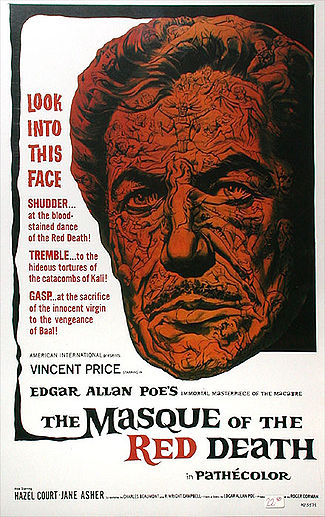
Vincent Price always cited Roger Corman’s Edgar Allan Poe adaptations as being amongst his favorite of the horror films in which he appeared. In this scene from 1964’s The Masque of the Red Death, Vincent Price delivers a monologue on the meaning of terror as only he could.
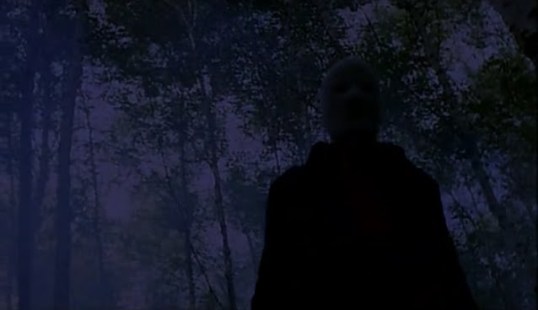
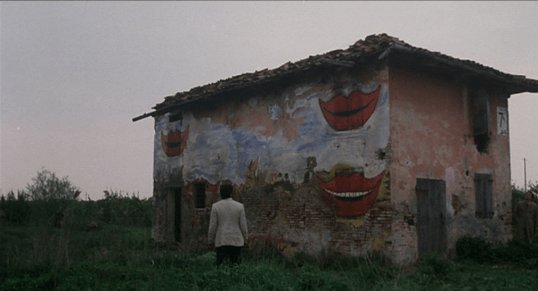
4 Shots From 4 Films is just what it says it is, 4 shots from 4 of our favorite films. As opposed to the reviews and recaps that we usually post, 4 Shots From 4 Films is all about letting the visuals do the talking.
4 Shots From 4 Films
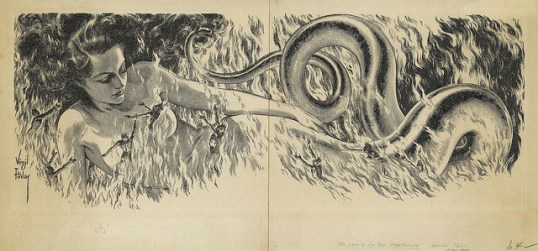
Forbidden Photos Of A Lady Above Suspicion (1970, directed by Luciano Ercoli)
Torso (1973, directed by Sergio Martino)
Spasmo (1974, directed by Umberto Lenzi)
The House With Laughing Windows (1976, directed by Pupi Avati)
As some of our regular readers undoubtedly know, I am involved in hosting a few weekly live tweets on twitter and occasionally Mastodon. I host #FridayNightFlix every Friday, I co-host #ScarySocial on Saturday, and I am one of the five hosts of Mastodon’s #MondayActionMovie! Every week, we get together. We watch a movie. We snark our way through it.
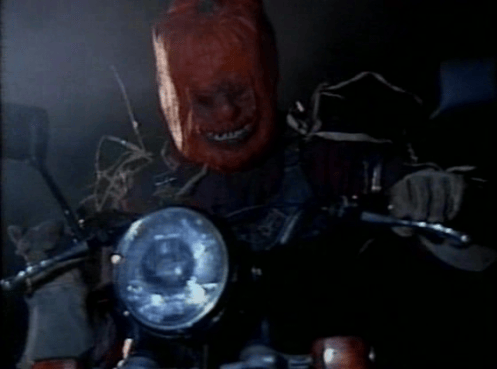
Tonight, for #MondayActionMovie, the film will be the SOV classic, Psycho Scarecrow!
If you want to join this watch party, just hop onto Mastodon, pull up Psycho Scarecrow on YouTube, start the movie at 8 pm et, and use the #MondayActionMovie hashtag!
I describe True Fiction Pictures as sort of Christian. The production company is not explicitly Christian, but they have Christian themes. They swear a lot and have jokes that are based in edgy things, but there is a moral lesson in these comedies. In fact, they quote the bible at the end of the film.
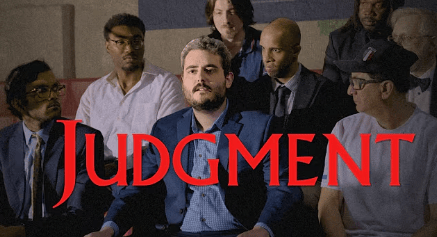
This film depicts a motivation speaker who makes a hard left turn, accuses one of the attendees of being a Hellbound sinner, and the sinner vows to repent. It was funny and kind of scary, trust me.
I put this in the Christian film camp. If you think about it, – it had bad language and adult humor that might be a great vehicle to get a lot of people to watch a Christian film and learn a lesson who would never seek out a Christian film. I do not claim to fully understand this production company, but the film had humor, a clear Christian message, and I was thoroughly entertained.
This video was controversial when it was first released with some people wondering if the video would promote violence with its story of a Marilyn Monroe look-alike being photographed while a killer tossed around a knife and newspaper headlines announced that a movie star had been murdered. Controversy sells and the video was put in heavy rotation on MTV, helping Photograph to reach number one on the charts and to stay there for several weeks.
Director David Mallet is one of those directors who has done videos for just about everyone, from AC/DC to Olivia Newton-John to Peter Gabriel.
“There is an evil which I have seen under the sun, and it is common among men.” — Ecclesiastes 6:1
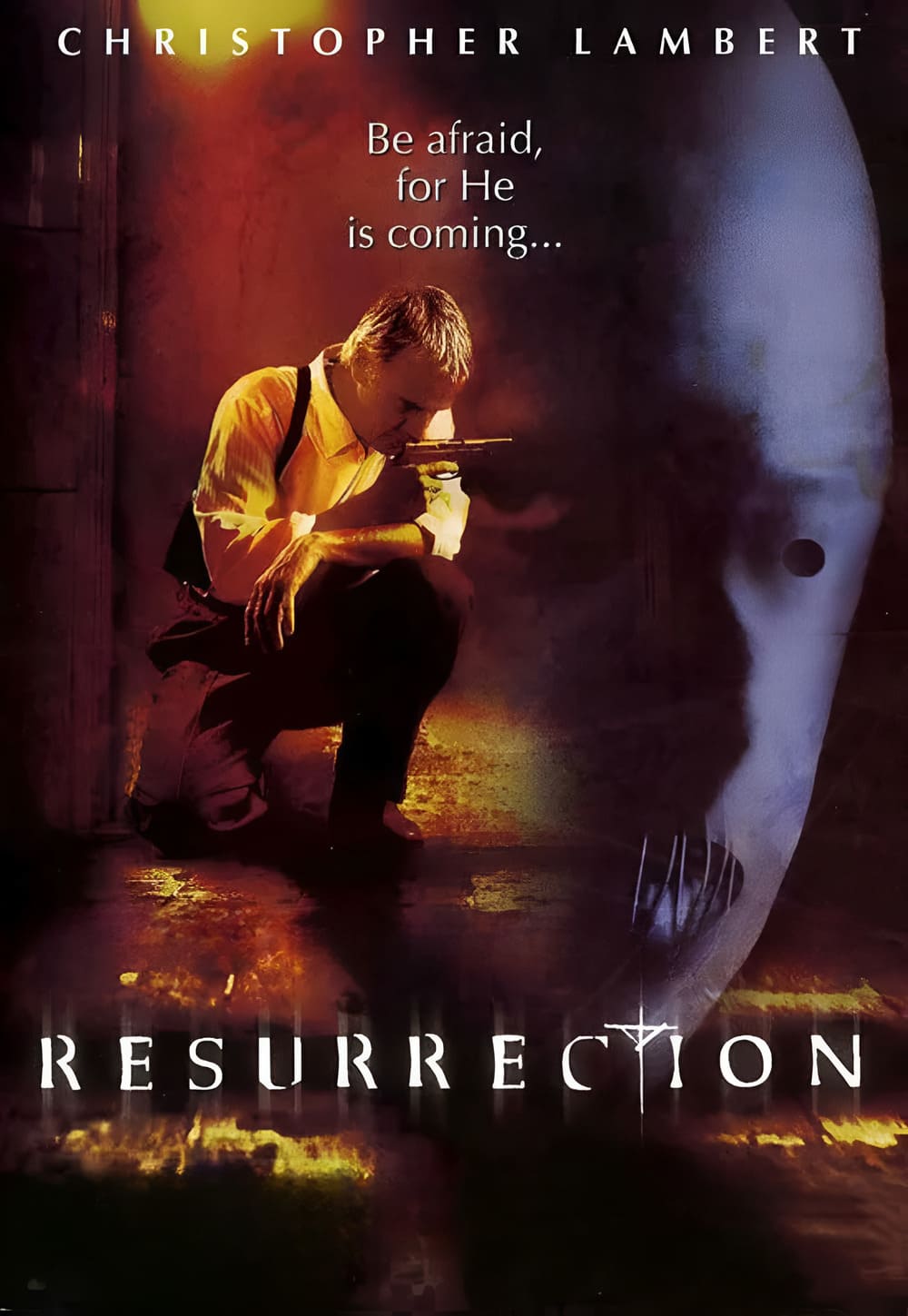
There is a fine line between a serial-killer thriller that gets under your skin and one that simply throws enough severed limbs at you to make an impression. Resurrection (1999) spends most of its running time somewhere between the two. Russell Mulcahy’s film has the haunted detective, the religiously obsessed murderer, and the crime scenes that look like nobody has paid the electricity bill in years. None of that is particularly original, but originality is not necessarily the deciding factor with a movie like this. What matters is whether the atmosphere, performances, and central mystery make you willing to follow it into another dark room. More often than not, they do.
Christopher Lambert plays John Prudhomme, a Chicago detective still struggling with the accidental death of his young son. His latest assignment involves a series of murders in which the victims have been left with body parts missing. Working alongside his partner, Andrew Hollinsworth, played by Leland Orser, Prudhomme discovers that the mutilations follow a biblical pattern. The killer believes he can reconstruct the body of Christ, with Easter serving as his deadline. It is an outrageous premise, but an effective one for a horror thriller: every murder advances a larger project, and every breakthrough brings the detectives closer to understanding just how far their suspect intends to go.
The obvious comparison is Se7en, and pretending otherwise would be giving Resurrection more credit for individuality than it earns. The oppressive city, elaborate murders, and collision of religious language with human depravity all feel familiar. Where Mulcahy’s film establishes some identity is in its willingness to push the material toward gruesome pulp. It is less interested in carefully cultivating philosophical dread than in making the killer’s obsession physically revolting. That does not make it the better movie, but it gives it something to work with beyond imitation. The mystery is not just about catching a murderer; it is about interrupting a grotesque act of construction.
That distinction makes the crime scenes more effective than their shock value alone would suggest. The missing limbs are not random embellishments designed to make an already unpleasant murder look worse. They are the reason the murders happen. Each victim has been reduced to a useful piece of somebody else’s fantasy, and that cold practicality is genuinely disturbing. The religious angle sometimes becomes heavy-handed, particularly when the screenplay spells out connections that already seem clear. Still, the central idea holds together well enough to give the investigation momentum. Knowing what the killer wants does not immediately tell the detectives how to stop him.
Mulcahy gives that investigation a suitably miserable visual landscape. Rooms feel cramped and contaminated, shadows seem to swallow whatever light reaches them, and the city offers very little relief from the ugliness indoors. At its best, the direction makes an ordinary doorway or hallway feel like the entrance to something nobody should discover. At its worst, the stylization starts competing with the material. Restless camerawork and aggressive visual flourishes occasionally announce the film’s anxiety rather than allowing the viewer to feel it. There are scenes where a steadier approach might have been more unsettling. Even so, the atmosphere remains one of the movie’s strongest selling points.
Lambert helps because he approaches Prudhomme without any apparent embarrassment about the material. His performance has rough edges, and some of the more emotional dialogue does not land with complete ease, but his tired expression and gravelly voice suit a man who is barely keeping himself together. He looks worn down before the investigation really gets moving, which gives the case somewhere to push him. More importantly, he does not treat the grisly premise like an invitation to ham it up. His sincerity gives the film a degree of emotional weight, even when the writing leans on familiar shorthand for a grieving father.
Orser makes a useful partner, bringing a different energy without turning Hollinsworth into comic relief. Their exchanges help establish the practical business of working a case, something the movie needs whenever the religious symbolism threatens to take over. They are more convincing as colleagues trying to make sense of horrible evidence than as pieces in an elaborate thematic puzzle. That distinction matters because the screenplay is not always as persuasive as its actors. Clues sometimes arrive with suspicious convenience, and certain complications feel less like believable obstacles than devices intended to keep the chase going for another stretch.
The same problem affects Prudhomme’s personal story. Connecting his grief to a case built around resurrection gives the film an obvious emotional framework, but it does not always develop that connection with much delicacy. The ideas are there: the desire to reverse death, the damage caused by loss, and the difference between faith and obsession. Too often, though, the movie states those concerns more clearly than it dramatizes them. Once the investigation shifts into its later confrontations, the balance tips further toward thriller mechanics. The tension survives, but some of the unsettling possibilities raised by the premise get left behind.
What ultimately makes Resurrection worth watching is not that it transcends its influences, but that it gets enough of the fundamentals right. The murders are disturbing, the central obsession is memorable, and Lambert gives the ugliness a battered human presence to work against. Mulcahy occasionally pushes too hard, while the screenplay occasionally asks for too much patience, but neither problem completely drains the experience. This is not the serial-killer thriller you recommend for airtight plotting or subtle insights into belief. It is the one you put on when you want something dark, lurid, and committed to making its familiar nightmare unpleasant again.
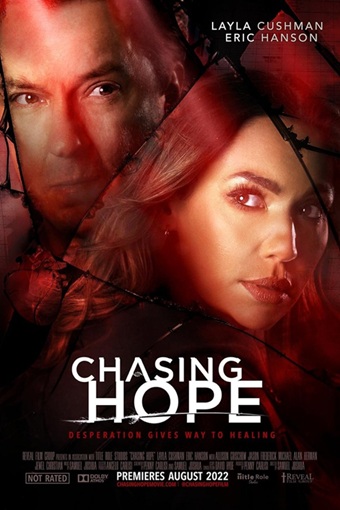
When Hope Howard (Layla Cushman) discovers that her boss at a medical research company has been overcharging the company for medical supplies, she is promptly fired by Dr. David Jakes (Eric Hanson). Angered over the way she’s been treated and still convinced she can prove that Dr. Jakes was up to something shady, Hope hits the road. She returns to her former hometown and drops in on her way-too-quirky best friend, Stephanie (Allison Grischow). She visits her mother’s grave and then has an awkward encounter with her father (Philip Schaefer), from whom she was once estranged but who is now making an effort to be a better person. She also meets a cute guy (Jason Frederick), and they end up with a sort of Hallmark-like romance going.
Meanwhile, Dr. Jakes is dying. He has a rare form of blood cancer, one that is survivable when you’re young but aggressive when you’re older. He realizes that his only hope is to find someone who survived the cancer as a child and get a blood transfusion from them. With the help of a nerdy but greedy hacker named Dylan (Michael Alan Herman), he tracks down the only possible donor and—OH NO!—it’s Hope!
Now, this might sound like the setup for a really zany Hallmark film, but unfortunately, in 2023’s Chasing Hope, Dr. Jakes is not that nice and Hope is not that forgiving. Dr. Jakes tries to call Hope several times, and she eventually reacts by tossing her phone in a dumpster and then trying to find proof that he’s been stealing money from the company. Eventually, Dr. Jakes resorts to trying to kidnap Hope. If nothing else, this film is a lesson in being polite to people. Seriously, you never know when you might need their blood. If Dr. Jakes had been a little bit nicer when firing Hope or had offered her a better severance package, maybe she would be more willing to give him her blood. It’s hard for me to say because I’ve never actually been fired. When I graduated college, I was hired to be an office administrator by a friend of my mom’s, and I did that until he retired, and there was always kind of an understanding that all I really had to do was show up and stay out of trouble. I think that if I ever had been fired from an actual job, I would be pretty angry. Would I still let the person who fired me die of a rare disease? I’d like to think that I wouldn’t.
This is a faith-based film, though it doesn’t really become obvious how until the final minutes. It feels more like a Lifetime film from the late aughts. It has a strong woman trying to bring down an ungrateful man, a quirky best friend, and a potential romance with a somewhat boring man. Unfortunately, the film itself is not as much fun as the typical Lifetime film. For instance, the quirky friend is actually a bit too quirky, and by the third time she’s said something inappropriate, you’re kind of over her. Hope herself isn’t always that sympathetic, if only because she keeps dragging everyone else into her personal drama. Like, seriously, Hope, not everyone wants to risk dying just because you’re unemployed.
Oh, this movie made me happy that I’ve never had a real job.