“This is my tip-of-the-hat to early Rolling Stones. Like in 1964/65 when their songs were very Chuck Berry orientated. They just feel so good, in the pocket. This song was begging to be in the live show. We’ve done it in four different continents now and no one had ever heard it. By the second chorus, the whole audience is singing ‘I’ll Bite Your Face Off.’ It’s the perfect little 3 minute hit single.”
I’ll Bite Your Face Off was the first single to be released off Welcome 2 My Nightmare, Alice Cooper’s 26th studio album and a follow-up to Cooper’s 1975 album, Welcome To My Nightmare. Each song represents a different aspect of a bad dream. In I’ll Bite Your Face Off, Alice dreams about being introduced to the devil.
The video was filmed at several different live venues. One of these performances was at the 100 Club in London, where actor Johnny Depp joined the band on guitar.
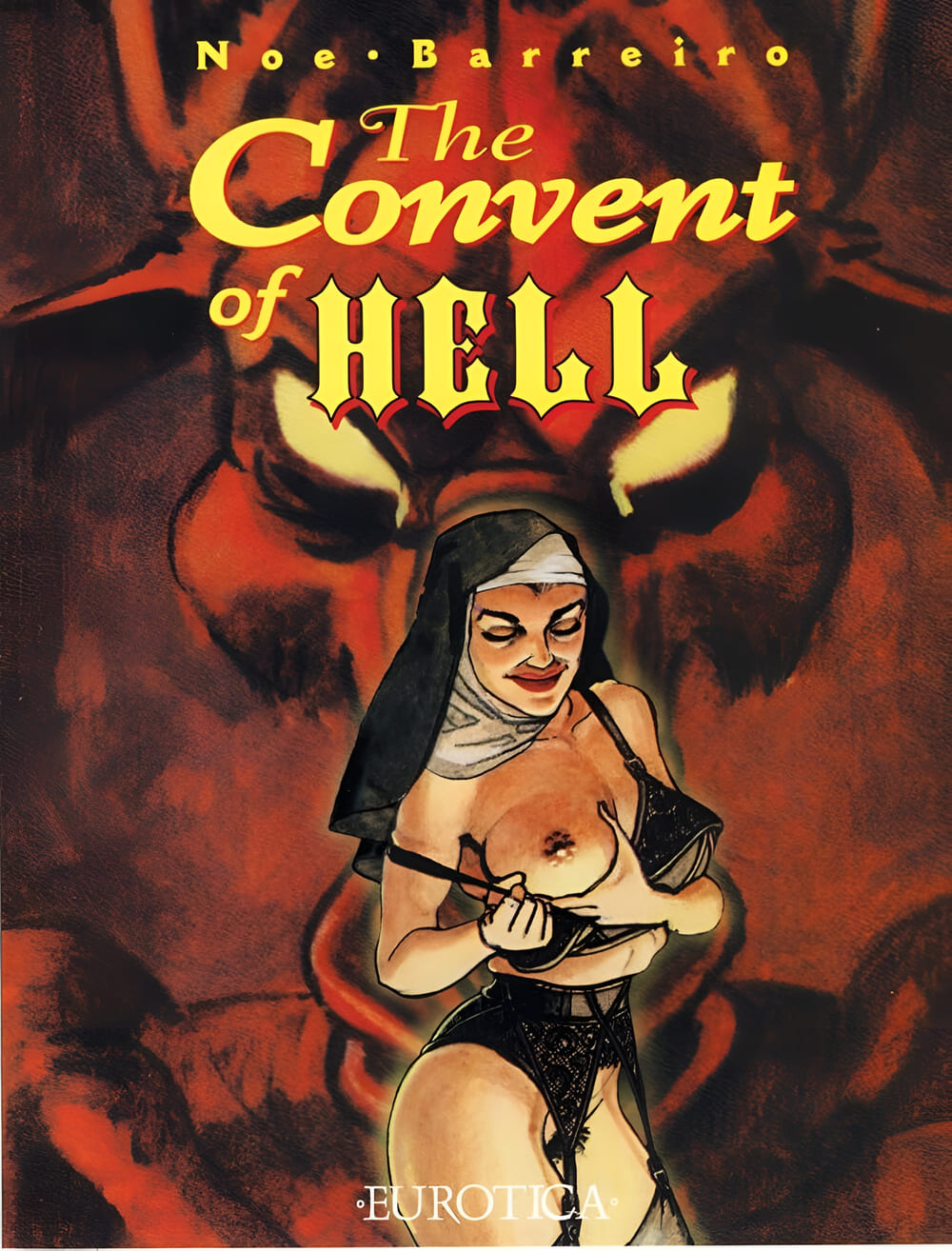
The Convent of Hell is the kind of guilty pleasure that makes you admire the artwork while hoping nobody walks in and asks what you’re reading. Written by Ricardo Barreiro and illustrated by Ignacio Noé, it feels like what would happen if European exploitation films of the 1970s collectively decided they weren’t being exploitative or extreme enough. Whatever restraint those movies occasionally exercised gets thrown out the convent window, leaving a delirious collision of religious imagery, explicit adult material, and grotesque supernatural horror. It is definitely not safe for work, and that warning covers considerably more than nudity. Still, beneath the shock tactics sits an impressive piece of visual storytelling, presented with more artistic conviction than its premise might suggest.
The setup is wonderfully suited to this kind of lurid entertainment. An isolated Spanish convent conceals a mysterious door in its basement, and investigating what lies behind it proves spectacularly unwise. Religious discipline already exists alongside cruelty, repression, and compromised authority before the supernatural threat fully emerges. That matters because the horror does not simply invade an otherwise innocent sanctuary. It finds an institution with weaknesses already built into its foundations. The Mother Superior’s fascination with the forbidden doorway turns curiosity into catastrophe, giving the story a clear dramatic engine even when its increasingly outrageous content threatens to take over completely. You know opening that door is a terrible idea, but watching the inevitable disaster unfold is part of the appeal.
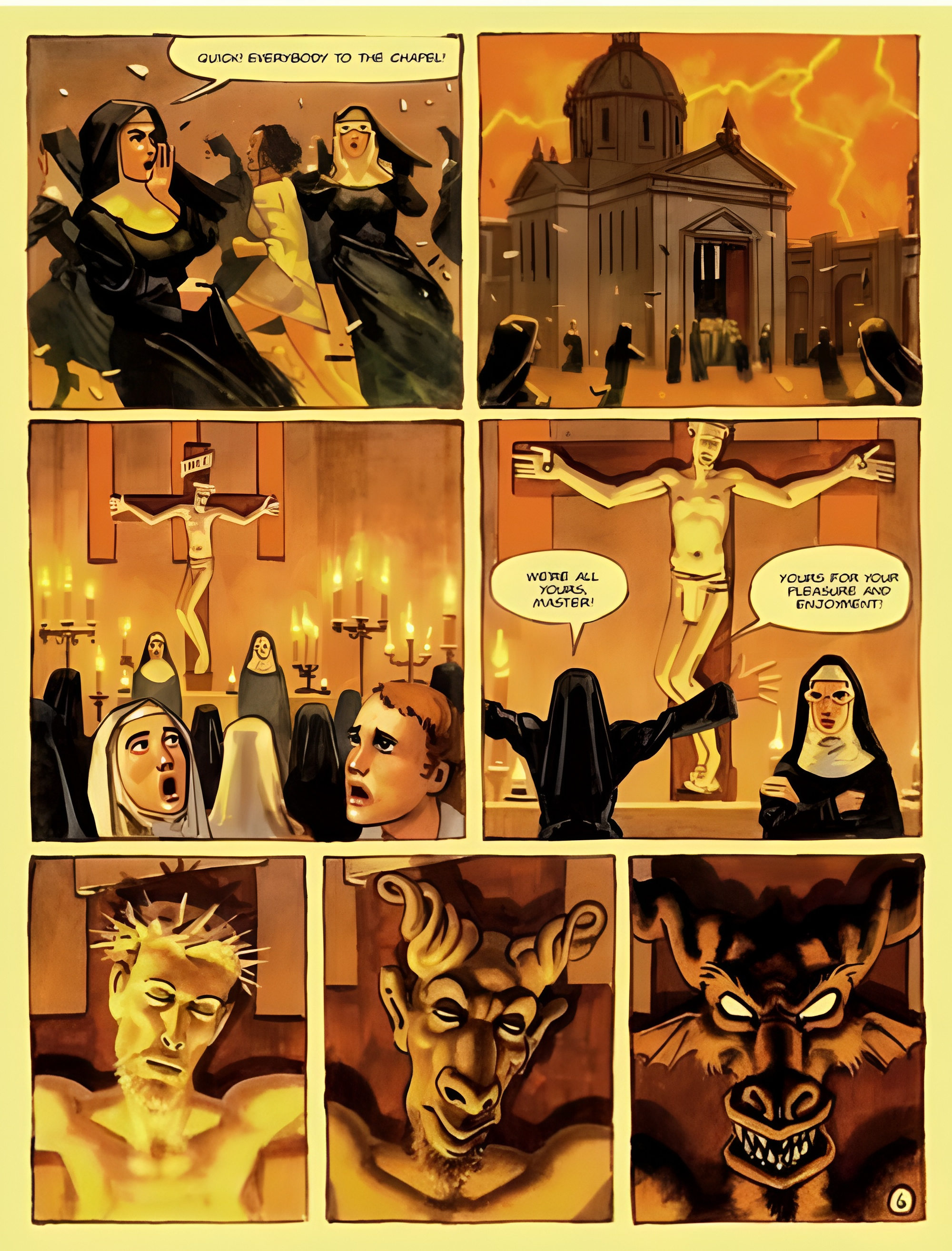
Noé’s artwork is the biggest reason the book rises above being a disposable exercise in provocation. His painted imagery gives the convent a physical presence that makes its corruption feel unusually tangible. The building looks oppressive rather than comforting, with an atmosphere of isolation that establishes unease before the demonic spectacle arrives. There is a strong contrast between the solidity of the setting and the impossible things that eventually occupy it. Instead of treating the backgrounds as empty space between bodies, Noé uses the environment to sustain the mood. The result is a comic whose visual atmosphere remains compelling even when the narrative is operating at its most ridiculous. You can question the taste involved while still admiring the craftsmanship.
That craftsmanship also helps the horror retain some genuine ugliness. The demonic presence is not simply a glamorous fantasy figure with a few sinister accessories. Its animalistic design and exaggerated scale make it feel invasive, alien, and fundamentally wrong within the convent’s enclosed world. This is important because the book constantly moves between erotic spectacle and disgust, sometimes refusing to give the reader a comfortable distinction between them. Noé makes that collision visually forceful. The imagery can be excessive, but it rarely feels timid or accidentally awkward. Whether a particular page fascinates or repels you, there is usually little doubt that the artist knows exactly what kind of reaction he is trying to provoke.
Barreiro’s writing deserves some credit for giving the excess a framework. The discovery of the door, the growing mystery surrounding it, and the escalation into outright supernatural disaster create a recognizable progression rather than a completely shapeless collection of adult scenes. There is anticipation, a threshold being crossed, and a widening sense of consequences. The opening stretch gives the setting time to acquire some menace, which makes the later chaos feel like a release of pressure rather than an arbitrary change of subject. That does not mean the book becomes a deeply layered psychological drama. It simply means its exploitation elements benefit from actual pacing, and pacing makes a considerable difference when the premise is this aggressively overblown.
The characters are less convincing as complicated individuals than as participants in a nightmare about repression and corrupted power. The Mother Superior is the most important figure because her authority and transgression become inseparable, but the book is not especially interested in patiently exploring everyone’s interior life. Its religious imagery supplies an immediate vocabulary of purity, temptation, punishment, and desecration, then twists those ideas into spectacle. There is potential for a sharper critique of institutional hypocrisy here, yet the comic generally prefers another outrageous escalation to a sustained argument. That limitation is worth acknowledging. A reader looking for an insightful examination of faith or convent life will probably find the book much thinner than its elaborate artwork initially promises.
The biggest obstacle, however, is not the thin characterization. It is the sexual violence. Calling this a cheeky naughty-nuns comic would badly undersell how cruel and confrontational parts of it become. Its explicit content includes nonconsensual acts, so the guilty-pleasure label needs a serious qualification: the pleasure comes from the feverish horror, visual skill, and sheer audacity, not from pretending the disturbing material is harmless. For some readers, that combination will be an immediate dealbreaker, and understandably so. Even readers comfortable with extreme horror may find the balance between eroticism and brutality unpleasant rather than entertaining. This is a book whose content warnings are genuinely useful, not merely promotional shorthand for something mildly scandalous.
What ultimately makes The Convent of Hell memorable is the mismatch between its disreputable subject matter and its committed execution. It has the instincts of a midnight exploitation feature, but Noé gives those instincts a richly realized visual identity, while Barreiro supplies enough structure to keep the descent into chaos moving. It is excessive, uncomfortable, occasionally absurd, and unmistakably adults-only. As a guilty pleasure for readers who can tolerate its extreme content, it delivers a distinctive collision of supernatural horror and sacrilegious spectacle. As a recommendation for the average graphic-novel reader, it comes with enormous reservations. The artistry is real; so are the reasons to leave it on the shelf.