“I don’t know what’s going on here, but I do know that it’s happening.” — Nathan Slaughter
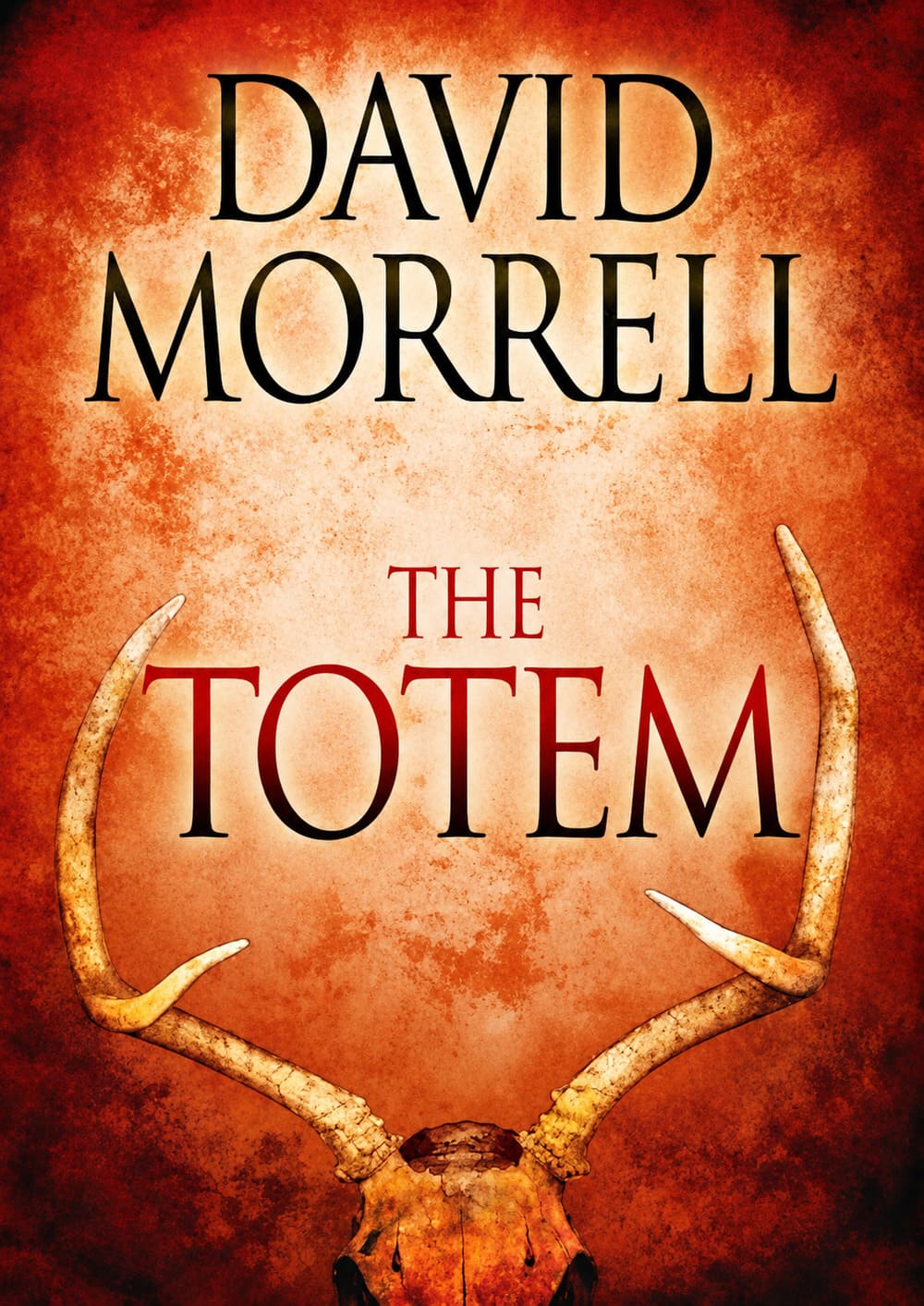
A fresh start doesn’t count for much when the place you’ve escaped to develops a nightmare of its own. That’s the nasty irony at the heart of David Morrell’s The Totem, a novel in which the promise of a quieter life gives way to something violent and difficult to understand. In its expanded, unedited form, the book has room to explore both the spreading danger and the people caught in its path. The result is a mix of small-town horror, outbreak suspense, and personal trauma that’s sometimes uneven but rarely short on atmosphere.
Police chief Nathan Slaughter has come to Potter’s Field, Wyoming, hoping to put a traumatic experience in Detroit behind him. It’s an understandable move: leave the city, find somewhere less chaotic, and try to regain a little control over your life. Unfortunately, the town’s distance from urban violence doesn’t make it safe. Mutilated cattle signal the beginning of something troubling, and increasingly aggressive animals and disturbing changes in human behavior suggest a problem beyond ordinary police work. Slaughter needs to protect the community while figuring out what, exactly, he’s supposed to protect it from.
That uncertainty is one of the novel’s strongest assets. Morrell doesn’t simply introduce a threat and let the characters spend the rest of the book running from it. He makes understanding the danger part of the ordeal. The symptoms resemble rabies, but the speed and severity of what happens make that explanation feel inadequate. Every new incident seems to alter the situation rather than clarify it. Slaughter can respond to what has already happened, but anticipating what comes next is another matter. The investigation becomes an uncomfortable exercise in trying to catch up.
The threat also works because it can cross into ordinary life so easily. An encounter with an animal doesn’t need to look especially significant to become disastrous. A boy’s terrifying behavioral changes after a raccoon bite bring the danger out of the surrounding landscape and into the home. Suddenly, the problem isn’t something happening to livestock or lurking beyond the town’s boundaries. It’s right in front of people who have no preparation for it. Morrell makes familiarity feel fragile, and that’s considerably more unsettling than simply filling the wilderness with things that bite.
There’s a particularly ugly emotional tension in the way concern can become a liability. When someone is sick or injured, the natural response is to get closer and help. Here, that instinct can expose people to something they don’t understand. The horror comes partly from physical violence, but also from watching ordinary human connections become dangerous. A loved one’s face is still familiar even when their behavior isn’t. Morrell gets under the skin when he concentrates on that gap, making the loss of recognizable humanity feel as frightening as the possibility of death.
Slaughter gives those fears a personal focus. His history means he isn’t approaching the crisis as a clean-slate hero who only needs an opportunity to prove himself. He’s already been hurt, and his move to Wyoming was supposed to create distance from that damage. Being forced into another nightmare gives his role a weight that straightforward competence wouldn’t provide. He has responsibilities, experience, and reasons to keep going, but none of those things erase his vulnerability. The book is more convincing because it allows him to be capable without pretending that capability makes fear disappear.
The supporting characters broaden the story beyond Slaughter’s struggle. Dunlap, an alcoholic reporter investigating the history of a nearby hippie colony, brings another damaged perspective into the unfolding mystery. The colony’s strained connections with local families also establish that the community’s problems didn’t begin with the outbreak. Old resentments and fractured relationships are already there, waiting to complicate the response. This is where the expanded scope pays off. Potter’s Field feels less like a convenient setting for attacks and more like a place whose residents had unfinished business long before survival became their main concern.
That breadth does come at a cost. Some background material adds emotional substance, while other stretches slow things down just when the central threat is becoming especially compelling. There are moments when you want the novel to stay with the immediate crisis rather than pull back into another character’s history. Still, the police investigation and medical uncertainty usually restore the momentum. Morrell understands that discovering more can make a situation worse: evidence may reveal how far the danger has spread without offering any practical solution. Knowledge becomes another source of anxiety rather than a dependable route toward control.
The resolution is likely to divide readers, especially those expecting the mystery to produce a tidy explanation. Some questions about the outbreak and certain characters’ fates remain open, preserving an unpleasant uncertainty but also leaving parts of the experience feeling less complete than they could. Even so, The Totem has enough atmosphere, character tension, and visceral menace to make a strong impression. Its most effective idea is that escape and safety aren’t the same thing. Slaughter changes his surroundings, but he can’t guarantee what those surroundings will demand of him. Morrell takes that disappointment and turns it into a grim, absorbing nightmare.

