Jason Shaw (Andrew Cheney) is an aspiring photographer who works as a clerk in a store owned by his sister, Ava (Erin Bethea). One day, Jason meets a woman named Mac (Rachel Hendrix) and it’s attraction-at-first-sight. That night, they go on a date and they have an amazing time. They start bonding instantly. Jason feels as if he’s finally found his soul mate. Unfortunately, the date ends with a car crash that leaves Mac dead.
The next morning, Jason wakes up without a scratch on him. Convinced that he’s just woken up from the most intense dream of his life, Jason goes about his day and he’s immediately hit by a sense of deja vu. He feels like he knows what people are going to say and do before they do it. Everything about the day feels very familiar. And then, once again, he meets Mac….
Yep, Jason is stuck in a Groundhog Day-style time loop. He relives the same day over and over again. Once Jason realizes that this is actually happening to him and that it’s not a dream, he assumes that he’s in the time loop to save Mac. But, no matter he does, the car accident always occurs and Mac always dies at the end of the night. Even when he specifically goes out of his way not to meet her and spends the entire day locked away in his apartment, he still sees a news story about her death in a car accident.
What if Jason hasn’t being sent through the time loop just to save Mac? What if there’s something else that he has to do first?
77 Chances is a sweet film. Yes, it does have a religious angle and that will probably turn off some viewers but who cares? Actually, when you think about it, the idea of God making someone live the same day over and over again makes more sense than the solutions that are typically offered up in time loop films. For my part, I appreciated that Jason wasn’t being forced to live the same day over and over again for the reason that everyone would naturally assume. I love Groundhog Day and Palm Springs but, for the most part, most time loop films suffer because they always tend to hit the same notes. 77 Chances works because it actually tries to do something unexpected with the idea.
77 Chances also works because of the chemistry between Andrew Cheney and Rachel Hendrix. They make for a cute couple and you really do hope that things will work out for them. They just seem to belong together. Rachel Hendrix, in particular, gives a strong and likeable performance as Mac. It’s interesting to see the different ways that she reacts to being approach by Jason over the course of the time loop. While Jason has spent months getting to know her, Mac has no idea who he is. Early on in the time loop, when Jason comes on too strong, Mac blows him off and tells him that his obsessiveness is creepy. Good for her!
77 Chances left me pleasantly surprised. It’s a sweet movie.
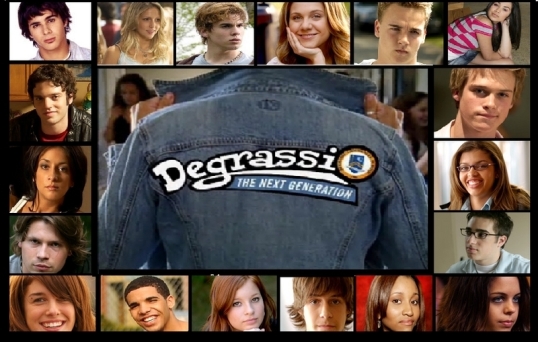
Welcome to Late Night Retro Television Reviews, a feature where we review some of our favorite and least favorite shows of the past! On Sunday, I will be reviewing the Canadian series, Degrassi: The Next Generation, which aired from 2001 to 2015! The series can be streamed on YouTube and Tubi.
(Dir by Eleanore Lindo, originally aired on February 9th, 2004)
Manny is pregnant and frightened. Craig, however, is overjoyed and can’t wait to be a father at 15. During their lunch period, Craig shows up with a book of baby names. When Ashley sees and hears Craig and Manny debating what they should name the baby, she immediately figures out what has happened. She then proceeds to announce it to the entire cafeteria.
Craig is still enthusiastic about being a father, but Manny is having doubts. When Emma briefly leaves Manny and Craig alone with Baby Jack, Craig freaks out over having to change the baby’s diaper. Manny realizes that if Craig can’t handle that, he can’t handle being a father. She decides to get an abortion. Both Emma and Craig are upset by Manny’s decision. Emma, who knows that her mother considered getting an abortion when she was pregnant, feels that Manny should give the baby up for adoption. Craig still thinks that he and Manny can raise the child themselves. But Manny says that she can’t handle the idea of giving birth and that she’s too young to be a mom. In the end, Emma supports Manny’s right to make her own decision, even if she doesn’t agree with it.
As much as I complain about Emma as a character, Degrassi deserves a lot of credit for how this episode portrays her reaction to Manny’s decision to get an abortion. Emma’s opposition to abortion is treated respectfully, and the episode allows the viewers to make up their own minds about the issue while also making it clear that neither Manny nor Craig was mature enough to raise a child. It’s the type of thing that Degrassi did so well in its early seasons. (Unfortunately, later seasons would be a bit more heavy-handed when it came to dealing with issues like abortion.)
Unfortunately, this episode’s nuanced and intelligent take on abortion is matched with one of the worst B-plots in Degrassi history. After JT tells Liberty that he will never like her and that it’s time for her to get over her crush, Liberty shifts her attention over to Sean. When Sean and Liberty are assigned to work together on a class assignment, Liberty starts trying to act “tough” to win Sean’s interest. Of course, for Liberty, this means dressing up and talking like a minor character in Grease. Eventually, Sean says, “You’re as edgy as a butter knife,” and Liberty is crushed once again. However, it turns out that Sean’s friend, Towerz (Travis Donegan), likes smart girls. So, Liberty finally gets a boyfriend!
Oh, this was just embarrassing to watch. I felt bad for everyone involved. Not only was Liberty made to look like a crazed stalker, but the idea of her dating Towerz—who is a part of the crew that’s been stealing supplies from the school—made no sense at all. It didn’t help that all of this played out in between scenes of Cassie Steele and Miriam McDonald doing some of the best work that they ever did on Degrassi.
This episode was considered to be so controversial that it didn’t even air in the States until 2006, two years after it originally aired in Canada.
Horrorthon continues! It’s hard to believe that we have two weeks left to go! I can’t wait for Halloween. I’m enjoying October and I hope you are too.
I’m enjoying despite the fact that I spent the majority of this week in bed, sick. The cold weather has finally arrived and so has my annual fall cold. As I write this, I am very thankful to all the members of the TSL Crew who have stepped up and kept this site busy while I’ve been resting and getting better. I’m very much looking forward to jumping back into things on Monday!
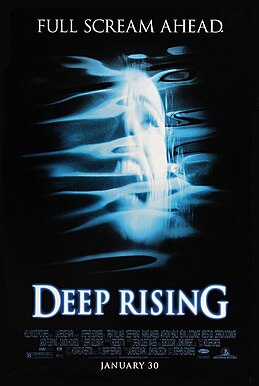
A group of mercenaries led by Hanover (Wes Studi) hires Captain John Finnegan (Treat Williams) and his crew to pilot their boat across the South China Sea so that they can loot a luxury cruise ship on its maiden voyage. The ship has been sabotaged by its owner, Simon Canton (Anthony Heald), who is hoping to collect a big insurance payment after Hanover and his men sink the boat. But before Finnegan, Hanover, and everyone else arrives, an undersea monster attacks the cruise ship and most of the crew and passeners end up dead. Finnegan, his crew, the mercenaries, Canton, and professional thief Trillian St. James (Famke Janssen) find themselves trapped on the ship and fighting to survive the chaos.
A B-movie that was made with an A-budget, Deep Rising never gets enough respect for being an enjoyable if mindless monster film. When it was released, it was dismissed as just being another Alien rip-off. While it does have some Alien DNA, the film really has more in common with the monster movies of the 50s and 60s. Treat Williams even looks like a leading man from that era, and his performance suggests that he was in on the joke. Famke Janssen is incredibly sexy as the incredibly named Trillian St. James. Anthony Heald and Wes Studi play two very different villains, and Studi gets a great final scene. There are also plenty of disposable characters who get picked off one by one. Some people will be disappointed that Finnegan’s comic relief sidekick (played by Kevin J. O’Connor) was not one of those characters, but these films always need an annoying sidekick. Someone has to make the audience laugh before the monster jumps out of nowhere.
Deep Rising is a entertainingly simple monster movie that doesn’t ask too much of its audience and delivers an entertaining 106 minutes of creature mayhem.
Welcome to Retro Television Reviews, a feature where we review some of our favorite and least favorite shows of the past! On Sundays, I will be reviewing Homicide: Life On The Street, which aired from 1993 to 1999, on NBC! It can be viewed on Peacock.
It’s Christmas in Baltimore.
Episode 6.8 “All Is Bright”
(Dir by Matt Reeves, originally aired on December 12th, 1997)
It’s the holidays! Falsone (ugh) is still talking about suing to get custody of his kids. (Seriously, Falsone — either do it or shut up about it. We already had to go through this crap with Felton a few seasons ago.) Lewis and Kellerman are worrying about whether or not Georgia Rae has footage of Kellerman executing Luther Mahoney. Bayliss is suddenly making out with Cox at the Christmas party. Well, why shouldn’t he? It’s impossible to go in a bar or even a shop in Baltimore without running into Dr. Cox.
Meanwhile, Gharty and Ballard are investigating the murder of man in a laundromat. Someone beat him to death and poured bleach down his throat. It turns out that the man was HIV+ and he infected a woman named Rita (the great Kathryne Erbe). Rita is now visibly sick and dying while the man who infected her wasn’t showing any signs of being sick at all. Rita’s guilt is never really in question. The issue is that Ballard feels sorry for Rita and understands her anger while the older and more-traditionally minded Gharty sees her as just being another murderer. It’s a pretty simple story but Callie Thorne and Peter Gerety sold it. The fact that Gharty is obviously in love with Ballard adds a whole other level of meaning to their scenes together.
Speaking of love, Munch’s ex-wife Gwen (Carol Kane) showed up at the bar and recruited Munch to help with her mother’s funeral. Only real-life author Peter Maas showed up for the ceremony. Munch, of course, asked Gwen about Lennie Briscoe. Belzer and Kane were a great team. I’m a bit disappointed that there was apparently never a Munch/Gwen spin-off.
Watching Gharty and Ballard provided a needed relief from all of the Falsone-centered episodes that I’ve had to sit through recently. This was a simple episode but a good one.
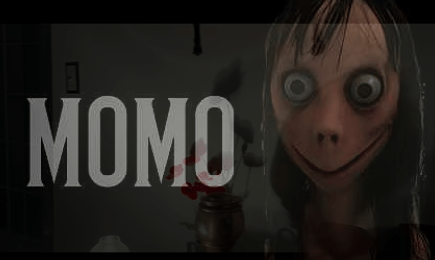
Momo is a home movie short; in fact, I have the same fridge. The short is straight forward- beginning, middle, and an end. A man hears a noise, gets a baseball bat, and jump scare.
I know some of you are gonna be like- Case, this is barely a film. I respond with “Relax”; he’s got some talent and he’s trying to make art. Also, it’s A LOT better than some that have a budget …. of any kind. Think on this, he made this with no budget and it had a clear story and payoff- that’s storytelling. I hope he tries to make something longer with a developed plot.
No, I have not gone soft. If it were bad, I’d say so- it’s fun.
“Who will dare to face the challenge of the Funhouse? Who is mad enough to enter that world of darkness?” — Funhouse Barker
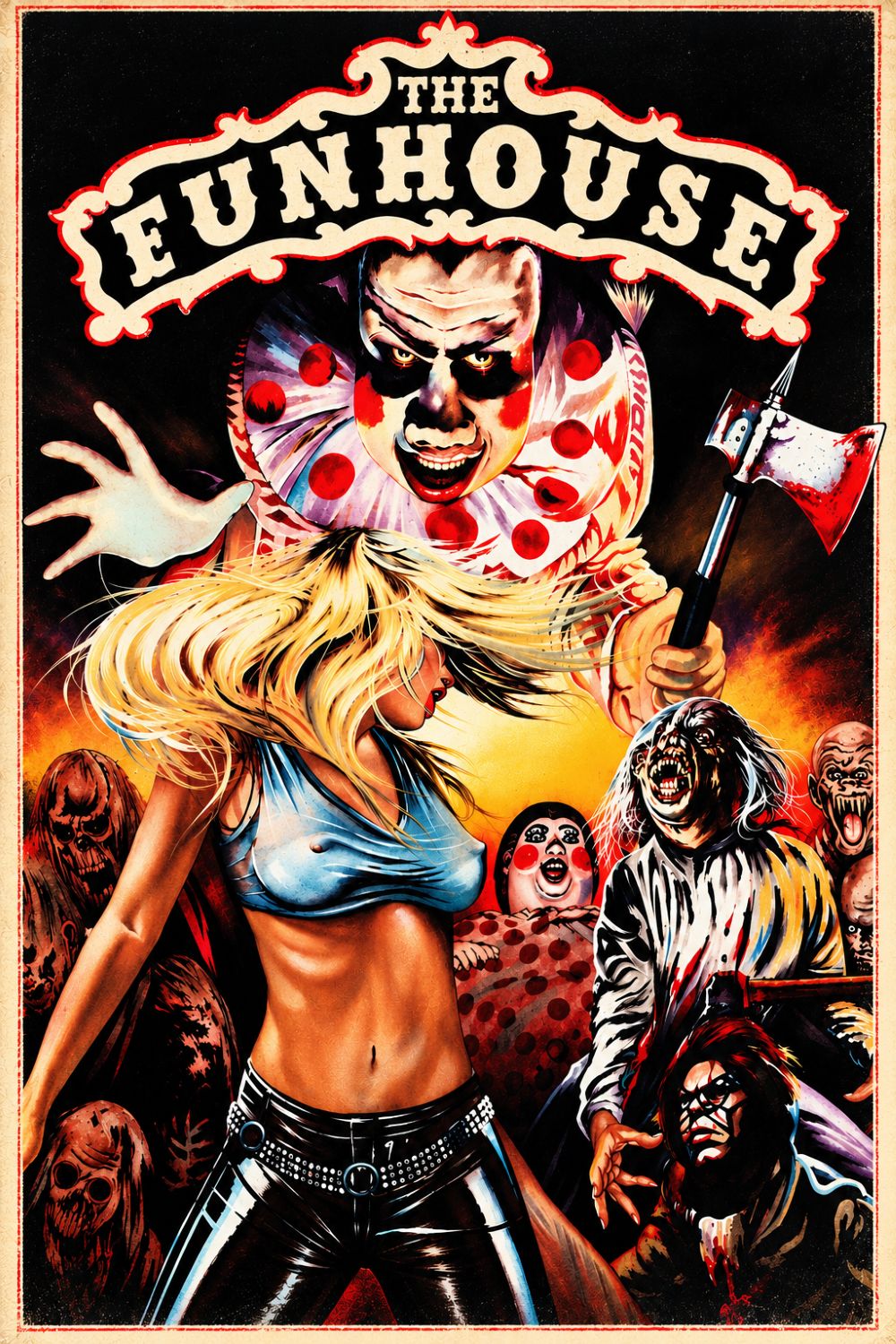
There’s something wonderfully sleazy about a horror movie that makes you feel like you need a shower before anyone has even been murdered. Tobe Hooper’s The Funhouse (1981) gets that feeling just right, turning a traveling carnival into a place where the entertainment seems questionable and whatever happens behind the scenes looks considerably worse. It’s not Hooper’s most relentless film, and its straightforward story sometimes struggles to justify the leisurely buildup. Still, there’s enough grime, menace, and visual imagination here to make a familiar teenagers-in-trouble premise feel like more than another ride around the slasher circuit.
The teenagers are Amy Harper, played by Elizabeth Berridge, her date Buzz, and their friends Liz and Richie. Their evening starts with the usual carnival activities: wandering around, checking out attractions, and looking for ways to entertain themselves. Eventually, they decide to hide inside the funhouse overnight. It’s the kind of bad idea that becomes irresistible when nobody wants to be the boring one who objects. After witnessing a murder involving a worker wearing a Frankenstein mask, they find themselves trapped inside with people who have a very good reason to make sure they never leave.
Before any of that, Hooper introduces a playful awareness of horror movies through Amy’s younger brother. He’s a horror fan whose enthusiasm spills into an elaborate prank, approaching Amy in the shower while wearing a mask. The sequence borrows from Halloween and Psycho, turning familiar suspense techniques into a kid’s obnoxious attempt to stage his own scary movie. It’s a neat little meta touch because horror already exists as entertainment within these characters’ lives. They recognize its costumes and enjoy its tricks. The trouble begins when that familiarity encourages them to treat danger as something they can safely play around with.
The carnival extends that idea on a larger scale. Its business depends on selling fear without consequences, and the teenagers arrive expecting every unsettling sight to be part of the experience. Hooper makes that expectation increasingly difficult to maintain. There’s a sourness underneath the attractions, a sense that the smiles and sales pitches barely cover the irritation of the people working there. The movie’s sleaze isn’t just a matter of dirty surroundings. It comes from the uneasy relationship between the customers looking for cheap thrills and the workers who seem to regard them with boredom, contempt, or something less easily identified.
Hooper spends a substantial amount of time letting us absorb that atmosphere. Depending on your patience, this either gives the movie its personality or makes the first half feel like an extended wait for something to happen. There are stretches where the teenagers’ wandering could have been tightened without losing much. On the other hand, rushing directly to the murders would sacrifice the sense that this place has an existence beyond the plot. By the time the group becomes trapped, the carnival feels less like a collection of convenient horror props than a shabby little world with its own unpleasant routines.
Once inside the funhouse, the visual design takes over. Mechanical figures, grotesque faces, and cluttered passageways make it difficult to separate an actual threat from another piece of scenery. Hooper gets suspense out of that uncertainty, giving your eyes plenty to investigate without always rewarding the effort with an immediate scare. The machinery keeps moving regardless of what happens around it, which becomes increasingly unnerving. Something designed to provide a few minutes of harmless excitement turns into an obstacle course whose mechanisms have no interest in whether anyone gets hurt. The attraction doesn’t become evil; its normal operation simply becomes dangerous.
The characters are less distinctive than their surroundings. Berridge gives Amy a believable vulnerability, and her discomfort never feels like an excuse for smugly announcing that everyone else should have known better. She’s simply a young woman whose evening gets horribly out of hand. Buzz, Liz, and Richie have enough personality to establish the group, but not enough to make their individual fates especially affecting. That’s the main limitation of the screenplay: the situation generates more investment than the people caught in it. You’re anxious about what might happen without necessarily feeling that you know these kids very well.
Kevin Conway adds a stronger dose of personality as three different carnival barkers, especially in his role as the masked killer’s father. His combination of aggression and warped protectiveness gives the horror an ugly domestic undercurrent. The creature is frightening, but his vulnerability makes the relationship more disturbing than a simple partnership between villains. The Frankenstein mask also pays off the movie’s interest in familiar horror imagery: a recognizable monster face initially offers something almost reassuring, until its removal destroys that comfort. The makeup is memorable, although the film’s use of physical difference as a source of monstrous terror remains an uncomfortable shortcut.
When the chase finally takes over, The Funhouse delivers tense, claustrophobic suspense without becoming an endless procession of elaborate kills. Its cramped spaces and unreliable hiding places make escape feel frustratingly difficult. The thin characterization and occasional sluggishness keep it from matching Hooper’s strongest work, but the setting remains potent enough to carry the film. From the brother playing horror director to the carnival packaging fear for paying customers, the movie keeps showing people enjoying pretend terror before confronting something they can’t control. It’s an effective, grimy little nightmare that makes the midway’s cheap pleasures look a lot less inviting.
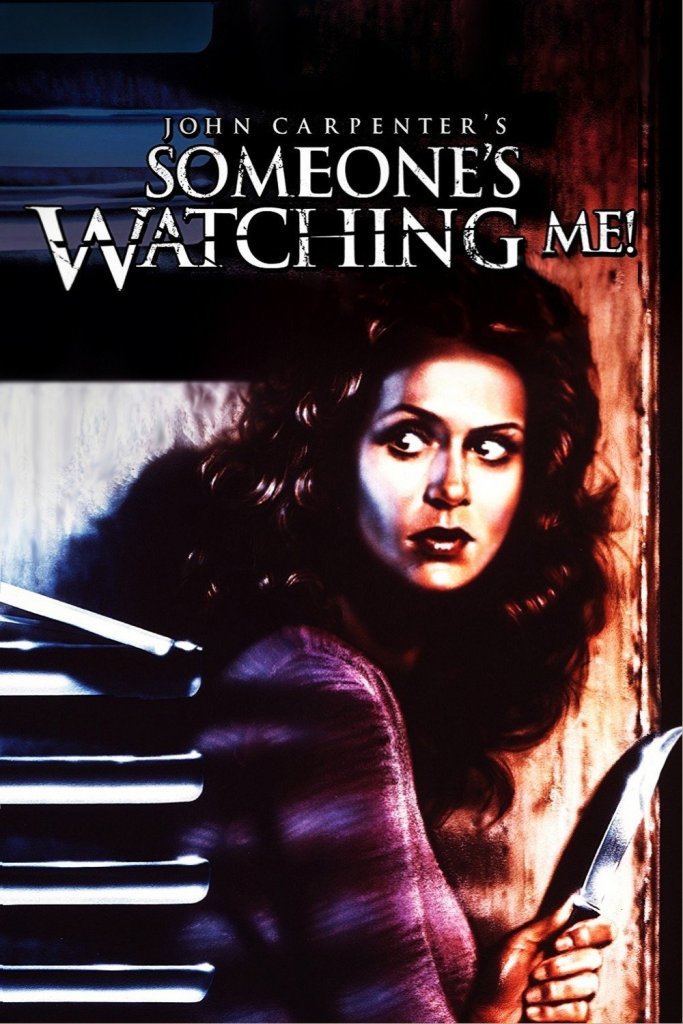
In my latest quest for a scary movie that looks interesting and that I haven’t seen, I came across the title SOMEONE’S WATCHING ME! from 1978. I did what I always do and did a quick search on IMDb to find out a little more about the film. I was definitely surprised when I saw that it was directed by John Carpenter, and that it premiered on television in November of 1978 a couple of weeks after his classic HALLOWEEN hit theaters. The film had been referred to as the “lost Carpenter film,” because for several decades it was not available on home video. For many years in the 80s and early 90s, I’d scour the shelves at my local video stores looking for that special find that I’d call a diamond in the rough. As I got older and married, whenever we’d go to Dallas, I’d head to the Movie Trading Company and scour their shelves searching for the same. Being a big fan of Carpenter, especially ASSAULT ON PRECINCT 13, ESCAPE FROM NEW YORK, and VAMPIRES, it was like I had found that lost jewel, and I couldn’t wait to fire it up.
Lauren Hutton stars as Leigh Michaels, a television director who moves into a high-rise apartment building in Los Angeles. She’s starting a new job and a new life, but things take on a creepy and scary turn when she begins receiving mysterious phone calls and unwanted gifts and letters. Before long, Leigh realizes that someone is watching her every move. Even worse, the police don’t seem very interested in helping her, leaving her to figure out who’s stalking her and what she can do to stop him.
First off, I really enjoyed Lauren Hutton as the lead in the film, which was a bit of a revelation for me. I remember her as the Countess in the 80s vampire comedy ONCE BITTEN, but I mainly remember that one because it was an early leading role for Jim Carrey. I’ve seen her in a lot of movies, but her characters had not stood out much to me. Here, as the focus of the movie, she’s likable, sexy and has this cute running dialogue with herself as she goes about her days. When bad things start happening, she’s not some helpless victim waiting for somebody else to rescue her, either. She’s smart, independent, and even tough enough to take matters into her own hands when she has to.
I also appreciate what John Carpenter is doing here as the writer and the director. A couple of years earlier, he had effectively played off of Howard Hawks with ASSAULT ON PRECINCT 13. This time he’s riffing on Alfred Hitchcock, especially movies like REAR WINDOW and VERTIGO. He accomplishes this through his settings, some of his shots, character traits, and especially, the building of tension. His premise is simple, but the idea that someone could be invading our privacy with bad intentions is a scary thought to all of us, and this movie takes it to the extreme. The screenplay builds on this natural fear with enough info that we realize our likable star is in true danger, and that was enough to draw me in. It also helps that I’m a sucker for these types of stories and characters. The made-for-TV limitations on the project are here, but Carpenter’s talent is also very evident. From the first moment I saw a shadowy character dash behind our heroine while she’s on the phone in her apartment, I knew he was going to have some fun with me. He would make me jump and my heart skip a beat several times over the course of the film’s 97 minutes.
It was also fun seeing some of the important actors and actresses that Carpenter has worked with over the years pop up in the movie. Adrienne Barbeau is especially likable and beautiful as Leigh’s friend and coworker, Sophie. She has this big smile and way about her that I found very appealing. She’s also a lesbian, which was probably a fairly unusual TV movie character trait at the time. Barbeau and Carpenter met on the set of this film and would get married less than a year later, on January 1st, 1979. Charles Cyphers, who’s so good as Sheriff Leigh Brackett in the HALLOWEEN series, shows up in the last half hour as the somewhat sympathetic Detective Gary Hunt. Cyphers also had a small, but pivotal role with Charles Bronson in DEATH WISH II, so I always enjoy seeing him on screen.
I’m not going to sit here and say that SOMEONE’S WATCHING ME! is as good as Carpenter’s classic theatrical features, but for me it was a fun discovery, and I really had a good time with it. The Hitchcock flourishes and Hutton’s excellent performance as our heroine, combined with Carpenter’s obvious talents as a writer and director, provided me with the kind of rare cinematic jewel that I had not found in a long time.