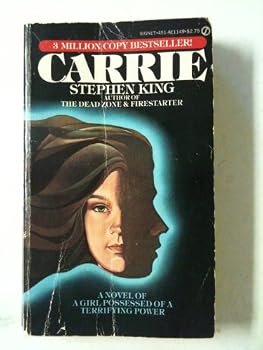
As I mentioned in my previous post, I’ve been watching Mike Flanagan’s Carrie on Prime. I’ve made it through four episodes and to say that I’m not enjoying it would be an understatement. The miniseries is spending 8 hours on a story that Stephen King handled in about 200 pages and which Brian De Palma was able to tell in a little over 90 minutes. Of course, De Palma was smart enough not to give Carrie an invisible friend. He also didn’t introduce a psychic cult. De Palma knew the story worked as it was.
If you haven’t read Stephen King’s original novel, you really should. That’s especially true if you’re currently watching the Flanagan miniseries and you’re wondering what all of the complaints are about. Carrie was King’s first published novel and King himself has admitted that it’s a flawed work. It’s a mix of passages that are definitely the work of King and excerpts from government hearings, Carrie’s notebook, and Sue Snell’s autobiography. The split format shows that King still wasn’t totally sure how he wanted to tell the story. That said, when the book works, it really does work. King doesn’t shy away from Carrie’s anger and bitterness. He doesn’t try to make the story about anything more than what it is. And even the government hearings and Sue Snell’s autobiography show us that Carrie, the outcast with telekinetic powers, will never be forgotten.
For the record, I do know that King has endorsed Flanagan’s revisions. With the exception of Stanley Kubrick’s The Shining, Stephen King tends to endorse everything and one gets the feeling that, much as was the case with Frank Darabont, King enjoys the fact that Flanagan is such a fan. That’s just human nature. That said, the novel, flaws and all, is infinitely superior to Flanagan’s miniseries.
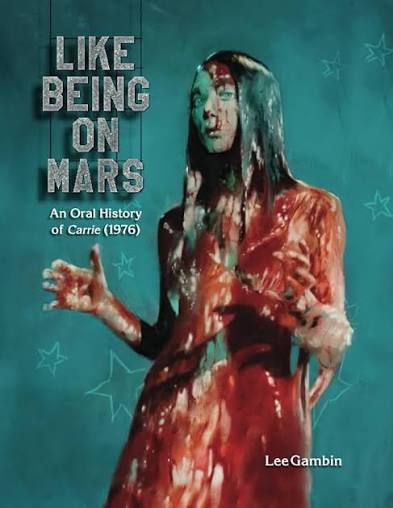
Again, as I mentioned in my previous post, if you’re watching Flanagan’s miniseries but haven’t seen Brian De Palma’s film, that’s something you need to rectify. After you watch Brian De Palma’s film, be sure to check out Like Being On Mars: An Oral History Of Carrie (1976) by Lee Gambin. This book is all about the production of the film that changed horror in much the same way that Star Wars, a year later, would later change science-fiction. Gambin interviews the key players: Sissy Spacek, Piper Laurie, Nancy Allen, Amy Irving, William Katt, P.J. Soles, De Palma, Stephen King, and even Bill Paxton! (Paxton worked on the crew.) It’s a great book for lovers of both movies and horror.
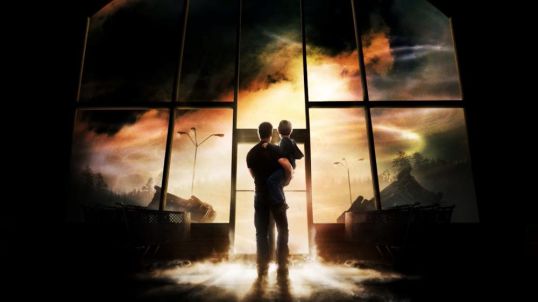
Based on a novella by Stephen King, The Mist opens the morning after a sudden thunderstorm in Maine. Artist David Drayton (Thomas Jane) steps outside and sees that a tree has crashed through one of his front windows. Meanwhile, his neighbor, attorney Brent Norton (Andre Braugher), stares at the tree that has crushed his car. Though David and Brent are not exactly on friendly terms, the storm briefly brings them together. When David says that he’s going into town to pick up supplies, Norton asks if he can come with him. David’s wife stays back at the house while David drives his son (Nathan Gamble) and Brent to the local grocery store. Before David leaves, he notices a thick mist moving over a nearby lake.
The entire town is without power and the grocery store is crowded. Three soldiers, who are picking up supplies before going on leave, are told that the leave has been abruptly canceled. Once the mist surrounds the store, it soon becomes obvious why that is. There are monsters in the mist and David, Norton, and several others find themselves trapped in the store. Going outside, as some insist on doing, only leads to death at the hands of the Lovecraftian monsters that inhabit the mist.
The Mist was first released in 2007 and I have to admit that I didn’t care much for it the first time that I saw it. I thought that some of the performances were a bit too histrionic and the film’s dark ending was almost too portentous to be credible. When I first saw it, I thought the film was almost trying too hard with the tragic conclusion. However, when I recently rewatched the film, I discovered that it had grown on me. I was better able to appreciate the fact that the monsters were both ludicrous and deadly at the same time. Performances that once seemed over-the-top in 2007 now seemed almost subtle when compared to how I’ve seen people actually behave in the real world over the past ten years. Once you’ve been yelled at for not wearing a mask while jogging, it’s a lot easier to buy the idea of a bunch of people in a grocery store losing their collective minds. Even the film’s dark ending now seemed like the only honest way the film could have ended.
The Mist is a film that plays much differently in a post-COVID world. The idea of innocent people losing their lives because of an accident at a government lab no longer seems all that unbelievable. The argument about whether or not to leave the store mirrored many of the same arguments that I heard during the COVID lockdowns. If Mrs. Carmody (Marcia Gay Harden) and her followers originally seemed like standard Stephen King religious fanatics, Carmody now brings to mind the loathsome Randi Weingarten and her insistence that the only way to defeat COVID was to sacrifice the future of the young. Even the film’s final moments of self-destruction reflected the attitude that many had in 2020, that the situation was hopeless and that there was no escape beyond waiting for the world to end. The final image of one man, driven mad and screaming, brings to mind both the fate of the typical Lovecraftian explorer and also the excesses of the COVID era. That Stephen King continues to be one of the major defenders of these excesses brings a wonderful irony to the film’s subtext.
The Mist has definitely grown on me. It still has its flaws but those flaws are less of a problem now than they were in 2007. In 2007, The Mist seemed overlong. In 2026, that 2-hour running time feels like a relief from the slow-moving miniseries that have become a signature part of the streaming age. Even Thomas Jane’s performance, which seemed rather stiff when I first saw the movie, has improved in hindsight. His tight-jawed stoicism makes his eventual breakdown all the more effective. Everyone reaches the limit, the film seems to be saying.
The Mist is a film that has aged well. It’s one of the better Stephen King adaptations, one that largely stays true to the source material while still having the courage to develop its own identity. The first time I saw it, I was wrong about The Mist. It’s a film that deserves to be remembered as one of the most relevant horror films of the past 20 years.
4 Or More Shots From 4 Or More Films is just what it says it is, 4 shots from 4 of our favorite films. As opposed to the reviews and recaps that we usually post, 4 Shots From 4 Films lets the visuals do the talking!
Tomorrow will be the birthday of Stephen King. Normally, we honor folks on their birthday but tomorrow is also Bill Murray’s birthday so we’re going to honor King now.
In others words, it’s time for….
4 Shots from 4 Stephen King Films
Creepshow (1982, dir by George Romero, written by Stephen King, DP: Michael Gornick)
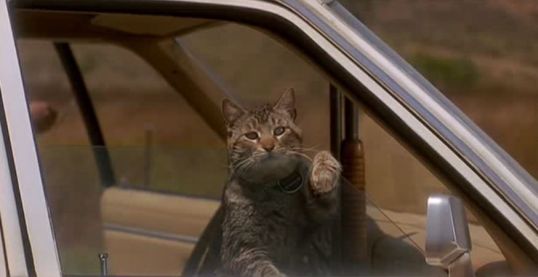
Maximum Overdrive (1986, dir by Stephen King, written by Stephen King, DP: Armando Nannuzzi)
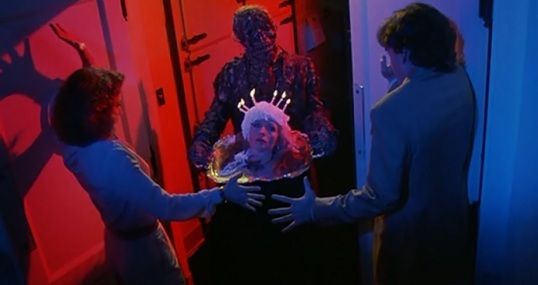
Sleepwalkers (1992, dir by Mick Garris, written by Stephen King, DP: Rodney Charters)
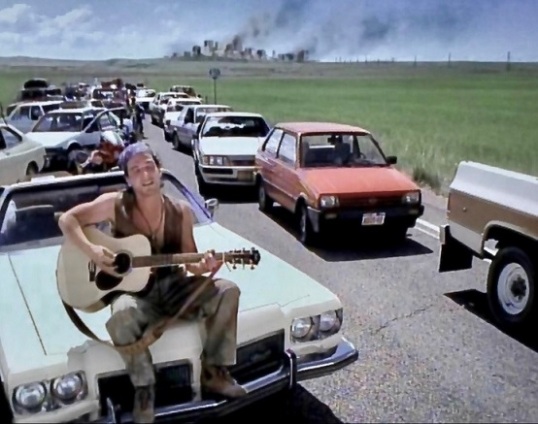
The Stand (1994, dir by Mick Garris, written by Stephen King, DP: Edward J. Pei)
Today’s scene that I love comes from Stanley Kubrick’s The Shining.
Stephen King can whine about this film all that he wants. It’s one of the few adaptations of his novels that can still scare the view even after numerous rewatches.
It’s not always easy to adapt someone else’s work.
Stick too close to the source material, and you end up with Gus Van Sant’s Psycho. Veer just a bit away from it, and you may end up with surprises like Stanley Kubrick’s The Shining or Frank Darabont’s The Mist. Tossing out the source material or rushing the story gives you Nikolaj Arcel’s The Dark Tower. Sometimes it works, sometimes it doesn’t. Even Stephen King had a rough time adapting his own work to film with Maximum Overdrive.
So seeing that we have yet another adaptation of King’s first novel, Carrie, I was a little confused and surprised when Mike Flanagan’s name came up. I know I haven’t kept up on everything online these days, but wasn’t he working on an adaptation for The Exorcist? Either way, we have it, and it looks like it has the potential to be pretty great. Flanagan’s no stranger to King’s works, having adapted Gerald’s Game and Doctor Sleep.
As always, Flanagan’s invited some of this friends to join in on the fun. For me, the standout returning actor is Samantha Sloyan, who previously worked on Hush, Midnight Mass, and The Life of Chuck, among others. Samantha’s playing Margaret White, and while Piper Laurie’s portrayal in Brian DePalma’s 1976 classic still scares me, I’m excited to see how this will turn out. Additionally, we have Midnight Mass‘ Michael Trucco and Rahul Kohli on hand. Of course, Flanagan production would be complete without his Hush lead actress, muse and wife, Actor/Director Kate Siegel. Matthew Lillard (Five Nights at Freddy’s) and Amber Midthunder (Prey, Novocaine) are also featured, with Summer H Howell (Night of the Reaper) as Carrie.
Carrie premieres on Amazon Prime early this October, just in time for Halloween.
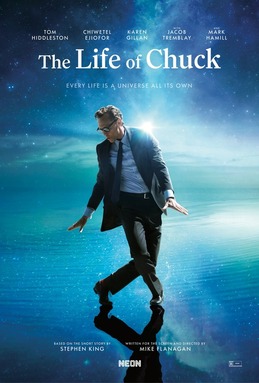
The world is ending and teacher Marty Anderson (Chiwetel Ejiofor) wonders why he keeps seeing signs that announce, “Charles Krantz: 39 Great Years! Thanks, Chuck!” Marty’s ex-wife (Karen Gillan) calls him and tells him that, at the hospital where she works, she and her co-workers have taken to calling themselves “the suicide squad.” It would be an effective moment if not for the fact that the film’s narration (somewhat predictably voiced by Nick Offerman) had already informed us of that fact. Everyone wonders why the world is falling apart. Why has the internet gone off-line? Why has California finally sunk into the ocean? Why are people rioting? Several characters say that it’s the end times before then adding that it’s not the same end time that the “religious fanatics” and “right-wing nuts” always talk about. Thanks for clarifying that! It’s nice to know that, at the end of the world, people will still talk like an aging Maine boomer.
Nine months earlier, a straight-laced banked named Chuck Krantz (Tom Hiddleston) comes across a busker playing her drums on a street corner and feels inspired to start dancing.
Years earlier, a young boy named Chuck Krantz is raised by his grandmother (Mia Sara) and his grandfather (Mark Hamill). Young Chuck (Jacob Tremblay) inherits a love of dance from his grandmother but, after she dies in a supermarket, his grandfather turns to drinking. His grandfather keeps one room in their house locked. (There’s even an absurdly huge lock on the door because The Life of Chuck is not a subtle one.) Eventually, Chuck discovers what is hidden away in the room and it shapes the rest of his life.
Occasionally, solid genre craftsmen will fill the need to prove that they’re actually deeper than people give them credit for. In 2020, Stephen King published a novella called The Life of Chuck. In October of 2023, director Mike Flanagan announced that he had begun filming on his adaptation of The Life of Chuck. Both King and Flanagan are better-known for their contributions to the horror gerne, though, around 2017, King apparently decided that he was also meant to be a political pundit. (No writer, with the possible exception of Joyce Carol Oates, has done more damage to their reputation by joining twitter than Stephen King.) There are elements of horror to be found in The Life of Chuck. There’s the world ending during Act One. There’s the locked rom in Act Three. There’s the terrible acting of the woman playing the drummer in Act Two. But this definitely is not a horror film. Instead, it’s King and Flanagan at their most sentimental, heartfelt, and ultimately simplistic.
It’s ultimately a bit too self-consciously quirky for its own good. Flanagan seems to be really concerned that we’ll miss the point of the film so he directs with a heavy-hand and, at times, he overexplains. Sometimes, you have to have some faith in your audience and their ability to figure out things on their own. The scenes of Chuck’s childhood are so shot through a haze of nostalgia that they feel as overly stylized as the scenes that don’t necessarily take place in our reality. For the most part, the narration could have been ditched without weakening the film. That said, the film is hardly a disaster. There are moments that work, like the joyous scene of Tom Hiddleston dancing. The film tries a bit too hard to be profound but there’s joy to be found in the performances of Hiddleston and Jacob Tremblay. Chucks seems like a nice guy.
“I was twelve going on thirteen the first time I saw a dead human being.”
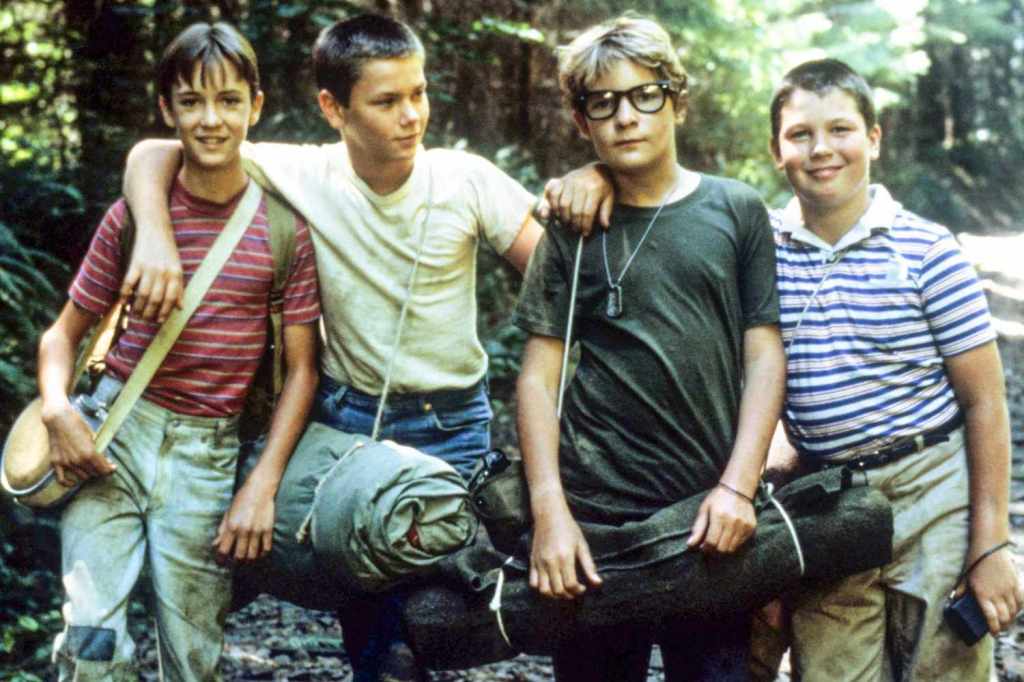
These are the first words spoken in director Rob Reiner’s classic coming of age film, STAND BY ME, which received its widespread theatrical release in the United States on August 22nd, 1986. Actor Richard Dreyfuss spoke words that gave an exact description of my own age in the summer of 1986 when the film was released, and I certainly felt a connection to the characters in Reiner’s film. I watched STAND BY ME many times as a teenager, and with a humble and hurting heart, I decided to watch it again last night. On its surface, it’s a pretty simple story…
After accidentally learning of the location of the body of a local boy who’s been missing for several days, four boys (played by Wil Wheaton, River Phoenix, Corey Feldman, and Jerry O’Connell) set off on a weekend adventure to find the body in hopes of becoming local heroes. Along the way, they dodge trains, get sucked on by leeches, tell gross-out stories around a campfire, tackle traumatic personal issues, and eventually stand up to a group of older bullies (led by Kiefer Sutherland)! When the weekend is over, they move on with their own lives, lives that are never quite the same again.
The main reason I have a real personal connection to STAND BY ME is the fact that I recognize myself and some of my friends in its young characters. I grew up in a very small rural community in Arkansas called Toad Suck. It wasn’t even a town; it was more of just a spot in the road where a few homes built up near a dam and bridge on the Arkansas River. Often when I’d spend the night with my best friend, we’d go walking down the railroad track that ran through our community, carrying our BB guns and hanging out on the railroad bridges where we could take aim at rocks, sticks, turtles, and, at times, the dreaded water mocassin! Like the boys in the movie, we’d always have to be on the lookout for the oncoming trains. As a very naïve and sheltered kid of the mid-80’s who was raised in a strict religious household, I tended to be somewhat judgmental. STAND BY ME forced me to think deeper thoughts and try to find a more mature empathy for those kids I hung out with and saw at school every day. While none of the characters in the film are an exact replica of me or my friends, we knew of people who were probably experiencing abuse, who were looked down upon as “less than,” and who were neglected by their parents. And I think we have all experienced times when we felt insecure, lacked confidence, or were afraid and didn’t have the maturity to handle it in a positive manner. I felt compassion for these characters, which in turn helped me feel more understanding towards those around me in my real life! As a filmmaker in complete control of his craft, Rob Reiner made a movie that even affected someone like me, and I’ve never forgotten those feelings.
My feeling of kinship with the actors who played in STAND BY ME didn’t end when the movie ended either. Wil Wheaton, River Phoenix, Corey Feldman and Jerry O’Connell were all very close to my age when they filmed the movie, and I’ve followed each of their careers fairly closely my entire life. My two favorites were River Phoenix and Corey Feldman. It was painful to me when River Phoenix died in 1993 at just 23 years of age. I remember all the issues Corey Feldman had with drug addiction. I’m so glad that he’s been able to overcome that addiction and achieve sobriety for multiple decades. I’m not a Star Trek completist, but I always got a kick out of seeing Wil Wheaton on THE BIG BANG THEORY. And then Jerry O’Connell definitely lost his baby fat and has gone on to a solid acting career! The common thread, of course, is the fact that Reiner got great performances from each of these young actors in STAND BY ME. Combine those performances with the quality of the film and the time in my own life when the film came out, and you can start to get the idea of why the film has a position of reverence in my life. You can also see why I have such respect for Rob Reiner as a filmmaker.
Overall, STAND BY ME is simply one of my favorite films of all time. It has some of the most memorable on-screen moments of my childhood. The pie eating barf-o-rama and the crotch leeches are scenes that are burned into my psyche. Along with the great cast of boys, Kiefer Sutherland gives one of his solid, bully performances in an 80’s film. Sutherland would go on later in his career and play one of my all-time favorite TV characters, Jack Bauer, in 24. More important than all of that, though, is the fact that the coming-of-age film STAND BY ME helped 12-13 year-old me grow up a little bit myself by making me feel something. I guess the greatest compliment you can give any director is to tell them that their film made you think about things more important than yourself and made a difference in your own life. Today, I pay you that great compliment and say Rest in Peace, Mr. Reiner!
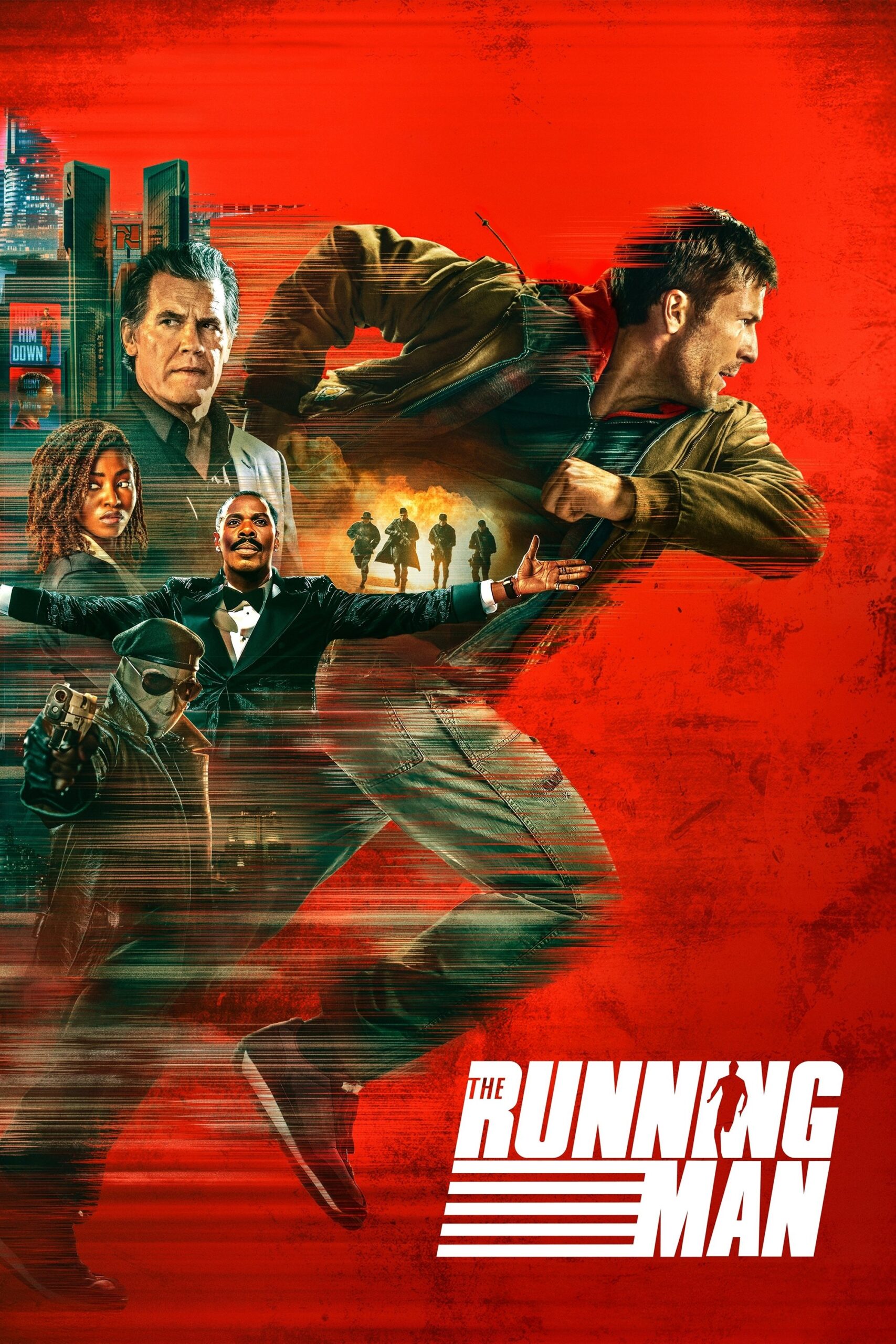
Edgar Wright’s 2025 take on The Running Man is an adrenaline shot to the chest and a sly riff on our era’s obsession with dystopian game shows, all filtered through his own eye for spectacle and pacing. Unlike many of his earlier works, such as Shaun of the Dead and Scott Pilgrim vs. The World, which bristle with meta-commentary, the film is a sleeker and more bruising affair. At its core, this is a survival thriller decked out in neon, driven by a director who wants to both honor and outpace what’s come before.
Wright’s version ditches the muscle-bound caricature of the 1987 Schwarzenegger adaptation, recentering on a more grounded protagonist. Glen Powell’s Ben Richards isn’t a quip-dispensing tank; he’s a desperate father, pressed to extremes, haunted more by anxiety than rage. We meet him in a world where reality TV devours everything, and nothing is too cruel if it wins the ratings war. Richards is cast as the sacrificial everyman, volunteering for the deadly Running Man show only because his family’s survival is at stake, not his ego. This lends the film a more human—and frankly, more believable—edge than either of its predecessors.
Visually, The Running Man is vintage Wright: kinetic and muscular, with chase scenes propelled by propulsive synths and punchy editing, each set piece designed as much to thrill as to disorient. Gone, however, is much of the director’s comedic ribbing; what remains is a tense visual feast, saturated in electric colors and relentless motion. The camera rarely settles. The television show itself is depicted as both garish and sinister, a spectacle that feels plausible because it’s only five minutes into our own future.
The film takes sharp aim at the machinery of television and the spectacle it creates, exposing how entertainment can thrive on cruelty and manipulation. It highlights a world where reality is heavily curated and shaped to serve ratings and control, with the audience complicit in consuming and encouraging the degradation of genuine human experience. The media in the film mirrors warnings that have circulated in recent years—that it has become a tool designed to appease the masses, even going so far as to use deepfakes to manipulate narratives in favor of particular agendas. While this focus on broadcast media delivers potent social commentary, Wright does drop the ball a bit by concentrating too much on traditional TV media at a time when entertainment consumption is largely online and more fragmented. This narrower scope misses an opportunity to deeply engage with the digital age’s sprawling and insidious impact on public attention and truth.
Glen Powell’s performance is pivotal to the film’s success. He anchors the story, selling both the exhaustion and the resolve required for the role. This Ben Richards is no superhero—his fear feels palpable, and his reactions are messy, urgent, and often impulsive. Opposite him, Josh Brolin steps in as Dan Killian, the show’s orchestrator. Brolin’s performance, smooth and menacing, turns every negotiation and threat into a master class in corporate evil. The stalkers, the show’s gladiatorial killers, are less cartoon than their 1987 counterparts, but all the more chilling for their believability—branding themselves like influencers, they embody a world where violence and popularity are inseparable.
On the surface, Wright’s Running Man leans heavily into social satire. It lobs grenades at infotainment, the exploitation inherent in reality TV, and the way audiences are silently implicated in all the carnage they consume. Reality is a construct, truth is whatever the network decides to show, and every moment of suffering is a data point in an endless quest for engagement. The critique is loud, though not always nuanced. Where Wright has previously reveled in self-aware storytelling, here he pulls back, focusing on the mechanics and cost of spectacle more than its digital afterlife.
Action is where the film hits hardest. Wright brings his expected flair for movement and tension, with chase sequences escalating to wild, blood-smeared crescendos, and hand-to-hand fights that feel tactile rather than stylized. The film borrows more heavily from the structure of King’s novel, raising stakes with each new adversary and refusing to let viewers catch their breath. Despite the non-stop pace, the movie runs a little too long—some sequences feel indulgent, and the final act’s rhythm stutters as it builds toward its conclusion. Still, even in its bloat, there’s always something energetic or visually inventive happening onscreen.
The movie’s climax and resolution avoid over-explaining or revealing too much, instead choosing to leave room for interpretation and suspense about the outcomes for the characters and the world they inhabit. This restraint preserves the tension and leaves viewers with something to chew on beyond the final credits.
For fans of Edgar Wright, there’s a sense of something both familiar and altered here. The visual wit, the muscular editing, the stylish sound cues—they’re all present. Yet the film feels less like a playground for Wright’s usual whimsy and more like a taut, collaborative blockbuster. It’s playfully brutal and thoroughly engaging, but does not, in the end, subvert the genre quite as gleefully as some might hope. For every moment of subtext or clever visual flourish, there is another in which the movie simply barrels forward, content to dazzle and provoke in equal measure.
The Running Man (2025) is a film with a target audience—those who want action, smart but accessible social commentary, and just enough character work to feel the stakes. It will delight viewers drawn to a flashier, meaner take on dystopian spectacle, and Powell’s central performance is likely to win over skeptics and fans alike. If you’re hoping for a thesis on algorithmic age or a meditation on surveillance capitalism, you may need to look elsewhere. But if you want a turbo-charged chase movie that occasionally stops to wag a finger at the world that spawned it, you’re likely to have a great time.
Ultimately, Edgar Wright’s Running Man is a sharp, glossy refit of a classic dystopian story, packed with high-octane action and grounded by its central performance. It won’t please everyone and doesn’t attempt to, but it never forgets that, above all, good television keeps us running. In the era of spectacle, that might be all you need.
“In this Walk, it’s not about winning. It’s about refusing to be forgotten while the world watches us fade away.” — Peter McVries
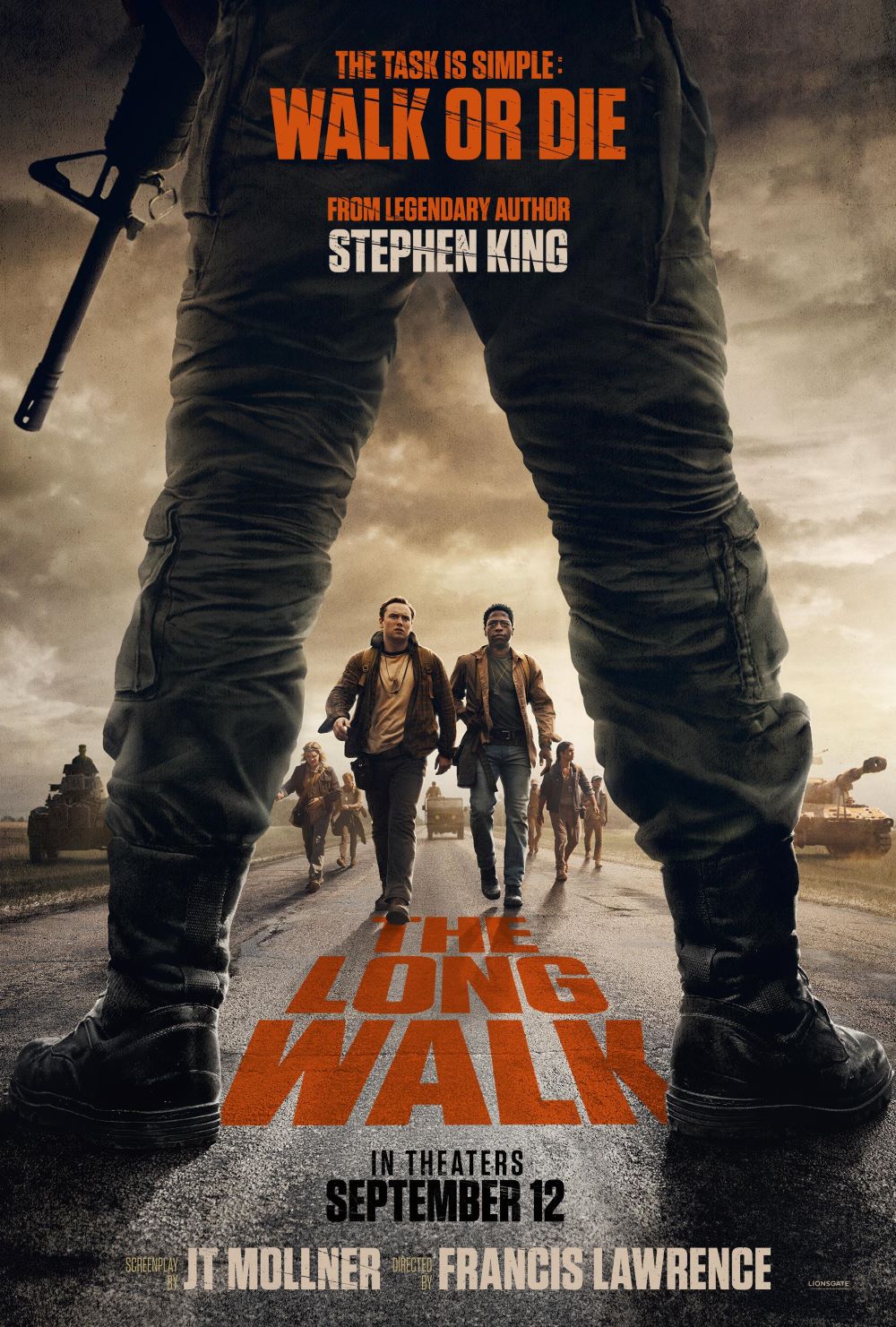
Francis Lawrence’s The Long Walk (2025) delivers a relentlessly brutal and unyielding vision of dystopian horror that explores survival, authoritarian control, and the devastating loss of innocence. The film immerses viewers in a grim spectacle: fifty teenage boys forced to participate in an annual, televised event known as the Long Walk. To survive, each participant must maintain a constant pace, never falling below a minimum speed, or else face immediate execution.
At the heart of this bleak narrative is Raymond Garraty, played with earnest vulnerability by Cooper Hoffman. Garraty’s backstory, marked by the tragic execution of his father for political dissent, sets a somber tone from the outset. As the Walk drags on, Garraty forges fragile bonds with fellow contestants, particularly Peter McVries (David Jonsson), whose camaraderie and quiet resilience inject moments of hope and humanity into the harrowing journey. These relationships become the emotional core, grounding the film’s relentless physical and psychological torment in deeply human experiences.
The setting enhances this oppressive atmosphere. The time and place remain deliberately ambiguous, with evident signs that the United States has recently suffered a second Civil War. The aftermath is a landscape ruled by a harsh, authoritarian military regime overseeing a nation economically and politically in decline. Though visual cues evoke a retro, 1970s aesthetic—reflected in military hardware and daily life—the film resists pinning itself to an exact year. This timelessness amplifies its allegorical power, emphasizing ongoing societal collapse and authoritarianism without tying the story to one era specifically. The dystopian backdrop is populated by broken communities and a pervasive sense of hopelessness that mirrors the characters’ internal struggles.
Visually, The Long Walk employs stark, gritty cinematography that traps viewers in the monotonous expanse of endless roads and bleak environments. Lawrence’s direction is unflinching and unrelenting, echoing the merciless march to death and the broader commentary on institutionalized brutality. The atmospheric score complements this oppressive tone, underscoring the emotional and physical exhaustion pacing the narrative.
Performances elevate the film’s emotional stakes significantly. Hoffman’s portrayal of Garraty captures the youth’s evolving vulnerability and determination, while Jonsson’s McVries adds a poignant emotional depth with his steady, hopeful presence. Supporting actors such as Garrett Wareing’s enigmatic Billy Stebbins and Charlie Plummer’s self-destructive Barkovitch bring vital complexity and urgency. Stebbins remains a figure whose allegiance is ambiguous, adding layered mystery to the group dynamics. Judy Greer’s limited screentime as Ginny Garraty, Ray’s mother, stands out powerfully despite its brevity. Each of her appearances is heartbreaking, bringing a wrenching emotional weight to the film. Her panicked, anguished attempts to hold onto her son before he embarks on the deadly Walk amplify the human cost of the dystopian spectacle, leaving a lasting impression of maternal agony amid the surrounding brutality.
Mark Hamill’s role as The Major is a significant supporting presence, embodying the authoritarian face of the regime. The Major oversees the brutal enforcement of the Walk’s rules, commanding lethal squads who execute those who falter. Hamill brings a grim and chilling force to the character, whose cold charisma and unwavering commitment to the ruthless system make him a menacing figure. Despite relatively limited screen time compared to the young participants, The Major’s presence looms large over the story, symbolizing the chilling machinery of power and control that governs the dystopian world.
Yet, the film is stark in its depiction of violence. The executions and suffering are raw and often grotesquely explicit, serving as a damning critique of authoritarian cruelty and the voyeuristic nature of state violence televised as entertainment. This unfiltered brutality can, however, become numbing and exhausting as it piles on relentlessly, occasionally undercutting emotional resonance. The narrative embraces nihilism fully, underscoring the dehumanization and futility within the dystopian world it portrays.
The film’s overall pacing and structure reflect this bleakness but at times suffer from monotony. The heavy focus on walking and survival mechanics leads to a lack of narrative variation, testing the audience’s endurance much like the characters’. There is likewise a noticeable stretch of physical realism—the contestants endure near-impossible physical feats without adequate signs of weariness or injury, which can strain believability.
Character development is another area where the film falters slightly. While Garraty and McVries are well-drawn and immunize emotional investment, other characters tend toward archetypical roles—bullies, outsiders, or generic competitors—diminishing the impact of many deaths or interactions. Similarly, the repetitiveness of the setting and cinematography, relying mostly on basic shots following the walkers, misses opportunities for more creative visual storytelling that might heighten tension or spotlight key emotional beats.
The film’s conclusion, stark and abrupt, offers no real catharsis or closure, reinforcing the overarching theme of unyielding despair. While this resonates with the film’s nihilistic motif, it may alienate those seeking narrative resolution or hope. The visceral shock and bleak tone permeate to the end, leaving the viewer with a lasting impression of relentless suffering and sacrifice.
This demanding yet visually striking and emotionally intense film challenges viewers with its unrelenting bleakness and brutal thematic content. It critiques societal violence, media spectacle, and authoritarianism through starkly powerful performances and an oppressive, immersive atmosphere. Though it excels in evoking emotional rawness in key moments and maintaining thematic consistency, it struggles with pacing, character depth beyond the leads, and occasional narrative monotony. Its ambiguous setting in a post-second Civil War America ruled by a declining authoritarian regime adds a timeless, allegorical layer to its exploration of human endurance and societal collapse.
Ultimately, this film is best suited for viewers prepared for an uncompromising, intense vision of dystopia. It stands as a compelling, if bleak, meditation on youth, survival, and the human spirit under extreme duress, showcasing Francis Lawrence’s aptitude for crafting thought-provoking, provocative horror.
“Alone. Yes, that’s the key word, the most awful word in the English tongue. Murder doesn’t hold a candle to it and hell is only a poor synonym.” ― Stephen King