In 2017’s Run, Levi (Josiah David Warren) marries Natalie Winters (Taylor Murphy). Natalie is a journalist who has made it a point to report on the growing problem of human trafficking. Her journalism makes her a target for low-life criminals like Jeff Connors (Stephen Baldwin). On their wedding night, Natalie is abducted by two men who are planning on selling her into sex slavery.
The police are useless. So is the FBI. It looks like Levi is going to have to rescue his wife on his own. While Natalie prays in the back of the van in which she’s being held prisoner, Levi hits streets, putting up missing posters and talking to motel maids.
Now, I’m going to post a spoiler here. You can stop reading now, if you want. Otherwise, you have been warned.
Levi does find his wife. He finds her because he just happens to be in the parking lot of a Florida motel when a maid walks by wearing his wife’s scarf. She tells him that she found it in a room. (No judgment from me! For one summer, I lived in a motel with my mom and my sisters and my mom paid for our board by working as a maid. Apparently, people leave stuff behind all the time.) The maid then goes on to say that she saw the van pulling out of the parking lot. She gives a perfect description of the make and the model. She recites the license plate number without hesitation. She then tells Levi exactly which street the van went down and which direction they were heading. Levi then manages to easily track the van down and get the police involved.
WHAT LUCK!
I mean, seriously, for all the time that this movie devoted to Levi trying to find his wife, it all comes down to one maid finding a scarf. I’m sure that some would argue that this is meant to be proof that God arranged for the maid to be in that parking lot at the exact same time as Levi. That’s fine. In the movie, it comes across as being a huge dues ex machina …. which is exactly the same thing, now that I think about it.
Anyway…..
Josiah David Warren has directed a handful of faith-based films and I have to admit that, as a reviewer, I haven’t always been kind to them. Warren’s biggest mistake is that he always casts himself in the lead. He’s not a particularly good actor and, with his perpetually tired expression and unshaven appearance, he tends to come across as being more a stoner than a preacher.
While that continues to be true here, Run is still better than the average Josiah David Warren film. The plot is full of contrivances and the editing is haphazard but Taylor Murphy gives a sympathetic and likable performance as Natalie. For that matter, the often-mocked Stephen Baldwin is convincing as the cocky and dangerous Connors. Baldwin doesn’t get much screentime but he sets a wanted poster on fire with skill and style.
Finally, I appreciated that the film ended on a note of forgiveness and redemption, indicating that there’s hope for everyone. That’s a good message and not one that seems to be particularly popular right now. The film deserves credit for that.
Welcome to Late Night Retro Television Reviews, a feature where we review some of our favorite and least favorite shows of the past! On Saturdays, I will be reviewing Saved By The Bell, which ran on NBC from 1989 to 1993. The entire show can be purchased on Prime!
This week, we meet Jessie’s new stepbrother! I’m sure he’ll be around forever.
Episode 3.10 “Wicked Stepbrother: Part One”
(Dir by Don Barnhart, originally aired on November 2nd, 1991)
Jessie’s mom has gotten married …. again!
Now, in this episode, we don’t actually meet Jessie’s mom. Nor do we meet her new stepfather. In fact, she says next to nothing about her new stepfather. Instead, this entire episode is all about Eric Tramer (Joshua Hoffman), her new stepbrother from New York!
That’s right. Jessie has a stepbrother and I’m sure that he’s going to be a major part of the show!
(Incidentally, I’m assuming that Eric Tramer was named after script consultant Bennett Tramer.)
Unfortunately, Eric is a little bit cocky. He’s got that New York attitude. When Zack pretends to be Jewish so he can skip school on Rosh Hashanah and go to a baseball game, Eric finds out and blackmails him into giving up his locker. When Jessie calls Slater a “curly Conan,” Eric records it and threatens to play it for the whole school. Jessie gives up her bedroom to Eric.
(Hey, remember how, during the first season, Zack and Jessie lived right next to each other and Zack would regularly climb in through Jessie’s window? Apparently, the show forgot about that.)
Eric has a weakness. He has a crush on Lisa but Lisa doesn’t want anything to do with him. Zack has a plan. Belding is away for the weekend and he’s given the keys to his red sportscar to Slater so that Slater can install a CD player. (Hello, 1990s!) Zack offers to give Lisa two tickets to the MC Hammer concert if she agrees to go out with Eric. Then, he and Slater allow Eric to borrow Belding’s car for his date. Their plan is to take a picture of Eric driving Belding’s car and then …. well, I’m not sure what the next step is. I guess they’re going to frame Eric for auto theft and send him to prison so that Zack can get his locker back.
Lisa goes out with Eric. They go to see Casablanca. Eric does a really bad Bogart impersonation. Lisa is charmed. Eric lets Lisa drive the car. Awwww! Zack pops up with his camera and takes a picture. The flash blinds Lisa and she crashes Belding’s car!
“We’re trouble,” Zack says to the audience.
Hey, Zack — your best friend Lisa just crashed a car! Maybe go check on her and make sure she’s not dead….
This is a two-part episode so we’ll take a look at the conclusion next week. As for the first part, this whole thing is a good example of people overreacting to nothing. Because Eric had Screech tape the baseball game, he has video evidence of Zack not being at school. Well, so what? Zack skips class all the time and, in this case, his absence was pre-approved. To get Zack in trouble, Eric would have to prove that Zack was lying about being Jewish and Zack being at a baseball game doesn’t do that. Then, Jessie gives up her room so people won’t know that she called Slater a “curly Conan.” Jessie does this to avoid being embarrassed but would it really be that embarrassing? Slater’s the most popular guy at school and he calls her “mama” in public. And finally, the biggest overreaction is Zack and Slater deciding to frame Eric for a crime as opposed to just ignoring him. It just seems like this whole thing could have been resolved by everyone going out dancing or something.
Can things get any dumber? We’ll find out next week!
I watched an episode featuring Olivia Rodrigo on Saturday morning.
Bar Rescue (Weekdays, Paramount)
I was up early on Wednesday so I could watch Sweet November on TCM. After the movie ended, I watched two episodes of Bar Rescue on Paramount, The first one was set at an Irish bar that needed some help. The second one was at a North Carolina nightclub that was pouring cheap liquor into expensive bottles and then overcharging the customers. John Taffer got mad and yelled at everyone, as he should have.
In between watching the first and the second episodes of Crystal Lake on Thursday, I ended up watching three episodes of Bar Rescue. I only meant to watch one but I couldn’t help it. I got drawn into all the drama and the shouting,
Baseball: Devil Rays vs Guardians (TBS, Tuesday Night)
My sister was so sweet about watching the Twilight films with me that I watched a baseball game with her on Tuesday night.
My friend Mark recommended that I watch an episode featuring Arnold, his younger stepbrother Sam, and an epileptic street performer. The performer had a seizure in Central Park and Sam yelled, “It’s Karen! She’s dying!” Later, Arnold cracked a joke about the performer and got yelled at by his housekeeper, who was epileptic herself. That served Arnold right!
Holy Mass In Honor Of Our Lady of Fatima (EWTN, Tuesday Night)
Erin and I watched this on Tuesday. It was very moving.
In Search Of…. (YouTube)
I watched (andshared!) a few episodes of this old Leonard Nimoy-narrated series this week. They were pretty fun! The entire series is on YouTube so I might watch them all.
Jail (Reelz, Weekdays)
I watched two episodes on Wednesday. Just about everyone who was brought into the jail was drunk. The deputies called everyone “buddy.”
Mother Angelica Classics (EWTN, Weekday Mornings)
In a show that probably originally aired in the 80s or the early 90s, Mother Angelica, the founder of EWTN, discussed the importance of faith. At one point, Mother Angelica went to commercial because she was having “mic problems.” It was a nice, humanizing moment.
Night Flight (Night Flight+)
On Friday night, I watched an episode about “women in rock.” I’m pretty sure that I had watched that one before.
SCTV (Netflix)
Erin Nicole and I watched two episodes on Sunday. Mel did his best to host Mel’s Rockpile, despite his audience not having much respect for him. We followed this up with another Mel’s Rockpile episode. Richard Harris came by to sing MacArthur Park.
Seinfeld (KDAF, weeknights)
Erin and I watched two episodes of this show on Tuesday night. The first featured an old movie theater, Elaine losing a button, everyone thinking that George was crazy, and Lloyd Braun (Matt McCoy) acting strange. The second episode features Kramer using butter to shave, Jerry purposefully bombing on stage to make Kenny Bania look bad, and Elaine and Puddy flying back to America after a European vacation. George also pretended to be handicapped so he could get a job at a company that manufactured playground equipment. Who wouldn’t?
Shawn’s Eyes (EWTN, Wednesday Morning)
This sweet short film from 2014 aired on EWTN on Wednesday morning. It was a profile of Shawn, a 41 year-old man with Down’s Syndrome. It was very touching. Both Erin and I had tears in our eyes by the end of it.
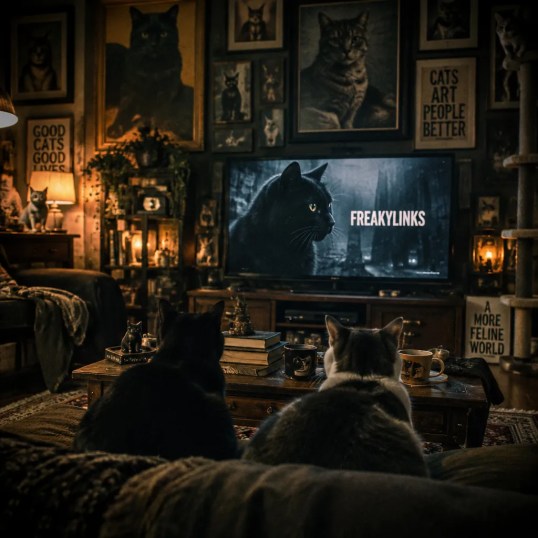
For tonight’s episode of Freakylinks, we have a little something called Still I Rise. It has a zombie theme to it. Towards the end of the episode, Ethan Embry goes a little crazy, as if it’s Rex Manning Day all over again.
This episode originally aired on January 12th, 2001. And you can watch it below!
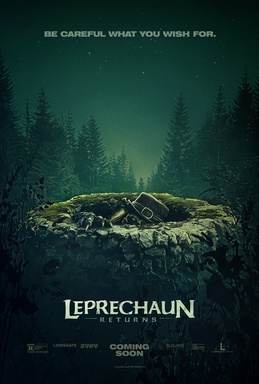
In North Dakota, college student Lila Jenkins (Taylor Spreitler) and her friends are trying to greenify a house that was recently purchased by their sorority. It’s the same house where, 25 years ago, Lila’s late mother fought off a Leprechaun. Lila is the daughter of Jennifer Aniston’s character from the first film, and the fact that her mother is dead probably tells us how much interest Aniston has in returning to the franchise that made her a star. That’s some friend for you.
Mark Holton does return from the first film, recreating the character of Ozzie Jones. Ozzie gets sprayed by water from the well while dropping Lila off at the house. Later, the Leprechaun (now played by Linden Porco) bursts out of his abdomen. Ozzie may be dead, but his ghost still appears, which is good because Lila and her friends are going to need all the help they can get.
To date, this is the last Leprechaun film, and ironically, it’s also the only Leprechaun film to actually show any interest in maintaining continuity with the first one. It’s actually not terrible. The Leprechaun is talking and rhyming again, and some of the kills are memorably bloody. This is the only film I know of that features death by solar panel. It’s still missing Warwick Davis, though, and Davis really was what made the first few Leprechaun films memorable. Linden Porco’s not bad, but he doesn’t have the same joyous energy that Davis brought to the role. As for the human actors, none of them can really match up to Jennifer Aniston, Shevonne Durkin, or Ice-T.
Supposedly, Warwick Davis has said that he would now be willing to come back and play the Leprechaun in another film, assuming the money and the script were right. I hope he does. As bad as most of the Leprechaun films were, the character still deserves a proper sendoff.
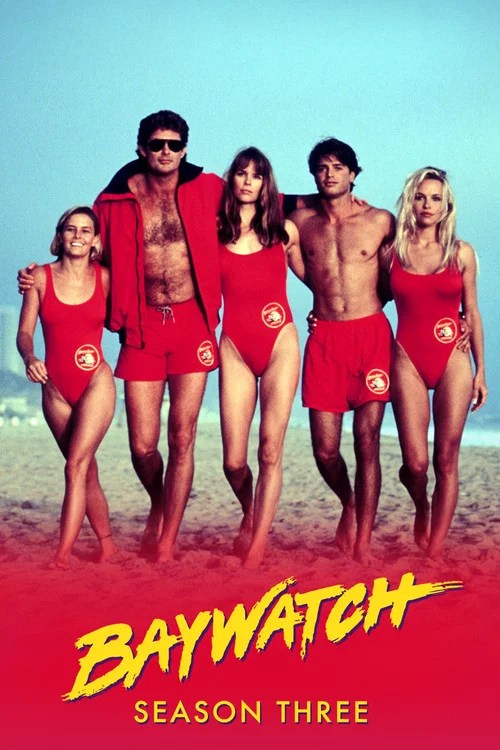
Welcome to Retro Television Reviews, a feature where we review some of our favorite and least favorite shows of the past! On Saturdays, I will be reviewing Baywatch, which ran on NBC and then in syndication from 1989 to 2001. The entire show can be viewed on Tubi.
This week, we start the third season!
Episodes 3.1 and 3.2 “River of No Return”
(Dir by Douglas Schwartz, originally aired on September 14th, 1992)
The third season of Baywatch begins with Mitch learning of the death of his uncle, an eccentric old prospector who always claimed that he was going to find gold. Mitch and Hobie decide to head to Northern California to investigate, and Eddie and Shauni agree to join them. For Eddie, it’s a chance to have one last adventure with Mitch before he heads off to Australia as part of the lifeguard exchange program. For Shauni, it’s a chance to reveal to Eddie that he knocked her up. For the show, it’s a chance to introduce CJ Parker (Pamela Anderson), a river guide who plays the saxophone and who gives good relationship advice.
Yes, this episode was Pamela Anderson’s first appearance on Baywatch. It turns out that, before she was a sax-playing river guide, CJ was a lifeguard, and Mitch would love it if she would return to the beach. Oddly, even though everyone already knows CJ, no one has ever mentioned her before. Considering that she was apparently a legendary lifeguard, you would think that she would have been mentioned in the past.
However, before CJ can return to the beach, she has to help Mitch and the gang find the gold mine that Mitch’s uncle found shortly before he died. Unfortunately, Drew (Bill McKinney) and Lonny (Mickey Jones), two no-good rednecks, also want to find the mine.
Meanwhile, back at the beach, Summer Quinn (Nicole Eggert) and her mother, Jackie (Susan Anton), have moved to Los Angeles to get away from Jackie’s abusive ex, Jed (Geoffrey Scott). Jed follows them but, fortunately, he’s put in his place by Matt Brody (David Charvet), a rich kid who is hoping to become a lifeguard. Like all of the other prospective lifeguards, Matt Brody is curious about “Bobby Quinn,” who is new to California and who was apparently a champion swimmer back in Pennsylvania. At the lifeguard try-out, Summer tells Matt that Summer is just a nickname and her first name is actually Roberta.
This two-part episode largely exists to introduce Pamela Anderson, Nicole Eggert, and David Charvet as regulars. All three of them do pretty well for their first episode. They all seem like they actually want to be there, which is quite a contrast to Billy Warlock and Erika Eleniak, both of whom have subsequently been pretty vocal about not being happy with the direction the show took during the second season. Of course, as soon as Eggert and Charvet show up, it’s easy to see that there’s no longer going to be room for Warlock and Eleniak. So, it’s not a shock when this episode ends with Shauni and Eddie marrying and leaving Baywatch.
This was a good way to start the season. Yes, the whole gold mine thing was a bit silly, but it gave David Hasselhoff a chance to do the earnest action hero thing, and it also introduces Pamela Anderson, who—in this episode at least—comes across as being surprisingly natural and down-to-earth in the role of CJ.
Next week, Matt goes undercover and meets even more new characters!
“Your suffering has only just begun, we have such sights to show you.” — Pinhead
Hell is not supposed to be inviting, but Clive Barker’s Hellraiser: Revival understands that the most dangerous doors are the ones that look like they might lead somewhere extraordinary. Developed and published by Saber Interactive and released in October 2026 for PC, PlayStation 5, Xbox Series X/S, and Nintendo Switch 2, this first-person survival-horror action game is a new chapter in the franchise rather than a direct adaptation of any single film. It was written in collaboration with Clive Barker himself, and that involvement gives it a stronger artistic identity than most licensed horror games manage. Revival understands that Hellraiser is not merely about monsters, chains, and gore. It is about desire, pain, ritual, bodily transformation, and the unsettling possibility that suffering can feel like a doorway to something greater.
The setup is classic Hellraiser. Aidan Lynch gets pulled into a nightmare involving Cenobites, cultists, and Pinhead after his girlfriend opens the Genesis Configuration, a puzzle box that is absolutely not the sort of thing you should mess with if you value having a normal weekend. From there, Aidan has to survive, fight, sneak, solve puzzles, and eventually try to rescue her from hell. It is a simple premise, but it gives the game room to lean into the franchise’s central themes. This is not just “monster chases person through dark hallway.” It is about obsession, temptation, the body as a site of horror, and the dangerous seduction of giving yourself over to something that promises transcendence and delivers a very bad time. The story has its clumsy moments, but the relationship between Aidan and the nightmare world around him gives the campaign more emotional weight than your average survival-horror rescue plot.
Visually, Revival is often spectacular in the most upsetting possible way. The game understands that Hellraiser is not merely about gore; it is about elaborate, almost ceremonial ugliness. Flesh is sculpted rather than simply splattered. The Cenobites look like religious icons that have been left in a butcher shop for a century. Pinhead, unsurprisingly, looks fantastic, and the game clearly understands that his presence needs to feel less like a slasher villain and more like an elegant, patient force of cosmic punishment. The detailed character models, cadaver-laden environments, and Escher-like spaces are major strengths. There are rooms in this game that feel like they were designed by someone who looked at a cathedral, a medical museum, and a bad acid trip, then asked, “What if all three had a baby?”
The sound design deserves just as much credit. Chains rattle, flesh tears, distant voices groan, and the whole soundscape keeps you uneasy even when nothing is actively trying to remove your skin. That matters because Hellraiser: Revival is less interested in constant jump scares than in maintaining a low, persistent sense of dread. It wants you to feel like you have wandered somewhere you were never meant to be, and that the walls are not just walls. The atmosphere is the game’s best weapon. Even when the mechanics get repetitive or the combat turns sloppy, the world itself keeps pulling you forward.
Gameplay-wise, Revival is a first-person blend of survival horror and action, and its closest comparison is probably the classic first-person horror game Condemned: Criminal Origins rather than the usual over-the-shoulder formula associated with most Resident Evil games. You control Aidan as he explores hostile environments, manages limited resources, crafts healing supplies and ammunition, solves puzzles, uses stealth, and fights both hostile humans and demonic Cenobites. Like Condemned, it puts you directly behind the character’s eyes, emphasizes close-quarters violence and environmental unease, and makes combat feel messy, desperate, and physical rather than clean and cinematic. That said, Resident Evil has dabbled in first-person horror too, most notably with Resident Evil Village, so Revival is not operating in a completely unfamiliar space. It simply leans harder into the grimy, immediate, first-person brutality of something like Condemned than into the more polished action-horror rhythm of modern Resident Evil.
The Genesis Configuration is the game’s best original mechanic. It is not just a puzzle box you manipulate during quiet exploration; it can also become a combat and traversal tool, giving Aidan supernatural abilities that help distinguish the game from other first-person horror titles. When the game lets you use the box in clever ways, Revival feels like it has found its own identity. The problem is that those moments are not consistent enough. Too often, the game retreats into standard survival-horror routines: find key, open door, craft item, shoot monster, repeat. The environments are so memorable that you forgive some of this, but you still notice it.
Combat is where the game is at its weakest. At its best, it is merely average; at its worst, it is outright clunky. The unreliable hitboxes are a persistent problem, with melee swings and gunfire sometimes failing to connect in ways that feel unfair rather than intentionally punishing. Resource management does not help matters, because the game can make ammunition, healing items, and breakable equipment feel scarce without always giving you a satisfying reason for that scarcity. If you have played Resident Evil Village or MachineGames’ Indiana Jones game, the difference in feel will be obvious. Those games can make first-person combat tense, responsive, and physically convincing. Revival, by comparison, can feel like a slog: enemies absorb hits inconsistently, weapons lack satisfying feedback, and encounters that should be frightening instead become tedious exercises in whiffing attacks and managing a stubborn inventory. The combat is not broken, but it often lacks the weight and precision that make great horror action feel rewarding.
The game’s length, however, hits a pretty comfortable Goldilocks range. If you are mainly playing through the story on Normal difficulty without hunting down every Easter egg, collectible, or optional side quest, you can likely finish it in around ten to fifteen hours. Completionists who want to see everything the game has to offer can probably stretch that to somewhere between twenty and thirty-five hours. That feels right for this kind of experience. Hellraiser: Revival is not trying to be Elden Ring or Skyrim, and thank goodness for that. It is a contained, atmospheric horror campaign rather than an open-world time sink, and its runtime gives the story enough room to breathe without wearing out its welcome.
The ending also gives the story a little extra replay value without turning the game into a sprawling choice-driven epic. Near the conclusion, Aidan faces one major decision, and the choice you make determines which of the game’s two endings you receive. I will not spoil what those outcomes are, but the decision feels appropriately Hellraiser: it is less about picking the obviously heroic option and more about deciding what Aidan is willing to sacrifice, accept, or become in order to reach the end of his nightmare. It is a smart way to close a story built around temptation, and it gives players a reason to consider how differently the final chapter might unfold under another choice.
The enemy design helps compensate for the rougher combat. Cenobites are inherently terrifying, and the game uses them well in chase sequences and moments where you feel trapped rather than empowered. There are sections where the game pushes you to run, hide, or simply survive long enough to reach safety, and those are among its most effective sequences. The best horror games understand that the player should not always feel like an action hero, and Revival understands that better than it understands, say, melee hit registration. When a Cenobite is bearing down on you and the soundtrack turns into a wall of industrial dread, the game absolutely works.
The content warnings are not decorative. This is an extremely graphic game, with intense violence, dismemberment, nudity, sexual content, drugs, and body horror that goes well beyond standard AAA horror fare. Some players will find that excessive. Others will argue, fairly, that Hellraiser has always been about transgression, and that a sanitized version would feel dishonest. I mostly land in the second camp, though the game does occasionally mistake intensity for depth. There are moments where the shock value feels purposeful and thematically connected, and other moments where it feels like the game is shouting, “Look how extreme we are!” The strongest Hellraiser material has always had a strange philosophical seriousness underneath the flesh and chains. Revival captures that sometimes, but not always.
So where does that leave Clive Barker’s Hellraiser: Revival? I think it is a flawed but genuinely worthwhile horror game, especially for people who already love the franchise. It is not a masterpiece on the level of the best modern Resident Evil entries, and it does not fully escape the feeling of being a very well-dressed genre pastiche. But it has something many horror games lack: a real artistic identity. It is ugly in a deliberate, expressive way. It is uncomfortable on purpose. It treats hell not as a generic demon dimension but as a place shaped by appetite, pain, ritual, and desire. The Genesis Configuration gives it a few moments of genuine originality, the two-ending finale gives its themes a fitting final test, and the atmosphere carries it through stretches where the gameplay repeats itself.
If you are sensitive to extreme gore or sexual content, this is an easy skip. If you want polished, mechanically innovative survival horror above all else, you may come away disappointed. But if you have ever watched the first two Hellraiser films and wished a game could capture that specific blend of gothic elegance and bodily nightmare, Revival is absolutely worth enduring its rough edges. It is a game that occasionally hurts to play, though not always in the way it intends. Still, for a franchise that has spent decades exploring the thin line between pleasure and suffering, that feels weirdly appropriate.
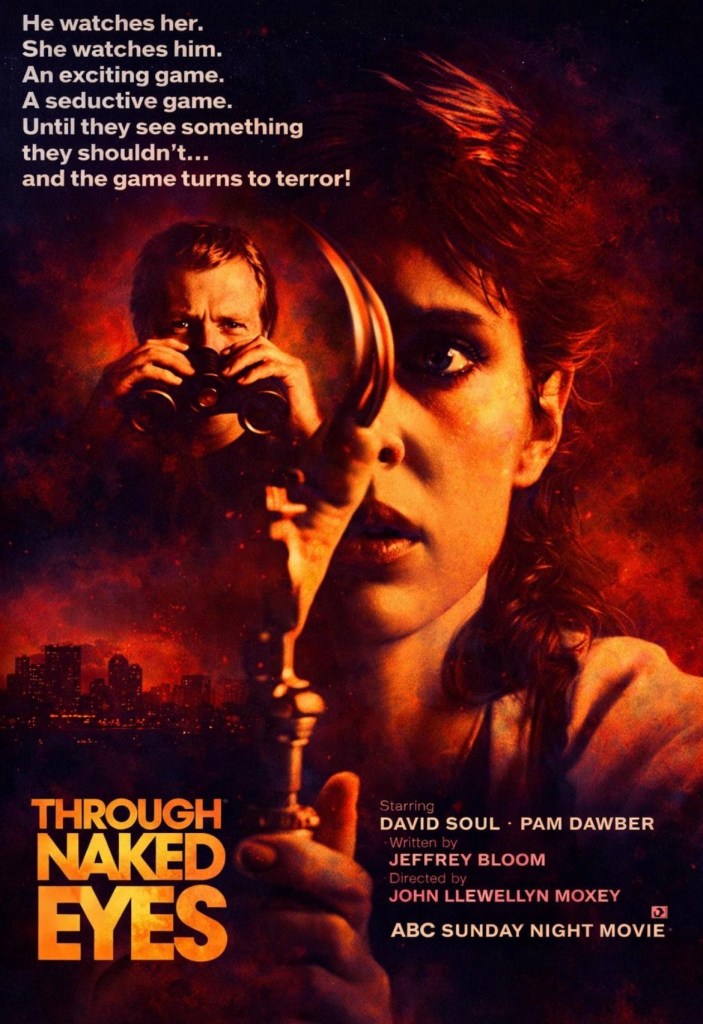
One of the coolest things about being a contributor for The Shattered Lens is the month of October and our Horror-thon. I’m constantly on the lookout for less well-known thrillers that I can watch and write about. I recently came across the 1983 made-for-TV thriller THROUGH NAKED EYES. The premise gives off some definite REAR WINDOW vibes, a favorite of mine, and I’ve always enjoyed the actor David Soul. Having never seen the film, or even heard about it before, I thought I’d give it a shot.
Soul plays William Parrish, a talented flutist who spends most of his time practicing his craft, while still carving out a few moments to pull out his binoculars and check out some of the people who live in the apartment building across the street. One night, he discovers that an attractive woman, Anne Walsh (Pam Dawber), is also watching him through her very nice telescope. Through a variety of circumstances, the two voyeurs meet and begin a relationship. By the way, did I mention that there have been a series of knife murders in the neighborhood, even in William’s own apartment building? And that the detective in charge of the investigation has our musician in his sights as the number one suspect? Of course the fun is watching the suspects and clues pile up as the story plays out!
THROUGH NAKED EYES is one of those movies that snuck up on me. It took a little bit of time for me to get into it as I watched our main character play his flute, practice his flute and sweat profusely. Set in Chicago, they are really trying to make the point that it’s HOT. Everyone is so sweaty. They’ll be having symphony practice and William’s shirt will be so wet that it looks like he just ran a marathon. It was over 100 degrees in Arkansas for 22 days this past summer, and I’ve never been that sweaty inside a building. I guess the AC was spotty in the Windy City back in the early 80s. We also spend time in Anne’s life as we follow her job as guide at the planetarium, as well as her dealings with her sleazy literary agent who’s helping her get some articles published in National Geographic. Seriously dude, that mustache is just creepy. Once we get past all this setup and the two meet, have dinner, and make love, the thriller elements start getting a lot more interesting as the stakes get a lot higher! I won’t say anymore, but I got wrapped up into the story and really enjoyed the last hour.
David Soul gives a strong performance in the film, one that I appreciated more and more as I got to know his character. To be honest, at first he seems pretty darn creepy, but he turns out to have a lot more depth than you might initially think. Pam Dawber, best known to me for MORK & MINDY, is cute, kind, and even sexier than I remembered in her role as the voyeur who had her own little obsession going on. I will admit that it sounded a lot more innocent, and less creepy, when her character explained herself. It convinced me for sure!
The supporting cast in this film is tremendous, and certainly adds to my enjoyment of the film. Fionnula Flanagan has an excellent scene where her shrink character provides a more balanced perspective on our number one suspect. Gerald Castillo is good as the obsessed cop with blinders on for everything except getting his man, who he believes is William. I recognized Castillo from his performances as cops in several Bronson films of the 80s. My favorite scene in the entire film completely surprised me and it involved a scene between William and his estranged dad, played by William Schallert. I love a good, emotional father / son scene. You can even play a game of “spot the future stars” as John Mahoney, Dennis Farina, and Ted Levine play various Chicago police officers throughout the film. It was fun every time one of them would pop up.
If it’s not obvious, I had a good time with THROUGH NAKED EYES. The film does a good job of taking its time and letting us get to know these characters in a way that helps us see them differently as the story plays out. In other words, the film’s drama is effective. It also stretches out the suspense appropriately so that we stay invested in the thriller elements as well. As a viewer, I actually cared about what would happen at the end. Nothing says you enjoy a movie like caring about the outcome, and this one was a very nice discovery for me.
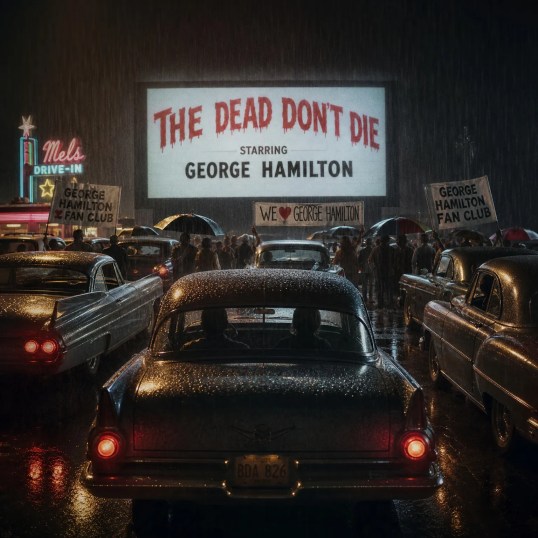
Today, we offer up a bonus horror on the lens, a 1975 made-for-television movie called The Dead Don’t Die!
The Dead Don’t Die takes place in Chicago during the 1930s. George Hamilton is a sailor who comes home just in time to witness his brother being executed for a crime that he swears he didn’t commit. Hamilton is convinced that his brother was innocent so he decides to launch an investigation of his own. This eventually leads to Hamilton not only being attacked by dead people but also discovering a plot involving a mysterious voodoo priest!
Featuring atmospheric direction for Curtis Harrington and a witty script by Robert Bloch, The Dead Don’t Die is an enjoyable horror mystery. Along with George Hamilton, the cast includes such luminaries of “old” Hollywood as Ray Milland, Ralph Meeker, Reggie Nalder, and Joan Blondell. (Admittedly, George Hamilton is not the most convincing sailor to ever appear in a movie but even his miscasting seems to work in a strange way.)