Filmed in Dallas, 1982’s Deadly Choice tells the story of a doctor and his daughter.
Dr. Bob Reasoner (Robert Ginnaven) is outraged that abortions are being performed at the hospital where he works. The film opens with a patient dying during an abortion and then cuts to Bob and a group of other doctors discussing how a premature baby was allowed to starve to death because the mother didn’t feel that she could care for it. Apparently, the policy of abortion and infanticide is an unofficial one, but it’s something that all the doctors know about. Bob and his colleagues decide to write an official statement opposing the hospital’s policy.
Meanwhile, Bob’s teenage daughter, BJ (Geraldine Leer), is pregnant. She hasn’t told her father because she’s scared of how he’ll handle it. Bob is religious while BJ is not. However, BJ has told her school’s guidance counselor, Vicky Stewart (Doris Hargrave). Vicky tells BJ that she needs to get an abortion and even drives BJ to the clinic. When BJ expresses doubts about going through with the procedure, Vicky is there to assure her that her baby isn’t even human yet. In fact, Vicky describes it as being “a cancer.”
I’ve seen a lot of movies about abortion. I’ve seen Pro-Life movies and I’ve seen Pro-Choice movies, and almost all of them have one thing in common: somebody has to die. In Pro-Choice movies, the death usually happens due to a back-alley abortion. In most Pro-Life movies, the death happens because the trained doctors who performed the abortion were dangerously incompetent and just didn’t care about the health of the woman getting the abortion. Deadly Choice changes things up a bit. BJ doesn’t die during the abortion. Instead, suffering from a huge amount of guilt, she takes an overdose of pills after the abortion.
Bob rushes BJ to the hospital, where he frantically tries to save her life. He desperately tries to get her heart beating again, just to be told that she’s dead. Dr. Leventhal (Hal Bennett), who earlier defended the hospital’s abortion policy, is the one who tells Bob that she’s dead, and he sort of smiles when he does it. (I imagine that has more to do with the actor than the character. This is Hal Bennett’s only credited performance and, watching this movie, I could see why.) Bob finally steps away from BJ. As soon as he does, her heart starts to beat and BJ comes back to life.
So, yes, BJ dies, but then she’s revived. Of course, even though she’s alive, she’ll always have to live with the guilt of her actions.
There’s nothing subtle about this Pro-Life film. It’s only 55 minutes long and it has the look of a television medical drama. Robert Ginnaven gives a good performance as Bob. For that matter, both Geraldine Leer and Doris Hargrave give good performances as well. That said, it’s definitely a film that was made to preach to the converted, and how you react to it will largely depend on whether or not you agree with the film’s message. It’s not a film that makes a case for its beliefs as much as it’s a film that says, “We’re right and they’re wrong.”
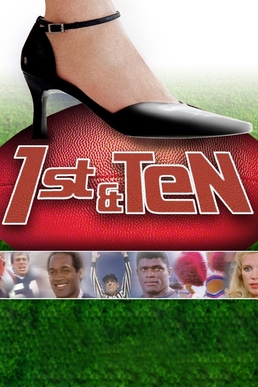
Welcome to Late Night Retro Television Reviews, a feature where we review some of our favorite and least favorite shows of the past! On Wednesdays, I will be reviewing 1st and Ten, which aired in syndication from 1984 to 1991. The entire series is streaming on Tubi.
This week, everyone’s trying to get laid.
Episode 5.9 “Gunn and Bullette”
(Dir by Stan Lathan, originally aired on December 13th, 1989)
Johnny Gunn tracks down Sunset West (Rebecca Ferratti), the daughter of one of Gunn’s friends in prison. Sunset is now working as a stripper. Her boss is an evil gangster guy named Achmed (Aharon Ipale). Achmed tells Johnny that, as a quarterback, he can have anyone at the strip club except for Sunset. Johnny wants Sunset. I wonder how Johnny’s prison friend would feel about Johnny becoming obsessed with his daughter.
In the end, it doesn’t add up to much. Sunset decides to go to the police about Achmed’s criminal activities. Achmed is arrested. Sunset goes into the Witness Protection Program. Johnny remains single. Who cares? It’s always funny to me how 1st & Ten will devote a show to some character we’ve never even met before and we’re suddenly supposed to have some sort of emotional stake in their story.
This episode’s second storyline featured Jenny (Shari Shattuck), a cheerleader who finds herself in trouble when Playpen Magazine publishes nude pictures that were taken years earlier by her boyfriend. Westwood offers to protect Jenny’s job if Jenny sleeps with him. Jenny gets revenge by inviting Michael to her apartment, dressing him up in a corset and stockings, and then having Bubba and Jethro snap some pictures. Westwood flees. It later turns out that Kristy is actually the one who came up with the idea of setting Westwood up. Kristy arranges for Jenny to get a new job in New York and Jenny gives Kristy the pictures.
The third and final storyline featured Kristy wanting to trade Dr. Death. Denardo convinces her to give Dr. Death another chance. Dr. Death has to have a good game to save his job. Dr. Death has a good game and he saves his job. Hey, that was easy!
The main thing that stood out about this episode was just how badly acted it was. I mean, I’m not surprised to see OJ Simpson and Shannon Tweed giving less than great performances. But even the usually reliable Christopher Meloni seemed to sleepwalk through this episode. The worst performance came from Aharon Ipale, who turned Achmed into the least intimidating gangster that I’ve ever seen.
This episode didn’t add up too much. Are the Bulls even trying to make the playoffs this year?
Congratulations to the Milwaukee Brewers on winning their first World Series! The Rays put up a good fight and I hope they’ll get another chance (though not before my Rangers) but the Brewers pretty much dominated this World Series and they ended up winning in five games.
Congratulations to the team and their fans! And thank you to both teams for giving us one of the best World Series of my lifetime. There’s nothing like watching two hard-working teams that understand the importance of fundamentals both playing for their first World Series title.
I was hoping the World Series would at least last until Halloween but it looks like I won’t have a baseball game to watch on the 31st. That’ll give me more time to concentrate on being the best Playboy Bunny I can be while handing out candy. Or eating the candy, in case it rains.
I can’t wait for the start of next season! Go Rangers!
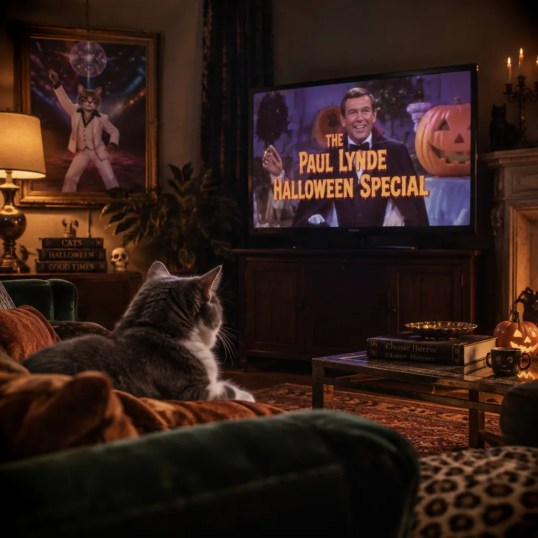
Tonight, from 1976, we have The Paul Lynde Halloween Special.
In this special, actor and comedian Paul Lynde celebrates Halloween with Betty White, KISS, Donny and Marie Osmond, Florence Henderson, Billy Barty, Margaret Hamilton (the original Wicked Witch of the West), and I’m going to guess a mountain of cocaine that was probably sitting backstage.
This special is definitely a product of a very certain era in America’s cultural history.
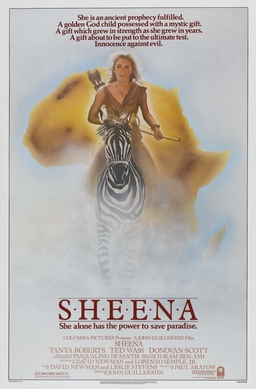
There’s trouble in the African nation of Tigora. The kind and wise King Jabolni (Clifton Jones) has been assassinated, and his younger brother, former football player Prince Otwani (Trevor Thomas), has been elevated to the throne. With his brother’s former fiancée (France Zobda), Otwani is planning to sell out the Zambouli Tribe because their land sits on a very valuable titanium deposit. Having framed the Zambouli Shaman (Princess Elizabeth of Tooro, a former Ugandan government official who barely escaped from Idi Amin), Otwani hires a group of mercenaries to wipe out the Zambouli people. Sheena (Tanya Roberts), a white woman who was raised by the Shaman after the death of her parents, stands in the way of Otwani’s evil plans. Working with both the animals who obey her commands and also with reporter Vic Casey (Ted Wass), a former teammate of Otwani’s, Sheena protects her people and her land.
After several failed attempts, this film brought to the screen Sheena, a comic book heroine who was first introduced in 1938. Tanya Roberts was selected over contenders like Farrah Fawcett, Cheryl Ladd, and Bo Derek, and it must be said that she’s not bad in the role. No one is going to mistake her for a classically trained actress, but she was enthusiastic, athletic, and beautiful. She also didn’t have much chemistry with Ted Wass, which made their scenes feel awkward and dull. If the film had just been Sheena and her animal friends fighting the mercenaries, it probably would have been a lot better, but instead, the movie seemed to think that we needed to be introduced to Sheena through Vic’s eyes. Obviously, I disagree. Everyone already knew who Tarzan was, so I don’t think they would have had a hard time recognizing a female version.
Sheena still has its moments. I really liked the idea of the villain being a rich kid who left his country to play football in America and then returned to overthrow the government. We don’t see many villains like that. The main problem with the movie is that it feels really long. Director John Guillermin was an old-fashioned director who specialized in epics, and he lets too many scenes drag out. With more energetic direction and a stronger romantic lead, Sheena could have been a B-movie classic.
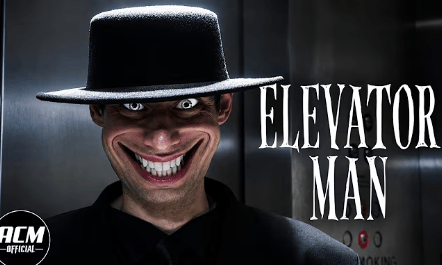
I knew that I had to review an Alex Magana film. Afterall, he makes them … on purpose and I’m sure that I’ve been wrong about things … maybe? But, not these films. This is going to be terrible because you can’t fix this, but we’ll get through this together. Maybe.
A woman is taking the elevator in a parking garage, but all of the buttons are pressed. Every time the door opens, who’s there – yep, Elevator Man. He appears to be Amish. He’s aggressively Amish; for real, check out this Amish vibe. Maybe, Rumspringa took a dark left turn?
I think you can survive Elevator Man, if you just throw a zipper at him; he’ll be confounded for weeks…weeks!
She sees him on every floor. She gets to the 5th floor and he’s waiting for her; so, she goes to the roof and he’s now in the elevator and really slowly grabs her like really slowly. You could’ve just walked to your car and he’d be like “A Car?”. Then, you drive away to safety and he goes back to selling well-made furniture.
“Butchering people is hard work. Physically and mentally.” — Ed Kemper
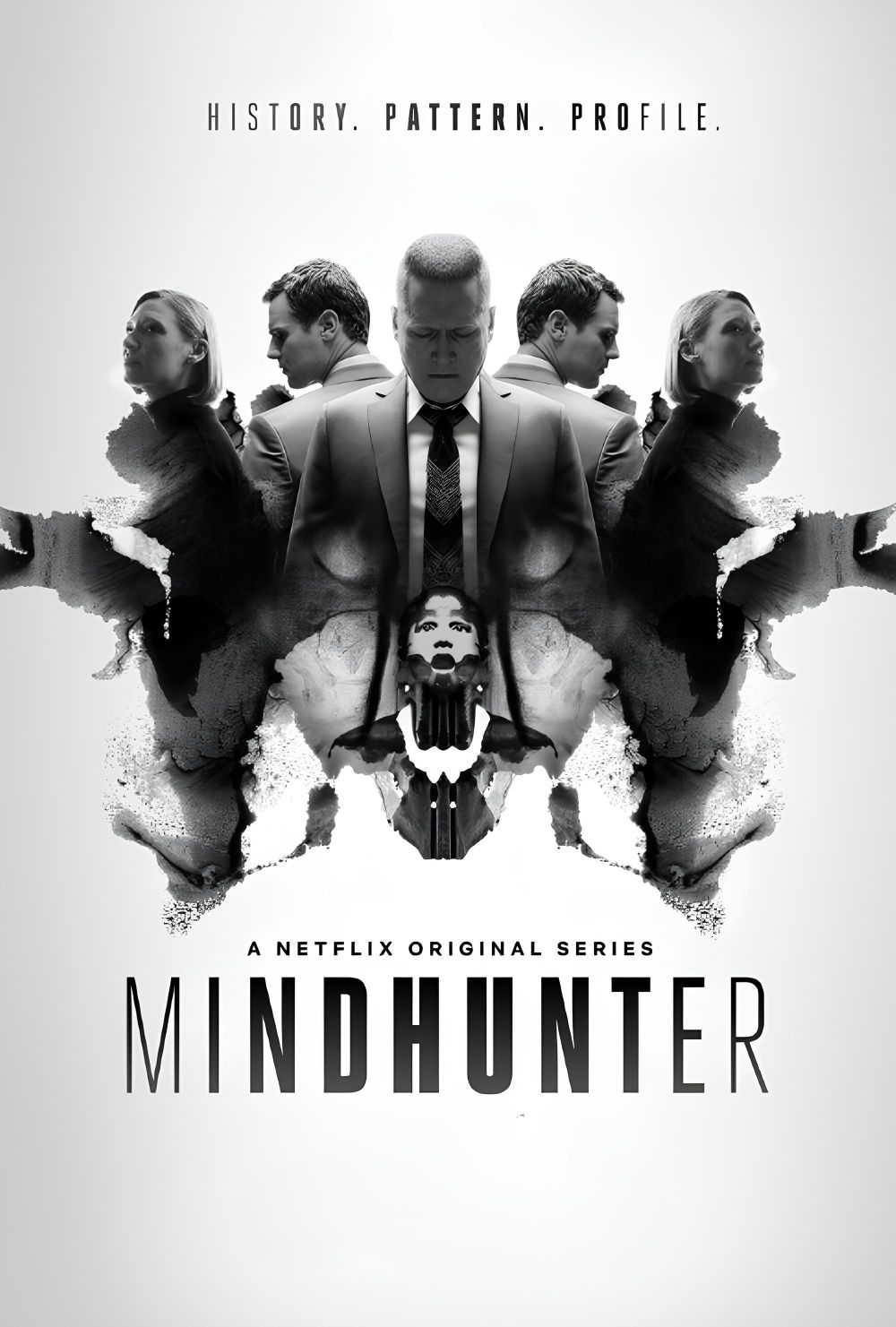
The scariest thing in Mindhunter isn’t a crime scene. It’s how quickly a conversation with a murderer can start to feel normal. Someone makes a joke, offers an observation, or answers a question with surprising thoughtfulness, and for a moment you settle into the exchange. Then comes a detail that makes your stomach turn, delivered in exactly the same conversational tone. Across its two seasons, the Netflix series repeatedly catches you making that adjustment. You become comfortable listening to people whose actions should make comfort impossible. That’s where the show finds its particular kind of horror: not in making monsters seem alien, but in showing how easily they can sound like anyone else.
Created by Joe Penhall, with David Fincher serving as an executive producer and a defining directorial presence, Mindhunter draws from John E. Douglas and Mark Olshaker’s book Mindhunter: Inside the FBI’s Elite Serial Crime Unit. It follows the early development of criminal-profiling research within the FBI’s Behavioral Science Unit through agents Holden Ford and Bill Tench and psychologist Wendy Carr. We’ve watched countless investigators study killers and connect behavioral patterns, but what feels different here is the uncertainty. These characters aren’t applying an established formula. They’re trying to determine whether their questions can produce anything useful at all.
That gives the procedural material an unusual texture. Holden and Bill travel, negotiate access, conduct interviews, and deal with colleagues who don’t necessarily see the value in their work. Wendy wants to turn their encounters into research rather than a collection of gruesome anecdotes. The process can be repetitive, awkward, and bureaucratic, which makes it convincing. Instead of treating profiling as a supernatural gift possessed by the smartest person in the room, Mindhunter presents it as a developing discipline shaped by observation, disagreement, and mistakes. Getting someone to talk is only the beginning. Knowing what to do with the answers is another problem entirely.
Unlike Se7en, Mindhunter doesn’t surround its characters with a grimy, nihilistic atmosphere that makes the entire world feel rotten. Nor is its main driving force the obsessive, cat-and-mouse pursuit that consumes the investigators in Zodiac. Its horror comes from somewhere quieter: the suggestion that beneath everyday normalcy lurks a darker, much darker world. Ed Kemper, Dennis Rader—the BTK killer—Wayne Williams, and Charles Manson weren’t inventions designed to populate a nightmare. They existed and walked among the masses. Their histories aren’t interchangeable, but their presence throughout the series punctures the comforting idea that dangerous people must somehow announce themselves as dangerous.
Calling Mindhunter a crime thriller or police procedural, then, only gets you so far. It has horror in its DNA and both feet firmly planted in the genre. That isn’t simply because it deals with murder and sexual violence. It makes normalcy itself feel unreliable. A calm voice, a familiar routine, or an apparently reasonable explanation tells you remarkably little about the person behind it. These people occupied ordinary spaces, held conversations, and participated in a world that didn’t always recognize what they were. There’s no supernatural threat to identify and no reassuring boundary separating their world from ours.
The use of the killers’ own recorded words makes that realization harder to shake. Although Mindhunter dramatizes its encounters rather than reconstructing them as a documentary, portions of its interview dialogue draw from actual statements. You aren’t simply hearing a screenwriter invent something horrible for a villain to say. There’s a real person behind the language, someone who found ways to describe, explain, or rationalize appalling acts. The matter-of-fact presentation makes it worse. The show rarely needs to insist that you be disturbed. It simply gives you enough time to understand what you’ve just heard.
Cameron Britton’s Ed Kemper is the clearest expression of that approach. He’s articulate, conversational, and seemingly pleased that someone wants to listen. Britton doesn’t play every exchange as a warning that violence is about to erupt. He lets Kemper be engaging, which creates a more uncomfortable response than constant menace would. You understand Holden’s fascination even while recognizing the danger in it. Kemper’s willingness to talk doesn’t mean he has surrendered control. Sometimes it means he has found another way to exercise it. Britton makes the difference between access and understanding frighteningly easy to miss.
Fincher’s influence is apparent in how patiently these encounters unfold. The controlled framing, subdued interiors, and measured pacing encourage you to notice small changes: a pause, a look, a shift in posture. A room can remain physically unchanged while the balance of power inside it moves somewhere unpleasant. These are horror sequences built around conversation. Nobody needs to jump out of the shadows. The tension comes from proximity and the possibility that the investigators have become more exposed than they realize. They can leave the room, but that doesn’t mean everything they heard stays behind.
Jonathan Groff makes Holden’s confidence both understandable and irritating. His curiosity opens doors, but he starts confusing his ability to provoke a response with an ability to control the encounter. Groff preserves the earnestness beneath that arrogance. Holden wants the work to matter, but he also wants to be right. His frightening encounter with Kemper exposes how little professional enthusiasm can do when intellectual curiosity becomes physical vulnerability. Understanding danger isn’t the same thing as feeling another person take control of your safety.
Holt McCallany’s Bill Tench supplies the weary perspective Holden lacks. He’s practical, skeptical, and more aware that a useful interview can still leave damage behind. His dry humor keeps the series from becoming suffocatingly solemn, but exhaustion always feels close to the surface. The second-season situation involving his adopted son and a toddler’s death brings his professional anxieties home. The parallel sometimes feels overly arranged, yet McCallany grounds it in a father’s helplessness. Anna Torv’s Wendy provides another necessary counterweight, insisting on methods and conclusions that can withstand scrutiny. Her personal story integrates less smoothly, but her presence keeps the project from becoming a celebration of Holden’s instincts.
The Atlanta child-murder investigation pushes those instincts against a reality that refuses to accommodate them. Behavioral patterns collide with racial distrust, political pressure, institutional priorities, and families whose grief cannot be answered by an interesting theory. Holden’s certainty becomes harder to admire when the stakes extend beyond proving his approach works. Meanwhile, the glimpses of BTK quietly undermine any comforting sense of progress. Whatever knowledge the team acquires, other lives continue beyond its awareness. Understanding some offenders doesn’t mean the investigators can recognize or stop them all.
The lack of a third season makes that expanding scope especially frustrating. Fincher has declared Mindhunter finished, citing the difficulty of justifying its production costs against its audience. Instead of reaching a deliberate conclusion, the series stops with important threads still hanging. The recurring glimpses of BTK suggest a longer game that never gets played out, while the futures of Holden, Bill, Wendy, and their developing work remain unresolved. For fans and critics who championed the series, that’s more than the disappointment of losing a favorite show. It’s the frustration of watching something grow more ambitious only to have its possibilities cut short. There’s a difference between deliberately withholding easy answers and losing the opportunity to continue asking the questions.
Still, its unfinished state doesn’t erase what those two seasons accomplished. You can admire the performances, the filmmaking, and the intelligence of its procedural detail, but its lasting effect is less comfortable than admiration. It leaves you thinking about pleasant exchanges and ordinary faces that gave nothing away. Other crime shows let the solution create distance between us and the horror. Mindhunter keeps taking that distance back. By the end, the troubling question isn’t how anyone could sit across from these men and listen. It’s how many people sat across from them before anyone knew what they had done.
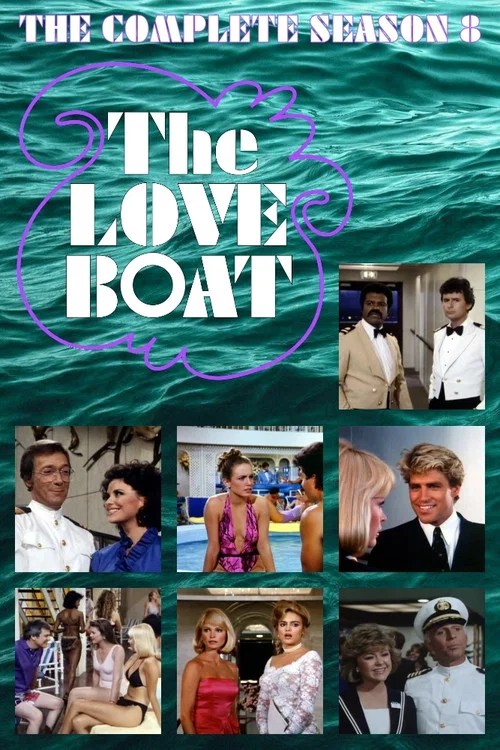
Welcome to Retro Television Reviews, a feature where we review some of our favorite and least favorite shows of the past! On Wednesdays, I will be reviewing the original Love Boat, which aired on ABC from 1977 to 1986! The series can be streamed on Paramount Plus!
And love won’t hurt anymore …. unless your nickname is Gopher.
Episode 8.18 “Love on the Line/Don’t Call Me Gopher/Her Honor, the Mayor”
(Dir by Richard A. Wells, originally aired on January 26th, 1985)
Poor Gopher.
All he wants is for the crew to not call him by his nickname for one cruise. His friend Janet (Katherine Moffat) is going to be on the boat and she only knows him as Burl. Burl, to put it simply, wants to get laid. He suspects that he’ll have a better chance of getting laid if Janet doesn’t know that his nickname is Gopher. He’s probably correct about that, though Burl isn’t much of an improvement.
For some reason, the crew takes it personally. They act as if Burl is being arrogant by not wanting to be called by a nickname that brings to mind a hairy and destructive rodent. Eventually, Janet does discover that “Gopher” is Burl’s nickname and, just as Burl suspected, she finds it impossible to kiss him without laughing.
And yet, somehow, Burl is the one who ends up apologizing to the crew and accepting that he will always be known as Gopher. Listen, if the guy wants to be known by his actual legal name, that’s his right. Of course, Gopher does get laid after he accepts his nickname so maybe the crew had a point. Who knows?
Meanwhile, newly-elected Mayor Frances Hardy (Shelley Fabares) boards the boat with her campaign manager, Barry Singer (David Hedison). Barry is in love with Frances and wants to marry her. However, Frances ends up falling in love with the man she defeated in the election, Phil Haines (Robert Fuller). It’s nice to see that political differences don’t have to stand in the way of love. Imagine how different the country would be today if Hillary and Donald would just admit that they’re in love with each other.
Finally, businessman John Stockton (Cesar Romero) meets a mysterious woman named Marcy (Jane Wyatt). Mary encourages John to shake off his old routine and learn to love life. How will John react when he discovers that Marcy actually works in his office? If you guessed that John will fall in love with her, you’re right. This is the Love Boat!
This wasn’t a bad episode. The guest stars were likable. The stories were pleasant in that way that the Love Boat usually is. That said, I do feel bad for Gopher. All he wanted was a better nickname.
Oh, hi, Indy. You’re back! I really enjoyed rewatching and reviewingRaiders of the Lost Ark at the start of October. Let’s take a look at Indiana Jones and the Temple of Doom!
Hey, there you are, played by Harrison Ford! And let’s see, that title card says that this film is taking place a year before Raiders, so I already know you’re going to survive whatever trouble life throws at you. Wow, Kate Capshaw sure is overacting as that blonde singer. I hope she’s just going to be here for the opening of the film. I mean, seriously, Indy, everyone knows that you love Marion Ravenwood. Oh look, you’ve got a kid assistant! His name is Short Round and he is played by Ke Huy Quan, who years later is going to give one of the best Oscar acceptance speeches of all time. Okay, that shootout at the start of the movie went on a little bit too long and apparently Kate Capshaw is going to be in the entire film, but still, there was some fun action. Harrison Ford is one of those actors who can make just about anything enjoyable… or, at least, he was. He seems really grouchy nowadays. The plane crash was nicely handled. Where is this taking place, Indy? I guess you’re in India now? And your mission is to recover a sacred stone and free a bunch of kidnapped children from a nearby mine? That’s not bad! I like the fact that Indiana seems to really care about helping out the villagers. The stakes aren’t quite as high as with Raiders, but you really can’t get much higher than finding the Lost Ark of the Covenant. This should be a good, old-fashioned adventure movie and…
OH MY GOD, HE JUST RIPPED THAT GUY’S HEART OUT OF HIS CHEST!
Listen, I’m not here to make the argument that Indiana Jones and the Temple of Doom is a horror film. It’s not. It’s an adventure film, a thrill-ride with big sets and that classic Indiana Jones music and an extended chase sequence that feels like it was conceived specifically so it could be adapted into a hundred theme park roller coasters. Even more so than Raiders of the Lost Ark, it’s a throwback to the serials of the past, with Indiana, Short Round, and Willie (that’s Kate Capshaw’s character) running into another cliffhanger every fifteen minutes or so. It’s a fun adventure movie, made when Harrison Ford was at the peak of his abilities. If the story doesn’t resonate quite as strongly as either Raiders of the Lost Ark or The Last Crusade, it’s still far more memorable than those bland siblings known as Crystal Skull and Dial of Destiny.
That said, I would argue that the film is definitely horror-adjacent. This is a film that features Amrish Puri as a Thuggee priest who reaches into a man’s chest and removes his still-beating heart. In loving close-up, the heart continues to beat in the priest’s hands while the man squirms behind him. This is a film in which even Indiana is briefly possessed by otherworldly magic. Indy gets into a fight on a conveyor belt and not only does he have to avoid his opponent’s fists, but he also has to deal with terrible back pain because a little brat is poking a voodoo doll. I always used to blame my back pain on my boobs, but now I’m at least 65% convinced that the true culprit is someone with a magic Lisa doll.
Of course, the thing that really keeps this from being a horror film is that it’s a prequel. It takes place before Raiders of the Lost Ark, so we all know that Indy is going to make it out of the Thuggee mines and he’s not going to get his heart ripped out. For true horror to work, you have to feel like anyone could fall victim to whatever the story’s threat may be. We know Indiana’s going to be safe because he has to save the world from the Nazis in a year. We know Short Round’s safe because he’s a kid. And we really don’t care whether or not Willie’s safe.
Apparently, that heart removal sequence was so controversial that it led to the creation of the PG-13 rating. Without that rating, the original Red Dawn would have been rated R and a lot of teenagers would not have gotten a chance to cheer the destruction of the communists. As a country, we owe a lot to Indiana Jones and the Temple of Doom.