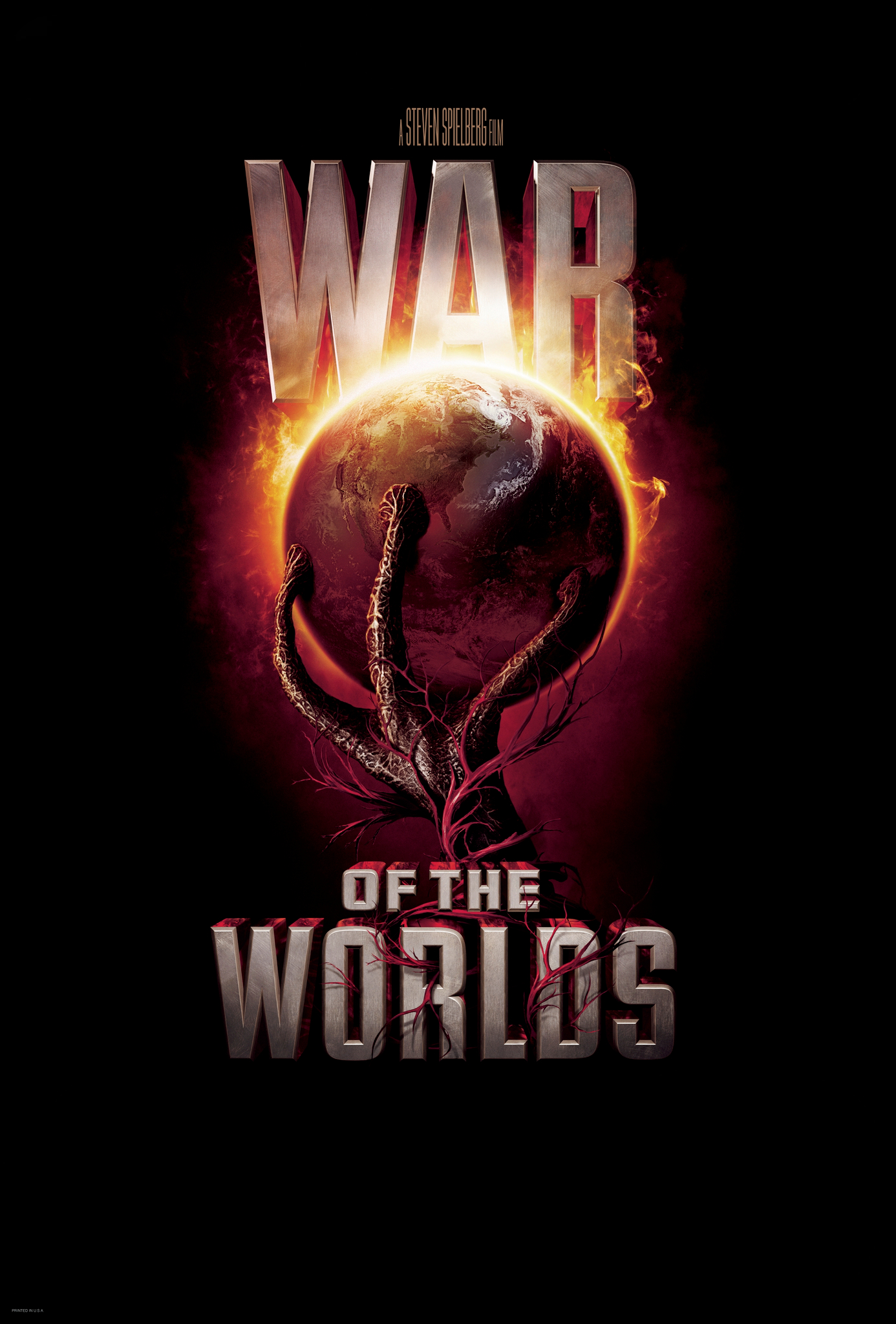
Review: War of the Worlds (dir. by Steven Spielberg)


“This is not a war any more than there’s a war between men and maggots… This is an extermination.” — Harlan Ogilvy

When looking back at the vast filmography of Steven Spielberg, science fiction usually evokes a sense of sweeping wonder, starry-eyed optimism, or at the very least, a deeply felt humanism. Films like Close Encounters of the Third Kindand E.T. the Extra-Terrestrial taught generations to look at the stars with hope rather than dread. Even when things took a darker turn in Jurassic Park or the neon-drenched corridors of Minority Report, there remained a foundational thrill—a cinematic ride that ultimately leaves the audience exhilarated. However, his 2005 adaptation of H.G. Wells’ classic novel, War of the Worlds, stands as a radically different beast altogether. It is arguably the bleakest, most claustrophobic blockbuster Spielberg ever directed, operating less as an adventurous alien invasion epic and more as a raw, nerve-shredding analog for collective trauma. Emerging a mere four years after the collapse of the Twin Towers, the film strips away the romanticism of cosmic exploration and replaces it with a visceral, ground-level nightmare of sudden, inexplicable annihilation.

The brilliance of Spielberg’s approach, working alongside screenwriter David Koepp, lies in how intensely localized the narrative remains. Rather than tracking the invasion from the traditional perspective of military command centers, global leaders, or brilliant scientists, the audience is trapped inside the chaotic, deeply flawed perspective of Ray Ferrier, played with a brilliant, unheroic franticness by Tom Cruise. Ray is not a savior; he is a deadbeat, blue-collar crane operator living in a graying New Jersey suburb. He is the kind of father who doesn’t know his son’s school schedule and has an empty refrigerator when his ex-wife drops off their two children, Robbie and Rachel. By centering the apocalypse around a fractured, working-class American family, Spielberg roots the cosmic terror in a painful reality. The impending destruction of the planet mirrors the collapse of Ray’s domestic stability, forcing a man who can barely manage basic parental accountability to suddenly navigate the literal end of the world.

From a purely technical standpoint, the first act of War of the Worlds features some of the most masterful suspense and terror ever committed to celluloid, heavily leaning on a barrage of explicit 9/11 visual imagery. The sequence where the first Martian Tripod emerges from beneath a New Jersey intersection is a masterclass in modern cinematic dread, directly weaponizing the fresh, collective trauma of the post-9/11 American public. Spielberg eschews the clean, omniscient visual language of standard disaster cinema for an organic, chaotic documentary style, mirroring the sudden, disorienting informational and electronic blackout experienced by millions during the real-world attacks. The camera lingers on heavy, ominous storm clouds moving against the wind, the eerie crackle of localized lightning strikes, and the unsettling silence of a neighborhood stripped of electronic life. When the asphalt fractures and the colossal, three-legged war machine rises from the earth, the sound design hits the audience like a physical blow. The Tripod’s horn—a terrifying, mechanical foghorn groan—instantly triggers an ancient, mammalian fight-or-flight response. As the machine opens fire with its disintegration beams, turning nearby pedestrians into literal puffs of ash, the camera tracks Ray running for his life through a massive, rolling cloud of dust and debris. When Ray finally makes it back to his house, the ash of his vaporized neighbors covers his clothes and face, an unmistakable and deeply unsettling visual that explicitly echoes the horrific reality of the streets of Manhattan on September 11, 2001.

This deliberate invocation of post-9/11 anxiety is the thematic engine that drives the entire film. Spielberg does not hide these parallels; he highlights them with a devastating accuracy that makes the film difficult to watch even decades later. When the invasion begins, a terrified, screaming Rachel asks her father if it is “the terrorists,” a line that perfectly encapsulates the collective, reactionary psyche of the mid-2000s American consciousness, where any sudden, catastrophic violence was instantly filtered through the lens of domestic terrorism. The imagery of walls plastered with photocopied missing-persons flyers, crowds of refugees trudging down desolate highways with whatever belongings they can carry, and a derailed, blazing passenger train hurtling past an abandoned station all tap into a very specific, historical vulnerability. In Independence Day, an alien invasion was an opportunity for global unity and triumphant, cigar-chomping counter-offensives. In Spielberg’s hands, the invasion is an overwhelming, asymmetric slaughter that reduces the world’s most powerful military to a collection of burning tanks rolling over a ridge into an invisible abyss.

However, while the film masterfully handles the grand-scale terror of the invasion, it stumbles significantly when navigating its internal family dynamics, particularly regarding Ray’s son, Robbie, played by Justin Chatwin. I completely agree with the widespread criticism that Robbie is an intensely annoying, deeply self-destructive presence whose actions and decisions repeatedly defy basic human survival instincts. Throughout the crisis, his behavior goes beyond typical teenage rebellion and crosses into pure narrative absurdity. Instead of helping protect his traumatized, screaming younger sister, Robbie consistently sabotages his family’s safety to aggressively gawk at a hopeless war zone. His sudden, obsessive urge to join a military force that is clearly being pulverized by an unearthly power feels entirely unearned and maddening to watch. His character arc reaches a peak of irritation when he blindly runs over a burning ridge directly into a mechanical meat grinder, abandoning his family for a bizarre, suicidal patriotic impulse. This makes his miraculous survival at the end of the film a massive narrative misstep; having him casually show up at his grandparents’ pristine Boston home after witnessing a literal military massacre completely undermines the high-stakes realism Spielberg spent two hours building, turning what should have been a tragic consequence of his own foolishness into a cheap, unearned happy ending.

As the narrative progresses past the family friction, the film shifts its focus from external spectacle to the internal breakdown of human morality under the weight of existential terror. This transition is embodied by the mid-movie introduction of Harlan Ogilvy, played with an unsettling, unhinged intensity by Tim Robbins. Trapped in a dark basement while the Martians harvest the surrounding countryside, Ray and Ogilvy represent two radically different, yet entirely believable, reactions to trauma. Ogilvy is consumed by a vengeful, nihilistic madness, obsessed with digging tunnels and launching a futile, suicidal guerrilla war against an enemy that operates on a completely different evolutionary plane. Ray, conversely, is driven solely by a desperate, animalistic urge to protect his daughter. The sequence culminating in Ray’s decision to kill Ogilvy behind closed doors to keep him from alerting the aliens is one of the darkest thematic beats in Spielberg’s career. It forces the audience to confront a disturbing truth: the true horror of the apocalypse is not just what the monsters do to us, but what we are willing to do to each other to survive another hour.

The film’s visual palette, masterfully crafted by cinematographer Janusz Kamiński, reinforces this pervasive sense of rot and despair. Kamiński utilizes a heavily bleached, high-contrast aesthetic that drains the world of vibrant color, leaving behind a cold, metallic landscape dominated by sickly slates, deep shadows, and stark whites. This visual harshness reaches its zenith during the infamous “Red Weed” sequence. As the Tripods begin carpet-bombing the landscape with human blood to fertilize an invasive, crimson alien flora, the film transforms into a surrealist, gothic horror show. The Earth itself is literally being terraformed by the bodily fluids of the slaughtered, creating a grotesque, bleeding ecosystem that visually mirrors the internal rot of the surviving human populations. It is a sequence that feels closer to the cinematic nightmares of H.R. Giger than the traditional whimsy of a Spielbergian adventure.

Despite its immense strengths, War of the Worlds is frequently criticized for its final act, a critique that deserves a nuanced evaluation. The abrupt resolution—wherein the seemingly invincible Martians suddenly succumb to Earth’s microscopic bacteria—is lifted directly from H.G. Wells’ original 1898 text. While narratively faithful, its execution in a modern Hollywood blockbuster can feel jarring, functioning as a biological deus ex machina that robs the human protagonists of a traditional, heroic victory. Furthermore, Robbie’s unearned survival represents a sudden, almost desperate pivot back toward Spielberg’s traditional family-first sentimentality. This neat resolution feels somewhat unearned given the preceding two hours of unrelenting, uncompromising nihilism, momentarily fracturing the film’s gritty, documentary-like reality.

Yet, looking past these structural stumbles, the final voiceover adaptation of Wells’ text offers a profound philosophical punctuation mark to the nightmare. The realization that humanity has earned its right to survive on this planet not through military might or moral superiority, but through millions of years of evolutionary struggle alongside the tiniest microbes, recontextualizes the entire ordeal. It reminds the audience of our inherent fragility and the hubris of believing ourselves to be permanently secure in our modern, technological fortresses. Spielberg’s War of the Worlds remains an incredibly potent piece of mainstream filmmaking precisely because it refuses to comfort its audience for the majority of its runtime. It stands as a brilliant, terrifying time capsule of an era defined by sudden vulnerability, demonstrating that even the master of cinematic wonder could look into the abyss of the cosmos and see nothing but our own reflections looking back in sheer terror.
6 Shots From 6 Films: Special Steven Spielberg Edition


4 Shots From 4 Films is just what it says it is, 4 shots from 4 of our favorite films. As opposed to the reviews and recaps that we usually post, 4 Shots From 4 Films is all about letting the visuals do the talking.

Today, we wish a happy birthday to director Steven Spielberg!  It’s time for….

6 Shots From 6 Films

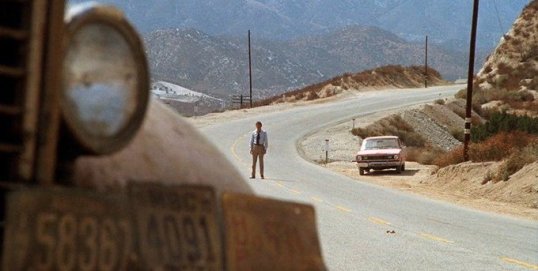
Duel (1971, dir by Steven Speilberg, DP: Jack Marta)

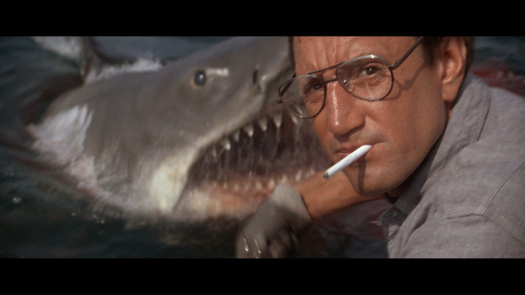
Jaws (1975, dir. by Steven Spielberg, DP: Bill Butler)

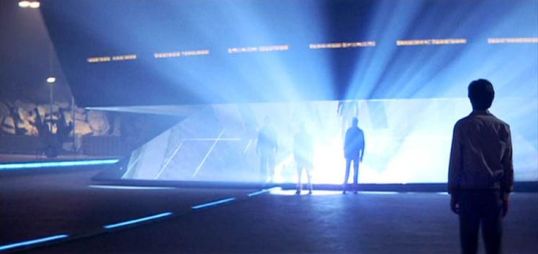
Close Encounters of the Third Kind (1977, dir by Steven Spielberg, DP: Vilmos Zsigmond)

1941 (directed by Steven Spielberg, DP: William Fraker)

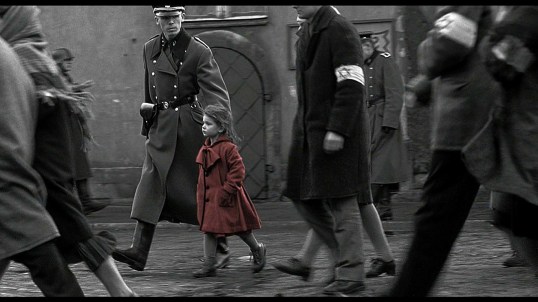
Schindler’s List (1993, dir by Steven Spielberg, DP: Janusz Kamiński)

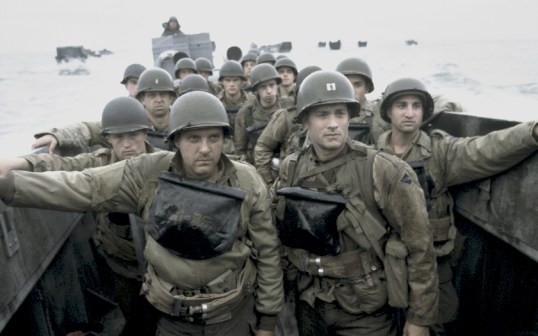
Saving Private Ryan (1998, dir by Steven Spielberg, DP: Janusz Kamiński)


Spielberg delves into Sci-Fi again with the Disclosure Day Teaser


Spielberg. Williams. Koepp. Kaminski. What the heck is Disclosure Day?

The teaser trailer for Steven Spielberg’s Disclosure Day hit my phone via Letterbox’d. This is connected to those weird X-Files looking posters I’ve been seeing as of late. It looks like another film with aliens, similar to Close Encounters of the Third Kind with a dash of Zemekis’ Contact or sprinkle of Villeneuve’s Arrival. The film stars Josh O’Connor (Wake Up Dead Man: A Knives Out Mystery), Emily Blunt (Jungle Cruise), Colin Firth (Kingsman), Coleman Domingo (The Running Man), Wyatt Russell (Marvel’s Thunderbolts), and Eve Newson (Robin Hood).

Spielberg and Koepp have a good track record together with the Jurassic Park films, and it’a always good to see a pairing with John Williams. Still, this all looks really weird. Either way, we’ll find out when the film is released next June.

Enjoy!

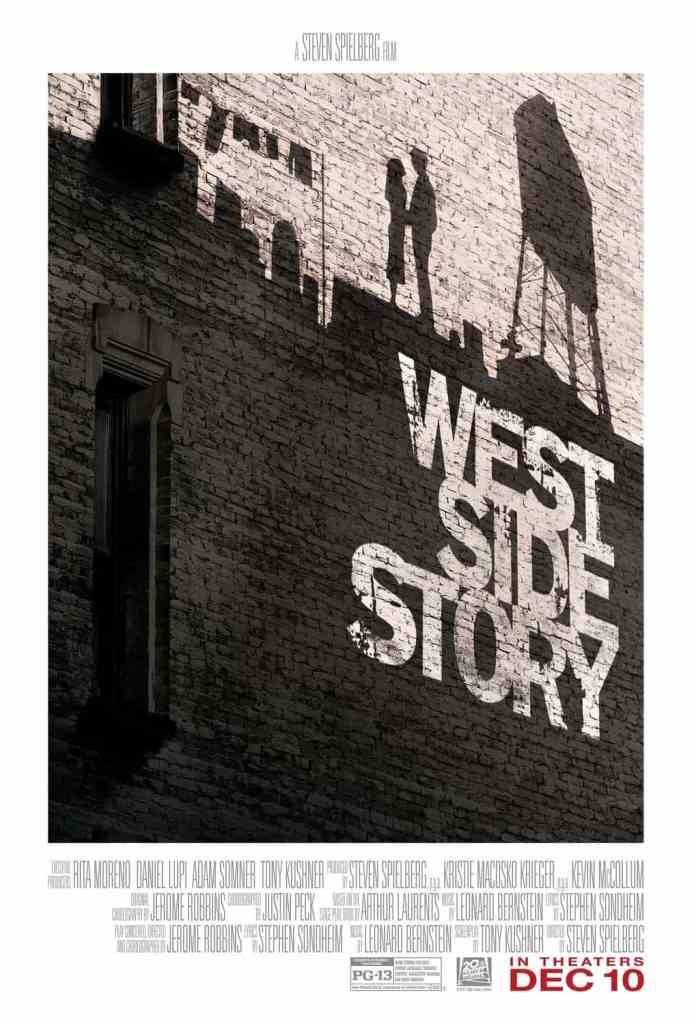
West Side Story (dir. by Steven Spielberg)


Although it lacks an Overture and an Intermission, Steven Spielberg’s rendition of 1961’s West Side Story flows well and does the story justice. Remakes are tricky things, you know. Stay too close to the source material and you end up with the line for line, shot for shot weirdness of Gus Van Zant’s Psycho. Stray too far from it and you discover something experimental and head scratching, like Luca Guadagnino’s Suspiria. West Side Story is in the middle of it all. It’s the same story you know and love, just taken from some new angles. I just wish the supporting cast hadn’t overshadowed the leads. My Aunt was a huge fan of the original, and I like to think she might have appreciated this one. It was worth catching it on the big screen back in December, and as of this writing, West Side Story is now available on Disney Plus and other streaming networks.

West Side Story is basically Romeo and Juliet, with two rival gangs (the Jets and the Sharks), fighting for territory in a battered New York City. When Tony (Ansel Elgort) meets Maria (Rachel Zegler), sparks fly between them, but it sets the stage for a dangerous confrontation between both gangs.

West Side Story marks another Spielberg production that doesn’t have John Williams at his side. While it saddens me that the two aren’t working together (and let’s face it, having just celebrated his 90th Birthday, Williams has easily earned a well deserved rest), the music for the film is in great hands. Originally composed by Leonard Bernstein and Stephen Sondheim, the music was handled by David Newman (Serenity) this time around, at Williams’ recommendation. One thing to learn here if you’re new to movies – David Newman is part of the Newman family of musicians that includes Thomas Newman (Wall-E, The Shawshank Redemption and just about any film Sam Mendes made), Randy Newman (Toy Story), and Alfred Newman, who created that 20th Century Fox fanfare you used to hear when watching Star Wars. Things remain mostly unchanged for the songs that were in the 1961 original, but there’s one additional piece (at least to me, anyway). “Somewhere” is sung by Rita Moreno’s character, rather than the leads. Not every song is exactly the same as the original (and it really shouldn’t be), but it’s very close. The only quirk I really had was for my favorite song, “Officer Krupke”, which changes things up just a little. It should be noted that everyone on screen is signing here, whereas in the original, it was mainly George Chakiris and Russ Tamblyn who sung their own parts (something I only learned just now in writing about this). I loved the whole element with Riff getting whacked over the head with the newspaper. Every other song has some magic to it, and with Janusz Kaminski as Spielberg’s Director of Photography, there are some fantastic uses of the camera in many shots. Guillermo Del Toro recently raved about the dance sequence, and it’s a great sequence. Sometimes, it’s also the subtle moments. My favorite comes in “A Boy Like That”. In the original, there was a glass door with a blue, yellow and red glass paneling. Spielberg still showcases the color pattern, but with the drapes instead. It was a cute homage to the original, I felt.

I also enjoyed what Tony Kushner did with the script. There’s a lot of Spanish in the film that’s given without any subtitles at all. I’m not sure if that was his decision or Spielberg’s, but for the most part, the feelings are clearly conveyed, whether you can understand what’s being said or not.

Writing is usually supposed to be without bias. I believe the sexual assault allegations against Ansel Elgort (Baby Driver) affected West Side Story’s success, somewhat. At my 7pm showing back in December, there weren’t many seats taken up for the film. That, or perhaps musicals aren’t as popular as they used to be (used to be being only a month prior with Lin-Manuel Miranda’s Tick Tock Boom!). Add to that a Pandemic we thought we were slowly breaking out of only to discover a return with renewed fervor and what could have been gigantic just didn’t seem so. My own biases were in part to blame for not writing about this movie sooner. I didn’t hate the film by any means – I really enjoyed it – I just didn’t want to throw in to the whole cancel culture that screamed “This person did bad things, smite him from our film and shun them from our memories.” (though I suppose by adding this, I am doing just that). Whatever the case, Elgort’s Tony isn’t terrible in any way. Based on his performance in Baby Driver, he would have been my go to pick as well. I just didn’t feel as much for the character as I thought I would, knowing that I found about the actor. Tony’s the only character in this one where I felt they could have swapped in a CGI Richard Beymer and it would have worked fine.

The opposite could be said of Zegler. She has an incredible voice and screen presence, and fits into Maria so well that you might forget you’re watching actors on screen. I hope to see her do more in the future (and while we’re on that topic, let her sit in at the Oscars. What’s one more seat, anyway?)

From top to bottom, West Side Story is stacked with a mix of veterans and young talent that we hope to see more of in the future. Rita Moreno, who played Anita in the original, returns a Doc, the owner of a store (which also makes a nice connection to the previous film). Brian D’Arcy James (Molly’s Game) is on hand as Officer Krupke. Corey Stoll (Ant-Man) plays Lt. Schrank, and that’s about the bulk of the adults you’ll run into other than teachers and the like. For the Jets and Sharks, we have Maddie Ziegler (who is Sia’s Muse) as Velma. We also have Mike Faist as Riff and David Alvarez as Bernardo, who were just fantastic. It is an absolute shame that either actor didn’t gain some kind of recognition during the award season. Thank goodness that at least Ariana DeBose (Hamilton) portrayal of Anita is getting some love. She lights up every scene she’s in, whether it’s dancing or showing grief. She’s my pick for Best Supporting Actress this year, though that position is stacked with some strong nominees.

Overall, West Side Story was a surprise for me. Spielberg hits the right marks, and I feel you can sit it next to Wise’s production. Whatever mood you happen to be in, you can pick one and enjoy. The supporting cast may overshadow the leads, but not so much that it ruins the film.

Belatedly, Here Are The Nominations of the North Texas Film Critics!


Two days ago, the North Texas Film Critics Association announced their nominations for the best of 2017!

On twitter, there’s been a lot of speculation as to why the NTFCA totally snubbed Call Me By Your Name in their nominations.  Hilariously, some people — all from out-of-state, of course — are assuming that the NTFCA must be made up of evangelical, right-wingers because it’s a Texas organization.  Seriously, those people have no idea how left-wing most members of the Texas media are.  Texas may be a Republican state but most of our native film critics are somewhere to the left of Bernie Sanders.

Anyway, here are the nominees:

BEST PICTURE
“Baby Driver”
“The Big Sick”
“Dunkirk”
“Get Out”
“The Florida Project”
“Lady Bird”
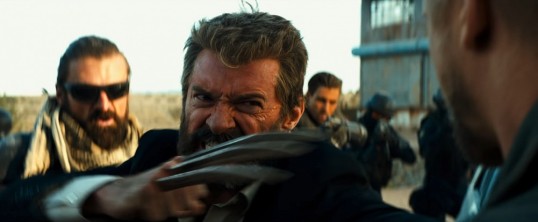
“Logan”
“The Post”
“The Shape of Water”
“Three Billboards Outside Ebbing, Missouri”

BEST ACTOR
James Franco, “The Disaster Artist”
Jake Gyllenhaal, “Stronger”
Tom Hanks, “The Post”
Hugh Jackman, “Logan”
Daniel Kaluuya, “Get Out”
James McAvoy, “Split”
Kumail Nanijiani, “The Big Sick”
Gary Oldman, “Darkest Hour”
Robert Pattinson, “Good Time”
Jeremy Renner, “Wind River”
Andy Serkis, “War for the Planet of the Apes”

BEST ACTRESS
Jessica Chastain, “Molly’s Game”
Judi Dench, “Victoria & Abdul”
Gal Gadot, “Wonder Woman”
Jennifer Lawrence, “mother!”
Frances McDormand, “Three Billboards Outside Ebbing, Missouri”
Brooklynn Prince, “The Florida Project”
Margot Robbie, “I, Tonya”
Saoirse Ronan, “Lady Bird”
Emma Stone, “Battle of the Sexes”
Meryl Streep, “The Post”

BEST SUPPORTING ACTRESS
Mary J. Blige, “Mudbound”
Holly Hunter, “The Big Sick”
Allison Janney, “I, Tonya”
Nicole Kidman, “The Killing of a Sacred Deer”
Tatiana Maslany, “Stronger”
Laurie Metcalf, “Lady Bird”
Octavia Spencer, “The Shape of Water”
Tilda Swinton, “Okja”
Kristin Scott Thomas, “Darkest Hour”
Bria Vinaite, “The Florida Project”
Allison Williams, “Get Out”

BEST SUPPORTING ACTOR
Steve Carell, “Battle of the Sexes”
Daniel Craig, “Logan Lucky”
Bryan Cranston, “Last Flag Flying”
Willem Dafoe, “The Florida Project”
Idris Elba, “Molly’s Game”
Will Poulter, “Detroit”
Sam Rockwell, “Three Billboards Outside Ebbing, Missouri”
Ray Romano, “The Big Sick”
Mark Rylance, “Dunkirk”
Patrick Stewart, “Logan”

BEST DIRECTOR
Sean Baker, “The Florida Project”
Guillermo del Toro, “The Shape of Water”
Greta Gerwig, “Lady Bird”
Patty Jenkins, “Wonder Woman”
Christopher Nolan, “Dunkirk”
Jordan Peele, “Get Out”
Steven Spielberg, “The Post”
Aaron Sorkin, “Molly’s Game”
Denis Villeneuve, “Blade Runner 2049”
Joe Wright, “Darkest Hour”

BEST CINEMATOGRAPHY
Thimios Bakatakis, “The Killing of a Sacred Deer”
Roger Deakins, “Blade Runner 2049”
Hoyte Van Hoytema, “Dunkirk”
Matthew Jensen, “Wonder Woman”
Dan Laustsen, “The Shape of Water”
Janusz Kaminski, “The Post”
Michael Seresin, “War for the Planet of the Apes”

BEST FOREIGN LANGUAGE FILM
“First They Killed My Father”
“In the Fade”
“Menashe”
“Raw”
“The Square”

BEST DOCUMENTARY
“Abacus: Small Enough to Jail”
“Chasing Coral”
“City of Ghosts”
“Cries from Syria”
“An Inconvenient Sequel: Truth to Power”
“Jane”
“Step”

BEST ANIMATED FEATURE
“The Breadwinner”
“Cars 3”
“Coco”
“Despicable Me 3:
“The LEGO Batman Movie”
“Loving Vincent”

The American Society of Cinematographers Has Spoken!


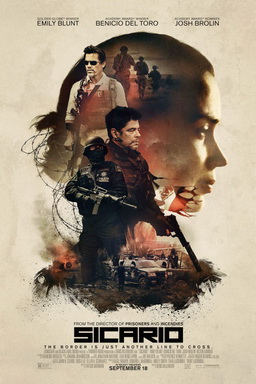
Sicario_poster

The American Society of Cinematographers announced their 5 nominees for the best cinematography of 2015 and here they are:

Bridge of Spies – Janusz Kaminski
Carol – Edward Lachman
Mad Max: Fury Road – John Seale
The Revenant – Emmanuel Lubezki
Sicario – Roger Deakins

This is Roger Deakins’s 14th ASC nomiantion!  If Sicario scores a best picture nomination, I wouldn’t be surprised if Deakins finally picks up an Oscar as a result.

Though a lot of critics don’t want to admit it (for obvious reasons), the guild awards are actually a far better Oscar precursor than the critic awards.  If you want to know what films are popular with the people who actually make movies, look to the guild awards.

And looking at the guild awards so far, it really does appear that there are quite a few films that have wide industry support.  Interestingly enough, both Sicario and Straight Outta Compton have been making something of a comeback with the guild awards.  (Even though Compton was not nominated by ASC, it has been recognized by the PGA, WGA, and SAG.)  As well, Bridge of Spies and Trumbo have both received more guild support than either has gotten from the critics.

For that matter, both Mad Max: Fury Road and The Big Short have received more guild support than Spotlight.  I know that Sasha Stone and Jeff Wells have pretty much declared Spotlight to be unbeatable but who knows?  Things could still get interesting.

(Correction: Over on Gold Derby, Sasha Stone is now predicting victory for The Big Short.)

Here Are The Winners of The 2015 Hollywood Film Awards, Whatever The Hell Those Are.


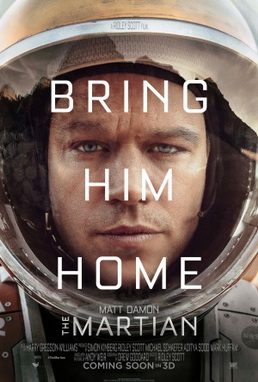
The_Martian_film_poster

Oh my God, y’all — the Hollywood Film Awards were held on Sunday and a bunch of potential Oscar contenders were honored!  Which all leads to one very important question:

What the Hell are the Hollywood Film Awards?

As I pondered that question, I realized that I had vague memories of sitting through the Hollywood Film Awards last year.  The ceremony was broadcast on CBS and it was distinguished from other awards shows in that there were no nominees.  Instead, only the winners were announced.  It was so amazingly dull and I can remember watching it and thinking, “Awards season has finally jumped the shark.”

(And this was even before Sasha Stone and Jeff Wells had their annual breakdowns…)

Anyway, the Hollywood Film Awards for 2015 were given out on Sunday and I’m assuming they weren’t televised.  (I was busy watching A Student’s Obsession anyway…)  You can find the winners below.  For the most part, it’s a pretty boring list (and why give out awards in November?) but it does allow us an early glimpse into some of the films and performers that are contending for Oscar gold.

Here’s the list.  Along with a gif of a kitty showing just how excited he is over Awards Season…

YAY! AWARDS! I'M SO EXCITED..I'M SO EXCITING...I'M SO ... SCARED!"

“YAY! AWARDS! I’M SO EXCITED..I’M SO EXCITED… I’M SO … SCARED!”

Career Achievement Award presented to Robert De Niro by David O. Russell.

Producer Award presented to Ridley Scott (“The Martian) by Russell Crowe.

Director Award presented to Tom Hooper (“The Danish Girl”) by Amber Heard.

Actor Award presented to Will Smith (“Concussion”) by Jamie Foxx.

Actress Award presented to Carey Mulligan (“Suffragette”) by Jake Gyllenhaal.

Supporting Actor Award presented to Benicio Del Toro (“Sicario”) by Reese Witherspoon.

Supporting Actress Award presented to Jane Fonda (“Youth”) by Laura Dern.

Breakout Actor Award presented to Joel Edgerton (“Black Mass”) by Johnny Depp, Dakota Johnson.

Breakout Actress Award presented to Alicia Vikander (“The Danish Girl”) by Armie Hammer.

New Hollywood Award presented to Saoirse Ronan (“Brooklyn”) by Ryan Gosling.

Ensemble Award presented to “The Hateful Eight” by Quentin Tarantino.

Breakout Ensemble Award presented to “Straight Outta Compton” by Ice Cube.

Comedy Award presented to Amy Schumer (“Trainwreck”) by Selena Gomez.

Breakthrough Director Award presented to Adam McKay (“The Big Short”) by Steve Carell.

Screenwriter Award presented to Tom McCarthy, Josh Singer (“Spotlight”) by Mark Ruffalo.

Blockbuster Award presented to “Furious 7” by Kurt Russell.

Song Award presented to “Furious 7” (“See You Again”) by Vin Diesel.

Animation Award presented to Pete Docter (“Inside Out”) by Amy Poehler.

Cinematography Award presented to Janusz Kaminski (“Bridge of Spies”).

Composer Award presented to Alexandre Desplat (“The Danish Girl,” “Suffragette”).

Documentary Award presented to Asif Kapadia (“Amy”).

Editor Award presented to David Rosenbloom (“Black Mass”).

Visual Effects Award presented to Tim Alexander (“Jurassic World”).

Sound Award presented to Gary Rydstrom (“Bridge of Spies”).

Costume Design Award presented to Sandy Powell (“Cinderella”).

Make-Up and Hair Styling Award presented to Lesley Vanderwalt (“Mad Max: Fury Road”).

Production Design Award presented to Colin Gibson (“Mad Max: Fury Road“).

"Yawn. These awards are boring..."

“Yawn. These awards are predictable and boring.  You disappoint me…”

The Cold War Relived Through Bridge of Spies


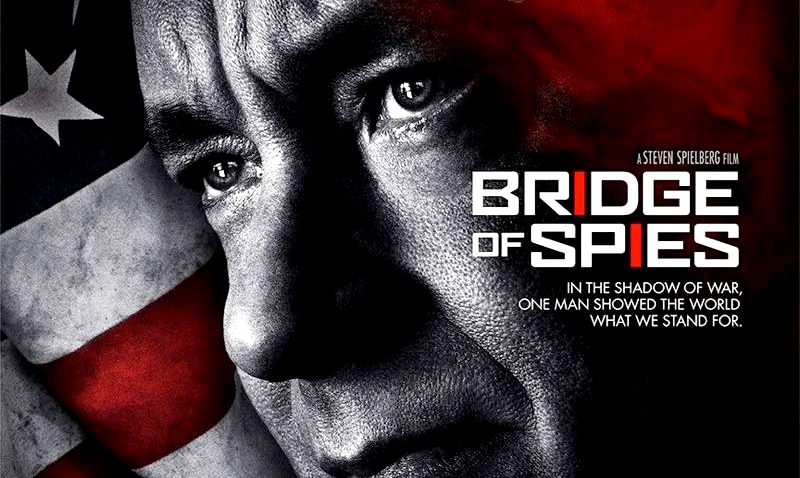
BridgeofSpies

Lisa Marie is not the only history nerd in this here place. I don’t think it was a coincidence that TSL’s co-founders ended up being both history nerds. We both love films the depict historical events. Some of them turn out to be great while some end up on the trash heap.

One filmmaker who has made a career late in his life of making historical films is Steven Spielberg. The same one who gave us great blockbusters in the scifi, thriller and fantasy genres has also given us some excellent historical films such as Saving Private Ryan, Schindler’s List, Munich and Lincoln.

We have the first trailer for Spielberg’s latest film which is based on the real-life events surrounding the 1960 U-2 spy plane incident where American pilot Francis Gary Powers was shot down while on a mission over the Soviet Union and was subsequently swapped back into US custody for a Soviet spy that the Americans were holding.

Bridge of Spies showcases the events which led to that swap and how contentious the negotiations had been before it finally came about. Everyone knows the Cuban Missile Crisis put the world very close to nuclear annihilation, but what many don’t know is how the Gary Powers Incident also pushed the two nuclear powers very close to the brink.

Bridge of Spies is set for an OCt. 16, 2015 release date…just in time for the start of Lisa Marie’s favorite film season: Awards Season.

By the way, here are the Satellite Award Nominations…


Moonrise

In even more Oscar season news, the International Press Association announced their nominations for the Satellite Awards yesterday.  Les Miserables led with 10 nominations.

If you’re like most people who don’t obsess over film awards then chances are that you’ve never heard of the International Press Association.  And that’s okay.  The main thing to know is that it’s Oscar season and that means that everyone’s giving out an award.  The Satellites are a lot like the Golden Globes, just with less credibility.  As far as serving as a precursor is concerned, a Satellite win can help a film maintain momentum but a loss doesn’t really hurt.

That said, for the past few years, I’ve always ended up agreeing more with the Satellite Nominations than with either the Oscars or the Golden Globes.  For instance, back in 2010, the Satellites nominated Noomi Rapace for her performance in the original (and the best) version of The Girl With The Dragon Tattoo.

BEST PICTURE
“Argo”
“Beasts Of The Southern Wild”
“Life Of Pi”
“Lincoln”
“Les Misérables”
“Moonrise Kingdom”
“The Sessions”
“Silver Linings Playbook”
“Skyfall”
“Zero Dark Thirty”

BEST DIRECTOR
Ben Affleck, “Argo”
Steven Spielberg, “Lincoln”
Kim Ki-duk, “Pieta“
Ben Lewin, “The Sessions”
David O. Russell, “Silver Linings Playbook”
Kathryn Bigelow, “Zero Dark Thirty”

BEST ACTRESS
Laura Birn, “Purge”
Jessica Chastain, “Zero Dark Thirty”
Emilie Dequenne, “Our Children”
Keira Knightley, “Anna Karenina”
Jennifer Lawrence, “Silver Linings Playbook”
Laura Linney, “Hyde Park On Hudson”
Emmanuelle Riva, “Amour”

BEST ACTOR
Bradley Cooper, “Silver Linings Playbook”
Daniel Day-Lewis, “Lincoln”
John Hawkes, “The Sessions”
Hugh Jackman, “Les Misérables”
Joaquin Phoenix, “The Master”
Omar Sy, “The Intouchables”
Denzel Washington, “Flight”

BEST SUPPORTING ACTRESS
Amy Adams, “The Master”
Samantha Barks, “Les Miserables“
Judi Dench, “Skyfall”
Helene Florent, “Café De Flore”
Anne Hathaway, “Les Misérables”
Helen Hunt, “The Sessions”

BEST SUPPORTING ACTOR
Javier Bardem, “Skyfall”
Robert De Niro, “Silver Linings Playbook”
John Goodman, “Flight”
Philip Seymour Hoffman, “The Master”
Tommy Lee Jones, “Lincoln”
Eddie Redmayne, “Les Misérables”

BEST ORIGINAL SCREENPLAY
John Gatins, “Flight”
Eric Toledano and Olivier Nakache, “The Intouchables”
Paul Thomas Anderson, “The Master”
Roman Coppola and Wes Anderson, “Moonrise Kingdom”
Kim Ki-duk, “Pieta”
Mark Boal, “Zero Dark Thirty”

BEST ADAPTED SCREENPLAY
Tom Stoppard, “Anna Karenina”
Chris Terrio, “Argo”
David Magee, “Life Of Pi”
Tony Kushner, “Lincoln”
Ben Lewin, “The Sessions”
David O. Russell, “Silver Linings Playbook”

BEST FOREIGN LANGUAGE FILM
“Amour” (Austria)
“Beyond The Hills” (Romania)
“Caesar Must Die” (Italy)
“The Intouchables” (France)
“Kon-Tiki” (Norway)
“Our Children” (Belgium)
“Pieta” (South Korea)
“A Royal Affair” (Denmark)
“War Witch” (Canada)

BEST ANIMATED OR MIXED-MEDIA FILM
“Brave”
“Frankenweenie”
“Ice Age 4: Continental Drift”
“Madagascar 3: Europe’s Most Wanted”
“Paranorman”
“Rise Of The Guardians”
“Wreck-It Ralph”

BEST DOCUMENTARY FEATURE
“Ai Weiwei: Never Sorry”
“The Central Park Five”
“Chasing Ice”
“The Gatekeepers”
“Marina Abramovic: The Artist Is Present”
“The Pruitt-Igoe Myth”
“Searching For Sugar Man”
“West Of Memphis”

BEST CINEMATOGRAPHY
Seamus McGarvey, “Anna Karenina”
Ben Richardson, “Beasts Of The Southern Wild”
Claudio Miranda, “Life Of Pi”
Janusz Kaminski, “Lincoln”
Mihai Malaimare, Jr., “The Master”
Roger Deakins, “Skyfall”

BEST PRODUCTION DESIGN
Sarah Greenwood, Niall Moroney, Thomas Brown, Nick Gottschalk and Tom Still, “Anna Karenina”
Nathan Crowley, Kevin Kavanaugh, James Hambidge and Naaman Marshall, “The Dark Knight Rises”
Rick Carter, Curt Beech, David Crank and Leslie McDonald, “Lincoln”
David Crank and Jack Fisk, “The Master”
Eve Stewart and Anna Lynch-Robinson, “Les Misérables”
Niels Sejer, “A Royal Affair”

BEST COSTUME DESIGN
Jacqueline Durran, “Anna Karenina”
Kym Barrett and Pierre-Yves Gayraud, “Cloud Atlas”
Christian Gasc and Valerie Ranchoux, “Farewell, My Queen”
Paco Delgado, “Les Misérables”
Manon Rasmussen, “A Royal Affair”
Colleen Atwood, “Snow White And The Huntsman”

BEST FILM EDITING
Alexander Berner, “Cloud Atlas”
Jeremiah O’Driscoll, “Flight”
Chris Dickens, “Les Misérables”
Lisa Bromwell, “The Sessions”
Jay Cassidy, “Silver Linings Playbook”
Dylan Tichenor, “Zero Dark Thirty”

BEST ORIGINAL SCORE
Dario Marianelli, “Anna Karenina”
Alexandre Desplat, “Argo”
Dan Romer and Benh Zeitlin, “Beasts Of The Southern Wild”
John Williams, “Lincoln”
Jonny Greenwood, “The Master”
Thomas Newman, “Skyfall”

BEST ORIGINAL SONG
“Learn Me Right,” “Brave”
“Fire In The Blood/Snake Song” “Lawless”
“Love Always Comes As A Surprise,” “Madagascar 3: Europe’s Most Wanted”
“Suddenly,” “Les Misérables”
“Still Alive,” “Paul Williams: Still Alive”
“Skyfall,” “Skyfall”

BEST SOUND (EDITING AND MIXING)
“Flight”
“Les Misérables”
“Snow White And The Huntsman”
“Kon-Tiki”
“Life Of Pi”
“Prometheus”

BEST VISUAL EFFECTS
“Cloud Atlas”
“The Dark Knight Rises”
“Flight”
“Life Of Pi”
“Prometheus”
“Skyfall”

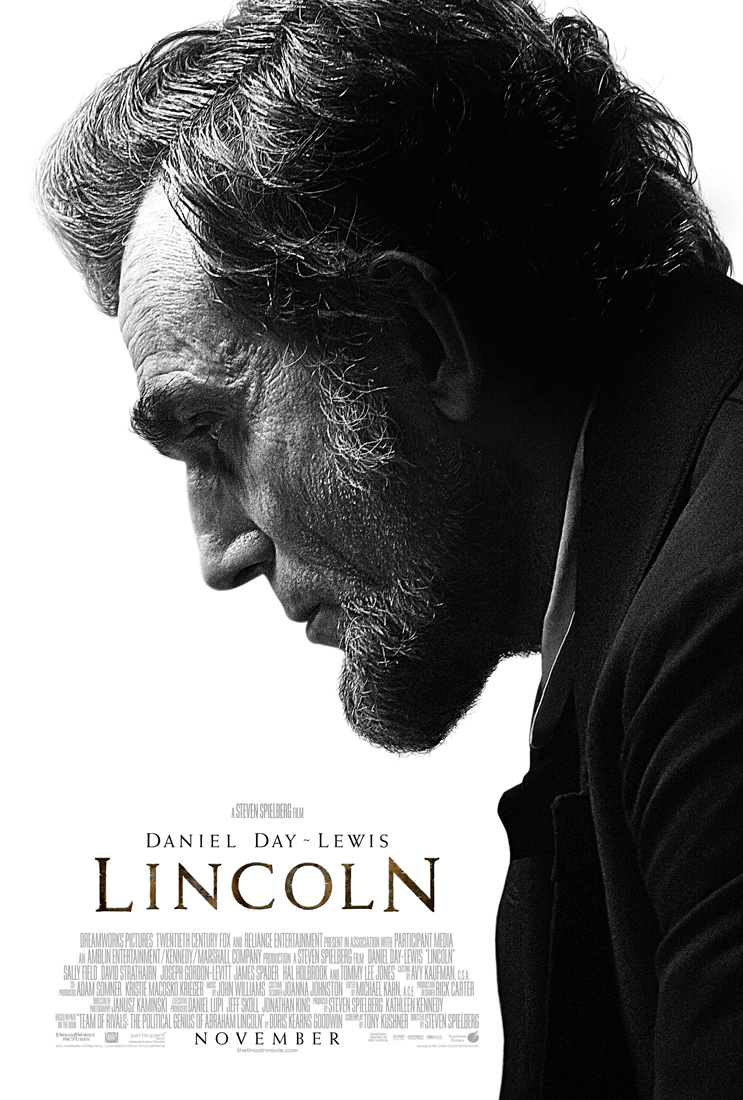
Trailer: Lincoln (dir. by Steven Spielberg)


One of the films for 2012 that’s seen by many as a major player in the end of the year Awards season. Steven Spielberg’s long-delayed and gestating historical drama about Abraham Lincoln will finally make it onto the big-screen this early November. Spielberg had initially chosen Liam Neeson to play the 16th President of these United States but as the project continued to get delayed he backed out and in comes Daniel Day-Lewis to take on a very difficult role.

Lincolnis based off of Doris Kearns Goodwin’s biography of the 16th President, Team of Rivals: The Political Genius of Abraham Lincoln. With Tony Kushner tasked with finally hashing out a final draft of the screenplay the film finally went into production in 2009. The cast is an ensemble led by Day-Lewis that includes several past Academy Award and Emmy winners like Tommy Lee Jones, Sally Field and Hal Holbrook with other acting luminaries like Joseph Gordon-Levitt, Walton Goggins, David Straithairn, Jared Harris and Jackie Earle Haley.

The first trailer finally arrived today, September 13, 2012, during a Google+ hangout with Spielberg and Gordon-Levitt and reaction to the trailer seems to range from “give Daniel Day-Lewis the Oscar already” to “an Oscar-bait if there was ever one”. No matter where one sat in their reaction to this trailer it will be interesting to see if Spielberg will come out with a film that doesn’t come off as maudlin and manipulative, but deliver a film that explores and tries to explain why Lincoln became such a beloved President in his time despite making so many unpopular decisions and sitting through the worst era of American history (Civil War) and decades since his death.

Here’s to hoping that the film is less like Amistad and more like Schindler’s List in terms of tone and narrative. We know why Lincoln is seen as the greatest President we ever had. What we want to know is the why’s.

Lincoln arrives in the theaters this November 9, 2012.