I’m a big fan of Robert De Niro, and I think it all started because of the movie MIDNIGHT RUN (1988). I was only 14 years old when it came out, but it was everything I wanted in a movie, which was primarily great action, with a dash of fun comedy. I was soon seeking out all of his great work, whether it be with Coppola, Scorsese, De Palma, or even Roger Corman. Well, just this evening, as I was browsing through Amazon Prime’s selection of horror films, I came across HIDE AND SEEK. Since I’d never seen it before, and it looked kind of creepy, I thought I’d give it a chance.
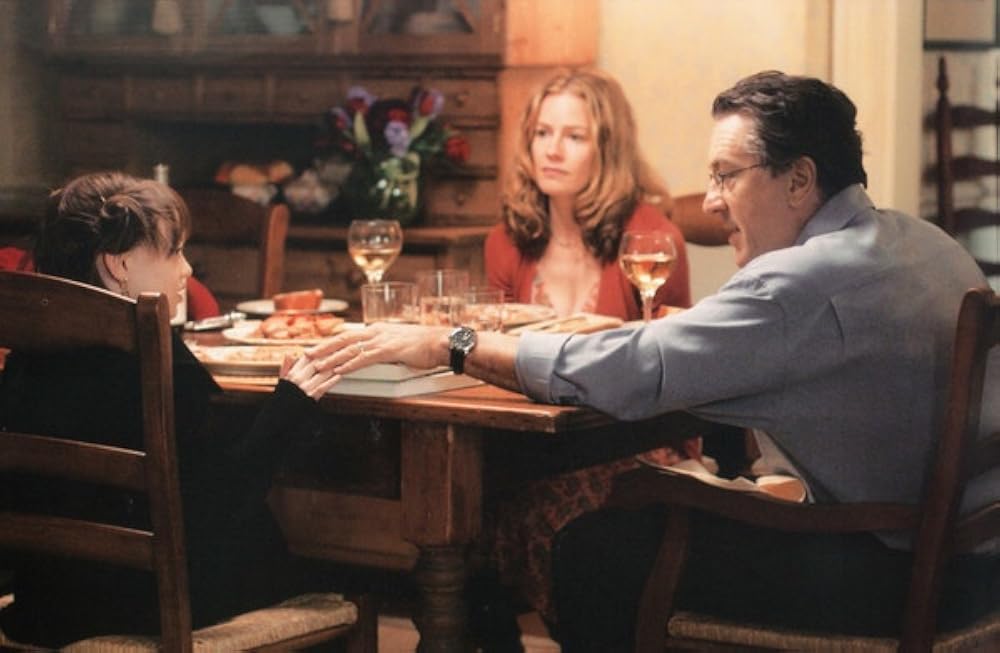
De Niro plays David Callaway, a psychologist who is struggling to cope with the death of his wife. He moves with his young daughter, Emily (Dakota Fanning), to a house out in the country in upstate New York, hoping that a change of scenery will help them both recover from their loss. Unfortunately, Emily begins acting strangely, talking about an imaginary friend named Charlie. Before long, David finds himself dealing with a series of increasingly disturbing events that seem to have something to do with this mysterious friend.
I’ve always enjoyed a good psychological thriller, especially one that keeps you guessing about what’s going on. HIDE AND SEEK is one of those movies that wants to freak you out and make you question whether or not you can trust what you’re seeing, or any of the people involved. Of course this being a psychological thriller, you can’t really trust anyone, especially the people who pretend to care the most.
Dakota Fanning is excellent as Emily. I’ve always held her performance in the great Denzel Washington film, MAN ON FIRE (2004), in high regard as an example of how great a child actress can be. Here, I think she does a good job of making Emily seem both vulnerable and a little scary at times. De Niro is also effective, particularly as the story gradually reveals more about the relationship between him and his daughter. The supporting cast, which includes Famke Janssen, Amy Irving, and especially Elisabeth Shue, adds to the mystery surrounding the film. I just like seeing Elisabeth Shue in any film, because I’ve had a crush on her since the fifth grade.
HIDE AND SEEK is the kind of thriller that depends on its twists and turns, and whether or not we’re willing to go along. I will say that I enjoyed the watching the story unfold, even when the ending doesn’t come off quite as clever as the filmmakers had hoped. My final verdict is that it’s an entertaining film with strong central performances from De Niro and Fanning. I enjoy movies that give me something to think about while I’m watching them, and this one kept me interested in finding out what was really going on. It was a fun watch on dark night in October.
When I think of Tuesday Weld, I first think of her character in Sergio Leone’s ONCE UPON A TIME IN AMERICA (1984). It’s not an easy character to play and she nails it. James Woods references Tuesday in his 2024 album Hear the Thunder Crack on the song “Cafe Central,” specifically pointing out how difficult her character was to play.
Weld hasn’t appeared on screen since 2001, but she worked for 45 years prior to her retirement. To celebrate her birthday, here’s a scene from the Leone masterpiece.
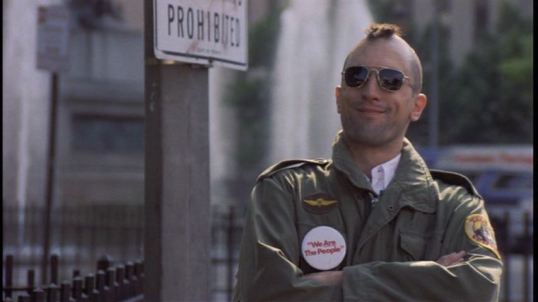
Taxi Driver is 50 years old but it’s still one of cinema’s most definitive portraits of urban paranoia and societal detachment. Travis (played by Robert De Niro) obsesses on the city that he harshly judges even though he’s as much a part of New York as those who he wishes will be washed away.
This scene features Robert De Niro, Martin Scorsese, and Paul Schrader at their definite best. I imagine that, for a lot of people, this is one of those scenes that solidified their opinions on New York City. For the record, the last time I was in New York, everyone was fairly pleasant. They weren’t exactly friendly but I also didn’t get my bag stolen. (Those of us who don’t live in New York tend to assume that we’ll get mugged as soon as we leave JFK.)
4 Or More Shots From 4 Or More Films is just what it says it is, 4 shots from 4 of our favorite films. As opposed to the reviews and recaps that we usually post, 4 Shots From 4 Films lets the visuals do the talking!
Today, the Shattered Lens wishes a happy birthday to actor Robert De Niro. It’s time for….
4 Shots From 4 Robert De Niro Films
Taxi Driver (1976, dir. Martin Scorsese, DP: Michael Chapman)
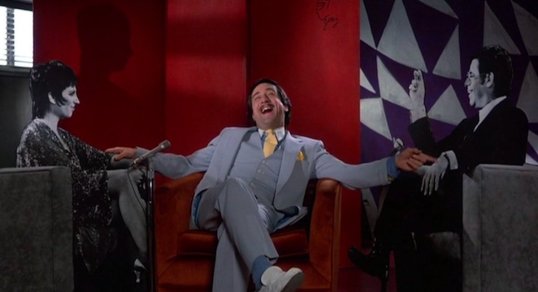
The King of Comedy (1982, dir by Martin Scorsese, DP; Fred Schuler)
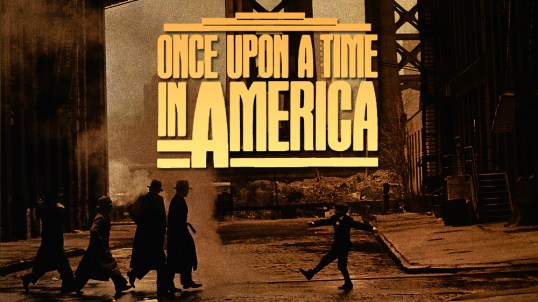
Once Upon A Time In America (1984, dir by Sergio Leone, DP: Tonino Delli Colli)
Casino (1995, dir by Martin Scorsese, DP: Robert Richardson)
“They say there’s just enough religion in the world to make men hate one another, but not enough to make them love.” — Louis Cyphre
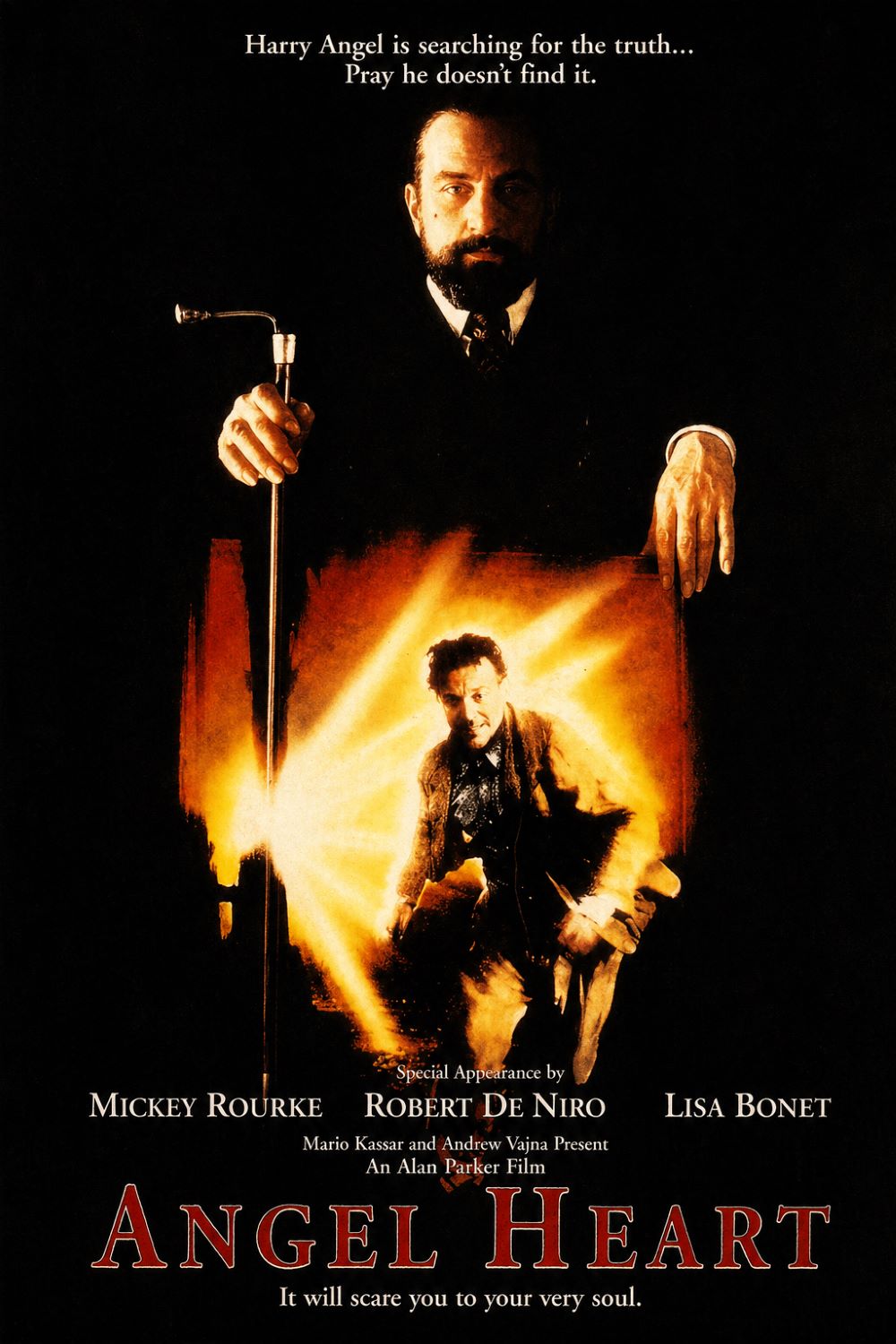
Angel Heart is one of those ’80s movies that sneaks up on you, starting like a gritty detective yarn before plunging into supernatural muck that leaves you questioning everything. Alan Parker’s 1987 neo-noir gem, adapted from William Hjortsberg’s Falling Angel, stars Mickey Rourke as Harry Angel, a down-and-out private eye in 1955 New York who gets pulled into a case that reeks of bad karma from the jump. It’s casual viewing at first—rain-slicked streets, fedoras, the whole bit—but Parker’s got a critical eye for blending hardboiled noir with occult horror, making it stick like gum on your shoe long after the credits roll.
Harry’s your classic hard luck of a gumshoe, hustling divorce cases in a dingy office when this slick mystery man named Louis Cypher (Robert De Niro, chewing scenery with devilish glee—get the name pun?) hires him to track down Johnny Favorite, a crooner who vanished after World War II. Cypher’s got cash to burn and an unsettling vibe that hints at deeper darkness, pulling Harry into a web of lies from the start. Harry follows the trail from NYC’s jazz dives to the steamy underbelly of New Orleans, where voodoo rituals, bloody murders, and hallucinatory nightmares start piling up like bodies in a back alley. Parker does a solid job adapting the source material’s clash of noir cynicism with Southern gothic rot, but his direction leans too heavily on the style of what he thinks a Southern gothic noir is supposed to look like—overripe with misty bayous and candlelit rituals—instead of letting the narrative drive the supernatural melding with the hardboiled detective beats.
What hooks you early is Rourke’s performance—he’s at his pre-meltdown peak here, all brooding intensity and rumpled charm, nailing the everyman unraveling under cosmic pressure. De Niro’s Cypher is a masterclass in minimalism; he lounges in that art deco office peeling a hard-boiled egg with surgical precision, dropping biblical barbs that land like gut punches. It’s not showy, but every word drips menace, elevating the whole film from B-movie territory to something almost operatic. Then there’s Lisa Bonet, fresh off The Cosby Show, diving headfirst into an X-rated role as Epiphany Proudfoot, Johnny’s daughter with a voodoo twist. Her steamy, sweat-drenched sex scene with Harry is erotic nightmare fuel—raw, uncomfortable, and unforgettable, pushing boundaries in a way that got the film slapped with an X rating before settling on R. Parker’s not afraid to get gory either; decapitations and ritual killings hit with visceral thud, but it’s the psychological slow burn that really twists the knife.
The film’s neo-noir DNA shines through in its voiceover narration, shadowy cinematography by Michael Seresin (those rain-lashed rooftops and fog-shrouded bayous are poetry), and a Trevor Jones score laced with eerie blues that pulses like a heartbeat from hell. Parker shifts gears from straight detective procedural to full-on supernatural dread, introducing occult hints gradually—a creepy voodoo ceremony here, a phantom vision there—until the genre flip feels inevitable yet shocking. New Orleans becomes a character itself, all humid decay and ritual undercurrents, contrasting sharp with New York’s cold urban grind. It’s Parker’s only stab at horror (he’s more Mississippi Burning or The Commitments guy), but while he nails the glossy nightmare aesthetic, the heavy stylistic hand sometimes overshadows the organic fusion of noir fatalism and otherworldly dread that the story begs for.
Critically, though, Angel Heart isn’t flawless. The late-game turns pack a wallop but drag a bit in laying out their logic, making you question the elaborate cat-and-mouse when a quicker path might’ve sufficed. Some dated effects in the dream sequences feel cheesy now, a minor blemish on an otherwise polished gem. Pacing sags slightly in the middle as Harry chases red herrings, and while the cast is gold, supporting players like Brownie McGhee as Toots Sweet add flavor without always deepening the mystery. Still, these are nitpicks; Parker’s atmospheric command and thematic depth—exploring guilt, denial, and the inescapability of one’s darker impulses—elevate it above pulp, even if the visuals occasionally feel more like a mood board than narrative propulsion.
Thematically, it’s a devil’s playground. Angel Heart riffs on classic Faustian tropes, but Parker’s critical lens probes deeper into fractured identity and moral rot. Harry’s journey mirrors the novel’s hardboiled cynicism, but the film amps the supernatural, turning noir fatalism into outright damnation. Mirrors recur obsessively—shattered glass, reflections warped by blood—symbolizing a crumbling self-image as buried truths bubble up. Voodoo isn’t just window dressing; it’s woven into the fabric, blending African diaspora mysticism with Catholic guilt for a uniquely American horror. Parker’s post-war setting adds layers, nodding to shell-shocked vets and racial undercurrents without preaching, letting the era’s shadows do the talking, though one wishes the story’s momentum had guided the gothic flourishes rather than the other way around.
Visually, it’s a feast. Seresin’s camera glides through rain-swept nights and candlelit rituals with painterly flair, while Parker’s British outsider gaze infuses Americana with alien menace—think Midnight in the Garden of Good and Evil but grimier. The egg-peeling scene alone is iconic, De Niro’s Cypher dissecting morality with yolk-stained fingers. And those final confrontations? Subtle, actor-driven tension that relies on faces, not effects, delivering chills through implication rather than revelation. Jones’ score weaves jazz horns with dissonant strings, amplifying the bluesy fatalism; it’s the perfect auditory companion to Harry’s descent, grounding the style in emotional truth.
For fans of the genre mashup, Angel Heart is essential—think Chinatown meets The Exorcist, with Parker’s glossy sheen making it pop. Rourke’s turn here is arguably his career best, raw and vulnerable before the tabloid implosion; De Niro proves he’s the king of charismatic evil. Bonet’s bold pivot shocked audiences, earning a career-defining role that proved her chops beyond sitcom smiles.
Rewatch value is sky-high; the slow build rewards patience, and clues hidden in plain sight make it a puzzle box. It’s not subtle—Cypher’s name screams spoilers—but that’s part of the fun, a winking nod to infernal cleverness. Parker’s eye for detail shines in production design: peeling wallpaper in tenements, incense-heavy apartments, gator-infested swamps. It’s immersive, oppressive, and oddly seductive, with every frame dripping atmosphere that pulls you deeper into the haze, even if the narrative sometimes plays catch-up to the visuals.
In a sea of jump-scare slop, Angel Heart stands tall as thoughtful horror-noir that lingers because it forces you to confront the monster in the mirror. If you’re digging into ’80s cult classics or just crave a detective tale with teeth, fire it up. It’s flawed, yeah—style occasionally eclipsing story—but those flaws make it human, much like Harry himself.
Today’s scene of the day comes from 1995’s Casino. In this scene, Martin Scorsese shows us and Joe Pesci and Robert De Niro tell us about what happened when Nicky Santoro (played by Pesci, in one of his best performances) moved out to Las Vegas.
The final moments of Sergio Leone’s epic 1984 gangster film, Once Upon A Time in America, are filled with questions and mysteries.
The final moments of Sergio Leone’s epic 1984 gangster film, Once Upon A Time in America, are filed with questions and mysteries.
In 1968, who did Noodles (played by Robert De Niro) see standing outside of Max’s mansion? When the garbage truck pulled up, did the mysterious man get in the truck or was he thrown in by some unseen force?
Why, in 1968, did Noodles see a car from the 1920s, one that was full of people who appeared to be celebrating the end of prohibition? Was the car really there, in 1968, or was it an element of Noodles’s past as a gangster suddenly popping into his mind?
Once Upon A Time In America (1984, dir by Sergio Leone, DP: Tonino Delli Colli)
When we then see a young Noodles in an opium den, are we flashing back to the 1920s? Is Noodles remembering the past or is it possible that we’ve been in the 20s the whole time and all of the scenes set in 1968 were actually only a drug-induced dream?
Why, with men looking to kill him and all of his friends apparently dead, does Noodles suddenly smile at the end of the film? Is that sudden smile a result of the drugs or is there something else going on?
Once Upon A Time In America was Sergio Leone’s final film. It’s one that he spent decades trying to get made and, once it was finally produced, it was butchered and re-edited by a studio hacks who demanded that the film tell its story in a linear style. Leone was reportedly heart-broken by how his film was treated. Some have speculated that his disappointment may have even contributed to the heart attack that eventually killed him. It was only after Leone passed that his version of Once Upon A Time In America became widely available in the U.S. This enigmatic epic continues to spark debate. One thing that can’t be denied is that it’s a brilliant film.
As today is Leone’s birthday, it only seems appropriate to share a pair of scenes that I love, from the ending of Once Upon A Time In America.
Taxi Driver is nearly 50 years old but it’s still one of cinema’s most definitive portraits of urban paranoia and societal detachment. Travis (played by Robert De Niro) obsesses on the city that he harshly judges even though he’s as much a part of New York as those who he wishes will be washed away.
This scene features Robert De Niro, Martin Scorsese, and Paul Schrader at their definite best. I imagine that, for a lot of people, this is one of those scenes that solidified their opinions on New York City. For the record, the last time I was in New York, everyone was fairly pleasant. They weren’t exactly friendly but I also didn’t get my bag stolen. (Those of us who don’t live in New York tend to assume that we’ll get mugged as soon as we leave JFK.)
I do worry about the future of New York, especially with the election that is being held today. To say I’m not a fan of either of the two front runners would be an understatement but, at the same time, it’s not my place to tell people in New York City how to vote. (I’m a big believer in not telling people in other cities and states how to vote. Whenever anyone from up north asks me why Beto didn’t win in 2018, I tell them the truth. A bunch of pro-Beto yankees came down here and got on everyone’s nerves right before they voted.) Instead of telling people what to do, I’ll just say that I sincerely hope that whatever happens will work out as well as it possibly can.
(That’s another reason I don’t endorsements. “Vote for the candidate who will work as well as he possibly can,” probably isn’t going to gets the cheers that some other slogans would.)
In The Alto Knights, I’m pretty sure that Robert De Niro sets the record for saying “What’s the mater with you!?” the most times in one movie.
I don’t know for sure, of course. While I was watching the movie last night, I didn’t keep an exact count and, for that, shame on me. That said, when you consider that The Alto Knights features Robert De Niro playing not just one but two old school Italian gangsters, you can be sure that there were a lot of scenes of either Vito Genovese (Robert De Niro) or Frank Costello (De Niro, again) demanding to know what was the matter. When Genovese watches Costello testifying in front of a Congressional hearing, the “What’s the matter with you!?” count truly goes haywire.
The Alto Knights was directed by Barry Levinson, who has directed some great films. It tells the relatively true story of the rivalry between Costello and Genovese. Both Costello and Genovese were present when the modern Mafia was first created. The diplomatic and negotiation-minded Costello was known as the “Prime Minister of the Underworld.” Genovese was a much more violent gangster and he became one of the most powerful members of the New York Mafia by basically killing anyone who stood in his way. Costello and Genovese started out as weary friends before coming mortal enemies. Costello retired from the rackets after Genovese ordered one of his men to shoot Costello in the head. Meanwhile, Genovese ended up involving the Mafia in the drug trade and died in prison. In the film, Costello narrates their story. There’s a lot of shots of an elderly Costello sitting in what appears to be a park as he speaks directly to the camera. Interestingly enough, Gottitried to do the same thing, with Travolta’s John Gotti speaking directly to the audience while standing in front of the Brooklyn Bridge.
The Alto Knights pretty much features all of the usual Mafia tropes. All the usual points are hit. Albert Anastasia (played by Michael Rispoli) is assassinated while getting a haircut and some viewers will remember that, before De Niro played the man who ordered Anastasia’s assassination, he also played the man who claimed to have shot Anastasia in The Irishman. Personally, I love Mafia films but The Alto Knights felt a bit too recycled to be truly effective. Barry Levison does the usual thing of dropping real-life newspaper headlines and photographs into the middle of the film and it doesn’t so much add verisimilitude as much as it just reminds one of David DeCoteau’s film about Bonnie and Clyde.
The film’s main selling point is that it features Robert De Niro playing two gangsters but there’s really not much gained from casting De Niro in both roles. We get a few scenes of De Niro acting opposite of himself and it’s hard not to notice that Genovese’s reactions often don’t seem to match whatever it is that Costello’s saying. As an actor, De Niro has the ability to be believable as both the cerebral Costello and the hot-headed Genovese but ultimately, the double casting just feels like a distraction. Watching De Niro acting opposite himself, I found myself thinking how much more entertaining it would have been if Joe Pesci, Al Pacino, Harvey Keitel, or even John Travolta had played Genovese. To be honest, if Levinson really had any courage, he would have given the role to James Woods and given us the Once Upon A Time In America/Casino reunion that we all deserve.
The film did win me over a bit towards the end with a recreation of the Apalachin meeting. That was when Genovese invited every mob boss in the country to come to a meeting in upstate New York, just for the feds to suddenly show up and send everyone scattering. For most of the film, it was hard not to feel that Barry Levinson was past his prime as a director but he actually did a good job with the Apalachin scenes. I genuinely laughed when Genovese got into a pointless argument with his driver. I loved the way the film captured the real-life absurdity of a bunch of mob bosses fleeing into the woods, all of their bravado suddenly dissipating as they scrambled into the wilderness. If the entire film had just been about the Apalachin meeting, this review would probably be a lot of different. As it is, one good sequence can’t save the film as a whole.