Film Review: Prisoners (dir. by Denis Villeneuve)


“He’s not a person anymore. He stopped being a person when he took our daughters.” — Keller Dover

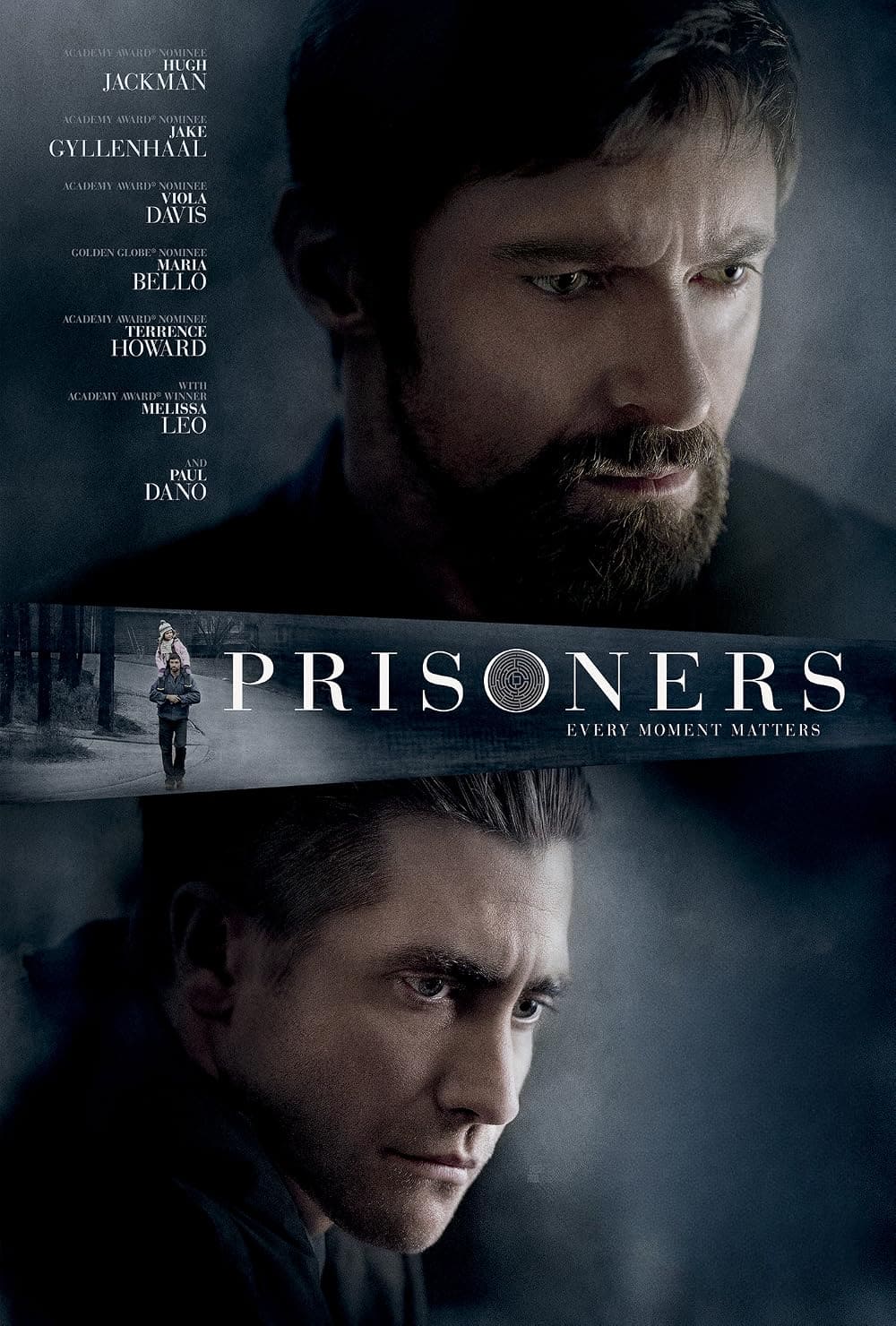
There’s a point in Prisoners (2013) when waiting starts to feel like the most unbearable thing a person could do. A child is missing, answers aren’t coming, and every passing hour makes restraint seem harder to defend. Denis Villeneuve builds his thriller around that pressure, then asks what happens when someone mistakes the need to act for the right to do anything. The result is gripping, ugly, and emotionally exhausting in ways that go beyond its kidnapping mystery. It’s a film about a father trying to rescue his daughter while steadily losing the ability to judge himself.

The nightmare begins when two young girls disappear during Thanksgiving. Their families scramble for answers, and suspicion falls on Alex Jones, a young man whose RV was parked nearby. Detective Loki, played by Jake Gyllenhaal, questions him, but the police don’t have enough evidence to hold him. Keller Dover, played by Hugh Jackman, cannot accept his release. Convinced Alex knows where his daughter is, Keller abducts him and begins torturing him for information. What he considers a necessary response to an emergency becomes a second crime unfolding alongside the one he wants to solve.

Keller’s reasoning is frightening because its starting point is understandable. His daughter might be suffering, and he cannot bear to imagine himself standing around while there’s still a chance to help her. But he turns that fear into a false choice: either he hurts Alex, or he fails his child. Once he accepts those as the only options, cruelty starts looking like duty. The film’s strongest insight is that terrible choices don’t always feel terrible to the people making them. Sometimes they feel like the only responsible thing left to do.

That thinking grows out of Keller’s identity as someone who prepares for disaster. He stores supplies, anticipates danger, and treats protecting his family as a responsibility that demands constant vigilance. His daughter’s disappearance makes all that preparation feel useless. He has built his life around being ready, only to discover that readiness cannot guarantee safety. Holding Alex captive gives him something he can control when everything else feels beyond his reach. He can set the conditions and demand a response. It doesn’t mean he’s getting closer to his daughter, but it lets him feel less helpless.

Jackman makes that helplessness visible even when Keller is at his most intimidating. The shouting and physical aggression are forceful, but the performance works because they never completely conceal his panic. He looks like a man trying to force the world back into a shape he recognizes. There’s also an increasingly stubborn quality to his behavior, as though admitting doubt would bring the whole structure crashing down. Jackman lets us understand Keller’s anguish without asking us to confuse it with innocence. His grief is real, and so is the suffering he chooses to inflict.

The longer Keller holds Alex, the more his obsession protects itself from challenge. Silence becomes evidence that Alex is hiding something. Confusion becomes a refusal to cooperate. The failure to produce useful information becomes an argument for more violence rather than a reason to reconsider. Paul Dano makes this painful to watch, giving Alex an unreadability that never cancels out his vulnerability. Keller believes he is stripping away deception, but he is actually making it impossible for anything to contradict him. He wants an answer, yet he has already decided which answer he will accept.

The film also understands that crossing a moral line can make retreat harder rather than easier. If Keller stops, he has to face the possibility that his actions were pointless as well as cruel. Continuing allows him to postpone that reckoning. His obsession becomes partly about finding his daughter and partly about proving that everything he has done belongs to a rescue mission. That’s an especially uncomfortable idea: people can become more committed to a terrible decision because of the damage it has already caused. The cost becomes their reason to keep going.

Terrence Howard and Viola Davis, playing the other missing girl’s parents, widen that conflict beyond Keller’s individual behavior. Their characters share his desperation, but their responses expose the difference between being horrified by violence and actually intervening. Fear makes compromise tempting, especially when someone else is willing to do the thing you can barely stand to consider. These scenes aren’t as explosive as Jackman’s, but they matter. They show how an obsession can draw other people into its logic, asking them to accept one more violation because this might finally be the one that produces answers.

Gyllenhaal gives Loki a different kind of intensity. His tense posture, restless blinking, and clipped exchanges suggest someone working hard to contain frustration. He isn’t an emotionless representative of procedure; he cares about finding the girls, and the lack of progress clearly weighs on him. What separates him from Keller is the need to keep investigating uncertainty rather than erase it through conviction. Gyllenhaal makes that effort compelling. The contrast challenges Keller’s assumption that restraint means indifference, or that the person willing to go furthest must be the person who cares most.

Villeneuve’s patient direction makes the waiting feel oppressive without turning Keller’s violence into a satisfying release. The cold surroundings and gloomy interiors seem to drain comfort from ordinary places. Scenes linger long enough for us to register the consequences rather than simply anticipate the next clue. The mystery does become elaborate, and some developments feel more engineered than the emotional conflict around them. Still, the performances keep pulling the film back toward something painfully human. Its most effective suspense comes from wondering not just what Keller will do next, but what he will tell himself afterward.

By the end, Prisoners has made action itself feel morally complicated. Doing something isn’t automatically better than waiting, especially when the action depends on treating doubt as weakness and another person’s suffering as an acceptable expense. That’s what gives the film its staying power beyond the mechanics of its mystery. Keller wants to be the father who never gives up, but he stops distinguishing perseverance from destruction. Villeneuve leaves that confusion exposed rather than making it noble. The hardest thing to watch isn’t a man abandoning his principles. It’s a man convincing himself that violating them is how he proves they matter.
Horror Film Review: Zodiac (dir. by David Fincher)


“Just because you can’t prove it, doesn’t mean it’s not true.” — Robert Graysmith

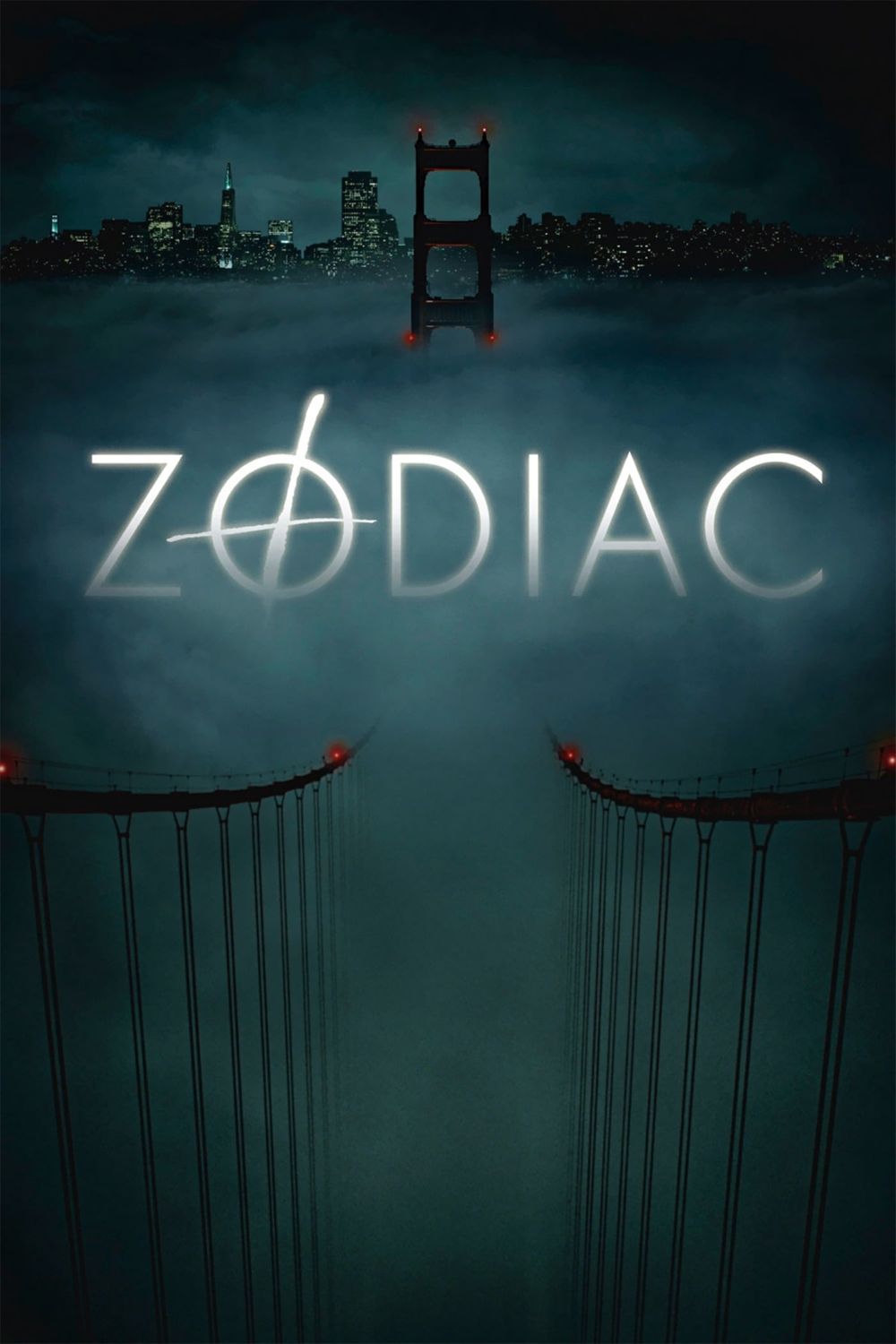
There’s a particular kind of dread in watching capable people do everything they can and still come up short. That’s the feeling David Fincher taps into throughout Zodiac, a movie where a promising lead can be almost as unnerving as a dead end. Every possibility raises hopes, invites scrutiny, and threatens to pull someone deeper into a mystery that refuses to settle. Released in 2007, it’s a remarkably absorbing thriller about a serial killer, but it’s just as interested in the people left sorting through his damage. Catching him is the goal. Living with the failure to catch him becomes the story.

The film approaches the Zodiac investigation through three men with different relationships to the case. Newspaper cartoonist Robert Graysmith, played by Jake Gyllenhaal, becomes fascinated by its puzzles. Crime reporter Paul Avery, played by Robert Downey Jr., follows it professionally, while police inspector Dave Toschi, played by Mark Ruffalo, works to build a prosecutable case. James Vanderbilt’s screenplay, adapted from Graysmith’s books Zodiac and Zodiac Unmasked, lets their paths overlap without making them a conventional crime-solving team. They share information and frustrations, but their responsibilities, methods, and personal stakes aren’t interchangeable. That distinction gives the investigation texture.

Although Zodiac isn’t a typical horror movie, its story and themes firmly belong in serial-killer horror. The fear comes from more than what happens at individual crime scenes. This is an entire region being terrorized by someone whose next move nobody can reliably predict. His letters extend that fear into homes and workplaces, keeping the possibility of another attack alive. The authorities appear almost helpless to provide reassurance, despite their efforts. Fincher doesn’t reduce that helplessness to incompetence. The disturbing point is that people can work diligently, follow procedures, and pursue credible leads without gaining the power to prevent another killing.

The early attacks make that threat feel horribly concrete. Fincher doesn’t treat the victims as disposable figures whose only purpose is to establish how dangerous the killer is. There’s an uncomfortable attention to their vulnerability, especially during the Lake Berryessa sequence. Its daylight setting strips away the familiar suggestion that darkness is what makes a place unsafe. Everything is visible, yet visibility offers no protection. The pacing is agonizing because it allows the situation to become clear without offering an escape from it. Rather than making the violence exciting, Fincher makes it something you want desperately to interrupt.

Once the film turns toward the investigation, it finds suspense in the distance between a discovery and a usable answer. Handwriting comparisons, witness descriptions, phone calls, and jurisdictional obstacles become compelling because their consequences are clear. A detail might matter enormously, but only if someone can verify it or connect it to something stronger. Fincher gets you invested in that process without making it look smooth. Information arrives late, recollections complicate things, and apparent breakthroughs lose their shape. The movie keeps generating momentum, then showing how easily that momentum can disappear. Progress is possible, but it’s never secure.

Ruffalo gives that uncertainty a persuasive human center. His Toschi is smart, engaged, and occasionally funny, but he isn’t presented as a detective whose instincts automatically outrank the evidence. He can suspect someone without possessing what he needs to move forward. Ruffalo makes that limitation frustrating without turning every setback into a speech. A tired expression or clipped response often carries the scene. His performance also gives the procedural material an emotional foundation: this isn’t paperwork for its own sake. It’s the work standing between an investigator’s conviction and the possibility of holding someone accountable.

Downey’s Avery brings a looser, more abrasive rhythm to the film. He’s comfortable with a cutting remark, and his humor initially makes him seem insulated from the ugliness he covers. Gradually, that apparent insulation wears thin. Downey lets the character’s wit remain recognizable even as the confidence behind it becomes less convincing. It’s an effective performance because the deterioration doesn’t feel like a separate dramatic subplot pasted onto the investigation. It grows out of his involvement. Avery’s trajectory also makes Graysmith’s increasing enthusiasm uneasy to watch. One man is getting pulled in while another shows the damage that involvement can leave behind.

Gyllenhaal handles Graysmith’s transformation with similar care. His curiosity starts out as something approachable: he likes puzzles, notices details, and wants people to take his observations seriously. Those qualities don’t vanish when his interest becomes obsession. They simply stop having sensible limits. Gyllenhaal makes it easy to understand the appeal of another conversation or another possible connection, even when the cost becomes obvious. The family scenes matter because they expose what the investigation can obscure. Time spent chasing the case is also time taken from people who need him, and being sincere doesn’t make him less capable of neglect.

Fincher’s control is evident in how naturally the movie makes years accumulate. The period setting feels functional rather than decorative, and the changing dates gradually become reminders of how much life this investigation consumes. Even the suspense changes character. Early fear of an attack develops into anxiety about what might have been missed or misunderstood. The basement sequence brings those feelings together beautifully. Graysmith goes looking for information, only to find himself questioning the safety of the room he’s standing in. It’s a genuinely frightening scene built around uncertain knowledge rather than a clear, visible threat.

The deliberate approach does have drawbacks. The volume of names and disputed details can become tiring, and viewers looking for a steadily escalating chase may find the later stretches repetitive. The shift toward Graysmith also sacrifices some of the balance that makes the earlier sections so engaging. There’s another tension worth keeping in mind: the film’s dramatic investment in a suspect isn’t the same as definitive proof. Its storytelling can make an interpretation feel persuasive without resolving every doubt. That distinction matters in a movie so concerned with how easily the desire for an answer can outrun the available evidence.

What makes Zodiac exceptional is that it never lets the investigation become separate from the lives carrying it. The suspense isn’t only about whether someone will find the right clue; it’s about what another year of searching will do to them. Fincher delivers frightening scenes, excellent performances, and an engrossing procedural, but the cumulative effect is more troubling than any single moment. The killer doesn’t need to remain constantly on-screen to dominate the movie. His absence leaves room for suspicion, fear, and unfinished business to spread—and for everyone else to discover how little control they have over where it ends.

Scenes I Love: The “Head Over Heels” Montage from Donnie Darko


This Saturday, while I was live tweeting 2001’s Donnie Darko, I was reminded of how much I enjoy today’s scene that I love.  Not only does this scene introduce us to the film’s ensemble cast but it also makes perfect use of a great song.

Scenes I Love: Brothers


*spoilers*

The film Brothers, released in 2009, came and went with little fanfare, but it was a film that stuck with me when I saw it a couple years later.

It has definitely made an impression on me after seeing it again while convalescing the summer of 2019. The film deals with PTSD with soldiers coming home from the wars in the Middle East. Yet, it also does a great job of portraying of someone going through severe PTSD after experiencing a major tragedy in their life.

One doesn’t have to have been at work to experience PTSD.

Tobey Maguire does such a great job of acting as the tormented Sam Cahill that one feels discomfort at watching his performance. A performance that shows such unrestrained rage and helplessness in the midst of “drowning” in one’s trauma.

Retro Television Review: Homicide: Life On The Street 2.1 “Bop Gun”


Welcome to Retro Television Reviews, a feature where we review some of our favorite and least favorite shows of the past!  On Sundays, I will be reviewing Homicide: Life On The Street, which aired from 1993 to 1999, on NBC!  It  can be viewed on Peacock.

This week, the second season begins with a special guest star.

Episode 2.1 “Bop Gun”

(Dir by Stephen Gyllenhaal, originally aired on January 6th, 1994)

The 2nd season of Homicide opens with a murder.  That’s not surprising, considering the name of the show and the fact that it’s taking place in Baltimore, which had (and has) one of the highest murder rates in the country.  However, this time, the victim is an innocent tourist from Iowa, gunned down because she and her family took a wrong turn and ended up in a neighborhood that was far from the wharf.  With the press in a feeding frenzy over how unsafe Baltimore is, the bosses want the shooter to be caught and sentenced quickly.

Detective Beau Felton, the primary on the case, is overjoyed.  Sitting in the squad room and joking about how the victim’s husband didn’t even know what type of gun was used in the robbery-turned-murder, Felton brags that he is going to be making so much overtime off of this case.

Unfortunately, the victim’s husband happens to be in the squad room and he overhears Felton.  Angry, tired, and still wearing a shirt stained with his wife’s blood, Robert Ellison (played by special guest star Robin Williams) demands that Felton be taken off the case.

Giardello takes Ellison into his office and explains that Felton is the primary and he can’t be replaced.  Giardello also lists all of the other murders that Felton has recently worked.  Felton deals with violent death every day.  Giardello says that Felton is going to solve the case but he’s not going to “feel” Mrs. Ellison’s death the same way that her family does.

It’s an interesting scene and undoubtedly, a realistic one.  From the very first episode, Homicide has emphasized the gallows humor that goes along with being a homicide detective in a big city.  This episode, though, marks the first time that we get to see how an outsider would react to that attitude.  Significantly, Felton never apologizes and, even after the shooter is arrested, Ellison never forgives Felton for his comments.  Whenever the two interact, it’s obvious that they don’t like each other.  But they’re forever linked by one act of violence.

Felton ends up arresting three men.  Two of them are accused of robbing the Ellison family and being accessories to the murder.  They end up with 30 years in prison.  The accused shooter is Vaughn Perkins (Lloyd Goodman), a teenager who has never had any trouble with the police and who not only tries to write Ellison a note of apology but who also pleads guilty and accepts a life sentence.  (Ellison, in another example of this show choosing realism over sentimentality, refuses to read the note.)

Kay Howard is convinced that Vaughn is covering for the other two men, saying that Vaughn just seems too quiet and meek to be a cold-blooded murderer.  At the end of the episode, she goes down to the prison and meets with Vaughn, who now goes by the name Abu Aziz.  Though he initially tries to act hard, the former Vaughn Perkins finally admits that he was holding the gun during the robbery because he thought he could “control” the situation and keep anyone from getting hurt.  But when Mrs. Ellison refused to give up a locket, he panicked and shot her.  He lost control and, in a split second, he changed the lives of everyone involved.  Feeling defeated by the sad reality of Baltimore, Kay leaves the prison and heads back to work.

When Homicide returned for a second season, it was only given a four-episode order.  With the show on the cusp of cancellation, Homicide only had four hours in which to prove itself.  Originally, Bop Gun was scheduled to be the second season finale.  NBC, wanting to take advantage of having Robin Williams as a guest star, instead decided to move the episode to the start of the season.  That was probably a good idea.  Bop Gun is a good episode that reintroduces us to squad room and also features an excellent performance from Robin Williams.  Williams could, to be honest, be a bit hit-and-miss when it came to dramatic roles but he does wonderful work here, perfectly capturing Ellison’s anger, sadness, and desperation.  He starts the episode as a stunned innocent but, by the end of it, he’s become a much more hardened individual, one who has no interest in Vaughn’s heartfelt but too little and too late apology.  Just Vaughn now has to act hard to survive in a physical prison, Ellison has had to shut off his feelings so that he can survive in his emotional prison.

(As a sidenote, Ellison’s son is played by a very young Jake Gyllenhaal, whose real-life father directed this episode.)

If the first season occasionally felt a bit too much like an insider’s view of the Homicide Department, this episode gives us the point of view of an outsider.  Through Ellison’s eyes, we are reintroduced to the detectives.  Felton may not be a great cop or even a likable human being but he gets the job done in this episode.  And while Felton will now move on to the next case, Robert Ellison will spend the rest of his life thinking about that one day in Baltimore.

Because of the holidays, this is my final Homicide review of 2024!  These reviews will return on January 5th!


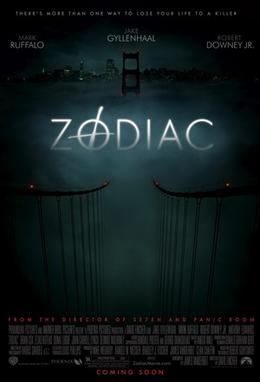
October True Crime: Zodiac (dir by David Fincher)


Who was the Zodiac Killer?

That is a question that has haunted journalists, cops, and true crime fans since the late 60s.  It is known that the Zodiac Killer murdered at least five people in Northern California in 1968 and 1969.  He targeted young couples, though he is also thought to have murdered on taxi driver as well.  What set Zodiac apart from other killers is that he was a prolific letter writer, who sent cards and ciphers to the police and the journalists who were reporting on his crimes.  In one of his ciphers, Zodiac claimed that he had killed 37 people.  Cartoonist Robert Graysmith later wrote two books about his personal obsession with the case.  He estimated that the Zodiac may have been responsible for hundred of murders, up through the 80s.  Of course, reading Graysmith’s first Zodiac book, it’s also easy to suspect that Graysmith reached a point where he saw the Zodiac’s hand in every unsolved murder in the San Francisco area.  Of all the unidentified serial killers in American history, Zodiac is one that most haunts us.  Zodiac was a serial killer who operated in an era when such things were still considered to be uncommon.  Much as Jack the Ripper did during the Victorian Age, Zodiac announced the arrival of a new age of evil.

Zodiac wrote about being a film fan and he was probably happy about the fact that he inspired quite a few films.  1971’s The Zodiac Killer came out while Zodiac was still sending letters to the police and cops actually staked out the theaters showing the film just to see if he  would show up.  Dirty Harry‘s Scorpio Killer was also based on Zodiac, right down to the taunting letters that he sent the mayor and again, one has to wonder if Zodiac ever showed up to watch Clint Eastwood take him down.

And, if Zodiac survived into the 21st Century, one has to wonder if he showed up in the theaters for 2007’s Zodiac.

One of the best true crime films ever made, Zodiac not only recreates the crimes of the Zodiac but it also examines the mental price of obsessing over the one unknown force of evil.  Mark Ruffalo plays Dave Toschi, the celebrity cop who nearly sacrificed his professional reputation in his search for the identity of the killer.  Jake Gyllenhaal plays cartoonist Robert Graysmith, who spends over a decade searching for the Zodiac’s identity and who loses his wife (Chloe Sevigny) in the process.  And Robert Downey, Jr. plays Paul Avery, the crime reporter to whom the Zodiac wrote and who sunk into paranoia and addiction as a result.  This is a film that is less about the Zodiac’s crime and more about how this unknown killer seemed to unleash a darkness that would come to envelope first a city and eventually an entire nation.

As one might expect from a film directed by David Fincher, Zodiac plays out like a filmed nightmare with the starkly portrayed murders being all the more disturbing because they often take place outside, where people would think they would be safe.  (The second murder is especially terrifying, as it plays out without even the sound of background music to allow us the escape of remembering that it’s only a movie.)  Fincher heightens our paranoia but having a different actor play the killer in each scene, reminding us that the Zodiac could literally be anyone.  Indeed, one of the scarier things about Zodiac is that, in the course of his investigation, Graysmith meets so many different people who seem like they could be the killer.  Even if they aren’t the Zodiac, the viewer is left with the feeling that the world is full of people who are capable of committing the same crimes.  The film becomes a journey into the heart of darkness, with the Zodiac becoming both a malevolent force and potentially your next door neighbor.  And with the film’s detailed recreation of the 60s and the 70s, the film becomes a portrait of a country on the verge of changing forever with the Zodaic and his crimes representing all the fear waiting in the future.

Again, as one might expect from a Fincher film, it’s a well-acted film, especially by Robert Downey, Jr.  Zodiac came out a year before Iron Man, when Downey was still better known for his personal troubles than for his talent.  Downey perfect captures his character’s descent into self-destruction, as he goes from being cocky and self-assured to being so paranoid that he’s carrying a gun.  (Paul Avery’s actual colleagues have disputed the film’s portrayal of Avery being mentally destroyed by the Zodiac.)  Ruffalo and Gyllenhaal also do a good job of portraying Toschi and Graysmith’s growing obsession with the case while Charles Fleischer and John Carroll Lynch both make strong (and creepy) impressions as two men who might (or might not) be the killer.

Though the film was not a success at the box office and it was totally ignored by the Academy, Zodiac has built up a strong reputation in the years since its released.  It’s inspired a whole new generation of web sleuths to search for the killer’s identity.  Personally, my favored suspect is Robert Ivan Nichols, an enigmatic engineer who abandoned his former life and changed his name to Joseph Newton Chandler III in the 70s and who committed suicide in 2002.  I think much like Jack the Ripper, the Zodiac’s identity will never be definitely known.  There have been many compelling suspects but most of the evidence seems to be circumstantial.  (That’s certainly the case when it comes to Nichols.)  The Zodiac was thought to be in his 30s or even his early 40s in 1969 so it’s doubtful that he’s still alive today.  In all probability, his identity and his motive will forever remain an unsolvable mystery.

Here’s The Trailer For The Covenant


Here’s the trailer for Guy Ritchie’s latest film, The Covenant.

In this film, Jake Gyllenhaal plays a veteran who returns to Afghanistan to rescue his interpreter from the Taliban.  This seems like the type of film that critics are going to hate but which will be better appreciated by audiences.  Considering the number of allies that the U.S. abandoned in Afghanistan and the fact that everyone knows that the chaotic withdrawal from Afghanistan was hardly our greatest hour, I have a feeling that we’re going to see a lot more films like The Covenant.  Just as how the 80s and the 90s were full of films about vets who returned to Vietnam to “finish the job” and rescue POWS, there’s undoubtedly going to be a lot of films about vets returning to Afghanistan and saving those who helped them from the Taliban.  For many people, the movies are going to provide the second chance that we’ll never get in a real life.

The Covenant will be released on April 21st, 2023.

Live Tweet Alert: Join #FridayNightFlix for Source Code!


As some of our regular readers undoubtedly know, I am involved in a few weekly live tweets on twitter.  I host #FridayNightFlix every Friday, I co-host #ScarySocial on Saturday, and I am one of the five hosts of #MondayActionMovie!  Every week, we get together.  We watch a movie.  We tweet our way through it.

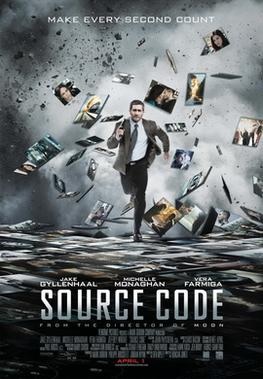
Tonight, at 10 pm et, I will be hosting #FridayNightFlix!  The movie?  2011’s Source Code! 

Can Jake Gyllenhaal prevent a bombing on a train?  That sound like a simple premise but, in Source Code, things get much more complicated.  This twisty sci-fi thriller from Duncan Jones was one of my favorite films of 2011 and I look forward to watching it with the Friday Night Flix crew!

If you want to join us this Friday, just hop onto twitter, start the movie at 10 pm et, and use the #FridayNightFlix hashtag!  I’ll be there tweeting and I imagine some other members of the TSL Crew will be there as well.  It’s a friendly group and welcoming of newcomers so don’t be shy.

Source Code is available on Prime!

See you there!

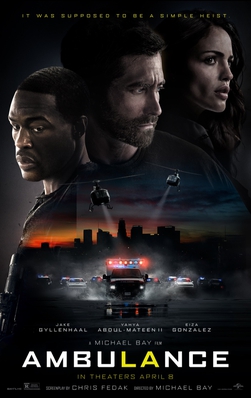
Film Review: Ambulance (dir by Michael Bay)


Ambulance is the ultimate Michael Bay movie.

Obviously, whether or not that’s a good thing for you personally will depend on how you feel about Michael Bay.  As a director, Bay specializes in kinetic thrill rides, the type of films where the camera never stops moving, the characters are attractive but shallow, and every plot development is an excuse for another action sequence.  Michael Bay is hardly the first, only, or last director to put action and spectacle above characterization and a coherent storyline.  However, he might very well be the most shameless about it.  Michael Bay’s approach has not made him a favorite of the critics but it has usually proved successful with audiences.  Personally, I’ve smirked at a lot of scenes in a lot of Michael Bay films.  (I still laugh whenever I remember the slow motion shot of the children playing in front of the faded JFK campaign poster in Armageddon.)  But, in this age of self-important filmmakers, it’s hard not to appreciate a director who just wants to have a good time.

And, make no doubt about it, Ambulance is definitely a good time.  The film’s plot is simple.  Jake Gyllenhaal and Yahya Abdul-Mateen II rob a bank.  When the robbery goes wrong, they hijack an ambulance.  In the back of the ambulance is an EMT played by Eliza Gonzalez, who is desperately trying to keep a wounded cop (Jackson White) from dying.  Gyllenhaal and Abdul-Mateen also want to make sure that the cop doesn’t die because they know that, if they’re captured, the penalty for being a cop killer is considerably worse than the penalty for being a bad bank robber.  With the entire LAPD and the FBI in pursuit, the two men drive the ambulance through Los Angeles, trying to find a way to escape.  Essentially, Michael Bay said, “You know how everyone enjoys a chase scene?  What if we made the chase scene last for 136 minutes?”  And wisely, some people gave him money to do just that.

(Actually, that’s just the way that I like to imagine it.  Ambulance is actually a remake of a Danish film and Michael Bay originally passed on the project.  But, as they put it in The Man Who Shot Liberty Valance, print the legend.)

Jake Gyllenhaal may be top-billed but the star of Ambulance is definitely Michael Bay.  In many ways, there’s not much about Bay’s direction here that’s different from what he’s been doing since The Rock.  The camera moves a lot.  The images are sharp and clear.  The rapid-fire editing captures the chaos of the action scenes, occasionally at the cost of letting the audience know just who exactly is shooting at who.  But what sets apart Ambulance from other Bay films is that Michael Bay finally discovered his greatest collaborator, the drone.  Bay’s camera flies across Los Angeles, zooming over buildings and down streets and essentially making the viewer as much a part of the chase as Gyllenhaal and the cops pursuing him.  Ambulance moves with so much energy and confidence that it doesn’t matter that it’s a bit too long and that Gyllenhaal’s plan often doesn’t make much sense.  Ambulance is a thrill-ride, a film that rewards anyone who is willing to just go with it.  It’s an example of what Lucio Fulci called “pure cinema,” where the story itself is not as important as the way the director puts it all together.  I enjoyed it.  That ambulance barreling through the streets of Los Angeles was the 21st century equivalent of the speeding train that thrilled and terrified audiences during the silent era.

Unfortunately, Ambulance struggled a bit at the box office.  I’m a bit confused as to why, other than it wasn’t a part of a franchise or a sequel (like The Batman, Dr. Strange, and Top Gun: Maverick) and it didn’t have the mix of strong reviews and pop cultural cachet that led audiences to make Everything Everywhere All At Once into a hit.  Along with reviews that were more interested in criticizing Michael Bay in general as opposed to actually considering whether or not the film itslef worked, Ambulance was damaged by the fact that audiences were still getting used to the idea of leaving their homes for a night out.  I get the feeling that a lot of people looked at the commercials for Ambulance and said, “That’s something I can watch at home.”  (Admittedly, that’s what I did.)  It’s a shame that Michael Bay’s ultimate (and, I would say, best) film is also one of the few to be deemed a box office failure.  The film is currently on Peacock.  Try to watch it on the biggest screen you can find.

Spider-Man Meets Mysterio In The New Spider-Man: Far From Home Trailer


The new trailer for Spider-Man: Far From Home opens with a warning from Tom Holland.  Do not watch this trailer if you have not seen Avengers: Endgame and you want to avoid spoilers.  It should also go without saying that, if you are avoiding Endgame spoilers, do not read any further on this post.

Spoilers below:

Judging from the trailer, Spider-Man: Far From Home finds Peter Parker mourning the loss of his mentor, Tony Stark.  Looking to get away from the pressures of crime fighting and saving the world and also wanting to pursue his crush on Zendaya’s MJ, Peter joins his classmates on a trip to Europe.  Were all of Peter’s classmates from Spider-Man: Homecoming wiped out by the Snap?  According to Avengers: Endgame, bringing everyone back did not change anything that happened over the previous five years.  Peter got lucky that MJ apparently wasn’t around to graduate high school and move away while he was non-existent.

Peter may want to escape from it all but Samuel L. Jackson’s Nick Fury has other ideas.  Judging from the trailer, it appears that Peter has replaced Tony with three new mentors, Nick Fury, Happy Hogan (Jon Favreau, making the transition over from the Iron Man films), and Jake Gyllenhaal’s Mysterio.  Of course, anyone who is familiar with Mysterio’s history knows that Peter should be careful about trusting him.

The trailer also introduces the concept of the Multiverse.  With all the questions that Endgame raised about time travel and alternate realities, the Multiverse is surely going to be an important factor moving forward.  For instance, it may explain how there’s both a Loki TV show and a Black Widow movie in production when both of those characters were apparently very dead at the end of Avengers: Endgame.

Spider-Man: Far From Home opens on July 2nd.