Since today is Oliver Stone’s birthday, it seems appropriate that our song of the day should come from the soundtrack of one of Stone’s best-remembered films, 1991’s JFK!
Since today is Oliver Stone’s birthday, it seems appropriate that our song of the day should come from the soundtrack of one of Stone’s best-remembered films, 1991’s JFK!
For today’s song of the day, we have this wonderful piece of music from John Williams’s score for Oliver Stone’s Nixon.
It’s not the summer without John Williams and the theme from Jaws!
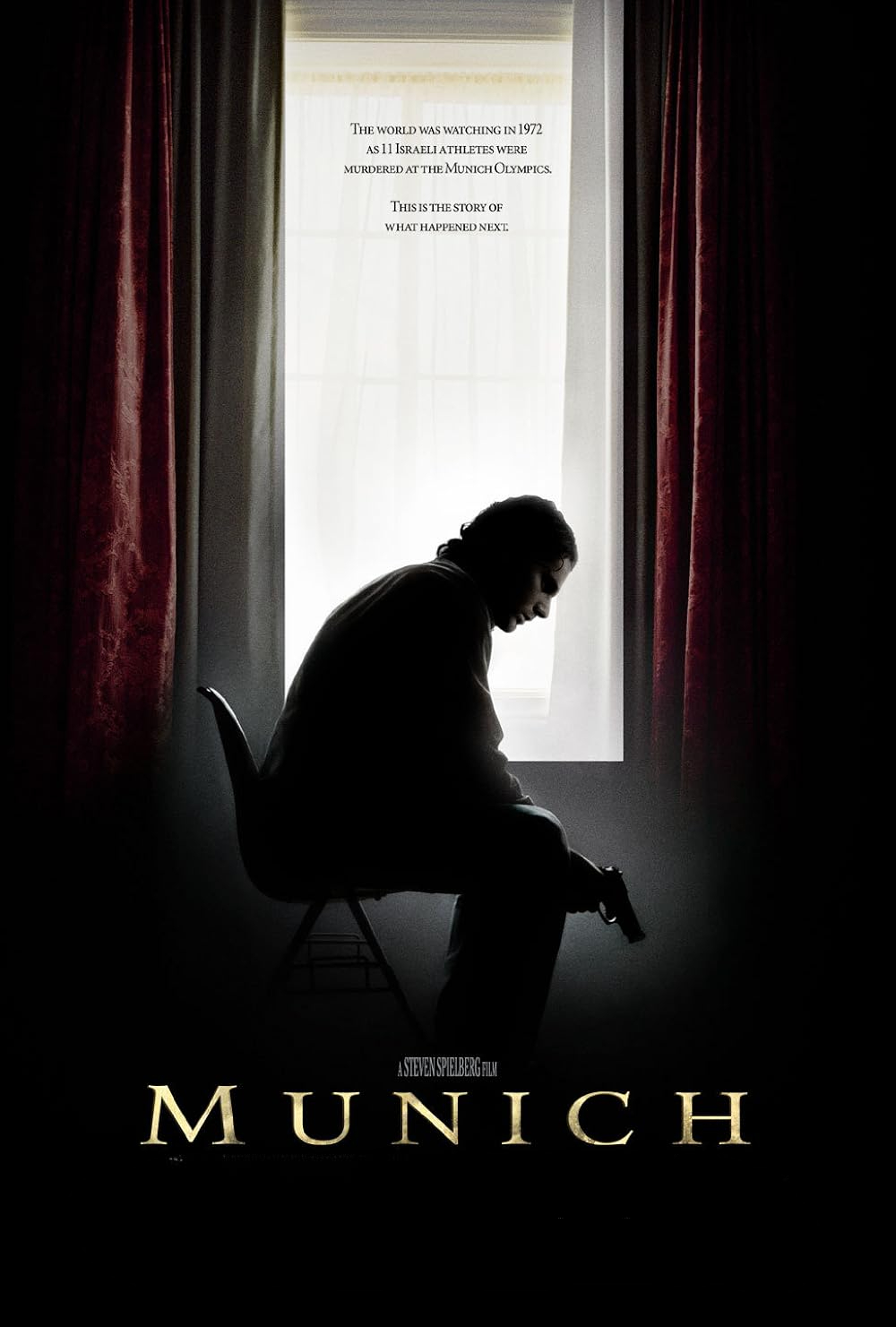
If you’re looking for a comfortable, easily digestible thriller with clear-cut heroes and villains, Munich is going to be a tough sit. This 2005 film, now two decades old, finds Steven Spielberg operating at a peak level of craft, but it’s a cold and angry kind of mastery. It’s a dense, paranoid, and deeply unsettling historical drama that feels less like a movie and more like a wound that’s been picked at for years. Based on the book Vengeance, the film dramatizes the secret Israeli mission, “Operation Wrath of God,” to hunt down and assassinate the Palestinian militants responsible for the massacre of 11 Israeli athletes at the 1972 Munich Olympics. But here’s the kicker: this isn’t an action movie about a bunch of spies getting revenge and feeling good about it. Spielberg isn’t making a war film about who is right and who is wrong. Munich is a film about the ugly, corrosive nature of state-sponsored violence and the way it eats away at the soul of everyone involved. It’s a thriller, sure, but the tension isn’t built around whether the team will succeed, but around the psychological and moral cost of their success. There’s no triumph here, no victory lap—just the sinking realization that for every target they eliminate, the wound in the world only seems to get deeper.
The movie is anchored by a phenomenal performance from Eric Bana as Avner, the team’s leader. He’s a man of deep patriotism, handpicked for this mission by Prime Minister Golda Meir (Lynn Cohen) herself, but he’s completely unprepared for the psychological toll the job will take. He’s joined by a fantastic ensemble that includes Daniel Craig as a brutal and cold-blooded South African operative, and Mathieu Kassovitz as a toymaker turned reluctant bomb expert. They’re a tight, desperate group, and as they move from one European capital to the next, meticulously planning and executing assassinations, the initial sense of righteous duty slowly curdles into paranoia, guilt, and nihilism. The film doesn’t shy away from the violent acts, but it presents them not as a cause for celebration, but as messy, brutal affairs that often have unintended, horrific consequences—like a scene where a bombing intended for a target gets dangerously close to an innocent child. You can feel the weight of every decision pressing down on these men, and Spielberg makes sure you sit with that discomfort rather than brushing past it for the sake of pacing.
One of the most crucial—and still controversial—aspects of Munich is its willingness to humanize the Palestinian perspective. This isn’t a film that paints the Black September terrorists as caricatures of evil. In one of the film’s most powerful scenes, Avner and a PLO member named Ali (Omar Metwally) engage in a tense, philosophical debate about their respective claims to the land. Avner warns that the world will see the Palestinians as “animals” for their actions, to which Ali chillingly replies, “Yes, but then the world will see how they’ve made us into animals. They’ll start to ask questions about the conditions in our cages.” The film doesn’t excuse the terrorism, but it forces the audience to understand the desperation and statelessness that fuels it, presenting a horrifying symmetry where both sides see themselves as victims fighting for survival. It’s a gutsy move for a mainstream Hollywood director, especially in the mid-2000s, and it’s precisely that moral even-handedness that made the film so divisive upon release—and still makes it so damn compelling today.
And that’s where this film connects to a larger, darker moment in Spielberg’s career. Munich was released at the tail end of what some critics have rightly called his “Post-9/11 triptych,” alongside Minority Report (2002) and War of the Worlds (2005). These aren’t just three random films. They are all steeped in a profound sense of paranoia and fear of the outsider that was so prevalent in America after 9/11. Minority Report imagines a society where you’re arrested for a crime before you commit it; War of the Worlds literalizes the fear of a sudden, devastating attack on American soil; and Munich transposes those anxieties onto the Israeli-Palestinian conflict. Spielberg used this triptych to explore the American psyche’s newfound sense of vulnerability and its willingness to embrace extreme, morally ambiguous measures—like torture and preemptive strikes—in the name of security. It was a director grappling with a changed world, and Munich, with its focus on a secret, government-approved assassination squad, feels like his most potent and cynical entry in the series. You can almost hear the echo of post-9/11 rhetoric in every scene, as if Spielberg was holding up a dark mirror to his own country’s creeping acceptance of extrajudicial killing.
But the bleakest part of Munich is how it transcends even that specific historical and political moment. The film relentlessly returns to the theme of the “violence loop.” The team assassinates one target, and he is immediately replaced by someone even more radical. They get a hit, and there’s a retaliatory bombing. It’s a terrifyingly accurate depiction of what has continued to happen for decades after the film’s events. Avner realizes that their entire operation, the endless cycle of state-sponsored revenge, is ultimately pointless for achieving peace. It’s a desperate, bloody game of whack-a-mole that only ensures the conflict continues in perpetuity, a cycle of vengeance that simply feeds on itself. As the film shows, and as is still plain to see today, the violence doesn’t end when the “list” is completed; it just regenerates. The final scenes, where Avner finds himself unable to even sleep in his own bed, watching his young daughter with a haunted look, drive home that the real casualty of state-approved assassination isn’t just the targets—it’s the humanity of the people pulling the trigger. He’s won the tactical war, but he’s lost every single battle that actually mattered.
Ultimately, Munich is a masterclass in filmmaking that offers no easy answers, and watching it today, with the current geopolitical landscape looking more fractured than ever, its relevance hasn’t faded one bit—if anything, it’s sharper and more painful now than it was in 2005. The same arguments, the same grievances, the same bloody score-settling between Israel, the Palestinians, and their Arab allies are still playing out in real time, with no end in sight. And yet, for all its brutal honesty, the film also exposes a tragic truth: this movie, like so much of the discourse surrounding the conflict, will probably only deepen the divide between the two groups watching it, as each side can point to it and say, “See? That’s what they do to us. That’s our pain validated.” It becomes another piece of ammunition in an endless argument rather than a bridge toward understanding. The brilliant cinematography from Janusz Kaminski and the chilling, minimalist score from John Williams only add to that oppressive, paranoid atmosphere, making it not a film that will make you feel good about anything, but one that will make you think—and perhaps that’s exactly why it remains so damn relevant decades later.
So what’s the way out? The film doesn’t give you a manual, but it does whisper a desperate question between its frames: can either side actually step back from the brink long enough to see the loop they’re both trapped in? Because the violence loop isn’t a natural disaster—it’s a human creation, and what humans build, humans can theoretically unbuild. But that would require something infinitely harder than pulling a trigger or planting a bomb—it would require acknowledging that your own righteous suffering doesn’t cancel out the other side’s legitimate pain, it would require looking at the face of your enemy and seeing not a monster but a person who also loves their children and believes they’re fighting for survival. The film dares to suggest that the only real break in the cycle might come from exhaustion, from the sheer soul-crushing fatigue of burying one more generation, or from a moment of radical, almost insane empathy that makes someone say “enough” before the next retaliation.
Spielberg doesn’t offer that moment in the movie, because he knows it hasn’t happened yet in real life—Munich isn’t a prescription; it’s an autopsy. Every few years, when the news cycle inevitably rolls around to another flare-up in that tortured corner of the world, this movie comes back to mind not as a prophecy, but as a painfully accurate diagnosis. It’s a powerful, haunting reminder that the echo of old violence is never truly silent, and that in the long run, vengeance is often a debt that can never be repaid. If you go in expecting a straightforward revenge fantasy, you’ll walk out exhausted and conflicted. But if you go in ready to wrestle with some of the ugliest questions about justice, morality, and state power, then Munich will stick with you like a splinter you just can’t dig out—and maybe, just maybe, that splinter is the first tiny crack in the loop that someone, someday, will have the courage to break.
“Sometimes, in order to see the light, you have to risk the dark.” — Dr. Iris Hineman
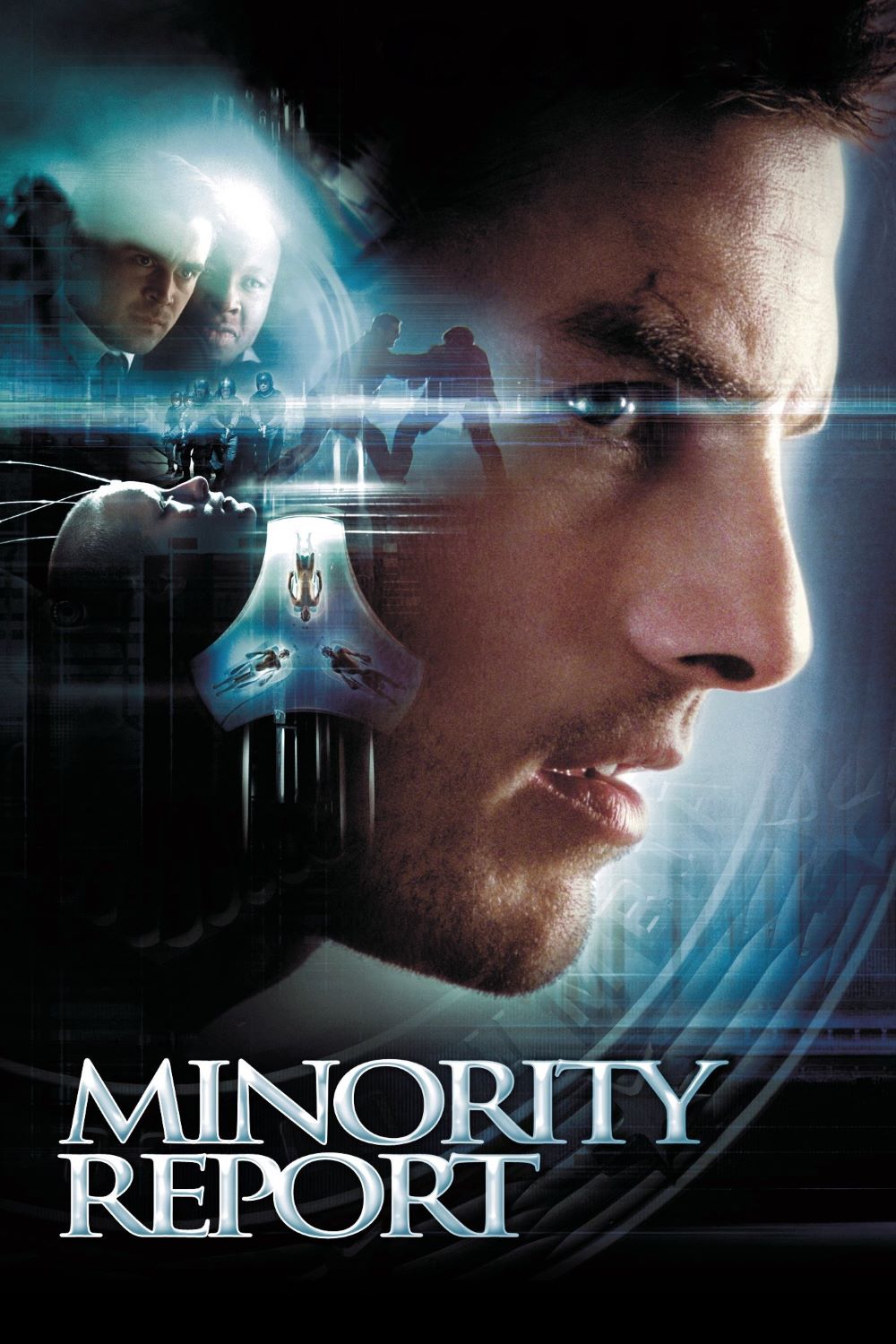
There’s a particular pleasure in revisiting Minority Report now, decades removed from its 2002 release, because it’s aged in the strangest possible way: it hasn’t dated so much as it’s caught up to us. Steven Spielberg’s adaptation of Philip K. Dick’s short story plays like a glossy, big-budget action thriller on the surface, all sleek gestural interfaces and Tom Cruise sprinting across rooftops, but underneath that polish is a film that’s quietly become one of the most unnervingly accurate predictions of how surveillance, data, and policing would actually evolve in the real world.
The premise is simple enough to fit on a poster. In a near-future Washington D.C., a special police unit called PreCrime uses three psychic “precogs” to see murders before they happen, allowing cops to arrest people for crimes they haven’t committed yet. John Anderton, played by Cruise with a kind of haunted, grief-soaked intensity, is the unit’s star detective, a true believer in the system who lost his son years earlier and has thrown himself into the work as a substitute for healing. Then the precogs name him as a future murderer, and the rest of the film is Anderton on the run, trying to prove his innocence inside a system explicitly designed to make innocence irrelevant. It’s a clever structural trick because it forces the audience to watch the hero discover, in real time, all the holes in a system he’s spent his career defending.
What makes the film work as more than just a stylish chase movie is how seriously Spielberg and his screenwriters, Scott Frank and Jon Cohen, take the philosophical rot at the center of the premise. PreCrime isn’t framed as a dystopian villain organization; it’s framed as something genuinely good and genuinely popular, a program that’s driven murder rates to near zero and that ordinary citizens are grateful for. That’s the unsettling part. The film isn’t asking you to be afraid of an obviously evil system. It’s asking you to be afraid of aSteve Harris system that works, that delivers real safety, and that nonetheless requires you to accept punishment without due process, fate without appeal, guilt assigned before the act. Cruise’s Anderton spends the film discovering that the machinery he trusted contains exactly the kind of ambiguity and abuse it was built to eliminate, and the film never lets you forget that the most dangerous systems are the ones that feel necessary.
Visually, this is one of Spielberg’s most distinct collaborations with cinematographer Janusz Kamiński, who bleached the color out of nearly every frame to give the film a cold, overexposed, almost silvery look. It’s a future that feels lived-in and grubby rather than chrome and gleaming, which was a deliberate choice; Spielberg and his production designers consulted with actual futurists and technologists to imagine a 2054 that felt plausible rather than fantastical. That’s part of why the gestural data interfaces Anderton uses, swiping and conducting evidence in midair like an orchestra conductor, became such a cultural touchstone; they didn’t feel like science fiction gadgetry so much as a believable next step from where computing was already heading.
And that brings us to the part of the film’s legacy that’s only grown more pointed with time. Minority Report arrived in June 2002, less than a year after September 11th, and it’s impossible to separate the film’s anxieties from that specific American moment. This was the period when the Patriot Act had just been signed, when warrantless surveillance and preventive detention were being normalized in the name of safety, when the entire architecture of American security policy pivoted toward stopping threats before they materialized rather than responding after the fact. Minority Report dramatizes that exact logic and then methodically exposes its flaws, showing a security state so committed to preventing harm that it’s willing to imprison the innocent, manipulate evidence, and treat dissent as a structural malfunction.
It’s worth situating the film alongside the other two movies Spielberg made in the years immediately following 9/11, because together they form a loose, unofficial triptych about post-9/11 American fear. War of the Worlds, his 2005 alien invasion film, restaged the trauma of a sudden, incomprehensible attack on home soil, with Tom Cruise again playing an ordinary man trying to shepherd his children through a landscape of falling ash, mass panic, and faceless threats descending from above, imagery that’s hard not to read as a direct echo of lower Manhattan that morning. Munich, released the same year, dug into the moral wreckage of a state’s decision to respond to terrorism with a covert campaign of targeted assassination, asking hard questions about whether vengeance dressed up as justice actually makes anyone safer or just perpetuates the cycle. Minority Report is the third leg of that stool, the one concerned not with the attack itself or the retaliation but with the surveillance and preemption apparatus built in the name of preventing the next one. Together, the three films trace a kind of emotional arc through American anxiety in that period: the shock of the unknown threat, the morally compromised vengeance that follows, and the paranoid, technologically enabled security state erected to make sure it never happens again. None of the three films name 9/11 directly, but all three are unmistakably shaped by it, by a culture suddenly suspicious of the outsider, willing to trade liberty for the promise of safety, and uncertain whether the institutions built to protect them could be trusted.
What’s remarkable is how much more relevant the surveillance angle feels today than it did in 2002. Predictive policing software is real now, with departments across the country having actually used algorithms to flag individuals or neighborhoods as high risk for future crime, often with the same built-in biases and feedback loops the film gestures at. Data brokers and advertising networks track movement and behavior with a granularity that makes the film’s retina-scanning ad billboards look almost quaint by comparison. The conversation about predictive algorithms making consequential decisions about people’s freedom, hiring, credit, and policing based on probabilistic models of future behavior is now a mainstream policy debate rather than science fiction. Watching the film now, the gap between its imagined 2054 and our actual 2026 feels uncomfortably narrow, less a futuristic warning than a documentary about tendencies we’re already deep inside of.
That’s what makes Minority Report so achingly prophetic, not just in its prediction of our tech, but in its prediction of our mindset. We live in a world now where predictive policing algorithms are actually being used, where social credit scores are a reality in some places, and where the debate over privacy versus security is a constant, exhausting hum in the background. We’re not at the level of precogs, but we don’t need to be. We have big data, machine learning, and a populace that’s been slowly conditioned to accept that if you have nothing to hide, you have nothing to fear. The film is a warning shot across the bow of that complacency. It asks us to consider the cost of a crime-free society, and it suggests that the price might be our very souls. Spielberg, ever the optimist even in his darkest films, ultimately comes down on the side of human fallibility. He prefers a world with crime and free will to a world of perfect, totalitarian peace. And watching it today, in an age of deepfakes, biometric tracking, and algorithm-driven justice, that preference feels less like a luxury and more like an urgent, desperate necessity. It’s a hell of a ride, with more twists than a pretzel factory and a car chase that still holds up, but the real thrill of Minority Report isn’t the action—it’s the haunting feeling that we’re not watching a dystopian future anymore. We’re watching the news.
Since today is Superman Day, it only makes sense that today’s song of the day should John Williams’s rousing Superman March from 1978’s Superman. In this video from 2023, John Williams conducts the Saito Kinen Orchestra.
“This is not a war any more than there’s a war between men and maggots… This is an extermination.” — Harlan Ogilvy
When looking back at the vast filmography of Steven Spielberg, science fiction usually evokes a sense of sweeping wonder, starry-eyed optimism, or at the very least, a deeply felt humanism. Films like Close Encounters of the Third Kindand E.T. the Extra-Terrestrial taught generations to look at the stars with hope rather than dread. Even when things took a darker turn in Jurassic Park or the neon-drenched corridors of Minority Report, there remained a foundational thrill—a cinematic ride that ultimately leaves the audience exhilarated. However, his 2005 adaptation of H.G. Wells’ classic novel, War of the Worlds, stands as a radically different beast altogether. It is arguably the bleakest, most claustrophobic blockbuster Spielberg ever directed, operating less as an adventurous alien invasion epic and more as a raw, nerve-shredding analog for collective trauma. Emerging a mere four years after the collapse of the Twin Towers, the film strips away the romanticism of cosmic exploration and replaces it with a visceral, ground-level nightmare of sudden, inexplicable annihilation.
The brilliance of Spielberg’s approach, working alongside screenwriter David Koepp, lies in how intensely localized the narrative remains. Rather than tracking the invasion from the traditional perspective of military command centers, global leaders, or brilliant scientists, the audience is trapped inside the chaotic, deeply flawed perspective of Ray Ferrier, played with a brilliant, unheroic franticness by Tom Cruise. Ray is not a savior; he is a deadbeat, blue-collar crane operator living in a graying New Jersey suburb. He is the kind of father who doesn’t know his son’s school schedule and has an empty refrigerator when his ex-wife drops off their two children, Robbie and Rachel. By centering the apocalypse around a fractured, working-class American family, Spielberg roots the cosmic terror in a painful reality. The impending destruction of the planet mirrors the collapse of Ray’s domestic stability, forcing a man who can barely manage basic parental accountability to suddenly navigate the literal end of the world.
From a purely technical standpoint, the first act of War of the Worlds features some of the most masterful suspense and terror ever committed to celluloid, heavily leaning on a barrage of explicit 9/11 visual imagery. The sequence where the first Martian Tripod emerges from beneath a New Jersey intersection is a masterclass in modern cinematic dread, directly weaponizing the fresh, collective trauma of the post-9/11 American public. Spielberg eschews the clean, omniscient visual language of standard disaster cinema for an organic, chaotic documentary style, mirroring the sudden, disorienting informational and electronic blackout experienced by millions during the real-world attacks. The camera lingers on heavy, ominous storm clouds moving against the wind, the eerie crackle of localized lightning strikes, and the unsettling silence of a neighborhood stripped of electronic life. When the asphalt fractures and the colossal, three-legged war machine rises from the earth, the sound design hits the audience like a physical blow. The Tripod’s horn—a terrifying, mechanical foghorn groan—instantly triggers an ancient, mammalian fight-or-flight response. As the machine opens fire with its disintegration beams, turning nearby pedestrians into literal puffs of ash, the camera tracks Ray running for his life through a massive, rolling cloud of dust and debris. When Ray finally makes it back to his house, the ash of his vaporized neighbors covers his clothes and face, an unmistakable and deeply unsettling visual that explicitly echoes the horrific reality of the streets of Manhattan on September 11, 2001.
This deliberate invocation of post-9/11 anxiety is the thematic engine that drives the entire film. Spielberg does not hide these parallels; he highlights them with a devastating accuracy that makes the film difficult to watch even decades later. When the invasion begins, a terrified, screaming Rachel asks her father if it is “the terrorists,” a line that perfectly encapsulates the collective, reactionary psyche of the mid-2000s American consciousness, where any sudden, catastrophic violence was instantly filtered through the lens of domestic terrorism. The imagery of walls plastered with photocopied missing-persons flyers, crowds of refugees trudging down desolate highways with whatever belongings they can carry, and a derailed, blazing passenger train hurtling past an abandoned station all tap into a very specific, historical vulnerability. In Independence Day, an alien invasion was an opportunity for global unity and triumphant, cigar-chomping counter-offensives. In Spielberg’s hands, the invasion is an overwhelming, asymmetric slaughter that reduces the world’s most powerful military to a collection of burning tanks rolling over a ridge into an invisible abyss.
However, while the film masterfully handles the grand-scale terror of the invasion, it stumbles significantly when navigating its internal family dynamics, particularly regarding Ray’s son, Robbie, played by Justin Chatwin. I completely agree with the widespread criticism that Robbie is an intensely annoying, deeply self-destructive presence whose actions and decisions repeatedly defy basic human survival instincts. Throughout the crisis, his behavior goes beyond typical teenage rebellion and crosses into pure narrative absurdity. Instead of helping protect his traumatized, screaming younger sister, Robbie consistently sabotages his family’s safety to aggressively gawk at a hopeless war zone. His sudden, obsessive urge to join a military force that is clearly being pulverized by an unearthly power feels entirely unearned and maddening to watch. His character arc reaches a peak of irritation when he blindly runs over a burning ridge directly into a mechanical meat grinder, abandoning his family for a bizarre, suicidal patriotic impulse. This makes his miraculous survival at the end of the film a massive narrative misstep; having him casually show up at his grandparents’ pristine Boston home after witnessing a literal military massacre completely undermines the high-stakes realism Spielberg spent two hours building, turning what should have been a tragic consequence of his own foolishness into a cheap, unearned happy ending.
As the narrative progresses past the family friction, the film shifts its focus from external spectacle to the internal breakdown of human morality under the weight of existential terror. This transition is embodied by the mid-movie introduction of Harlan Ogilvy, played with an unsettling, unhinged intensity by Tim Robbins. Trapped in a dark basement while the Martians harvest the surrounding countryside, Ray and Ogilvy represent two radically different, yet entirely believable, reactions to trauma. Ogilvy is consumed by a vengeful, nihilistic madness, obsessed with digging tunnels and launching a futile, suicidal guerrilla war against an enemy that operates on a completely different evolutionary plane. Ray, conversely, is driven solely by a desperate, animalistic urge to protect his daughter. The sequence culminating in Ray’s decision to kill Ogilvy behind closed doors to keep him from alerting the aliens is one of the darkest thematic beats in Spielberg’s career. It forces the audience to confront a disturbing truth: the true horror of the apocalypse is not just what the monsters do to us, but what we are willing to do to each other to survive another hour.
The film’s visual palette, masterfully crafted by cinematographer Janusz Kamiński, reinforces this pervasive sense of rot and despair. Kamiński utilizes a heavily bleached, high-contrast aesthetic that drains the world of vibrant color, leaving behind a cold, metallic landscape dominated by sickly slates, deep shadows, and stark whites. This visual harshness reaches its zenith during the infamous “Red Weed” sequence. As the Tripods begin carpet-bombing the landscape with human blood to fertilize an invasive, crimson alien flora, the film transforms into a surrealist, gothic horror show. The Earth itself is literally being terraformed by the bodily fluids of the slaughtered, creating a grotesque, bleeding ecosystem that visually mirrors the internal rot of the surviving human populations. It is a sequence that feels closer to the cinematic nightmares of H.R. Giger than the traditional whimsy of a Spielbergian adventure.
Despite its immense strengths, War of the Worlds is frequently criticized for its final act, a critique that deserves a nuanced evaluation. The abrupt resolution—wherein the seemingly invincible Martians suddenly succumb to Earth’s microscopic bacteria—is lifted directly from H.G. Wells’ original 1898 text. While narratively faithful, its execution in a modern Hollywood blockbuster can feel jarring, functioning as a biological deus ex machina that robs the human protagonists of a traditional, heroic victory. Furthermore, Robbie’s unearned survival represents a sudden, almost desperate pivot back toward Spielberg’s traditional family-first sentimentality. This neat resolution feels somewhat unearned given the preceding two hours of unrelenting, uncompromising nihilism, momentarily fracturing the film’s gritty, documentary-like reality.
Yet, looking past these structural stumbles, the final voiceover adaptation of Wells’ text offers a profound philosophical punctuation mark to the nightmare. The realization that humanity has earned its right to survive on this planet not through military might or moral superiority, but through millions of years of evolutionary struggle alongside the tiniest microbes, recontextualizes the entire ordeal. It reminds the audience of our inherent fragility and the hubris of believing ourselves to be permanently secure in our modern, technological fortresses. Spielberg’s War of the Worlds remains an incredibly potent piece of mainstream filmmaking precisely because it refuses to comfort its audience for the majority of its runtime. It stands as a brilliant, terrifying time capsule of an era defined by sudden vulnerability, demonstrating that even the master of cinematic wonder could look into the abyss of the cosmos and see nothing but our own reflections looking back in sheer terror.
“Monsieur Neary, I envy you.” — Claude Lacombe
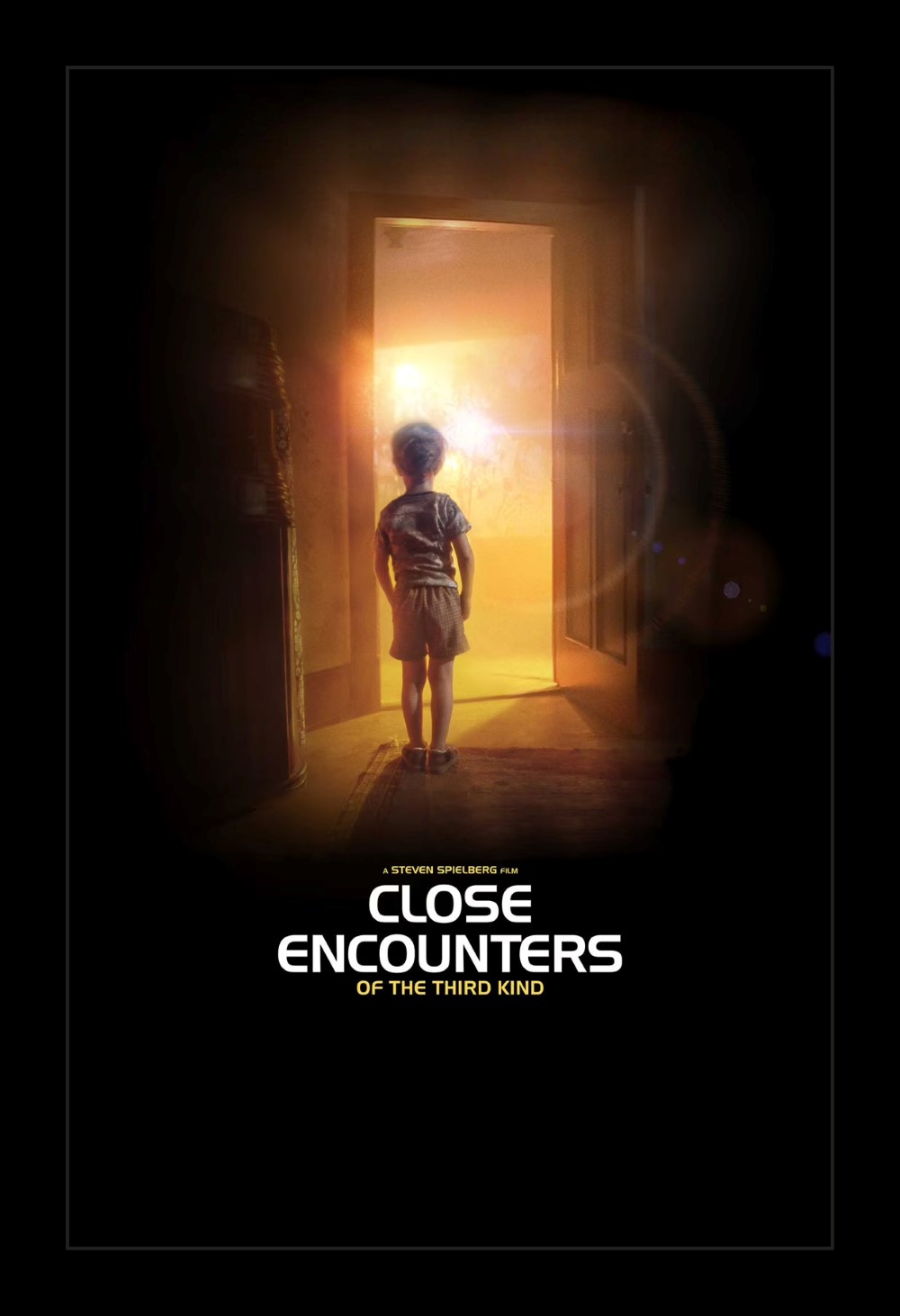
When we look back at the historic cinematic landscape of 1977, it is almost impossible not to view it through the lens of a seismic cultural shift. That was the year a young George Lucas unleashed Star Wars upon the collective consciousness, fundamentally reshaping the Hollywood studio system and redirecting the trajectory of science fiction toward space opera, galactic dogfights, and mythic hero journeys. Yet, just a few months later, Steven Spielberg quietly delivered his own counter-argument to the stars with Close Encounters of the Third Kind. While Lucas looked outward toward far-away galaxies, Spielberg looked upward from our own suburban backyards. The result remains one of the most singular, agonizingly beautiful, and intensely personal science fiction films ever made, a masterclass in atmospheric tension that manages to balance deep blue-collar anxieties with a profound, almost spiritual sense of cosmic wonder. Watching it today, stripped of the immediate historical noise of the late seventies, the film stands out not merely as a technical milestone of visual effects, but as a fascinatingly messy character study about the terrifying, disruptive nature of inspiration and obsession.
The story follows Roy Neary, a blue-collar electrician in Indiana who, during a late-night power outage, sees something inexplicable in the sky. He’s not alone—across the state, a young mother named Jillian Guiler also witnesses strange lights, and her toddler son Barry becomes eerily fascinated by them. What Roy and Jillian don’t know is that similar sightings are happening worldwide, from the Gobi Desert to the air traffic control towers of Indianapolis. The film then does something unusual: instead of cutting to a military briefing or a scientist’s whiteboard, it stays with Roy as his ordinary life starts to fracture. He becomes obsessed with a shape he can’t quite remember—a mountain, maybe, or a tower—that he begins sculpting out of mashed potatoes, shaving cream, and whatever else is at hand. His wife and kids, understandably, think he’s losing his mind. Jillian, meanwhile, faces a more immediate and terrifying version of the same mystery.
What’s remarkable is how Spielberg handles characterization. Roy isn’t a hero in any traditional sense. He’s a loud, slightly goofy family man who loves model trains and bad jokes. Richard Dreyfuss plays him with a permanent crease of confusion between his eyebrows, as if his brain is trying to process a frequency nobody else can hear. The film never explains why Roy is chosen or why the visions hit him so hard—it just shows the consequences: lost jobs, a crumbling marriage, a man who starts seeing his living room as a prison. Jillian, played with fierce tenderness by Melinda Dillon, is the emotional anchor. Where Roy’s obsession feels almost euphoric, Jillian’s is rooted in primal fear and love. She doesn’t want to meet the unknown; she wants her son back. The film wisely never pits them against each other. Instead, they become accidental allies, two people dragged toward the same inexplicable destination for very different reasons.
Then there’s the other side of the coin: the government. François Truffaut (one of the founders of the French New Wave film movement), in a wonderfully offbeat piece of casting, plays Claude Lacombe, a French scientist leading a secret U.N. team that’s been tracking the phenomena for years. We see them discover something astonishing in the Mongolian desert—a lost ship from World War II, returned without its crew, in pristine condition. Later, they find an entire tanker ship deposited in the Gobi, miles from any ocean. These scenes are brief but crucial, because they establish that whatever is happening has been happening for a long time. Lacombe and his team aren’t villains; they’re just as baffled as Roy, but with better funding. Their method of communication—a simple five-note musical phrase—becomes the film’s quiet heartbeat. Spielberg trusts you to understand that this isn’t a code or a weapon. It’s a greeting.
The film’s middle section is where most blockbusters would insert a chase or a battle. Instead, Close Encounters gives us a slow-burn portrait of obsession as a kind of grace. Roy drives his family crazy. Jillian chases rumors. Hundreds of other ordinary people—the film calls them the “paranoids”—start showing up at rural crossroads, drawn by the same psychic pull. Spielberg shoots these scenes with a documentary-like patience: a traffic jam of confused believers, a midnight roadblock, a man who just knows he has to go to Wyoming. You start to feel the pull yourself. By the time Roy finally understands what the mashed-potato mountain is—Devil’s Tower, a real volcanic plug in northeastern Wyoming—the movie has earned every ounce of that revelation. It’s not a twist. It’s a release.
The final forty minutes of Close Encounters are best experienced with as little prior knowledge as possible, so I’ll stay vague. What I will say is that Spielberg stages the arrival of the unknown as a religious event, not an invasion. There are no laser cannons, no ultimatums, no speeches about humanity’s destiny. Instead, there’s light and sound, a symphony of colored orbs and humming engines, and a sequence of hand gestures that communicates more than any dialogue could. The aliens, when they finally appear, are small and pale and oddly childlike—not scary, not angelic, just other. And a choice that Roy faces, involving whether to stay or go, lands with the weight of a moral question, not a happy ending. Spielberg doesn’t tell you if it’s right. He just shows you a man’s face, lit by unearthly glow, and leaves the rest to your own compass.
Technically, the film is a marvel of analog craft. The UFOs aren’t digital—they’re models, lights, and smoke, shot with such loving care that they feel tangible. Douglas Trumbull’s visual effects prioritize scale and mystery over menace. John Williams’s score, anchored by that five-note motif, does the emotional heavy lifting without ever feeling manipulative. And Spielberg’s direction is all about waiting—holding on a character’s face as they process something impossible, letting a shot of the night sky breathe for an extra five seconds. That patience is the film’s secret weapon. In an era of quick cuts and louder-is-better spectacle, Close Encounters dares you to sit in the dark and listen.
Does it hold up? Almost entirely, though with small caveats. The pacing is glacial by modern standards, and Roy’s family is written as shrill obstacles—Teri Garr does her best with a thankless role. Some viewers may find Roy’s eventual choices hard to forgive. But those complaints miss the point. Close Encounters isn’t about good fathers or responsible citizens. It’s about the ache of the ineffable—the feeling that something is out there, just past the treeline, and it knows your name. Spielberg made bigger hits, but he never made anything more personal. If you’ve never seen it, or haven’t since you were a kid, watch it in the dark. Turn your phone off. Let the tones wash over you. You might find yourself humming that five-note song for days. And honestly, that’s the whole point.
Spielberg. Williams. Koepp. Kaminski. What the heck is Disclosure Day?
The teaser trailer for Steven Spielberg’s Disclosure Day hit my phone via Letterbox’d. This is connected to those weird X-Files looking posters I’ve been seeing as of late. It looks like another film with aliens, similar to Close Encounters of the Third Kind with a dash of Zemekis’ Contact or sprinkle of Villeneuve’s Arrival. The film stars Josh O’Connor (Wake Up Dead Man: A Knives Out Mystery), Emily Blunt (Jungle Cruise), Colin Firth (Kingsman), Coleman Domingo (The Running Man), Wyatt Russell (Marvel’s Thunderbolts), and Eve Newson (Robin Hood).
Spielberg and Koepp have a good track record together with the Jurassic Park films, and it’a always good to see a pairing with John Williams. Still, this all looks really weird. Either way, we’ll find out when the film is released next June.
Enjoy!
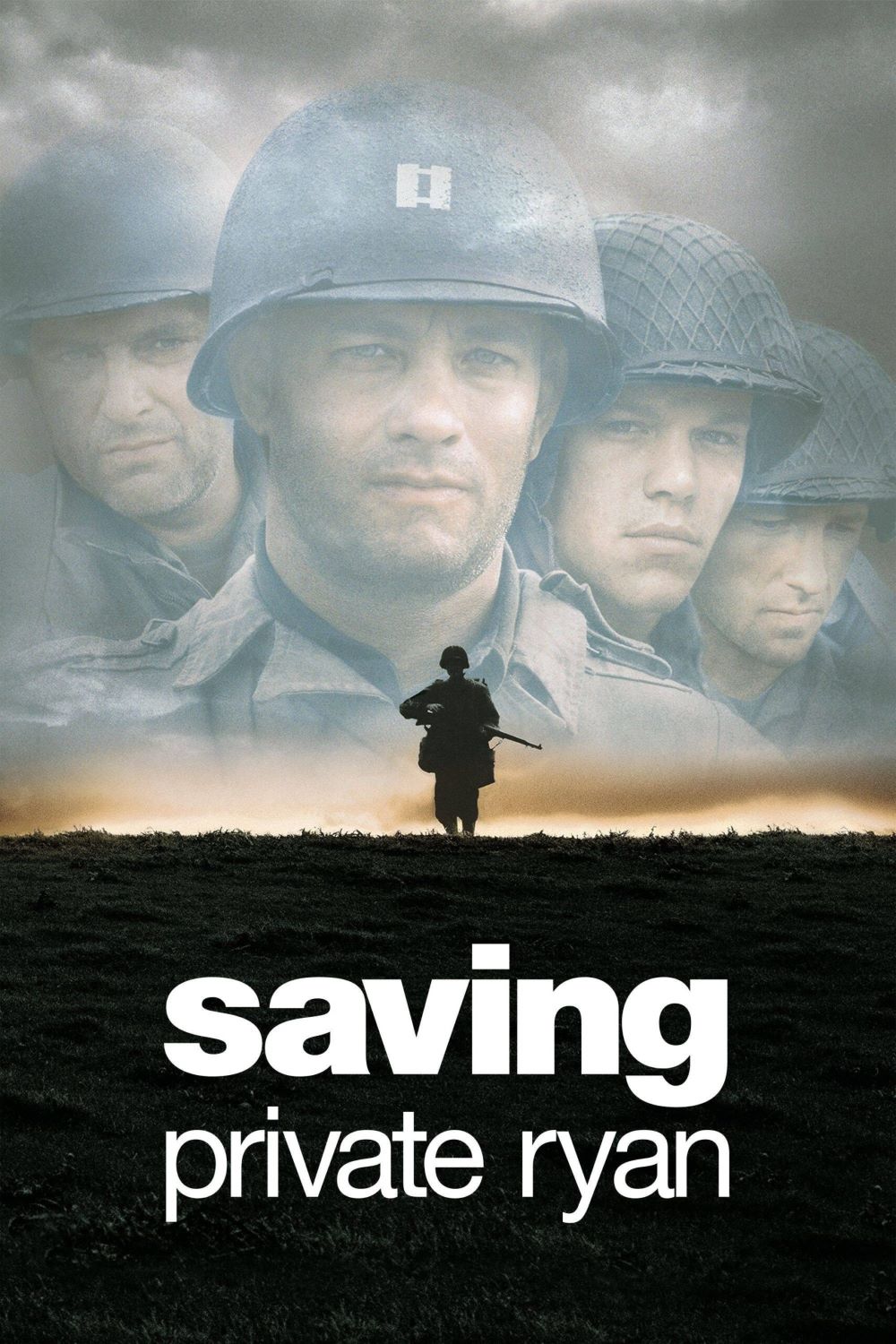
“Someday we might look back on this and decide that Saving Private Ryan was the one decent thing we were able to pull out of this whole godawful, shitty mess.” — Sergeant Horvath
Saving Private Ryan stands as a landmark achievement in war cinema, intricately weaving immersive battle scenes, rich character dynamics, and profound moral themes into a nearly three-hour exploration of World War II’s human cost. One of its most remarkable features is the opening Omaha Beach landing sequence, a meticulously crafted, over 24-minute depiction of warfare’s brutal reality. Spielberg deploys a cinema verité style with handheld cameras capturing disorientation and chaos through the soldiers’ eyes. The sound design envelops the viewer in a sensory onslaught—gunfire, shouting, explosions—creating a visceral experience that immerses audiences directly in the terror and confusion of D-Day.
The filming process drew heavily on historical accuracy, with the production shot on the coast of County Wexford, Ireland, employing amputee actors and practical effects over computer graphics to simulate violent injuries and battlefield horrors. Muted tones evoke wartime photographs, and rapid, shaky editing conveys the disorganized, frantic environment soldiers endured. Consulting WWII veterans and historians, Spielberg created a sequence that reshaped cinematic portrayals of war, influencing how future films would approach the genre’s raw immediacy and emotional weight.
The film’s narrative follows a squad led by Captain Miller on a mission to locate and bring home Private James Ryan, whose three brothers have been killed in combat. The mission is steeped in the real-life tragedy of the five Sullivan brothers who died together aboard the USS Juneau in the Pacific, prompting military policies to prevent similar familial devastation. This historical context frames the story’s ethical heart: risking several men’s lives to save one, raising enduring questions about the value of individual sacrifice within the broader war.
In Saving Private Ryan, sacrifice is portrayed ambiguously—not as the sacrifice of a single hero but as the collective cost borne by the men tasked with rescuing one individual under perilous conditions. As the squad journeys through the war-torn French countryside, the deaths, injuries, and tensions they face underscore war’s randomness and the difficulty of weighing one life against many. The narrative refuses to romanticize or simplify, instead confronting the audience with the tragic truth that countless soldiers lose their lives without recognition or purpose, while some survive against staggering odds.
Duty and camaraderie thread throughout the film, portrayed through the soldiers’ evolving relationships and personal struggles. Each grapples with loyalty not only to their mission but to their fellow men and their own moral codes.
Integral to the film’s power is Tom Hanks’s layered performance as Captain John Miller. Hanks breathes life and emotional depth into Miller, portraying him as a man shaped by civilian life—revealed poignantly when he discloses his pre-war profession as a schoolteacher—now transformed by the relentless demands of war. He embodies an officer who is both composed and vulnerable, carrying the heavy burden of leadership with quiet dignity. Hanks’s portrayal reveals the internal struggles beneath Miller’s stoic exterior: moments of doubt, moral conflict, and fatigue subtly expressed through a trembling hand or a weary gaze. This humanity makes Miller relatable, as a man trying to maintain order and purpose amid chaos.
Hanks skillfully balances Miller’s authoritative presence with warmth and empathy, particularly evident in his paternal interactions with younger soldiers, reinforcing Miller’s role as both a leader and protector. His nuanced acting delivers the complexity of a man constantly negotiating duty and compassion. In scenes of high tension or moral quandaries, Hanks conveys the weight of command while allowing glimpses into Miller’s psychological strain, deepening the film’s emotional resonance.
Following Hanks’s Miller, a standout amongst the supporting cast is Tom Sizemore’s portrayal of Technical Sergeant Mike Horvath, Miller’s steady second-in-command. Sizemore embodies the pragmatic, battle-hardened soldier whose loyalty and experience provide emotional grounding for the squad. Sizemore portrays Horvath’s weariness and quiet commitment, adding layers of realism that deepen the exploration of how war reshapes individuals. The chemistry and shared history between Miller and Horvath are palpable, illustrating the bonds that sustain soldiers through hardship and lending emotional weight to the narrative.
The film wrestles with intense moral ambiguity throughout. The mission’s premise—to risk many lives to save one—compels both characters and viewers to confront complex questions about justice, value, and the cost of war. Scenes presenting difficult choices, such as the decision to spare or execute prisoners, dramatize these ethical dilemmas and highlight the emotional burdens borne by soldiers.
Technically, the film excels, with Janusz Kaminski’s dynamic cinematography capturing both the chaos of battle and intimate moments with evocative clarity. The immersive sound design reinforces the brutal reality, stripping warfare of glamor and confronting audiences with its daunting human costs.
Despite the overwhelming destruction and loss, Saving Private Ryan offers moments of humanity and hope. The rescue mission serves as a fragile symbol of compassion in the midst of devastation, while the film’s closing reflections on memory and legacy emphasize the lasting significance of sacrifice and survival.
Saving Private Ryan stands as a monumental achievement in the war genre, combining visceral combat realism, compelling characters, and moral complexity. Through Hanks’s deeply human Captain Miller and the nuanced supporting performances, especially Sizemore’s grounded Horvath, the film explores themes of sacrifice, duty, and brotherhood with unflinching honesty. Its enduring legacy lies in its unvarnished yet empathetic portrayal of war’s cost and the profound sacrifices made by those who lived it.

