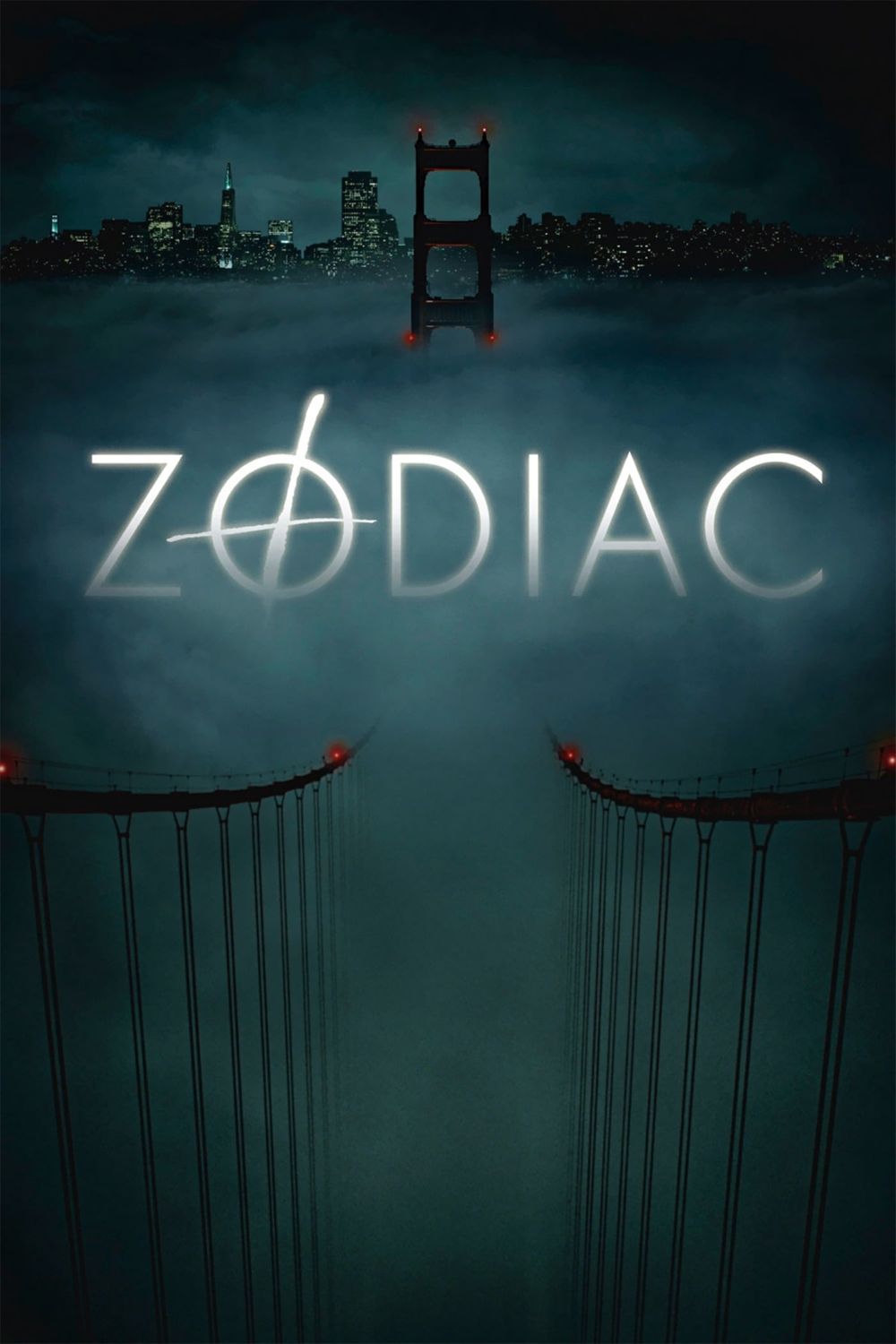
Horror Film Review: Zodiac (dir. by David Fincher)


“Just because you can’t prove it, doesn’t mean it’s not true.” — Robert Graysmith

There’s a particular kind of dread in watching capable people do everything they can and still come up short. That’s the feeling David Fincher taps into throughout Zodiac, a movie where a promising lead can be almost as unnerving as a dead end. Every possibility raises hopes, invites scrutiny, and threatens to pull someone deeper into a mystery that refuses to settle. Released in 2007, it’s a remarkably absorbing thriller about a serial killer, but it’s just as interested in the people left sorting through his damage. Catching him is the goal. Living with the failure to catch him becomes the story.

The film approaches the Zodiac investigation through three men with different relationships to the case. Newspaper cartoonist Robert Graysmith, played by Jake Gyllenhaal, becomes fascinated by its puzzles. Crime reporter Paul Avery, played by Robert Downey Jr., follows it professionally, while police inspector Dave Toschi, played by Mark Ruffalo, works to build a prosecutable case. James Vanderbilt’s screenplay, adapted from Graysmith’s books Zodiac and Zodiac Unmasked, lets their paths overlap without making them a conventional crime-solving team. They share information and frustrations, but their responsibilities, methods, and personal stakes aren’t interchangeable. That distinction gives the investigation texture.

Although Zodiac isn’t a typical horror movie, its story and themes firmly belong in serial-killer horror. The fear comes from more than what happens at individual crime scenes. This is an entire region being terrorized by someone whose next move nobody can reliably predict. His letters extend that fear into homes and workplaces, keeping the possibility of another attack alive. The authorities appear almost helpless to provide reassurance, despite their efforts. Fincher doesn’t reduce that helplessness to incompetence. The disturbing point is that people can work diligently, follow procedures, and pursue credible leads without gaining the power to prevent another killing.

The early attacks make that threat feel horribly concrete. Fincher doesn’t treat the victims as disposable figures whose only purpose is to establish how dangerous the killer is. There’s an uncomfortable attention to their vulnerability, especially during the Lake Berryessa sequence. Its daylight setting strips away the familiar suggestion that darkness is what makes a place unsafe. Everything is visible, yet visibility offers no protection. The pacing is agonizing because it allows the situation to become clear without offering an escape from it. Rather than making the violence exciting, Fincher makes it something you want desperately to interrupt.

Once the film turns toward the investigation, it finds suspense in the distance between a discovery and a usable answer. Handwriting comparisons, witness descriptions, phone calls, and jurisdictional obstacles become compelling because their consequences are clear. A detail might matter enormously, but only if someone can verify it or connect it to something stronger. Fincher gets you invested in that process without making it look smooth. Information arrives late, recollections complicate things, and apparent breakthroughs lose their shape. The movie keeps generating momentum, then showing how easily that momentum can disappear. Progress is possible, but it’s never secure.

Ruffalo gives that uncertainty a persuasive human center. His Toschi is smart, engaged, and occasionally funny, but he isn’t presented as a detective whose instincts automatically outrank the evidence. He can suspect someone without possessing what he needs to move forward. Ruffalo makes that limitation frustrating without turning every setback into a speech. A tired expression or clipped response often carries the scene. His performance also gives the procedural material an emotional foundation: this isn’t paperwork for its own sake. It’s the work standing between an investigator’s conviction and the possibility of holding someone accountable.

Downey’s Avery brings a looser, more abrasive rhythm to the film. He’s comfortable with a cutting remark, and his humor initially makes him seem insulated from the ugliness he covers. Gradually, that apparent insulation wears thin. Downey lets the character’s wit remain recognizable even as the confidence behind it becomes less convincing. It’s an effective performance because the deterioration doesn’t feel like a separate dramatic subplot pasted onto the investigation. It grows out of his involvement. Avery’s trajectory also makes Graysmith’s increasing enthusiasm uneasy to watch. One man is getting pulled in while another shows the damage that involvement can leave behind.

Gyllenhaal handles Graysmith’s transformation with similar care. His curiosity starts out as something approachable: he likes puzzles, notices details, and wants people to take his observations seriously. Those qualities don’t vanish when his interest becomes obsession. They simply stop having sensible limits. Gyllenhaal makes it easy to understand the appeal of another conversation or another possible connection, even when the cost becomes obvious. The family scenes matter because they expose what the investigation can obscure. Time spent chasing the case is also time taken from people who need him, and being sincere doesn’t make him less capable of neglect.

Fincher’s control is evident in how naturally the movie makes years accumulate. The period setting feels functional rather than decorative, and the changing dates gradually become reminders of how much life this investigation consumes. Even the suspense changes character. Early fear of an attack develops into anxiety about what might have been missed or misunderstood. The basement sequence brings those feelings together beautifully. Graysmith goes looking for information, only to find himself questioning the safety of the room he’s standing in. It’s a genuinely frightening scene built around uncertain knowledge rather than a clear, visible threat.

The deliberate approach does have drawbacks. The volume of names and disputed details can become tiring, and viewers looking for a steadily escalating chase may find the later stretches repetitive. The shift toward Graysmith also sacrifices some of the balance that makes the earlier sections so engaging. There’s another tension worth keeping in mind: the film’s dramatic investment in a suspect isn’t the same as definitive proof. Its storytelling can make an interpretation feel persuasive without resolving every doubt. That distinction matters in a movie so concerned with how easily the desire for an answer can outrun the available evidence.

What makes Zodiac exceptional is that it never lets the investigation become separate from the lives carrying it. The suspense isn’t only about whether someone will find the right clue; it’s about what another year of searching will do to them. Fincher delivers frightening scenes, excellent performances, and an engrossing procedural, but the cumulative effect is more troubling than any single moment. The killer doesn’t need to remain constantly on-screen to dominate the movie. His absence leaves room for suspicion, fear, and unfinished business to spread—and for everyone else to discover how little control they have over where it ends.

Here Are The 2012 Critics’ Choice Movie Award Nominees


Earlier today, the Broadcast Film Critics Association announced their nominations for the 17th Annual Critics’ Choice Awards.  The BFCA is the largest of the so-called “major” critics’ groups (and, interestingly enough, it’s also the newest and the least prestigious) and it has a fairly good track record of predicting the actual Oscar nominations.  The awards themselves will be handed out on January 12th, 2012 in a self-important, kinda seedy ceremony that will be broadcast on VH-1.   

BEST PICTURE
The Artist
The Descendants
Drive
Extremely Loud & Incredibly Close
The Help
Hugo
Midnight in Paris
Moneyball
The Tree of Life
War Horse

BEST ACTOR
George Clooney – The Descendants
Leonardo DiCaprio – J. Edgar
Jean Dujardin – The Artist
Michael Fassbender – Shame
Ryan Gosling – Drive
Brad Pitt – Moneyball

BEST ACTRESS
Viola Davis – The Help
Elizabeth Olsen – Martha Marcy May Marlene
Meryl Streep – The Iron Lady
Tilda Swinton – We Need to Talk About Kevin
Charlize Theron – Young Adult
Michelle Williams – My Week With Marilyn

BEST SUPPORTING ACTOR
Kenneth Branagh – My Week With Marilyn
Albert Brooks – Drive
Nick Nolte – Warrior
Patton Oswalt – Young Adult
Christopher Plummer – Beginners
Sir Andrew Serkis – Rise of the Planet of the Apes

BEST SUPPORTING ACTRESS
Berenice Bejo – The Artist
Jessica Chastain – The Help
Melissa McCarthy – Bridesmaids
Carey Mulligan – Shame
Octavia Spencer – The Help
Shailene Woodley – The Descendants

BEST YOUNG ACTOR/ACTRESS
Asa Butterfield – Hugo
Elle Fanning – Super 8
Thomas Horn – Extremely Loud & Incredibly Close
Ezra Miller – We Need to Talk About Kevin
Saoirse Ronan – Hanna
Shailene Woodley – The Descendants

BEST ACTING ENSEMBLE
The Artist
Bridesmaids
The Descendants
The Help
The Ides of March

BEST DIRECTOR
Stephen Daldry – Extreme Loud & Incredibly Close
Michel Hazanavicius – The Artist
Alexander Payne – The Descendants
Nicolas Winding Refn – Drive
Martin Scorsese – Hugo
Steven Spielberg – War Horse

BEST ORIGINAL SCREENPLAY
The Artist – Michel Hazanavicius
50/50 – Will Reiser
Midnight in Paris – Woody Allen
Win Win – Screenplay by Tom McCarthy, Story by Tom McCarthy & Joe Tiboni
Young Adult – Diablo Cody

BEST ADAPTED SCREENPLAY
The Descendants – Alexander Payne and Nat Faxon & Jim Rash
Extremely Loud & Incredibly Close – Eric Roth
The Help – Tate Taylor
Hugo – John Logan
Moneyball – Steven Zaillian and Aaron Sorkin, Story by Stan Chervin

BEST CINEMATOGRAPHY
The Artist – Guillaume Schiffman
Drive – Newton Thomas Sigel
Hugo – Robert Richardson
Tree of Life – Emmanuel Lubezki
War Horse – Janusz Kaminski

BEST ART DIRECTION
The Artist – Production Designer: Laurence Bennett, Art Director: Gregory S. Hooper
Harry Potter and the Deathly Hallows Part 2 – Production Designer: Stuart Craig, Set Decorator: Stephenie McMillan
Hugo – Production Designer: Dante Ferretti, Set Decorator: Francesca Lo Schiavo
The Tree of Life – Production Designer: Jack Fisk, Art Director: David Crank
War Horse – Production Designer: Rick Carter, Set Decorator: Lee Sandales

BEST EDITING
The Artist – Michel Hazanavicius and Anne-Sophie Bion
Drive – Matthew Newman
The Girl With the Dragon Tattoo – Kirk Baxter and Angus Wall
Hugo – Thelma Schoonmaker
War Horse – Michael Kahn

BEST COSTUME DESIGN
The Artist – Mark Bridges
The Help – Sharen Davis
Hugo – Sandy Powell
Jane Eyre – Michael O’Connor
My Week With Marilyn – Jill Taylor

BEST MAKEUP
Albert Nobbs
Harry Potter and the Deathly Hallows Part 2
The Iron Lady
J. Edgar
My Week With Marilyn

BEST VISUAL EFFECTS
Harry Potter and the Deathly Hallows Part 2
Hugo
Rise of the Planet of the Apes
Super 8
The Tree of Life

BEST SOUND
Harry Potter and the Deathly Hallows Part 2
Hugo
Super 8
The Tree of Life
War Horse

BEST ANIMATED FEATURE
The Adventures of Tintin
Arthur Christmas
Kung Fu Panda 2
Puss in Boots
Rango

BEST ACTION MOVIE
Drive
Fast Five
Hanna
Rise of the Planet of the Apes
Super 8

BEST COMEDY
Bridesmaids
Crazy, Stupid, Love
Horrible Bosses
Midnight in Paris
The Muppets

BEST FOREIGN LANGUAGE FILM
In Darkness
Le Havre
A Separation
The Skin I Live In
Where Do We Go Now

BEST DOCUMENTARY FEATURE
Buck
Cave of Forgotten Dreams
George Harrison: Living in the Material World
Page One: Inside the New York Times
Project Nim
Undefeated

BEST SONG
“Hello Hello” – performed by Elton John and Lady Gaga/written by Elton John and Bernie Taupin – Gnomeo & Juliet
“Life’s a Happy Song” – performed by Jason Segel, Amy Adams and Walter/written by Bret McKenzie – The Muppets
“The Living Proof” – performed by Mary J. Blige/written by Mary J. Blige, Thomas Newman and Harvey Mason, Jr. – The Help
“Man or Muppet” – performed by Jason Segel and Walter/written by Bret McKenzie – The Muppets
“Pictures in My Head” – performed by Kermit and the Muppets/written by Jeannie Lurie, Aris Archontis and Chen Neeman – The Muppets

BEST SCORE
The Artist – Ludovic Bource
Drive – Cliff Martinez
The Girl With the Dragon Tattoo – Trent Reznor & Atticus Ross
Hugo – Howard Shore
War Horse – John Williams

The BFCA has obviously made a lot of nominations and some of them are interesting but I have to be honest: the BFCA as an organization annoys me with how they’re always bragging about how big they are and how they’re so good at celebrating the conventional establishment wisdom.  So, I’ll just say that its nice to see Hanna getting at least some sort of recognition (even if that recognition is kinda minor.)

Lisa And The Academy Agree To Disagree


The Oscar nominations were announced today and, for the most part, it’s pretty much what you would expect.  Below is the list of nominees.  If a nominee listed in bold print, that means they also appeared on my own personal list of nominations.

Best motion picture of the year

Black Swan
The Fighter
Inception
The Kids Are All Right
The King’s Speech
127 Hours
The Social Network
Toy Story 3
True Grit
Winter’s Bone

(The Academy and I agree on five of the ten nominees.  That’s actually more than I was expecting.)

Performance by an actor in a leading role

Javier Bardem (Biutiful)
Jeff Bridges (True Grit)
Jesse Eisenberg (The Social Network)
Colin Firth (The King’s Speech)
James Franco (127 Hours)

(The only real surprise here is Bardem.  I haven’t seen Biutiful but I’ve heard amazing things about it.)

Performance by an actor in a supporting role

Christian Bale (The Fighter)
John Hawkes (Winter’s Bone)
Jeremy Renner (The Town)
Mark Ruffalo (The Kids Are All Right)
Geoffrey Rush (The King’s Speech)

(Yay for John Hawkes!  Some people are surprised that Andrew Garfield wasn’t nominated for The Social Network.  I’m disappointed he wasn’t nominated for Never Let Me Go.)

Performance by an actress in a leading role

Annette Bening (The Kids Are All Right)
Nicole Kidman (Rabbit Hole)
Jennifer Lawrence (Winter’s Bone)
Natalie Portman (Black Swan)
Michelle Williams (Blue Valentine)

(I’m happy to see Lawrence and Portman recognized but I still so wish that the Academy had recongized Noomi Rapace and Katie Jarvis as well.  I knew it wouldn’t happen but still…)

Performance by an actress in a supporting role

Amy Adams (The Fighter)
Helena Bonham Carter (The King’s Speech)
Melissa Leo (The Fighter)
Hailee Steinfeld (True Grit)
Jacki Weaver (Animal Kingdom)

(Weaver — Yay!) 

Achievement in directing

Darren Aronofsky (Black Swan)
David O Russell (The Fighter)
Tom Hooper (The King’s Speech)
David Fincher (The Social Network)
Joel Coen and Ethan Coen (True Grit)

(The snubbing of Christopher Nolan for Inception is probably the closest thing to an outrage that the Oscars will produce this year.)

Adapted screenplay

127 Hours – Danny Boyle & Simon Beaufoy
The Social Network – Aaron Sorkin
Toy Story 3 – Michael Arndt (screenplay); John Lasseter, Andrew Stanton and Lee Unkrich (story)
True Grit – Joel Coen and Ethan Coen
Winter’s Bone – Debra Granik & Anne Rosellini

Original screenplay

Another Year – Mike Leigh
The Fighter – Scott Silver, Paul Tamasy and Eric Johnson (screenplay); Keith Dorrington, Paul Tamasy and Eric Johnson (story)
Inception – Christopher Nolan
The Kids Are All Right – Lisa Cholodenko and Stuart Blumberg
The King’s Speech – David Seidler

Best animated feature film of the year

How to Train Your Dragon
The Illusionist
Toy Story 3

 (I haven’t seen The Illusionist yet but I’m looking forward to it because the previews look great, it’s based on a script by Jacques Tati, and I love all things French.  Still, I kinda wish that Despicable Me had been nominated just so Arleigh could see the minions at the Academy Awards.)

Best foreign language film of the year

Biutiful (Mexico)
Dogtooth (Greece)
In a Better World (Denmark)
Incendies (Canada)
Outside the Law (Hors-la-loi) (Algeria)

Art direction

Alice in Wonderland – Robert Stromberg (production design), Karen O’Hara (set decoration)
Harry Potter and the Deathly Hallows Part 1 – Stuart Craig (production design), Stephenie McMillan (set decoration)
Inception – Guy Hendrix Dyas (production design), Larry Dias and Doug Mowat (set decoration)
The King’s Speech – Eve Stewart (production design), Judy Farr (set decoration)
True Grit – Jess Gonchor (production design), Nancy Haigh (set decoration) 

Achievement in cinematography

Matthew Libatique (Black Swan)
Wally Pfister (Inception)
Danny Cohen (The King’s Speech)
Jeff Cronenweth (The Social Network)
Roger Deakins (True Grit) 

Achievement in costume design

Colleen Atwood (Alice in Wonderland)
Antonella Cannarozzi (I Am Love)
Jenny Beavan (The King’s Speech)
Sandy Powell (The Tempest)
Mary Zophres (True Grit)

(That’s right, I ended up going 0 for 5 as far as Costume Design is concerned.  Which I guess goes to prove that I have better taste than the Academy.)

Best documentary feature

Exit Through the Gift Shop (Banksy and Jaimie D’Cruz)
Gasland (Josh Fox and Trish Adlesic)
Inside Job (Charles Ferguson and Audrey Marrs)
Restrepo (Tim Hetherington and Sebastian Junger)
Waste Land (Lucy Walker and Angus Aynsley)

 (If Banksy wins, I’ll be happy.  I have a feeling the award will go to Inside Job, however.  As a documentary, Inside Job reminded me a lot of Capt. Hindsight from the South Park Coon Vs. Coon And Friends trilogy.  Also, I’m a little bit surprised that Waiting for Superman wasn’t nominated.  I’m even more surprised that I actually saw enough feature documentaries last year to even have an opinion.  Also, interesting to note that Restrepo — a very nonpolitical look at military in the mid-east — was nominated while The Tillman Story, a much more heavy-handed and stridently political documentary was not.)

Best documentary short subject

Killing in the Name (Nominees to be determined)
Poster Girl (Nominees to be determined)
Strangers No More (Karen Goodman and Kirk Simon)
Sun Come Up (Jennifer Redfearn and Tim Metzger)
The Warriors of Qiugang (Ruby Yang and Thomas Lennon)

(It’s always interesting that nobody knows what these movies are about yet their producers always end up giving the longest speeches at the Oscars.  I’m hoping that Poster Girl wins because the actual producers have yet to be determined.  I imagine that means there might be some sort of legal action going on which means that, if it wins on Oscar night, there might be a big fight at the podium.  Plus, I like the title.  It makes me want to walk up to people I barely know, lean forward, and go, “Can I be your poster girl?”)

Achievement in film editing

Andrew Weisblum (Black Swan)
Pamela Martin (The Fighter)
Tariq Anwar (The King’s Speech)
Jon Harris (127 Hours)
Angus Wall and Kirk Baxter (The Social Network) 

Achievement in makeup

Adrien Morot (Barney’s Version)
Edouard F Henriques, Gregory Funk and Yolanda Toussieng (The Way Back)
Rick Baker and Dave Elsey (The Wolfman)

Achievement in music written for motion pictures (original score)

John Powell (How to Train Your Dragon)
Hans Zimmer (Inception)
Alexandre Desplat (The King’s Speech)
AR Rahman (127 Hours)
Trent Reznor and Atticus Ross (The Social Network)

Achievement in music written for motion pictures (original song)

Coming Home (from Country Strong, music and lyrics by Tom Douglas, Troy Verges and Hillary Lindsey)
I See the Light (from Tangled, music by Alan Menken, lyrics by Glenn Slater)
If I Rise (from 127 Hours, music by AR Rahman, lyrics by Dido and Rollo Armstrong)
We Belong Together (from Toy Story 3, music and lyrics by Randy Newman)

(I’ll just say it now — 4 nominations and I didn’t agree with a single one of them.  Seriously, they could have nominated up to 5 songs but instead of giving at least one nomination to Burlesque, they just nominated 4 songs.  What a load of crap.)

Best animated short film

Day & Night (Teddy Newton)
The Gruffalo (Jakob Schuh and Max Lang)
Let’s Pollute (Geefwee Boedoe)
The Lost Thing (Nick Batzias, Shaun Tan and Andrew Ruhemann)
Madagascar, carnet de voyage (Madagascar, a Journey Diary) (Bastien Dubois)

(I’ve actually seen Day & Night since it was shown before Toy Story 3.  I thought it went on a little bit too long, to be honest.)

Best live action short film

The Confession (Tanel Toom)
The Crush (Michael Creagh)
God of Love (Luke Matheny)
Na Wewe (Ivan Goldschmidt)
Wish 143 (Ian Barnes and Samantha Waite) 

Achievement in sound editing

Inception (Richard King)
Toy Story 3 (Tom Myers and Michael Silvers)
Tron: Legacy (Gwendolyn Yates Whittle and Addison Teague)
True Grit (Skip Lievsay and Craig Berkey)
Unstoppable (Mark P Stoeckinger)

Achievement in sound mixing

Inception (Lora Hirschberg, Gary A Rizzo and Ed Novick)
The King’s Speech (Paul Hamblin, Martin Jensen and John Midgley)
Salt (Jeffrey J Haboush, Greg P Russell, Scott Millan and William Sarokin)
The Social Network (Ren Klyce, David Parker, Michael Semanick and Mark Weingarten)
True Grit (Skip Lievsay, Craig Berkey, Greg Orloff and Peter F Kurland)

 (I would have probably had more matches in the sound category if I actually knew the difference between sound editing and sound mixing.)

Achievement in visual effects

Alice in Wonderland (Ken Ralston, David Schaub, Carey Villegas and Sean Phillips)
Harry Potter and the Deathly Hallows Part 1 (Tim Burke, John Richardson, Christian Manz and Nicolas Aithadi)
Hereafter (Michael Owens, Bryan Grill, Stephan Trojanski and Joe Farrell)
Inception (Paul Franklin, Chris Corbould, Andrew Lockley and Peter Bebb)
Iron Man 2 (Janek Sirrs, Ben Snow, Ged Wright and Daniel Sudick)

So there you go.  I went 50/50 on the Best Picture nominations and — well, it all pretty much went downhill from there, didn’t it?  Oh well.