Review: The Other Guys (dir. by Adam McKay)


“We are gonna have sex in your car. It will happen again!” — Dirty Mike

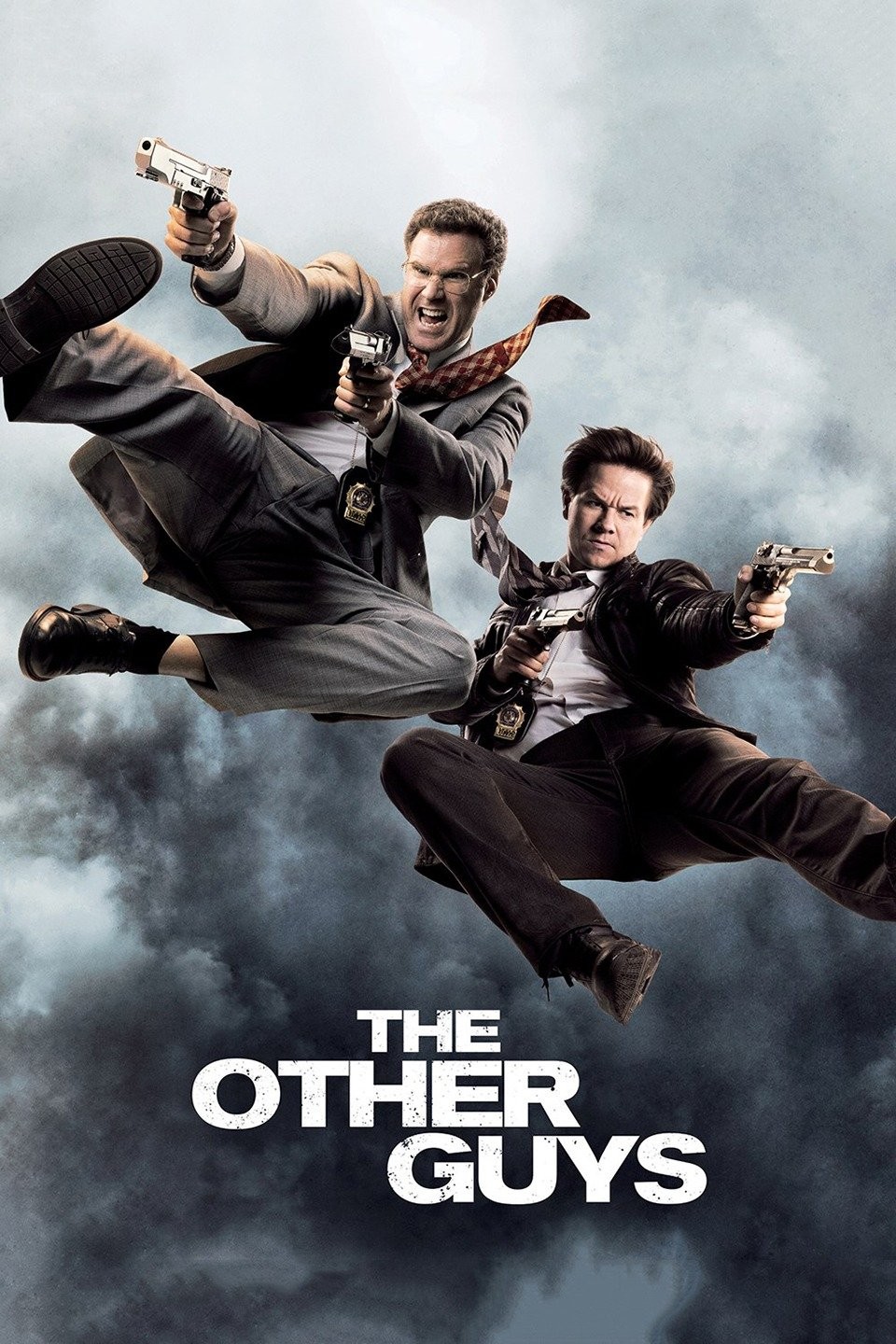
Adam McKay’s The Other Guys feels like the moment a class clown who is secretly a genius finally snaps and decides to teach the entire school a lesson while making them laugh so hard they forget they’re being educated. Released in 2010, the film lands right in that sweet spot of McKay’s career where he was pivoting away from the pure, unhinged mania of Anchorman and Step Brothers and starting to smuggle razor-sharp satire into the multiplex under a mountain of stupidity. It is, without a doubt, one of the funniest movies of its decade, but calling it just a comedy feels like a disservice. It’s a buddy cop movie that hates the irresponsibility of buddy cop movies, a financial crisis explainer disguised as a screamo TLC tribute, and a showcase for two lead performances that should have spawned at least three sequels. If you’ve somehow managed to sleep on this one, it’s time to fix that.

The opening sequence is a masterclass in bait-and-switch. We are introduced to Danson and Highsmith, the city’s top cops, played with magnificent, self-serious swagger by Dwayne Johnson and Samuel L. Jackson. They’re chasing down a minor misdemeanor in a way that destroys half of downtown Manhattan, culminating in them heroically jumping off a twenty-story building to land safely in some bushes. Except they don’t. They splatter. It’s a shocking, hilarious, and instantly iconic death scene that serves as McKay’s thesis statement: the action movie logic you’ve been fed for decades is a lethal fantasy. With the heroes dead, the spotlight shifts painfully to the guys who have to do the paperwork on their mangled corpses, forensic accountant Allen Gamble and hot-headed loose cannon Terry Hoitz. These two are, emphatically, the other guys, and when circumstances force them onto a case involving corporate financial fraud, they stumble their way toward something resembling heroism, occasionally despite themselves.

What separates The Other Guys from the pile of mediocre comedy-action hybrids that came before and after it is the chemistry between Ferrell and Wahlberg, which is genuinely one of the more unexpected comedic pairings of that era. Ferrell plays Gamble as a deeply strange man who has weaponized milquetoast passivity into a superpower. His complete, serene contentment with a life of spreadsheets, Grand Theft Auto grand larceny sprees where he obeys all traffic laws, and a suspiciously beautiful wife played by Eva Mendes is a hypnotic thing to watch. Ferrell dials down the bombast and delivers something wonderfully weird and controlled, a man who is simultaneously a complete dork and, as we later discover, a shockingly capable pimp named Gator. Wahlberg, meanwhile, is doing something genuinely interesting here. Terry Hoitz is a walking wound, a great cop reduced to a desk jockey and public mockery for the unforgivable sin of accidentally shooting Derek Jeter during the World Series. He’s angry, humorless, and convinced of his own greatness despite ample evidence to the contrary. Wahlberg plays him completely straight, which is the exact right call, because his deadpan bewilderment at Ferrell’s behavior, the way his voice cracks with desperate, shrill anger when trying to explain a normal scenario, ends up being funnier than almost anything else in the film. Their chemistry is a perfect storm of a guy who wants to live inside a peaceful spreadsheet and a guy who wants to set that spreadsheet on fire while learning to dance the sardine.

This is the kind of comedy where the supporting cast keeps piling on gloriously unhinged performances, which makes Ray Stevenson’s work as the heavy all the more valuable. As Roger Wesley, the corporate enforcer who does the violent bidding of Steve Coogan’s billionaire fraudster, Stevenson operates in a completely different register from everyone else. While Ferrell is weaponizing passive-aggressive politeness, Wahlberg is screaming about peacocks, and Michael Keaton is unconsciously quoting Waterfalls while running a police precinct, Stevenson remains a granite slab of menace. He doesn’t crack jokes, he doesn’t do double-takes, and he certainly doesn’t care about the absurdity swirling around him. There’s something almost old-fashioned about his screen presence here, a grim, heavy-lidded seriousness that makes him feel like he wandered in from a real crime thriller and simply refused to leave. It’s the kind of straight-man performance that doesn’t just anchor the chaos; it makes the chaos funnier by contrast. When he’s methodically hunting down loose ends while Ferrell and Wahlberg are bickering about whether a lion could beat a tuna in open ocean, the collision of tones is pure McKay alchemy.

The plot, such as it is, involves the duo stumbling onto a massive white-collar crime conspiracy led by a billionaire played with smarmy, cowardly glee by Steve Coogan. It’s here that McKay’s deeper ambitions start to peek through the absurdity. While Terry is desperate for a classic action-movie shootout and car chase, the investigation leads them to the Lendl Global offices, where the real villainy isn’t drug lords or terrorists but leveraged buyouts and pension fund looting. There’s a perfect running gag where they keep trying to get into the action, preparing for a massive gunfight against a team of mercenaries, only to find that the corrupt corporate security detail is made up of ex-cops just looking to quietly retire with their benefits. It is the funniest anti-climax, a deliberate denial of violence that reinforces the film’s core idea that the most dangerous criminals wear suits, not ski masks. The financial villain is a thinly veiled stand-in for the kind of Wall Street grift that was very much in the cultural conversation in 2010, just a couple of years after the financial crisis. McKay would later go much deeper on that territory with The Big Short, but the seeds of that interest are planted all over this film.

The comedy in The Other Guys operates on two distinct but equally brilliant levels. There is the surface-level absurdity, the kind that produces quotes like “I’m a peacock, you gotta let me fly!” and the quiet, steady domination of Gamble’s totemic Prius, which somehow survives a fireball helicopter crash without a scratch. The “aim for the bushes” jump, the lion versus tuna debate that Hoitz treats with theological gravity, and the wooden gun gifted to Gamble are all top-tier ridiculousness. Then there is the deeper, more surreal well of humor that feels distinctly McKay. The entire subplot of Gamble’s past as a college pimp named Gator is a work of deranged genius, a slow-motion, honey-dripped flashback that reveals a world of casual, elegant pimping that Ferrell plays with a straight face so absolute it circles back around to being terrifyingly cool. The relentless jokes about Gamble unknowingly marrying way out of his league, his genuine confusion over why people think Eva Mendes is attractive, is a running gag that beautifully plays on Ferrell’s ability to be completely oblivious to the reality surrounding him. Eva Mendes is admittedly underused, though the film at least has fun with the joke by leaning into Wahlberg’s incredulous reaction every time she appears, which never gets old.

Visually, the film has a blandly competent sheen that actually works in its favor. Unlike the frattish haze of Anchorman, here McKay is directing a movie that looks like a real cop film, which makes the eruptions of insanity even more jarring. The action sequences are staged with real competence. The car chases aren’t played as joke sequences; they’re genuinely well-staged, particularly the Prius chase midway through where Gamble’s calm, methodical driving commentary clashes with a panicking Hoitz. It’s legitimately exciting before it goes completely off the rails in the best way. McKay never lets the plot drag even when the jokes need room to breathe. By this point in his career he’d clearly figured out the right pace for this kind of thing, and it shows. The movie moves. The film also showcases Michael Keaton in a delightful supporting role as Captain Gene Mauch, a cop who unconsciously works a second job at Bed Bath & Beyond while peppering his police work with retail slogans. Keaton’s deadpan delivery of lines about TLC references and towel specials, only to shout the chorus of Waterfalls at a moment of high tension, is a thing of beauty. Every single one of his scenes is a gift. It’s a running joke that never explains itself, and it’s all the better for it.

Then there is the ending. For a film that spends nearly two hours being aggressively stupid-smart, the final moments make a radical pivot. As the bad guy is caught, the movie doesn’t just roll credits. It stops dead and turns into a miniature economics lecture. With animated infographics and hard statistics, McKay lays out exactly how Ponzi schemes, bailouts, and income inequality have shattered the American middle class, all while the Rage Against the Machine cover of Maggie’s Farm thrashes on the soundtrack. It’s a jarring, preachy, and completely unexpected move. On first viewing, it feels like the director violently smashing the emergency brake on the comedy train. But in hindsight, it’s the only honest way this movie could end. McKay isn’t just telling us that bank robbers are less dangerous than bankers; he’s stopping us from leaving the theater without understanding the scale of the theft. It doesn’t undermine the fun at all. If anything it adds a layer of purpose that makes the whole thing feel a little more substantial than your average cop spoof. It’s the moment the class clown pulls out a graph showing your student debt will cripple you for life, and somehow, it works because he’s been earning your trust with jokes for the previous hour and a half.

There’s something almost nostalgic about watching a comedy this confident in its own weirdness. The Other Guys arrived at an interesting moment for this kind of movie, when the mid-budget, R-rated studio comedy was still a viable commercial proposition. It made decent money even if it wasn’t a runaway smash, but more importantly, it trusts that you’re going to be on board for a scene where Ferrell and Wahlberg argue about whether they’d rather be a lion or a tuna, and it’s right to trust that. The criticisms are relatively minor. The movie is maybe fifteen minutes too long, and a subplot involving Wahlberg’s ballet background gets introduced and then somewhat dropped. The villain’s scheme, by design, isn’t particularly cinematic, and the film occasionally strains to make the stakes feel real. But these are the kinds of complaints you make about a movie you liked, not a movie you didn’t, and none of them meaningfully dent the overall experience.

More than a decade later, The Other Guys has aged into something of a classic, a revered staple of late-night cable and quotable group chats. It sits at a fascinating crossroads, holding onto the absurdist, quote-heavy DNA of McKay’s earlier work while laying the formal and thematic groundwork for what he would do next with The Big Short and Vice. It proves that the jump from Ron Burgundy to a film about the 2008 housing crisis wasn’t actually that far at all. He just needed Wahlberg to yell a little bit, Ferrell to explain why a lion would still beat a tuna, even in open ocean, and Stevenson to stand in the middle of it all looking like he genuinely wants to murder everyone in the room. Whether you come for the laughs, the surprisingly competent action, or Michael Keaton mumbling TLC lyrics under his breath, you’re going to find something to love. Absolutely worth your time.
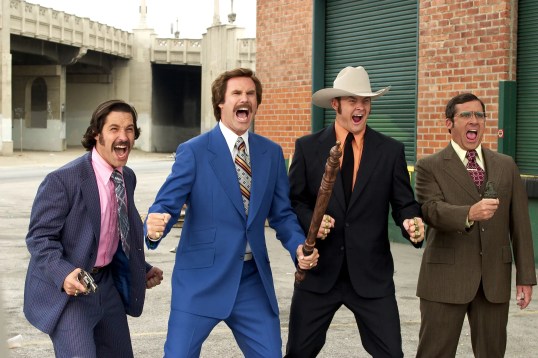
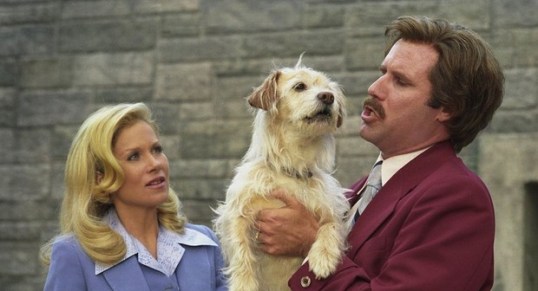
I Re-Watched Anchorman (2005, Dir. by Adam McKay)


“Ron Burgundy was the balls.”

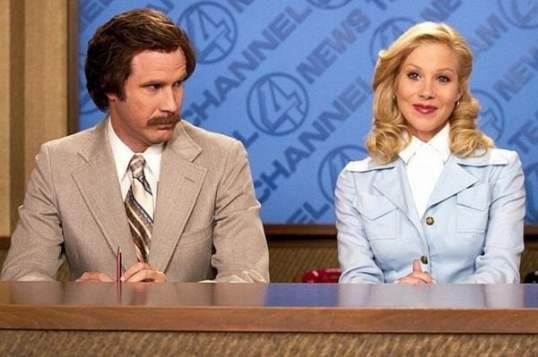
You got that right!  That’s one reason why I’ve lost track of the number of times that I’ve watched Anchorman.  Whatever’s going on in the world or my life, I know that Anchorman is going to make me laugh and make me feel better about things.  The adventures of anchorman Ron Burgundy (Will Ferrell) and his news team (Paul Rudd, David Koechner, Steve Carell) never cease to amuse me, whether they’re capturing the birth of a panda or getting involved in a street fight with their rival newsmen.

“Brick killed a guy.”

He did!  Where did Brick get a trident from?  When the street fight started, he only had a hand grenade.  Ron Burgundy suggests that Brick should find a safehouse and I hope Brick took his advice.  There’s a lot of funny people in Anchorman but Steve Carell, playing the weatherman with an IQ under 80, is my favorite.  Brick saying that he loves the lamp is so touching.

“Fare thee well, Baxter.  You shall always be a friend of the bears.”

The first time I saw Anchorman, I couldn’t believe it when Baxter was drop-kicked off that bridge.  I swore that I would never watch another movie featuring Jack Black!  Baxter was so cute!  When Ron broke down over the loss of his dog, I wanted to break down with him.  Later, when Baxter emerged from the river and barked, “I’m coming, Ron!,” I was so relieved.  Baxter lives!  Baxter’s conversation with the bears warmed my heart.

“Stay classy, San Diego.”

That’s right, San Diego!  Stay classy.  Anchorman is in a class all of its own.  Ron Burgundy makes beautiful music with his jazz flute.  Brian Fantana is a walking advertisement for Sex Panther.  Veronica Corningstone (Christine Applegate) strikes a blow for women’s liberation and teaches Ron an important lesson about teleprompters.  It’s the little moments that make me laugh the most, whether it’s Fred Willard talking to his son’s school about why his son has been expelled or Tim Robbins as the PBS anchor who smokes a pipe and chops off Luke Wilson’s arm or Vince Vaughn shouting about the ratings.  Best of all, Will Ferrell has never been better than as the pompous Ron Burgundy, so stupid but so committed to his job that you can’t help but love him.

“Wow, that really escalated.”

You bet it did, Ron!  Each moment of Anchorman is funnier than the last.  (I wish the same was true of Anchorman 2.)  That’s why Anchorman is a film that I watch and rewatch.  In fact, I think I’ll go watch it right now!

“Thanks for stopping by, San Diego.”

Lisa Marie’s Oscar Predictions for January


Well, here we are. Another awards season is wrapping up. Almost all of the regional critic groups have announced their picks for the best of 2021. The Guilds have spoken. The front runners have emerged. Both Don’t Look Up and Being the Ricardos have weathered bad reviews and become probable Oscar nominees. If nothing else, I’ll have something to complain about for the next three or four months. At the same time, Power of the Dog has emerged as the critical favorite. Belfast seems to be the populist favorite. West Side Story is the big production that has to be nominated, even though no one seems to feel particularly strongly about it one way or the other. Dune is the blockbuster that the Academy is hoping will cause people to tune into the ceremony, especially now that it appears that the Spider-Man Oscar campaign has fizzled. Don’t Look Up is the “Let’s piss off the cons” nominee. Being the Ricardos is this year’s “Wow, our industry really is the best” nominee. Personally, I’m going to view tick, tick….Boom! as being the most likely dark horse to pull off an upset.

So, with all that in mind, here’s my last set of 2021 Oscar predictions.

Looking at the list below, I have to say that we certainly have a good race this year. It’s interesting that, this year, only films that were released between March and the end of December were eligible for the Oscars. 2021 was a very good year for movies! Not only do we have the nominees below but we also had films like The Father and Judas and the Black Messiah, both of which are 2021 films as far as I’m concerned.

(Consider this. If the Oscars had kept the eligibility window the same last year instead of extending it to accommodate films delayed by the pandemic, Anthony Hopkins would probably be the Best Actor front runner right now and the Academy probably would have given Chadwick Boseman a posthumous Best Actor award last April. I also imagine that Jesse Plemons would have a better chance of picking up a supporting actor nomination if the members of the Academy were currently screening both The Power of the Dog and Judas and the Black Messiah at the same time.)

To see how my thinking has evolved,  check out my predictions for March and April and May and June and July and August and September and October and November and December!

The Oscar nominations will be announced on February 8th. Below are my predictions!

Best Picture

Being The Ricardos
Belfast
CODA
Don’t Look Up
Dune
King Richard
Licorice Pizza
The Power Of The Dog
Tick, Tick….Boom!
West Side Story

Best Director

Jane Campion for The Power of the Dog

Adam McKay for Don’t Look Up

Lin-Manuel Miranda for tick, tick …. Boom!

Steven Spielberg for West Side Story

Denis Villeneuve for Dune

Best Actor

Nicolas Cage in Pig

Benedict Cumberbatch in The Power of the Dog

Andrew Garfield in tick, tick….Boom!

Will Smith in King Richard

Denzel Washington in The Tragedy of Macbeth

Best Actress

Jessica Chastain in The Eyes of Tammy Faye

Olivia Colman in The Lost Daughter

Jennifer Hudson in Respect

Nicole Kidman in Being the Riacardos

Kristen Stewart in Spencer

Best Supporting Actor

Bradley Cooper in Licorice Pizzia

Ciaran Hinds in Belfast

Troy Kostur in CODA

Jared Leto in House of Gucci

Kodi Smit-McPhee in The Power of the Dog

Best Supporting Actress

Caitriona Balfe in Belfast

Ariana DeBose in West Side Story

Kirsten Dunst in The Power of the Dog

Aunjanue Ellis in King Richard

Ruth Negga in Passing

The Films of 2021: Don’t Look Up (dir by Adam McKay)


Our story so far:

In 2010, after making audiences laugh with films like Anchorman, Talladega Nights, and Step Brothers, director Adam McKay released The Other Guys.  A spoof of buddy cop films, The Other Guys featured Mark Wahlberg and Will Ferrell as two lovably incompetent but well-intentioned cops who took down a corrupt investor played by Steve Coogan.  It was a funny movie and, along with Anchorman and Talladega Nights, it revealed that McKay was one of the few directors who understood how to best capture Ferrell’s style of comedy.  And yet, the film ended on a bit of an odd note as the end credits were accompanied with statistics on how much money Wall Street executives were getting paid while the average American struggled to keep up with their bills.  It suggested that McKay meant for Coogan’s somewhat cartoonish villain to be taken seriously.

McKay followed up The Other Guys with Anchorman 2, which had some funny moments but which was also overlong, spent a good deal of time railing against corporate sponsorship of the news, and took a jarringly serious approach to a subplot in which Will Ferrell’s Ron Burgundy was rendered blind.  In retrospect, it’s easy to see how The Other Guys and Anchorman 2 both lay the foundation for what would become McKay’s signature style.  The end credits for The Other Guys revealed that McKay felt he could change the world through comedy and, at the time, there was actually something charmingly naïve about his belief that he could use the end credits to turn the audience into activists.  Anchorman 2‘s excessive length and its strained attempts at being meaningful (particularly when compared to the pure fun of the first film) revealed a somewhat less charming side to McKay’s activist vision.

This all led to 2015’s The Big Short, a film in which McKay mixed broad comedy with strained drama and attempted to tell the story of the 2007 financial crisis.  It was a mess of a film, featuring Ryan Gosling introducing famous people to explain complex financial concepts.  It was also a film that occasionally attempted to be a serious tear-jerker, featuring poor old Steve Carell as an investor who still hadn’t gotten over the suicide of his brother.  At the time, The Big Short was acclaimed by some and hated by others.  Interestingly enough, some of the most liberal film critics out there dismissed the film as being smug and preachy.  There were other critics who thought the film was brilliant.  The Academy appreciated the film, nominating it for Best Picture and giving McKay an Oscar for his screenplay.  McKay, for his part, encouraged everyone watching the Oscars to vote for Bernie Sanders.

In retrospect, of course, The Big Short wasn’t very good.  A lot of the film’s so-called revolutionary style was lifted from a British film called 24-Hour People (which, make of it what you will, starred The Other Guys‘s Steve Coogan) and the film’s mocking use of celebrities was nothing that hadn’t already been done before.  Worst of all were McKay’s attempts at drama.  I’ll always remember the random scene in which Steve Carell is seen crying to Marisa Tomei about his dead brother.  “He said he was feeling sad and I tried to give him money!” Carell says.  The McKay of old would have understood that this was the point where the scene needed Tomei to deadpan, “That’s probably why he killed himself.”  However, The Big Short was directed by the new, serious McKay.

Why was The Big Short such a success with the Oscars?  In a pattern that would repeat itself, it was a film that preached to an appreciative audience of the already-converted.  No one decided to vote for Bernie Sanders as a result of watching The Big Short.  However, those who were already planning on voting for him left the film even more determined to do so.  As well, by taking place in 2007 and 2008, The Big Short allowed viewers to blame the sluggish economy on the former president as opposed to the one who was currently sitting in the White House.

In 2018, McKay returned with Vice, in which he brought his new signature style to the life of Dick Cheney.  Vice received even worse reviews than The Big Short as it attempted to get audiences to care about someone who hadn’t exactly been relevant for the last ten years.  Again, though, Vice was appreciated by a vocal group of critics and it was the second McKay film to receive a best picture nomination.  2018, of course, was a notably weak film as far as Oscar contenders were concerned.  Also, undoubtedly, there were many people who felt that nominating Vice would “own the cons.”  Of course, if those people (or McKay, for that matter) understood how deeply unpopular Cheney was with most right-wingers, they might have thought twice.  If anything, Vice’s portrayal of Cheney being a heartless insider who sacrificed American lives for his own personal and financial gain could have been written by Donald Trump.  As well, quite a few audiences members walked out of the theater thinking that Cheney had a point when he said that whatever he did, he did it to keep Americans safe.  One need only compare Oliver Stone’s Nixon biopic to Adam McKay’s Cheney biopic to see the difference between a filmmaker who makes movies about politics and an activist who allows his politics to make his movies.

Vice featured a mid-credits scene in which a focus group, having watched the film, got into a fight over whether or not Cheney was a hero.  During the fight, two girls were seen looking at their phone and talking about how they can’t wait to see the new Fast and Furious film.  That scene pretty summed up McKay’s view of the American public.  He may want to save you but that doesn’t mean that he thinks much of you.

That attitude leads us directly to McKay’s latest film, Don’t Look Up.  I fully understand that you may be wondering whether it was truly necessary to devote 1,000 words to Adam McKay’s pre-Don’t Look Up career to review his latest film.  I would argue that it was because it’s impossible to really understand Don’t Look Up unless you understand how Adam McKay has gone from directing broad but enjoyably silly comedies to being one of the most self-important filmmakers working today.  Don’t Look Up is not a film that could have been made without the undeserved accolades that were given to The Big Short and ViceDon’t Look Up is the ultimate Adam McKay film, a towering testament to McKay’s misplaced belief that the best way to convert audiences is to hit them over the head with a sledgehammer.  The flaws are obvious but they’re the same flaws that many chose to overlook in The Big Short and ViceDon’t Look Up is not very good but, as with his previous two Oscar-nominated films, that probably won’t matter when the Academy Award nominations are announced on February 8th.

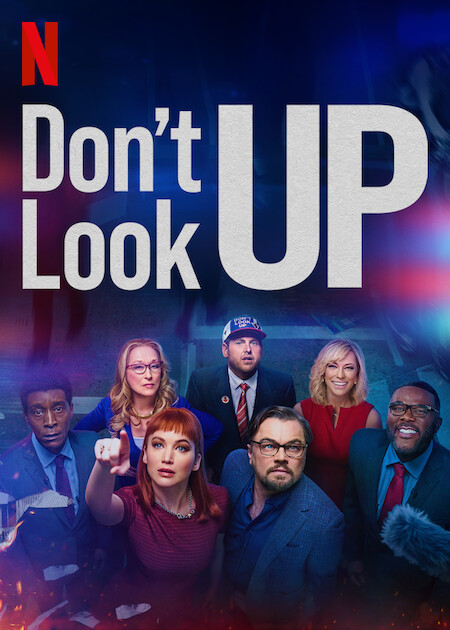
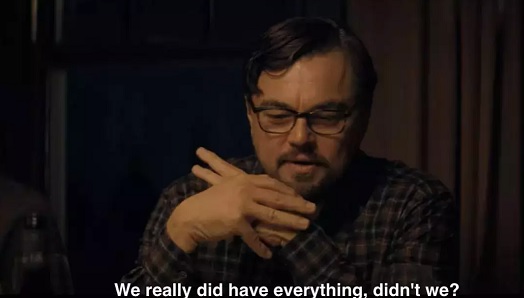
The time is the near future.  Kate Dibiansky (Jennifer Lawrence) and Dr. Randall Mindy (Leonardo DiCaprio) are two low-level astronomers who discover that a comet is heading straight towards the Earth.  “WE’RE ALL GOING TO DIE!” as Kate puts it.  “I’M SO SCARED!” as Dr. Minty puts it.  They go to the White House but the President (Meryl Streep) is more concerned with her approval ratings and her son, the chief of staff (Jonah Hill), is a weirdo who keeps talking about how hot his mother is.  Kate and Randall go on a morning show but the hosts. Brie (Cate Blanchett) and Jack (Tyler Perry), are only interested in repeating positive news.  (We all know how much news stations go out of their way to avoid panicking people.)  When Kate has a breakdown, she becomes a meme.  Randall, on the other hand, briefly becomes a celebrity and has an affair Brie.  While a strange tech billionaire (Mark Rylance) plots to harvest the comet for its minerals, Kate gets a job at a grocery store and has a weird romance with a religious skater named Yule (Timothee Chalamet).  As it slowly becomes impossible to ignore the sight of the comet approaching Earth, the President orders her supporters to “DON’T LOOK UP!”  Some insist on looking up.  Some look down.  Fights break out as people argue online.  Ariana Grande sings a song to encourage people to look up.  Meanwhile, those who always knew what was happening prepare for the world to end because you can do anything in a montage.

Don’t Look Up was envisioned as a commentary on America’s response to the climate crisis.  It was originally meant to be released during the 2020 presidential election, hence Meryl Streep playing a president who was obviously meant to be a combination of Donald and Ivanka Trump.  When DiCaprio shouts that “this administration” doesn’t care about protecting the Earth from the comet, it’s obvious which administration he was actually supposed to be referring to.  However, because of the pandemic, Don’t Look Up wasn’t released until 2021 and, as such, its portrayal of the White House being occupied by an amoral former television star doesn’t carry quite the same bite that it would have in 2020.  Because of the delay in the film’s release, many have reinterpreted Don’t Look Up as being a commentary on the COVID pandemic.

Well, regardless, of how you interpret the film, it doesn’t work.  It takes all of the flaws of The Big Short and Vice and it multiplies them several hundred times.  It’s a big, messy, and rather smug film.  The editing is self-consciously flashy, the 138-minute running time feels excessive, and McKay’s attempts to generate dramatic tension reveal that he hasn’t learned much since that scene with Carell and Tomei in The Big Short.  It’s been a while since Leonardo DiCaprio has been this bad (and this shrill) in a film while Meryl Streep acts up a storm without really making much of an impression beyond, “Hey, there’s Meryl overacting.”  On the plus side, I did like the scenes between Jennifer Lawrence and Timothee Chalamet but there aren’t many of them and one gets the idea that the only reason why Yule was included in the script was so Chalamet could join the cast.

Politically, this is a film that preaches to the converted.  Now, if you’re one of the converted, that may not matter to you.  You can watch the film and say, “That’s exactly the way it is!”  You can even say, as many have, the it’s impossible to change the minds of climate deniers so why should anyone even waste their time trying to come up with a persuasive film.  That’s a legitimate argument but it goes against the stated aims of the filmmakers.  Both McKay and screenwriter David Sirota have said that the goal of the film is to try to convert climate agnostics.  McKay recently gave an interview in which he said that his hope was that Joe Manchin would watch the film because he or a family member liked someone in the cast and that Manchin would later wake up, sweating in fear.  However, the film is so heavy-handed and so contemptuous of just about everyone on the planet (even those who look up) that it’s hard to imagine it changing anyone’s mind.  The possibility of Manchin or any other politician turning against coal power after watching Don’t Look Up is probably about as likely as an atheist converting to Christianity after watching God’s Not Dead.  If anything Don’t Look Up is the secular version of the type of films that people watch in church basements.

“I’M SO SCARED!” multiple characters are heard to shout in scenes that are obviously meant to pay homage to Network‘s cry of “I’M AS MAD AS HELL AND I’M NOT GOING TO TAKE IT ANYMORE!”  Indeed, the film owes an obvious debt to both Network and Dr. Strangelove but McKay doesn’t seem to have learned the most important lessons that those films have to offer.  Dr. Strangelove may have featured a bunch of dumb people in Washington and it may have been full of characters with silly names but, as a director, Stanley Kubrick wisely took a straight-forward approach to his material.  Kubrick directed in an almost semi-documentary manner, giving the film a realistic feel regardless of how crazy things got onscreen.  The fact that the film played out in such a matter-of-fact, non-flashy style is why it was so effective.  If the action had stopped so Peter Sellers could deliver a 9-minute speech about the evils of nuclear war, it’s doubtful the film would be remembered today.   (Famously, Kubrick removed a custard pie fight from the finale because he realized it would take away from the film’s realism.  One doubts that McKay would have been capable of such restraint.)

As for Network, Paddy Chayefsky and Sidney Lumet both understood why it was important that Howard Beale be the made prophet of the airwaves but they also understood that there could only be one Howard Beale.  Only one man could rant and rave and be killed for low ratings.  If every character had been Howard Beale, Network would have been unwatchable.  With Don’t Look Up, McKay fills the movie with Howard Beales and it gets tedious.  The constant screams of “I’M SO SCARED!” become a sort of panic porn as opposed to being the calls for action that McKay seems to mean for them to be.

And yet, despite not being a very good movie, I have a feeling that Don’t Look Up will be nominated for Best Picture and it will be nominated for the same reason as The Big Short and Vice.  Politically, it has the right message for a very select audience.  It’s a film that will resonate with people who have a very specific way of viewing existence.  It may be a film that preaches to the converted but the converted love it.  It’s a film that appeals to those who are convinced that the world is going to end at any moment.  It’s a film for everyone who is pissed off that some people were more concerned about the next Fast and Furious film than they were with watching the latest political melodrama.

All of that said, perhaps the most interesting thing about Adam McKay’s politically-charged films is how ineffective they are.  The Big Short won an Oscar for McKay’s screenplay but Bernie Sanders twice lost the Democartic presidential nomination to candidates who were backed by Wall Street.  Indeed, much like Oliver Stone’s Wall Street, The Big Short today seems to be more likely to inspire someone to play the stock market than to rally against it.  As for Vice, Dick Cheney’s daughter is currently the media’s favorite Republican and Cheney himself was recently given a hero’s welcome when he returned to D.C.  Watching Don’t Look Up, you have to wonder how many people sympathized with the “I’M SO SCARED” crowd and how many people instead watched the rich and powerful boarding a spaceship and thought to themselves, “That’s who I want to be.”

Personally, I refuse to give up hope for Anchorman 3….

Here Are The Nominations From The Detroit Film Critics Society


The Detroit Film Critics Society announced their nominations for the best of 2021 earlier today.  It’s an interesting group of nomination, though I would point out that Detroit is usually one of the quirkier of the critics groups.  Every awards season, they nominate something or someone unexpected, there’s a brief flurry of excitement, and then everyone moves on.

I guess that’s one reason why I love them.

Anyway, here’s their nominations:

BEST PICTURE
Belfast
CODA
Cyrano
Don’t Look Up
King Richard

BEST DIRECTOR
Sean Baker – Red Rocket
Kenneth Branagh – Belfast
David Lowery – The Green Knight
Adam McKay – Don’t Look Up
Lan-Manuel Miranda – Tick, Tick…Boom!

BEST ACTOR
Nicolas Cage – Pig
Peter Dinklage – Cyrano
Andrew Garfield – Tick, Tick…Boom!
Oscar Isaac – The Card Counter
Will Smith – King Richard

BEST ACTRESS
Jessica Chastain – The Eyes Of Tammy Faye
Alana Haim – Licorice Pizza
Jennifer Hudson – Respect
Nicole Kidman – Being The Ricardos
​Kristen Stewart – Spencer

BEST SUPPORTING ACTOR
Jon Bernthal – King Richard
Troy Kotsur – CODA
Jared Leto – House Of Gucci
Ray Liotta – The Many Saints Of Newark
Kodi Smit-McPhee – The Power Of The Dog

BEST SUPPORTING ACTRESS
Ariana DeBose – West Side Story
Kirsten Dunst – The Power Of The Dog
Aunjanue Ellis – King Richard
Rita Moreno – West Side Story
Diana Rigg – Last Night In Soho

BEST ENSEMBLE
CODA
Don’t Look Up
The French Dispatch
The Harder They Fall
House Of Gucci

BREAKTHROUGH
Alana Haim – Actress – Licorice Pizza
Emilia Jones – Actress – CODA
Woody Norman – Actor – C’mon C’mon
Agathe Rousselle – Actress – Titane
Emma Seligman – Writer/Director – Shiva Baby

BEST USE OF MUSIC/SOUND
Cyrano
In The Heights
Last Night In Soho
Tick, Tick…Boom!
West Side Story

BEST ORIGINAL SCREENPLAY
Don’t Look Up
The French Dispatch
The Harder They Fall
Licorice Pizza
Parallel Mothers

BEST ADAPTED SCREENPLAY
CODA
The Green Knight
In The Heights
The Power Of The Dog
Tick, Tick…Boom!

BEST ANIMATED FEATURE
Belle
Cryptozoo
Encanto
Flee
Luca
The Mitchells vs. The Machines

BEST DOCUMENTARY
Flee
Roadrunner: A Film About Anthony Bourdain
The Sparks Brothers
Street Gang: How We Got To Sesame Street
Summer Of Soul

*Sigh* Here’s The Trailer for Adam McKay’s Don’t Look Up


Adam McKay has a new movie coming out.  It’s called Don’t Look Up and the cast is packed with stars.  It’s apparently a comedy about two astronomers who discover that a comet is about to collide with Earth, potentially ending all life as we know it.

Here’s the teaser:

I’m not really a big Adam McKay fan.  In fact, I think the last Adam McKay film that I really liked was AnchormanThe Big Short was overrated and smug.  Vice was an attempt to destroy Dick Cheney that, instead, rehabilitated the former vice president’s image in the eyes of many.  (I mean, seriously, it takes a certain amount of effort to screw up a film that’s only reason for existing was to portray Dick Cheney as being a sinister figure.)  Both Vice and The Big Short were victims of McKay’s tendency to try too hard to prove that he’s capable of more than just Anchorman.  (Let’s be honest, though.  If you had to pick between Anchorman and either of McKay’s Oscar-nominated films, which one are you going for?)

McKay is not a particularly good or clever political satirist but there are people who love his work, largely because they already agree with him.  His films are like the progressive, secular version of God’s Not Dead, heavy-handed, predictable, and beloved by people who exist in a very specific social and cultural bubble.  Of course, both The Big Short and Vice received several Oscar nominations but that due more to Hollywood agreeing with the film’s politics than the films themselves.

Anyway, the teaser features Leonardo DiCaprio, Jonah Hill, Meryl Streep, and Jennifer Lawrence, all acting up a storm.  (These are four talented actors, all of whom really need a director who is willing to say, “Okay, let’s dial it back a little.”  Subtlety, of course, is not really a McKay specialty.)  I’m not looking forward to this film but I’ll still watch it when it shows up on Netflix.  Who knows?  Maybe it’ll feel more like Anchorman than Vice.  One can only hope!

Lisa Marie’s 10 Worst Films of 2021


Also be sure to check out my picks for 2020, 201920182017201620152014201320122011, and 2010!

10. Paradise Cove (dir by Martin Guigi)
9. Eternals (dir by Chloe Zhao)
8. Spiral: From the Book of Saw (dir by Darren Lynn Bousman)
7. Space Jam: A New Legacy (dir by Malcolm D. Lee)
6. Falling (dir by Viggo Mortensen)
5. Deadly Illusions (dir by Anna Eizabeth James)
4. Being the Ricardos (dir by Aaron Sorkin)
3. Don’t Look Up (dir by Adam McKay)
2. After We Fell (dir by Castille Landon)
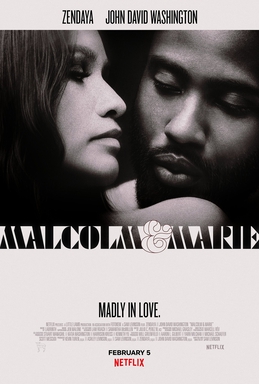
1. Malcolm & Marie (dir by Visionary Sam Levinson)

Triple Frontier, Review By Case Wright


5c90294e802b2.image

The heist movie or treasure hunt movie is always the same and always pretty fun.  It’s not supposed to be Shakespeare; it’s supposed to pull you in and be a thrill ride.  This iteration is all about the down and out Iraq and Afghanistan Veterans who decide to seek their fortune the old fashioned way: ripping off a drug kingpin!  In true heist genre fashion, everything works out great!

The characters came across as real Veterans to me.  After some research, the writer- Mark Boal was embedded with a platoon in Iraq and he also wrote The Hurt Locker.  The characters in Triple Frontier were like the men I knew: strong, divorced, and liked to joke.  Ben Affleck’s character Tom struck me as especially realistic.  He loved his daughter, but there was a distance because he was just not suited for civilian life.  She wanted him home, but he always wanted to be away.  You could see on her face that she knew the moment his buddies came calling that he was already gone.

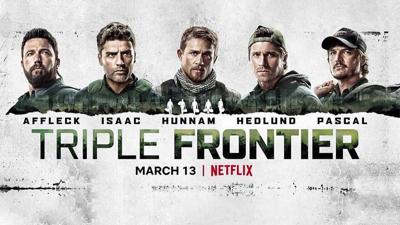
Oscar Isaac plays Pope who has a gig doing private security/law enforcement in South America.  He is in pursuit of Lorea, a drug boss, who is causing all kinds of problems. Yada Yada Yada.  Pope finds the location of Lorea’s hideout which has hundreds of millions of dollars stashed inside, but he needs a team to kill Lorea, Lorea’s men, get the cash, and get out of the country.  He turns to his former squad to pull off the heist.  They need a little cajoling, but they come around. There isn’t a lot of dialogue after they agree to the heist, which makes sense.  They committed and now transitioned to soldier-mode.  The heist starts off with success in sight, but it’s not long before everything goes wrong and they are in a fight for their lives.

The film is shot really beautifully and has some high-priced songs for a Netflix program. Everything seemed very real.  Even the way the characters carried themselves and flowed through Lorea’s hideout was seamless.   They moved the way we are trained to move through rooms.  I am always looking for that in action films.  Are they not having muzzle-awareness (pointing there weapon accidentally at a friendly)?  Are they holding the rifle close to their face? Are they aiming right?  The answers to those questions were yes.   J.C. Chandor should be really proud of himself for the realism.

What kept pulling me into the story wasn’t the action (which was excellent BTW); it was that these men were like the ones I knew.  The team itself was representative of who does our killing for us: salt of the earth…men.   I like seeing women in action films and I am already excited about Black Widow, but the infantry in real life is male.  They are regular guys who are asked to do terrible terrible things.  When those terrible things are done, we cast the men aside.  The story concludes a lot like the war itself did with a lot of loss and not a lot to show for it.  This film has a political statement between the explosions and it’s worth listening to it. 

* I included Mary Pop Poppins by the True Loves in my review.  The song embodies the heist genre like no other.  Also, they are Seattleites!!!!

Here are the DGA Nominations!


The Director’s Guild announced their nominations for 2018 earlier today.

Typically, getting a DGA nomination tends to translate into a film also getting a Best Picture nomination from the Academy.  There’s been some exceptions, of course.  David Fincher somehow received a DGA nom for his work on The Girl With The Dragon Tattoo, but the Academy was not quite as enamored.  Personally, I’m hoping that, this year, Adam McKay will get the David Fincher treatment.  McKay may have picked up a DGA nom for Vice but that doesn’t mean that the film’s actually any good.  In fact, I’d say that Vice is one of smuggest, most self-congratulatory films that I’ve ever seen but I’ll save all that for my review.

Anyway, here are the DGA nominations!  For Best Director of a Feature Film:

Bradley Cooper, A Star is Born

Alfonso Cuaron, Roma

Peter Farrelly, Green Book

Spike Lee, BlackKklansman

Adam McKay, Vice

Can you believe that, until today, Spike Lee has never received a nomination for the DGA?  Interestingly, BlackKklansman is one of his weaker films but it’s also definitely more of a mainstream crowd pleaser than some of his previous work, which I imagine is why he received a nomination for it and not Da Sweet Blood of Jesus.

This is also the first nomination for both Cooper and Peter Farrelly.  With Cooper, that makes sense because this is the first film that he’s ever directed.  But how did the Guild fail to nominate Peter Farrelly for that movie where Matt Damon and Greg Kinnear are conjoined twins?

This was Cuaron’s second nomination.  It was also McKay’s second nomination, despite the fact Adam McKay hasn’t made a good film since The Other Guys.

Here are the nominations for Best First Time Director:

Bo Burhnam, Eighth Grade

Bradley Cooper, A Star is Born

Carlos Lopez Estrada, Blindspotting

Matthew Heineman, A Private War

Boots Riley, Sorry to Bother You

For everyone who is hoping to see Black Panther become the first comic book movie to receive a best picture nomination, it’s hard not to be disappointed by the snubbing of Ryan Coogler.  A DGA nomination would have really Black Panther with the members of the Academy who might still be hesitant about the idea of honoring a Marvel film.

Personally, I would have replaced Adam McKay with Ryan Coogler.  For that matter, I would have replaced Adam McKay with just about anyone else who had a film released last year.  Lynne Ramsay.  Debra Granik.  Yorgos Lanthimos.  The Russo Brothers.  Peyton Reed.  Who directed The Equalizer 2?  I’m not sure but I’d nominate him before I nominated Adam McKay.  Hell, I’d even build a time machine and bring Ed Wood and Phil Tucker into the present and have them collaborate on a movie about a haunted laundromat before I gave that fifth slot to Adam McKay.

Anyway, should I try to make a prediction?  Okay: Alfonso Cuaron wins Best Director for Roma while Bradley Cooper is named Best First-Time Director for A Star is Born.

Lisa Marie’s Oscar Predictions for December


Well, it’s that time of the month!

It’s time for me to post my Oscar predictions.  With precursor season in full swing, the Oscar picture has become a lot clearer.

If you want to see how my thinking has evolved over the year, be sure to check out my predictions of January, February, March, April, May, June, July, August, September, October, and November!

Also, keep in mind — these are not necessarily my picks for the best of the year.  I’ll be posting those during the second week of January.  Instead, these predictions are based on the precursor awards and just my own guesses based on the Academy’s past picks.

Best Picture

BlackKklansman

Black Panther

The Favourite

Green Book

If Beale Street Could Talk

Roma

A Star is Born

Vice

Best Director

Ryan Coogler for Black Panther

Bradley Cooper for A Star is Born

Alfonso Cuaron for Roma

Yorgos Lanthimos for The Favourite

Adam McKay for Vice

Best Actor

Christian Bale in Vice

Bradley Cooper in A Star is Born

Ethan Hawke in First Reformed

Rami Malek in Bohemian Rhapsody

Viggo Mortensen in Green Book

Best Actress

Yalitza Aparicio in Roma

Glenn Close in The Wife

Olivia Colman in The Favourite

Lady Gaga in A Star is Born

Melissa McCarthy in Can You Ever Forgive Me?

Best Supporting Actor

Mahershala Ali in Green Book

Timothee Chalamet in Beautiful Boy

Sam Elliott in A Star is Born

Richard E. Grant in Can You Ever Forgive Me?

Michael B. Jordan in Black Panther

Best Supporting Actress

Amy Adams in Vice

Regina King in If Beale Street Could Talk

Thomasin McKenzie in Leave No Trace

Emma Stone in The Favourite

Rachel Weisz in The Favourite