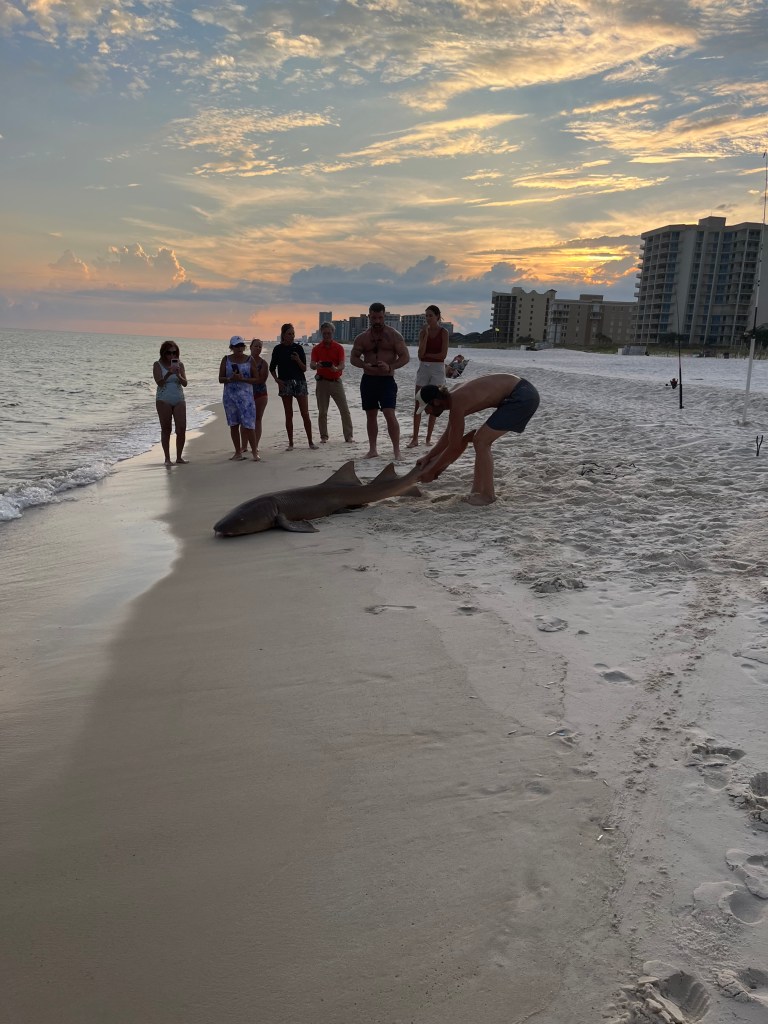
Last year around this time, I was sitting poolside at a resort in Maui when I wrote about Charles Bronson’s career in the 1950’s. A year later, I’m sitting on the beach in Perdido Key, FL, and it seems like the perfect time to write about Bronson in the 1960’s! Holy hell… a guy just caught a shark!!
Random Beach Guy with Shark – He released the Shark back into the ocean right after I took this pic!
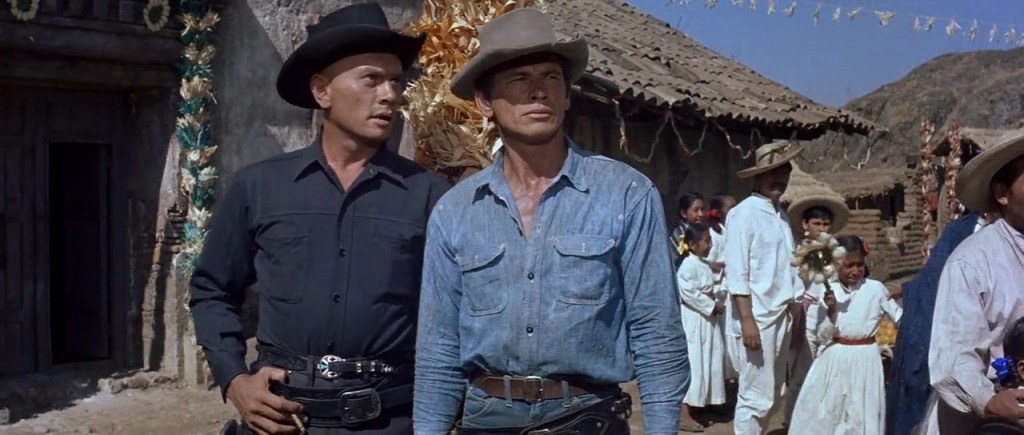
Back to Bronson, the 1960’s were a pivotal decade in Charles Bronson’s personal life and career. As the decade started, he was headlining his own TV series, MAN WITH A CAMERA, although that show’s run would end in 1960. He would also have a memorable supporting role in the classic western, THE MAGNIFICENT SEVEN (1960). His portrayal of Bernardo O’Reilly would be one of the most heroic of the film. This type of supporting performance would come to be a staple for Bronson throughout the 1960’s.
Charles Bronson and Yul Brynner in THE MAGNIFICENT SEVEN (1960)
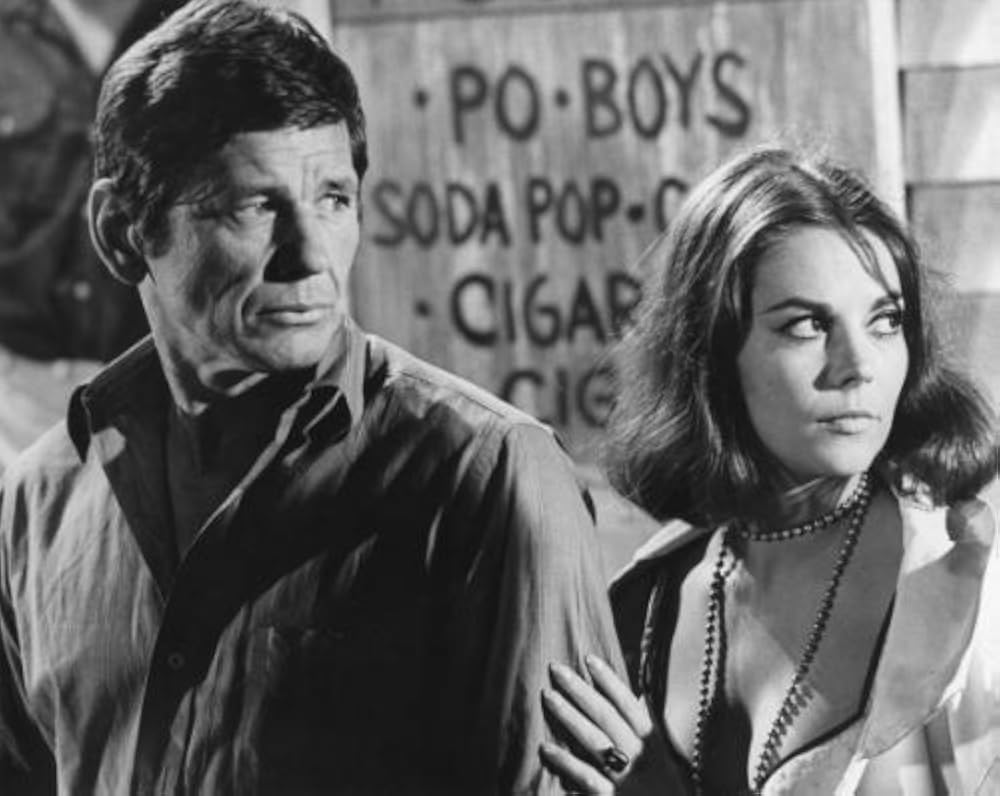
For the most part, it seems that Charles Bronson’s career would settle into a series of important co-starring roles in both television and in major motion pictures. The most important of these movies were his excellent performances in classics like THE GREAT ESCAPE (1963) and THE DIRTY DOZEN (1967). He also had important supporting roles in popular films like KID GALAHAD (1962) with Elvis Presley, THE SANDPIPER (1965) with Richard Burton and Elizabeth Taylor, and THIS PROPERTY IS CONDEMNED (1966) with Natalie Wood and Robert Redford.
Charles Bronson and Natalie Wood in THIS PROPERTY IS CONDEMNED (1966)
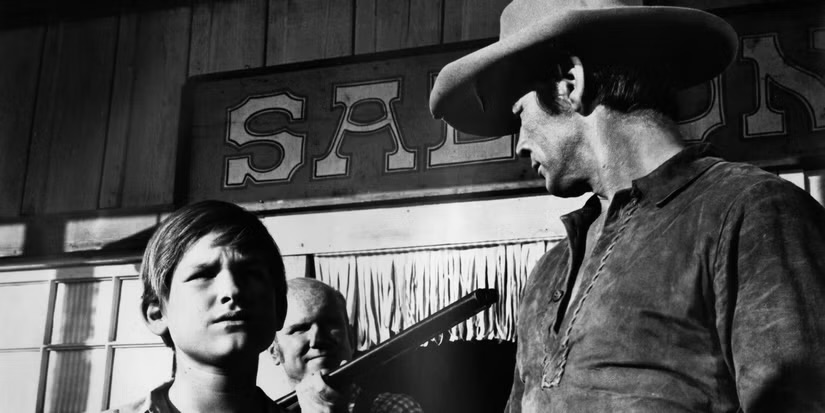
On TV, he was performing in prominent “guest star” roles in classic TV series like ALFRED HITCHCOCK PRESENTS, BONANZA, GUNSMOKE, RAWHIDE, and THE F.B.I. He also had turned into an actor who would join a TV series already in progress to help class it up some. He would provide that service to EMPIRE (1962-1963), starring Richard Egan and Ryan O’Neal, as well as THE TRAVELS OF JAIMIE MCPHEETERS (1963-1964) starring a young Kurt Russell. While he seemed to be everywhere, and there were some exceptions, it seemed he was always the guest star and never the star. This was very frustrating for an actor who had already spent over a decade providing strong support to bigger stars, while his contemporaries like Steve McQueen and James Coburn were headlining their own films. But things were about to change in a big way for Bronson, in both his personal life and professional life.
Kurt Russell and Charles Bronson in THE TRAVELS OF JAIMIE MCPHEETERS Television series
First, his personal life… Charles Bronson had been married to Harriet Tendler Bronson from 1949 to 1965. He met Jill Ireland on the set of THE GREAT ESCAPE in 1962 when she was there with her then-husband David McCallum, who was also starring in the film. Legend has it that Bronson told McCallum that he was going to “marry his wife,” but who really knows what’s fact and what’s fiction when it comes to Hollywood. Regardless, Bronson and Ireland would both get divorced in the sixties and marry each other on October 5th, 1968. They were a true Hollywood love story and would be inseparable until her death from breast cancer in 1990.
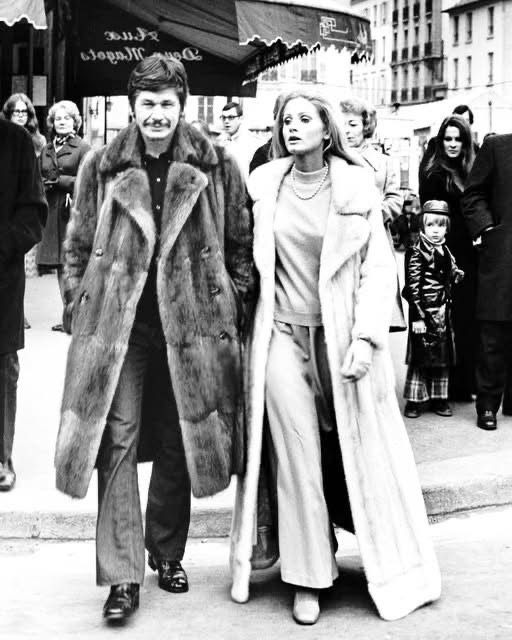
Charles Bronson and Jill Ireland
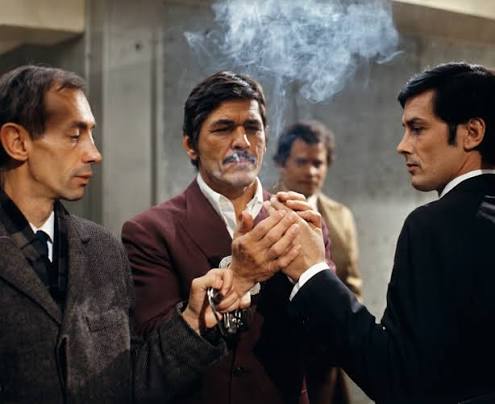
Jill Ireland turned out to be crucial in the success of Charles Bronson’s career. She was able to convince him to accept some of the offers that he had been receiving to go to Europe where he could finally be the “star” of his movies. The first of these films was FAREWELL, FRIEND (1968), where he would co-star with international superstar Alain Delon. Delon had specifically requested Bronson based on his strong performance a decade earlier in Roger Corman’s MACHINE GUN KELLY. Bronson would steal the film from Delon and it would be a huge box office hit across Europe. Suddenly, Bronson found himself to be a sex symbol across the continent. When I was a kid in the 80’s, this movie was only available on terrible VHS tapes under the title HONOR AMONG THIEVES. I didn’t fully appreciate how important it was to Bronson’s career until decades later.
Charles Bronson and Alain Delon in FAREWELL, FRIEND (1968)
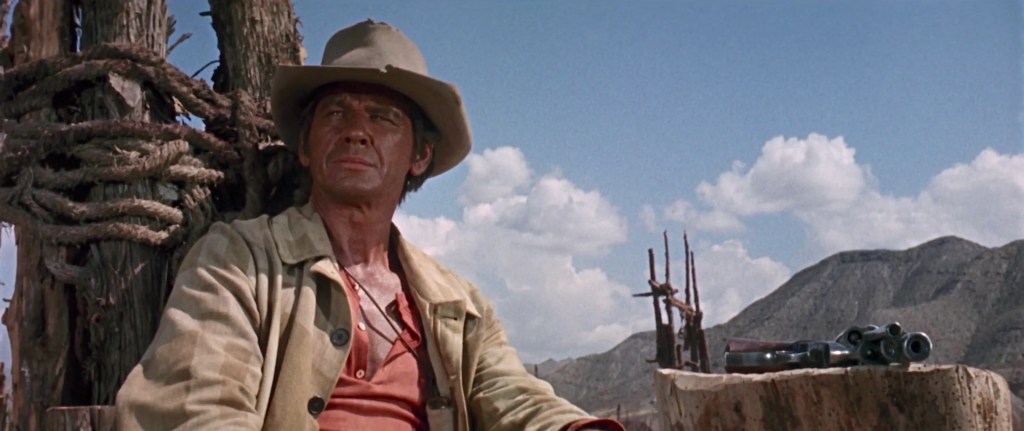
Bronson’s next film would turn him into a true international stud when he would play Harmonica in Sergio Leone’s ultimate masterpiece ONCE UPON A TIME IN THE WEST (1968). His incredible screen presence would dominate a film that featured excellent performances from Henry Fonda, Jason Robards and possibly the most beautiful woman on earth, Claudia Cardinale. Leone had wanted to work with Bronson for years, including all three films in the “Dollars” trilogy, but it had never worked out. While their film was butchered for its American release, it was a monster hit all across Europe and Bronson would be one of the biggest stars on the planet for the next decade.
Charles Bronson in ONCE UPON A TIME IN THE WEST (1968)
The 1960’s turned out to be a great decade for Charles Bronson. He married the love of his life and became one of the biggest movie stars in the world, even if he wasn’t fully appreciated in his home country yet. But we’ll get to that next when we discuss the 1970’s, his most successful decade of all!
Today, the Shattered Lens wishes a happy birthday to director Robert Zemeckis!
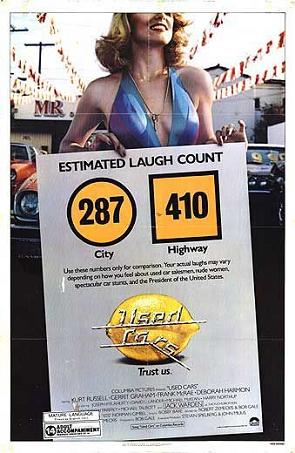
Today’s scene that I love comes from Zemeckis’s 1980 comedy, Used Cars! In this scene, used car salesman Gerrit Graham interrupts a televised presidential address so that he can demonstrate the best way to deal with inflation.
(Of course, he does the demonstration at a rival used car lot.)
Jack Warden watches as his cars blow up while Graham’s boss (Kurt Russell) tries to keep his business partner (Deborah Harmon) from noticing what is happening on the television.
In honor of Kurt Russell’s birthday, I thought I would share one of my favorite podcasts with you. Most of the time Nick and Ray talk about Charles Bronson, but every so often they go outside of Bronson. Their episode on the Kurt Russell film SOLDIER is excellent. It’s a great way to celebrate one of the most popular actors of my lifetime.
From 1982’s The Thing, here is one of the greatest endings in the history of horror. Kurt Russell and Keith David play two characters who might be the final survivors of the The Thing’s rampage or who might just be one human talking to one alien. With nothing to do but wait for the inevitable, the two of them share a drink and prepare to freeze.
The scene features great acting from Russell and David and great direction from John Carpenter. It’s one of those endings that you will never forget.
4 Shots From 4 Films is just what it says it is, 4 shots from 4 of our favorite films. As opposed to the reviews and recaps that we usually post, 4 Shots From 4 Films lets the visuals do the talking!
Today, we wish a happy birthday to the great Kurt Russell! Last year, we pretty much reviewed every Kurt Russell films that we could find. It was a great day. This year, we cannot let the day pass without offering up….
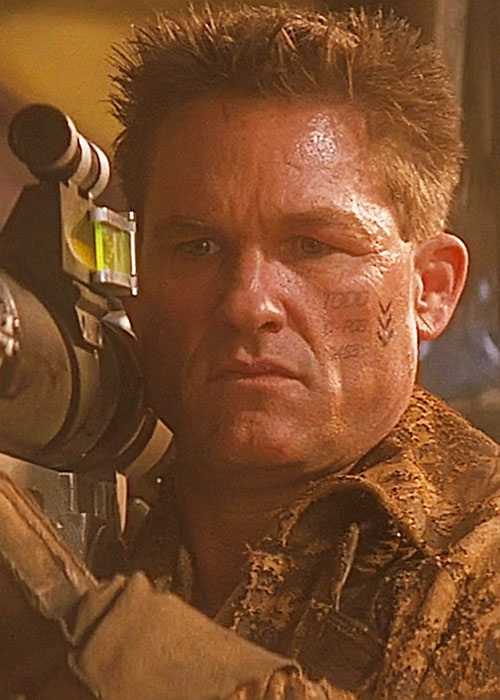
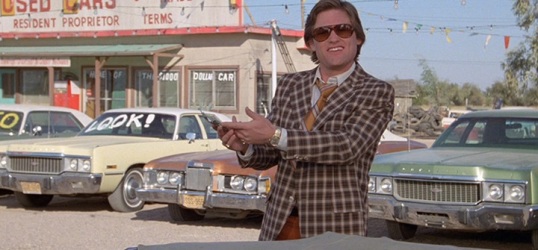
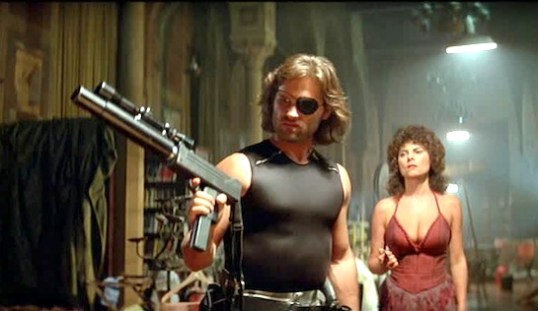
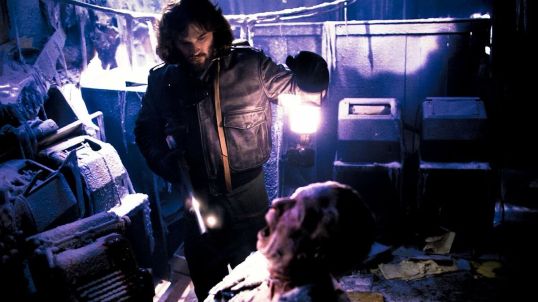
4 Shots From 4 Kurt Russell Films
Used Cars (1980, dir by Robert Zemeckis, DP: Donald M. Morgan)
Escape From New York (1981, dir by John Carpenter, DP: Dean Cundey)
The Thing (1982, dir by John Carpenter, DP: Dean Cundey)
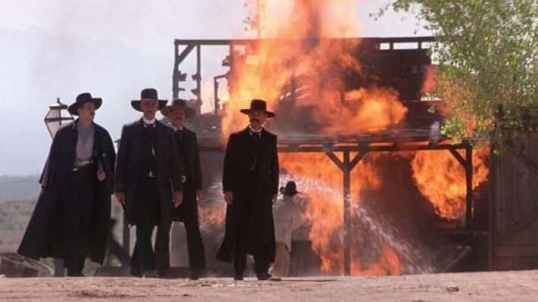
Tombstone (1993, dir by George Pan Cosmatos (and Kurt Russell), DP: William Fraker)
I should begin by saying that there’s a good chance that Ethan Hawke will win an Oscar later tonight. He’s been nominated for Blue Moon. When this Oscar season began, he was definitely the front runner. As of late, the momentum seems to have shifted toward Michael B. Jordan or perhaps Timothee Chalamet but still, one should not totally discount Hawke’s chances. If Hawke does lose tonight, I have no doubt that he will be nominated in the future and eventually, he will win. It’ll be long overdue. As you can probably guess by the picture at the start of this post, I’m one of those people who thinks that he definitely should have won for Boyhood.
Colin Farrell
Colin Farrell finally received his first Oscar nomination for The Banshees of Inisherin but he lost the award to Brendan Fraser. Farrell is not an actor who has always gotten the respect that he deserves. Especially early in his career, he was often miscast. Much like Matthew McConaughey, he was often dismissed as just being a pretty boy until he met a director — in this case, Martin McDonagh — who truly understood how to best utilize Farrell’s screen presence. As In Bruges, Banshees and The Penguin showed, Farrell is essentially a character actor in a leading man’s body. My hope is that Farrell will win his first Oscar between now and 2036 and that he’ll give a memorable acceptance speech.
Brendan Gleeson
Speaking of The Banshees of Inisherin, how does Brandan Gleeson only have one Oscar nomination to his name? Now, to be clear, I don’t begrudge the fact that Gleeson lost to Ke Huy Quan. Quan had a wonderful personal story, gave the best performance in the overrated mess that was Everything Everywhere All At Once, and his acceptance speech was truly touching. That said, my sincere hope is that the Academy understands that Gleeson is long overdue an Oscar. Hopefully, that will be corrected soon.
Kurt Russell
Kurt Russell is one of those actors who I just can’t believe has never been nominated. In a few days, Kurt Russell will be turning 75. He’s been a popular actor for most of his life but he’s not getting any younger. So, get with it, Academy! I don’t care what his next film is. I don’t care how big the role is. Give Kurt Russell his Oscar!
Tom Cruise
Tom Cruise has had an interesting career. He went from being a teen idol to a character actor to a somewhat disreputable celebrity to finally reemerging with the Mission Impossible films as one of our last true movie stars. One need only watch Top Gun: Maverick to see the type of charisma that we’re going to miss once it’s gone. Later this year, Cruise will be starring in Digger.
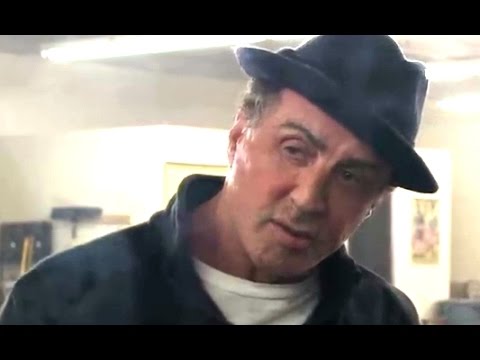
Sylvester Stallone
Seriously, how many times does this man have to play Rocky and Rambo before the Academy finally gives him the award that everyone secretly wants him to win? Give Stallone his Oscar!
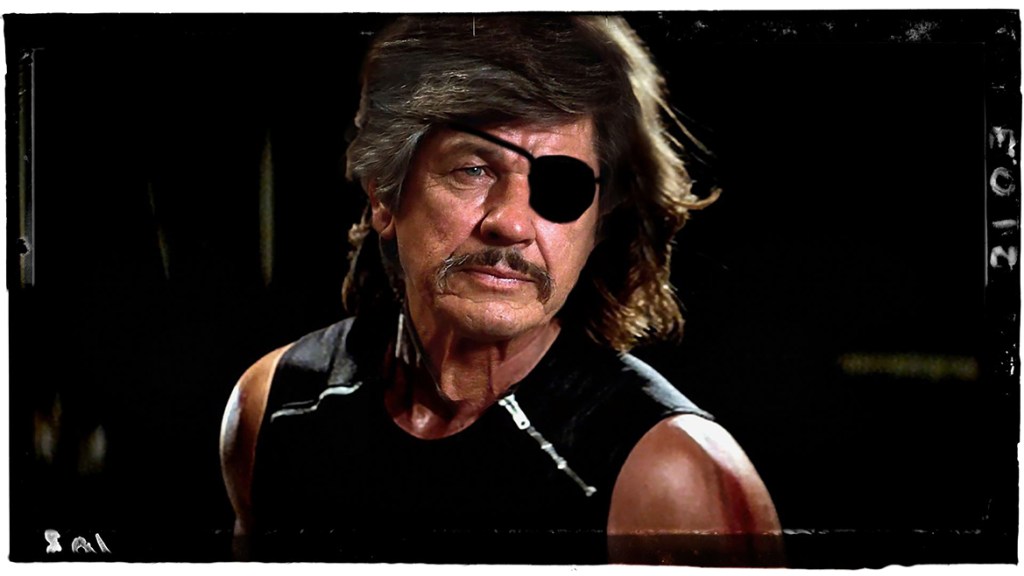
If you’re following the page today, you know that The Shattered Lens is celebrating the 78th birthday of legendary Director John Carpenter. Did you know that there was a time when the studio “suits” wanted Charles Bronson to play the role of Snake Plissken in Carpenter’s classic, ESCAPE FROM NEW YORK? A big star when the original idea of the film began kicking around, studio executives felt that an experienced, gritty actor like Bronson might be perfect for the role, especially since he was already a solid box office champ.
Carpenter, however, wanted a younger guy to play Plissken and may have even been a little intimidated to work with the veteran action star…
“Charles Bronson had expressed interest in playing Snake, but I was afraid of working with him. He was a big star, and I was this little-shit nobody.”
It all worked out well in the long run as Carpenter was eventually able to cast his first choice for the role, Kurt Russell, who was at an important stage in his own career as he was still in the process of reinventing his on-screen image from his days as a former child star and Disney star. John Carpenter had worked with Russell a couple of years earlier in the TV movie, ELVIS (1979), so he had confidence in the young actor. Russell turned out to be an incredible choice for the film and key to making it the classic it is today.
Still, for a Bronson fan like me, it’s quite interesting to know that there’s a multiverse out there that could have seen Bronson in the iconic role!
I was a bit shocked to realize that I hadn’t reviewed Escape from New York for this site. Leonard’s reviewed it.Jeff’s reviewed it. I’ve reviewed quite a few Italian films that were inspired by Escape from New York. Last year, I devoted an entire day to how much I love Kurt Russell. I’ve shared John Carpenter’s theme music, more than once. I’ve reacted to Mamdani’s election by telling my friends that it’s time to escape from New York. I’ve lost track of the number of times that I’ve told Leonard that it is “Time to leave the Bronx,” even though he doesn’t live in the Bronx. (What do I know? I live in Texas.) But I’ve never actually reviewed Escape From New York.
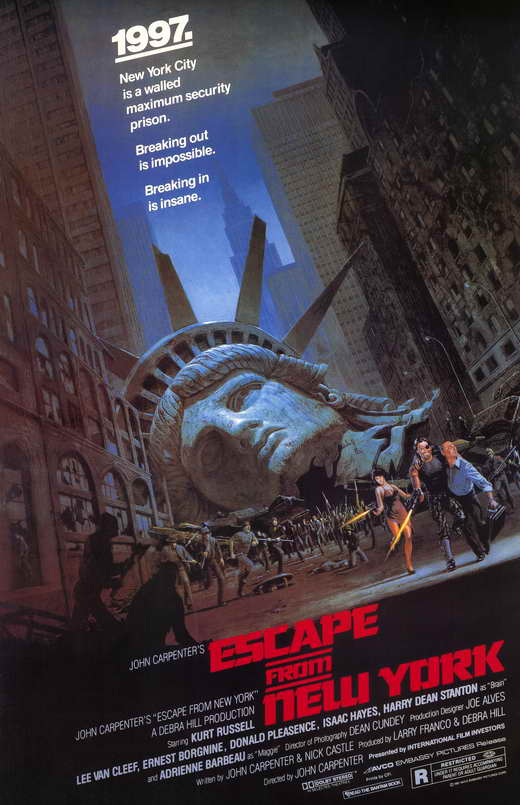
I love Escape from New York but I have to say that the film itself can’t live up the brilliant poster art. The first time I watched Escape from New York, I was really disappointed that the Statue of Liberty’s head never appeared in the middle of a street in Manhattan. If the film were made today, one imagines that the filmmakers would be able to do all sorts of things with the Statue of Liberty. But Escape from New York was made in 1981, in the days before rampant CGI. Escape from New York was made at a time when directors had to be somewhat clever and that definitely works to the film’s advantage. The lack of big time special effects meant that Carpenter had to emphasize character and atmosphere. Escape From New York might not feature the Statue of Liberty’s head but it does feature an amazing cast and a host of unforgettable characters. When you manage to get Kurt Russell, Ernest Borgnine, Donald Pleasence, Harry Dean Stanton, Adrienne Barbeau, Lee Van Cleef, and Isaac Hayes all in the same film, there’s no way it isn’t going to be memorable.
We all know the plot. Kurt Russell plays career criminal Snake Plissken. (Everyone thought Snake was dead.) When the President (Donald Pleasence) finds himself trapped on the prison island of Manhattan, Snake is the man who is sent to rescue him. The fate of the world depends on rescuing the President. If the President isn’t rescued, it could lead to nuclear war. Snake doesn’t really care about the fate of the world. He does care about the fate of himself, however. He’s been injected with a poison that will kill him unless he receives the antidote in 24 hours.
(The doctor who gives Snake the poison is named Dr. Cronenberg. Meanwhile, Frank Doubleday appears as a thug named Romero. Lee Van Cleef’s police commissioner is named Hauk, as in Howard Hawks. Tom Atkins plays Captain Rehme, as in producer Bob Rehme. The film may be about the collapse and possible end of the world but John Carpenter’s having fun. And, of course, so are we.)
The President has been captured by the Duke of New York (Isaac Hayes). It doesn’t take Snake long to track down the Duke. But rescuing the President and making it back to safety turns out to be far more difficult and violent than anyone was anticipating. Snake gets some help, from characters like Cabbie (Ernest Borgnine), Brain (Harry Dean Stanton), and Maggie (Adrienne Barbeau). Of course, that help is largely due to everyone’s self-interest. The recurring theme is that no one really cares that much about whether or not the President or even Snake lives or dies. Maggie loves Brain but, otherwise, there’s not much individual loyalty to be found in this film. Instead, everyone just cares about getting the Hell out of New York. In the end, even the President turns out to be a bit of a jerk.
(I do have to say that I absolutely love Donald Pleasence’s performance in Escape from New York. The “You’re the Duke! You’re the Duke! A Number One!” scene? That was Pleasence at his most brilliant.)
It’s a wonderfully acted and directed film, one that is often darkly humorous. (While Kurt Russell delivers his lines with a endearing self-awareness, Carpenter has a lot of fun imagining the type of criminal society that would emerge on an isolated Manhattan.) It’s also a film that understands the power of New York City. Depending on who you ask, New York either represents the worst or the best of America. That’s true today and, watching Escape from New York, it’s easy to guess that was probably true in 1981 as well. There’s a power to the “New York” name and it’s why this film wouldn’t have worked if it had been called Escape From Houston or Escape From Spokane. (One reason why Escape From LA failed was because the cartoonishness of Los Angeles couldn’t compete with the grit of New York.) We all know the saying — “New York, New York: If you can make it there, you can make it anywhere.” This film reminds us that it’s also true that if you can escape from there, you can escape from anywhere. Escape from New York brilliantly captures the way that most of the rest of country view New York but, by limiting the action to Manhattan, it also presents a story that can be enjoyed by people in Brooklyn, the Bronx, Queens, and Staten Island. I imagine the film is especially popular on Staten Island.
Escape From New York is a brilliant work of the pulp imagination. It’s a film that will probably outlive the city.
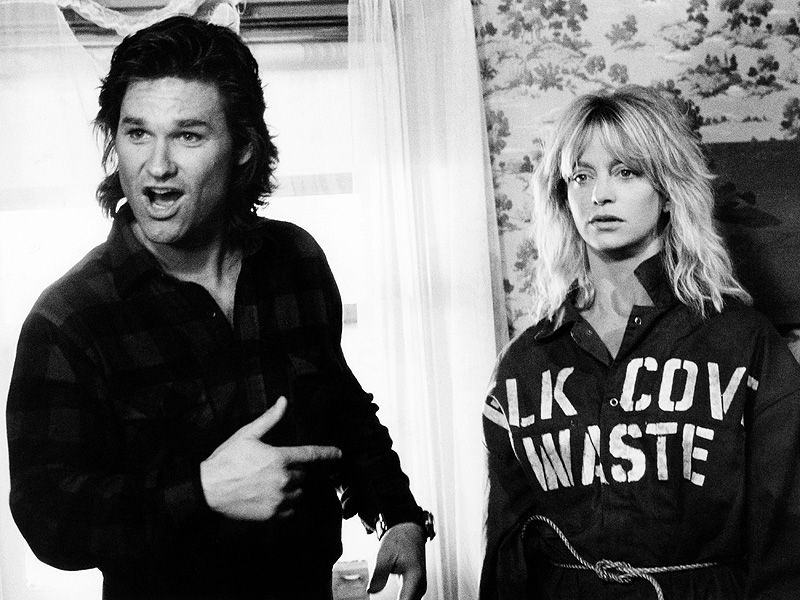
Spoiled heiress Joanna Stayton (Goldie Hawn) hires carpenter Dean Proffitt (Kurt Russell) to remodel a closet on her yacht. Unsatisfied with his work and completely unreasonable about everything, she refuses to pay him and when he presses her for the $600, she pushes him and all of his tools overboard. Needless to say, the lady’s a “bitch” (Dean’s word) and nobody can stand her, including her husband, Grant Stayton III (Edward Herrman), and their butler Andrew (Roddy McDowell). And then something interesting happens a few days later… Joanna accidentally falls off her yacht, and when she’s fished out of the ocean, she’s still difficult to deal with, but she doesn’t have a clue who she is. Unable to identity her, the hospital puts the “amnesia lady” on the news hoping someone will recognize her. Sensing a chance to get rid of the anchor around his neck, Grant Stayton III pretends he doesn’t know her and heads out of town. This is where Dean hatches up his own plot to get revenge. He heads to the hospital and through a series of happenstances and coincidences, he’s able to convince everyone, including Joanna, now dubbed as “Annie,” that she’s his wife. He takes her home with him and makes her take care of his four wild boys, cook their food, and clean his house. Dean figures she owes it to him. But wouldn’t you know it, even though “Annie” hates it at first, over time she begins to soften towards her new life, bonds with the boys, and some sparks of love start flying between her and Dean. When she unexpectedly gets her memory back, she has to decide whether to return to her life as a spoiled heiress or stay with the man and boys she’s grown to love.
I have a soft spot in my heart for OVERBOARD, because this is a movie that my mom and I both loved, and we watched it together many times in the late 80’s and early 90’s. My mom and I didn’t often have the same taste in movies, so this was kind of “our movie.” There are a couple of other notable favorites for both me and mom, and those movies are RUTHLESS PEOPLE (1986) and LETHAL WEAPON (1987). I guarantee if I called my mom right now, interrupted her Hallmark Christmas movies, and told her I was coming over with OVERBOARD, she’d say “Come on! I’ll get something together for you to eat!” That actually sounds like a pretty good idea!
Another reason I love OVERBOARD is the fact that it stars Kurt Russell. I became a big fan of Kurt Russell during my teenage years, as I was 14 when this movie came out. A couple of years earlier, Russell starred in the films THE BEST OF TIMES (1986) and BIG TROUBLE IN LITTLE CHINA (1986), and a couple of years later he would make movies like TEQUILA SUNRISE (1988), TANGO & CASH (1989), and BACKDRAFT (1991). I wanted to watch every movie that Russell was in, and all of these films are staples of my VHS years and nostalgic favorites. In OVERBOARD, Russell starts off as a gruff, grudge-holder, but as he begins to fall for “Annie,” his natural charm and likability emerge, but so does a newfound guilt for lying to her and possibly even kidnapping her. One question for the lawyers out there, is it kidnapping when her husband had a chance to claim her and chose to abandon her instead? I’m not sure if it’s a felony or not, but I’m guessing there has to be something on the law books that doesn’t jive with what happens here. Anyway, I’ll just say that it’s best not to think of these types of pesky realities when judging this fairy tale and just go along for the ride.
Along with the Russell’s fun performance, Goldie Hawn is so perfect as the horrifically spoiled snob of an heiress who transforms into a caring substitute mother and the woman of Dean’s dreams. I know she’s great in the movie, because I can’t stand her at the beginning, but I find myself falling for her too as the movie progresses. I would not really call myself a fan of Goldie Hawn, because I haven’t spent much of my life revisiting her films, but I love her here. A couple in real life, the natural chemistry between Russell and Hawn sparkles as they fall in love on screen and only the most cold-hearted cynic isn’t pulling for them to live happily ever after as the movie closes in on its ending. As far as the supporting cast, Edward Herrmann, Katherine Helmond, Mike Hagerty, and Roddy McDowall all have good moments sprinkled throughout the film.
I do have one complaint about OVERBOARD, and that’s the “Wonders of the World Miniature Golf Course,” which is the dream business of Dean and his best friend Bad Billy Pratt (Mike Hagerty). As someone who grew up in the 70’s and 80’s playing miniature golf on the courses in Branson, MO, I would never want to play their course. Its design appears over-the-top and cheesy to me, the type of course where the scores on the holes would be determined as much by luck as by skill, which is something I find offensive. However, just like the potential kidnapping storyline, I’ve had to let my disdain for the quality of the course design go as well so I could enjoy that section of the film. I will admit this one is harder for me personally, and I still struggle with it.
Overall, OVERBOARD is not high art, and its premise is about as silly as it gets, but through a magical combination of personal 1980’s nostalgia, an appreciation for the chemistry of its stars, and a complete willingness to suspend my disbelief as we head towards an irresistibly happy ending, I still love this film. I watch it just about every year, especially if I need a pick me up as I hammer away at tax returns!
“What is sacred to a bunch of goddamned savages ain’t no concern of the civilized man! We got permission!” — Buddy
Bone Tomahawk (2015) begins in quiet dread. A still horizon, the whisper of wind across rock, a hint of bone under the dust—the American frontier looms like an unfinished thought. This silence sets the tone for S. Craig Zahler’s remarkable debut, a film that wears the form of a Western only to strip it down to nerve and marrow. It’s a story of decency under siege, of men pushing past the last borders of civilization and discovering that what lies beyond is not the unknown, but the origin of everything they thought they’d overcome.
At first glance, the premise seems familiar. When several townspeople vanish from the small settlement of Bright Hope, Sheriff Franklin Hunt (Kurt Russell) leads a rescue expedition into the desert. Riding with him are three others: the injured but determined Arthur O’Dwyer (Patrick Wilson), whose wife has been taken; his tender-hearted deputy, Chicory (Richard Jenkins), whose chatter and old-fashioned kindness soften the film’s bleak austerity; and the self-assured gunman John Brooder (Matthew Fox), a man equal parts gallant and cruel. Together, they represent the moral cross-section of a civilization still trying to define itself—duty, love, loyalty, arrogance.
Their journey outward becomes one of inward descent. Zahler’s script unfolds at a deliberate pace, steeped in stillness and exhaustion. The first half moves like ritual—meandering conversations, humor worn thin by weariness, the small comforts of campfire fellowship flickering against the vast emptiness around them. It’s here that Bone Tomahawk begins its slow transformation. What starts as a rescue Western gradually becomes something deeper and older. By stripping away the romance of exploration, Zahler reveals the frontier not as a space of discovery, but as a place of reckoning—a mirror of the instincts civilization pretends to have tamed.
The film’s most haunting element is its portrayal of the so-called “troglodytes,” the mysterious group believed to be responsible for the kidnappings. They are less a tribe than an incarnation of the wilderness itself—nameless, wordless, and utterly beyond cultural translation. Covered in ash, communicating through the eerie hum of bone instruments embedded in their throats, they seem less human than ancestral, as though the land itself had dragged them upward from its own depths. Zahler refuses to frame them anthropologically or politically; instead, they represent the primal truth the American frontier sought to bury under its myths of order and progress.
Western films, for more than a century, have mythologized the wilderness as an external force—something to conquer. But the “troglodytes” in Bone Tomahawk feel like the soil’s memory of what came before conquest: the savage necessity that built the very myths used to conceal it. They are the frontier’s unspoken ancestry—what remains after all the churches, taverns, and codes of decency are stripped away. Civilization needs them to remain hidden in the canyons, out of sight and unspoken, because their existence contradicts everything the polite narrative of the Old West stands for. They are what progress denies but cannot erase.
Zahler’s restraint strengthens this allegory. He shoots the desert not as backdrop but as evidence—a geographical wound extending beyond the horizon. The wilderness looks stunning but predatory, its stillness full of threat. Even when the posse’s odyssey is free of immediate danger, there’s the growing sense of being consumed: by the sun, by exhaustion, by the quiet knowledge that the world they’re riding into has no use for their notions of law and virtue. Civilization, here, is a pocket of light surrounded by something much older and hungrier.
That hunger, the need to conquer and consume, connects Bone Tomahawk to its spiritual predecessor, Antonia Bird’s Ravenous (1999). Bird’s film transformed the Donner Party’s historical ghosts into an allegory of Manifest Destiny, equating cannibalism with American expansion—the act of devouring land, life, and self under the guise of progress. Zahler continues that lineage with deliberate starkness. For him, violence in the frontier isn’t just literal; it’s foundational, the unacknowledged currency of civilization. Where Ravenous expressed its critique with mordant humor, Bone Tomahawk speaks in solemn tones, observing how every civilized act—the enforcement of law, the defense of home—rests upon the refusal to see what was consumed to create it.
The “troglodytes” embody that refusal incarnate. They are not villains in the traditional sense; Zahler grants them no ideology or explanation, only the primal fact of their survival. In doing so, he flips the Western’s moral equation: the barbarians at the edge of civilization are not invaders, but reminders of its origins. They are ghosts of the violence that founded the frontier, the unspoken proof that the West was never as far from savagery as it claimed. To look upon them is to glimpse the beginning—the raw, lawless reality America buried beneath the idea of itself.
Kurt Russell, magnificent in his restraint, anchors this tension. His Sheriff Hunt evokes a fading kind of decency: measured, fair, and unwavering even in futility. Russell plays him not as a Western hero but as a man committed to honor in a world that no longer rewards it. His calm authority softens only around those he loves and hardens in the face of what he doesn’t understand. In that measured decency lies the film’s aching question: what happens when morality meets something that does not recognize it?
Patrick Wilson’s O’Dwyer embodies faith’s physical agony—a man driven by devotion, limping through a landscape that punishes his determination. Richard Jenkins provides heart and subtle tragedy; his rambling, almost comical musings on aging and loneliness become the story’s moral texture, the sound of humanity scraping against extinction. And Matthew Fox, in his most precise performance, gives voice to the arrogance of the civilized killer—a man who fashions violence as virtue, believing his elegance excuses his cruelty.
Together, the four men form a living cross-section of the West’s moral mythos. Their journey exposes how fragile those ideals become once separated from the safety of town limits. They embody the dream of order confronting the truth of chaos—and the cost of looking too long into the void beyond it.
Zahler’s filmmaking is remarkably self-assured for a debut, and what stands out most is his willingness to trust stillness. There is no manipulated rhythm, no swelling score to guide emotion. The soundscape is shaped by wind, hoofbeats, crackling fires, and quiet voices rattled by exhaustion. The silence itself becomes a spiritual presence, pressing down on the travelers until conversation feels like resistance. Each scene builds tension not through action, but through waiting—the dread of what remains unseen, what civilization has pretended not to hear.
The violence, when it erupts, is unforgettable. Zahler does not linger voyeuristically, yet the weight of what happens lands with moral precision. The horror feels earned—an eruption of the primal into the civilized. Its purpose is not to shock, but to remind: the line between the men of Bright Hope and the people they fear is thinner than they want to believe. The frontier, as Zahler presents it, is not an untouched wilderness but the graveyard of an ongoing denial—the myth of progress stacked atop the bones of the devoured.
In that way, Bone Tomahawk moves beyond the idea of genre blending. It is not merely a “horror Western,” but a meditation on how those two sensibilities spring from the same source. Both depend on the confrontation between safety and the unknown, belief and disbelief. Both are rituals of fear, structured to reassure yet always at risk of unveiling the truth. Zahler’s greatest achievement is the way he strips away that reassurance. By the film’s final stretch, the promises of civilization—hope, faith, righteousness—have been exposed as fragile constructions built atop an ancient void.
And yet, through all its darkness, Zahler allows a flicker of grace. The film’s humanity endures in small gestures: a conversation interrupted by laughter, a hand extended in kindness, the stubborn persistence of dignity in impossible circumstances. Bone Tomahawk never preaches or offers catharsis, but it does something harder—it bears witness. It shows men maintaining decency not because it protects them, but because it defines them. In that endurance lies the film’s quiet heartbeat.
Like Ravenous before it, Bone Tomahawk reimagines cannibalism and frontier brutality not as aberrations, but as mirrors reflecting a truth about the American project: that every step westward demanded erasure, and that what was erased refuses to stay buried. The “troglodytes” linger not only in the canyons but within the culture that feared them—proof that civilization’s polish has always covered the rough, enduring shape of appetite.
By the end, what remains is not revelation or redemption, but silence—the kind that comes after myth collapses. Zahler’s film leaves its characters and viewers alike to confront the space where civilization ends and something older begins. The desert remains untouched, vast and timeless, holding the secret at the center of all Western stories: that progress has always been haunted by the primitive, that the world we built never left the wilderness—it merely disguised it.
Measured, brutal, and strangely tender, Bone Tomahawk stands as both a reclamation and an undoing of the Western myth. It listens to the echoes of the Old West and answers them not with triumph, but with reckoning. In its dust and silence lies a truth older than law or legend: civilization may light its fires, but there will always be something in the dark watching, waiting—the part of us it never truly left behind.


 Through the Shattered Lens