Last night, I saw that A League of Their Own was on Netflix. I tried to get my sister to watch it with me, but she just told me that she liked the high ones and called me a nag. (It makes sense if you’ve seen the movie.) So I rewatched it by myself and cried all over again.
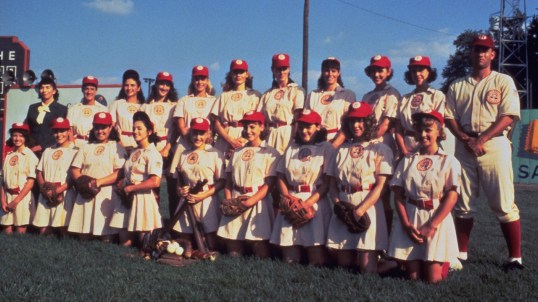
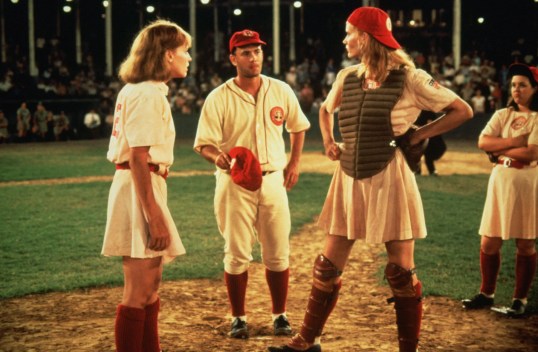
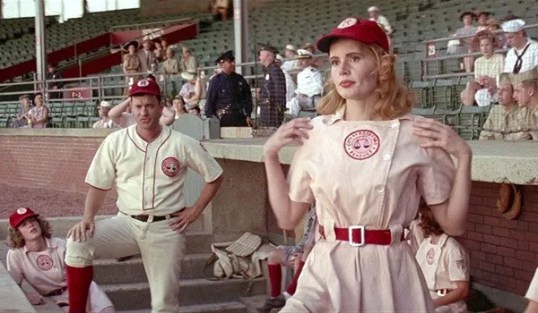
In case you’re one of the two people who haven’t heard of this movie, A League of Their Own takes place during World War II. With professional baseball players either enlisting or getting drafted, people worry there might not be another season of baseball until the war ends. Candy-bar manufacturer Walter Harvey (played by director Penny Marshall’s brother, Garry) creates the All-American Girls Professional Baseball League, with the requirement that the players not only know how to handle a bat but also look good in the impractical short skirts he expects them to wear while sliding into home. The movie follows the first season of the Rockford Peaches. Geena Davis plays Dottie, the catcher whose husband is serving overseas. Lori Petty plays Kit, the pitcher who struggles to hit high fastballs and who is also Dottie’s sister. Rosie O’Donnell and Madonna play two players from New York. Tom Hanks is Jimmy, the alcoholic former player turned manager who says, “There’s no crying in baseball!”
It may be heresy to admit it, but A League of Their Own is not my favorite baseball movie. (That would be Major League.) Most of the actresses, especially Geena Davis, are convincing as baseball players, and I love that the movie shone a light on the real-life AAGPBL. (Sixty former AAGPBL players appear in the movie.) But as a baseball fan, it’s always bothered me that the movie doesn’t really examine any of their games in depth. We know that Dottie is a good catcher, that Kit is a good pitcher, that Madonna can catch a baseball in her hat, and that Evelyn (Bitty Schram) cries when she gets yelled at, but we don’t learn much about the other players on the team and what they’re good at. The Peaches win games, but I would have liked to see more of how they won.
I still love A League of Their Own, though. The bonding between the players gets to me. They’re all from different parts of the country. Some of them are married and some of them are definitely single. But from the minute they’re selected to play in the AAGPBL, they form a family of their own. When one of them reveals that she’s never learned how to read, the players teach her. When Evelyn needs to bring her bratty problem child on the road, the team looks after him. When Jimmy makes Evelyn cry, the team rallies around Evelyn. Everyone remembers Jimmy saying there’s no crying in baseball, but they forget he got kicked out of the game afterward. (Jimmy eventually becomes a better coach.) When one player gets the telegram that her husband has been killed in the war, everyone cries. In the film’s epilogue, Evelyn’s son says that she was never happier than when she was playing for the Peaches, and I can understand why. The heart of the film is the relationship between Dottie and Kit. Even though you can guess from the start that Kit and Dottie are eventually going to end up on different teams and face each other in the big game, it’s still an emotional moment when they find themselves on opposite sides of the plate.
A League of Their Own is on Netflix, so watch it if you haven’t seen it before. Or, if you’re like me, rewatch it and try not to cry all over again when the former players reunite at the Baseball Hall of Fame. Hurry up, though. It’s leaving on September 30th.
Apollo 13 (1995, dir by Ron Howard, DP: Dean Cundey)
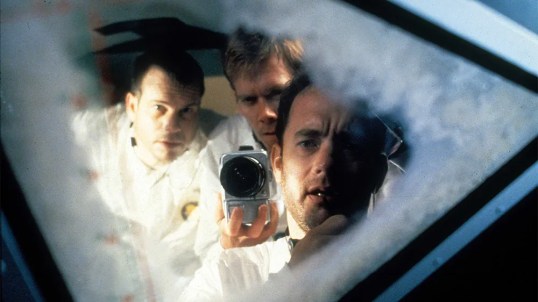
Today we have an absolutely beautiful scene from 1995’s Apollo 13. In this scene, astronaut Jim Lovell (Tom Hanks) takes a look at the moon and, for a minute, thinks about what could have been, if only a malfunction hadn’t scuttled Apollo 13’s moon landing and left Lovell and his two crewmates apparently stranded in space. Though Lovell may dream of walking on the moon, he knows it won’t happen and that his only concern now is getting both himself and his crew back home.
Some critics have a tendency to dismiss Ron Howard as just being a director who makes middlebrow films but this scene shows him to be a director who instinctively understands not only what it’s like to dream but also what it’s like when reality intrudes on those dreams. This scene features both Howard and Tom Hanks at their best.
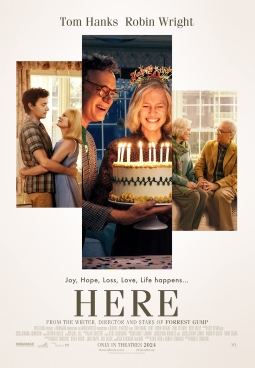
Released in 2024, Here is the type of movie that I usually would like. It’s ambitious. It’s experimental. It’s about history and how certain patterns will always repeat themselves no matter what. It features Tom Hanks and Paul Bettany, two of my favorite actors. Also, unlike a lot of people, I haven’t turned on Robert Zemeckis. For the most part, I usually enjoy his movies, including the more recent ones. (Of course, when I say more recent, I’m thinking of The Walk, which came out eleven years ago. But still….)
Here has an intriguing concept. Over the course of 104 minutes, Here covers several thousand years of history. The stationary camera focuses on a single plot of land, which goes from being an area dominated by dinosaurs to being the road outside of Colonial Governor William Franklin’s house during the American Revolution to eventually becoming the living room of a house that is occupied by several different families. The story plays out in a nonlinear fashion with the marriage of Richard and Margaret Young (played by Tom Hanks and Robin Wright) ultimately dominating the narrative. We watch as people fall in love, sometimes fall out of love, and eventually die. With the exception of one key moment, the camera never moves. Instead, we watch as life plays out in front of the camera and it’s often left to our imagination as to what’s happening on the other side of the lens. When Margaret, at one point, complains about how she can’t stand to keep looking at the same couch day-after-day, we know exactly how she feels.
As I said, I really wanted to like this movie but, unfortunately, it just fell flat. We meet a lot of characters but no one really feels human. Instead, all of the dialogue and the action has the shallow snappiness of an old sitcom. It’s easy to imagine this film being aired with a laugh track and an audience going, “Awwww!” after every emotional moment. As a result, watching Here feels less like witnessing history unfold and more like flipping around the nostalgia channels and trying to pick which old sitcom you want to watch. Do you want to watch the show about Ben Franklin not liking his son or the show that features Paul Bettany as a veteran dealing with PSTD? Do you want a show about a pilot who dies during the Spanish Flu epidemic or about a masked-up husband during the COVID lockdowns? One of the film’s final scenes features a character who is suffering from Alzheimer’s visiting the house and suddenly announcing that they remember everything about living there. It’s a moment that is meant to be heartfelt but, instead, it feels insulting to anyone who has ever taken care of a loved one with dementia. Alzheimer’s is never cutesy, regardless of what the movies may tell us. In the end, very little of the film’s vision of humanity feels authentic.
The other big problem is that the film occasionally uses digital de-aging to try to convince us that Tom Hanks and Robin Wright are both teenagers and it just doesn’t work. Hanks is playing Paul Bettany’s son but, whenever the two actors appear at the same time, it’s obvious that Hanks is considerably older than his screen father. Unlike The Irishman, which had a strong story and enough good performances to convince the viewer to suspend their disbelief and accept the imperfect de-aging technology, the de-aging in Here just emphasizes how inauthentic the film’s story feels.
As I said earlier, this film had potential but, unfortunately, most of that potential goes unrealized.
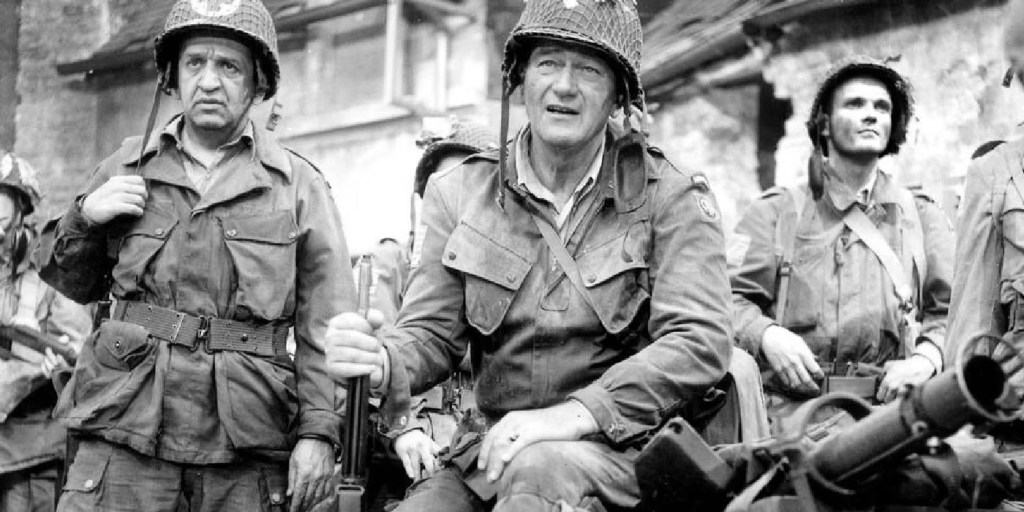
On Jun 6th, 1944, Allied forces invaded Normandy, France, in the largest amphibious invasion in military history. This action laid the foundation for the liberation of Western Europe from Nazi control.
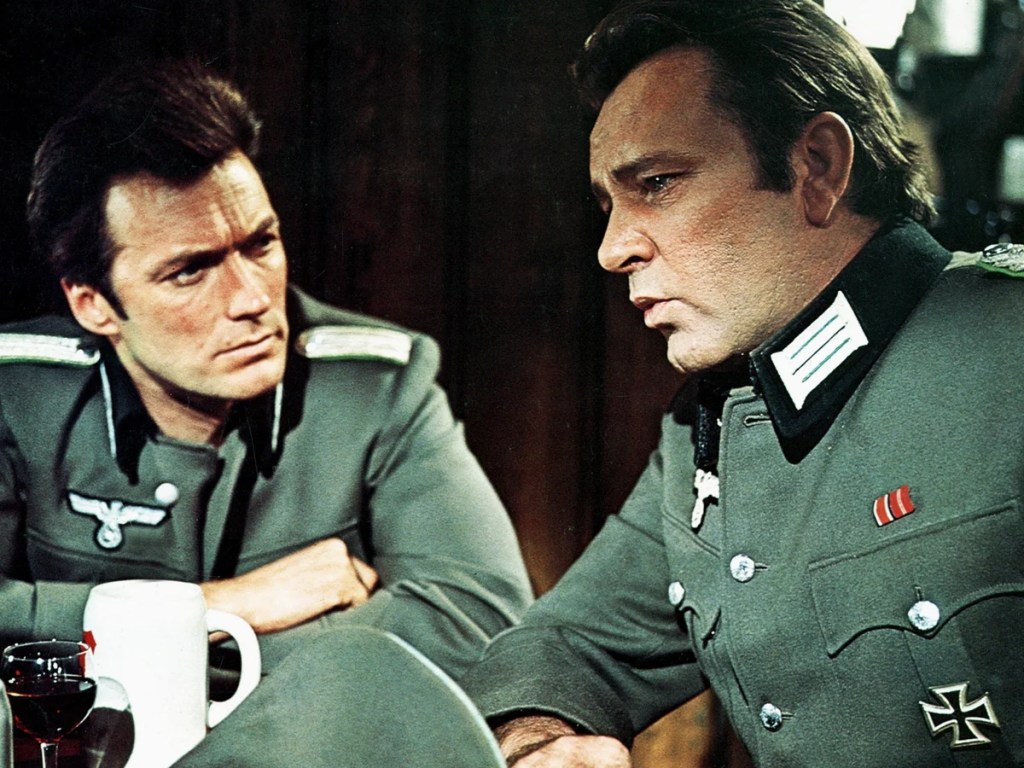
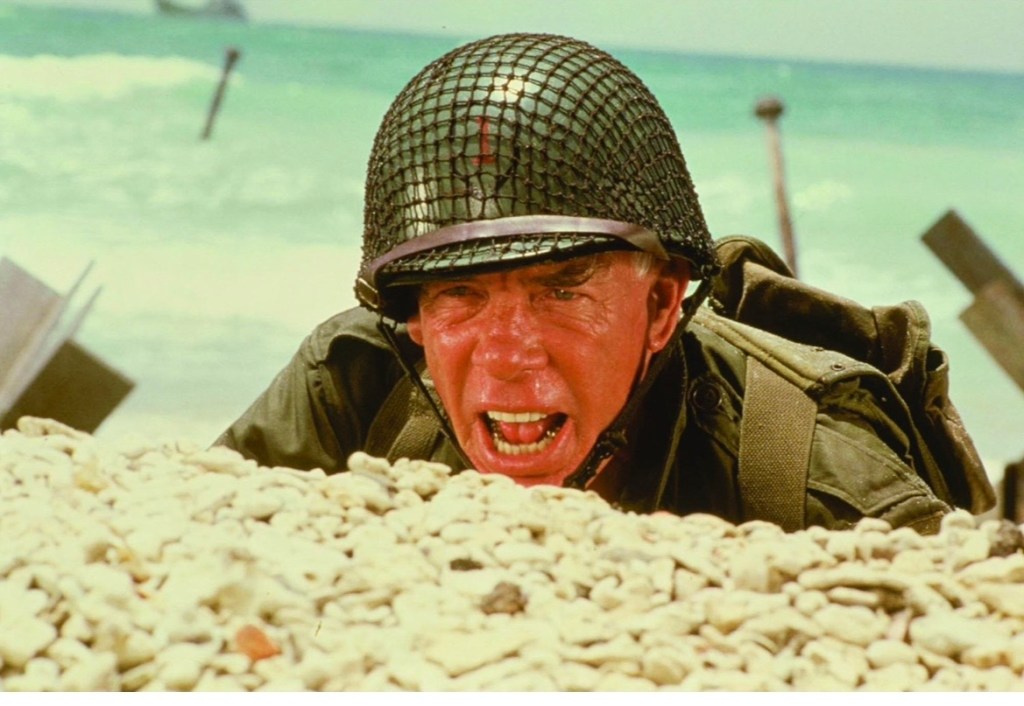
There have been some incredible cinematic portrayals based on and around that historic day. Here are some of my favorites.
The Longest Day (1962)Where Eagles Dare (1969)The Big Red One (1980)Saving Private Ryan (1998)
“A lot of those [German] soldiers, I’ve thought about this often, that man and I might’ve been good friends. We might’ve had a lot in common. We might’ve liked to fish, you know, he might’ve liked to hunt. You never know. You know. Of course, they were doin’ what they were supposed to do, and I was tryin’ to do what I was supposed to do. But, under different circumstances we might’ve been good friends.” — Darrell “Shifty” Powers
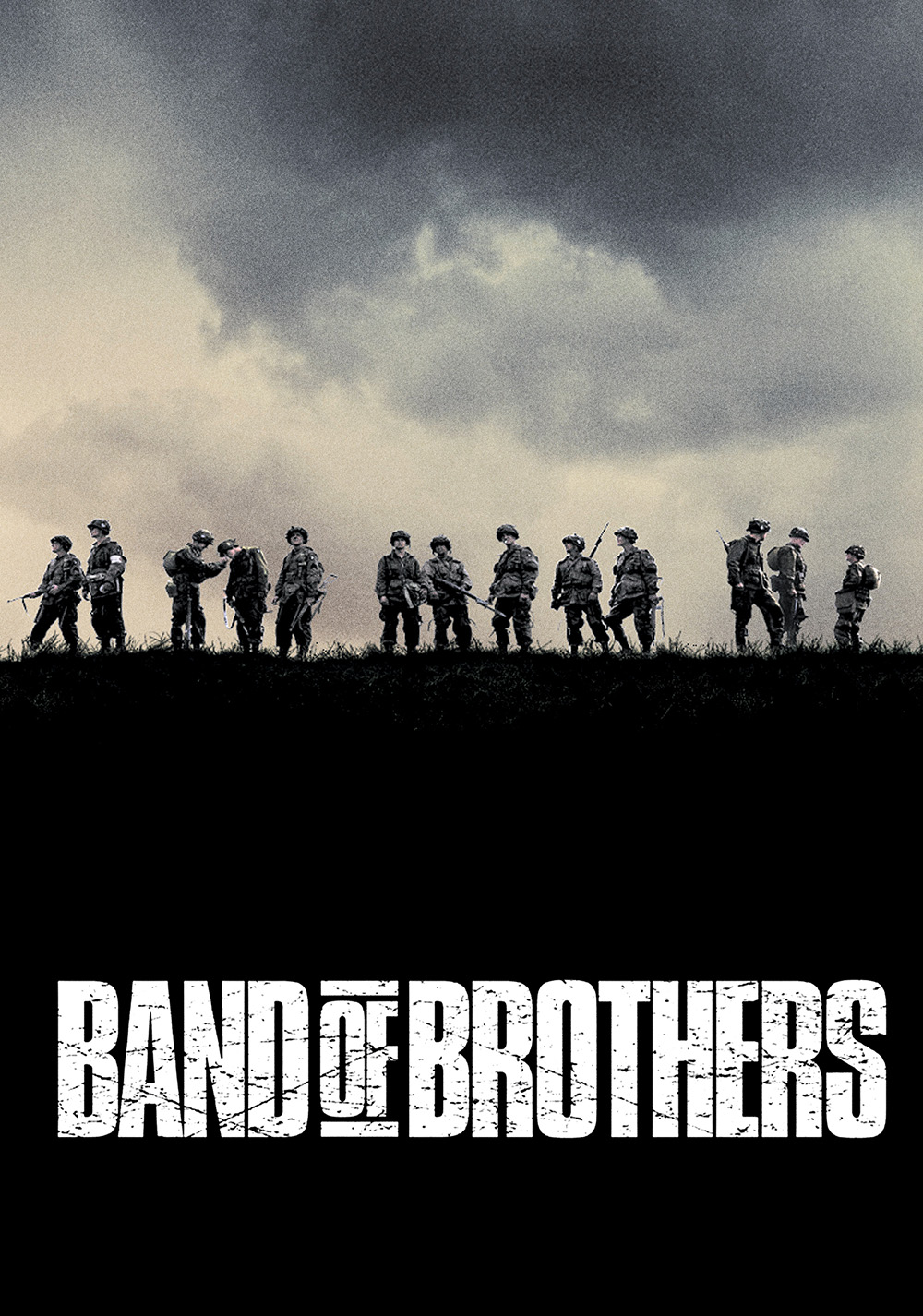
When we look back at the landscape of modern television, it is easy to take the concept of cinematic TV for granted. We live in an era where massive budgets, sweeping orchestral scores, and A-list Hollywood talent are regularly deployed on the small screen. But if you trace this golden lineage back to its true modern genesis, all roads inevitably lead to a singular, towering achievement: the 2001 HBO mini-series Band of Brothers. Produced by Tom Hanks and Steven Spielberg, this ten-part masterpiece did not just recount the harrowing journey of Easy Company, 506th Parachute Infantry Regiment, 101st Airborne Division during World War II; it fundamentally altered the DNA of television storytelling. Watching it today, a quarter-century after its initial broadcast, the series remains as potent, heartbreaking, and visually stunning as it was when it first shocked audiences. It exists as a perfect bridge between the classical Hollywood war epics of old and the uncompromising, gritty realism of twenty-first-century media. By committing to an unprecedented budget and an absolute refusal to sanitize the psychological horrors of combat, Band of Brothers set a high-water mark that few series have ever managed to touch, let alone surpass.
To understand the visual language and visceral power of Band of Brothers, one must first look at the cinematic earthquake that preceded it three years earlier: Steven Spielberg’s 1998 masterpiece Saving Private Ryan. That film rewrote the rules of how cinema captures warfare, abandoning the steady, heroic, brightly lit panoramas of mid-century studio pictures in favor of a terrifyingly immersive, chaotic style. Spielberg utilized desaturated colors, shutter-angle manipulation to create a jittery, hyper-real sense of motion, and handheld cameras that made the audience feel like they were ducking bullets in the surf of Omaha Beach. When Hanks and Spielberg pivoted to television to adapt Stephen E. Ambrose’s non-fiction book Band of Brothers, they brought this exact aesthetic blueprint with them. The impact of Saving Private Ryan on the mini-series cannot be overstated; it acts as the structural and aesthetic godfather of the entire project. Directors like Phil Alden Robinson, Richard Loncraine, and David Nutter utilized the same bleach-bypass film processing techniques to strip away vibrant primaries, leaving a color palette dominated by icy blues, muddy browns, and sickly olive drabs. This was not just a stylistic gimmick; it was a psychological tool that pulled the viewer out of the comfort of their living rooms and dropped them into the frozen, unforgiving forests of Bastogne or the smoke-choked ruins of Carentan. The camera became a participant in the war, getting splattered with mud, shaking violently during artillery barrages, and refusing to look away from the gruesome reality of what high-explosive shrapnel does to human flesh.
Yet, while it shared a visual vocabulary with Saving Private Ryan, Band of Brothers achieved something that a two-and-a-half-hour feature film simply never could, owing entirely to the expansive canvas of the mini-series format. A film must ultimately compress its narrative arc, often relying on archetypes and rapid pacing to reach a resolution. Over the course of ten hours, Band of Brothers allows its characters to breathe, change, harden, and break. Crucially, some of the show’s most powerful, lasting stories have absolutely nothing to do with active battles, but rather unfold in the quieter moments between the chaos. We do not just see these men in the heat of a firefight; we watch them suffer through the mundane, soul-crushing basic training regime of Camp Toccoa under the tyrannical eye of Captain Sobel, played with a brilliant, tragic insecurity by David Schwimmer. We sit with them in the agonizing, silent darkness of C-47 transport planes, listening to the vomit hitting the floorboards and watching the sheer, unadulterated dread on their faces before the jump over Normandy. We freeze with them in foxholes during the long, static winter in the forests of Bastogne, sharing the psychological numbness of isolation and the simple, desperate human desire for a dry pair of socks or a warm cup of coffee. This structural patience transforms the viewing experience from simple passive entertainment into an emotional marathon. We have known these men through their triumphs and their absolute lowest points, making their losses hit with the weight of personal bereavement.
While these quiet stretches build a deep, slow-burning empathy, the absolute biggest gut punch of the entire series arrives in Episode 9, titled Why We Fight. Throughout their march across Europe, the men of Easy Company—and by extension, the audience—have become somewhat cynical and battle-weary, numbly pushing forward simply to survive and get the job done. That numbness is completely shattered when a patrol stumbles across an sub-camp in the woods near Landsberg, which itself was part of the larger Dachau concentration camp complex. Up until this point, the war had been about geopolitical strategies, territory, and survival; suddenly, the men are brought face-to-face with the industrial scale of Nazi atrocities. The direction in this sequence is devastatingly restrained. There are no swelling orchestrations or heroic monologues, only the bewildered horror of soldiers looking at skeletal survivors wandering the camp in striped uniforms. Watching tough, battle-hardened paratroopers like Captain Nixon and Major Winters reduced to breathless, disbelieving silence as they uncover the truth of the Holocaust anchors the narrative in an entirely different tier of tragedy. It is an episode that completely recontextualizes the title of the series, showing that their ultimate purpose transcended military victory; they were liberating humanity from an unimaginable nightmare.
The casting of the series is another stroke of absolute genius that looks even more miraculous in hindsight. The producers deliberately avoided casting massive, distracting superstars for the main roles, opting instead for relatively unknown British and American theater and character actors. This decision was crucial for maintaining the show’s documentary-like authenticity; if Tom Cruise or Brad Pitt had been jumping out of those planes, the illusion would have been instantly shattered. Instead, we got Damian Lewis as Major Richard Winters, delivering a performance of quiet, stoic, and deeply principled leadership that serves as the moral anchor of the entire narrative. Alongside him was Ron Livingston as Captain Lewis Nixon, embodying the weary, cynical, and battle-fatigued intellect of a man seeking refuge from the horrors of war in a bottle of Vat 69. The ensemble is a treasure trove of talent, featuring early-career appearances from actors who would go on to become household names, including Tom Hardy, Michael Fassbender, James McAvoy, Simon Pegg, and Michael Cudlitz. Because the show focuses on an entire company, the perspective shifts naturally from episode to episode. One week we are viewing the war through the eyes of a terrified replacement medic in Bastogne, and the next we are embedded with the cynical, battle-hardened sergeant Carwood Lipton in The Breaking Point. This shifting focus ensures that the series never feels like a traditional Hollywood star vehicle, but rather a collective portrait of brotherhood where the company itself is the true protagonist.
The emotional resonance of Band of Brothers is amplified tenfold by the brilliant inclusion of interviews with the actual surviving veterans of Easy Company at the beginning of each episode. Kept anonymous until the very final moments of the series, these elderly men sit in simple chairs against dark backgrounds, their voices trembling and eyes misting over as they recall events that occurred more than half a century prior. There is a heartbreaking disconnect between the frail, weathered men on screen and the vibrant, muscular young actors portraying them in the dramatization. These interviews ground the cinematic spectacle in an undeniable, sobering reality. They serve as a constant reminder that the explosions, the blood, and the impossible acts of bravery we are witnessing were not the inventions of a Hollywood writers’ room, but the actual lived experiences of ordinary boys who were plucked from small-town America and dropped into the middle of the apocalypse. When the real-life winter veteran Dick Winters quotes his friend’s letter at the end of the series—saying, “Grandpa, were you a hero in the war? And Grandpa said no, but I served in a company of heroes”—it is impossible not to be moved to tears. It is a rare instance where a piece of media successfully honors historical figures without falling into the trap of cheap, unearned sentimentality or jingoistic propaganda.
Beyond its historical and emotional triumphs, the legacy of Band of Brothers is woven directly into the fabric of what we now refer to as prestige television. Before 2001, television was largely viewed as cinema’s lesser sibling—a medium defined by low budgets, procedural structures, and compromised production values meant to fit the square dimensions of old cathode-ray tube television sets. HBO had already begun to challenge this status quo with groundbreaking dramas like The Sopranos and Oz, but Band of Brothers was the project that proved television could match, and perhaps even exceed, the scale and artistic ambition of Hollywood blockbusters. With a staggering budget of over one hundred and twenty million dollars, it was the most expensive television miniseries ever produced at the time. The immense financial gamble paid off spectacularly, demonstrating to network executives and creators alike that audiences were hungry for complex, serialized, and visually uncompromising narratives that demanded to be treated as high art. The success of the show cleared the path for future cinematic television epics, directly inspiring sister projects like The Pacific and Masters of the Air, while setting the production standards that would later allow shows like Game of Thrones, Chernobyl, and Succession to flourish. It proved that the small screen was capable of housing massive, global historical narratives without losing the intimate character dynamics that make long-form storytelling so uniquely compelling.
Ultimately, Band of Brothers stands as a definitive milestone because it perfectly balanced the macro-scale horror of global warfare with the micro-scale beauty of human connection. It stripped away the romanticized myths of World War II to expose the sheer, terrifying randomness of survival, while simultaneously validating the profound love and loyalty that can only be forged in the crucible of shared suffering. It did not glamorize combat; instead, it illuminated the heavy, permanent psychological toll extracted from those who survived it. Through its hyper-realistic visual language inherited from Saving Private Ryan, its impeccable ensemble casting, and its revolutionary impact on the medium of television, the series achieved a timeless quality. It remains a definitive piece of cultural touchstone media that demands annual rewatches from millions of viewers around the globe. It is not just a historical chronicle, nor is it merely a well-executed piece of premium television; it is a monument to the human spirit, an artistic triumph that continues to remind us of the immense sacrifices made by an ordinary generation of heroes who stood together when the world was falling apart.
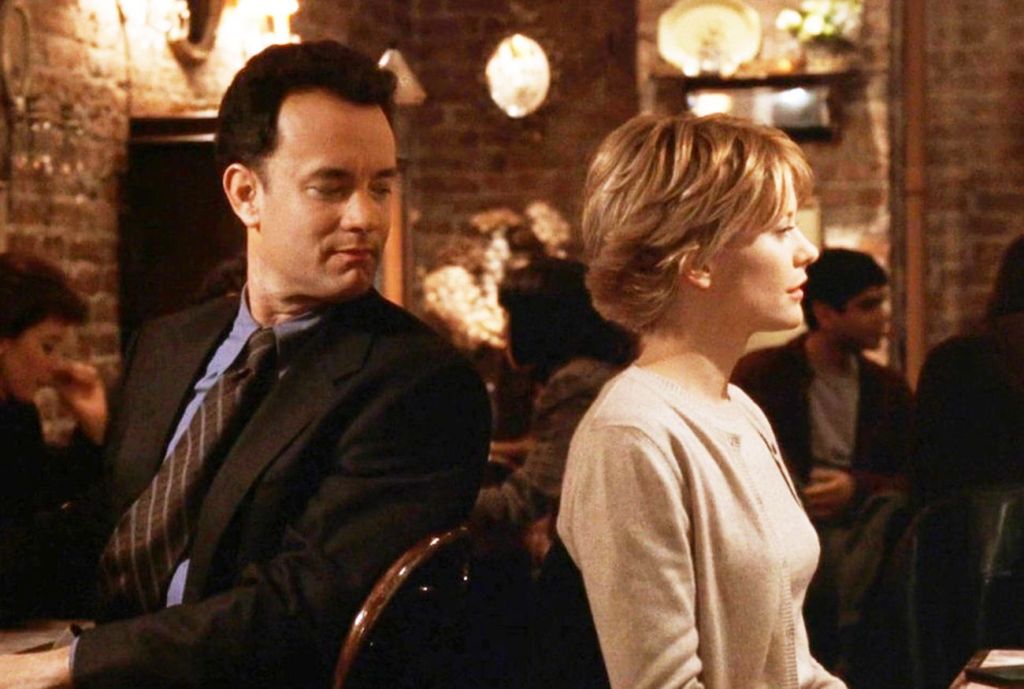
Kathleen Kelly (Meg Ryan) owns a children’s bookstore in New York City named “The Shop Around the Corner.” It’s a small, cozy store that she inherited from her dear mother, and it’s part of the lifeblood of who she is as a person, as well as the community itself. Joe Fox (Tom Hanks), on the other hand, is the heir to a major bookstore chain, Fox Books (think Barnes & Noble), that threatens to wipe places like Kathleen’s off the map. As fate would have it, the two meet anonymously online where they trade their hopes, dreams and insecurities through daily e-mails, with both excitedly opening their computers each night hoping to hear those three little words, “You’ve Got Mail.” Things begin to get interesting when Joe plans to open up a Fox Books Superstore just around the corner from Kathleen’s place with neither knowing that they’re real-life business adversaries. When will they find out that they’re enemies in the business world? Can true love find a way in the most difficult of circumstances? And isn’t that why we watch these kinds of movies in the first place?!
I’ll start off by saying that Meg Ryan is operating at the top of her “America’s sweetheart” phase here… she’s cute, sincere, nostalgic, slightly neurotic, and ultimately quite believable as a person who romanticizes her world and truly believes there will always be a place for her small store and the gigantic superstores! I grew up and still live in the state where Wal-Mart started so I definitely know how hard it is for the “mom and pop” stores to compete. Tom Hanks walks a bit more of a tightrope as Joe Fox. He’s likable enough that you want him to be able to win her heart, but he’s also just arrogant enough that you understand why Kathleen resents everything he stands for. Ultimately, Hanks is able to pull it off with enough charm that you still root for him even when he can be a little bit of a jerk at times.
What’s really strange about revisiting YOU’VE GOT MAIL at this point in my life is the fact that it takes me back to the late 90’s when the internet was something new to me and it seemed like something magical. In this movie, the internet connects two souls, and when we hear “you’ve got mail” as they fire up their computers, the movie expects you to feel genuine excitement, without a hint of irony. Compare that with where the world is today with almost any kind of online activity, especially social media. While there are still a lot of positives to be found, it’s sad that going online now is often exhausting, hateful, and stressful! In 1998, though, it was still possible to believe that logging on could lead to something incredible!
Nora Ephron, who directed the film and co-wrote the screenplay, does a good job of presenting a sad reality of the real world underneath this romantic comedy’s love story. “Progress” can be cruel, and it seems like it just can’t be stopped no matter what! I spend a lot of time talking about the wonderful hours I spent in the video stores of my youth. Those stores are all gone now and have been for decades. The stores that replaced them are mostly gone now, and almost all of my movie viewing is now done through online streaming. In YOU’VE GOT MAIL, Fox Books certainly isn’t better than Kathleen’s Shop Around the Corner. As a matter of fact, it’s not nearly as educational or personal. What it is, however, is bigger, cheaper, and more efficient, and that’s what seems to win in the end, just like it did with the local video stores and Wal-Mart. This is where Ephron does her strongest balancing act. Joe Fox and Kathleen Kelly still fall in love despite the fact that the realities of the world around them take their realistic and natural course. A true human connection is made in the most difficult and painful of circumstances, and that ultimately means more than anything else in the film.
Revisiting YOU’VE GOT MAIL now doesn’t feel that much different than revisiting the film that inspired it, 1940’s THE SHOP AROUND THE CORNER, starring Jimmy Stewart and Margaret Sullavan. Both films are time capsules of a world that no longer really exists. However, both films ultimately realize the time-tested truth that it’s our relationships with other people that provides the most meaning to our lives. That’s a truth that won’t change whether we’re writing letters, sending e-mails, exchanging texts or whatever “progress” the human race achieves in communication in the future! I find some comfort in that.
“Someday we might look back on this and decide that Saving Private Ryan was the one decent thing we were able to pull out of this whole godawful, shitty mess.” — Sergeant Horvath
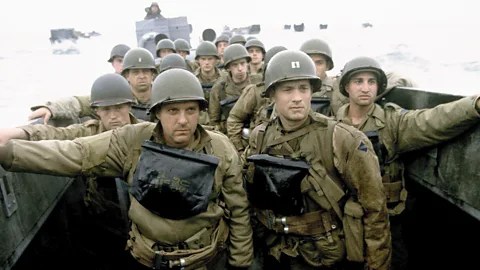
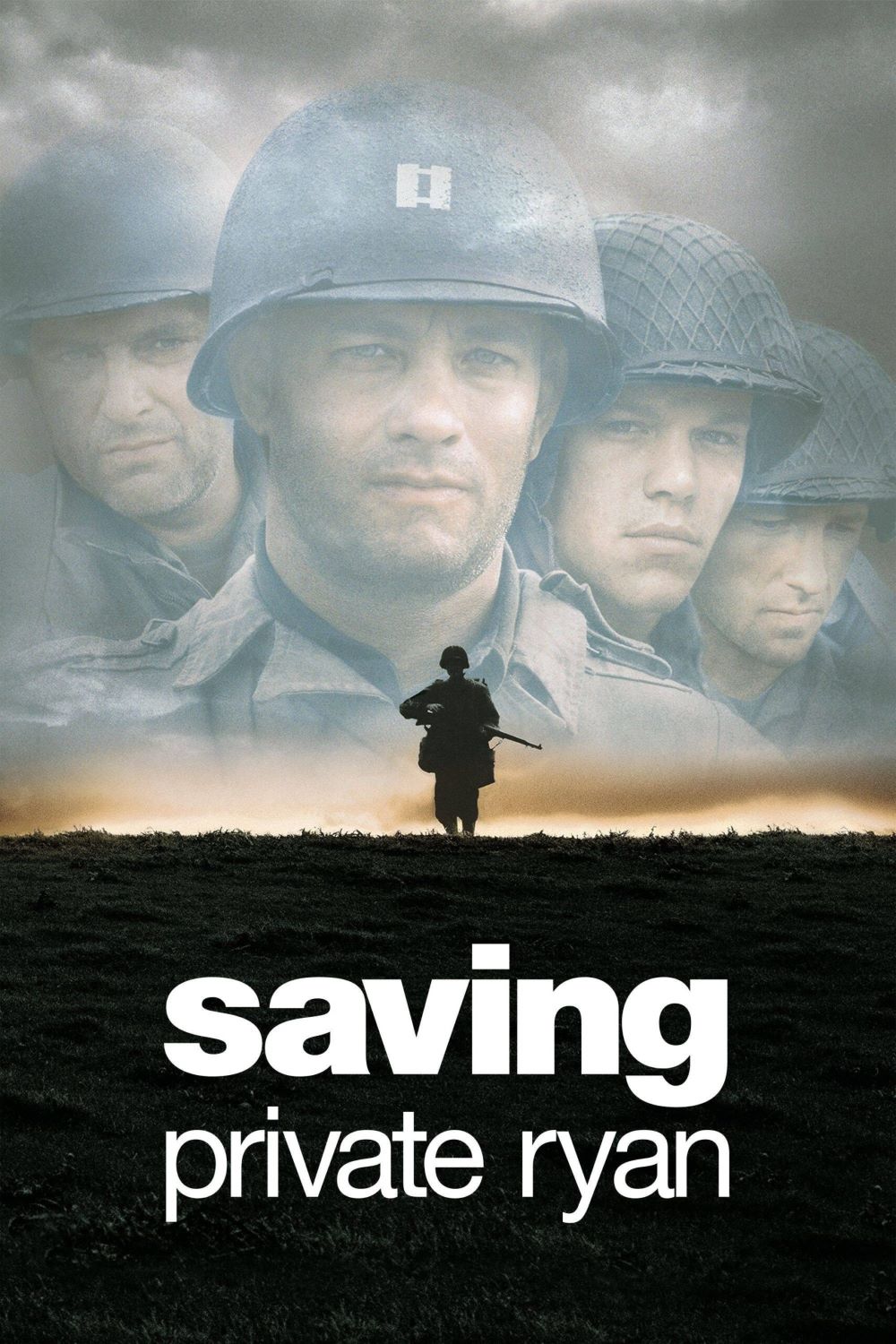
Saving Private Ryan stands as a landmark achievement in war cinema, intricately weaving immersive battle scenes, rich character dynamics, and profound moral themes into a nearly three-hour exploration of World War II’s human cost. One of its most remarkable features is the opening Omaha Beach landing sequence, a meticulously crafted, over 24-minute depiction of warfare’s brutal reality. Spielberg deploys a cinema verité style with handheld cameras capturing disorientation and chaos through the soldiers’ eyes. The sound design envelops the viewer in a sensory onslaught—gunfire, shouting, explosions—creating a visceral experience that immerses audiences directly in the terror and confusion of D-Day.
The filming process drew heavily on historical accuracy, with the production shot on the coast of County Wexford, Ireland, employing amputee actors and practical effects over computer graphics to simulate violent injuries and battlefield horrors. Muted tones evoke wartime photographs, and rapid, shaky editing conveys the disorganized, frantic environment soldiers endured. Consulting WWII veterans and historians, Spielberg created a sequence that reshaped cinematic portrayals of war, influencing how future films would approach the genre’s raw immediacy and emotional weight.
The film’s narrative follows a squad led by Captain Miller on a mission to locate and bring home Private James Ryan, whose three brothers have been killed in combat. The mission is steeped in the real-life tragedy of the five Sullivan brothers who died together aboard the USS Juneau in the Pacific, prompting military policies to prevent similar familial devastation. This historical context frames the story’s ethical heart: risking several men’s lives to save one, raising enduring questions about the value of individual sacrifice within the broader war.
In Saving Private Ryan, sacrifice is portrayed ambiguously—not as the sacrifice of a single hero but as the collective cost borne by the men tasked with rescuing one individual under perilous conditions. As the squad journeys through the war-torn French countryside, the deaths, injuries, and tensions they face underscore war’s randomness and the difficulty of weighing one life against many. The narrative refuses to romanticize or simplify, instead confronting the audience with the tragic truth that countless soldiers lose their lives without recognition or purpose, while some survive against staggering odds.
Duty and camaraderie thread throughout the film, portrayed through the soldiers’ evolving relationships and personal struggles. Each grapples with loyalty not only to their mission but to their fellow men and their own moral codes.
Integral to the film’s power is Tom Hanks’s layered performance as Captain John Miller. Hanks breathes life and emotional depth into Miller, portraying him as a man shaped by civilian life—revealed poignantly when he discloses his pre-war profession as a schoolteacher—now transformed by the relentless demands of war. He embodies an officer who is both composed and vulnerable, carrying the heavy burden of leadership with quiet dignity. Hanks’s portrayal reveals the internal struggles beneath Miller’s stoic exterior: moments of doubt, moral conflict, and fatigue subtly expressed through a trembling hand or a weary gaze. This humanity makes Miller relatable, as a man trying to maintain order and purpose amid chaos.
Hanks skillfully balances Miller’s authoritative presence with warmth and empathy, particularly evident in his paternal interactions with younger soldiers, reinforcing Miller’s role as both a leader and protector. His nuanced acting delivers the complexity of a man constantly negotiating duty and compassion. In scenes of high tension or moral quandaries, Hanks conveys the weight of command while allowing glimpses into Miller’s psychological strain, deepening the film’s emotional resonance.
Following Hanks’s Miller, a standout amongst the supporting cast is Tom Sizemore’s portrayal of Technical Sergeant Mike Horvath, Miller’s steady second-in-command. Sizemore embodies the pragmatic, battle-hardened soldier whose loyalty and experience provide emotional grounding for the squad. Sizemore portrays Horvath’s weariness and quiet commitment, adding layers of realism that deepen the exploration of how war reshapes individuals. The chemistry and shared history between Miller and Horvath are palpable, illustrating the bonds that sustain soldiers through hardship and lending emotional weight to the narrative.
The film wrestles with intense moral ambiguity throughout. The mission’s premise—to risk many lives to save one—compels both characters and viewers to confront complex questions about justice, value, and the cost of war. Scenes presenting difficult choices, such as the decision to spare or execute prisoners, dramatize these ethical dilemmas and highlight the emotional burdens borne by soldiers.
Technically, the film excels, with Janusz Kaminski’s dynamic cinematography capturing both the chaos of battle and intimate moments with evocative clarity. The immersive sound design reinforces the brutal reality, stripping warfare of glamor and confronting audiences with its daunting human costs.
Despite the overwhelming destruction and loss, Saving Private Ryan offers moments of humanity and hope. The rescue mission serves as a fragile symbol of compassion in the midst of devastation, while the film’s closing reflections on memory and legacy emphasize the lasting significance of sacrifice and survival.
Saving Private Ryan stands as a monumental achievement in the war genre, combining visceral combat realism, compelling characters, and moral complexity. Through Hanks’s deeply human Captain Miller and the nuanced supporting performances, especially Sizemore’s grounded Horvath, the film explores themes of sacrifice, duty, and brotherhood with unflinching honesty. Its enduring legacy lies in its unvarnished yet empathetic portrayal of war’s cost and the profound sacrifices made by those who lived it.
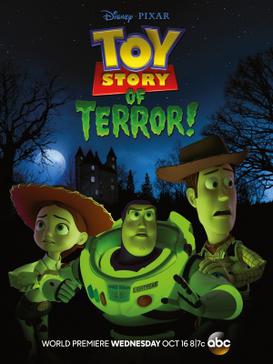
In Toy Story of Terror!, Bonnie (voice of Emily Hahn) is going on a Halloween road trip to visit her grandmother. When the car gets a flat, Bonnie and her mother have to spend the night in a creepy hotel. Bonnie has brought aome of her toys with her –Sheriff Woody (Tom Hanks), Buzz Lightyear (Tim Allen), Jessie (Joan Cusack), Mr. Potato Head (Don Rickles), Rex (Wallace Shawn), Trixie (Kristen Schaal), and Mr. Pricklepants (Timothy Dalton). Mr. Pricklepants says that the motel feels like the setting of a horror story and he’s right! Mr. Potato Head vanishes, leaving behind only his arm. While the toys search for him, they are captured one-by-one by an iguana. The owner of hotel (Stephen Tobolowsky) is stealing his guests’ toys and selling them online.
Toy Story of Terror! introduces some other toys, all of whom have been captured and imprisoned in a glass case. Combat Carl (Carl Weathers) was my favorite but I also have a soft spot for Old Timer (Christian Romano), the alarm clock who spoke like an old man. I like the iguana too. He didn’t know he was being bad.
What makes Toy Story of Terror! so special is that Jessie has to conquer her fear of being in a box to rescue Woody and the other toys. Everyone is scared of something, even brave and confident Jessie. Like Jessie, I get claustrophobic. I’m embarrassed to admit it but I do like to a keep a nightlight on when I’m sleeping. I don’t like the idea of waking up and not being able to see what’s in front of me. Toy Story of Terror! isn’t just about toys. It’s also about how it’s okay to scared because, deep down, we all have the strength to conquer our fears. Jessie proves it when she hides in a box so she can save Woody. Maybe I’ll even turn off the nightlight tonight. Nah, I don’t think so.
Lisa and I have watched Toy Story of Terror! every year since it first aired in 2013. Every time I see it, it makes me smile and it makes me feel like there’s nothing that I can’t do. I don’t know if they’re going to broadcast the special on TV this year. There really haven’t been any special Halloween shows yet, though there’s still another week to go. If they don’t air, it’ll be a shame. It is on Disney+, though. And It’s The Great Pumpkin, Charlie Brown is on Apple TV! Don’t forget to watch them this October!
1989’s The ‘Burbs takes place in …. well, it’s right there in the title.
Welcome to the suburbs! It’s place with big houses, green lawns, and neighbors who often don’t have much to do other than watch each other and gossip. Ray Peterson (Tom Hanks) lives with his wife, Carol (Carrie Fisher), and is friends with Art Weingartner (Rick Ducommun) and Mark Rumsfield (Bruce Dern). Ricky Butler (Corey Feldman) is the local teenager. It’s a nice neighborhood …. at least, until the Klopeks move in.
The Klopeks are viewed with suspicion from the minute they show up. They’re from a different country, they always seem to be burying something in their backyard, and Dr. Werner Klopek (Henry Gibson) is oddly stand-offish. When Walter Seznick (Gale Gordon) disappears and the the Klopeks are seen around Walter’s house and with Walter’s dog, Ray and his friends start to suspect that their new neighbors might be ritualistic murderers!
Oh, how I love The ‘Burbs. The film’s portrait of the suburbs as being a hotbed of paranoia may be a familiar one but it doesn’t matter when you’ve got actors like Tom Hanks and Bruce Dern throwing themselves into their roles. As always, Hanks is the glue that holds the film and its disparate parts together, giving a likable performance as a man who goes from being the voice of reason to being convinced that his neighbors are cannibals. Bruce Dern gleefully sends up his own image as a paranoid Vietnam vet but there’s also a sweetness to Dern’s performance that really makes it stand out. Dern’s character might be a little crazy but he does truly care about his neighbors.
Just as he did with Piranha and The Howling, Dante balances humor with suspense. He does such a good job of telling the story and getting good performances from his cast, that even the film’s big twist works far better than one might expect. It’s an 80s film so, of course, a few things explode towards the end of it. The film’s character-based humor is replaced with some broader jokes but no matter. The Burbs is an entertaining trip to the heart of suburban paranoia.
As the saying goes, just because you’re paranoid, that doesn’t mean that they aren’t out to get you.