Horror Film Review: The Evil Dead (dir. by Sam Raimi)


“I fear that the only way to stop those possessed by the spirits of the book is through the act of… bodily dismemberment.” — Professor Knowby

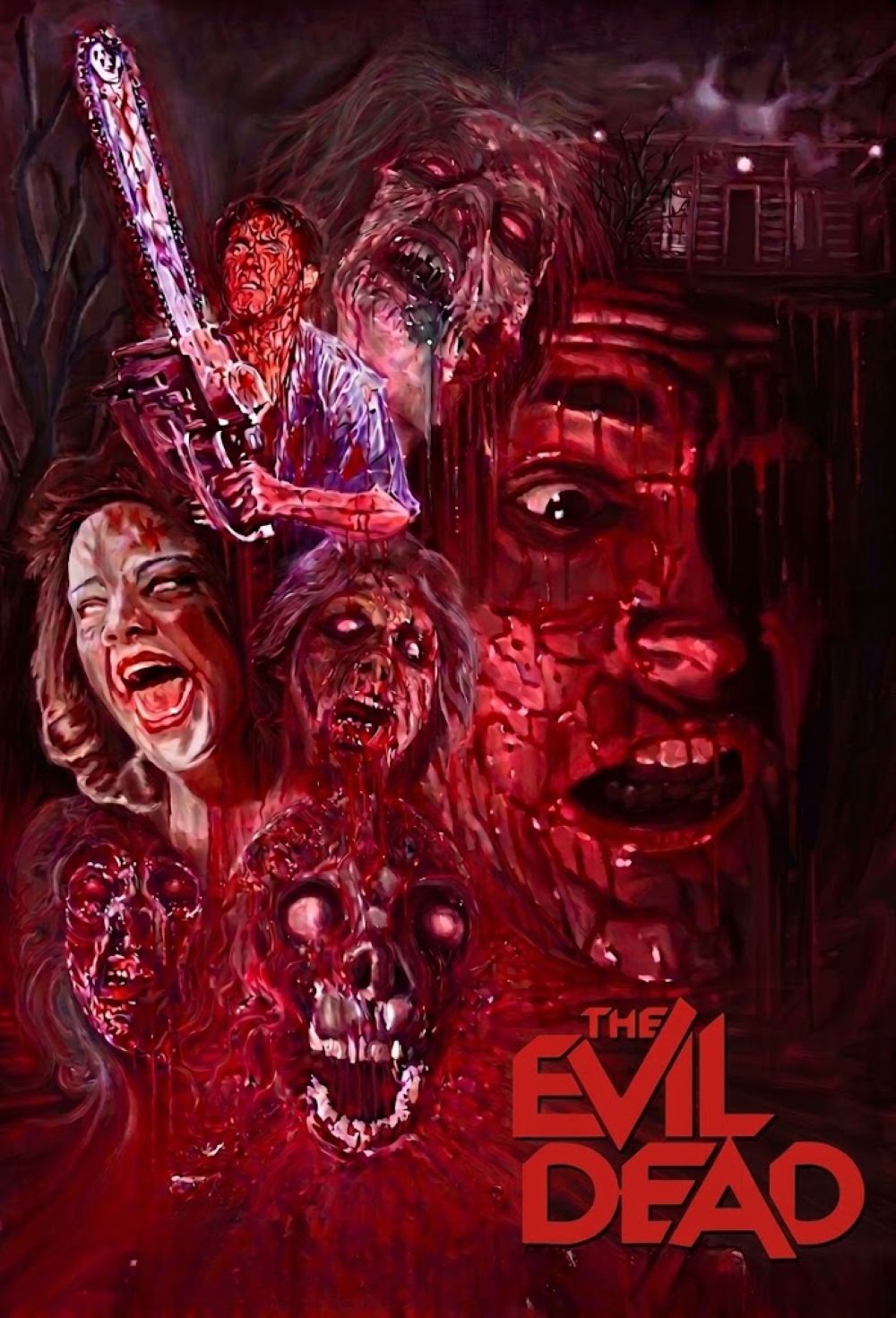
The Evil Dead is the kind of movie that feels like it should not have become a classic, at least not by conventional standards. It was made cheaply, filmed under brutal conditions, packed with unknown actors, and built around an extremely simple premise: five college friends head to an isolated cabin in the woods, unwittingly awaken an ancient evil, and spend the rest of the night being torn apart by demonic forces. Yet more than four decades later, Sam Raimi’s 1981 horror debut remains one of the most energetic, inventive, and genuinely nasty independent films ever made. It is rough around the edges in ways that are impossible to ignore, but those rough edges are a major part of its appeal. The Evil Dead feels handmade, hungry, and a little bit unhinged.

The story starts with Ash Williams, his girlfriend Linda, Ash’s sister Cheryl, and their friends Scotty and Shelly arriving at a remote Tennessee cabin for what is supposed to be a relaxing getaway. It is one of the most familiar setups in horror history now, but Raimi and his collaborators made it feel threatening before the real violence even begins. The cabin is decrepit, damp, and isolated to an almost absurd degree. There is no real sense of civilization nearby. The forest itself seems hostile, with tangled trees, strange sounds, and an atmosphere that makes the woods feel less like a location and more like a living organism surrounding the characters.

The group soon discovers a cellar beneath the cabin, where they find an ancient book bound in flesh, a dagger, and a tape recording left by an archaeologist. The recording describes the Necronomicon, a book of demonic incantations, and naturally the characters make the worst possible decision by playing the tape aloud. That act releases the evil presence that has been lurking in the forest, and the movie moves quickly from creepy cabin story to all-out supernatural nightmare. The concept is simple, but it gives Raimi room to focus on mood, visual invention, and escalation rather than complicated mythology.

What makes The Evil Dead special is how aggressively Raimi directs it. Even in his first feature, he had a style that was impossible to mistake for anyone else’s. The camera is constantly moving, lunging through the woods, creeping around corners, tilting at unnatural angles, and racing toward people as if the audience has become the demon’s point of view. The famous “demon-cam” shots are still startling because of how physical they feel. The camera does not glide elegantly. It charges. It crashes through the environment. It feels like something has broken loose and is hunting the characters.

That restless filmmaking gives the movie a personality far larger than its budget. Raimi turns limitations into an advantage. The cabin becomes a maze of shadows, floorboards, trap doors, windows, and hidden spaces. A cheap-looking hallway can suddenly become terrifying because the editing, sound design, and camera movement make it feel unstable. Raimi understands that horror does not always come from seeing a monster clearly. Sometimes it comes from the sense that the camera itself has stopped behaving normally, that the space around the characters is warping, and that even the trees outside are watching them.

The special effects are another major reason the film still has such a devoted following. They are obviously practical, often messy, and occasionally so exaggerated that they cross into dark comedy, but they have a tactile quality that modern digital effects often lack. The possessed characters look genuinely diseased and wrong: pale skin, dead eyes, rotting makeup, distorted faces, and unnatural movements. When the deadites attack, they do not simply become generic zombies. They taunt their friends, laugh at them, imitate their voices, and enjoy causing emotional pain. That cruel playfulness makes them more disturbing than ordinary monsters.

The makeup work on the possessed Cheryl, Shelly, and Linda remains especially effective because it turns familiar faces into grotesque masks. Ellen Sandweiss, Betsy Baker, and Theresa Tilly bring an unsettling intensity to those transformations, switching from frightened victims to shrieking, mocking demons. The performances are broad and theatrical, but that is exactly what the material needs. Nothing in The Evil Dead is subtle for very long. The film keeps pushing the characters past the point of normal human behavior until they are laughing, screaming, convulsing, and bleeding all over the cabin.

Bruce Campbell’s Ash is interesting because he is not yet the wisecracking, chainsaw-handed cult hero he would become in the sequels. In The Evil Dead, Ash is mostly an ordinary young man who slowly realizes he is trapped in a situation beyond comprehension. Campbell is still charismatic, and there are flashes of the physical comedy and wild-eyed determination that would define the character later, but this version of Ash is more vulnerable. He panics, hesitates, and suffers. By the end, he looks exhausted in a way that feels earned, covered in sweat, dirt, blood, and trauma.

That difference gives the original movie its own identity within the larger Evil Dead series. Evil Dead II would remake and expand many of the first film’s ideas with more money, more comedy, and a much more overtly cartoonish sensibility. Army of Darkness would take Ash into full fantasy-adventure mode. Those later films are arguably more polished and more immediately entertaining, especially for viewers who love Campbell’s comedic performance. But The Evil Dead has a rawness that the sequels never tried to reproduce. It is a horror movie first, even when its excesses become funny.

The film’s tonal shifts are one of its most fascinating qualities. Raimi clearly understands that grotesque violence can become absurd if it is pushed far enough, and the movie occasionally seems aware of its own madness. A possessed hand reaches through a window. A character gets stabbed with a pencil in one of the film’s most infamous scenes. Bodies erupt in streams of colored goo rather than realistic blood. The final destruction of the deadites is so elaborate that it feels like Raimi and his effects team were determined to empty every container of slime they had available. It is disgusting, but it is also gleefully imaginative.

At the same time, The Evil Dead can be more unpleasant than people remember. Its treatment of Cheryl in the woods is difficult to watch and remains one of the film’s most controversial moments. The scene is meant to establish the cruelty and violation associated with the demonic force, but it is not necessary to enjoy the movie, and it has aged badly compared with the more comic-book brutality of later entries. Raimi himself would move away from that kind of material in the sequels. It is worth acknowledging because the scene changes the tone of the film and may be a deal-breaker for some viewers.

The sound design helps make the movie feel more oppressive than its modest production would suggest. The woods groan, doors bang, voices echo from impossible places, and the demonic chants on the tape recording create a sense that something ancient has been invited into the cabin. Joseph LoDuca’s score adds another layer of unease, using shrill strings and harsh musical stabs to make even quiet scenes feel unstable. The soundtrack is not trying to be elegant. It is trying to make the viewer tense up, and it succeeds.

There is also something inspiring about the movie’s independent spirit. Raimi, Campbell, producer Robert Tapert, and their crew famously made the film through determination, ingenuity, and a willingness to endure conditions that sound miserable in retrospect. You can feel that effort on screen. Every strange camera angle, handmade prop, and splattering effect carries the energy of filmmakers trying to prove they can do something bigger than their resources should allow. The Evil Dead does not hide its budget. It turns that budget into part of its legend.

For horror fans, the movie is essential not because it is flawless, but because it is so alive. It captures the feeling of discovering a forbidden VHS tape or stumbling into a midnight screening where the audience is laughing, cringing, and yelling at the screen. It is scary in places, silly in others, and relentlessly committed to its own bizarre nightmare logic. Raimi would go on to make superhero movies, westerns, thrillers, and studio blockbusters, but the wild visual imagination that defined his career is already fully visible here.

The Evil Dead is a scrappy, blood-soaked supernatural horror movie that earns its reputation through pure filmmaking nerve. Its story may be basic, its acting may be uneven, and some of its material has not aged gracefully, but the movie’s pace, practical effects, demonic imagery, and manic camerawork remain unforgettable. It feels less like a carefully manufactured horror product than a curse someone managed to put on film. That is why it still works: Raimi and his team did not just make a movie about evil invading a cabin. They made the entire movie feel possessed.
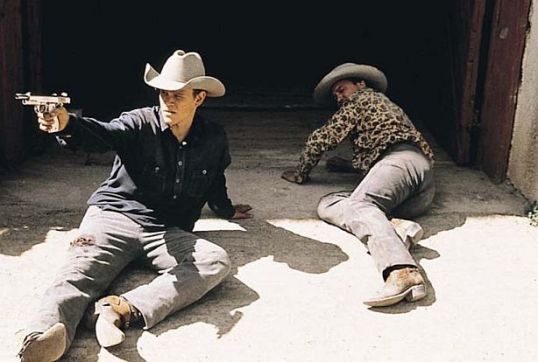
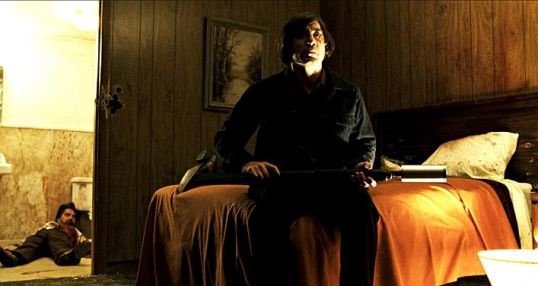
4 Shots From 4 Films: Special Cormac McCarthy Edition


4 Or More Shots From 4 Or More Films is just what it says it is, 4 shots from 4 of our favorite films. As opposed to the reviews and recaps that we usually post, 4 Shots From 4 Films lets the visuals do the talking!

The shots below are all taken from films based on the work of Cormac McCarthy.

4 Shots From 4 Films

All The Pretty Horses (2000, dir by Billy Bob Thornton, DP: Barry Markowitz)

No Country For Old Men (2007, dir by Joel and Ethan Coen, DP: Roger Deakins)

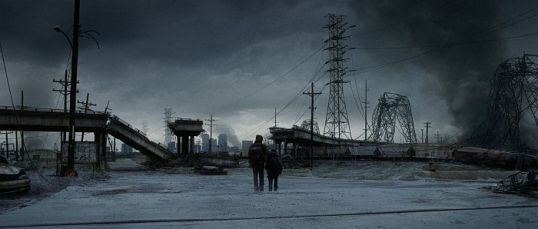
The Road (2009, dir by John Hillcoat, DP: Javier Aguirresarobe)

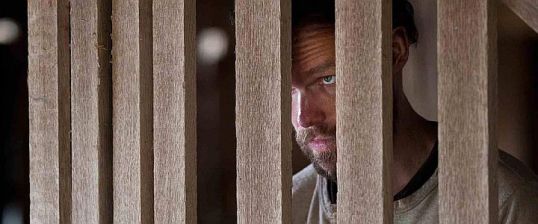
Child of God (2013, dir by James Franco, DP: Christina Varos)

4 Shots From 4 Films: Special Roger Deakins Edition


4 Or More Shots From 4 Or More Films is just what it says it is, 4 shots from 4 of our favorite films. As opposed to the reviews and recaps that we usually post, 4 Shots From 4 Films lets the visuals do the talking!

Today, the Shattered Lens wishes a happy birthday to the legendary cinematographer, Roger Deakins!  It’s time for….

4 Shots From 4 Roger Deakins Film

Nineteen Eighty-Four (1984, dir by Michael Radford, cinematography by Roger Deakins)

Fargo (1996, dir by the Coen Brothers, cinematography by Roger Deakins)

Kundun (1997, dir by Martin Scorsese, cinematography by Roger Deakins)

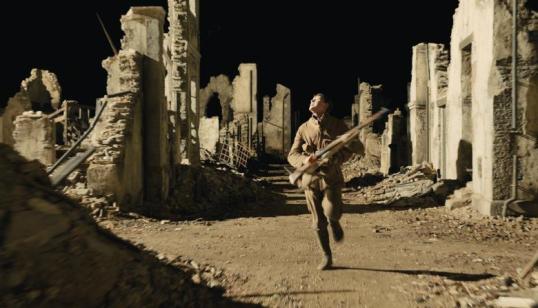
1917 (2019, dir by Sam Mendes. cinematography by Roger Deakins)

A Blast From The Past: The Fake Blood Simple Trailer Starring Bruce Campbell


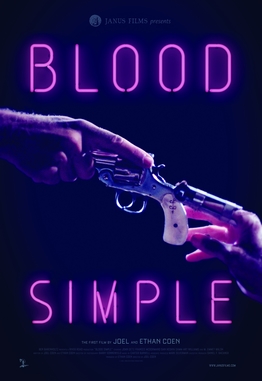
Way back in 1984, the Coen Brothers were trying to raise the $75,000 that they would need to produce and direct their first film, Blood Simple.  Sam Raimi, with whom the Coen Brothers had worked on Evil Dead, suggested that they put together a fake trailer to draw the interest of investors.

The Coens and their cinematographer, Barry Sonnenfeld (who would later go on to have his own directorial career), took Raimi’s advice and put together a trailer that, to be honest, has more in common with Evil Dead than with Blood Simple.  Then again, that was a smart move on their part.  Evil Dead made a lot of money.

Bruce Campbell appears in the trailer, playing the role that was later played by Dan Hedaya in the actual film.  (It’s hard to imagine Campbell playing that role, just because Hedaya gave such a perfect performance as Julian Marty.  That said, I could very well see Campbell in the role played by John Getz.)

Here is the fake Blood Simple Trailer, featuring Bruce Campbell!  (Admittedly, because of the way the trailer is shot, you don’t actually see Bruce’s face.  But you’ll recognize the hair immediately.)

And, for the sake of comparison, here’s the trailer for the actual film:

4 Shots From 4 Films: Special Roger Deakins Edition


4 Shots From 4 Films is just what it says it is, 4 shots from 4 of our favorite films. As opposed to the reviews and recaps that we usually post, 4 Shots From 4 Films lets the visuals do the talking!

Today is the birthday of our greatest living cinematographer, Roger Deakins!  It’s time for….

4 Shots From 4 Roger Deakins Films

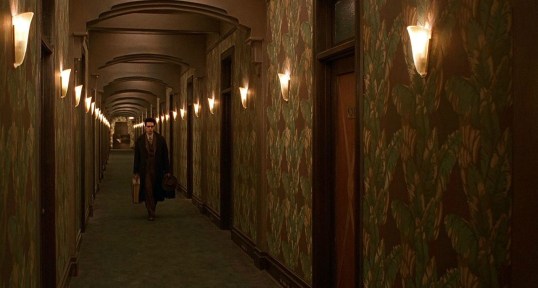
Barton Fink (1991, dir by the Coen Brothers, cinematography by Roger Deakins)

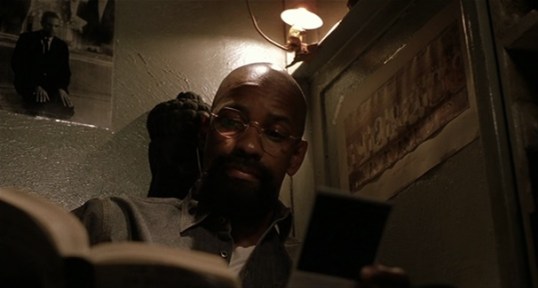
The Hurricane (1999. dir by Norman Jewison, DP: Roger Deakins)

Skyfall (2012, dir by Sam Mendes, cinematography by Roger Deakins)

Sicario (2015, dir by Denis Villeneuve, cinematography by Roger Deakins)

6 Shots From 6 Films: Special 1996 Edition


6 Shots From 6 Films is just what it says it is, 6 shots from 6 of our favorite films. As opposed to the reviews and recaps that we usually post, 6 Shots From 6 Films lets the visuals do the talking!

Today, we take a look at a classic cinematic year.  It’s time for….

6 Shots From 6 1996 Films

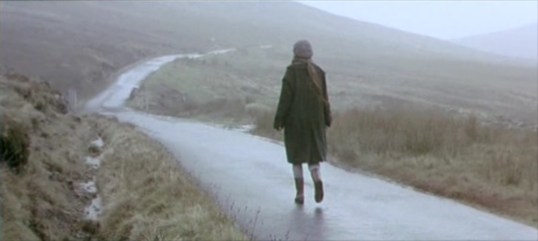
Breaking the Waves (1996, dir by Lars Von Trier, DP: Robby Muller)

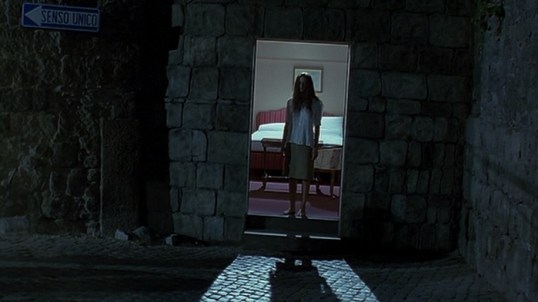
The Stendhal Syndrome (1996, dir by Dario Argento, DP: Giuseppe Rotunno)

Fargo (1996, dir by the Coen Brothers, DP: Roger Deakins)

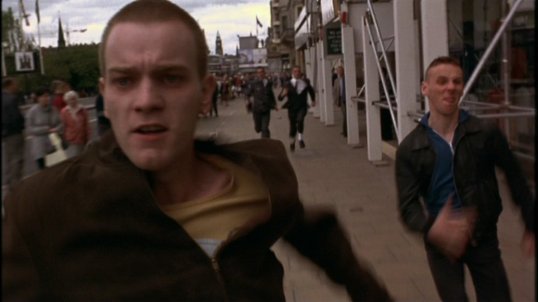
Trainspotting (1996, dir by Danny Boyle, DP: Brian Tufano)

Basquiat (1996, dir by Julian Schnabel, DP: Ron Fortunato)

Normal Life (1996, dir by John McNaughton, DP: Jean de Segonzac)

Lisa Marie Reviews An Oscar Nominee: Fargo (dir by the Coen Brothers)


Photograph by Erin Nicole

I am currently sitting in my bedroom, wrapped in several blankets and watching the snow fall on the other side of my window.  I love snow, mostly because I live in Texas and therefore, I don’t get to see it that often.  The most snow we’ve gotten down here, at least in my lifetime, was in 2021.  That was when we got hit by that blizzard and had to deal with rolling blackouts for a week straight.  That’s not a good memory but still, I love to watch the snow fall.  Even during that blizzard, I still loved the fact that I could use the snow as a nightlight as I read a Mickey Spillane book and waited for the power to come back on.

Down here in North Texas, snow is exotic.  In other parts of the country, it’s just a part of everyday life.

Like in the Dakotas for instance….

First released in 1996 and directed by the Coen Brothers, Fargo is a film that is full of arresting images.  As soon as you hear (or read) the title, those images and the sounds associated with them immediately pop into your head.  You immediately visualize the desperate car salesman Jerry Lundegaard (William H. Macy) trying to trick a customer into paying extra for the trucoat and insisting that “I’m not getting snippy here!”  You see the film’s two kidnappers, Carl Showalter (Steve Buscemi) and Gaear Grimsud (Peter Stomare), getting on each other’s nerves as they drive from one frozen location to another.  You remember heavily pregnant Marge Gunderson (Frances McDormand) investigating a snowy crime scene and gently correcting another officer’s “police work.”  You flash back to the moment when Mike Yanagita (Steve Park) suddenly breaks down in tears and tells Marge that she’s a super lady.  “And it’s a beautiful day,” Marge says at one point, wondering how so many terrible things could have happened on such a lovely day.  And she’s right.  It was a beautiful day.  It was far too beautiful a day to discover one man stuffing another into a woodchipper.

Myself, I always think of the scene where Carl attempts to find a place to hide a briefcase full of money.  It’s night.  Carl’s been shot in the face but he has the money that he’s gone through so much trouble to collect.  He runs into a field, looking for a place to hide it.  The field is covered in snow.  Every inch of the ground glows a bright white.  Everything looks the same.  But Carl still runs around desperately before picking a place to bury the suitcase.  It doesn’t seem to occur to Carl that there’s no visible landmarks or anything that would ever help him to find the money again.  He’s blinded, by the snow, by the pain of the bullet, and, like most of the characters in this movie, by his own greed.

Of course, Fargo is not a film about people behaving in intelligent ways.  Greed, loneliness, and desperation all lead to people doing some pretty stupid things.  Jerry thinks that the best way to pay off his debts and raise the money for a real estate deal is to arrange for his wife to be kidnapped so his wealthy father-in-law (Harve Presnell) will pay the ransom.  His father-in-law, who obviously despises Jerry and would be happy for him to just go away, is convinced that he’ll be able to both get back his daughter and recover his money.  (If Jerry had just spent a moment really thinking about his plan before going through with it, he would have realized his father-in-law would never just part with his money.)  Carl thinks that it’s a good idea to partner up with the obviously sociopathic Grimsud.  When a cop pulls over Carl and Grimsud’s car, Grimsud ignores the fact that Carl was talking his way out of the ticket and instead kills the policeman and then kills several eyewitnesses.  (“I told you not to stop.”)  Marge figures out what is going on but even she puts her life in danger by investigating a cabin without proper backup.  The characters in Fargo frequently behave in ludicrous ways and almost all of them speak with an exaggerated regional dialect (All together now: “Oh yeah,”) but they also feel incredibly real.  The sad truth of the matter is that there are people as greedy, dumb, and hapless in the world as Jerry.  There are people like Carl and Grimsud.  Even Jerry’s fearsome father-in-law is a very familiar type of character.  People do thing without thinking and inevitably, they make things worse the more overwhelmed they become.  Common sense (not to mention decency) is frequently the last thing that anyone considers.  Fortunately, Marge is believable too.  Marge at times almost seems so gentle and polite (“No, why don’t you sit over there?” she sweetly tells Mike when he attempts to get too close to her.) that the viewer worries about what’s going to happen to her when she gets closer and closer to figuring out what’s going on.  Fortunately, Marge turns out to be much stronger than anyone, even the viewer, expected.  The world of Fargo can be a terrible place but there’s moments of kindness and hope as well.

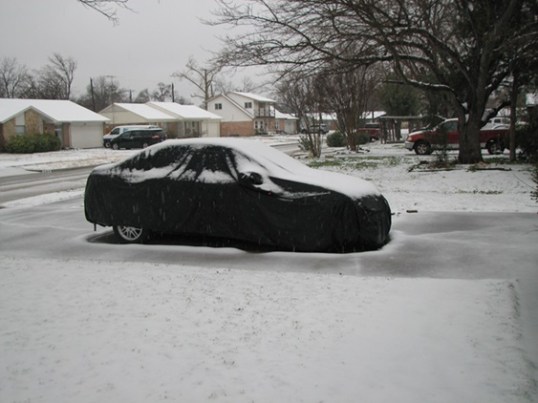
Fargo is both a comedy and a drama.  The opening title card says that the film is based on a true story, which is a typical Coen Brothers joke.  (The film was loosely inspired by several similar crimes but the story itself is fictional.)  Carter Burwell’s dramatic score is both appropriately grand and also gently satiric.  Jerry does some terrible things but William H. Macy plays him as being so naive and desperate and ultimately overwhelmed that it’s hard not to have a little sympathy for him.  Jerry truly thought it would be so simple to pull off a complicated crime.  (The poor guy can’t even get the ice off of his windshield.)  As played by Steve Buscemi, Carl Showalter talks nonstop and he makes you laugh despite yourself.  His shock at how poorly everything goes is one of the film’s highlights.  It’s a funny film but it’s also a sad one.  I always worry about what’s going to happen to Jerry’s son.  Ultimately, of course, the film belongs to Frances McDormand, who gives a wonderful performance as Marge.  She’s the heart of the film, the one who reminds the viewer that there are good people in the world.

Considering the film’s cultural impact, it’s always somewhat shocking to remember that Fargo did not win the Oscar for Best Picture.  It lost to The English Patient, a film about a homewrecker who helps the Nazis.  Personally, I prefer Fargo.

Fargo (1996, dir by the Coen Brothers, DP: Roger Deakins)

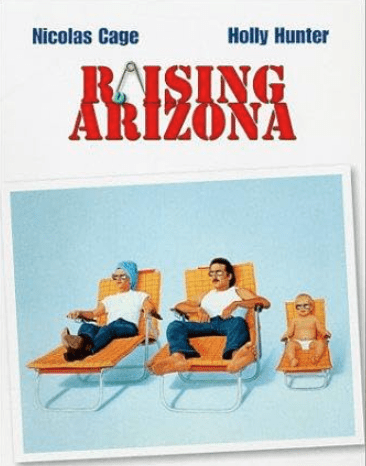
Raising Arizona (Dir Joel & Ethan Coen), Review by Case Wright


Happy Birthday, Nicolas Cage. If you’re an older Millennial or Young Gen X, you saw “Raising Arizona” about 100 times on Showtime and HBO because I believe that it was very inexpensive to license. The film was a hard left turn for the Coen Brothers who had major success with “Blood Simple” – a brutal thriller- that turned all women off to Fat Southern Murderers forever. The Coen thrillers tended to have comedic edge after Raising Arizona, but never just a comedy again- until The Big Lebowski. This film is also responsible for John Goodman. Prior to this film he was in mostly small parts, then after this picture- he became a household name in Roseanne.

Nicolas Cage is a made up name. He is Francis Coppola’s nephew and I can’t fault him for mayonnaising his name because my Italian ancestors did as well. However, I believe that he was trying to hide the Coppola name more than his heritage. Speaking of Italian heritage, try “Groking” “Italian American Jersey Girl” in grok. The lady who appears is beautiful, but doesn’t look like any of my Aunts. I feel that I should advocate for my people- We trend good looking and gave you Pizza Friday! Come on, show some love!

The film’s premise is that H.I. McDonnough (Nicolas Cage) is an ex con who is addicted to robbing the same convenience store again and again and again. This may seem strange, but in another life, I did criminal defense and I had a client who would steal the same jacket from the same store every year. Edwina “Ed” (Holly Hunter) is a cop who processes H.I. again and again. Each time, he flirts with her. His last time as a convict in front of her- her fiancé left her. H.I. realizes that he must go straight to get her love.

After his jail time, he returns as a free man to get his love- “Ed”. It works! They have a great life, but they want a child and yet she can’t conceive. The solution: they will kidnap a baby from the owner of Gallery Furniture! If you were from Texas, you would’ve laughed! They get the kid and are pursued by all sorts of people who want to claim the reward for the kidnapped baby.

This very intricate plot is just the first 30 minutes of the film. It is truly funny. I always felt for these character because good people should have LOTS OF KIDS- as many as possible! They shouldn’t have to pay taxes or anything. This film is special to me for another reason: it is when the Boomers were still young and filled with hope. Now, we are losing them and it hurts. This film is a glimpse of what they were like before the grey and how much they yearned for a good family on their own terms.

4 Shots From 4 Films: Special Roger Deakins Edition


4 Shots From 4 Films is just what it says it is, 4 shots from 4 of our favorite films. As opposed to the reviews and recaps that we usually post, 4 Shots From 4 Films lets the visuals do the talking!

Today is the birthday of our greatest living cinematographer, Roger Deakins!  It’s time for….

4 Shots From 4 Roger Deakins Films

Nineteen Eighty-Four (1984, dir by Michael Radford, cinematography by Roger Deakins)

Fargo (1996, dir by the Coen Brothers, cinematography by Roger Deakins)

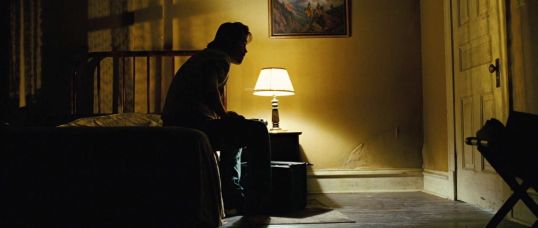
No Country For Old Men (2007, dir by the Coen Brothers, cinematography by Roger Deakins)

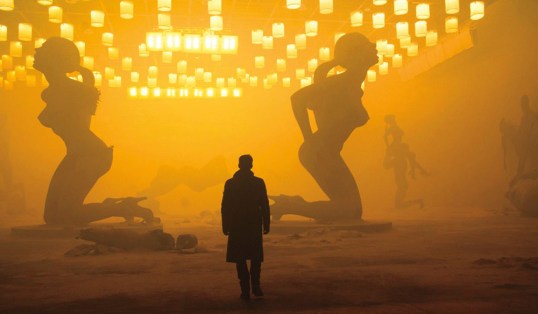
Blade Runner 2049 (2017, dir by Denis Villeneuve, cinematography by Roger Deakins)

Scene That I Love: M. Emmet Walsh in Blood Simple


The great character actor M. Emmet Walsh passed away yesterday.  He was an actor who had a long career, often playing small but important roles.  1985’s Blood Simple brought Walsh one of his few starring roles and today’s scene that I love comes from that film.

In this scene, M. Emmet Walsh’s sleazy private detective meets with bar owner Dan Hedaya and reveals the result of his investigation into whether or not the bar owner’s wife is cheating on him.  Blood Simple was the directorial debut of the Coen Brothers and featured Frances McDormand in one of her first starring roles.  It also featured M. Emmet Walsh at his best.