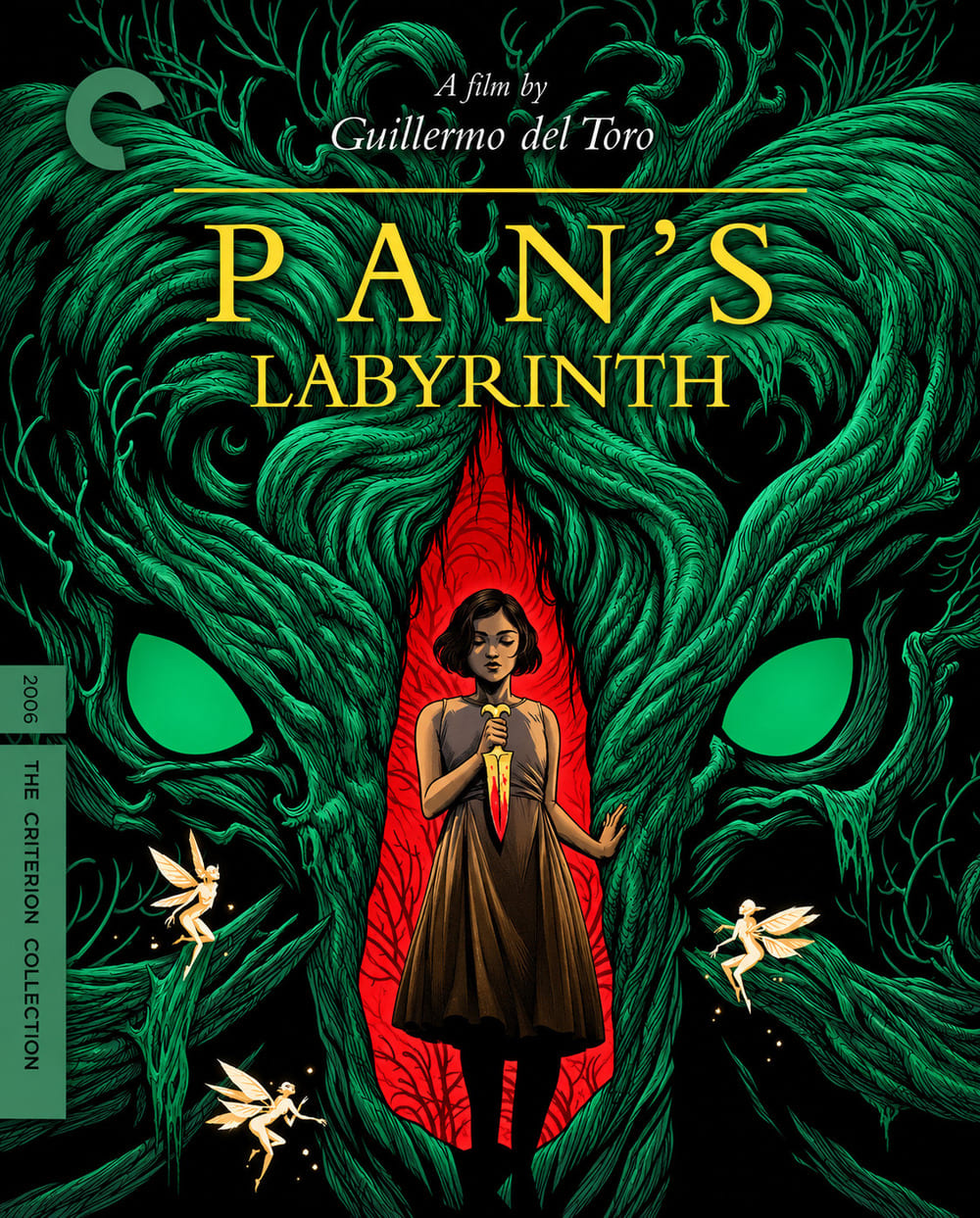
Horror Villain of the Day: Captain Vidal (Pan’s Labyrinth)


“I choose to be here because I want my son to be born in a new, clean Spain.” — Captain Vidal

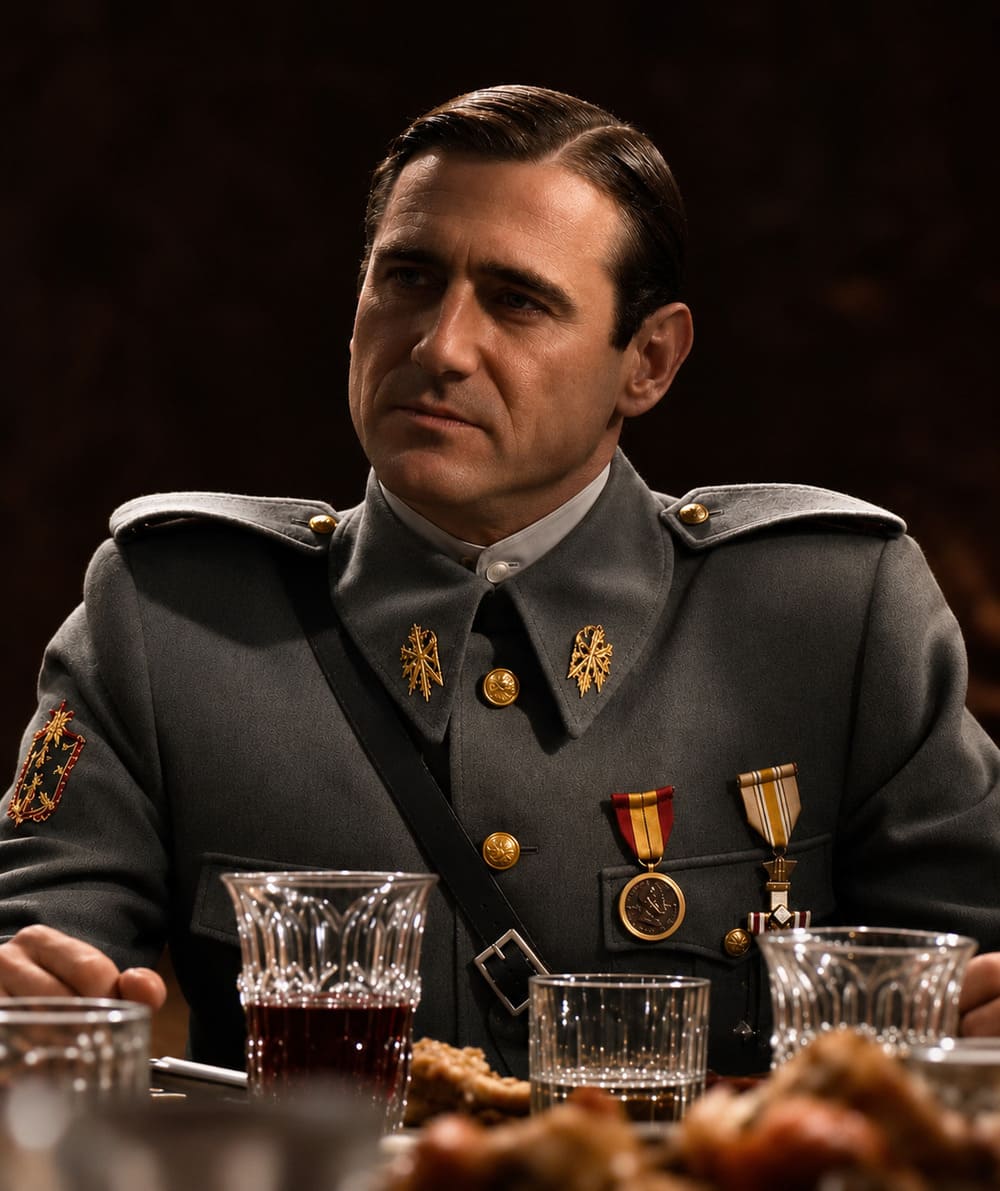
Captain Vidal from Pan’s Labyrinth stands as one of cinema’s most chilling villains because Guillermo del Toro places him among fantastical monsters without making him any less human—or any less terrifying. He occupies the same film as a Pale Man with eyes in his palms and a mysterious faun, yet Vidal requires no supernatural powers to inspire dread. His evil is methodical, disciplined, and woven into everyday routine. His immaculate appearance and meticulous attention to his watch coexist with his willingness to torture and murder. What makes him frightening is not simply that he commits atrocities, but that he regards them as entirely compatible with an orderly, respectable life.

Vidal captures the banality of fascism: the normalization of cruelty until it becomes an ordinary instrument of authority. Although his overt sadism makes him a more complicated example than a straightforward illustration of Hannah Arendt’s “banality of evil,” he embodies the terrifying substitution of obedience and procedure for moral judgment. When he murders two men suspected of aiding the guerrillas, the discovery that they really were hunting rabbits prompts no remorse—only irritation that his subordinate failed to search them properly. The scene is distinct from his later torture of a captured rebel who stutters, but both reveal the same worldview: another person’s vulnerability offers an opportunity for domination rather than a reason for restraint. Atrocity is not a deviation from his working day; it belongs to it.

Vidal’s obsession with legacy reveals how authoritarian power sustains itself through inheritance and heroic mythology. At dinner, a guest recounts the story that Vidal’s father smashed his watch on the battlefield so his son would know the precise moment of his death—and therefore how a brave man dies. Vidal dismisses the story, yet his fixation on the watch and his final request to have his own time of death preserved suggest how deeply that paternal ideal governs him. The significance lies in the grip of the legend: Vidal imagines fatherhood less as a relationship of care than as the transmission of masculine authority. His son becomes the intended inheritor of a story Vidal is determined to control, extending his obsession with obedience beyond his own lifetime.

The captain also dramatizes how cruelty becomes normalized under authoritarian rule, accommodated as the supposed cost of order. Yet the people around him should not be mistaken for a uniformly complicit household: Mercedes and Dr. Ferreiro actively resist him, exposing the difference between outward obedience and genuine acceptance. When Ferreiro mercifully ends a tortured prisoner’s suffering, Vidal responds, “You could have obeyed me.” The doctor’s answer identifies the moral emptiness beneath that demand: obedience without thought is something people like Vidal practice. Their exchange crystallizes the captain’s understanding of power. He treats compassion as insubordination because he recognizes no moral obligation that might legitimately override his command.

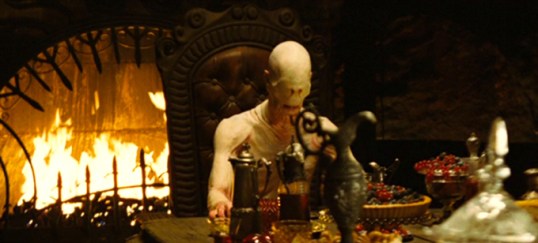
Ofelia’s fantasy realm gains its power through its disturbing resemblance to Vidal’s reality. The Pale Man’s lavish table invites comparison with the captain’s banquet, making the fairy-tale monster an interpretation of the human world rather than merely an escape from it. Both figures turn spaces associated with nourishment and hospitality into sites of danger. But resistance to Vidal also takes practical, human forms: the doctor refuses to prolong torture, Mercedes works against the captain from within his household, and she uses a concealed knife to escape his control. Read alongside Ofelia’s refusal to surrender her conscience, these acts suggest that resistance begins when people reject authority’s claim to determine what is right.

Finally, Vidal achieves iconic status because he is denied the heroic legacy he craves. Facing death, he asks that his son be told the time his father died. Mercedes interrupts him with the devastating reply, “No. He won’t even know your name.” His defeat is therefore more than physical: he loses control of the future he believed belonged to him. Although Vidal represents the fascist regime of Franco’s Spain, his significance need not remain confined to that historical setting. He can also be read as a reflection of individuals who espouse fascist ideals in today’s world: those who equate strength with domination, demand unquestioning loyalty, and excuse cruelty when it targets people they consider inferior or threatening. This is what makes him so enduringly disturbing. He is not merely a monster safely contained in the past, but a warning about a mindset that can reappear wherever obedience is valued above conscience and order above human dignity.

Villain of the Day

Horror Film Review: Pan’s Labyrinth (dir. by Guillermo del Toro)


“But Captain, to obey—just like that—for obedience’s sake… without questioning… That’s something only people like you do.” — Doctor Ferreiro

Guillermo del Toro’s Pan’s Labyrinth (2006) is the kind of fairy tale that reminds you these stories were never supposed to be completely comforting. Beneath the princesses, magical doorways, and mysterious creatures, there have always been warnings about cruelty, temptation, and adults who cannot be trusted. Del Toro brings those darker instincts to the surface, creating a film that is beautiful without being reassuring and frightening without feeling empty. Its greatest achievement is weaving together the horror of Francoist Spain, the dark fantasy of Ofelia’s childhood imagination, and the reality of everyone caught in between. These worlds do not compete for attention; they make each other more disturbing.

Set in Spain in 1944, the story follows Ofelia, played by Ivana Baquero, as she arrives at a remote military outpost with her pregnant mother, Carmen. Her new stepfather, Captain Vidal, is hunting Republican resistance fighters, and his household operates with the same cold discipline as his military command. Nearby, Ofelia discovers an ancient labyrinth and meets a faun who tells her she may be a lost princess. To reclaim her place in an underground kingdom, she must complete three tasks. That setup sounds like an adventure, but del Toro quickly establishes that neither world offers reliable safety.

What makes the historical setting so effective is that fascism is not just background scenery. It shapes the smallest interactions: who gets to speak, whose pain matters, and who must obey without asking questions. Vidal treats his authority as something natural and unquestionable, whether he is dealing with soldiers, servants, or his own family. The violence can be shocking, especially when it arrives abruptly during otherwise ordinary encounters. Still, the brutality has a purpose. Del Toro refuses to let the audience treat political oppression as an abstract idea when its consequences are written directly onto people’s bodies.

Sergi López makes Vidal terrifying because he rarely seems to think of himself as a monster. He behaves like a man convinced that order excuses anything. His immaculate appearance and controlled manner make his cruelty feel deliberate rather than impulsive. There is something especially ugly about watching someone approach violence with the patience another person might bring to a household chore. Compared with the creatures lurking in Ofelia’s magical world, Vidal is painfully recognizable. He needs no supernatural powers, just the expectation that everyone around him will submit.

Some viewers may find Vidal’s near-total viciousness limiting, but his lack of moral ambiguity feels like the point. He does not need a sympathetic backstory to become convincing. Read against the experience of Francoist repression, his entitlement, obsession with obedience, and casual dehumanization make him a chilling representation of someone who has completely bought into fascism. Rather than assuming that everyone who survived or studied the period would judge him identically, the stronger argument is that his apparent exaggeration serves a purpose. What looks like uncomplicated villainy can reveal the terrifying consistency of someone who treats brutality as a duty.

Against that certainty, Baquero gives Ofelia a wonderfully unforced mixture of curiosity, stubbornness, and fear. She is not a miniature action hero, and the film is stronger for it. Sometimes she makes mistakes; sometimes she follows a rule before understanding it. Her imagination gives her a language for experiences the adults dismiss or refuse to explain. Yet calling the fantasy mere escapism misses what makes it interesting. The tasks confront her with danger and moral choices rather than simply offering somewhere pleasant to hide. Her imagined identity becomes a way of discovering who she wants to be.

The creatures are a huge part of the appeal, but their beauty is always slightly wrong. The faun looks ancient, earthy, and difficult to read, more like something uncovered beneath a forest than a friendly guide. His presence makes every promise feel conditional. Then there is the Pale Man, whose banquet scene turns a familiar fairy-tale warning into an almost unbearable exercise in suspense. Del Toro understands that a monster becomes more frightening when its surroundings tell a story before it moves. The feast, the stillness, and the suggestion of previous victims make the room feel contaminated by appetite.

Crucially, those fantasy sequences do not interrupt the political story. They echo it. Both worlds contain powerful figures who issue commands, establish punishments, and expect a child to accept their rules. That connection gives the film its bite: learning to behave well is not necessarily the same as learning to obey. Ofelia must develop judgment, not just discipline. Meanwhile, Mercedes, the housekeeper, and the doctor face versions of that same dilemma. Their resistance depends on concealment, nerve, and helping others when discovery could mean death. Through them, the film makes ordinary care feel dangerous and morally urgent.

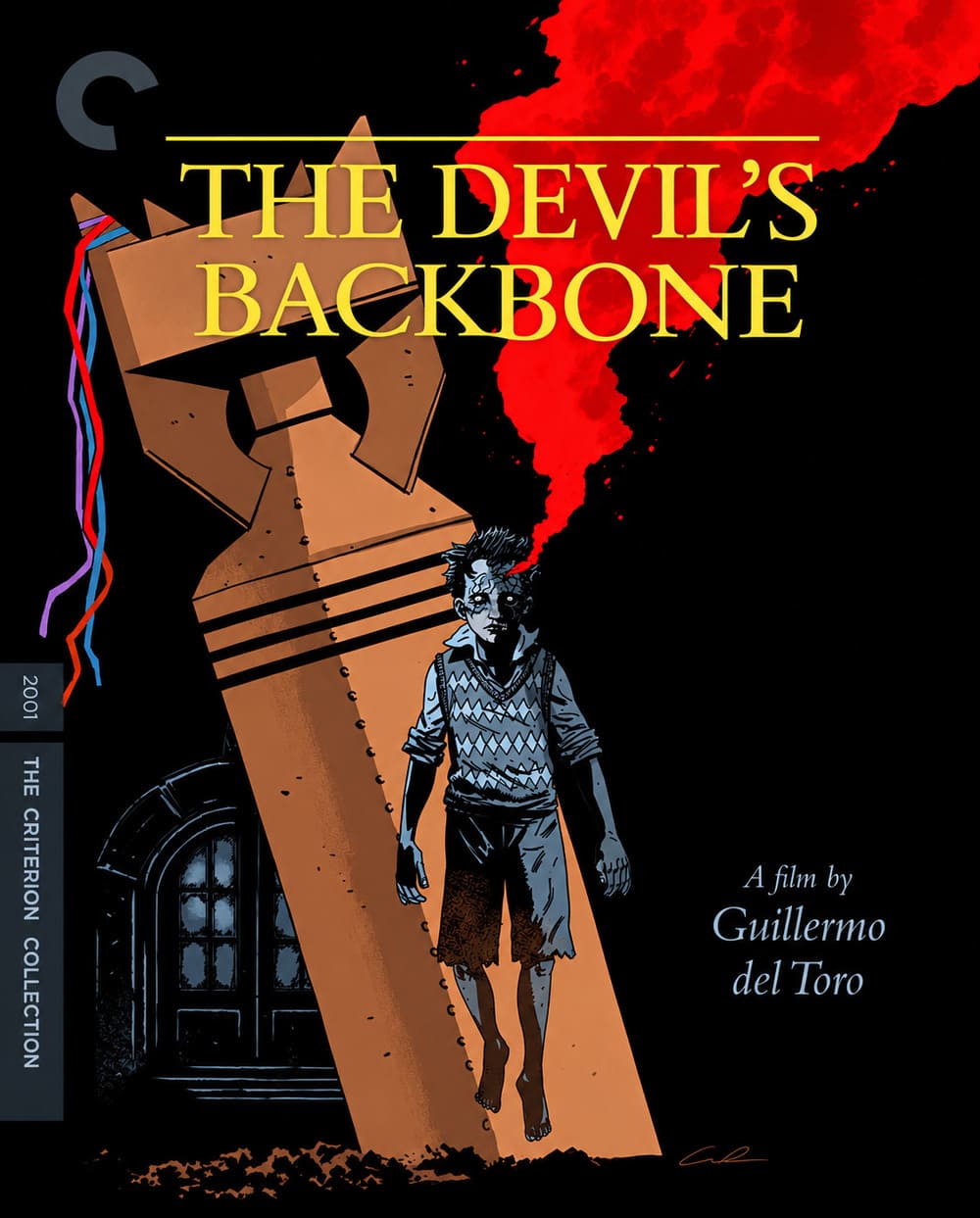
The film also makes a wonderful bookend to del Toro’s earlier The Devil’s Backbone (2001). Set during the final year of the Spanish Civil War, that film approaches violence and abandonment through children living in a haunted orphanage; Pan’s Labyrinth moves into the dictatorship’s aftermath. Del Toro himself described the later film as a companion, or sister, to the earlier one. Together, they trace childhood vulnerability across the war and its consequences, using supernatural encounters to expose wounds that adults cannot—or will not—address. One gives us a ghost story, the other a dark fairy tale, but both make human cruelty more frightening than the creatures.

Visually, Pan’s Labyrinth balances richness and decay. The forest and underground spaces feel textured, damp, and old, while Vidal’s surroundings suggest rigid arrangements and suffocating control. Even when the fantasy offers warmer colors or inviting shapes, something unsettling remains underneath. That consistency matters: the magical world never looks as though it belongs to a different movie. Wonder and dread occupy the same space, allowing a doorway, a root, or a shadow to seem beautiful and threatening at once. The shifts between graphic injury and childhood wonder can be punishing, but softening that contrast would weaken the reason Ofelia needs another world.

By the end, Pan’s Labyrinth has made its magic inseparable from grief. Its closing images allow consolation and devastation to coexist without letting either cancel the other out. How literally to understand Ofelia’s experiences remains compelling, but the emotional stakes are clear: imagination can preserve possibility when the surrounding world demands surrender. This is dark fantasy with something urgent beneath its exquisite surfaces. It understands that monsters can inhabit fairy tales, military uniforms, and systems of obedience—and that choosing compassion may be the most meaningful refusal available.

Horror Film Review: The Devil’s Backbone (dir. by Guillermo del Toro)


“A tragedy condemned to repeat itself time and again?” — Casares

The first time you see the ghost in The Devil’s Backbone, you’re likely to wonder what he’s going to do to the children. By the end, the more troubling question is what people have already done to him. That change in perspective is the heart of Guillermo del Toro’s 2001 supernatural horror film, a movie that slowly rearranges your sense of where the danger lies. It delivers eerie encounters, hidden secrets, and an isolated setting, but its real achievement is making those familiar ingredients feel emotionally necessary. The haunting isn’t there to interrupt the human story. It’s there to reveal the human story everyone else has found a way to avoid.

Set in 1939, near the end of the Spanish Civil War, the film follows Carlos, played by Fernando Tielve, as he arrives at a remote orphanage. He enters a community that has already established its routines, rivalries, and silences. The other boys know things he doesn’t, while the adults seem reluctant to explain much of anything. Carlos has enough to worry about before he encounters Santi, the ghost of a dead child whose presence suggests that the building holds more than ordinary unhappiness. Del Toro links these sources of anxiety from the beginning. Being haunted is frightening, but so is depending on strangers who control your life without telling you the truth about it.

Carlos makes an effective guide because he’s neither unusually helpless nor conveniently fearless. Tielve lets curiosity, stubbornness, and insecurity coexist without making them seem like separate performance choices. Carlos wants answers, but he also wants to fit in, and those desires don’t always lead him in the same direction. Investigating something strange can bring him attention he doesn’t necessarily want. Standing up for himself can make an already uncertain situation worse. The film respects the practical difficulty of being a child in an unfamiliar place: even when you recognize that something is wrong, you may have very little power to change it.

The orphanage makes that lack of power feel tangible. It’s a refuge, but it’s also a place Carlos hasn’t chosen and can’t simply leave. Del Toro makes its rooms and corridors feel connected to daily life rather than arranged exclusively for scares. Children sleep, argue, and establish little territories within a building that also contains private grief and concealed violence. That mixture matters. The frightening spaces aren’t somewhere separate from ordinary experience; they’re part of the same home. As Carlos learns more, familiar locations take on different meanings. The building doesn’t change, but his understanding of what has happened inside it does.

Visually, the film finds unease without depending entirely on darkness. Dusty daylight and exposed spaces can feel just as uncomfortable as a shadowy passageway. The unexploded bomb in the courtyard captures this approach perfectly. There’s nothing hidden about it. Everyone can see the danger, yet its continued presence has become part of the routine. It’s a striking image because it turns familiarity into something unsettling. Getting used to a threat doesn’t make it safe; sometimes it simply means you’ve stopped expecting anyone to remove it. That idea extends beyond the courtyard and into the orphanage’s relationships, where people tolerate arrangements that remain fragile or harmful.

Santi initially appears to belong to a different category of danger. Unlike the bomb, he’s mysterious, difficult to understand, and impossible to explain through the ordinary rules of the place. His appearance is disturbing, but del Toro gives that disturbance an emotional dimension. The ghost looks wounded rather than merely monstrous. As Carlos pays closer attention, the signs of suffering become harder to separate from the features that make Santi frightening. It’s an impressive balancing act. The film doesn’t need to make him visually comforting to encourage sympathy. Instead, it asks whether an unsettling appearance has prevented everyone from seeing a vulnerable child.

That question gives the haunting its purpose. Santi isn’t simply a supernatural problem that must be removed so the orphanage can return to normal. His presence challenges the idea that its normal life was acceptable to begin with. Something has happened that demands acknowledgment, and continuing without that acknowledgment becomes part of the wrong. This is where the mystery develops a moral dimension without turning into a lecture. Carlos’s discoveries don’t just provide information; they alter his obligations. Once he understands more, looking away is no longer an innocent choice. The ghost becomes frightening partly because he makes avoidance impossible.

The other boys complicate Carlos’s education in whom to fear and whom to trust. Their bullying and competitiveness can be cruel, but del Toro doesn’t flatten them into miniature villains. They’re children negotiating their own uncertain circumstances, sometimes by making someone else feel smaller. Their relationships develop through friction, guarded exchanges, and changing impressions rather than instant friendship. That makes their growing connections more convincing. The film understands that solidarity isn’t automatic just because people share a difficult situation. It has to be built, and building it requires recognizing something beyond your own immediate need to feel secure.

The adults offer even less reliable guidance. Carmen, played by Marisa Paredes, has the authority necessary to keep the orphanage functioning, but that authority doesn’t mean she can control everything happening within it. Professor Casares, played by Federico Luppi, brings gentleness and thoughtfulness, though neither quality guarantees action when action is needed. Both characters have emotional lives that extend beyond their responsibilities to the children. Their disappointments and attachments make them sympathetic, but they also create blind spots. Del Toro is especially good at showing the gap between wanting to protect someone and actually providing protection. Affection matters, but it isn’t a substitute for judgment or courage.

There’s a quiet sadness in those adult relationships that deepens the horror rather than distracting from it. These are people who can recognize beauty, offer tenderness, and understand suffering, yet still hesitate at crucial moments. The film doesn’t treat their limitations with contempt. It allows us to see how exhaustion and longing can narrow a person’s attention. At the same time, the children still have to live with the consequences. That tension keeps the story from becoming too reassuring. Good intentions don’t make an institution safe, and a sympathetic guardian can still fail someone who depends on them.

Jacinto, played by Eduardo Noriega, makes that distinction more brutal. His resentment and self-interest bring an increasingly direct threat into the orphanage. Beside Santi, he creates the film’s clearest reversal: the figure who looks unnatural may deserve compassion, while an ordinary human being can choose extraordinary cruelty. Jacinto is effective, though he’s also where the storytelling becomes less nuanced. As his role sharpens, some of the earlier uncertainty gives way to a more straightforward confrontation. The emotional complications surrounding Carmen and Casares are often more absorbing than his menace. Still, his presence makes the children’s vulnerability impossible to dismiss as merely a product of their imaginations.

The war gives that vulnerability a wider context without overwhelming the intimate story. It shapes the orphanage’s resources, its loyalties, and the uncertain future awaiting everyone inside. Physical distance from the fighting offers no real independence from its consequences. This isn’t a peaceful household suddenly disturbed by a ghost; it’s a precarious refuge whose existing problems become harder to conceal. The historical setting also reinforces the difference between having power and deserving it. The children inherit dangers they didn’t create, while the adults’ decisions determine how much of that danger reaches them. Even private acts of selfishness carry greater weight in a community with so little protection to spare.

What holds these ideas together is del Toro’s empathy, which is more demanding than simple sympathy for the unfortunate. The film asks us to revise our judgments, but it doesn’t suggest that every harmful action can be forgiven once we understand its cause. Santi’s suffering deserves recognition; another person’s resentment doesn’t justify turning others into victims. That distinction keeps the movie emotionally generous without making it morally vague. It encourages careful attention to people who frighten us while remaining clear-eyed about those who exploit the vulnerability of others. The mystery changes how we see the characters, not whether their choices matter.

The film does lose a little of its delicacy as it approaches the ending. Its early strength lies in allowing dread to gather through spaces, relationships, and unanswered questions. Later, the conflicts become more explicit, and the plotting pushes the separate elements into alignment. Some of that uneasy openness gives way to more familiar suspense. For me, the quieter stretches are the most distinctive, especially when a look or an uncomfortable pause communicates more than a dramatic confrontation could. Even so, the emotional investment survives the shift. By then, the children feel too specific and their situation too precarious for the resolution to become merely a matter of mechanics.

What stays with you after The Devil’s Backbone isn’t simply the appearance of its ghost, but the effort required to see him clearly. Del Toro takes a figure we’re prepared to recoil from and makes our changing response the measure of the story’s emotional progress. The film remains chilling because understanding doesn’t erase violence or restore what has been lost. It offers something smaller: the possibility that a person’s suffering will finally be recognized rather than absorbed into another household secret. That’s why its sadness feels earned. The ghost stops being just a frightening interruption and becomes someone whose absence should have mattered all along.

4 Shots From 4 Films: Special Cinco De Mayo Edition


4 Or More Shots From 4 Or More Films is just what it says it is, 4 shots from 4 of our favorite films. As opposed to the reviews and recaps that we usually post, 4 Shots From 4 Films lets the visuals do the talking!

Happy Cinco De Mayo to all of our readers!  It’s time for….

4 Shots From 4 Mexican Films

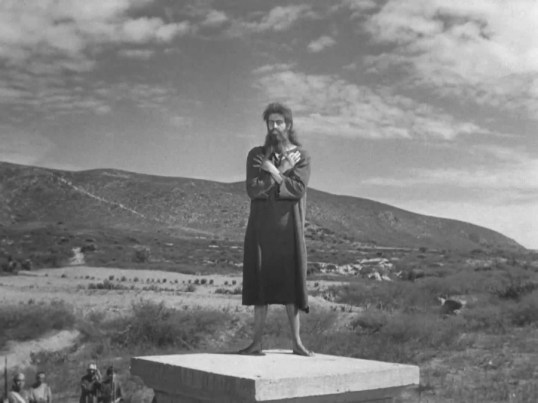
Simon of the Desert (1965, dir by Luis Bunuel, DP: Gabriel Figueroa)

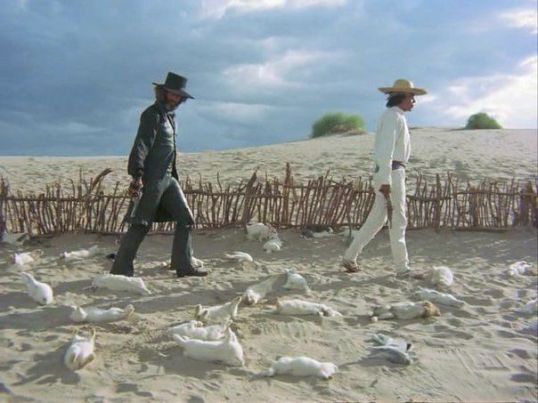
El Topo (1970, dir by Alejandro Jodorowsky, DP: Rafael Corkidi)

Like Water For Chocolate (1992, dir by Alfonso Arau, DP: Emmanuel Luzbeki)

Pan’s Labyrinth (2006, dir. by Guillermo Del Toro, DP: Guillermo Nava)

The DGA Honors Paul Thomas Anderson


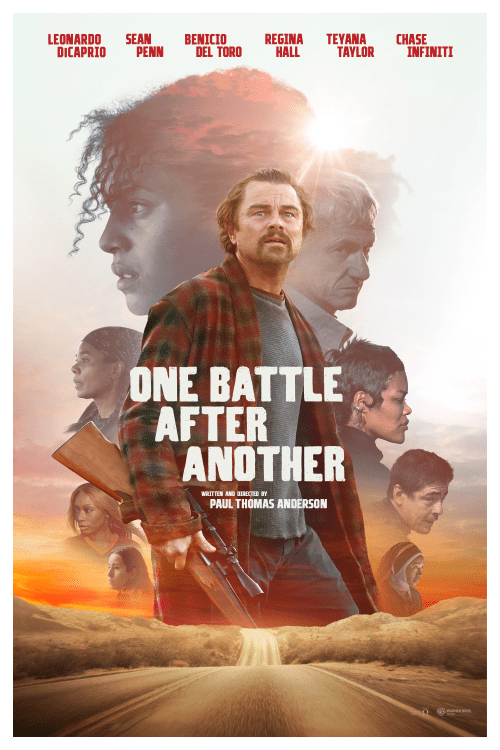
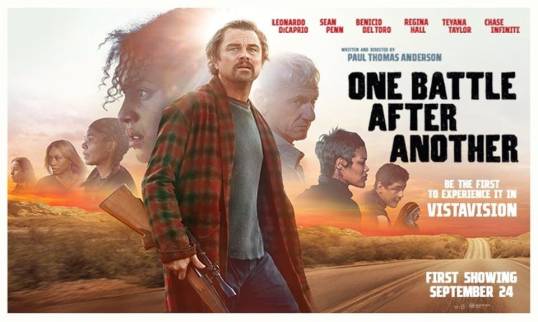
If you were like me and you were hoping for some sort of big upset at the Oscars next month, it looks like we’re out of luck!  The Directors Guild has honored Paul Thomas Anderson as director of the year for One Battle After Another.

The winners are in bold:

FEATURE FILM
Paul Thomas Anderson – “One Battle After Another” (Warner Bros.)
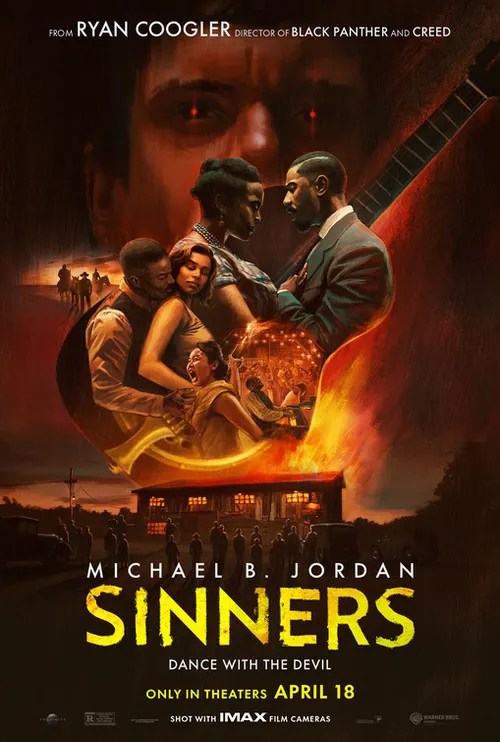
Ryan Coogler – “Sinners” (Warner Bros.)
Guillermo Del Toro – “Frankenstein” (Netflix)
Josh Safdie – “Marty Supreme” (A24)
Chloe Zhao – “Hamnet” (Focus Features)

FIRST-TIME THEATRICAL FEATURE FILM
Hasan Hadi – “The President’s Cake” (Sony Pictures Classics)
Harry Lighton – “Pillion” (A24)
Alex Russell – “Lurker” (Mubi)
Charlie Polinger – “The Plague” (IFC)
Eva Victor – “Sorry, Baby” (A24)

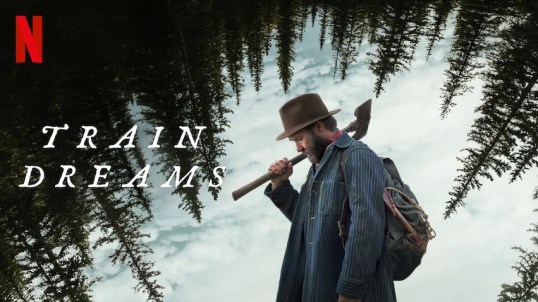
The Chicago Indie Film Critics Honor Train Dreams and Sinners!


The Chicago Indie Critics have announced their picks for the best of 2025!  The winners are listed in bold!

BEST INDEPENDENT FILM
If I Had Legs I’d Kick You – Producers: Sara Murphy, Ryan Zacarias, Ronald Bronstein, Josh Safdie, Eli Bush, Conor Hannon, Richie Doyle
It Was Just an Accident – Producers: Jafar Panahi, Philippe Martin
The Life of Chuck – Producers: Trevor Macy, Mike Flanagan
Sorry, Baby – Producers: Adele Romanski, Mark Ceryak, Barry Jenkins
Train Dreams – Producers: Marissa McMahon, Teddy Schwarzman, Will Janowitz, Ashley Schlaifer, Michael Heimler

BEST STUDIO FILM
Hamnet – Producers: Liza Marshall, Pippa Harris, Nicolas Gonda, Sam Mendes, Steven Spielberg
Marty Supreme – Producers: Eli Bush, Ronald Bronstein, Josh Safdie, Anthony Katagas, Timothée Chalamet
One Battle After Another – Producers: Adam Somner, Sara Murphy, Paul Thomas Anderson
Sinners – Producers: Zinzi Coogler, Sev Ohanian, Ryan Coogler
28 Years Later – Producers: Andrew Macdonald, Peter Rice, Bernie Bellew, Danny Boyle, Alex Garland

BEST INTERNATIONAL FILM
It Was Just an Accident – Producers: Jafar Panahi, Philippe Martin
No Other Choice – Producers: Park Chan-wook, Back Jisun, Michèle Ray-Gavras, Alexandre Gavras
The Secret Agent – Producers: Emilie Lesclaux, Kleber Mendonça Filho
Sentimental Value – Producers: Maria Ekerhovd, Andrea Berentsen Ottmar
Sirât – Producers: Domingo Corral, Oliver Laxe, Xavi Font, Pedro Almodóvar, Agustín Almodóvar, Esther García, Oriol Maymó, Mani Mortazavi, Andrea Queralt

BEST DOCUMENTARY
John Candy: I Like Me – Producers: Colin Hanks, Johnny Pariseau, George Dewey, Shane Reid, Ryan Reynolds, Sean Stuart, Glen Zipper
Orwell: 2 + 2 = 5 – Producers: Raoul Peck, Alex Gibney, George Chignell, Nick Shumaker
The Perfect Neighbor – Producers: Alisa Payne, Geeta Gandbhir, Nikon Kwantu, Sam Bisbee
Secret Mall Apartment – Producers: Jeremy Workman, Jesse Eisenberg
Zodiac Killer Project – Producers: Charlie Shackleton, Anthony Ing, Catherine Bray

BEST ANIMATED FILM
Elio – Producers: Madeline Sharafian, Domee Shi, Adrian Molina, Mary Alice Drumm
KPop Demon Hunters – Producers: Maggie Kang, Chris Applehans, Michelle Wong
Looney Tunes: The Day the Earth Blew Up – Producers: Peter Browngardt, Sam Register, Alex Kirwan
Predator: Killer of Killers – Producers: John Davis, Dan Trachtenberg, Marc Toberoff, Ben Rosenblatt
Zootopia 2 – Producers: Jared Bush, Byron Howard, Yvett Merino

BEST DIRECTOR
Paul Thomas Anderson – One Battle After Another
Ryan Coogler – Sinners
Guillermo del Toro – Frankenstein
Jafar Panahi – It Was Just an Accident
Chloé Zhao – Hamnet

BEST ORIGINAL SCREENPLAY
Eddington – Ari Aster
Marty Supreme – Ronald Bronstein, Josh Safdie
Sinners – Ryan Coogler
Sorry, Baby – Eva Victor
Weapons – Zach Cregger

BEST ADAPTED SCREENPLAY
Bugonia – Will Tracy
Frankenstein – Guillermo del Toro
Hamnet – Chloé Zhao, Maggie O’Farrell
One Battle After Another – Paul Thomas Anderson
28 Years Later – Alex Garland

BEST ACTOR
Timothée Chalamet – Marty Supreme
Leonardo DiCaprio – One Battle After Another
Ethan Hawke – Blue Moon
Michael B. Jordan – Sinners
Jesse Plemons – Bugonia

BEST ACTRESS
Jessie Buckley – Hamnet
Rose Byrne – If I Had Legs I’d Kick You
Amanda Seyfried – The Testament of Ann Lee
Emma Stone – Bugonia
Eva Victor – Sorry, Baby

BEST SUPPORTING ACTOR
Benicio del Toro – One Battle After Another
Jacob Elordi – Frankenstein
Delroy Lindo – Sinners
Sean Penn – One Battle After Another
Stellan Skarsgård – Sentimental Value

BEST SUPPORTING ACTRESS
Odessa A’zion – Marty Supreme
Amy Madigan – Weapons
Wunmi Mosaku – Sinners
Hailee Steinfeld – Sinners
Teyana Taylor – One Battle After Another

BEST ENSEMBLE (Casting Director Award)
Black Bag – Carmen Cuba
It Was Just an Accident – Jafar Panahi
Marty Supreme – Jennifer Venditti
One Battle After Another – Cassandra Kulukundis
Sinners – Francine Maisler

BREAKOUT PERFORMER
Odessa A’zion
Miles Caton
Indy the Dog
Chase Infiniti
Jacobi Jupe

BREAKOUT BEHIND-THE-SCENES
Clint Bentley
Harris Dickinson
Scarlett Johansson
James Sweeney
Eva Victor

SIGHT UNSEEN PERFORMANCE
Jason Bateman – Zootopia 2
Oona Chaplin – Avatar: Fire and Ash
Nick Offerman – The Life of Chuck
Will Patton – Train Dreams
Alan Tudyk – Superman

BEST CINEMATOGRAPHY
F1 – Claudio Miranda
Frankenstein – Dan Laustsen
One Battle After Another – Michael Bauman
Sinners – Autumn Durald Arkapaw
Train Dreams – Adolpho Veloso

BEST PRODUCTION DESIGN
The Fantastic Four: First Steps – Kasra Farahani, Jille Azis
Frankenstein – Tamara Deverell
Sinners – Hannah Beachler, Monique Champagne
28 Years Later – Carson McColl, Gareth Pugh
Wicked: For Good – Nathan Crowley, Lee Sandales

BEST EDITING
F1 – Stephen Mirrione
Marty Supreme – Ronald Bronstein, Josh Safdie
One Battle After Another – Andy Jurgensen
Sinners – Michael P. Shawver
Weapons – Joe Murphy

BEST COSTUME DESIGN
The Fantastic Four: First Steps – Alexandra Byrne
Frankenstein – Kate Hawley
Hedda – Lindsay Pugh
Sinners – Ruth E. Carter
Wicked: For Good – Paul Tazewell

BEST MAKEUP
Frankenstein – Mike Hill, Jordan Samuel, Cliona Furey
Sinners – Mike Fontaine, Ken Diaz, Shunika Terry
The Smashing Machine – Kazu Hiro, Felix Fox, Mia Neal
28 Years Later – Flora Moody, John Nolan
Weapons – Leo Satkovich, Melizah Wheat, Jason Collins

BEST VISUAL EFFECTS
Avatar: Fire and Ash – Joe Letteri, Richard Baneham, Eric Saindon, Daniel Barrett
F1 – Ryan Tudhope, Keith Alfred Dawson, Nicholas Chevallier, Robert Harrington
Frankenstein – Dennis Berardi
Sinners – Michael Ralla, Espen Nordahl, Guido Wolter, Donnie Dean
Superman – Stephane Ceretti, Enrico Damm, Stephane Naze, Guy Williams

BEST STUNTS
Ballerina – Jackson Spidell, Stephen Dunlevy
F1 – Gary Powell, Luciano Bacheta
Mission: Impossible – The Final Reckoning – Wade Eastwood
One Battle After Another – Brian Machleit
Superman – Wayne Dalglish

BEST SOUND
Avatar: Fire and Ash – Gwendolyn Yates Whittle, Brent Burge, Gary Summers, Michael Hedges, Alexis Feodoroff, Julian Howarth
F1 – Al Nelson, Gwendolyn Yates Whittle, Gary A. Rizzo, Juan Peralta, Gareth John
Sinners – Chris Welcker, Benny Burtt, Brandon Proctor, Steve Boeddeker, Felipe Pacheco
28 Years Later – Johnnie Burn
Warfare – Mitch Low, Glenn Freemantle, Ben Barker, Howard Bargroff, Richard Spooner

BEST ORIGINAL SCORE
Frankenstein – Alexandre Desplat
Hamnet – Max Richter
Marty Supreme – Daniel Lopatin
One Battle After Another – Jonny Greenwood
Sinners – Ludwig Göransson

BEST ORIGINAL SONG
“Clothed by the Sun” – The Testament of Ann Lee (Written by Daniel Blumberg, Mona Fastvold; Performed by David Cale, Lewis Pullman, Matthew Beard)
“Golden” – KPop Demon Hunters (Written by EJAE, Mark Sonnenblick, IDO, 24, Teddy; Performed by EJAE, Audrey Nuna, Rei Ami)
“Highest 2 Lowest” – Highest 2 Lowest (Written and Performed by Aiyana-Lee)
“I Lied to You” – Sinners (Written by Raphael Saadiq, Ludwig Göransson; Performed by Miles Caton)
“Pale, Pale Moon” – Sinners (Written by Brittany Howard, Ludwig Göransson; Performed by Jayme Lawson)

THE IMPACT AWARD
Elizabeth Arnott – Programmer of “Sapphopalooza”
Tyler Michael Baletine – Programmer of “Life Within the Lens: Juneteenth Edition”
Matthew C. Hoffman – Programmer and Host at the Pickwick Theatre
Anna Pattinson – Editor-in-Chief of Cinema Femme
Michael Phillips – Former Film Critic of The Chicago Tribune

Sinners Wins In Nashville


The Music City Film Critics Association has announced its picks for the best of 2025!  The winners are in bold!

Best Picture
Bugonia
Frankenstein
Hamnet
Marty Supreme
One Battle After Another
Sentimental Value
Sinners
The Testament of Ann Lee
Train Dreams
Weapons

Best Director
Paul Thomas Anderson – One Battle After Another
Ryan Coogler – Sinners
Guillermo Del Toro – Frankenstein
Josh Safdie – Marty Supreme
Chloé Zhao – Hamnet

Best Actress
Jessie Buckley – Hamnet
Rose Byrne – If I Had Legs I’d Kick You
Chase Infiniti – One Battle After Another
Amanda Seyfried – The Testament of Ann Lee
Emma Stone – Bugonia

Best Actor
Timothée Chalamet – Marty Supreme
Leonardo DiCaprio – One Battle After Another
Joel Edgerton – Train Dreams
Ethan Hawke – Blue Moon
Michael B. Jordan – Sinners

Best Supporting Actress
Odessa A’zion – Marty Supreme
Inga Ibsdotter Lilleaas – Sentimental Value
Amy Madigan – Weapons
Wunmi Mosaku – Sinners
Teyana Taylor – One Battle After Another

Best Supporting Actor
Benicio Del Toro – One Battle After Another
Jacob Elordi – Frankenstein
Delroy Lindo – Sinners
Sean Penn – One Battle After Another
Stellan Skarsgård – Sentimental Value

Best Young Actress
Shannon Mahina Gorman – Rental Family
Olivia Lynes – Hamnet
Madeleine McGraw – The Black Phone 2
Sora Wong – Bring Her Back
Nina Ye – Left-Handed Girl

Best Young Actor
Everett Blunck – The Plague
Miles Caton – Sinners
Cary Christopher – Weapons
Jacobi Jupe – Hamnet
Alfie Williams – 28 Years Later

Best Acting Ensemble
Marty Supreme
One Battle After Another
Sentimental Value
Sinners
Wake Up Dead Man

Best Music Film
The Ballad of Wallis Island
KPop Demon Hunters
Sinners
The Testament of Ann Lee
Wicked: For Good

Best Animated Film
The Day the Earth Blew Up
KPop Demon Hunters
Little Amélie or the Character of Rain
Predator: Killer of Killers
Zootopia 2

Best Documentary
The Alabama Solution
Cover-Up
John Candy: I Like Me
The Perfect Neighbor
Predators

Best International Film
It Was Just an Accident
No Other Choice
The Secret Agent
Sentimental Value
Sirāt

Best Screenplay
Marty Supreme
One Battle After Another
Sinners
Sorry, Baby
Weapons

Best Cinematography
Frankenstein
Hamnet
One Battle After Another
Sinners
Train Dreams

Best Editing
F1: The Movie
Marty Supreme
One Battle After Another
The Perfect Neighbor
Sinners

Best Production Design
Frankenstein
Marty Supreme
Sinners
The Testament of Ann Lee
Wicked: For Good

Best Original Song
“As Alive As You Need Me to Be” – Nine Inch Nails, Tron: Ares
“The Girl in the Bubble” – Ariana Grande, Wicked: For Good
“Golden” – EJAE, Audrey Nuna, and Rei Ami, KPop Demon Hunters
“I Lied to You” – Miles Caton, Sinners
“Train Dreams” – Nick Cave, Train Dreams

Best Score
Frankenstein
Marty Supreme
One Battle After Another
Sinners
Train Dreams

Best Sound
F1: The Movie
One Battle After Another
Sinners
Warfare
Wicked: For Good

Best Stunt Work
Ballerina
F1: The Movie
Mission: Impossible – The Final Reckoning
Sinners
Superman

Best Action Film
F1: The Movie
Mission: Impossible – The Final Reckoning
One Battle After Another
Predator: Badlands
Superman

Best Comedy Film
The Ballad of Wallis Island
Friendship
The Naked Gun
Splitsville
Wake Up Dead Man

Best Horror Film
28 Years Later
Frankenstein
Sinners
The Ugly Stepsister
Weapons

The Jim Ridley Award
The Day the Earth Blew Up
Dracula
A Little Prayer
Resurrection
Sirāt

One Battle After Another Wins In Hawaii


The Hawaii Film Critics Society has announced its picks for the best of 2025!  The winners are in bold.

Best Picture
Jay Kelly
Marty Supreme
One Battle After Another
Sentimental Value
Sinners

Best Director
Paul Thomas Anderson, One Battle After Another
Ryan Coogler, Sinners
Guillermo del Toro, Frankenstein
Josh Safdie, Marty Supreme
Chloé Zhao, Hamnet

Best Actor
Timothée Chalamet, Marty Supreme
Leonardo DiCaprio, One Battle After Another
Ethan Hawke, Blue Moon
Michael B. Jordan, Sinners
Wagner Moura, The Secret Agent

Best Actress
Jessie Buckley, Hamnet
Chase Infiniti, One Battle After Another
Sally Hawkins, Bring Her Back
Renate Reinsve, Sentimental Value
Sophie Thatcher, Companion

Best Supporting Actor
Benicio del Toro, One Battle After Another
Jacob Elordi, Frankenstein
Adam Sandler, Jay Kelly
Sean Penn, One Battle After Another
Stellan Skarsgård, Sentimental Value

Best Supporting Actress
Elle Fanning, Sentimental Value
Inga Ibsdotter Lilleaas, Sentimental Value
Amy Madigan, Weapons
Amanda Seyfried, The Housemaid
Teyana Taylor, One Battle After Another

Best Original Screenplay
Eddington
Marty Supreme
Sentimental Value
Sinners
Weapons

Best Adapted Screenplay
Frankenstein
Hamnet
One Battle After Another
The Housemaid
Train Dreams

Best Editing
F1: The Movie
Marty Supreme
One Battle After Another
Sinners
Together

Best Cinematography
F1: The Movie
Frankenstein
One Battle After Another
Sinners
Train Dreams

Best Art Direction
Frankenstein
Hamnet
Marty Supreme
Sinners
The Phoenician Scheme

Best Costume Design
Frankenstein
Hamnet
Sinners
The Phoenician Scheme
Wicked: For Good

Best Animated Film
Arco
Dog Man
KPop Demon Hunters
The Day the Earth Blew Up: A Looney Tunes Movie
Zootopia 2

Best Documentary
George A. Romero’s Resident Evil
Orwell: 2+2=5
Pee-wee as Himself
Predators
The Perfect Neighbor

Best Make-Up
28 Years Later
Frankenstein
Sinners
Weapons
Wicked: For Good

Best Sound
F1: The Movie
Frankenstein
One Battle After Another
Sinners
The Testament of Ann Lee

Best Score
F1: The Movie
Frankenstein
One Battle After Another
Sinners
Tron: Ares

Best Song
“As Alive as You Need Me to Be,” Tron: Ares
“Highest 2 Lowest,” Highest 2 Lowest
“Hurry Up Tomorrow,” Hurry Up Tomorrow
“I Lied to You,” Sinners
“Train Dreams,” Train Dreams

Best Visual Effects
Avatar: Fire and Ash
Frankenstein
Jurassic World: Rebirth
Predator: Badlands
Sinners

Best Action Movie
Ballerina
F1: The Movie
Mission: Impossible – The Final Reckoning
One Battle After Another
Predator: Badlands

Best Stunt Work
Ballerina
F1: The Movie
Mission: Impossible – The Final Reckoning
One Battle After Another
Sinners

Best New Filmmaker
Ugo Bienvenu, Arco
Ben Leonberg, Good Boy
Charlie Polinger, The Plague
Michael Shanks, Together
Eva Victor, Sorry, Baby

Best First Film
Arco
Good Boy
Sorry, Baby
The Plague
Together

Best Overlooked Film
Clown in a Cornfield
Eddington
Nouvelle Vague
Rental Family
The Life of Chuck

Best Vocal / Motion Capture Performance
Eric Bauza, The Day the Earth Blew Up: A Looney Tunes Movie
Oona Chaplin, Avatar: Fire and Ash (TIE)
Ebon Moss-Bachrach, The Fantastic Four: First Steps
Sam Rockwell, The Bad Guys 2 (TIE)
Alison Wright, Predator: Badlands

Best Animal Performance
Bing the dog, The Friend
Indy the dog, Good Boy
Jolene the dog, Superman
Olga the cat, Sorry, Baby
Tico the cat, Caught Stealing

Best Horror Film
Bring Her Back
Keeper
Shelby Oaks
Together
Weapons

Best Comic Book Movie
100 Nights of Hero
Captain America: Brave New World
Superman
The Fantastic Four: First Steps
Thunderbolts*

Best Foreign Language Film
It Was Just an Accident
Left-Handed Girl
No Other Choice
Sentimental Value
The Secret Agent

Best Underrated Film
Companion
Heart Eyes
Rental Family
The Life of Chuck
The Long Walk

Best Hawaiian Film
A Paradise Lost, dir. Laurie Sumiye (Hawaii)
Lahaina Rising, dir. Matty Schweitzer (Maui)
MĀHŪ: A Trans-Pacific Love Letter, dir. Lisette Marie Flanary (Oahu)
Reeling, dir. Yana Alliata (Oahu)
Sharing Aloha, dir. Blair Treu (Hawaii)

The Ha’aheo Award (Pride in Achievement for Film, TV, or Theater)
Chief of War

The Jason “Phormat” David Award celebrating originality and artistic playfulness in cinema
The Phoenician Scheme (dir. Wes Anderson)

Worst Film of 2025
Death of a Unicorn
Eddington
Hurry Up Tomorrow
Karate Kid: Legends
The Strangers: Chapter 2

Here’s What Won At The Golden Globes!


I didn’t watch the Golden Globes on Sunday night.  Technically, it’s because I wasn’t feeling well and I needed to get some rest.  In reality, even if I had been healthy, I don’t know that I would have watched.  A few years ago, the Golden Globes were not televised and I discovered how liberating it was to not have to pretend to care about this stupid show.

That said, the Globes are considered an Oscar precursor, despite the fact that no one’s even sure who is voting on them nowadays.  So, here’s what won on Sunday night:

BEST MOTION PICTURE, DRAMA
Frankenstein
Hamnet
It Was Just an Accident
The Secret Agent
Sentimental Value
Sinners

BEST MOTION PICTURE, MUSICAL OR COMEDY
Blue Moon
Bugonia
Marty Supreme
No Other Choice
Nouvelle Vague
One Battle After Another

BEST DIRECTOR, MOTION PICTURE
Paul Thomas Anderson – One Battle After Another

Ryan Coogler – Sinners
Guillermo del Toro – Frankenstein
Jafar Panahi – It Was Just an Accident
Joachim Trier – Sentimental Value
Chloe Zhao – Hamnet

BEST PERFORMANCE BY AN ACTRESS IN A MOTION PICTURE, DRAMA
Jessie Buckley – Hamnet

Jennifer Lawrence – Die, My Love
Renate Reinsve – Sentimental Value
Julia Roberts – After the Hunt
Tessa Thompson – Hedda
Eva Victor – Sorry, Baby

BEST PERFORMANCE BY AN ACTRESS IN A MOTION PICTURE, MUSICAL, OR COMEDY
Rose Byrne – If I Had Legs I’d Kick You

Cynthia Erivo – Wicked: For Good
Kate Hudson – Song Sung Blue
Chase Infiniti – One Battle After Another
Amanda Seyfried – The Testament of Ann Lee
Emma Stone – Bugonia

BEST PERFORMANCE BY AN ACTRESS IN A SUPPORTING ROLE IN ANY MOTION PICTURE
Emily Blunt – The Smashing Machine
Elle Fanning – Sentimental Value
Ariana Grande – Wicked: For Good
Inga Ibsdotter Lilleaas – Sentimental Value
Amy Madigan – Weapons
Teyana Taylor – One Battle After Another

BEST PERFORMANCE BY AN ACTOR IN A MOTION PICTURE, DRAMA
Joel Edgerton – Train Dreams
Oscar Isaac – Frankenstein
Dwayne Johnson – The Smashing Machine
Michael B. Jordan – Sinners
Wagner Moura – The Secret Agent
Jeremy Allen White – Springsteen: Deliver Me from Nowhere

BEST PERFORMANCE BY AN ACTOR IN A MOTION PICTURE, MUSICAL, OR COMEDY
Lee Byung-hun – No Other Choice
Timothee Chalamet – Marty Supreme
George Clooney – Jay Kelly
Leonardo DiCaprio – One Battle After Another
Ethan Hawke – Blue Moon
Jesse Plemons – Bugonia

BEST PERFORMANCE BY AN ACTOR IN A SUPPORTING ROLE IN ANY MOTION PICTURE
Benicio Del Toro – One Battle After Another
Jacob Elordi – Frankenstein
Paul Mescal – Hamnet
Sean Penn – One Battle After Another
Adam Sandler – Jay Kelly
Stellan Skarsgård – Sentimental Value

BEST SCREENPLAY, MOTION PICTURE
Hamnet
It Was Just an Accident
Marty Supreme
One Battle After Another
Sentimental Value
Sinners

BEST ORIGINAL SCORE, MOTION PICTURE
F1: The Movie
Frankenstein
Hamnet
One Battle After Another
Sinners
Sirat

BEST ORIGINAL SONG, MOTION PICTURE
Avatar: Fire and Ash – “Dream as One”
KPop Demon Hunters – “Golden”
Sinners – “I Lied to You”
Train Dreams – “Train Dreams”
Wicked: For Good – “No Place Life Home”
Wicked: For Good – “The Girl in the Bubble”

BEST MOTION PICTURE, ANIMATED
Arco
Demon Slayer: Kimetsu No Yaiba The Movie
Elio
KPop Demon Hunters
Little Amelie or the Character of Rain
Zootopia 2

BEST MOTION PICTURE, FOREIGN LANGUAGE
It Was Just an Accident
No Other Choice
The Secret Agent
Sentimental Value
Sirat
The Voice of Hind Rajab

GOLDEN GLOBE FOR CINEMATIC & BOX OFFICE ACHIEVEMENT
Avatar: Fire and Ash
F1: The Movie
KPop Demon Hunters
Mission: Impossible — The Final Reckoning
Sinners

Weapons
Wicked: For Good
Zootopia 2

The Greater Western New York Film Critics Association Honors One Battle After Another


The Greater Western New York Film Critics Association has announced its picks for the best of 2025.  And here they are:

BEST PICTURE
The Ballad of Wallis Island
Bugonia
Frankenstein
If I Had Legs I’d Kick You
It Was Just an Accident
Marty Supreme
No Other Choice
One Battle After Another
Sinners
Train Dreams

BEST FOREIGN FILM
It Was Just an Accident (Iran/France)
Misericordia (France)
No Other Choice (South Korea)
The Secret Agent (Brazil)
Sentimental Value (Norway)

BEST ANIMATED FILM
Arco
Boys Go to Jupiter
KPop Demon Hunters
Little Amélie or the Character of Rain
Zootopia 2

BEST DOCUMENTARY
Afternoons of Solitude
Cover-Up
The Encampments
The Perfect Neighbor
The Tale of Silyan

BEST DIRECTOR
Paul Thomas Anderson – One Battle After Another
Mary Bronstein – If I Had Legs I’d Kick You
Ryan Coogler – Sinners
Guillermo del Toro – Frankenstein
Josh Safdie – Marty Supreme

LEAD ACTOR
Timothée Chalamet – Marty Supreme
Leonardo DiCaprio – One Battle After Another
Ethan Hawke – Blue Moon
Michael B. Jordan – Sinners
Jesse Plemons – Bugonia

LEAD ACTRESS
Jessie Buckley – Hamnet
Rose Byrne – If I Had Legs I’d Kick You
Jennifer Lawrence – Die My Love
Renate Reinsve – Sentimental Value
Emma Stone – Bugonia

SUPPORTING ACTOR
Benicio del Toro – One Battle After Another
Jacob Elordi – Frankenstein
Delroy Lindo – Sinners
Sean Penn – One Battle After Another
Stellan Skarsgård – Sentimental Value

SUPPORTING ACTRESS
Odessa A’zion – Marty Supreme
Ariana Grande – Wicked: For Good
Amy Madigan – Weapons
Wunmi Mosaku – Sinners
Teyana Taylor – One Battle After Another

ORIGINAL SCREENPLAY
If I Had Legs I’d Kick You (Mary Bronstein)
It Was Just an Accident (Jafar Panahi)
Marty Supreme (Josh Safdie & Ronald Bronstein)
Sentimental Value (Eskil Vogt & Joachim Trier)
Sinners (Ryan Coogler)

ADAPTED SCREENPLAY
Bugonia (Will Tracy)
Frankenstein (Guillermo del Toro)
Hamnet (Chloé Zhao & Maggie O’Farrell)
No Other Choice (Park Chan-wook, Lee Kyoung-mi, Jahye Lee & Don McKellar)
One Battle After Another (Paul Thomas Anderson)

BEST ENSEMBLE
It Was Just an Accident
Marty Supreme
One Battle After Another
Sentimental Value
Sinners

BEST CINEMATOGRAPHY
Frankenstein (Dan Laustsen)
Marty Supreme (Darius Khondji)
One Battle After Another (Michael Bauman)
Sinners (Autumn Durald Arkapaw)
Train Dreams (Adolpho Veloso)

BEST EDITING
It Was Just an Accident (Amir Etminan)
Marty Supreme (Ronald Bronstein & Josh Safdie)
One Battle After Another (Andy Jurgensen)
Sinners (Michael P. Shawver)
Weapons (Joe Murphy)

BEST ORIGINAL SCORE
Frankenstein (Alexandre Desplat)
Marty Supreme (Daniel Lopatin)
One Battle After Another (Jonny Greenwood)
Sinners (Ludwig Göransson)
Train Dreams (Bryce Dessner)

BREAKTHROUGH PERFORMANCE
Odessa A’zion – Marty Supreme
Miles Caton – Sinners
Chase Infiniti – One Battle After Another
Inga Ibsdotter Lilleaas – Sentimental Value
Eva Victor – Sorry, Baby

BREAKTHROUGH DIRECTOR
Clint Bentley – Train Dreams
Mary Bronstein – If I Had Legs I’d Kick You
Harris Dickinson – Urchin
Carson Lund – Eephus
Eva Victor – Sorry, Baby